How to Ski Powder Without Sinking or Stalling (2026)
Deep snow rewards a different technique from groomers. Here's how to stay balanced, keep your rhythm, choose the right skis and avoid the hidden hazards of a powder day.
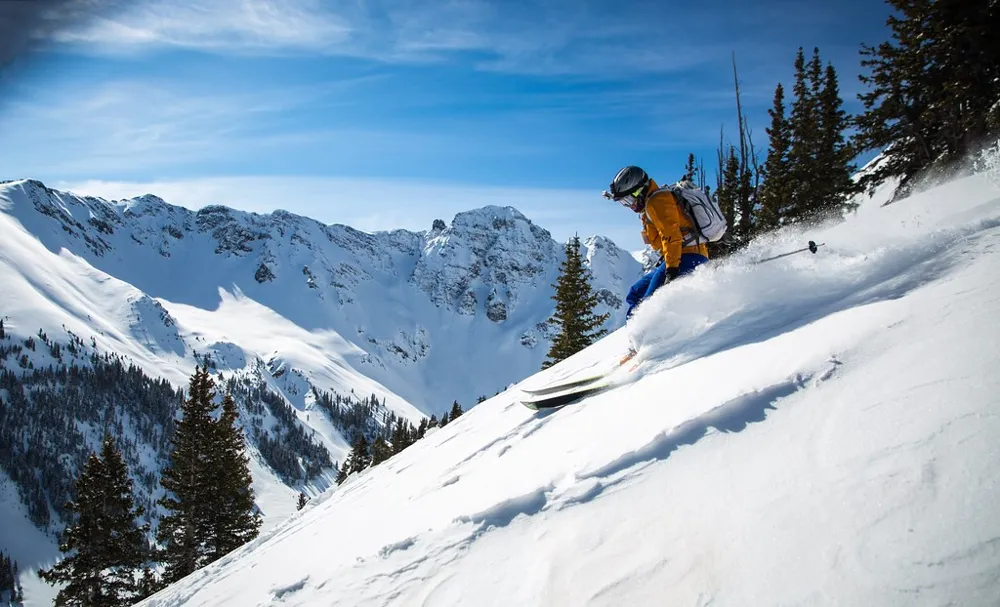
What Is Powder Skiing?
Powder is fresh, soft, ungroomed snow that you sink into rather than ride on top of. One coach quoted by Columbia defines a true powder day as any snowfall of more than about 9 to 10 inches, but even a few inches of new snow on a groomed run feel different from hardpack. On firm snow you turn by tipping your skis on edge; in powder, the snow surrounds the whole ski, so you steer both skis together, use the snow's resistance to bounce and keep speed up so the skis rise toward the surface.
If you're still working on parallel turns, start with how to ski. Powder is easiest once you can link turns comfortably on blue runs.
Powder vs. Groomer Technique at a Glance
| On Groomers | In Powder | |
|---|---|---|
| Stance width | About hip to shoulder width | Narrower, about hip width or closer |
| Weighting | Mostly on the outside ski | More even, both skis as one platform |
| Turning | Tip the skis on edge | Steer both legs together and use up-and-down rhythm |
| Turn shape | Finished, C-shaped turns | Rounder, shallower turns that stay near the fall line |
| Speed | Controlled by finishing turns | Kept up so the skis float |
| Ski choice | Narrower, more camber | Wider, with rocker in the tip |
Stance: Stay Centered
The most common powder advice you'll hear from older skiers is "lean back." Most current instruction says the opposite. Club Med's ski school, Carv, Neilson and Iglu Ski all tell skiers to stay centered: leaning back lifts the tips at first, but it burns out your thighs, makes it hard to start turns and throws off your balance.
- Flex your ankles and keep your shins in light contact with the fronts of your boots.
- Keep your hands forward where you can see them, as if holding a tray.
- Stay tall but relaxed so you can absorb and extend through each turn.
Some sources allow a little rearward shift. Snow.com describes the position as "centered or slightly set back," and an Olympic freeskier interviewed by Columbia suggests leaning back "a bit" to keep the tips up. REI notes your weight may drift toward your heels in deep snow while your ankles stay flexed. The common ground: a slight shift is fine, but never sit back on your tails.
Keep Your Feet Closer and Weight Both Skis
On groomers you stand mostly on the outside ski. In powder, weighting one ski makes it dive while the other floats, which is how many falls start. Instead:
- Narrow your stance to about hip width so your skis act together.
- Weight both skis evenly, thinking of them as one wide platform or a single snowboard.
- Turn both legs at the same time rather than pushing out the outside ski.
Carv's sensor data found skiers put noticeably more weight on the inside ski in powder than on piste, with the outside ski carrying only about half the load on a gentle slope.
Find Your Rhythm: Bounce and Pole Plants
Rhythm is what makes powder feel effortless. Each turn has a down phase, where you flex and compress the snow under your skis, and an up phase, where the snow pushes back and you extend and let the skis rise and change direction.
- Sink as you finish a turn, compressing the snow beneath you.
- Plant your pole down the hill as the turn ends, using a small wrist flick rather than a big arm swing.
- Extend and let the skis rise as the snow rebounds, then steer both skis into the new turn.
- Repeat in a steady beat. Don't force the skis to turn or jump them; let the snow do the work.
Keep your upper body facing downhill so you're always ready for the next pole plant.
Keep Your Speed Up
Powder slows you down, and slow skis sink. Most competitors agree that more speed improves float and makes turning easier. Point the skis a little more down the fall line than feels natural, especially on your first turn, and avoid long traverses where you'll lose momentum. On flat sections and catwalks, carry speed in from above; Columbia's guide suggests stopping well above a flat to plan how you'll cross it.
Turn Shape: Round and Shallow
- Stay near the fall line. Make crescent or "banana" turns rather than fully finished C-turns that bring you across the slope.
- Turn gradually. Abrupt edge changes catch in deep snow.
- Make fewer, longer turns on gentler slopes and shorter rhythmic turns on steeper ones.
- Look ahead down the slope, not at your skis, so you can pick a line.
Choose the Right Skis
Technique matters more than gear, but wider skis with rocker make powder much easier because they float higher and turn with less effort.
| Ski Type | Waist Width | Powder Performance |
|---|---|---|
| Frontside / carving | Under about 90 mm | Sinks in deep snow; fine for a few inches |
| All-mountain | About 90–114 mm | Handles most resort powder days |
| Dedicated powder | About 115 mm and wider | Floats best in deep snow; less precise on hardpack |
Width ranges follow REI's ski guide. Rocker, an upturned tip and sometimes tail, helps the ski plane up and makes turns easier to start; many powder skis put most of their rocker in the nose. Bindings mounted a little behind center also help the tips stay up. See our guide to the best skis for full reviews.
Blizzard Rustler 9
A freeride ski with a rocker-camber-rocker profile and a wood core, built for soft snow and off-piste terrain while still holding an edge on groomers.
Check Price on AmazonSalomon QST 100
A freeride and all-mountain ski around 100 mm underfoot with a full-length basalt and fiberglass layup, a popular choice for western resorts and soft snow.
Check Price on AmazonWhere to Practice
- Start shallow. Ankle-to-knee-deep snow is much easier than waist-deep.
- Use the edges of groomed runs, where soft snow piles up, to practice the even-weighted, bouncy feel.
- Ski a freshly snowed groomer on a storm day before heading off-piste.
- Pick moderate, open slopes in-bounds before trying trees or steeps.
- Watch for crust. A wind or sun crust over soft snow is harder; a slightly wider stance and a more pronounced bounce help.
Skiing Powder in the Trees
Trees hold soft snow long after open slopes are tracked out, but they demand more control. REI's tree-skiing guide offers these pointers:
- Look at the gaps, not the trees. Focus on the white spaces and plan one or two turns ahead.
- Enter slower than you would on an open slope so you have time to turn around obstacles.
- Start with widely spaced trees, ideally at the edge of a groomed run, and wait for a deep enough base to cover stumps and branches.
- Keep a narrow stance so both skis pass the same side of an obstacle, and use a low edge angle to skid around hazards.
- Stay within sight and earshot of your partner, and keep your hands out of your pole straps.
Drills to Build Powder Skills
- Pumping: on a gentle groomer, compress and extend in a steady rhythm while going straight, then add small turns.
- Feet together: make linked turns with your boots close and both skis equally weighted, as if your skis were one ski.
- Pole-plant rhythm: plant on every turn, timing your extension to the plant.
- Pivot (braquage) turns: on a smooth slope, rotate both skis under a still upper body to learn leg steering.
- Off-snow: squats, lunges, planks and balance-board work build the leg and core strength powder demands.
Common Powder Mistakes
| Mistake | Fix |
|---|---|
| Sitting back | Flex your ankles and bring your hips forward over your feet |
| Weighting only the downhill ski | Narrow your stance and weight both skis |
| Going too slowly | Point the skis more down the fall line |
| Skiing stiffly | Stay loose and use up-and-down rhythm |
| Groomer-style hard edging | Steer gradually with both legs |
| Long traverses | Make rounder turns near the fall line |
Falling and Getting Up in Deep Snow
Everyone falls in powder, and getting up is often harder than the fall itself.
- Breathe and stay calm. Clear snow from your face first.
- Get your skis below you and across the slope so you won't slide when you stand.
- Push up with your poles planted beside you. On steep slopes, pushing straight up is often easiest.
- If a ski came off, stomp a flat platform, put the downhill ski on first and use the binding toe piece to scrape snow off your boot sole before stepping in.
Finding a Lost Ski
Skis often release and vanish under deep snow. Don't dig randomly. Signal your group, mark where you fell and think about which way you were turning. Stand your other ski upright as a marker, then search uphill of that spot in a grid, probing with a pole. Powder straps, brightly colored ribbons that attach to your bindings and unfurl when a ski releases, make lost skis much easier to find.
Tree Wells and Snow Immersion Suffocation
This is the hazard most powder guides skip. A tree well is a void or depression of loose snow that forms around the base of a tree, especially evergreens like fir and hemlock. Snow immersion suffocation (SIS) happens when a skier falls, usually headfirst, into a tree well or deep loose snow and becomes trapped. According to the Deep Snow Safety program, about 70% of these accidents involve tree wells, most happen in ungroomed terrain during or after big storms, and in experiments 90% of participants placed in a tree well could not rescue themselves.
How to Prevent It
- Ski with a partner and keep each other in sight at all times, especially in trees.
- Give trees a wide berth and treat every tree well as dangerous.
- Take your hands out of pole straps in the trees so you can use your arms if you go in.
- Carry a whistle, and in deep-snow terrain consider an avalanche beacon, shovel and probe.
If You Fall In
- Yell or whistle, and try to keep your head above the snow by rolling or grabbing branches or the trunk.
- If you're buried, make an air space around your face and stay calm; struggling can pack snow around you.
- If your partner goes in, don't leave to get help. Stay, call for help and dig from the side toward their airway immediately.
Avalanche Safety Beyond the Ropes
Inside ski area boundaries, patrol teams control avalanche terrain. Beyond the boundary, you're on your own. The North American Public Avalanche Danger Scale has five levels, from Low (1) to Extreme (5), and the danger increases exponentially between levels. At Considerable (3), natural avalanches are possible and human-triggered slides are likely. Slopes of about 30 degrees and steeper are where most avalanches release.
The USDA Forest Service recommends that everyone in your group carry a transceiver (beacon), shovel and probe, that you never go alone and that you take a certified avalanche course. Check your regional forecast at avalanche.org before you go. See our avalanche beacon guide for transceiver reviews.
BCA T4 Rescue Package
A kit from Backcountry Access that bundles the Tracker4 avalanche beacon, a Stealth 300 probe and a Dozer 2H-S shovel with a saw.
Check Price on AmazonGear is no substitute for training. If you're curious about touring into untracked snow, read our guide to ski mountaineering and types of skiing to understand the difference between resort, sidecountry and backcountry terrain.
What to Wear on a Powder Day
Deep snow finds its way into every gap. Wear powder skirts in your jacket, pants with gaiters over your boots, a helmet and goggles that handle flat light. Our guides to what to wear skiing and ski helmets cover the essentials.
Related Guides
Ready to play on the rest of the mountain? Try ski tricks for beginners, learn about freestyle skiing, or find a snowy destination in the best US ski resorts.
Frequently Asked Questions
Do you lean back when skiing powder?
Most instructors say no: stay centered with your ankles flexed and shins against your boots. Some coaches suggest a very slight rearward shift in deep snow to keep the tips up, but sitting back tires your legs and makes turning harder.
Is skiing powder harder than skiing groomers?
It feels different rather than harder once you learn it. The snow slows you down and hides the surface, so you need more speed, even weight on both skis and a steady rhythm instead of sharp edge changes.
What width skis do I need for powder?
REI's ski guide suggests 115 mm or wider underfoot for dedicated powder skis, and 90 to 114 mm for skis that handle both groomers and powder. Rocker in the tip also helps the skis float.
Can you ski powder on all-mountain skis?
Yes. Many skiers handle resort powder on all-mountain skis around 90 to 100 mm wide. Wider, rockered skis make deep days easier but aren't required.
Why do I keep getting stuck in powder?
Usually you're going too slowly, weighting only the downhill ski or traversing too much. Point the skis more down the fall line, keep both skis evenly weighted and keep your speed up.
How do you get up after falling in deep powder?
Get your skis below you and across the slope, then push up with your poles. On flat ground, stomp a platform and put your downhill ski back on first, clearing snow from the boot and binding before you step in.
How do you find a lost ski in powder?
Signal your group, mark where you fell and search uphill of that point in a grid with a pole, rather than digging at random. Powder straps, bright ribbons that unfurl when a ski releases, make lost skis easier to spot.
How do you ski powder in the trees?
Look at the gaps between trees rather than the trunks, enter slower than on open slopes, start in widely spaced trees and stay within sight of a partner because of tree wells.
What is a tree well?
A tree well is a void or loose-snow depression around the base of a tree, especially evergreens. Falling headfirst into one can trap you and cause snow immersion suffocation, so give trees a wide berth and ski with a partner.
Do I need avalanche gear to ski powder at a resort?
Inside ski area boundaries, avalanche control work reduces the risk, and most skiers don't carry rescue gear. Outside the boundary, every person should carry a beacon, shovel and probe, know how to use them and check the avalanche forecast.