Cat Skiing and Heli-Skiing: Your Guide to Guided Powder (2026)
Snowcats and helicopters replace the chairlift and take small guided groups to untracked snow. Here's how each one works, who it suits, how the safety side runs and what to ask before you book.
What Are Cat Skiing and Heli-Skiing?
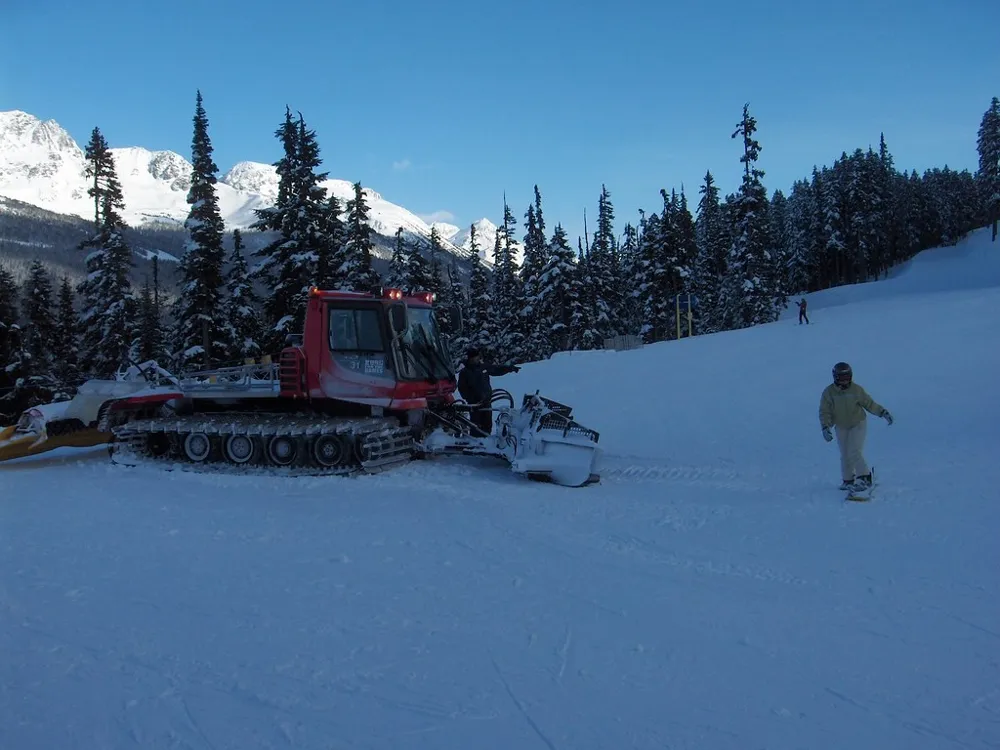
Cat skiing and heli-skiing are guided ways to ski untracked snow beyond the reach of chairlifts. Instead of riding a lift or climbing on skins, you ride uphill in a snowcat (a tracked vehicle of the kind resorts use for grooming) or a helicopter, then ski back down with a professional guide who chooses the terrain. A pickup waits near the bottom of each run, and the day repeats.
Both sit between resort skiing and self-guided backcountry touring. You get backcountry snow without carrying a pack full of food up a mountain, and the guide, not you, handles route choice and avalanche risk management. That makes them a popular step for strong resort skiers who want deep powder but aren't ready to tour on their own. If you want to earn your turns instead, start with our beginner's guide to backcountry skiing.
Heli-skiing has a long Canadian history. The earliest recorded heli-ski run was in British Columbia in 1953, and mountain guide Hans Gmoser founded Canadian Mountain Holidays (CMH), which combined lodging, transport and guiding, in 1965. Red Bull describes British Columbia's Selkirk Mountains as the birthplace of snowcat skiing too.
Cat Skiing vs Heli-Skiing at a Glance
| Factor | Cat Skiing | Heli-Skiing |
|---|---|---|
| How you get up | Heated snowcat cabin on tracks | Helicopter, landing at a chosen drop-off |
| Ride time | Slower; you rest and snack between runs | Fast; more time skiing, less time riding |
| Terrain | A set tenure reached by cat roads, often lots of trees | Larger and more remote areas, including alpine bowls and glaciers |
| Vertical per day | Lower; one cat day in British Columbia was reported at about a dozen runs and 15,000 vertical feet | Higher; CMH guests were reported to average 25,000–30,000 vertical feet a day |
| Bad weather | Cats can usually run in most weather | Wind, storms and poor visibility can ground the helicopter |
| Cost | Lower; often the more accessible first step | Higher, because helicopters are expensive to operate |
| Typical trip | Single days at resort-based or independent operations, plus multi-day lodges | Single days in the lower 48; multi-day lodge trips in British Columbia and Alaska |
Vertical figures are examples reported by Canadian Geographic for specific operations; your day depends on snow, weather, group pace and the operator.
How Cat Skiing Works
A cat-skiing day follows a simple loop. After check-in and a safety briefing, the group loads into the cat's cabin. The cat drives up a road or track to the top of a run, the guide leads the group down, and the cat meets you at the bottom for the next lap. Between runs you can warm up, drink water and eat a snack in the cabin, which makes the day easier on your body than touring.
- Runs per day: Red Bull says a full day can include as many as 12 runs. Park City Powdercats in Utah lists 8 to 12 guided runs a day, according to Powderhounds.
- Group size: Cats carry a group plus guides. Several US operators listed by Powderhounds rent a private cat for up to 12 guests, and also sell single seats in mixed groups.
- Lunch: Many day trips include lunch, either in the cat, on the snow or at a hut.
- Grouping by ability: Some operations run different cats for different ability levels; Powderhounds notes Steamboat Powdercats in Colorado does this.
Cat skiing in the US comes in three broad forms: in-resort tours on terrain next to the lifts, resort-attached operations, and independent operators on their own permit areas. Resort options can be the easiest introduction because you can ride lifts the same week and book a single day.
How Heli-Skiing Works
Heli-skiing replaces the snowcat with a helicopter that acts like a very fast chairlift. Guests get a helicopter safety briefing on how to approach, load and unload. The helicopter lands at a pre-chosen drop-off spot, the group unloads following the briefing, and once it has flown off you put on your skis and follow the guide down to a pickup point below. Nobody jumps from a hovering helicopter.
How the day is sold differs by region:
- British Columbia: Many lodge-based operators include a set amount of vertical in the package and offer multi-day stays.
- Alaska: Trips are mostly multi-day (often about a week), and many are billed by helicopter flight time because big storms cause frequent no-fly days, according to Powderhounds.
- Lower 48: Mostly single-day trips, typically around six runs, sometimes with lodging at a nearby resort.
Some US operators have a cat-skiing backup for weather days, and heli-assisted ski touring, where the helicopter gets you deep into the mountains and you tour from there, is growing in popularity.
What Ability Level Do You Need?
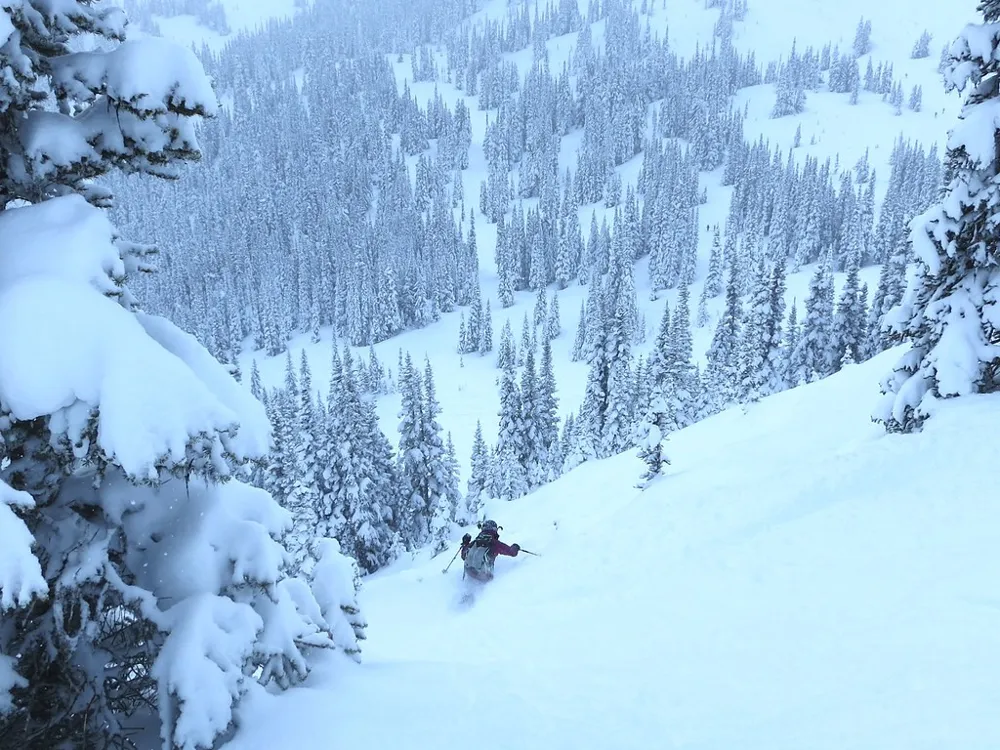
You don't need to be an expert, but you do need to be comfortable off groomed runs. Red Bull describes cat skiing as suited to intermediate and advanced skiers who already know how to turn in deep powder, and says it shouldn't be your first time on off-piste terrain. Operator listings tell the same story: many US cat and heli trips are rated "intermediate to expert" or "strong intermediate to expert," while some, especially in Alaska, start at advanced.
| Your Skiing | What Fits |
|---|---|
| Confident on groomed blues, little powder | Build skills first with a few resort powder days and some tree skiing |
| Comfortable on ungroomed blacks and in powder | Resort-based or intermediate-friendly cat skiing; tree-focused single-day heli trips |
| Strong in steep powder, trees and variable snow | Most cat and heli operations, including multi-day lodges |
| Expert, fit, experienced in big terrain | Alpine heli-skiing such as Alaska's steeper zones |
Expect a learning curve. A Canadian Geographic writer who called himself an intermediate snowboarder found it took a couple of days for his legs and technique to adjust to deep powder. Before you go, work through our guide on how to ski powder and practice linking turns in the trees at your home resort. Be honest with the operator about your level: groups are formed around the slowest skier, and putting yourself in the wrong group spoils the day for everyone, including you.
Fitness: Preparing Your Legs
Riding a cat or helicopter saves the climb, but you'll still ski far more ungroomed vertical than on a normal resort day, often in deep or heavy snow. Red Bull lists good endurance as a requirement. Tired legs also make falls, and getting up from them in deep snow, more likely.
- Start early: Build leg strength and endurance for several weeks before the trip with squats, lunges, step-ups and cardio. Our ski workout guide has a full plan.
- Ski before you go: A few full resort days, ideally in powder or soft bumps, prepare your legs better than gym work alone.
- Pace the day: Eat and drink at every pickup, and skip a run if you need to. Guides would rather you rest than get hurt.
- Altitude: Some US operations sit at high elevation, so arrive a day early if you're coming from sea level.
Safety: Guides, Avalanche Gear and Briefings
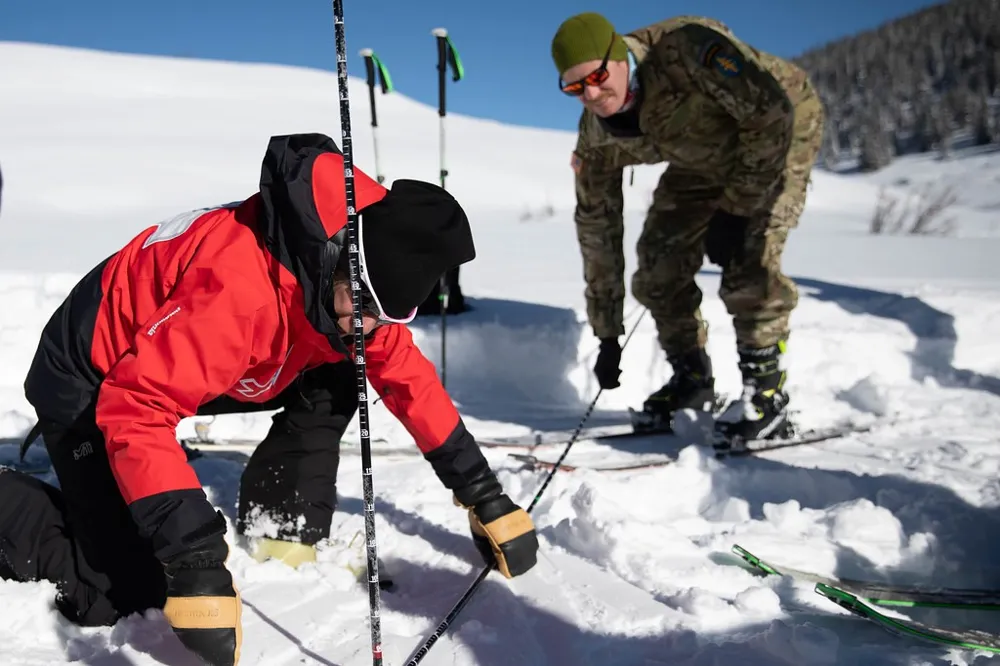
Both activities happen in avalanche terrain, so the safety system is what you're paying for as much as the transport. Avalanches are the main hazard, and tree wells, the deep, loose snow around tree trunks, are another serious one in forested terrain. Guided operations manage those risks in a few layers.
Certified Guides
In Canada, CMH says its guides are certified through the Association of Canadian Mountain Guides (ACMG), the International Federation of Mountain Guides Associations (IFMGA) or the Canadian Ski Guide Association (CSGA), and Mica Heliskiing lists ACMG or IFMGA certification. Guides assess the snowpack daily, choose slopes to match conditions and can avoid hazardous terrain entirely. In the US, ask about the guides' avalanche training and the operator's permits; our backcountry guide explains AMGA certification.
Avalanche Rescue Gear
Guests typically carry an avalanche transceiver (beacon), probe, shovel and radio. Practice is part of the package: CMH requires safety training on arrival covering transceiver, probe, shovel and radio use, and Mica Heliskiing's training includes a mock rescue.
Avalanche Airbags
Many operators now supply airbag packs, but it isn't universal. Mica Heliskiing lists a Mammut airbag pack in its guest gear, and Canadian Geographic reported that cat skiers at Skeena Cat Skiing were equipped with airbags. CMH lists avalanche flotation devices as an optional rental you request when booking. An airbag can help keep you near the surface in a slide, but it doesn't guarantee survival; see how they work in our ski backpack guide.
Your Part
- Sign and read the waiver; these trips carry real risk.
- Listen to every briefing and follow the guide's line and spacing instructions.
- Always ski with a partner, keep them in sight, and stay well clear of tree wells.
- Learn your beacon before the trip if you can, and consider an avalanche awareness class.
- Check that your travel insurance covers heli-skiing or off-piste skiing; many policies exclude it.
This guide is general information, not safety training. Follow your operator's instructions and use official avalanche forecasts such as those linked from avalanche.org if you ski the backcountry on your own.
Fat Skis and What to Bring
Deep, untracked snow is much easier on wide skis. REI's guidance puts dedicated powder skis at about 115 mm or wider underfoot, and all-mountain skis at roughly 90–114 mm. Heli-ski packages usually include freeride skis and poles, and many cat operations do too or rent them; Red Bull lists powder skis among the gear to have. Using the operator's powder skis saves you hauling your own and means you have the right tool on a deep day. If you bring your own, ask whether the operator's terrain suits them. More on width and rocker is in our guide to the best skis.
| Bring | Why |
|---|---|
| Waterproof jacket and pants with a powder skirt | Deep snow gets everywhere; see what to wear skiing |
| Warm base and mid layers | You alternate between hard skiing and sitting in a cab or waiting for pickups |
| Helmet | Trees and hidden obstacles; see our helmet guide |
| Goggles plus a spare lens or pair | Flat light and fogging; Red Bull suggests double-lens goggles and anti-fog |
| Spare gloves, neck gaiter, sunscreen | Gloves get soaked in deep snow |
| Well-fitted boots | Rental skis are common, but your own boots make a long day comfortable |
| Water and snacks | Many operators provide lunch, but extra fuel helps |
Our ski trip packing list covers the rest.
Where Cat Skiing and Heli-Skiing Happen
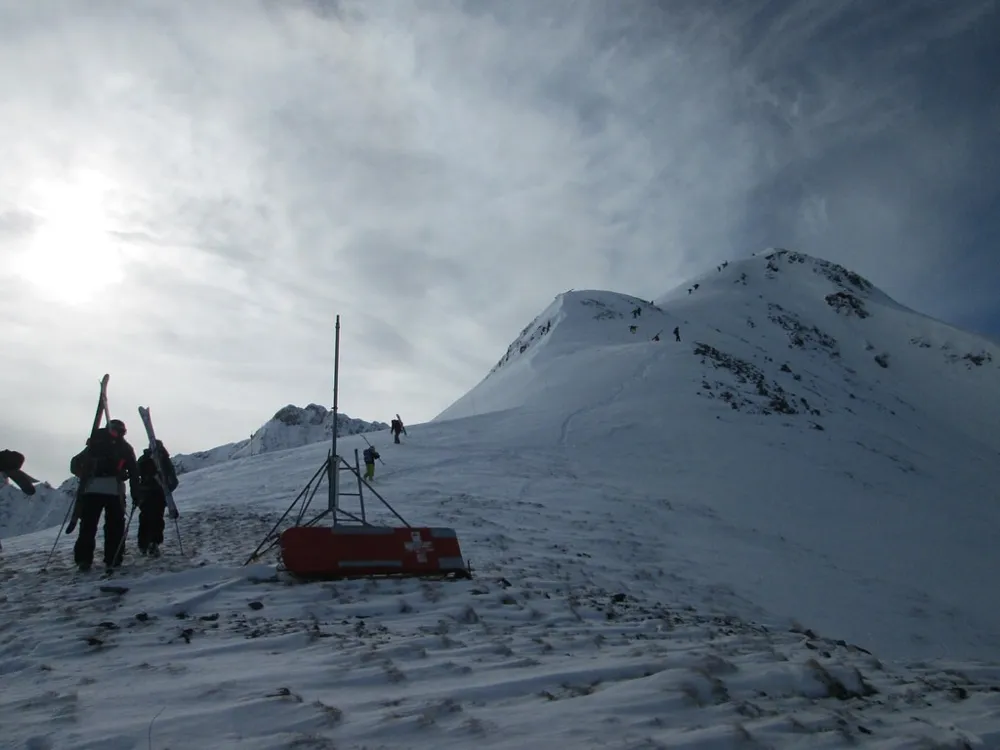
Both need big snowfalls, permitted terrain and access roads or helicopter bases. The operators below are examples named in the sources we checked; it's not a ranking or a complete list.
British Columbia, Canada
British Columbia is the best-known region for both. Wikipedia calls British Columbia and Alaska the most popular heli-skiing areas in North America. CMH runs 11 heli-ski destinations, including the Bugaboos, Monashees and Revelstoke, and Mica Heliskiing also operates in BC. Cat-skiing examples include Skeena Cat Skiing near Smithers in the north and Big Red Cats near Rossland. Many Canadian operators belong to HeliCat Canada, the industry's trade association.
Alaska
Alaska is known for steep, mostly treeless alpine terrain. Valdez and nearby Thompson Pass host several heli operations, including Valdez Heli Ski Guides and Black Ops Valdez, and there are others at Cordova (Points North Heli Adventures), Haines (SEABA) and Girdwood (Chugach Powder Guides). Most trips are multi-day, and weather days are common.
Colorado
Colorado has many cat-skiing options, including Steamboat Powdercats, Aspen Powder Tours, Keystone Adventure Tours, Chicago Ridge Cat Skiing at Ski Cooper, Durango Cat Skiing, Silverton Powdercats and Jones Pass Cat Skiing near Denver. Heli-skiing is offered by Helitrax in Telluride, and there is heli-skiing near Silverton Mountain. See also our Colorado ski resorts guide.
Utah
Park City Powdercats is an independent cat operation. For heli-skiing, Wasatch Powderbird Guides flies in the Wasatch Mountains, and both Snowbird and Alta list helicopter skiing on their websites. Our Utah resorts guide covers the lift-served side.
Elsewhere in the US
Idaho has cat skiing at Soldier Mountain and with Selkirk Powder Company at Schweitzer, plus Sun Valley Heli Ski. Ruby Mountain Heli flies in Nevada, Pacific Crest Snowcats runs near Lake Tahoe, and Smugglers' Notch in Vermont has offered snowcat tours. Powderhounds also notes cat skiing in Montana, Oregon, Washington and Alaska.
The Alps
Rules in Europe are stricter. According to Wikipedia, heli-skiing is banned in Germany, France banned it in 1985, and Austria allows only one landing site. Switzerland allows it at designated landing sites, and Zermatt is the most visited heli-skiing location in the Alps. Check current local rules, as they change.
Cost, Weather and Other Trade-Offs
We don't list prices because they change every season, but the pattern is consistent: heli-skiing costs considerably more than cat skiing because helicopters are expensive to run. Single days cost less than lodge weeks, and private cats or helicopters cost the most. Packages differ in what they include (lodging, meals, rental powder skis, airbags, guaranteed vertical), so compare what you get rather than the headline rate.
- Weather risk: Cats can usually keep running in poor weather. Helicopters can be grounded by wind, snow and flat light, and refund or credit policies for lost days vary.
- Vertical: Heli-skiing usually delivers more runs and vertical per day; cat skiing gives longer breaks between runs.
- Terrain variety: Helicopters reach alpine bowls and glaciers. Cat tenures are often tree-heavy, which is a plus on stormy days.
- Atmosphere: Cat days are social, with the group sharing the cab all day. Multi-day heli lodges are often more of a destination trip.
Many skiers try cat skiing first, then decide whether heli-skiing is worth the extra cost for them.
Questions to Ask Before You Book
- What ability level do you require, and how do you group guests? Can a mixed-ability group stay together?
- How many guests per guide and per cat or helicopter?
- What's included: transceiver, probe, shovel, radio, airbag pack, powder skis, lunch, transport?
- What are your guides' certifications and permits, and are you a member of an industry association such as HeliCat Canada?
- How many runs or how much vertical is typical, and is any vertical guaranteed?
- What happens on a weather day: refund, credit, cat backup or rebooking?
- What's the cancellation policy, and do you recommend specific insurance?
- Where do we meet, how long is the drive or flight, and what time does the day end?
- Do you take snowboarders and splitboarders, and are there age or fitness requirements?
Book early for popular dates, especially for multi-day lodges, and check current details directly with the operator.
Related Guides
- Backcountry Skiing for Beginners
- How to Ski Powder
- Best Ski Backpacks
- Best Avalanche Beacons
- Types of Skiing
- How to Plan a Ski Trip
Frequently Asked Questions
What is the difference between cat skiing and heli-skiing?
Both are guided powder skiing away from lifts. Cat skiing uses a tracked snowcat to drive groups uphill, while heli-skiing uses a helicopter, which is faster and reaches bigger, more remote terrain but costs more and is grounded more often by bad weather.
Do you have to be an expert to go cat skiing or heli-skiing?
No, but you should be a solid intermediate or better who can ski ungroomed snow and turn in powder. Many operators list their trips from intermediate or strong intermediate to expert, and Alaska heli terrain usually suits advanced skiers.
Is cat skiing cheaper than heli-skiing?
Generally yes. Helicopters are expensive to run, so heli-skiing usually costs much more per day than cat skiing. Prices vary widely by operator, region and trip length, so check each operator's current rates.
Is heli-skiing safe?
It carries real risks, mainly avalanches and tree wells, which guided operations manage with certified guides, terrain choices, avalanche rescue gear and mandatory safety training. No operator can remove the risk entirely, so listen to your guide and follow every briefing.
Do you jump out of the helicopter when heli-skiing?
No. The helicopter lands at a chosen drop-off spot, and the group unloads on the snow following the safety briefing before skiing down with the guide.
Do cat skiing and heli-skiing operators provide avalanche gear?
Most guided operations supply or require a transceiver, probe, shovel and radio, and many include or rent avalanche airbag packs. What's included varies, so confirm with the operator when you book.
Can snowboarders go cat skiing and heli-skiing?
Yes. Most operators take both skiers and snowboarders, and the same ability guidance applies: be comfortable riding powder and trees. Splitboards aren't needed because the cat or helicopter does the climbing.