Ski Workout: Get Your Legs Ready Before the First Chair (2026)
A preseason ski workout built from strength, power, balance and cardio exercises, with a sample weekly plan and a warm-up to do before your first run.
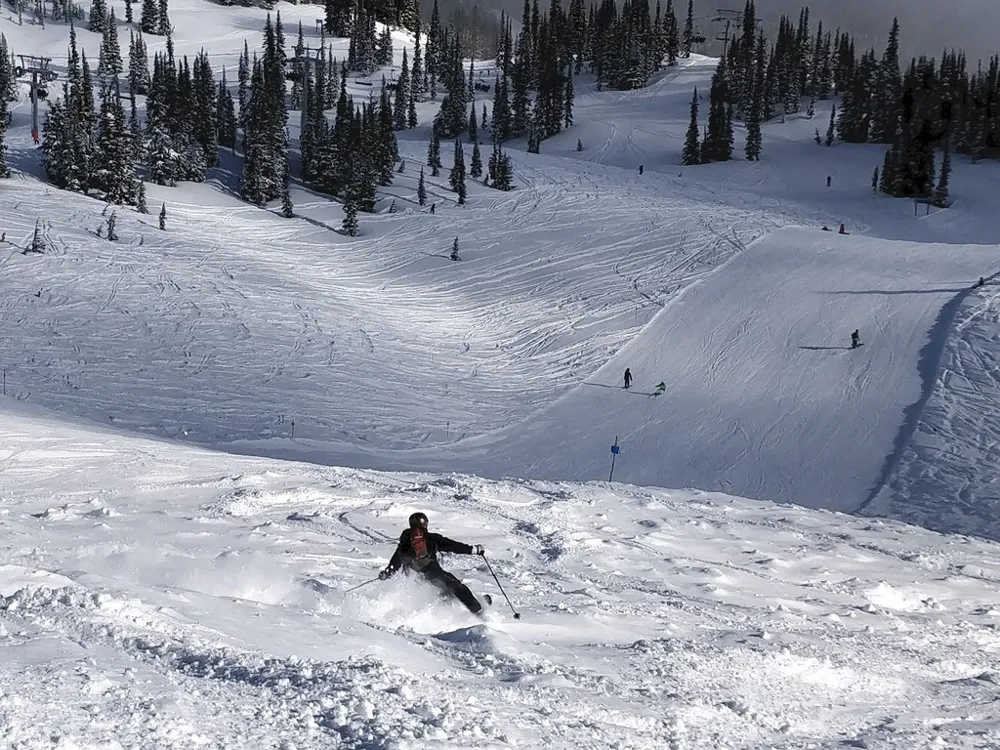
Why Train for Skiing?
Skiing asks your legs to hold a bent, athletic stance for minutes at a time, absorb bumps, push against the edges in every turn and recover from small slips. A preseason ski workout builds that strength and endurance before the lifts open, so your first days feel less like a shock to the system and your legs last longer into the afternoon.
Fitness also matters for safety. The American Academy of Orthopaedic Surgeons (AAOS) notes that knee injuries are very common in skiing, particularly to the anterior cruciate ligament (ACL), and that many ski injuries happen at the end of the day, when people push for one last run on tired legs. Training will not make you injury-proof, but stronger, better-conditioned legs tire later and give you more control.
This guide covers when to start, the exercises that matter most, a sample weekly plan and the warm-up to do on the mountain. It is general fitness information, not medical advice. Check with a doctor before starting a new exercise program, especially if you have a heart condition, a past injury or any pain, and see a physical therapist or other qualified professional if an exercise hurts.
When to Start and How Often to Train
Most ski fitness guides agree that a few weeks of preparation is the minimum, but they differ on how many. Earlier is better if you have the time, because it lets you start light and build up slowly.
| Source | Suggested start before your first ski day | Suggested frequency |
|---|---|---|
| Hospital for Special Surgery (HSS) | 4 to 6 weeks before your trip | Strength 2 to 3 times a week, 1 to 3 sets of 8 to 12 reps |
| REI (plan by a physical therapist) | 6 to 8 weeks before the season | Strength 2 to 3 times a week, plus about 30 minutes of cardio 2 to 3 times a week |
| Cleveland Clinic | At least 6 to 8 weeks before your first trip | Around 3 sets of 10 to 15 reps per exercise, building load over time |
| Ski Utah | 8 to 12 weeks before your first day on snow | Strength and plyometrics 3 to 4 times a week, cardio at least twice a week |
A practical approach for most recreational skiers: aim for six to eight weeks, with two or three strength sessions and two or three cardio sessions a week, and at least one rest or easy day. If your trip is only a couple of weeks away, a shorter program still helps. Just keep the effort moderate so you arrive rested, not sore.
What a Good Ski Workout Builds
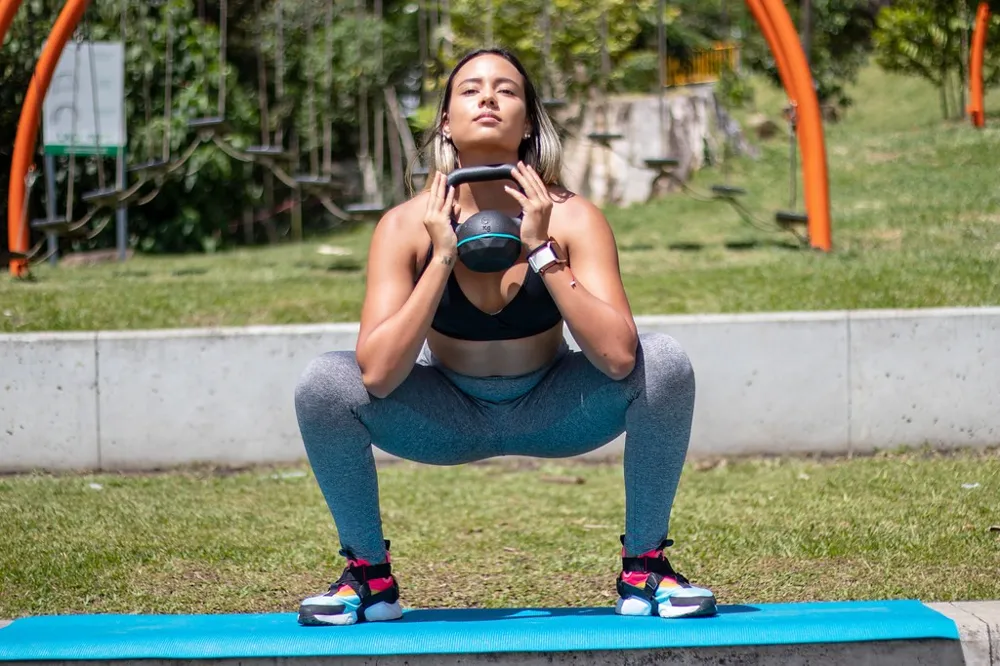
Competitor plans and sports medicine sources all cover the same four areas. A balanced routine includes each one every week.
| Component | Why it matters on skis | Example exercises |
|---|---|---|
| Leg and hip strength | Holds your stance, steadies the knees and powers each turn | Squats, lunges, single-leg squats, bridges, band walks |
| Power (plyometrics) | Quick edge changes, moguls, absorbing and recovering from bumps | Skater hops, jump squats, tuck jumps, lateral box jumps |
| Core and balance | Keeps your upper body quiet and centered over your skis | Planks, side planks, dead bugs, chops, single-leg balance |
| Cardio endurance | Lets you ski longer at altitude without fading | Cycling, running, stair climbing, rowing, ski machines |
Flexibility and mobility round it out. Tight hips, hamstrings and calves make it harder to stay low and centered, so add some stretching after each session.
Strength Exercises for Skiing
Start with body weight and add load (dumbbells, a kettlebell or a band) only when you can do every rep with good form. A common target is 2 to 3 sets of 8 to 15 reps. Keep your knees tracking over your toes and stop any exercise that causes pain.
Squats
The foundation of any ski workout. Stand with feet about hip- to shoulder-width apart, sit your hips back and down until your thighs approach parallel, then drive back up. Cleveland Clinic suggests pausing for a few seconds at the bottom, which mimics holding a ski stance. Progress to goblet squats with a weight held at your chest.
Lunges and Reverse Lunges
Lunges train each leg on its own, as skiing does. Reverse lunges (stepping back) are often easier on the knees than forward lunges. Walking lunges with a twist of the torso over the front leg add core rotation, which is how REI's physical therapist builds the move.
Single-Leg Box Squats
Stand on one leg in front of a bench or box, lower slowly until you lightly touch it, then press back up through the heel without letting the knee cave inward. Onthesnow's U.S. Ski Team exercise list uses a weighted version for single-leg strength and balance. Start with body weight and a higher box.
Romanian Deadlifts
Hinge at the hips with a slight knee bend, lower a weight along your legs, then stand tall by squeezing your glutes. This trains the hamstrings and the back of the body, which balance out all the quad work skiing demands. A single-leg version adds a balance challenge.
Glute Bridges With an Adductor Squeeze
Lie on your back with knees bent, squeeze a pillow or small ball between your knees and lift your hips. This works the glutes and inner thighs together, two muscle groups that help keep the knees in line.
Lateral Band Walks
Put a resistance loop band around your ankles or above your knees, sink into a quarter squat and step sideways for a set distance, then return. Band walks target the glute medius and other hip stabilizers. The REI plan links weak hips to knees that dive inward, and hip strength is a recurring theme across ski training guides.
Calf Raises
Rise onto your toes, pause and lower slowly. Ski boots lock the ankle, but the calves and feet still work to keep you balanced fore and aft.
Plyometrics and Power Exercises
Jumping drills build the quick, springy strength you use in short turns, moguls and when you land after a bump. Add them only once you have a few weeks of strength work behind you, land softly with bent knees, and keep sets short so form stays sharp. Skip or swap them if you have knee or back problems.
- Skater hops (lateral bounds): leap sideways from one foot to the other, landing softly and holding briefly before the next hop. This copies the side-to-side weight transfer of a turn.
- Jump squats: squat, then jump straight up and land back into the squat.
- Tuck jumps: jump and bring the knees toward your chest. Ski Utah's plan includes these on strength days.
- Lateral box jumps: jump sideways onto and off a low, stable box. Start low and raise the height as your confidence grows.
- Jumping lunges: switch legs in the air between lunges. These are hard, so start with a few reps per leg.
Joint-friendly swaps: squat holds, step-ups and slow single-leg balance drills build similar strength without the impact.
Core and Hip Stability
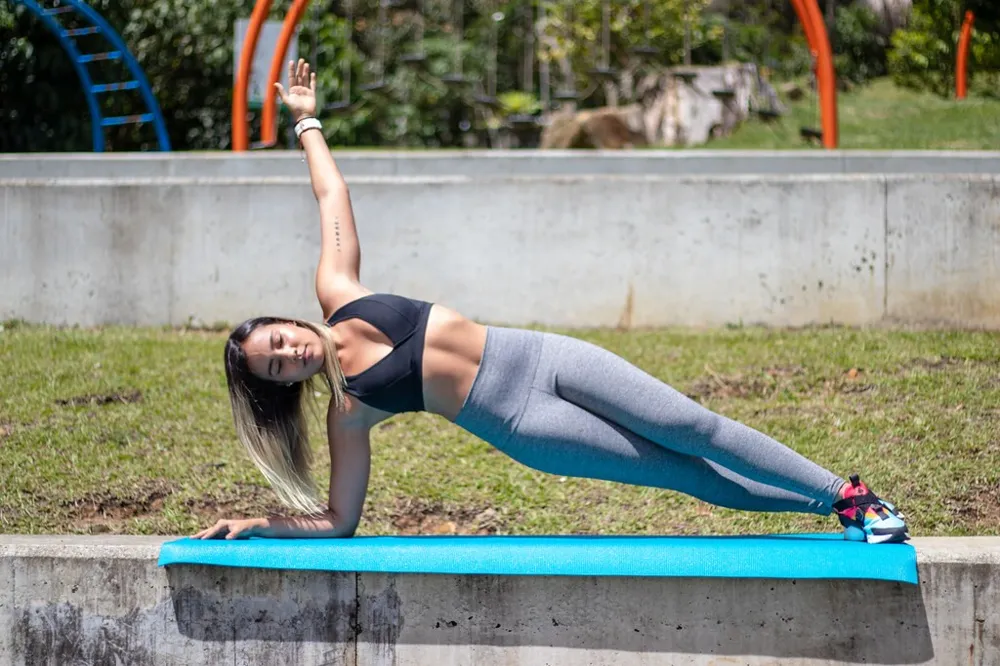
A strong core keeps your upper body quiet while your legs work, and helps you recover your balance when a ski catches. "Core" here means more than the abs: the lower back, glutes and hips are part of it too.
| Exercise | How to do it | Starting target |
|---|---|---|
| Plank | Forearms and toes on the floor, body in a straight line | Hold 15 to 30 seconds, build up over time |
| Side plank | On one forearm, hips lifted, body straight | Hold 15 to 30 seconds per side |
| Dead bug | On your back, slowly lower opposite arm and leg while keeping your lower back down | 8 to 10 per side |
| Band or cable chop | Pull a band diagonally from high to low across your body, rotating through the torso | 10 to 15 per side |
| Russian (oblique) twist | Seated, lean back slightly and rotate side to side | 10 to 15 per side |
| Back extension | Face down, lift chest and arms a few inches, then lower | 8 to 12 reps |
Balance Training
Skiing happens on a moving, slippery surface, so balance work pays off quickly. Start simple and add difficulty as each level feels easy.
- Single-leg stand: balance on one foot for 30 seconds. Then close your eyes, or turn your head side to side.
- Single-leg reach: on one leg, reach the other foot forward, sideways and back like the hands of a clock. REI's "hip clock" works this way.
- Unstable surfaces: stand, squat or hold planks on a balance board, wobble cushion or half-ball trainer. Ski Utah's plan uses one-minute single-leg holds on a half-ball trainer.
- Add movement: combine single-leg balance with a light band pull or a gentle hop and stick the landing.
Two inexpensive tools cover most of the band and balance work in this guide:
Fit Simplify Resistance Loop Exercise Bands
A set of five natural-rubber loop bands, each 12 by 2 inches, in five color-coded resistance levels from extra light to extra heavy. It comes with a carry bag and an illustrated instruction guide. Useful for band walks, glute bridges, chops and travel warm-ups.
Good to Know
- Five resistance levels in one set
- Small enough to pack in a ski bag
Watch Out For
- Natural rubber; not for people with latex allergies
- Individual band strengths are color-coded rather than marked in pounds
Yes4All Wooden Wobble Balance Board
A round wooden wobble board, 15.75 inches across, with an anti-slip top and 360-degree rotation. The maker lists a 300-pound weight capacity and says it can be used for standing balance drills, squats, push-ups and planks.
Good to Know
- Tilts in every direction for full balance work
- Compact and easy to store
Watch Out For
- Start next to a wall or sturdy support until you are steady
- Balance drills add to, but don't replace, practice on snow
Cardio and Endurance for Skiing
A day on skis can last hours, often at altitude, so aerobic fitness keeps your legs and lungs from fading by mid-afternoon. HSS suggests starting with 10 to 15 minutes of cardio at a moderate pace and building up to about 45 minutes. Good options include:
- Cycling, indoors or out, which builds leg endurance with little impact.
- Stair climbing or hiking, which HSS notes works many of the same muscles as skiing.
- Running, rowing or swimming for general endurance.
- Intervals: once you have a base, alternate short hard efforts with easy recovery, for example 30 seconds hard and 90 seconds easy, progressing to longer hard efforts over the weeks.
- Ski machines: ski ergometers and slide boards copy the poling or side-to-side motion of skiing. See our guide to the best ski machines if you want one at home.
Planning a backcountry trip? Uphill skiing is far more aerobic than resort skiing; see our ski mountaineering guide and backcountry skiing for beginners for what that involves.
A Sample Weekly Ski Workout Plan
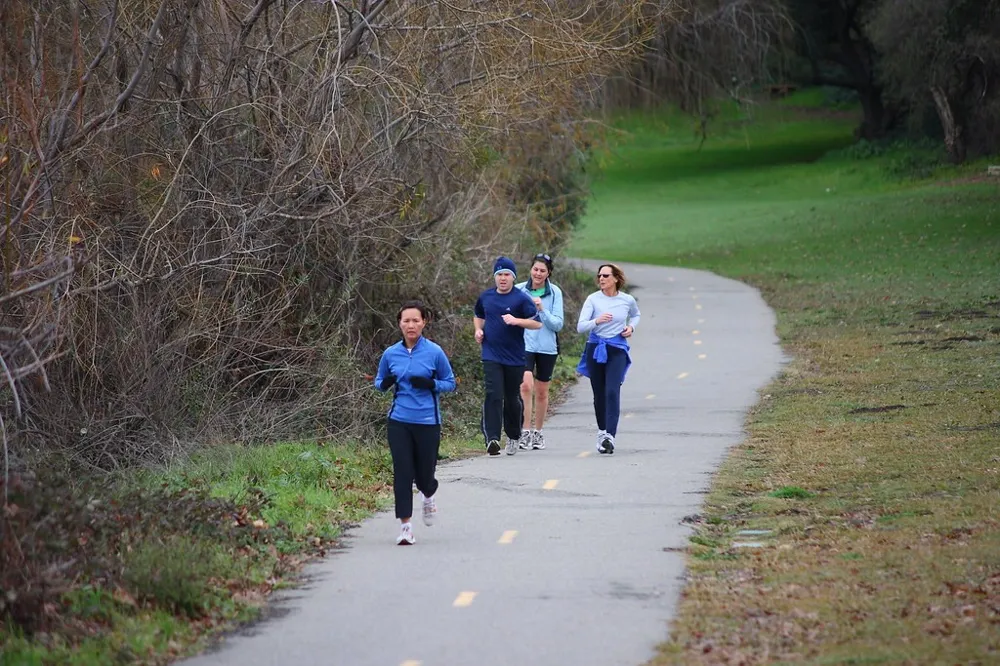
This plan combines the elements above into a simple week for a recreational skier. Adjust it to your schedule and fitness, start at the low end of each range and add sets, load or time gradually. Warm up for 5 to 10 minutes before each session.
| Day | Focus | What to do |
|---|---|---|
| Monday | Strength A | Squats, reverse lunges, Romanian deadlifts, band walks, plank |
| Tuesday | Cardio | 30 to 45 minutes of cycling, hiking or running at a steady pace |
| Wednesday | Core and balance | Side planks, dead bugs, chops, single-leg balance and wobble board work |
| Thursday | Strength B and power | Single-leg box squats, glute bridges, calf raises, then skater hops and jump squats |
| Friday | Rest or easy movement | Walk, gentle yoga or stretching |
| Saturday | Cardio intervals | Bike, run, rower or ski machine with short hard efforts and easy recovery |
| Sunday | Rest | Full rest or an easy hike |
Short on time? A circuit of squats, lunges, skater hops, a plank and a side plank, repeated two or three times with short rests, covers the essentials in about 20 minutes. In the week before a trip, ease off so your legs arrive fresh.
How to Warm Up Before Skiing
Cold muscles are less ready for hard work, and AAOS notes that research has shown cold muscles are more prone to injury. Its advice is to warm up with jumping jacks or running or walking in place for 3 to 5 minutes before you ski. A full on-mountain warm-up takes only a few more minutes:
- Raise your heart rate (3 to 5 minutes): brisk walk from the car, march or jog in place, or do jumping jacks before you put on your boots.
- Dynamic moves in your boots (2 to 3 minutes): leg swings forward and back and side to side while holding your poles for support, hip circles ("open the gate, close the gate"), arm circles and shoulder rolls.
- A few squats and lunges: 10 bodyweight squats and a handful of lunges wake up the legs before you click in.
- Easy first runs: make your first one or two runs on easy terrain at a relaxed pace. HSS describes these as part of the warm-up.
Save long, static stretches for the end of the day. Before skiing, dynamic movement is the better choice.
Cool-Down, Recovery and In-Season Training
After skiing or a workout, hold gentle static stretches for the quads, hamstrings, hip flexors, glutes and calves for about 30 seconds each, as HSS suggests. Foam rolling, sleep, food and water all help you recover for the next day.
On the mountain, listen to your legs. AAOS advises stopping when you are tired or in pain and not attempting the hardest run of the day after a full day on the slopes. Drink water through the day, too: HSS links both fatigue and dehydration to a higher injury risk.
Once the season starts, many skiers keep one or two shorter strength and balance sessions a week to hold their fitness. If you only ski a few weekends a winter, a maintenance routine helps your legs stay ready between trips.
Common Ski Training Mistakes
- Starting too late or too hard: cramming hard workouts into the last week leaves you sore on your trip. Start earlier and build gradually.
- Only training the quads: skipping hamstrings, glutes and hips leaves the knee less supported. Include bridges, deadlifts and band walks.
- Letting the knees cave in: on squats, lunges and landings, keep your knees in line with your toes.
- Skipping cardio: strong legs still tire quickly without an aerobic base.
- Ignoring pain: discomfort from effort is normal; sharp or joint pain is not. Stop and get it checked by a professional.
- Treating fitness as a substitute for technique: lessons improve control and efficiency more than any workout. Our how to ski guide and how to turn and stop on skis cover the basics.
Keep Exploring
Gear and comfort matter as much as fitness. Well-fitted boots let your muscles move your skis efficiently; see how to choose ski boots and our best ski boots. Dress in layers with our what to wear skiing guide, wear a helmet from our ski and snowboard helmets list, and check our ski trip packing list before you go. Ready for steeper or softer snow? Try how to ski powder or ski tricks for beginners. Skaters and riders can find a board-specific routine in our exercises for skating guide, and more on the sport at our skiing hub.
Frequently Asked Questions
How many weeks before ski season should I start training?
Common advice is to start at least four to eight weeks before your first ski day. Sports medicine and ski sources range from four to six weeks up to eight to twelve weeks, so starting earlier gives you more time to build up gradually.
What muscles do you need for skiing?
Mainly the quads, glutes, hamstrings and hip muscles that hold you in a flexed stance and steady your knees, plus the core and calves. Cardio fitness matters too, because ski days are long.
Can I train for skiing at home without a gym?
Yes. Squats, lunges, single-leg work, bridges, planks, side planks, skater hops and a resistance loop band cover most of a ski workout. A balance board or step adds variety.
How often should I do a ski workout?
Two or three strength sessions a week plus two or three cardio sessions is a common target. Leave at least one easy or rest day each week.
What is the best warm-up before skiing?
A few minutes of light movement to raise your heart rate, such as marching, jumping jacks or a brisk walk, then leg swings, hip circles, lunges and squats, and an easy first run.
Does training prevent ski injuries?
Being fit lets you ski with better control and less fatigue, but no workout removes the risk of injury. Take lessons, wear a helmet, keep bindings properly adjusted and stop when you are tired.
Should I keep training during ski season?
A shorter maintenance routine of one or two strength sessions a week helps many skiers hold the fitness they built in the fall.