Ski Boot Flex Explained: Find the Right Stiffness (2026)
Flex numbers like 90 or 120 describe how stiff a boot is. Here's what they mean and which one suits your skiing.
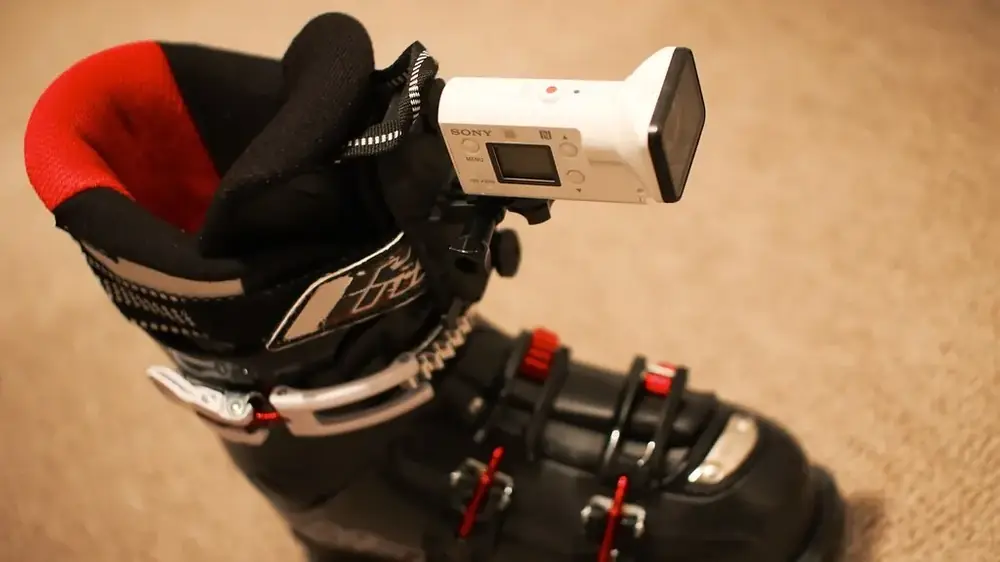
What Is Ski Boot Flex?
Flex is a number, usually from about 50 to 140, that describes how stiff a ski boot is when you bend forward. A softer boot (lower number) is more comfortable and forgiving; a stiffer boot (higher number) transfers power to the ski more directly, giving more control at speed. There's no universal standard, so flex varies between brands.
Flex Chart by Ability
| Skier Level | Men's Flex (approx.) | Women's Flex (approx.) |
|---|---|---|
| Beginner | 60–80 | 50–70 |
| Intermediate | 80–100 | 70–90 |
| Advanced | 100–120 | 90–110 |
| Expert / racer | 120–140+ | 110–130 |
Another Common Chart
Ranges vary between retailers and brands. REI's ski boot guide, for example, groups flex like this:
| Level | Men | Women |
|---|---|---|
| Beginner (soft) | Under 85 | Under 75 |
| Intermediate/advanced (medium) | 90–110 | 80–95 |
| Expert (stiff) | Over 115 | Over 100 |
The overlap between charts is a reminder that flex is a starting point, not a precise prescription.
What Changes the Flex You Need
| Factor | Effect |
|---|---|
| Body weight | Heavier skiers need stiffer boots |
| Height and leverage | Taller skiers can bend boots more easily |
| Skiing style | Aggressive, fast skiing suits stiffer boots |
| Terrain | Moguls and park often suit slightly softer boots |
| Temperature | Boots stiffen in the cold |
| Brand | Ratings aren't standardized |
Soft vs Stiff
| Softer Flex | Stiffer Flex | |
|---|---|---|
| Comfort | More comfortable | Firmer |
| Control | Forgiving | Precise, powerful |
| Speed | Less stable at high speed | Stable at speed |
| Best for | Learning, relaxed skiing | Advanced and aggressive skiing |
Examples Across the Range
Rossignol Pure Comfort 60 (Women's, Soft)
A soft, relaxed-fit women's boot designed for beginners and comfort-focused skiers.
Check Price on AmazonRossignol Alltrack 90 (Intermediate)
A walk mode boot with a 90 flex for intermediate skiers.
Check Price on AmazonAtomic Hawx Prime 100 (Intermediate to Advanced)
Atomic's medium-width boot with a 100 flex.
Check Price on AmazonTecnica Mach1 MV 120 (Advanced)
A 120-flex all-mountain boot with a 100mm mid-volume last.
Check Price on AmazonFlex Is Only Part of Fit
- Mondopoint size: roughly your foot length in centimeters; see the ski boot size chart.
- Last width: the inside width at the forefoot, often around 97–106mm. Under about 100mm is narrow, 100–102mm average, and over 102mm wide.
- Liner: heat-moldable liners can be shaped for a closer fit; a boot fitter can help.
- Walk mode: a rear lever on some boots frees the cuff for walking and touring.
Temperature Changes Flex
Plastic shells stiffen in the cold and soften in warm rooms, so a boot that feels soft in the shop will feel stiffer on a frigid day. Keep that in mind when comparing boots indoors.
Tips
- Try boots on and flex them in the shop, remembering they'll feel stiffer on the hill.
- Don't choose a boot too stiff for your ability; it can make learning harder.
- Some boots let you adjust flex with a switch or removable screws.
More: how to choose ski boots, the size chart, best ski boots and women's ski boots.
Frequently Asked Questions
What does ski boot flex mean?
It's a number that describes how much force it takes to bend the boot forward. Higher numbers mean stiffer boots.
What flex should a beginner use?
Beginners often choose around 60–80 for men and 50–70 for women.
Is ski boot flex the same across brands?
No. There's no universal standard, so a 100 in one brand can feel different from a 100 in another.
Does weight affect which flex I need?
Yes. Heavier skiers usually need a stiffer boot than lighter skiers of the same ability.
Do boots feel stiffer in the cold?
Yes. Plastic stiffens in cold temperatures, so boots often feel stiffer on the mountain than in a warm shop.