Climbing Skins That Grip, Glide and Stay Stuck (2026)
Nylon for grip, mohair for glide, blends for both: climbing skins from G3, Black Diamond and Pomoca, plus how to size, trim, wax and care for them so they keep sticking.
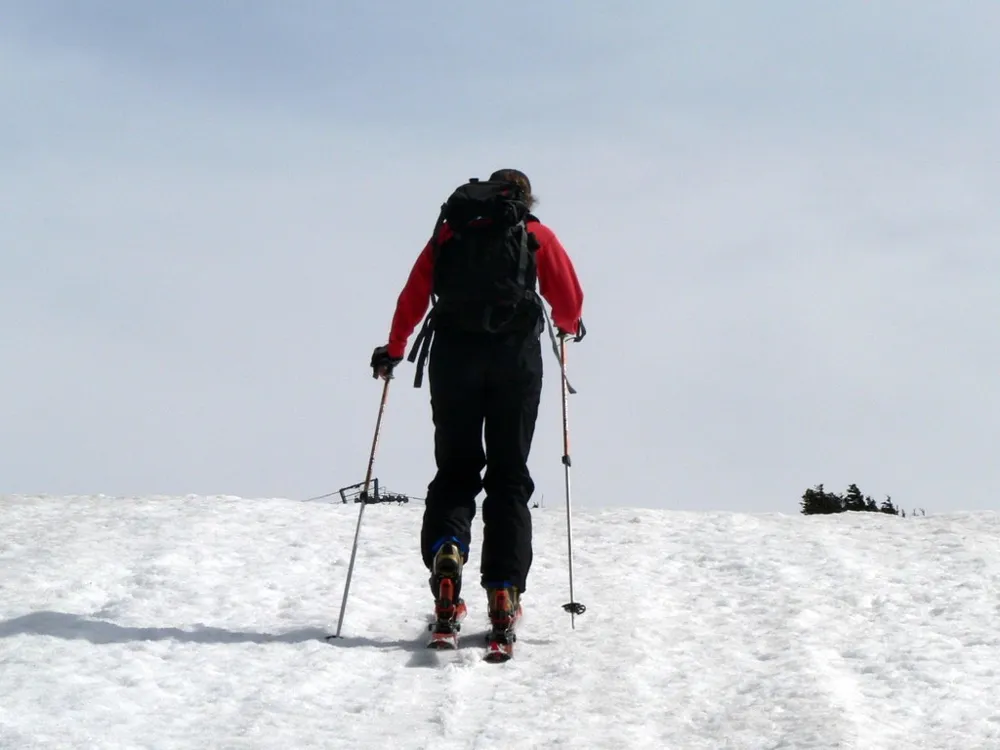
How Climbing Skins Work
Climbing skins are strips of fabric that stick to the base of your skis so you can walk uphill without sliding back. The fabric, called plush, has short, angled fibers that lie flat when you slide the ski forward and dig into the snow when the ski tries to slip backward. A layer of reusable adhesive on the back holds the skin to the base, and tip and tail hardware keep the ends from peeling off. At the top of the climb you rip the skins off, lock your heels and ski down.
Skins are part of every touring setup, whether you're on backcountry touring skis, a splitboard or an alpine ski with hybrid bindings. Choosing them comes down to four things: the plush material (nylon, mohair or a blend), the adhesive (standard glue or a glueless or hybrid adhesive), the tip and tail attachments, and getting the size and trim right for your skis. Our picks are below, followed by how to choose, size, trim, wax and care for skins.
Black Diamond Ascension
Best for grip and new tourers
- Nylon plush for grip
- Gold Label glue
- STS tail with 15 cm of adjustment
Pomoca Climb 2.0
Best mohair-blend all-rounder
- From Swiss skin maker Pomoca
- Several widths plus a splitboard version
- Balance of glide and grip
Climbing Skins Compared
| Skin | Plush | Adhesive | Tip | Tail | Sizing |
|---|---|---|---|---|---|
| G3 Alpinist Glide | 65% mohair, 35% nylon | ChannelBond, rated to -30°C/-22°F | Self-aligning articulating hands | Camming clip and rubber strap | 115, 130, 145 mm; four length sizes with 16 cm adjustment |
| Black Diamond Ascension | Nylon | Gold Label glue | Reinforced tip loop | STS adjustable tail | Five fixed-length sizes, 152 to 192 cm; trim to width |
| Pomoca Climb 2.0 | Mohair-nylon blend (check current version) | Pomoca adhesive | Varies by version | Varies by version | Several widths; splitboard version |
| G3 Escapist Universal | Nylon | Non-toxic adhesive, removable rip strip | Stainless steel hands (100 to 140 mm) | Tail connector | 70 to 140 mm; cut to length |
| Black Diamond Glidelite | Mohair mix | Gold Label glue | Tip loop | STS adjustable tail | Fixed-length sizes; splitboard version |
Details come from each maker's product page as of November 2026. Skin lines are updated often, so check the current version, the width range and what comes in the box (trim tool, skin savers, bag) before buying.
The Best Climbing Skins
1. G3 Alpinist Glide
G3's Alpinist Glide is the mohair-blend version of its main touring skin. G3 lists a 65% mohair, 35% nylon "Glide Plush" designed for cold, dry snow, paired with its new ChannelBond adhesive, which uses a vertical channel pattern and is rated to perform down to -30°C/-22°F. G3 says the glue stays tacky for reapplication and that you can store the skins glue to glue without skin savers.
At the tip, self-aligning articulating hands pivot to fit different tip shapes, with a snow-shedding connection that limits buildup under the tip. At the tail, a camming clip with a low-profile locking anchor pairs with a rubber tail strap. Widths are 115, 130 and 145 mm, and four length sizes run from XS (150 to 166 cm) to L (183 to 199 cm), each with 16 cm of adjustment. A trim tool and storage bag are included, the plush has a PFC-free waterproofing treatment, and G3 says the skins are designed in Canada and made in the USA.
Good to Know
- Cold-rated adhesive
- No skin savers needed, per G3
- Wide widths for powder skis
Watch Out For
- Mohair blends grip less than nylon on icy, steep tracks
- Mohair wears faster than nylon
Not found on Amazon when we checked (November 2026); check G3 and backcountry ski shops.
2. Black Diamond Ascension
The Ascension is Black Diamond's all-nylon skin, and the latest version keeps the focus on grip and durability. Black Diamond lists a durable nylon plush for climbing grip, its Gold Label glue (which it says sticks when needed but is easy to rip off at transitions), a reinforced tip loop that fits a range of tip shapes and the STS adjustable tail with 15 cm of length adjustment. The tail is pre-cut in a "bikini" shape to reduce drag, and the tip and tail hardware come pre-fixed.
It comes in five fixed-length sizes: 152 to 164, 159 to 171, 166 to 178, 173 to 185 and 180 to 192 cm. You trim it to the width of your ski. Black Diamond lists weights from 660 to 740 g across the sizes. There's also an Ascension splitboard version.
Good to Know
- Nylon grip suits steep, firm skin tracks
- Adjustable tail fits a range of ski lengths
- Splitboard version available
Watch Out For
- Heavier and less packable than mohair blends
- Earlier Ascension Nylon versions are still sold; check which you're buying
3. Pomoca Climb 2.0
Swiss maker Pomoca's Climb 2.0 is its mohair-blend touring skin, aimed at backcountry skiers who want a balance of glide and grip. It's sold in several widths, including 100, 120 and 140 mm, and in a wider splitboard version. Pomoca also offers pre-cut "Ready2Climb" versions of some of its skins and higher-end Climb Pro models, including a full-mohair Climb Pro Mohair.
Pomoca updates its plush and adhesive regularly, so check the current blend, the hardware on the version you're buying and whether it's a trim-to-fit roll or a pre-cut skin.
Good to Know
- Blend balances glide and grip
- Ski and splitboard versions
- Pre-cut options for some skis
Watch Out For
- Check the exact version and hardware
4. G3 Escapist Universal
The Escapist is G3's simpler nylon skin. G3 lists a proprietary nylon plush it describes as light, durable and fast-gliding, and an updated non-toxic adhesive. Its standout feature is a removable rip strip down the skin, which cuts down skin-to-skin sticking when you fold the skins and can be removed for extra glue contact. On the 100, 120 and 140 mm widths, stainless steel tip hands self-align to fit any tip shape; the narrow 70 mm version (and a 50 mm width mentioned in the feature text) uses a tip loop for skinny and Nordic skis.
Unlike fixed-length skins, you set the length yourself and trim to fit: size S fits skis up to 175 cm and size L up to 200 cm. G3 includes a trim tool, skin savers and a storage bag, and the skins are made in British Columbia.
Good to Know
- Skin savers and trim tool included
- Works for narrow and Nordic skis too
- Cut-to-length fits unusual ski lengths
Watch Out For
- Cutting length and width takes more setup time
5. Black Diamond Glidelite
The Glidelite is Black Diamond's mohair-mix skin, the glide-focused partner to the nylon Ascension. Black Diamond's current lineup lists the new Glidelite Tour skins and a Glidelite Tour Splitboard version, alongside earlier Glidelite Mix fixed-length STS skins that are still widely sold. The Glidelite Mix uses Gold Label adhesive, which Black Diamond says grips in all weather conditions, and the STS tail, which fits a range of ski shapes and lets you adjust tension or move the skins to another pair of skis.
Black Diamond sells tip loop kits, an offset trim tool and a skin bag separately, so check what's included with the version you buy.
Good to Know
- Mohair mix for better glide than nylon
- Adjustable STS tail
- Splitboard version
Watch Out For
- Several generations on sale at once; check the model name
Nylon vs Mohair vs Blends
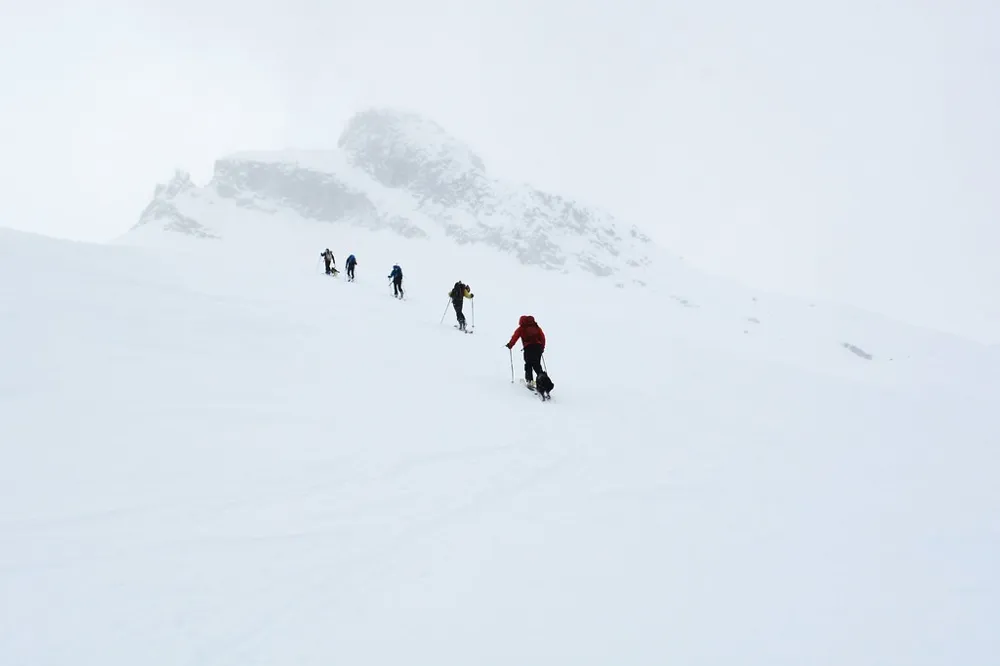
The plush decides how a skin grips and glides. Nearly all skins use one of three materials:
| Plush | Grip | Glide | Weight and Packability | Durability | Best For |
|---|---|---|---|---|---|
| Nylon | Best, especially on steep and icy tracks | Slowest | Heaviest, bulkiest | Longest-lasting | New tourers, steep and icy skin tracks, wet snow |
| Mohair-nylon blend | Good | Good | Moderate | Moderate | Most tourers and mixed conditions |
| Mohair | Least | Fastest | Lightest, packs smallest | Wears fastest | Long approaches, cold dry snow, racing |
Nylon is synthetic, tough and grippy. It's the forgiving choice for a first pair of skins, for steep skin tracks where you'd otherwise slip back and for spring and wet snow, where mohair can get waterlogged. The trade-off is weight and glide: nylon feels sticky on long, flat approaches.
Mohair comes from the hair of Angora goats. It glides noticeably better, so each stride carries you farther, and it's lighter and packs smaller. It grips less on firm or icy snow and wears out sooner, which is why full-mohair skins are popular with skimo racers and fast, light tourers who already have solid technique.
Blends mix the two, often around 65 to 70% mohair with the rest nylon (G3's Alpinist Glide is 65/35, for example). Reviewers at Switchback Travel and Treeline Review both describe blends as the best all-round choice for most skiers. If you tour mostly in cold, dry snow and value speed, lean toward more mohair; if your skin tracks are steep, icy or wet, lean toward nylon.
Glue vs Glueless and Hybrid Adhesives
The back of a skin is coated with a reusable adhesive. There are two broad families:
- Standard glue skins use a tacky glue that sticks firmly to the base, even in cold temperatures. Black Diamond's Gold Label, G3's ChannelBond and Pomoca's adhesives are in this group. They hold well, but glue picks up pine needles, dog hair and dirt, and the skins can be hard to peel apart when folded. Glue also wears and needs refreshing every few seasons.
- Glueless and hybrid adhesives use a smoother, less tacky layer that holds by close contact with the base rather than raw stickiness. They peel apart easily, don't leave residue, and many can be cleaned with water to restore adhesion. Contour's Hybrid line combines a glueless-style layer with traditional glue; Switchback Travel reports that its hybrid glue adheres in low temperatures, releases easily and can be revived with a wash. Kohla's Vacuum Base skins are another option reviewers group with these alternative adhesives; check Kohla for the current construction.
Glueless and hybrid adhesives are less forgiving of snow, water or debris on the base, so keep them clean and dry. Standard glue is more tolerant of imperfect conditions but needs more care when storing and more frequent re-gluing. Some skins add a non-stick strip down the middle, such as G3's rip strip, to make standard glue easier to pull apart.
Tip and Tail Attachments
Hardware keeps the ends of the skin from peeling off as snow gets under them. Check that it fits your ski's shape before buying.
| Attachment | How It Works | Fits Best |
|---|---|---|
| Wire or cable tip loop | A loop or bail hooks over the ski tip | Most rounded tips; some come in sizes by ski width |
| Articulating tip "hands" | Metal hooks that pivot to grip the tip edges | Wide, flat or unusually shaped tips |
| Tip anchor or notch fitting | Clips into a hole or notch built into the ski | Skis with skin anchors and matching pre-cut skins |
| Tail clip with adjustable strap | A hook grips the tail; the strap sets length and tension | Flat tails; most fixed-length skins |
| Tail notch clip | A clip seats in a notch cut into the tail | Touring skis with notched tails |
| Twin-tip tail fittings | Specific hardware that grips an upturned tail | Twin-tip skis; check the maker for compatibility |
Many touring skis now have notches or anchors built in. The Black Diamond Helio Carbon has a tail notch for skin clips and the Rossignol Escaper has a V-Skin tip anchor, for example. If your ski has a rounded or twin tail, check that the skin's tail clip will hold; some skiers use a ski strap around the tail on twin-tips. Replaceable hardware, like Black Diamond's STS system, also means a broken clip doesn't retire a whole skin.
How to Size Climbing Skins
Skins are sized by width and length, and sold either pre-cut for a specific ski model or as trim-to-fit skins that you cut to your skis.
Width
Find the widest part of your ski that touches the snow, usually the shovel near the tip (the first number in the ski's dimensions, such as 130 in 130/102/121). Buy the skin width that is equal to or slightly wider than that number. G3 advises choosing a width that matches the widest part of your skis. You'll trim the extra so the plush covers the base edge to edge but leaves the metal edges exposed for grip on traverses. A narrower skin saves weight but grips less.
Length
- Fixed-length skins come in size ranges with an adjustable tail. Pick the size whose range includes your ski length; Black Diamond's Ascension, for example, covers 166 to 178 cm in one size.
- Cut-to-length skins like G3's Escapist are sold by maximum ski length, and you trim the tail end to fit.
Pre-Cut vs Trim-to-Fit
Many ski brands sell pre-cut skins for their touring skis, often made by one of the big skin makers. They save time and fit perfectly, but only on that model and length. Trim-to-fit skins work with any ski and can be moved to another pair if it's narrower. Some shops will trim skins for you when you buy them.
How to Trim Climbing Skins
Trimming is a one-time job, but cuts can't be undone, so read your skin maker's instructions first and work slowly on a clean, flat surface.
- Prepare the ski. Clean and dry the base. If you plan to wax, do it first and scrape and brush thoroughly so the base is smooth.
- Fit the tip. Attach the tip hardware over the ski tip and line the skin up so it's centered on the base.
- Set the length. Stick the skin down from tip to tail, pressing out air bubbles. Adjust the tail strap or clip so the skin is snug; on cut-to-length skins, mark and cut the tail end and fit the tail hardware as the maker describes.
- Offset the skin. Shift the skin sideways so one metal edge is fully exposed and the plush overhangs the other edge.
- Cut the first side. Run the trim tool along the exposed edge. An offset trim tool leaves a sliver of base and the full metal edge uncovered.
- Cut the second side. Re-center the skin, offset it the other way and trim the second edge the same way.
- Finish the tip and tail. Round off or taper the corners where the ski narrows. A little bare base at the tip and tail is normal.
- Check the fit. The plush should cover the base with both metal edges exposed along the full length. Label each skin left or right, since your skis may not be identical.
Keep the trim tool's blade sharp, and cut away from your hands. If a cut wanders, it's usually fine as long as the edge is exposed and most of the base is covered.
Splitboard Skins
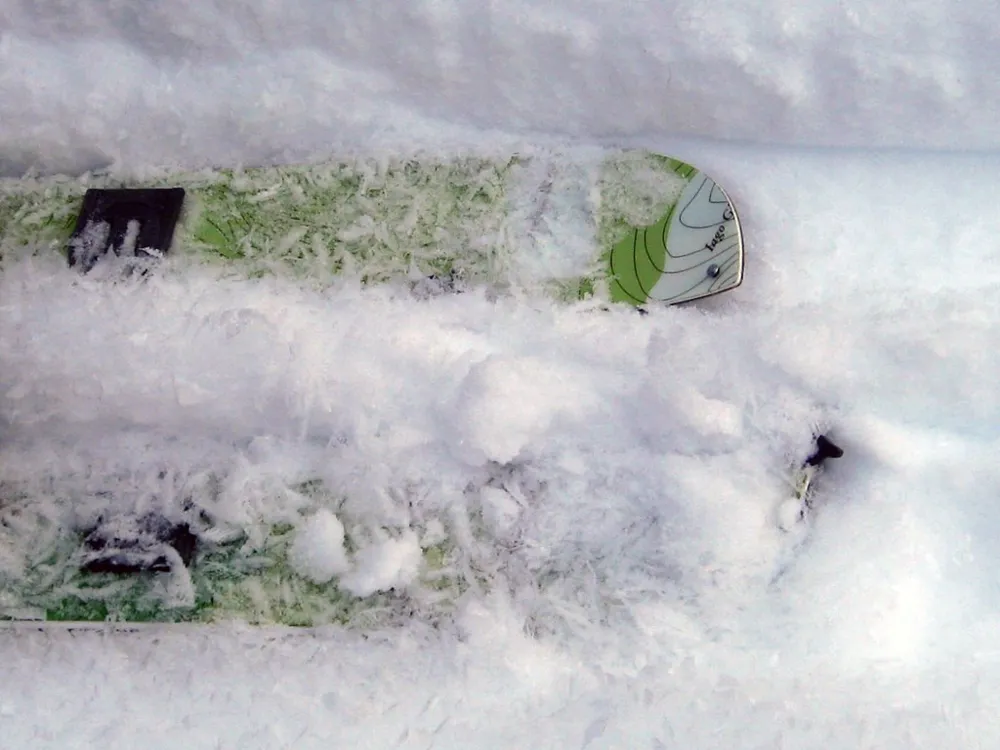
A splitboard separates into two ski-like halves for the climb, and each half needs its own skin. Splitboard skins use the same plush and glue choices as ski skins, but they are cut for the board's asymmetrical halves and come in wider widths (Pomoca's Climb 2.0 splitboard skin is 145 mm, for example) with splitboard-specific tip and tail hardware.
- Trimming: each half has one outside edge (the board's real edge) and one inside edge where the halves join. Trim so both metal edges are exposed, following the maker's splitboard instructions.
- Tails: splitboard tails are often blunt or notched, and some skins use clips that hook into those notches. Check the fit with your board's tail shape.
- Pre-cut options: many splitboard brands sell skins cut for their boards, usually made by the big skin makers. Switchback Travel reports that Jones skins are made by Pomoca, Spark R&D skins by G3, and Nitro and Karakorum skins by Kohla.
- Size by board length and widest point: use the board's length and the width of each half at the nose, just as you'd measure a ski's shovel. Our snowboard size chart covers board length.
Black Diamond (Ascension and Glidelite Tour), Pomoca (Climb 2.0) and G3 all sell splitboard versions of their ski skins.
Putting On and Ripping Skins
Good habits at transitions keep the glue clean and the skins sticking all day.
- Clear the base. Scrape snow and ice off the ski base with a glove, pole or the edge of the other ski, and wipe off moisture.
- Hook the tip. Peel the skin apart, hook the tip hardware over the tip and lay the skin down along the center of the base, pressing it on as you go.
- Clip the tail and press. Attach the tail clip, then rub the skin down firmly along its whole length with your hand.
- Ripping skins at the top: unclip the tail and peel from tail to tip, folding the skin glue to glue as you go (or onto a skin saver). Keep the glue away from snow.
- Store them warm. Put the folded skins inside your jacket or in the pack close to your back so the glue stays warm and dry for the next climb.
Practice at a resort that allows uphill travel before your first tour. Our ski mountaineering guide covers transitions and skin tracks, and backcountry skiing for beginners walks through a first tour.
Glopping and Skin Wax
Glopping (also called globbing or icing) is when snow sticks to the plush and builds up into heavy clumps under your skis. It happens most when skins get wet and then freeze, when you move from cold snow into warm sun or wet snow, or when you cross water or slush. Each step gets heavier, and you lose glide.
- Wax your skins. Rub skin wax into the plush in the direction of the hair before the tour and again when glopping starts. Black Diamond's Glop Stopper is one widely sold skin wax. Use skin wax only on the plush, never on the glue. Some makers also allow skin wax to be ironed in; check their instructions first.
- Scrape it off. Clear clumps by scraping the plush with the edge of the other ski or a pole, then re-wax.
- Keep skins dry. Avoid stepping in slush or running water, and take skins off before long sunny descents so they don't get soaked.
- Choose the right plush. Mohair can absorb more water in warm, wet snow; well-treated nylon or a blend with waterproofing is more forgiving in spring.
Glide wax on your ski bases helps too, because snow sticks less to a well-waxed ski. Wax the bases well before applying skins and scrape and brush thoroughly so wax residue doesn't weaken the glue. Our ski waxing and tuning guide explains how.
Cold-Weather Adhesion Failures
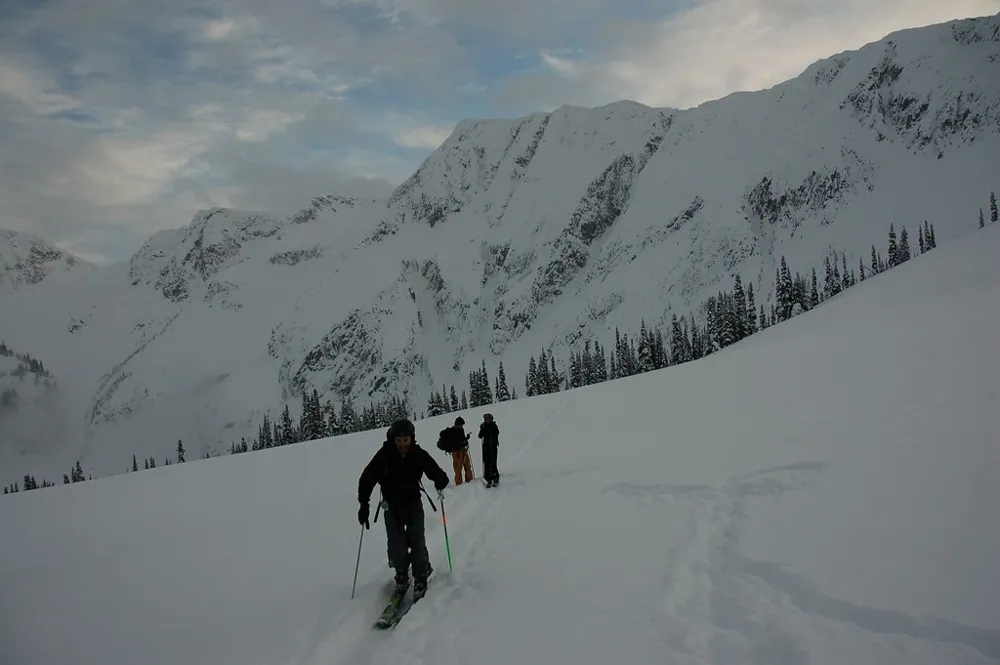
Skins that peel off in deep cold are one of the most common touring frustrations. Glue loses tack as it cools, and any frost, snow or moisture between the glue and the base stops it from bonding.
- Keep the glue warm. Carry skins inside your jacket, not in an outside pack pocket. Before applying, warm the glue side against your body if it has gone stiff.
- Keep the base dry. Scrape off rime and wipe the base before applying. Cold skis can pick up a film of frost that blocks adhesion.
- Keep snow off the glue. Fold skins glue to glue or onto skin savers immediately, and never lay them glue side down in the snow.
- Use a backup. A rubber ski strap around the ski and skin, or extra skin wax and a spare tail clip, can get you up a slope when a skin keeps lifting.
- Pick cold-rated glue. If you tour regularly in deep cold, look at adhesives rated for low temperatures, such as G3's ChannelBond (rated to -30°C/-22°F), or at hybrid adhesives that reviewers report holding well in the cold.
If skins keep failing even when warm and clean, the glue is likely contaminated or worn out and needs cleaning or re-gluing.
Skin Care: Drying, Storage and Skin Savers
Most skin failures come from poor drying and storage rather than wear on the plush.
- Dry them after every tour. Unfold the skins and hang them at room temperature with good airflow. Keep them away from direct heat such as wood stoves, radiators and heaters, which can damage the glue and the plush.
- Short-term storage: once dry, fold glue to glue or onto skin savers and keep them in their bag.
- Skin savers: these are mesh or plastic sheets that go on the glue so the skin doesn't stick to itself. G3 includes skin savers with the Escapist and says its ChannelBond skins can be stored glue to glue without them. With standard glue, skin savers help prevent glue from transferring between halves during long storage.
- Off-season storage: store skins clean and dry on skin savers in a cool, dark, dry place, away from heat and sunlight. Some skiers keep them in a sealed bag in a cool room or fridge.
- Keep the glue clean: pick out needles, hair and grit with your fingers. Avoid touching the glue more than necessary.
Treeline Review notes that skins should be stored indoors at consistent temperatures to preserve the glue, and Switchback Travel recommends drying them indoors away from heat sources.
Re-Gluing and When to Replace Skins
Glue usually wears out before the plush does. Signs it needs attention include skins that won't stick even when warm and dry, glue left on your ski base, bare patches on the adhesive or a gritty, dirty layer you can't clean off.
- Clean first: with glueless and hybrid adhesives, washing per the maker's instructions often restores adhesion.
- Re-glue standard glue skins: the usual methods are a glue transfer sheet, which you iron onto the skin to add a fresh layer, or scraping off the old glue and applying new skin glue. Follow your skin maker's recommended product and method.
- Shop service: many ski shops and skin makers offer re-gluing, which is a good option if you've never done it.
Replace skins when the plush is worn thin or bald in patches (especially underfoot), the fibers no longer grip on moderate slopes, the backing is torn or delaminating, or the skins no longer cover your current skis. Treeline Review reports quality skins typically see about 100 days of touring before significant wear, though plush, conditions and care all change that.
Who Makes Climbing Skins
A small number of companies make most of the world's climbing skins, including many pre-cut skins sold under ski and board brands.
| Maker | Known For |
|---|---|
| Pomoca (Switzerland) | Mohair and blend skins; Switchback Travel reports it also makes skins for DPS, Dynafit and Jones |
| Black Diamond | Ascension (nylon) and Glidelite (mohair mix) skins with the STS tail |
| G3 (Canada) | Alpinist and Escapist skins; articulating tip hands; ChannelBond adhesive |
| Kohla | Peak and Vertical skin lines and Vacuum Base skins |
| Contour | Hybrid adhesive skins; Switchback Travel reports it makes skins for Black Crows and Elan |
Black Crows sells its own Pellis and Pilus skin lines, in trim-to-fit and pre-cut versions for its skis. When a ski brand offers pre-cut skins for your model, they're often the easiest path, but trim-to-fit skins from the big makers give you more choice of plush and glue.
Related Backcountry Gear
Skins are one piece of a touring kit. See our guides to backcountry touring skis, ski bindings (including hybrid touring bindings), ski poles and avalanche beacons. Everyone in a backcountry group needs a beacon, shovel and probe plus avalanche training and the current forecast before leaving the resort boundary. Browse more in skiing.
Frequently Asked Questions
Are mohair or nylon climbing skins better?
Neither is better for everyone. Nylon grips better on steep and icy skin tracks and lasts longer; mohair glides faster, weighs less and packs smaller but wears sooner. Mohair-nylon blends sit in between and suit most tourers.
How wide should my climbing skins be?
Measure the widest part of your ski that touches the snow, usually the shovel near the tip, and buy the skin width that is equal to or a little wider than that. You then trim the skin so it covers the base but leaves the metal edges exposed.
Can I use the same skins on different skis?
Often, yes, if the second ski is no wider than the trimmed skin, the length falls inside the tail adjustment range and the tip and tail hardware fit both skis. Skins trimmed for a narrow ski will leave too much base uncovered on a wider one.
How long do climbing skins last?
It depends on the plush, the glue and how often you tour. Treeline Review reports that quality skins typically see about 100 days of touring before significant wear, and glue usually needs refreshing before the plush wears out.
Why won't my skins stick?
The usual causes are snow, ice or moisture on the glue or ski base, cold glue, dirt or hair in the adhesive, or old glue that has lost its tack. Dry the base, scrape the glue clean, warm the skins inside your jacket and use a ski strap as a backup.
Do I need skin savers?
They help with standard glue, which can be hard to peel apart and can pull glue off the opposite skin when stored folded. Some newer adhesives, such as G3's ChannelBond, are sold as storable glue to glue without skin savers. Follow your skin maker's advice.
Can I put ski wax on climbing skins?
Use skin wax, not regular ski wax, on the plush. Rub-on skin wax such as Black Diamond's Glop Stopper helps prevent snow buildup and improves glide; never wax the glue side.
Do splitboards need special skins?
Yes. Splitboard skins are cut for the shape of each board half and come in wider widths with splitboard-specific tip and tail hardware. The materials and glue choices are the same as ski skins.