Types of Snowboards: A Simple Guide to Every Style (2026)
All-mountain, freestyle, powder, splitboard: here's what each type of snowboard is for, plus the shapes and profiles behind them.
Snowboard Types at a Glance
Snowboards are designed for different terrain and riding styles. Most riders start with an all-mountain board, but knowing the other types helps you choose your next one. Each type combines a shape, a profile (how the board curves) and a flex.
| Type | Best For | Typical Shape | Typical Flex |
|---|---|---|---|
| All-mountain | Everything | Directional twin or directional | Medium |
| Freestyle (park) | Jumps, rails, switch | True twin | Soft to medium |
| Freeride | Steeps, speed, off-piste | Directional | Stiff |
| Powder | Deep snow | Directional, tapered, setback | Varies |
| Splitboard | Backcountry touring | Directional | Medium to stiff |
| Alpine / carving | Hard-boot carving | Narrow, directional | Stiff |
All-Mountain
The do-it-all board for groomers, park, trees and some powder. See all-mountain snowboards.
Freestyle (Park)
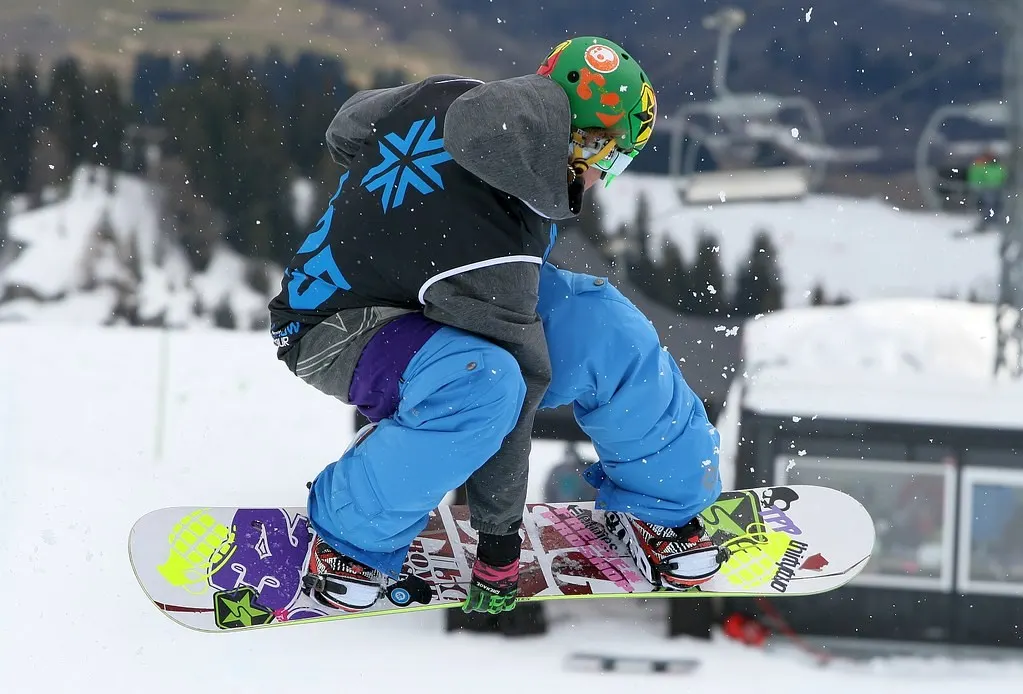
Usually true twins with soft to medium flex, making them easy to spin, press and ride switch. Great for the terrain park.
Freeride
Stiffer, directional boards built for speed, steep terrain and off-piste riding. They hold an edge at high speed but are less forgiving.
Powder
Designed to float in deep snow, often with a wide nose, tapered tail and setback stance. Some have swallowtails.
Splitboard
A snowboard that splits into two ski-like halves for climbing with skins, then reconnects to ride down. Built for backcountry touring.
Alpine / Carving
Narrow, stiff boards ridden with hard boots for high-speed carving. A niche style.
Board Profiles
| Profile | Shape Side-On | Feel |
|---|---|---|
| Camber | Arches up between the feet | Poppy, strong edge hold |
| Rocker (reverse camber) | Curves up like a banana | Loose, catch-free, floats |
| Flat | Flat between the feet | Stable, balanced |
| Hybrid | Mix of camber and rocker | Best of both, depending on the mix |
Board Shapes
- True twin: identical nose and tail; rides the same both ways.
- Directional twin: twin shape with directional flex or stance setback.
- Directional: longer nose than tail; designed to ride one way.
- Tapered: wider nose than tail; helps in powder.
Women's and Kids' Boards
Women's boards are often narrower and softer to suit smaller feet and lighter riders. Kids' boards are shorter and softer still. Many riders simply choose by size and flex, regardless of label.
Example Boards
Burton Process (Twin, Freestyle-Leaning)
A symmetrical twin with PurePop Camber.
Check Price on AmazonBurton Custom Camber (Directional All-Mountain)
A classic directional shape with a camber bend.
Check Price on AmazonLib Tech Skate Banana (Rocker-Camber Hybrid)
A board that pioneered rocker-camber hybrids, with Magne-Traction edges.
Check Price on AmazonNext steps: snowboard size chart, beginner snowboards, snowboard brands and stance and binding angles.
Frequently Asked Questions
What are the main types of snowboards?
All-mountain, freestyle (park), freeride, powder and splitboards, plus alpine carving boards.
What type of snowboard is best for beginners?
A soft to medium-flex all-mountain board with a forgiving profile, like rocker or a hybrid.
What is a splitboard?
A snowboard that splits into two halves for climbing uphill like skis, then reconnects for riding down.
What's the difference between camber and rocker?
Camber arches up between the feet for pop and edge hold; rocker curves the other way for a looser, catch-free ride and better float.
Do women need women's snowboards?
Not necessarily, but women's boards are often narrower and softer, which suits smaller feet and lighter riders.