Ski and Snowboard Glossary: Talk Like a Local on the Mountain (2026)
From bluebird days and corduroy to gapers, yard sales and face shots, here are the ski and snowboard words you'll hear on the hill, grouped by topic and explained in plain English.
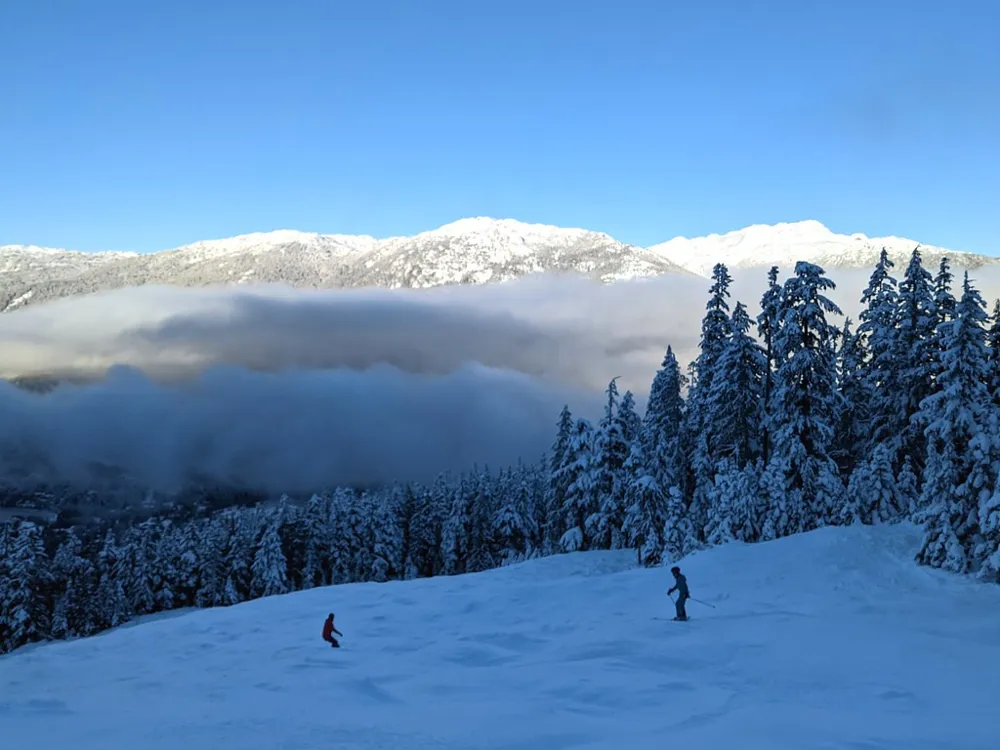
Ski and Snowboard Terms at a Glance
Ski areas have a language of their own. Some of it is practical, like knowing what a black diamond or a tree well is. Some describes your gear, and a lot of it is just mountain culture. Skiers and snowboarders share most of it, though snowboarding brought plenty of skate and surf words with it. This glossary sticks to terms that appear across established glossaries, resort guides and dictionaries, grouped by topic so you can find what you need quickly.
If you only learn a dozen words before your first trip, make it these:
| Term | What It Means | Why It Matters |
|---|---|---|
| Groomer | A run smoothed by a grooming machine | The easiest, most predictable snow |
| Green / blue / black | Trail difficulty ratings | Tells you what you're getting into |
| Fall line | The most direct path straight down a slope | Every turn is described against it |
| Pizza / french fries | Wedge to slow down / skis parallel | The first two things ski instructors teach |
| Liftie | A lift operator | The person to ask about loading |
| Ski patrol | The resort's safety and rescue team | Who to call after an accident |
| Pow | Fresh powder snow | The snow most riders chase |
| Bluebird | A clear, sunny day, ideally after new snow | The best conditions there are |
| Flat light | Low-contrast light that hides bumps | Slow down and use a low-light lens |
| Regular / goofy | Left foot forward / right foot forward | Sets up a snowboard stance |
| Yard sale | A crash that scatters your gear | It happens to everyone |
| Après | Socializing after the lifts close | The other half of a ski day |
Words drift between resorts and regions, and some older slang is heard more in ski movies than on lifts. If a term below sounds odd where you ski, it may simply be local.
Trail Ratings and Terrain Terms
North American resorts mark runs with a green circle (easiest), blue square (more difficult), black diamond (most difficult) and double black diamond (experts only). Ratings are relative to each resort, so a black at a small hill may ski like a blue at a big mountain. Many European resorts use green, blue, red and black pistes instead. Terrain parks are marked with an orange oval in the US. Our guide to ski trail ratings covers the systems in detail.
| Term | Meaning |
|---|---|
| Run / trail | A marked route down the mountain |
| Piste | A marked, usually groomed trail; common in Europe |
| On-piste / off-piste | On a maintained trail / outside marked and groomed runs |
| Bunny slope / bunny hill | A gentle beginner area near the base |
| Groomer | A smooth run prepared by a snowcat |
| Cat track / catwalk | A flat, narrow trail used by snowcats, often linking runs |
| Runout | The flat area at the bottom of a slope or a flat link back to a lift |
| Fall line | The path a ball would roll straight down the slope |
| Skier's left / skier's right | Directions as seen by someone facing downhill |
| Moguls / bumps | Rounded mounds formed by skiers' turns or built on purpose |
| Zipper line | The straightest, most direct line through moguls |
| Glades / tree skiing | Skiing among spaced-out trees |
| Bowl | A wide, open basin with slopes on at least three sides |
| Chute / couloir | A narrow, steep gully, often lined with rock |
| Cornice | An overhanging lip of wind-packed snow on a ridge |
| Headwall | A steep, often rocky section at the top of a run |
| Pillows | Rounded snow mounds over rocks, stumps or fallen trees |
| Tree well | A deep hollow of loose snow around a tree trunk |
| Line | The route you choose down a slope (not the lift queue) |
| Leg burner | A long, nonstop run |
| No fall zone | Terrain where a fall could cause serious injury |
Tree wells are a real hazard. Falling headfirst into one can trap you in loose snow, so give trees a wide berth on deep days and ski the trees with a partner. Our guide on how to ski powder explains how to stay safe in the trees.
Snow Conditions and Weather Words
Snow talk is where ski slang gets most colorful. Most of it describes how snow feels underfoot, which matters more than how much has fallen.
Fresh Snow
| Term | Meaning |
|---|---|
| Powder / pow / pow-pow | Fresh, light, loosely packed snow |
| Freshies / first tracks | Untracked snow, and being the first to ride it |
| Dump | A heavy snowfall |
| Puking / nuking | Snowing very hard |
| Blower / cold smoke | Very dry, light powder that puffs up when you ride through it |
| Champagne Powder | Steamboat Resort's trademarked name for its light, dry snow |
| Steep and deep | Big slopes plus deep powder |
| Free refills | Snow falling so fast your tracks fill in before the next lap |
| Sleeper powder day | A powder day nobody saw in the forecast |
| Stash | A hidden patch of untouched powder |
| Face shot | Powder spraying up into your face during a turn |
| White room / snorkeling | Powder so deep it blocks your vision |
Packed, Old and Spring Snow
| Term | Meaning |
|---|---|
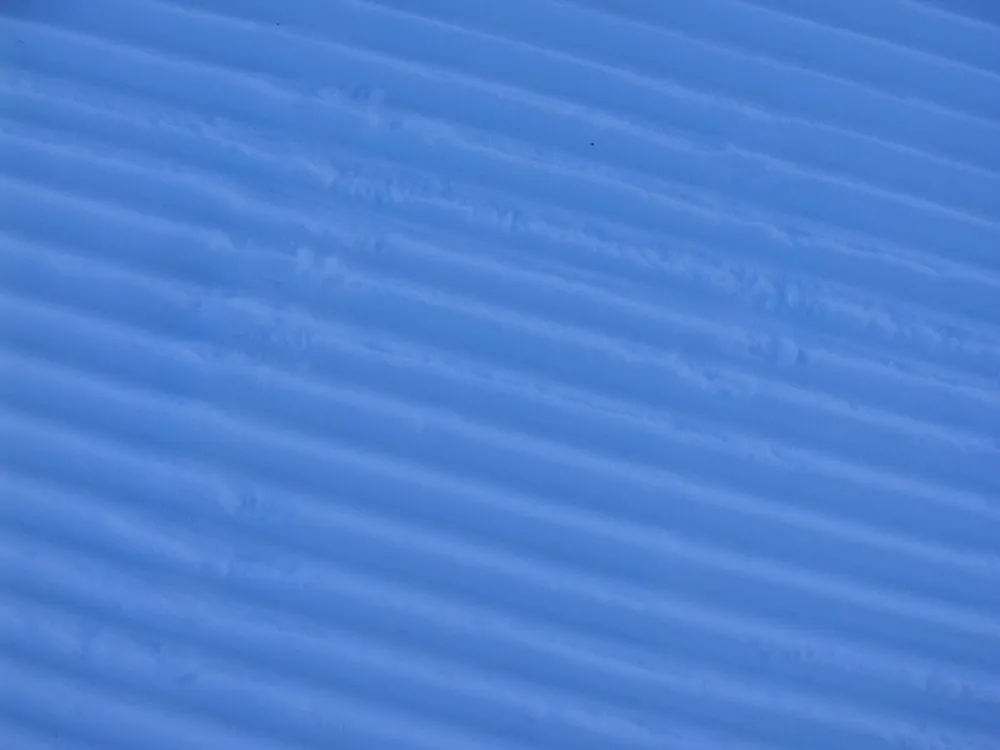
| Corduroy | The parallel ridges left by a grooming machine; also a freshly groomed run |
| Packed powder | Powder that has been compacted but is still soft |
| Hardpack | Snow compacted firm by grooming and traffic |
| Boilerplate / bulletproof | Icy, hard snow that edges struggle to grip |
| Death cookies | Hard, icy chunks on a groomed run from broken-up refrozen snow |
| Frozen granular | Refrozen, crusty snow with a rough texture |
| Crust | A hard layer on top of softer snow |
| Dust on crust | A thin layer of new snow over a hard base |
| Crud / chowder / chunder | Broken-up, uneven snow that is hard to turn in |
| Tracked out | A slope that has been ridden all over, with no fresh lines left |
| Corn | Spring snow that softens into kernel-like grains as the sun warms it |
| Hero snow | Soft, forgiving snow that makes everyone ski well |
| Mashed potatoes / Sierra cement | Heavy, wet snow; "Sierra cement" is the California nickname |
| Slush | Wet, melting snow, usually on warm spring afternoons |
| Grits | Loose snow scraped off hardpack and pushed down the run |
| Bony / thin cover | Rocks, grass or branches poking through the snow |
| White ribbon of death | A narrow strip of snow surrounded by bare ground |
Weather and Visibility
| Term | Meaning |
|---|---|
| Bluebird | A clear, sunny day, ideally after fresh snow |
| Flat light | Low-contrast light that hides bumps and dips |
| Whiteout | Very low visibility from cloud, fog or falling snow |
| Wind hold | Lifts shut down or paused because of wind |
| Wind blown | Uneven snow moved around by strong wind |
| Rime | Frost or ice that builds up from freezing fog |
Conditions change through the season, from early-season groomers to spring corn. Our guide on when ski season is explains what to expect month by month, and goggle lenses help in flat light.
Lift and Resort Terms
| Term | Meaning |
|---|---|
| Chairlift | An aerial lift with chairs on a continuously moving cable |
| Double / triple / quad / six-pack | Chairlifts seating two, three, four and six people |
| Fixed-grip lift | Chairs permanently clamped to the cable; slower to ride |
| Detachable lift | Chairs unclip from the cable in the station to slow down for loading, so the line can run faster |
| Gondola / gondy | An enclosed cabin lift, often for several riders |
| Chondola | One lift line that mixes chairs and gondola cabins |
| Tram | An aerial tramway with large enclosed cabins |
| Surface lift | Any lift that pulls you uphill while your skis or board stay on the snow |
| T-bar | A surface lift with a T-shaped bar that pulls riders uphill |
| Rope tow | A moving rope you hold to be pulled up a gentle slope |
| Magic carpet | A conveyor belt lift for beginners |
| Bullwheel | The big wheel at each end of a lift that turns the cable |
| Liftie | A lift operator |
| First chair | The first lift ride of the morning |
| Laps | Repeated runs on the same lift or slope |
| Lift ticket / pass | Proof you've paid to ride the lifts |
| Base area / base lodge | The hub at the bottom with tickets, rentals, food and lockers |
| Base depth | The average depth of snow on the mountain |
| Vertical drop / vert | The height difference from the top to the bottom |
| Ski in / ski out | Lodging you can ski to and from |
| Ski patrol | The resort team that handles safety, first aid and rescue |
| Ski school | The resort's lesson program |
| Snowcat | A tracked vehicle used to groom runs (piste basher in Europe) |
| Snowmaking / snow guns | Machines that spray water into cold air to make snow |
| Whales | Large mounds of man-made snow |
| Après / après-ski | Socializing after the lifts close |
On a snowboard, you ride lifts with your back foot out of the binding, resting on a stomp pad as you slide off at the top. For how multi-resort passes work, see our Epic vs Ikon pass comparison. The National Ski Areas Association's Responsibility Code, updated to 10 points in 2022, sets the basic on-slope and lift rules in the US; how to ski summarizes it.
Ski and Snowboard Gear Terms
Skis, Boards and Shape
| Term | Meaning |
|---|---|
| Tip / nose and tail | The front and back ends of a ski or board |
| Shovel | The upturned part of the tip |
| Waist | The narrowest point, under the foot; ski waists are given in millimeters |
| Sidecut | The inward, hourglass curve of the edges that helps a ski or board turn |
| Sidecut radius | The size of the circle the sidecut would make, in meters; smaller means quicker turns |
| Camber | An upward arch between the feet that gives pop and edge hold |
| Rocker / reverse camber | A shape with tip and tail lifted, for float and a looser feel |
| Twin tip | Identical tip and tail, so you can ride forward or backward |
| Effective edge | The length of edge in contact with firm snow when turning |
| Edge | The sharpened steel strip along each side of the base |
| Base | The underside that glides on snow; sintered or extruded |
| Topsheet | The top layer of a ski or board |
| Flex | How easily it bends lengthwise; torsional flex is how much it twists |
| Damp | Absorbs vibration; stays calm at speed |
| Chatter | Vibration at high speed or on hard snow |
| Swing weight | How hard an unweighted ski is to pivot; lighter skis are usually lower |
| Quiver | A collection of skis or boards for different conditions |
| Planks / sticks | Slang for skis (sticks also means a snowboard) |
| Jib stick | A snowboard built for park riding |
| Splitboard | A snowboard that splits into two ski-like halves for climbing |
Our guide to types of snowboards explains camber and rocker profiles, and best skis has a quick guide to ski spec sheets.
Boots, Bindings and Poles
| Term | Meaning |
|---|---|
| DIN setting | The release tension on a ski binding, set from your weight, height, age, ability and boot sole length |
| Pre-release / double eject | A binding letting go too early / both skis coming off in one fall |
| Boot flex | How stiff a ski boot is to bend forward, given as a number |
| Shin bang | Soreness on the front of the shin from pressing on the boot tongue |
| Highback | The rear plate of a snowboard binding that supports the calf |
| Forward lean | The angle of the highback, keeping your ankles bent |
| Step-on / step-in | Snowboard bindings you click into without straps |
| Stomp pad | A grippy pad by the back binding for your free foot |
| Leash | A strap tying a snowboard to your front boot |
| Basket | The disc near a pole tip that stops it sinking |
| Brain bucket | Slang for a helmet |
| Gaper gap | Bare forehead between helmet and goggles (see slang below) |
Have a certified shop set your DIN. Our ski DIN chart and ski boot flex guide explain both numbers.
Care and Tuning
| Term | Meaning |
|---|---|
| Tune | Edge sharpening and base repair |
| Wax | Glide wax for speed and base care; grip wax for cross-country skis |
| Bevel | The angle the edges are filed to |
| Detune | Dulling edges near the tip and tail so they catch less |
| Core shot | A gouge deep enough to expose the core |
| P-Tex | Polyethylene used to fill base damage |
| Delam | Layers of a ski or board separating |
See how to wax and tune skis and how to wax a snowboard.
Technique and Turning Terms
| Term | Meaning |
|---|---|
| Pizza / wedge / snowplow | Ski tips close, tails apart, to slow down or stop |
| French fries | Skis parallel |
| Stem christie | A turn started from a wedge that finishes with skis parallel |
| Parallel turn | A turn with both skis parallel throughout |
| Carve | A turn on edge that leaves a thin line instead of skidding |
| Railroad tracks / trench | Clean, deep carved lines in the snow |
| Euro carve | A deep carve that curves back up the hill |
| Sideslip | Sliding sideways down a slope on your edges |
| Falling leaf | Drifting back and forth across the slope on one snowboard edge |
| Heelside / toeside | Turns on the snowboard's heel edge / toe edge |
| Traverse | Riding across the slope rather than down it |
| Speed check | A quick skid or turn to scrub speed |
| Schuss / straight-lining / elevens | Going straight down without turning; elevens are the two straight ski tracks it leaves |
| Tuck | A crouch to cut wind resistance and go faster |
| Bomb | Going downhill very fast |
| Herringbone | Walking uphill with ski tips splayed in a V |
| Kick turn | Turning around in place by swinging one ski at a time |
| Jump turn | Hopping to change direction on steep terrain |
| Backseat | Leaning too far back, which hurts balance and tires your legs |
| Unweighting | Briefly taking weight off the skis to start a turn |
| Downhill ski / uphill ski | The lower ski on the slope / the higher one |
| Telemark / free heel | Skiing with the heel free, dropping into a lunge each turn |
If those first few rows are new to you, start with how to turn and stop on skis or how to turn and stop on a snowboard.
Stance, Park and Trick Terms
Stance and Direction
| Term | Meaning |
|---|---|
| Regular | Left foot forward on a snowboard |
| Goofy | Right foot forward; see goofy vs regular |
| Switch | Riding in your opposite stance, or skiing backward |
| Fakie | The older word for riding backward; most riders now say switch |
| Duck stance | Both snowboard bindings angled outward, toes pointing away from each other |
| Stance width | The distance between your bindings |
| Frontside / backside | Approaching a feature or spinning with your chest leading / with your back leading |
| Blindside | A spin where you briefly can't see the landing |
For setting up a board, see snowboard stance and binding angles.
Park Features
| Term | Meaning |
|---|---|
| Terrain park | An area with jumps, rails, boxes and other features |
| Features | Any built element: jumps, rails, boxes, walls |
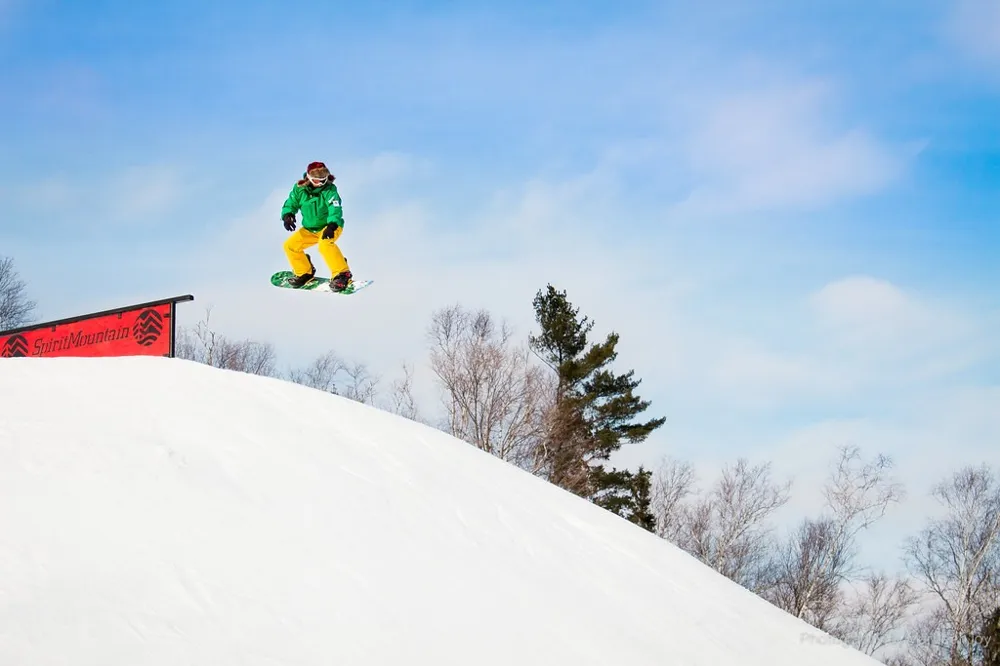
| Kicker / booter | A jump |
| Table top | A jump with a flat deck between takeoff and landing |
| Gap jump | A jump with open space between takeoff and landing |
| Lip | The takeoff edge of a jump, or the top edge of a halfpipe wall |
| Knuckle | The top of a jump's landing, where landing hard is risky |
| In-run | The approach to a jump or feature |
| Halfpipe | A U-shaped snow channel with matching walls |
| Transition / tranny | The curved part of a pipe wall |
| Box / rail / kinked rail | Slide features; a kinked rail changes angle along its length |
| Park rat | Someone who spends nearly every run in the park |
| Train | Riders hitting features one after another |
| Calling your drop | Raising a hand or shouting "dropping" before you start |
Tricks and Grabs
| Term | Meaning |
|---|---|
| Ollie / nollie | Popping off the tail / off the nose without a jump |
| Press | Shifting weight onto the nose or tail so the other end lifts |
| Butter | Pressing the nose or tail while spinning or sliding on snow |
| Jib | Riding on anything that isn't snow, like rails, boxes or logs |
| Bonk | Tapping an object with your skis or board |
| Grab | Holding your board or skis in the air |
| Indy | Back hand grabs the snowboard's toe edge between the bindings |
| Mute | Front hand grabs the snowboard's toe edge; on skis, the opposite hand grabs the other ski |
| Melon / stalefish | Front hand / back hand grabs the snowboard's heel edge between the bindings |
| Method | Knees bent, front hand grabs the heel edge and the board is pulled up level with your head |
| Japan | A ski grab with crossed skis, reaching behind to the inside edge |
| Tweak | Exaggerating a grab or position for style |
| Shifty | Twisting the board or skis one way and the upper body the other in the air |
| 180, 360, 540, 720 | Spins named by degrees of rotation |
| Cab | A spin started riding switch (originally a switch 360) |
| Alley-oop | A halfpipe spin rotating toward the uphill side |
| Cork | An off-axis, corkscrew-style rotation |
| Rodeo / misty | Inverted spins off a jump (rodeo frontside, misty backside) |
| Handplant | A pipe trick balancing on one or both hands on the lip |
| Pretzel | Spinning off a rail the opposite way to your entry spin |
| Stomp | A clean, solid landing |
| Steeze | Style plus ease: a trick that looks effortless |
Learn first tricks in order with our guides to snowboard tricks for beginners and ski tricks for beginners, which also cover Park SMART and terrain park signs. Competitive events are explained in freestyle skiing.
Falls, Crashes and Mishaps
| Term | Meaning |
|---|---|
| Yard sale | A crash that scatters your gear across the slope |
| Tomahawk | Tumbling end over end down the hill |
| Scorpion | A forward fall where your feet flip over your head |
| Lawn chair | A backward fall with skis out in front and knees bent |
| Catching an edge | An edge digs in unexpectedly, usually ending in a fall |
| Spinal tap | A hard backward slam after catching the heel edge on a snowboard |
| Taco | Folding over a rail or box after a missed slide |
| Slam / pack / wipeout | A crash |
| Rolling down the windows | Flailing your arms to catch your balance in the air |
| Snow snake | The invisible "thing" that grabs your ski when you fall for no reason |
| Sketchy / sketching | Shaky and barely in control |
| Ejected | Your binding releasing the boot in a fall |
| Toe drag / heel drag | Toes or heels hanging over a snowboard's edge and catching snow in a turn |
| ACL | The anterior cruciate ligament, a common ski knee injury |
A well-fitted helmet, correctly set bindings and staying within your ability prevent a lot of these. If you hit your head or think you're injured, stop, stay visible and ask ski patrol for help; this glossary isn't medical advice.
Skier and Snowboarder Slang
People on the Mountain
| Term | Meaning |
|---|---|
| Gaper / Jerry | An inexperienced or oblivious skier or rider; often teasing, sometimes an insult |
| Never-ever | A first-timer, usually in a lesson |
| Newbie / noob | A beginner |
| Grom | A young skier or snowboarder |
| Ripper / shredder | A strong, confident rider |
| Ski bum | Someone who lives at the mountain to ski as much as possible |
| Powderhound | Someone who chases every powder day |
| Cruiser | A relaxed skier who sticks to easy runs; also a mellow groomed run |
| Hucker | Someone who throws themselves off big airs with little regard for safety |
| Snake | Someone who cuts in front of you in a lift line or on a feature; being cut off is getting snaked |
| Knuckle dragger | Slang, often from skiers, for a snowboarder |
| Planker | Slang for a skier |
| Pinhead | Slang for a telemark skier |
Everyday Slang
| Term | Meaning |
|---|---|
| Send it / full send | Commit fully to a jump, trick or line |
| Sendy | A line or feature that invites you to go big |
| Shred / rip | Ride hard and well |
| Stoked | Very excited |
| Epic | An unforgettable day, run or set of conditions |
| Firing | Conditions are perfect |
| Gnarly / gnar | Extreme or difficult; can be praise or a warning |
| Steezy | Stylish and effortless |
| Earn your turns | Climb up before skiing down |
| Death before download | Ride down no matter what instead of taking the lift |
| Poaching | Riding closed runs or roped-off areas |
| Ducking ropes | Slipping under a boundary or closure rope |
| Ullr | The Norse god of snow and skiing |
Poaching and ducking ropes aren't just bad manners. Closures often mark avalanche work, hazards or the ski area boundary. The old rivalry behind words like knuckle dragger goes back to the years when many resorts banned snowboards; our history of snowboarding tells that story, and skiing vs snowboarding compares the two today.
Backcountry and Avalanche Terms
| Term | Meaning |
|---|---|
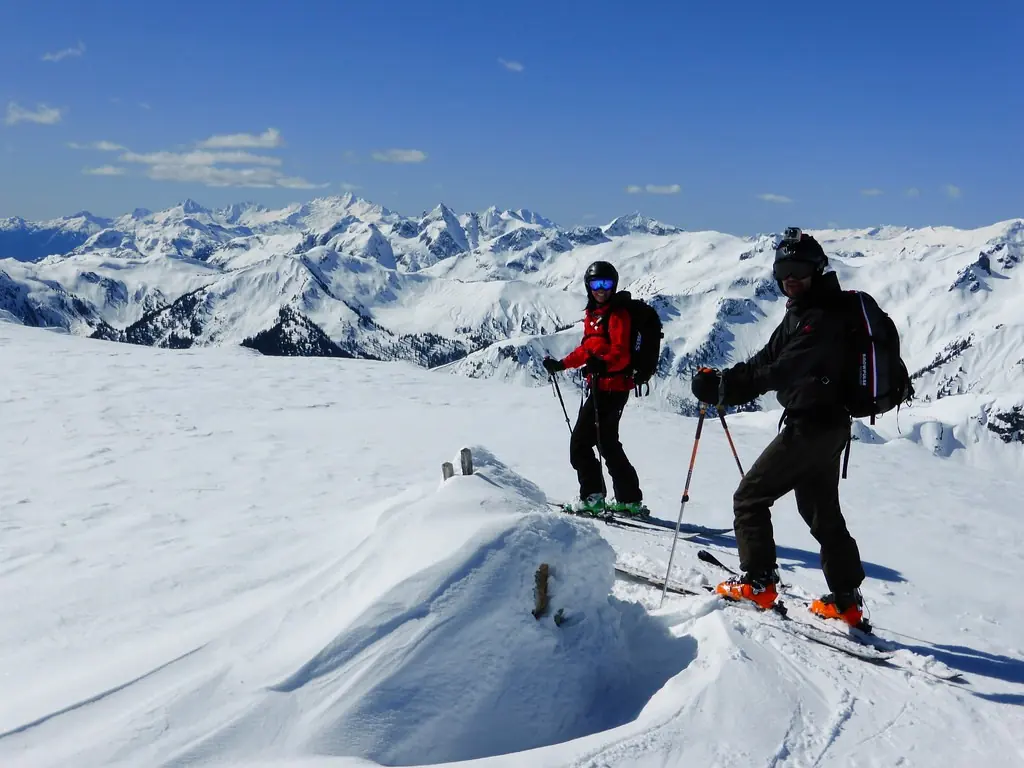
| Backcountry | Unpatrolled, uncontrolled terrain beyond resort boundaries |
| Out-of-bounds | Anywhere outside the ski area boundary |
| Sidecountry / slackcountry | Backcountry reached from a resort lift, often through a gate |
| Ski touring / alpine touring (AT) | Climbing and descending on skis with free-heel bindings that lock for the way down |
| Randonnée | Another name for alpine touring |
| Skins / skinning | Fabric strips on the base that grip uphill / climbing with them |
| Uphilling | Climbing with skins instead of riding a lift |
| Walk mode | A touring boot setting that frees the cuff for climbing |
| Bootpack | Kicking steps up a slope with skis or board on your back |
| Breaking trail | Going first through deep snow to pack a path |
| Frankenskins | Skins clogged with icy snow |
| Avy / avvy | Short for avalanche |
| Avalanche forecast / avy report | The daily danger rating and travel advice for an area |
| Beacon / transceiver | A radio worn in avalanche terrain that helps partners find a buried person |
| Probe and shovel | The other two pieces of essential rescue gear |
| Slough | Loose surface snow sliding down a steep slope |
| Snowpack | The layers of snow that build up over a season |
| Valley out | Ending up somewhere you have to hike out of |
| Cat skiing / heli-skiing | Reaching backcountry runs by snowcat or helicopter |
Forecasts in North America rate danger on the five-level North American Public Avalanche Danger Scale, from 1 Low to 5 Extreme. Everyone in a backcountry group should carry a beacon, shovel and probe, know how to use them and read the forecast before heading out. This is a glossary, not training. Take an avalanche course before going out of bounds, and start with our guide to backcountry skiing for beginners. Guided options are covered in cat skiing and heli-skiing, and climbing skins has the uphill gear.
How to Use Ski Slang Without Sounding Like a Gaper
- Learn the safety words first. Trail ratings, tree wells, closures, "dropping" and the Responsibility Code matter far more than knowing what steeze means.
- Use it where it fits. Calling a slushy spring day "blower pow" or a green run "gnarly" gets you noticed for the wrong reasons.
- Listen to locals. Some words, like Sierra cement or Champagne Powder, belong to particular regions or resorts, and slang varies between mountains.
- Tease kindly. Gaper, Jerry and knuckle dragger are often ribbing between friends. Aimed at a stranger, they can sound like insults.
- Ask. Most skiers and snowboarders are happy to explain a word on the chairlift. That's how everyone learned.
Ready to put the words to use? Our how to ski guide and beginner snowboarding tips walk you through day one, and what to wear skiing covers the layers.
Related Guides
- Skiing guides and snowboarding guides
- Types of skiing: alpine, Nordic, freestyle and more
- Alpine ski racing disciplines: slalom, GS, super-G and downhill
- Skiing facts and snowboarding facts
- More glossaries: skateboard terms and surf slang
Frequently Asked Questions
What does gaper mean in skiing?
A gaper is an inexperienced or oblivious skier or snowboarder. The word comes with the gaper gap, the strip of bare forehead between a helmet and goggles that marks someone as new. Jerry means much the same thing.
What is a yard sale in skiing?
A yard sale is a crash that scatters your gear across the slope: skis, poles, goggles and sometimes a hat, spread out like items at a yard sale.
What does pizza and french fries mean in skiing?
They're teaching terms for beginners. Pizza is the wedge or snowplow, with ski tips close together and tails apart to slow down or stop. French fries means skis parallel.
What does bluebird day mean?
A bluebird day is a clear, sunny day with little or no cloud, ideally right after fresh snow.
What does send it mean?
Send it means committing fully to a jump, line or trick. Friends often shout it as encouragement; full send is the bigger version.
What is après-ski?
Après-ski, often shortened to après, is the social time after the lifts close: food, drinks and music at the lodge or in town. The tradition began in the Alps.
What does goofy mean in snowboarding?
Goofy means riding with your right foot forward. Regular means left foot forward, and riding switch means riding in your opposite stance.
What is sidecountry?
Sidecountry is backcountry terrain just outside a resort boundary, usually reached through access gates from a lift. Once you leave the boundary it isn't controlled or patrolled, so it needs the same avalanche gear and training as any backcountry.