Learn How to Snowboard: Beginner Tips for Your First Days (2026)
The first days on a snowboard are the hardest. Here's what to wear, how to set up and the skills to learn in order, plus tips that save falls.
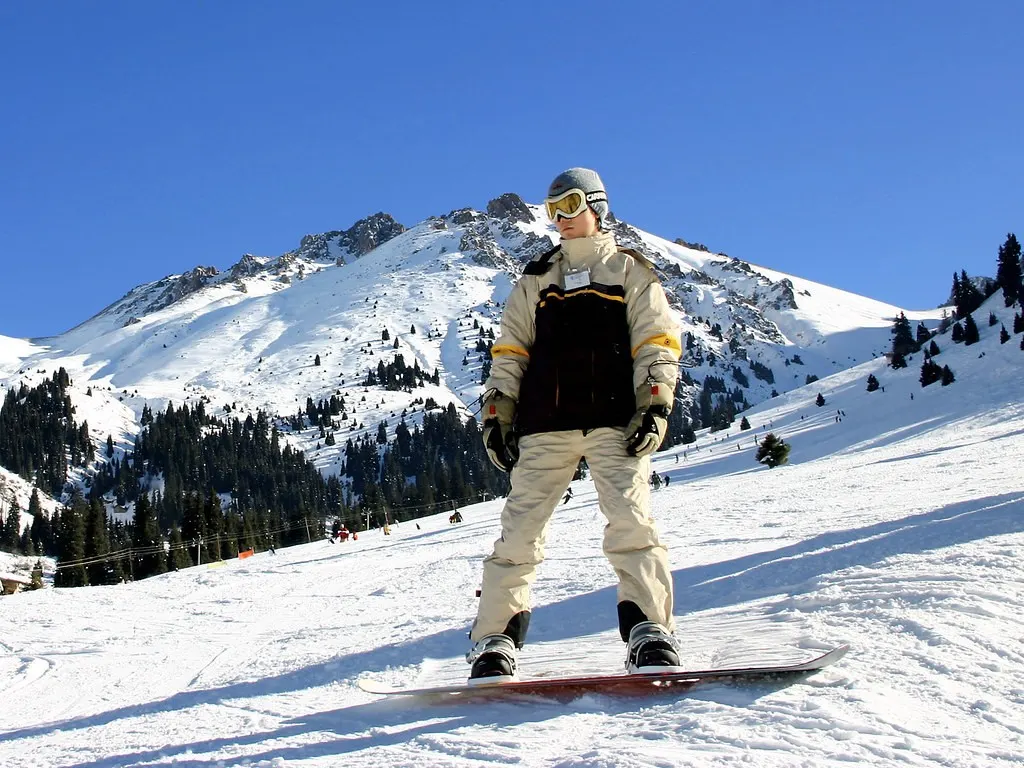
Before You Hit the Snow
- Take a lesson on your first day.
- Rent or buy beginner-friendly gear: a soft board, comfortable boots and bindings.
- Wear a helmet, goggles and waterproof layers; wrist guards and padded shorts help.
- Know your stance; see goofy vs regular.
Full outfit checklist: what to wear snowboarding.
Skills in Order
| # | Skill | Tip |
|---|---|---|
| 1 | Strapping in | Sit down on the slope, facing downhill, to strap in |
| 2 | Skating with one foot | Front foot strapped, push with the back foot |
| 3 | Standing up | From sitting, dig your heel edge in and push up |
| 4 | Heelside slip | Slide down slowly on your heel edge |
| 5 | Falling leaf | Slide side to side on one edge |
| 6 | Toeside slip | Same, facing uphill on your toe edge |
| 7 | First turns | Link heelside and toeside with a flat-base transition |
| 8 | Chairlift | Ride with one foot strapped in; follow lift staff |
Beginner Tips
- Bend your knees, not your waist.
- Look where you want to go; your board follows your shoulders.
- Weight on your front foot to steer.
- Use gentle slopes and stay on beginner terrain.
- Fall safely: on heelside falls, sit back onto your butt; on toeside falls, go to your knees and forearms. Avoid catching yourself with straight arms.
- Take breaks; fatigue causes falls.
- Follow the Responsibility Code: stay in control and give way to people below you.
Strapping In and Getting Up
- Strap in sitting down on the slope's edge, board across the hill so it can't slide away.
- Front foot first, ankle strap snug, then toe strap.
- Getting up on your heel edge: pull the board close, dig the heel edge in and push up with one hand.
- Getting up on your toe edge is often easier: roll onto your knees, then stand.
Skating and the Lift
On flat ground and in lift lines, keep your front foot strapped in and push with your back foot, like skateboarding. Practice skating and stopping on the flat before your first lift. Getting off the chair, put your free foot against the back binding (or on a stomp pad), point the board straight and glide away.
Falling Safely
- Falling backward: sit down toward your bottom, tuck your chin and roll onto your back rather than reaching back with your hands.
- Falling forward: drop to your knees and forearms instead of landing on straight arms.
- Wrist guards and padded shorts help a lot during the first days.
From Falling Leaf to Linked Turns
- Falling leaf: slide side to side down the slope on your heel edge, then your toe edge.
- J-turns / garlands: point the board slightly downhill, then turn back across the slope.
- Linked turns: flatten the board as you head downhill, then shift to the other edge to complete the turn.
Beginner Gear
Burton Instigator
A directional board with PurePop Camber for a forgiving feel, suited to beginners riding all over the mountain.
Check Price on AmazonBurton Gore-Tex Mittens
Waterproof, insulated mittens for snowboarders who spend time sitting in the snow.
Check Price on AmazonChoose a board in beginner snowboards, check your size with the snowboard size chart and set up with stance and binding angles.
Frequently Asked Questions
Is snowboarding hard to learn?
The first few days are often tough, with lots of falling, but many people link turns within a few days, especially with a lesson.
Should I take a snowboard lesson?
Yes. A lesson on your first day teaches safe habits and usually speeds up progress.
What should beginners wear snowboarding?
Waterproof jacket and pants, layers, a helmet, goggles, waterproof gloves or mittens, and snowboard socks. Wrist guards and padded shorts help.
What is the falling leaf?
A beginner drill where you slide side to side across the slope on one edge, building edge control before turns.
Which snowboard is best for beginners?
A soft, forgiving board with a rocker, flat or hybrid profile, sized for your weight.