30 Snowboarding Facts: From the Snurfer to the 2026 Olympics (2026)
Snowboarding started as a backyard toy, got banned from most ski resorts and ended up an Olympic headliner. Here are the facts behind the sport, with the latest results.
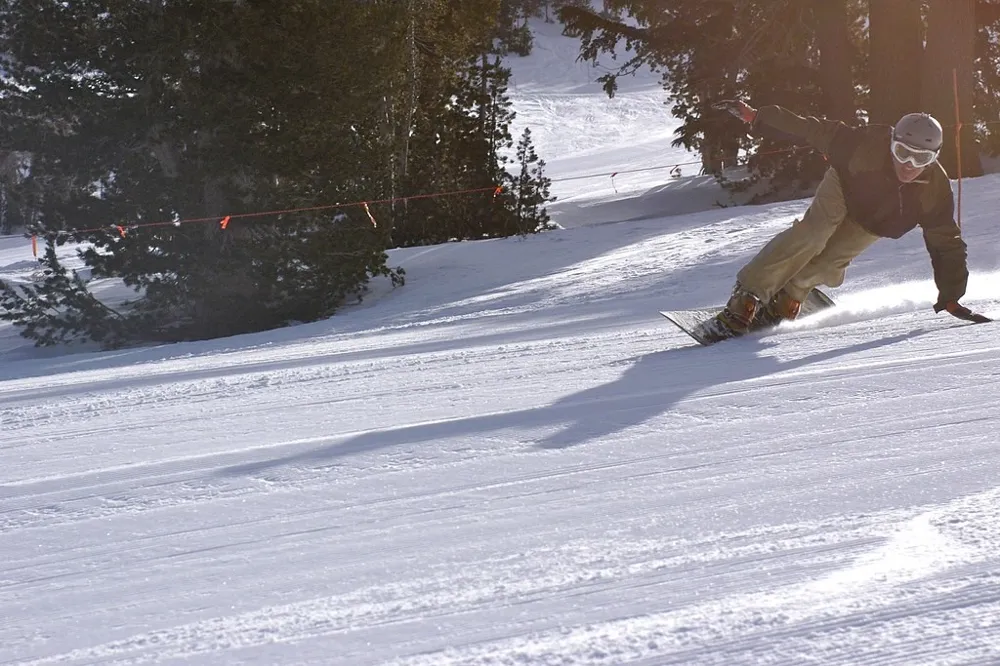
Snowboarding Facts at a Glance
| Fact | Detail |
|---|---|
| Snurfer invented | 1965, Muskegon, Michigan |
| Burton founded | 1977, Vermont |
| Olympic debut | 1998, Nagano |
| First FIS World Championships | 1996, Lienz, Austria |
| Olympic snowboard events, 2026 | 11 |
| Top nation, 2026 Olympic snowboarding | Japan (4 gold, 2 silver, 3 bronze) |
| All-time Olympic snowboard medal leader | USA (37 medals) |
| Snowboard speed record | 203.275 km/h (about 126 MPH) |
| Best-known ski-only resorts | Alta, Deer Valley, Mad River Glen |
Origin Facts
- A teenager rode a "snowboard" in 1917. According to the Smithsonian, 13-year-old Vern Wicklund rode a modified sled standing up in Cloquet, Minnesota, and patented the idea about two decades later.
- The Snurfer started it all in 1965. Sherman Poppen, of Muskegon, Michigan, fastened two skis together as a toy for his daughters, with a rope at the nose for steering.
- Its name was a family idea. "Snurfer," a blend of snow and surfer, is credited to Poppen's wife, Nancy.
- It sold fast. Close to a million Snurfers were sold by 1970, according to the Smithsonian, after Brunswick licensed it.
- Snurfer contests came first. The first organized Snurfer competition was held in Michigan in 1968.
- Winterstick was the first modern snowboard company. Dimitrije Milovich founded it in 1972, building boards with steel edges, fiberglass and nylon straps.
- Tom Sims and Jake Burton Carpenter founded their companies in 1976 and 1977. Burton is credited with popularizing the word "snowboarding."
Read the full story in the history of snowboarding.
The Ban Years
- Most resorts banned snowboarding in the 1980s. Ski areas worried about liability, insurance and early riders' behavior.
- Stratton led the way in the East. The Vermont resort let snowboarders ride its lower slopes in 1983 and hosted the first US Open in 1985.
- By the 1990s, almost every North American resort allowed snowboarding.
- Aspen Mountain held out until 2001.
- Taos held out until 2008. The New Mexico resort welcomed snowboarders on March 19, 2008. See New Mexico ski resorts.
- Three resorts are still ski-only. As of recent reporting, Alta, Deer Valley and Mad River Glen don't allow snowboards. Alta has never allowed them and won a 2014 lawsuit challenging its ban; Deer Valley has been ski-only since it opened in 1981; Mad River Glen banned boards in 1985.
Pop culture helped. James Bond, played by Roger Moore, snowboarded in a chase scene in the 1985 film A View to a Kill, years before many resorts lifted their bans.
Olympic Facts
- Snowboarding joined the Olympics at Nagano 1998 with halfpipe and giant slalom.
- The first gold had a twist. Canada's Ross Rebagliati won the men's giant slalom in 1998, was briefly stripped of the medal after a positive marijuana test and got it back on appeal.
- The event list keeps changing. Parallel giant slalom arrived in 2002, snowboard cross in 2006, slopestyle in 2014, big air in 2018 and mixed team snowboard cross in 2022. Parallel slalom appeared only in 2014.
- Shaun White won three Olympic halfpipe golds, in 2006, 2010 and 2018.
- Chloe Kim won halfpipe gold in 2018 and 2022, but her bid for a three-peat ended with silver in 2026 behind 17-year-old Choi Ga-on of South Korea.
- Zoi Sadowski-Synnott of New Zealand has the most Olympic snowboarding medals, five.
- The USA leads the all-time Olympic snowboarding medal table with 37 medals, including 17 golds.
- Japan topped snowboarding at Milano Cortina 2026 with four golds, two silvers and three bronzes.
2026 Olympic Snowboarding Champions
All 11 snowboard events were held at the Livigno Snow Park.
| Event | Men's Gold | Women's Gold |
|---|---|---|
| Halfpipe | Yūto Totsuka (JPN) | Choi Ga-on (KOR) |
| Slopestyle | Su Yiming (CHN) | Mari Fukada (JPN) |
| Big air | Kira Kimura (JPN) | Kokomo Murase (JPN) |
| Snowboard cross | Alessandro Hämmerle (AUT) | Josie Baff (AUS) |
| Parallel giant slalom | Benjamin Karl (AUT) | Zuzana Maděrová (CZE) |
| Mixed team snowboard cross | Great Britain (Huw Nightingale, Charlotte Bankes) | |
For skiing's Olympic events, see Olympic skiing.
Records and Competition Facts
- The snowboard speed record is 203.275 km/h (about 126 MPH), set by Edmond Plawczyk at Vars, France, in 2015.
- The first FIS Snowboard World Championships opened on January 24, 1996, in Lienz, Austria.
- Early contests were homegrown. Some of the first snowboard races were at Ski Cooper, Colorado, in 1981, and the National Snow Surfing Championships were held at Suicide Six, Vermont, in 1982.
- Big airs have long been a showcase. One widely cited record credits Norway's Terje Håkonsen with a 9.8-meter (32-foot) backside air on a quarterpipe, though such records are hard to verify independently.
Snowboarding is governed internationally by FIS, which also runs skiing's World Cups and World Championships. In 2022 FIS changed its name to the International Ski and Snowboard Federation to reflect the sport's place alongside skiing.
Riding Facts
- Regular vs. goofy: riding left foot forward is "regular," and right foot forward is "goofy." See snowboard stance and binding angles.
- "Switch" means riding with your opposite foot forward, a core skill for freestyle riders.
- Modern boards come in many shapes, from directional freeride boards to twin-tip park boards. See types of snowboards.
- Snowboarding changed skiing. Terrain parks, halfpipes and twin-tip skis all grew alongside snowboarding in popularity.
- Getting started takes a few days. Many new riders spend the first day or two learning to balance and fall safely before linking turns. See how to snowboard.
Injury patterns differ from skiing. A long-running University of Vermont study of more than 10,000 injured skiers and riders found snowboarders most often hurt their wrists, shoulders and ankles, while skiers more often injured knee ligaments. Wrist guards and a helmet are worth considering, especially while learning; see snowboard and ski helmets.
Snowboarding vs. Skiing by the Numbers
NSAA counts snowboarders and skiers together, recording about 61.5 million US visits in 2024/25 and about 52.6 million in 2025/26. Industry estimates of snowboarding's share of US lift users vary widely, from roughly 30% to 40%, so treat any single figure with caution. See skiing vs. snowboarding to compare the two sports, and skiing facts for more numbers.
Gear Up
Ready to ride? Start with the best snowboards for beginners, snowboard boots, snowboard bindings and what to wear snowboarding. Find your size with our snowboard size chart.
Frequently Asked Questions
Who invented snowboarding?
No single person. Sherman Poppen's 1965 Snurfer is the best-known ancestor, and pioneers including Dimitrije Milovich (Winterstick), Tom Sims and Jake Burton Carpenter turned it into the modern snowboard in the 1970s.
When did snowboarding become an Olympic sport?
Snowboarding debuted at the 1998 Winter Olympics in Nagano, Japan, with halfpipe and giant slalom events.
Which ski resorts don't allow snowboarders?
Alta and Deer Valley in Utah and Mad River Glen in Vermont are the best-known ski-only resorts in North America, as of recent reporting. Check each resort's current policy before you go.
Why were snowboarders banned from ski resorts?
In the 1980s, many resorts worried about liability and insurance, damage to slopes and the behavior of early riders. By the 1990s, almost every North American resort allowed snowboarding.
Who is the most decorated Olympic snowboarder?
New Zealand's Zoi Sadowski-Synnott has the most Olympic snowboarding medals, with five. Shaun White has the most halfpipe golds, with three.
What is goofy vs. regular stance?
Regular means riding with your left foot forward; goofy means riding with your right foot forward. Neither is better; it's whatever feels natural.
How fast can a snowboarder go?
The snowboard speed record is 203.275 km/h (about 126 MPH), set by Edmond Plawczyk at Vars, France, in 2015.
Is snowboarding harder than skiing?
Snowboarding is often harder for the first few days, while skiing is easier to start but can take longer to master. See our skiing vs. snowboarding guide for details.
What are the most common snowboarding injuries?
Wrist, shoulder and ankle injuries are the most common for snowboarders, according to a long-running University of Vermont study, while skiers more often injure their knees.
Who governs competitive snowboarding?
FIS, which renamed itself the International Ski and Snowboard Federation in 2022, runs the snowboard World Cups and World Championships.
What does Snurfer mean?
It's a mix of 'snow' and 'surfer.' The name is credited to Sherman Poppen's wife, Nancy.