Hoverboard or Electric Scooter? Which Ride Fits You (2026)
One is a hands-free toy-sized balancer, the other a handlebar commuter that folds. Here's how they differ on learning, speed, range, safety, laws and age, and which one suits your rides.
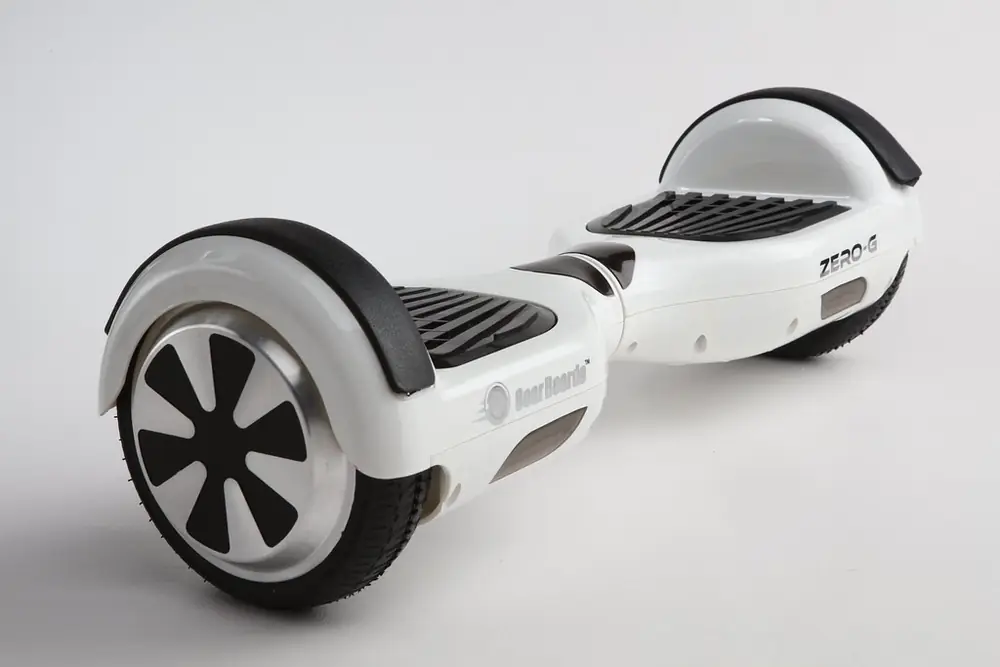
The Short Answer
Choose an electric scooter if you want to actually get somewhere: it's faster, goes farther on a charge, has a handlebar and real brakes, handles rough pavement better and is covered by clearer laws in most US states. It's the better pick for commuting, campus trips and most teens and adults.
Choose a hoverboard if you want a compact, playful ride for short loops on smooth ground: driveways, cul-de-sacs, parks and indoor spaces like gyms. Hoverboards are slower, hands-free and easy to stash in a closet, which makes them popular with kids and for fun rather than transport.
Whichever you pick, buy a model certified to UL 2272, match it to the rider's age and weight rating, and wear a helmet.
Hoverboard vs Electric Scooter at a Glance
| Hoverboard | Electric Scooter | |
|---|---|---|
| How you ride | Stand on two foot pads between two side-by-side wheels; hands free | Stand on a deck between front and rear wheels; hold a handlebar |
| Speed and steering | Lean to go, slow and turn | Thumb or twist throttle; turn the handlebar |
| Brakes | No hand brake; you lean back to slow down | Hand-lever, electronic and/or foot brake, by model |
| Learning curve | Steeper; balance is the skill | Gentler for most beginners |
| Typical listed top speed | About 6–10 mph (knee-steered models up to about 12 mph) | About 13–22 mph for commuters; much higher on performance models |
| Typical listed range | Short: often under 10–15 miles, or listed as ride time | About 10 to 40+ miles depending on battery |
| Wheels | Usually about 6.5–10.5 inches | Usually about 6.5–10 inches on commuters, larger on off-road models |
| Carrying | Short and compact; doesn't fold | Many fold, but they stay long and are often heavier |
| Best ground | Smooth, flat pavement and indoors | Streets, bike lanes and rougher pavement |
| Typical use | Fun, short rides, kids and teens | Commuting, errands, campus, last-mile trips |
Speeds and ranges are maker or listing claims gathered for our hoverboard speed and e-scooter speed guides. Real-world numbers drop with rider weight, hills, cold weather and riding style.
How Each One Works
Hoverboards: Self-Balancing on Two Wheels
A hoverboard (also called a self-balancing scooter) has two wheels side by side, each with its own hub motor, plus gyroscope and tilt sensors under each foot pad. Lean both feet forward and the motors drive the wheels to stay under you, which is how leaning controls speed. Push one foot's toes forward and that wheel speeds up, turning you. There's no hand brake: you slow down by standing upright and leaning back. Most boards run on lithium-ion packs of about 36 volts. Our guide to how hoverboards work explains the sensors and turning in detail.
Knee-steered models such as the Segway Ninebot S2 add a bar between your knees for turning. They sit between a basic hoverboard and a small personal transporter.
Electric Scooters: A Kick Scooter With a Motor
An electric scooter keeps the familiar kick-scooter layout: a deck, a front wheel and a rear wheel in line, and a stem with handlebars. A battery, usually in the deck or stem, powers a hub motor in one or both wheels. You push off (on many models), press a throttle on the handlebar and steer like a bike. Braking comes from hand levers connected to disc or drum brakes, electronic or regenerative braking, a rear fender you step on, or a mix. Many adult scooters fold at the stem. Our electric scooter hub covers the types.
Which Is Easier to Learn?
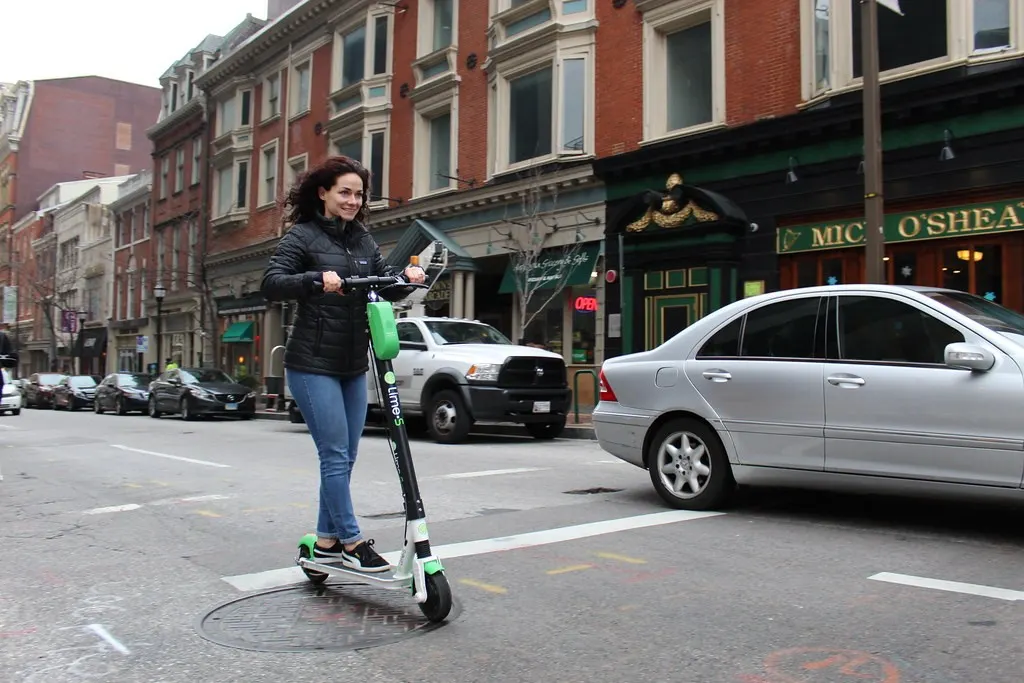
For most people, the electric scooter. Competitor guides and scooter makers broadly agree on this, and the reason is simple: a scooter gives you something to hold and a lever to squeeze. Anyone who has ridden a kick scooter or bicycle already understands steering with handlebars and braking with their hands, so the main things to learn are smooth throttle control and how quickly the brakes bite. See how to ride an electric scooter for first-ride steps.
A hoverboard asks you to do everything with your feet and balance. Stepping on, holding still, leaning gently and stopping all depend on small weight shifts, and over-correcting is the classic beginner wobble. Most riders get the hang of it with practice, and many boards help with a slower training mode (Razor's Hovertrax 2.0, for example, lists Training and Normal modes). Stepping off is the tricky part: you need to stop first and step off backward. Our how to ride a hoverboard guide walks through it.
| Skill | Hoverboard | Electric Scooter |
|---|---|---|
| Getting on | One foot, then the other, while the board balances | Stand on the deck, kick off, then press the throttle |
| Speeding up | Lean forward from the ankles | Press the throttle |
| Turning | Push one foot's toes forward | Turn the handlebar and lean slightly |
| Stopping | Stand upright, then lean back | Release the throttle and squeeze the brake |
| Main beginner mistake | Big, jerky weight shifts and looking down | Grabbing the front brake hard or too much throttle |
Speed, Range and Hills
Speed. Most hoverboards are listed at about 6 to 10 mph, small kids' boards at about 5 to 8 mph, and the fastest knee-steered models at about 11 to 12.4 mph. Budget commuter scooters are listed at about 13 to 15.5 mph (the Gotrax GXL V2 lists 15.5 mph), mid-range commuters about 18 to 22 mph (the Segway Ninebot Max G2 lists 22 mph), and performance scooters 30 mph or more. Each maker sets a top speed in software, and many models of both types offer slower beginner modes. Full lists are in how fast hoverboards go and how fast electric scooters go.
Range. This is the biggest practical gap. Hoverboard makers often list ride time rather than distance: Razor lists up to 40 minutes of continuous use for the Hovertrax 2.0, and Hover-1 lists a 9-mile range for its Ultra. Even entry-level scooters list comparable or longer ranges (the Hiboy S2 Lite lists up to 10.6 miles and the Gotrax GXL V2 up to 12), and commuter models go much farther; the Segway Ninebot Max G2 lists up to 43 miles. Scooter batteries are bigger because there's room for them in the deck. For longer trips, see long-range electric scooters.
Hills. Climbing depends on motor power, battery voltage and rider weight. Hoverboards can handle gentle slopes but slow down and are harder to control on steeper ones, especially downhill, where you can only brake by leaning back. Commuter scooters with stronger motors, and especially dual-motor models, generally climb better and have hand brakes for the way down. Check each model's listed climbing grade if your route is hilly.
Portability, Weight and Storage
A hoverboard is short and compact: it fits under a bed, in a car trunk or on a closet shelf, and some come with a carry bag. It doesn't fold, though, and it's heavier than it looks; brand comparison guides put typical boards at roughly 20 to 30 pounds, and off-road and knee-steered models weigh more. Check the listed weight for any board you'll be carrying up stairs.
Electric scooters fold at the stem, but even folded they're long. Weight varies widely: the lightest adult models on our lightweight electric scooters list are listed at about 21 to 27 pounds, while Gotrax puts typical commuter scooters at about 26 to 46 pounds and performance models far heavier. A folded scooter can roll by its wheel, which makes it easier to bring on a train or into an office than to carry in your arms, where a transit agency and building allow it. Our folding electric scooters guide compares fold designs.
Air travel: several major US airlines banned hoverboards after the 2015 fires because of their lithium-ion batteries, and e-scooter battery packs fall under airline lithium-battery rules too. Check your airline's current policy before flying with either.
Comfort, Terrain and Weather
Most standard hoverboards roll on wheels of about 6.5 inches, which feel cracks, gravel and expansion joints sharply; a small rock can stop a wheel and pitch you forward. Larger 8.5- to 10.5-inch boards, including off-road hoverboards, cope better with grass, dirt paths and rough pavement, but hoverboards are still happiest on smooth, flat ground.
Scooters range from small solid tires on budget models to larger air-filled tires and suspension on commuters; the Max G2, for example, lists front and rear suspension. Bigger, pneumatic tires smooth out a commute, and the in-line wheelbase plus handlebars make bumps easier to manage. See electric scooter tires for solid vs air tires.
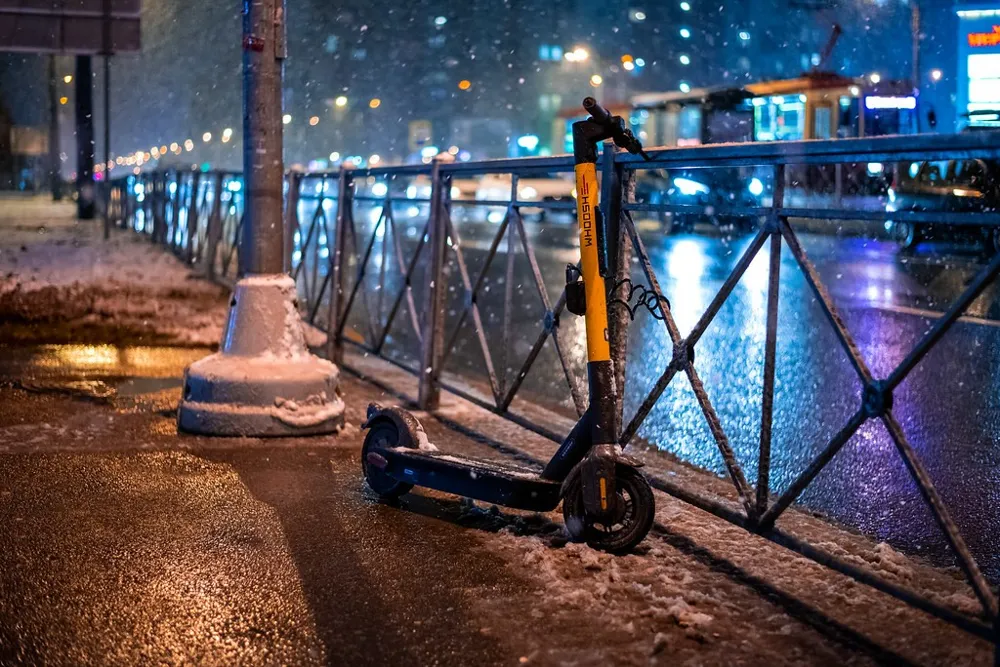
Rain and wet roads: neither is meant for puddles. Many e-scooters list an IP water-resistance rating (for example IP54 or IP55) that covers splashes, not submersion, while a Gyroor comparison guide notes that most hoverboards aren't water-resistant. Wet pavement also cuts grip and lengthens stopping distance on both. Read riding an electric scooter in the rain before heading out on a wet day.
Safety: Falls, Fires and UL 2272
Both rides share the same two big risks: falls and lithium-ion battery fires. The U.S. Consumer Product Safety Commission's April 2026 report on micromobility products shows how the pattern differs between them.
| CPSC Data, 2017–2024 | Hoverboards (Self-Balancing Scooters) | E-Scooters |
|---|---|---|
| Estimated ER-treated injuries, total | About 163,300 | About 380,000 |
| Estimated injuries in 2024 | About 10,600 (down from about 26,400 in 2018) | About 79,300 (up from about 10,600 in 2017) |
| Reported deaths | 17 | 206 |
| Most common fatal hazard | Fire (11 of 17 deaths) | Motor vehicle crashes (140 deaths) |
| Fire-related deaths | 11 | 15 |
Source: CPSC staff report, "Micromobility Products-Related Deaths, Injuries, and Hazard Patterns: 2017–2024" (April 2026). Death counts for 2023–2024 are incomplete because of reporting lags.
Read these numbers carefully. They are totals, not rates: the CPSC doesn't track how many people own or ride each device or how far they go, so the table can't tell you which is riskier per ride. E-scooter injuries have climbed as scooters, including rentals, became common on city streets, and scooters are ridden in traffic at higher speeds, which is why crashes with cars dominate their death toll. Hoverboard injuries have fallen since their 2015–2016 peak, and hoverboards are mostly ridden off-road, so fire is their leading cause of death. The CPSC's investigations found that hoverboard fires most often happened during or just after charging.
UL 2272 Covers Both
UL 2272 is the safety standard for the electrical systems of personal e-mobility devices, testing the battery, charger and drive system together. It applies to hoverboards and e-scooters alike. Look for the certification mark on both the box and the product; a "UL-compliant battery" claim alone doesn't mean the whole device is certified. The CPSC also says certification lowers the fire risk but can't guarantee a device won't overheat. On June 24, 2026, the CPSC proposed making lithium-ion battery standards mandatory for micromobility products, with both hoverboards and e-scooters in scope; as of November 2026 the rule wasn't final. Are hoverboards safe? covers the fire history, recalls and the proposed rule in depth.
Safety Habits for Either Ride
- Charge with the original charger, where you can watch it, never overnight, and let the device cool after riding first. See the hoverboard charging guide and e-scooter charger guide.
- Wear a certified helmet every ride, plus wrist guards and knee pads while learning. Faster scooter riders may want more head coverage; see skate helmets.
- Start in the slowest mode and move up only once you can stop on demand.
- Stop using any device that smells burnt, swells, smokes or gets unusually hot, and check CPSC.gov for recalls on your model.
Where You Can Legally Ride
Electric scooters have clearer rules. Most US states now have specific e-scooter laws covering a maximum speed (often about 15 to 20 mph), minimum age, helmets and where you can ride. California, for example, limits motorized scooters to 15 mph, bans sidewalk riding, requires helmets for riders under 18 and requires a driver's license or instruction permit, while New York State sets a 20 mph maximum and a minimum age of 16. Cities can add stricter limits. Our guides to e-scooter street laws and scooter license rules cover the details.
Hoverboards are a grayer area. Far fewer state laws mention self-balancing boards by name, so rules are often set by cities, parks, campuses, malls and transit agencies, and some ban them from roads or sidewalks or set minimum ages. In practice, hoverboards belong on private property, driveways and quiet paths where allowed, not in traffic. In the UK, privately owned e-scooters and hoverboards are both treated as powered transporters that can't legally be ridden on public roads or pavements; only rental e-scooters in government trial areas are allowed.
Rules last checked November 2026. This is general information, not legal advice; check your state and city rules before riding in public.
Age Suitability: Which Is Better for Kids?
Both come in kid-sized versions, and the maker's age, weight and height rating is the place to start. Some examples from listings and maker pages:
| Model | Type | Listed Age | Listed Top Speed |
|---|---|---|---|
| Hover-1 My First Hoverboard | Hoverboard | 5+ | 5 mph |
| Segway Ninebot C2 Lite | Kids' e-scooter | 6–10 | Check listing |
| Razor Hovertrax 2.0 | Hoverboard | 8+ | 8 mph |
| Segway Ninebot C2 Pro | Kids' e-scooter | 9+ | Up to 12.4 mph |
| Jetson Plasma X | Hoverboard | 12+ | 10 mph |
| Razor E300S | Seated e-scooter | 13+ | Up to 15 mph |
For younger kids, a small hoverboard in training mode keeps speeds low and is ridden in the driveway or yard rather than on streets, but it does take more balance and has no hand brake. A kids' e-scooter gives a handlebar and brakes that feel familiar from a kick scooter. For teens, a scooter is usually the more useful ride, since it can handle real trips; check your state's minimum age for e-scooters on public roads.
Medical groups are cautious about both: the American Academy of Pediatrics advises against children under 16 operating unlicensed motorized wheeled vehicles, and the CPSC advises supervising all children who use them. Compare kid-sized options in hoverboards for kids, electric scooters for kids and electric scooters for teens.
Maintenance and Ownership
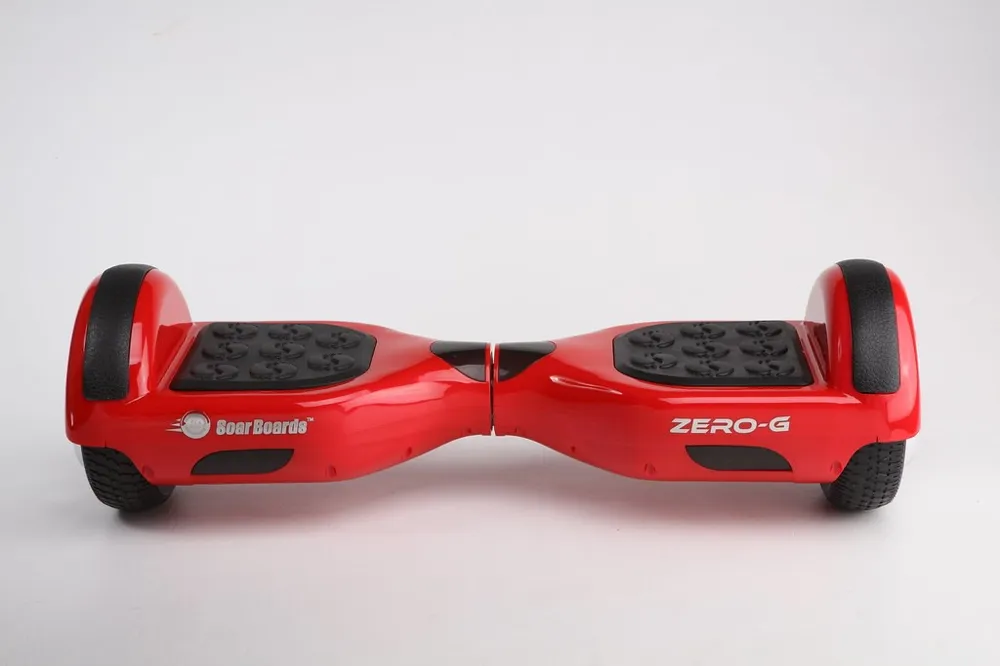
Hoverboards have fewer moving parts: no brakes, no folding latch, no throttle cable. Upkeep is mostly keeping it dry and clean, checking tires, recalibrating when it pulls or wobbles, and caring for the battery. See hoverboard troubleshooting and battery replacement.
Scooters need a bit more attention: brake adjustment and pad wear, tire pressure and punctures on air tires, a tight folding mechanism and stem, and bolts that loosen with vibration. In exchange, commuter scooters are built for daily use, and parts and repair shops are easier to find for established brands. Our electric scooter maintenance checklist and battery life guide cover the routine. On cost, hoverboards generally sit lower than adult commuter scooters, though both run from budget to premium tiers.
Which Should You Choose?
| If You... | Choose |
|---|---|
| Commute, run errands or ride more than a mile or two | Electric scooter |
| Ride on streets, bike lanes or rough pavement | Electric scooter |
| Want the easiest learning curve and hand brakes | Electric scooter |
| Want a hands-free, playful ride for driveways, parks and smooth paths | Hoverboard |
| Need the most compact device to store in a small space | Hoverboard |
| Are buying a first powered ride for a younger child to use at home | Either, rated for their age, in a slow mode |
| Want to add a seat for go-kart fun | Hoverboard with a kart attachment |
Still weighing other rides? Compare electric scooter vs e-bike, skateboard vs scooter or the single-wheel options in Onewheel vs electric unicycle.
Popular Options Listed on Amazon
A few established models from each side, all listed with UL certification on their listings as of November 2026; confirm the mark on the box and product.
Segway Ninebot Max G2 (electric scooter): a long-range commuter listed at up to 43 miles and 22 mph, with front and rear suspension and dual brakes.
Check Price on AmazonGotrax GXL V2 (electric scooter): a light budget folder listed at 15.5 mph and up to 12 miles, with 8.5-inch tires.
Check Price on AmazonSegway Ninebot S2 (hoverboard): a knee-steered board listed at 11.2 mph with 10.5-inch tubeless tires, for teens and adults within its height rating.
Check Price on AmazonRazor Sonic Glow Hovertrax (hoverboard): a kids' and beginner board listed for ages 8+ at up to 8 mph, with LED lights and a Bluetooth speaker.
Check Price on AmazonFor full roundups, see the best electric scooters and best hoverboards.
Frequently Asked Questions
Is a hoverboard or an electric scooter easier to ride?
For most beginners, an electric scooter. You hold a handlebar, use a thumb throttle and squeeze real brakes, while a hoverboard is steered and stopped only by shifting your weight, which usually takes more practice.
Which is faster, a hoverboard or an electric scooter?
Electric scooters. Most hoverboards are listed at about 6 to 10 mph, while budget commuter scooters are listed at about 13 to 15.5 mph and mid-range models at about 18 to 22 mph.
Can you commute on a hoverboard?
Only for very short, smooth trips. Hoverboards have small wheels, no brakes you can grab and shorter range, and many local laws don't clearly cover them, so an electric scooter is the usual choice for commuting.
Is a hoverboard or an electric scooter better for a 10-year-old?
Either can work if it is rated for the child's age and weight, kept in a slow mode and ridden with a helmet and adult supervision. Kids' e-scooters give a handlebar and brakes; small hoverboards are slower and stay off the road. The American Academy of Pediatrics advises against children under 16 operating unlicensed motorized wheeled vehicles.
Are hoverboards more dangerous than electric scooters?
They carry different risks. CPSC data for 2017–2024 tie most e-scooter deaths to motor vehicle crashes, while most hoverboard deaths were linked to fires. Falls cause most injuries on both, and the data don't show which is riskier per mile ridden.
Do hoverboards and electric scooters need UL 2272 certification?
UL 2272 covers the electrical systems of personal e-mobility devices, including both hoverboards and e-scooters. Look for the certification mark on the box and the product, not just on the battery or charger.