Best Skateboard Helmets That Are Properly Certified (2026)
Five certified skate helmets and a simple guide to safety standards, fit and replacing a helmet after a crash.
Why the Right Skate Helmet Matters
Falls are part of skateboarding, and head injuries are the most serious risk. A good skate helmet sits lower on the back of the head than most bike helmets, has a hard outer shell that slides on concrete and is certified to a recognized safety standard. The best helmet is a certified one that fits you properly and that you'll actually wear every session.
Triple Eight Certified Sweatsaver
Best overall skate helmet
- Dual certified: CPSC bike and ASTM F1492
- Sweatsaver liner
- Classic skate shape
Pro-Tec Classic Certified
Best classic skate helmet
- Listed as CPSC, ASTM F1492 and EN 1078 certified
- EPS foam inside an ABS shell
- Iconic skate design
Triple Eight Gotham MIPS
Best with MIPS
- MIPS rotational protection layer
- Listed as CPSC and ASTM certified
- Skate-style shell
Skateboard Helmets Compared
| Helmet | Listed Certifications | Notable Feature |
|---|---|---|
| Triple Eight Certified Sweatsaver | CPSC, ASTM F1492 | Sweat-absorbing liner |
| Pro-Tec Classic Certified | CPSC, ASTM F1492, EN 1078 | Classic skate shell |
| Triple Eight Gotham MIPS | CPSC, ASTM | MIPS layer |
| S1 Lifer | Dual certified (check listing) | Designed with multi-impact protection |
| Thousand Heritage 1.0 | Check listing (sold as a bike helmet) | Style-focused design |
Certifications are as listed by makers and retailers at the time of writing. Always check the label inside the helmet.
The Best Skateboard Helmets
1. Triple Eight Certified Sweatsaver
Triple Eight is one of the most common helmet brands at skateparks. The Certified Sweatsaver is dual certified to the CPSC bike standard and ASTM F1492 and uses a Sweatsaver liner designed to absorb sweat. It comes in several sizes with fit pads to fine-tune the fit.
Good to Know
- Dual certified
- Comfortable liner
- Classic skate look
Watch Out For
- Limited ventilation in hot weather
2. Pro-Tec Classic Certified
Pro-Tec's Classic is one of skateboarding's most recognizable helmets. The Certified version uses an EPS foam liner inside an ABS shell and is listed as meeting CPSC, ASTM F1492 and the European EN 1078 standard. Make sure you buy the "Certified" version, since some Pro-Tec models aren't certified.
Good to Know
- Multiple certifications
- Tough ABS shell
- Iconic shape
Watch Out For
- Check you're buying the certified model
3. Triple Eight Gotham MIPS
The Gotham adds a MIPS layer, designed to reduce rotational forces in angled impacts. It's listed as CPSC and ASTM certified and keeps a skate-style shell. It's a good choice for riders who want an extra layer of protection.
Check Price on Amazon4. S1 Lifer
The S1 Lifer is a dual-certified skate helmet designed to handle repeated impacts. It's popular with park and bowl skaters and comes in many colors and sizes. Check the listing for the specific certifications on the version you buy.
Check Price on Amazon5. Thousand Heritage 1.0
Thousand's Heritage helmet is a style-focused option sold as a bike helmet. It suits casual cruising and commuting riders who want a classic look. For park and trick skating, choose a helmet with ASTM F1492 certification.
Check Price on AmazonHelmet Safety Standards Explained
| Standard | What It Covers |
|---|---|
| ASTM F1492 | US standard for skateboarding and trick roller skating helmets |
| CPSC 16 CFR 1203 | Mandatory US standard for bicycle helmets |
| EN 1078 | European standard for bike, skateboard and roller skate helmets |
Dual-certified helmets meet both ASTM F1492 and the CPSC bike standard, which makes them suitable for skating and biking. Uncertified "skate-style" helmets may look the same but haven't been tested to these standards.
How to Choose a Skate Helmet
Fit Comes First
- Measure your head circumference about one inch above your eyebrows.
- Choose the size from the maker's chart.
- Put the helmet on level, not tilted back.
- Adjust the straps so they form a V under each ear.
- Buckle it snug: you should fit about one finger under the strap.
- Shake your head. The helmet shouldn't move independently.
Many skate helmets include extra pads to fine-tune the fit.
Coverage
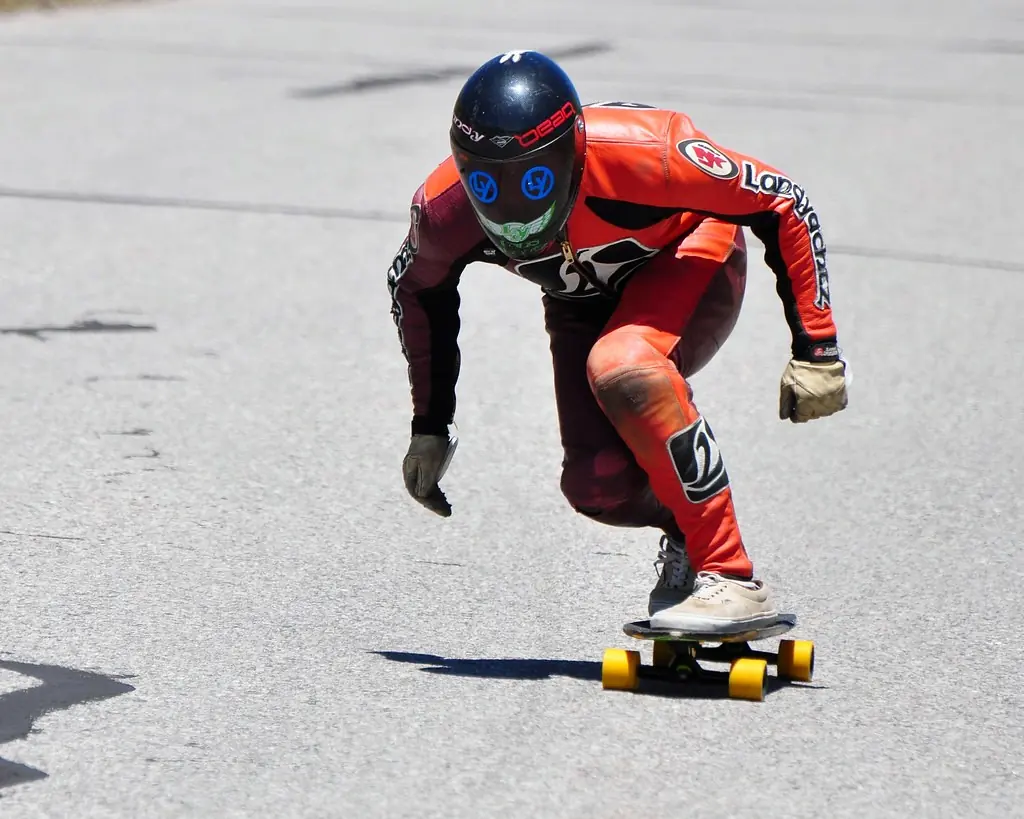
Skate helmets cover more of the back of the head than many bike helmets. For downhill longboarding, a full-face helmet adds face and jaw protection.
Comfort and Ventilation
A helmet you find comfortable is a helmet you'll wear. Look at liner materials, vents and weight, especially if you skate in hot weather.
When to Replace Your Helmet
- After a significant impact, even if there's no visible damage, unless the maker states it's designed for multiple impacts.
- If the foam is cracked, crushed or separating from the shell.
- If straps, buckles or fit pads are damaged.
- According to the maker's recommended replacement interval.
Kids' Skateboard Helmets
Children need helmets that fit their head size, not "room to grow". Many brands make youth and kids' versions of their skate helmets with smaller shells and extra fit pads. The same certifications apply: look for ASTM F1492 and the CPSC bike standard. Replace children's helmets as they outgrow them and after any significant impact.
Caring for Your Helmet
- Clean the shell with mild soap and water; avoid solvents, which can weaken materials.
- Wash removable liners and pads by hand and air-dry them.
- Don't leave the helmet in a hot car or direct sun for long periods.
- Don't add stickers or paint that the maker advises against.
- Store it where it won't be crushed.
One Helmet for Several Sports?
A dual-certified skate helmet works for skateboarding, roller skating, scooters and biking. For snow sports, use a helmet certified to a snow standard such as ASTM F2040. For downhill longboarding and BMX dirt jumps, a full-face helmet adds face and jaw protection.
More Protective Gear
A helmet protects against the most serious injuries; wrist guards and pads protect against the most common ones. See skateboard safety gear, skateboard knee pads and wrist guards. Wondering whether you really need one? Read do you need a helmet to skateboard?
Frequently Asked Questions
What certification should a skateboard helmet have?
Look for ASTM F1492, the US standard for skateboarding and trick roller skating helmets. Many skate helmets are also certified to the CPSC bike standard. A dual-certified helmet meets both.
How should a skateboard helmet fit?
Snug and level, sitting about two finger-widths above your eyebrows. It shouldn't rock forward or back. The straps should form a V under each ear, and the buckle should be snug with room for about one finger under the chin.
When should I replace my skateboard helmet?
Replace any helmet after a significant impact, even if it looks fine, unless the maker says it's designed for multiple impacts. Also replace it if the foam is cracked or compressed or the straps are damaged, and follow the maker's age guidance.
What is MIPS in a helmet?
MIPS is a low-friction layer inside some helmets designed to reduce rotational forces on the head in angled impacts. It's an added feature, not a certification.
Can I use a bike helmet for skateboarding?
A CPSC-certified bike helmet offers protection, but skate helmets usually cover more of the back of the head. A dual-certified skate helmet is the best choice for skateboarding.