Bike Helmets That Protect, Fit and Stay Cool (2026)
Road, commuter and light-up helmets from Smith, Giro, Thousand, Lumos and Lazer, with safety standards, rotational protection and fit explained in plain English.
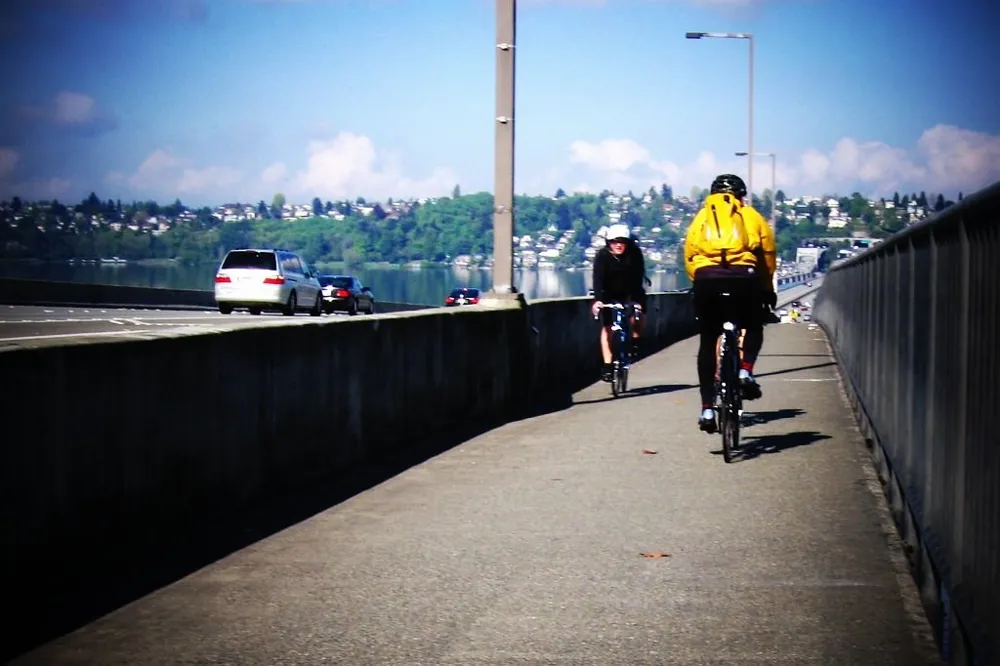
How to Pick the Right Bike Helmet
A good bike helmet is certified, fits snugly, and is comfortable enough that you wear it every ride. For road riding and commuting, the main choices come down to ventilation and weight for fast or long rides, and visibility and practical features such as lights and visors for city riding. This guide covers road, commuter and urban helmets. For trail riding see our mountain bike helmets and full-face helmets.
Three things to check on any helmet:
- Certification: a CPSC label in the US (EN 1078 in Europe).
- Fit: the right size for your head measurement, with a dial that adjusts the fit.
- Rotational protection: optional but common, such as MIPS or a brand's own system.
Smith Signal MIPS
Best for most road riders and commuters
- MIPS rotational system
- 21 vents, 300g (size M)
- CPSC and EN 1078 certified
Giro Register MIPS II
Best budget helmet
- Universal adult fit (54–61 cm)
- MIPS and one-hand dial fit
- Ponytail-compatible, removable visor
Thousand Chapter MIPS
Best urban commuter helmet
- Magnetic rechargeable rear light
- Magnetic buckle and visor
- Lock channel to secure it with your bike
Bike Helmets Compared
| Helmet | Style | Rotational System | Weight / Vents | Standout Features |
|---|---|---|---|---|
| Smith Signal MIPS | Road and commuter | MIPS | 300g (M), 21 vents | Eyewear storage, VaporFit dial |
| Giro Register MIPS II | Recreational and commuter | MIPS | Not listed; large vents | Universal fit 54–61 cm, removable visor |
| Thousand Chapter MIPS | Urban commuter | MIPS | 8 vents | Magnetic rear light, lock channel, magnetic buckle |
| Lumos Ultra MIPS | Commuter, light-up | MIPS (or standard) | 370–450g by size (MIPS) | Front, rear and turn-signal LEDs |
| Lazer Tonic KinetiCore | Road | KinetiCore | 240g (M), 18 vents | Eyewear docks, rear LED mount |
| Giro Aries Spherical | Performance road | MIPS Spherical | About 265–270g (M) | Roc Loc 5+ Air fit, eyewear ports |
Specs are from each maker's listing at the time of writing. Weights vary by size, and models are updated often, so check the current version and its certification label before buying.
The Best Bike Helmets
1. Smith Signal MIPS
A versatile road and commuter helmet with MIPS, 21 fixed vents and a listed weight of 300g in size M. Smith's VaporFit dial gives 270 degrees of adjustment, and the vents and channels are designed to hold sunglasses and reduce lens fogging. Smith lists CPSC, EN 1078 and Australian/New Zealand certification. A wide size range makes it easier to find a good fit.
Good to Know
- Good all-round ventilation
- Works with sunglasses
- Mid-range price tier
Watch Out For
- No visor or built-in light for city riding
2. Giro Register MIPS II
One of the most widely sold budget helmets. Giro's Universal Adult size fits heads from 54 to 61 cm, with a Universal Women's (50–57 cm) and Universal X-Large (58–65 cm) also listed. It uses MIPS, a one-handed Roc Loc Sport MIPS dial that's ponytail-compatible, an in-mold shell with a polycarbonate lower wrap and a removable visor. As with any bike helmet sold in the US, check for the CPSC label on the version you buy.
Good to Know
- Budget price tier with MIPS
- One size fits most adults
- Visor for sun and rain
Watch Out For
- Heavier and less airy than premium road helmets
- Older Register MIPS listings may still appear
3. Thousand Chapter MIPS
A city helmet with a clean, rounded look and practical touches. REI lists MIPS, 8 vents with internal channels, a magnetic USB-rechargeable rear light, a one-handed magnetic buckle, a visor and Thousand's PopLock, a hidden channel behind the logo that lets you run your U-lock or chain through the helmet when you park. Sizes run from S (21–22 in) to L (23–24 in), and it's certified to CPSC and EN 1078. The light specs differ between versions, so check the current listing.
Good to Know
- Built for everyday city riding
- Lock it with your bike
- Rear light included
Watch Out For
- Fewer vents, so warmer on hot climbs
- Reviewers say it runs slightly large
4. Lumos Ultra MIPS
A helmet built around visibility. Lumos lists 30 white front LEDs and 64 red rear LEDs, plus turn signals triggered by an included handlebar remote, the Lumos app or an Apple Watch. Automatic brake lights need a separately sold remote. It comes in standard and MIPS versions (MIPS weights are listed at 370g for S, 410g for M-L and 450g for XL), is certified to CPSC and EN 1078, has an IPX6 water-resistance rating and charges over USB-C, with 4–10 hours of runtime depending on the mode.
Good to Know
- Lights at head height
- Turn signals for traffic
Watch Out For
- Heavier than unlit helmets
- Needs regular charging
5. Lazer Tonic KinetiCore
A light road helmet at an entry price. Instead of a slip liner, Lazer's KinetiCore uses EPS foam blocks built into the liner that crumple to manage direct and rotational impacts. Lazer lists 240g in size M, 18 vents, a TurnSys dial with vertical adjustment, eyewear docks and a direct mount for a Lazer rear LED. Sizes run S (52–56 cm), M (55–59 cm) and L (58–61 cm). It's sold mainly through bike shops and outdoor retailers.
Good to Know
- Very light for the price tier
- Rotational protection without a liner
Watch Out For
- Smaller size range than some rivals
6. Giro Aries Spherical
Giro's premium road helmet. Spherical Technology, developed with MIPS, uses a ball-and-socket design in which the outer liner rotates around the inner liner in a crash. Giro lists about 265–270g in size M, a Roc Loc 5+ Air fit system that lifts the helmet slightly off the head for airflow, dual-density foam liners, eyewear docking ports and four sizes covering 51–65 cm. It's sold mainly through bike shops and specialty retailers.
Good to Know
- Light and well ventilated
- Wide size range
Watch Out For
- Premium price tier
Types of Bike Helmets

| Type | Built For | Key Traits |
|---|---|---|
| Road | Fitness, group rides, long distances | Light, many vents, eyewear ports |
| Aero road | Racing, triathlon, fast solo rides | Smoother shell with fewer vents to cut drag |
| Commuter / urban | City riding, errands | Visors, lights, reflective details, rounded shells |
| Gravel | Mixed surfaces | Road-style ventilation with a little more coverage; road or MTB helmets also work |
| Mountain bike | Trails | More rear coverage and a visor; see our MTB guide |
| E-bike / speed pedelec | Faster e-bikes | Extra coverage; some meet NTA 8776 |
| Kids' | Young riders | Look for CPSC labels for age 1+ or 5+; see below |
Road helmets save weight and maximize airflow, which matters on long, hot rides. Commuter helmets trade some ventilation for visibility features and a style that looks at home off the bike. Skate-style round helmets are popular in cities too; just check they carry the CPSC bicycle label, since skate-only helmets certified to ASTM F1492 aren't required to meet the bike standard (see our skateboard helmet guide).
Kids' helmets follow the same CPSC standard, with labels for children aged 1 and older (with extended head coverage) or 5 and older. A child should be able to see clearly and the helmet should sit level without rocking. Teaching a youngster to ride? See how to teach a kid to ride a bike and our balance bike guide.
Women's helmets must meet the same standards. Most differ only in colors, size ranges and ponytail-friendly fit systems, so choose by fit rather than label.
Bike Helmet Safety Standards: CPSC 16 CFR 1203 and Beyond
In the US, every bicycle helmet manufactured after March 10, 1999 must meet the Consumer Product Safety Commission's Safety Standard for Bicycle Helmets, 16 CFR Part 1203. Any helmet marketed for bicycling counts, including multi-sport helmets if biking is one of the intended uses. According to the CPSC's business guidance, the standard includes:
| CPSC Test | What It Checks |
|---|---|
| Impact attenuation | Helmets hit a flat anvil at about 6.2 m/s (roughly a 2 m drop) and hemispherical and curbstone anvils at about 4.8 m/s (roughly 1.2 m). Peak acceleration must not exceed 300 g. |
| Conditioning | Samples are tested at room temperature, cold, hot and after soaking in water. |
| Retention strength | An 8.8 lb (4 kg) weight drops 2 ft onto the fastened chin strap; straps must hold and stretch no more than 30 mm. |
| Positional stability | The helmet must not roll off the head form when pulled from the front or back. |
| Peripheral vision | At least 105 degrees of clear view to each side of center. |
| Labels | A certification label with the maker and date of manufacture, plus warnings on fit and hidden impact damage. |
The CPSC standard focuses on linear (straight-line) impacts. It doesn't set limits on rotational forces or concussion-level impacts, which is why independent ratings and rotational systems exist. Other standards you may see include EN 1078 (Europe, shown with a CE mark), and Australian/New Zealand standards. Look for the label inside the helmet, not just the packaging.
Rotational Protection: MIPS and Alternatives
Many crashes involve an angled impact that twists the head. MIPS (Multi-directional Impact Protection System) adds a low-friction layer inside the helmet that, according to MIPS, allows about 10–15mm of movement in any direction during an impact. The aim is to redirect some rotational energy away from the head. MIPS also states plainly that no helmet or system can protect against all injuries.
MIPS comes in several forms, including classic liners, MIPS Air and Air Node (built into the padding) and Spherical (a two-part liner). Other brands use their own systems, such as Lazer's KinetiCore, HJC's SLID and Trek's WaveCel. Rotational systems aren't required by the CPSC, so a helmet without one can still be fully certified. If rotational protection matters to you, compare helmets in independent tests such as Virginia Tech's, which measure rotation directly.
Ventilation, Weight and Aerodynamics
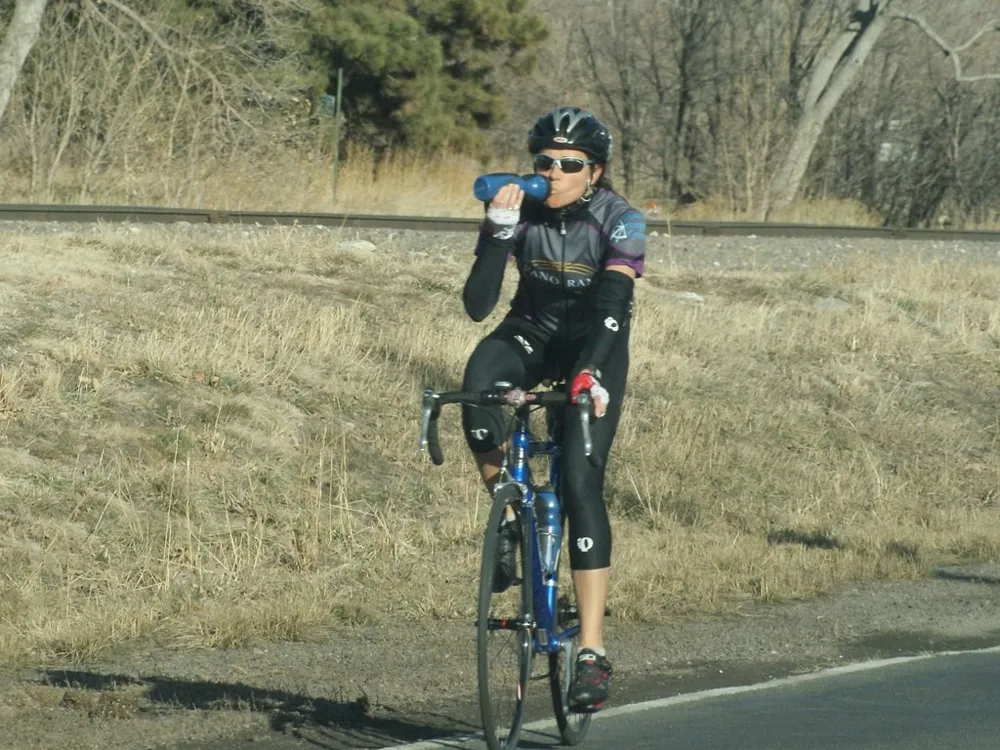
- Ventilation: more and larger vents with internal channels keep you cooler on slow climbs and hot days. Vent count alone doesn't tell the whole story; channel design and how the helmet sits matter too.
- Weight: most road helmets fall between about 240 and 350g. Lighter helmets are more comfortable on long rides, but weight doesn't indicate safety.
- Aerodynamics: aero helmets have smoother shells and fewer vents. They save the most effort at higher speeds and run warmer on climbs.
- Bug mesh and winter covers: some helmets add mesh to keep insects out, and covers are available for cold, wet rides.
Virginia Tech Helmet Ratings
The Virginia Tech Helmet Lab rates bike helmets on a five-star scale called STAR. Its bicycle test drops a helmeted head form onto an angled, sandpaper-covered anvil to mimic a real crash, at six impact locations and two speeds, and measures both linear acceleration and rotational velocity to estimate injury risk. The ratings grew out of research by Virginia Tech and the Insurance Institute for Highway Safety.
- Price isn't destiny: in its first round of tests, the lab found that price did not reliably predict performance, and several lower-cost helmets scored well.
- Ratings were tightened in July 2025. The lab raised the bar for five stars because helmets had improved, and the number of five-star bike helmets fell from 167 to 38. The lab says four- and five-star helmets still offer strong protection.
- Check the current list. Ratings are published on the Helmet Lab's website. Older star ratings quoted in reviews may predate the 2025 update.
Not every helmet has been tested. An unrated helmet isn't unsafe; it simply hasn't been through this extra lab test.
How to Measure and Fit a Bike Helmet
- Measure your head. Wrap a soft tape around the widest part, about an inch above your eyebrows and ears. Match the measurement to the brand's chart.
- Set it level. The front edge should sit about one to two finger-widths above your eyebrows, not tipped back on your forehead.
- Tighten the dial. Turn the rear dial until the helmet feels snug but not painful. It shouldn't move when you shake your head. Many dials also adjust up and down; set the cradle low on the back of your head.
- Adjust the side straps. They should form a "V" just below each ear lobe.
- Buckle the chin strap. You should fit about one finger between strap and chin. When you open your mouth wide, the helmet should press down on your head.
- Do the roll test. Try pushing the helmet forward and back. If it rolls off or exposes your forehead, tighten the straps or try a different size.
Head shapes vary between brands, so if a helmet pinches or leaves gaps, try another model rather than overtightening. Hats under helmets can affect fit; use a thin cycling cap if needed.
Visibility and Commuter Features
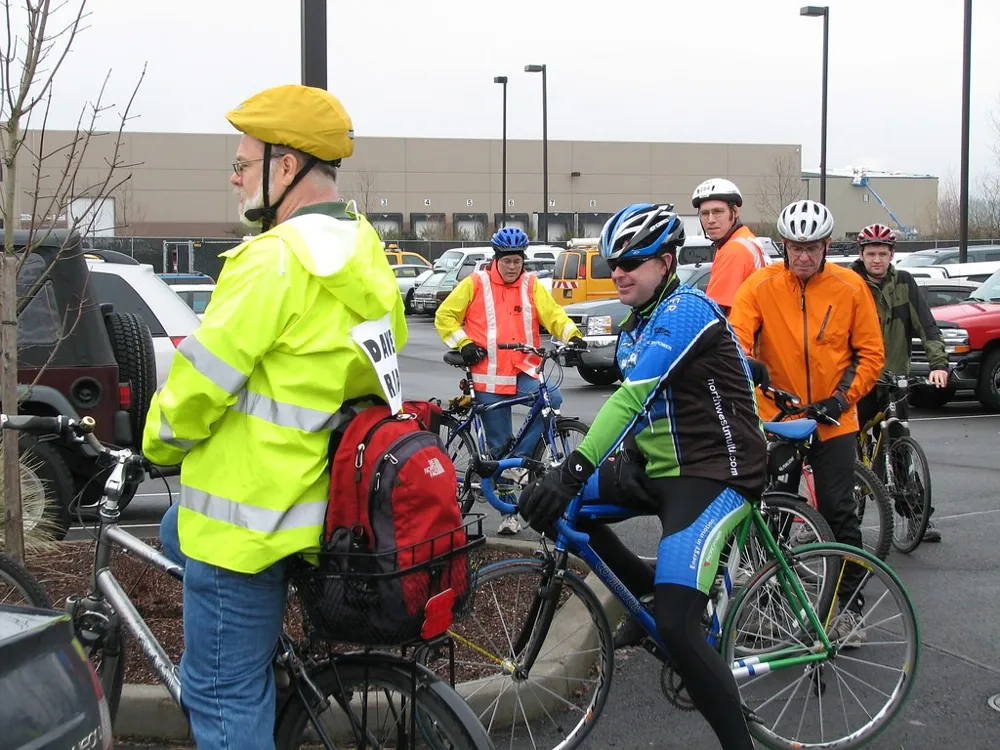
- Integrated lights: a light at head height is seen above cars and turns where you look. Built-in rear lights or turn signals are useful, but don't rely on them alone; add bike lights on the bike too.
- Bright colors and reflective details: white, yellow and high-vis colors stand out in daylight, and reflective trim helps at night.
- Visors: small visors block sun and rain, which helps in town.
- Magnetic buckles: easier to fasten with gloves or one hand.
- Lock channels: some commuter helmets let you lock the helmet with your bike; see our bike lock guide.
- Crash sensors and RECCO: some helmets accept sensors that can alert a contact after a crash, and some carry RECCO reflectors that help rescuers locate you.
Helmet Construction and Price Tiers
Most bike helmets have an expanded polystyrene (EPS) foam liner that crushes to absorb impact energy, covered by a thin polycarbonate shell. In in-mold construction the shell is fused to the foam during molding, which saves weight; some helmets add a lower shell wrap to protect the edges from dings, and premium models use dual-density foam or internal reinforcing frames so they can have bigger vents.
| Price Tier | What You Typically Get |
|---|---|
| Budget | CPSC certification, often MIPS, a basic dial fit, a universal size and fewer or smaller vents |
| Mid-range | Lighter weight, more vents, multiple sizes, eyewear storage and better padding |
| Premium | The lightest shells, the best airflow or aero shaping, advanced rotational systems and refined fit |
Every certified helmet passes the same CPSC minimum, so spend what you need for comfort and features. A helmet you'll wear every ride is worth more than a lighter one that stays on the shelf.
E-Bike Helmets and NTA 8776
E-bikes make higher speeds easy to sustain, but in the US, a CPSC-certified bike helmet remains the standard for most e-bike riders. The Netherlands published NTA 8776 in 2016 for speed pedelecs; it adds tougher curb-anvil tests and more coverage on the sides and back. The Bicycle Helmet Safety Institute suggests a helmet certified to NTA 8776 at minimum for riders who regularly travel 20 mph or faster, and a light motorcycle helmet for 28 mph e-bikes. Helmet rules for e-bike riders vary by state and class; see our e-bike laws guide and e-bike classes explained.
Bike Helmet Laws in the US
There's no federal law requiring cyclists to wear helmets. According to the Insurance Institute for Highway Safety, 21 states and Washington, DC have statewide bicycle helmet laws for younger riders, and no state requires helmets for riders of all ages. Some cities and counties have their own rules.
| Riders Covered | States |
|---|---|
| 17 and younger | California, Connecticut, Delaware, Hawaii, New Mexico |
| 16 and younger | Massachusetts, New Jersey |
| 15 and younger | Alabama, Florida, Georgia, Maine, Maryland, New Hampshire, North Carolina, Oregon, Rhode Island, Tennessee, Washington DC |
| 14 and younger | West Virginia |
| 13 and younger | New York |
| 11 and younger | Louisiana, Pennsylvania |
Last checked November 2026 using the IIHS helmet law table. Laws change, and local ordinances and e-bike rules may be stricter, so check your state and city before you ride. This is general information, not legal advice.
When to Replace a Bike Helmet
- After any crash or hard knock where your helmet hits something, even if it looks fine. The CPSC requires helmets to carry a warning that impact damage may not be visible. Foam crushes to absorb energy and doesn't fully recover.
- When it's damaged: cracks in the foam or shell, dents, frayed straps or a broken buckle or dial.
- When it no longer fits, which is common with growing kids.
- With age: follow your maker's guidance, as materials and pads wear over time.
Helmet Care
Clean the shell with mild soap and water and hand-wash removable pads, then air dry. Avoid solvents and harsh cleaners; the CPSC requires helmet warnings that common cleaners such as ammonia and bleach can cause damage. Many makers also advise against stickers, paint and leaving a helmet in a hot car, so check your manual, and store it where it won't be knocked around. Never remove or modify a MIPS liner.
More Road and Commuting Gear
Round out your kit with cycling sunglasses, cycling gloves, road cycling shoes and a sturdy bike lock. Looking for a bike to go with it? See our entry-level road bikes, hybrid bikes and gravel bikes, or start with mountain bike vs road bike.
Frequently Asked Questions
What safety standard should a bike helmet meet in the US?
Every bicycle helmet made for sale in the US since March 1999 must meet the CPSC safety standard, 16 CFR Part 1203. Look for the CPSC certification label inside the helmet.
Is a MIPS helmet worth it?
MIPS is a low-friction layer designed to reduce rotational forces in angled impacts, which the CPSC test doesn't measure. It isn't required, but many safety-focused riders choose it or a similar rotational system, and it's now common even on budget helmets.
Do more expensive bike helmets protect better?
Not necessarily. All helmets sold in the US meet the same CPSC minimum, and Virginia Tech's lab found that price did not reliably predict performance in its tests. Extra cost usually buys lower weight, more ventilation and aerodynamics.
How do I know what size bike helmet to buy?
Measure around your head about an inch above your eyebrows with a soft tape and match it to the brand's size chart. If you're between sizes, try both if you can, since head shapes vary by brand.
How often should I replace my bike helmet?
Replace it after any crash where your head hit something, even if it looks fine, and whenever the foam, shell or straps are damaged. Otherwise follow your helmet maker's guidance on age.
Can I use a mountain bike helmet for road riding?
Yes. Any CPSC-certified bike helmet protects on the road. MTB helmets are usually a little heavier and have visors, while road helmets prioritize ventilation, low weight and aerodynamics.
Are adults required to wear bike helmets?
No state requires helmets for all ages statewide, but 21 states and Washington, DC have laws for younger riders, and some cities and counties have their own rules. Check your local law.
Do I need a special helmet for an e-bike?
A CPSC-certified bike helmet is the legal minimum for most e-bike riders. For faster Class 3 e-bikes, consider a helmet that also meets the Dutch NTA 8776 standard, which was written for speed pedelecs.