Hybrid Bikes That Handle Roads, Paths and Gravel (2026)
Fitness, comfort, dual-sport and step-through hybrids from Schwinn, Vilano, Trek, Specialized, Cannondale and Giant, with a plain-English guide to gearing, brakes, tires and fit.
What Is a Hybrid Bike?
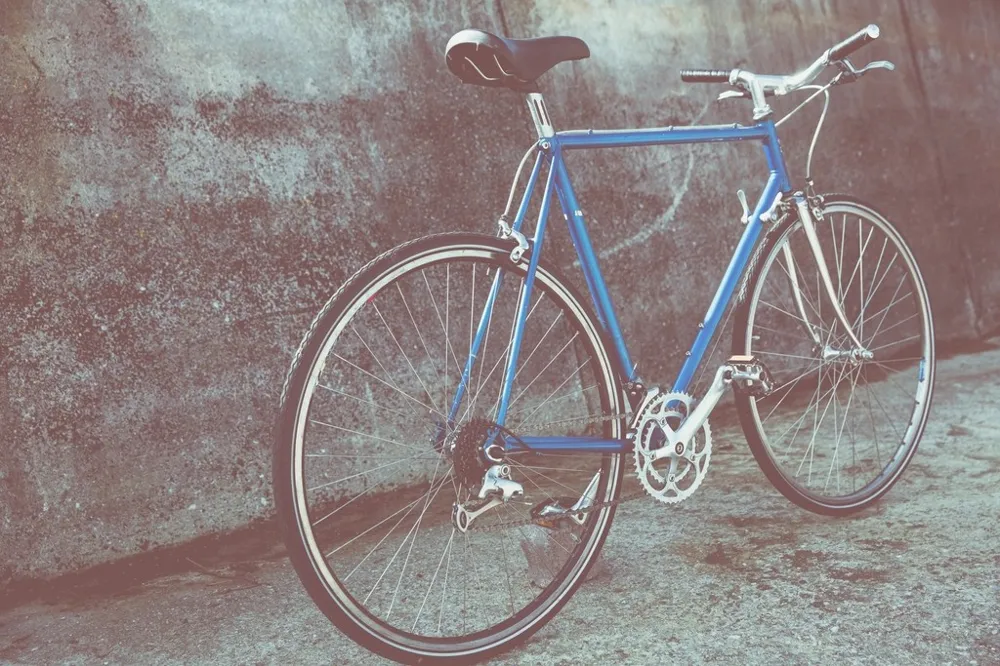
A hybrid bike sits between a road bike and a mountain bike. It usually has light 700c wheels like a road bike, flat handlebars and an upright riding position like a mountain bike, and medium-width tires that roll well on pavement but still grip on smooth gravel. Wide-range gears, disc or linear-pull brakes and mounts for racks and fenders make hybrids the default choice for commuting, fitness rides, errands and bike paths.
The category is broad. At one end are fast fitness hybrids that are basically flat-bar road bikes; at the other are relaxed comfort hybrids with suspension seatposts, wide saddles and step-through frames. In between are dual-sport hybrids with knobbier tires and a suspension fork for rail trails and dirt paths. Our picks cover all three, from budget bikes sold online to popular bike-shop models.
Schwinn GTX Dual Sport
Best for paths and light gravel
- Aluminum frame, front suspension fork
- 21 speeds
- Front and rear mechanical disc brakes
Schwinn Wayfarer
Best retro city hybrid
- Steel frame, swept-back bars
- 7 speeds
- Rear rack and fenders included
Schwinn Discover
Best comfort step-through
- Aluminum step-through frame
- Full fenders and rear rack
- Front suspension, 21 speeds
Hybrid Bikes Compared
| Bike | Style | Frame and Fork | Gears | Brakes | Tires |
|---|---|---|---|---|---|
| Schwinn GTX Dual Sport | Dual sport | Aluminum, suspension fork | 21 speeds | Mechanical disc | 700c multi-terrain |
| Vilano Diverse 3.0 | Fitness | 6061 aluminum, alloy fork | 24 speeds (3 x 8) | Disc | 700 x 35c |
| Schwinn Discover | Comfort, step-through | Aluminum, suspension fork | 21 speeds, twist shifter | Linear pull | 700c, fenders and rack |
| Schwinn Wayfarer | City, retro | Steel, rigid | 7 speeds, twist shifter | Linear pull | 700c, fenders and rack |
| Trek FX 2 Gen 4 | Fitness | Alpha Gold aluminum, alloy fork | 1 x 9 Shimano CUES | Hydraulic disc | 700 x 35mm |
| Specialized Sirrus X 2.0 | Fitness, all-surface | A1 aluminum, steel fork | 1 x 8 microSHIFT | Hydraulic disc | 700 x 42mm |
| Cannondale Quick 3 | Fitness | SmartForm C3 alloy, steel fork | 1 x 8 Shimano | Hydraulic disc | 700 x 35c |
| Giant Escape Disc 3 | Fitness, commuter | ALUXX aluminum | 3 x 7 Shimano | Mechanical disc | 700 x 38c |
Specs come from the makers' and retailers' listings and can change between model years. Check the current listing before you buy.
The Best Hybrid Bikes Online
1. Schwinn GTX Dual Sport
The GTX is Schwinn's dual-sport hybrid: an aluminum frame with a suspension fork, 21 speeds with an alloy triple crank, and front and rear mechanical disc brakes on high-profile double-wall alloy rims. Multi-terrain tires roll on pavement and grip on packed dirt, making it a good fit for rail trails, park paths and mixed commutes. The Amazon listing for the 17-inch frame suggests riders about 5'2" to 5'9" and gives a 275 lb maximum weight recommendation; check the size options before ordering.
Good to Know
- Disc brakes for wet weather
- Suspension fork softens rough paths
- Wide gear range for hills
Watch Out For
- Suspension fork adds weight
- Online bikes need assembly and tuning
2. Vilano Diverse 3.0
The Diverse 3.0 is a fitness hybrid, or flat-bar road bike, built for speed on pavement. It has a 6061 aluminum frame, a 24-speed drivetrain (a 42/34/24 triple crank with an 8-speed cassette and Shimano Tourney derailleurs), shifters integrated with the brake levers, disc brakes, Weinmann 700c rims and Kenda 700x35c tires. With no suspension fork, it's a lighter, quicker choice for fitness riding and commuting on roads.
Good to Know
- Rigid frame and fork for efficient pedaling
- Triple crank gives easy climbing gears
- Disc brakes
Watch Out For
- Entry-level components
- Sizes and rider heights vary by listing
Not sold new on Amazon when we checked; see the maker's site.
3. Schwinn Discover
A ready-to-commute comfort hybrid with a step-through aluminum frame, full fenders and a rear rack included. It has a front suspension fork, 21 speeds with a twist shifter, alloy linear-pull brakes, 700c wheels, swept-back handlebars and an adjustable-rise stem for an upright position. The Amazon listing gives a 250 lb maximum rider weight. If you want to ride in work clothes and carry a bag without buying extras, this setup saves a lot of add-ons.
Good to Know
- Fenders and rack included
- Easy step-through frame
- Very upright position
Watch Out For
- Rim (linear-pull) brakes are weaker in the wet than discs
- Heavier than rigid fitness hybrids
4. Schwinn Wayfarer
A retro-styled city hybrid with a steel step-over frame, 7 speeds with a twist shifter, linear-pull brakes, 700c wheels, swept-back handlebars, a rear cargo rack and chrome fenders. The listing suggests riders about 5'5" to 5'9" (per the Amazon listing). It's the simplest bike here: fewer gears to adjust, a relaxed position and the essentials for short trips around town.
Good to Know
- Rack and fenders included
- Simple 7-speed drivetrain
- Classic look
Watch Out For
- Steel frame is heavy
- Fewer gears for steep hills
Bike Shop Hybrids Worth Knowing
Bike-shop brands sell their hybrids through dealers and their own websites rather than Amazon. They usually cost more than online budget bikes but come with better components and shop setup. Many shops include a free tune-up after the first few weeks; ask before you buy.
5. Trek FX 2 Gen 4
The FX is Trek's best-known fitness hybrid line. The FX 2 Gen 4 uses an Alpha Gold aluminum frame with internal cable routing, an alloy fork, a 1x9 Shimano CUES drivetrain with a 40-tooth chainring and an 11-46 cassette, Tektro hydraulic disc brakes and 700x35mm Bontrager tires. There are rack, fender and kickstand mounts, sizes from XS to XL, and Stepover and Midstep frame styles.
Good to Know
- Hydraulic disc brakes
- Simple 1x shifting with a wide range
- Midstep frame option
Watch Out For
- Sold through Trek dealers and Trek's website, not Amazon
6. Specialized Sirrus X 2.0
The Sirrus X is the all-surface version of Specialized's Sirrus fitness hybrid. The 2.0 has an A1 aluminum frame, a steel fork, a 1x8 microSHIFT Acolyte drivetrain with a 12-42 cassette and a chainguard, Promax hydraulic disc brakes and wide 700x42mm Pathfinder Sport tires. It comes in six sizes from XXS to XL, plus a Step-Through version, with rack and fender mounts on the frame and fork. Specialized lists the size large at about 12.08 kg (26.6 lb).
Good to Know
- Wide tires for comfort and light gravel
- Broad size range including XXS
- Step-Through version
Watch Out For
- 8-speed cassette has bigger gaps between gears
7. Cannondale Quick 3
Cannondale's Quick is a light, sporty fitness hybrid. The Quick 3 combines a SmartForm C3 alloy frame with hidden cable routing, a steel fork, a 1x8 Shimano drivetrain (40T chainring, 11-45 cassette), Shimano MT200 hydraulic disc brakes and Schwalbe 700x35c tires. It has rack, fender and kickstand mounts plus a stem with a built-in phone mount, and comes in a traditional frame and a lower step-over version.
Good to Know
- Hydraulic disc brakes
- Clean 1x setup
- Low step-over option
Watch Out For
- 35c tires are narrower than all-surface hybrids
8. Giant Escape Disc 3
The Escape is Giant's long-running commuter and fitness hybrid. Giant's spec for the Escape Disc 3 lists an ALUXX aluminum frame, a 3x7 Shimano drivetrain (28/38/48 crank, 14-34 freewheel), Tektro mechanical disc brakes, 700x38c tires and room for tires up to 45mm, with integrated rack and fender mounts. Giant's chart covers sizes S to XL for riders from about 5'3" to 6'7".
Good to Know
- Triple crank for very easy climbing gears
- Clearance for wider tires
- Rack and fender mounts
Watch Out For
- Mechanical rather than hydraulic discs
- Specs change between model years
Types of Hybrid Bikes
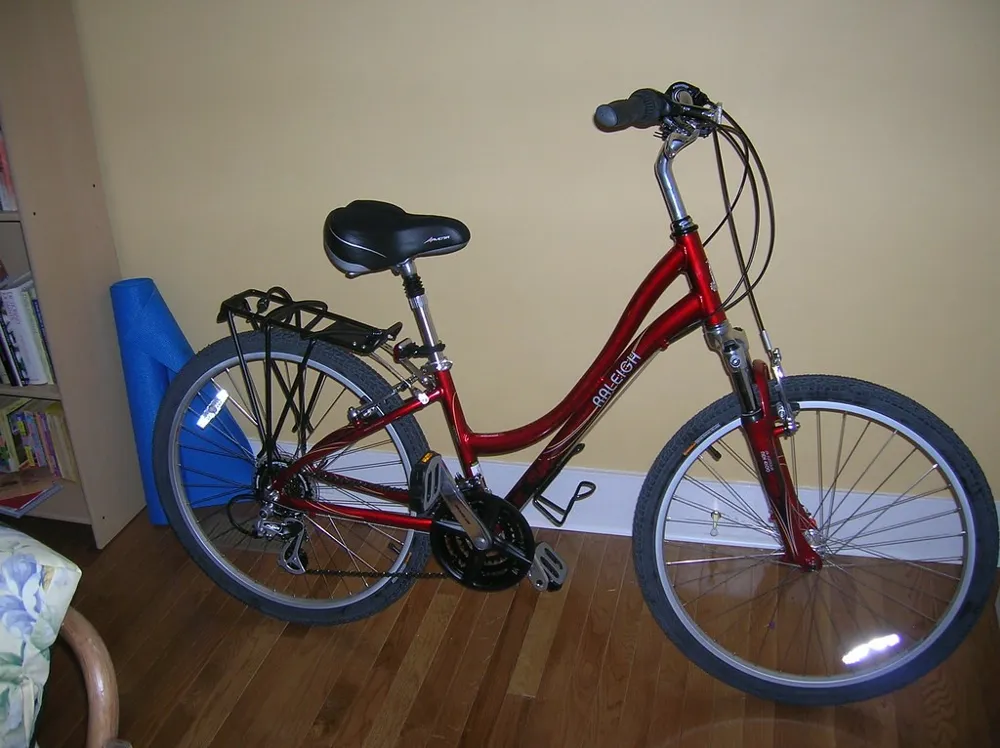
Hybrids sit on a scale between road and mountain bikes, and where a model sits on that scale tells you how fast it is on pavement and how well it copes off-road. Makers use different names, but most hybrids fall into these groups:
| Type | Typical Features | Best For |
|---|---|---|
| Fitness (flat-bar road) | Rigid fork, lighter frame, 32–40mm tires, sportier position | Fitness riding, fast commutes, paved trails |
| Comfort | Very upright, wide padded saddle, suspension seatpost or fork, often step-through | Short, relaxed rides, riders with back or wrist discomfort |
| Dual sport | Suspension fork, knobbier tires, mountain-bike-style handling | Rail trails, dirt paths, mixed surfaces |
| City and commuter | Fenders, rack, chainguard, kickstand, sometimes lights or hub gears | Riding in everyday clothes, errands, all-weather commuting |
| All-surface | Wide tires (40mm+) or 650b wheels, rigid fork | Gravel paths and rough city streets |
| Electric hybrid | Motor and battery added to a hybrid frame | Longer or hillier commutes |
Trek, for example, groups its non-cargo hybrids into comfort, active (fitness), urban/commuter and cruiser bikes, with electric versions of several. If you want a motor, see our electric bikes guide and the explainer on e-bike classes.
How to Choose a Hybrid Bike
- Where you'll ride: mostly pavement points to a fitness hybrid with a rigid fork; dirt paths and rail trails suit a dual-sport or all-surface model with wider tires.
- How far: for longer rides, a lighter bike with a slightly sportier position and a good saddle wastes less energy. For short trips, comfort and convenience matter more.
- What you'll carry: look for rack and fender mounts on the frame and fork, or buy a bike that already has them fitted.
- Fit and frame style: the right size matters more than any component. Step-through and midstep frames are easier to mount, especially in skirts or with a loaded rear rack.
- Brakes and gears: disc brakes stop more consistently in the rain; a 1x drivetrain is simplest to use, and a 2x or 3x gives the widest range for hills.
- Storage and stairs: if you carry the bike up stairs or onto a train, weight matters. Rigid aluminum bikes are lighter than steel or suspension models.
- Where you buy: online bikes are often cheaper but arrive partly assembled; shop bikes come set up and adjusted.
Hybrid Gearing: 1x, 2x, 3x and Hub Gears
| Setup | How It Works | Pros | Cons |
|---|---|---|---|
| 1x (one chainring) | One front ring, wide cassette, one shifter | Simple, fewer parts, less chain drop | Bigger jumps between gears |
| 2x (two chainrings) | Two front rings, two shifters | Wide range, closer gear steps | More to adjust and learn |
| 3x (triple) | Three front rings, common on budget hybrids | Very low climbing gears | Overlapping gears, more maintenance |
| Internal hub gears | Gears sealed inside the rear hub (often 3 to 14 speeds) | Low maintenance, shift while stopped | Heavier, narrower range, higher cost |
| Belt drive (with hub gears) | A toothed belt replaces the chain | Clean, quiet, no chain lube on trousers | Needs a compatible frame; costly to replace |
The number of "speeds" on the box isn't a quality measure on its own. A modern 1x9 can cover a similar range to an older 3x7, with simpler shifting. What matters is a low enough gear for your steepest hill and smooth, reliable shifts. If you're new to gears, our guide to shifting gears on a bike walks through the basics.
Brakes: Rim, Mechanical Disc or Hydraulic Disc
- Linear-pull (V) rim brakes are light, cheap and easy to service, but they lose power in the wet and wear your rims over time.
- Mechanical disc brakes use a cable to squeeze a rotor at the hub. They stop more consistently in rain and mud and don't wear the rims, but need occasional pad adjustment.
- Hydraulic disc brakes use fluid instead of a cable. They need less lever effort, self-adjust as pads wear and give the best control, at a higher cost.
For all-weather commuting, disc brakes are worth having, and hydraulic discs are now common on mid-range shop hybrids. For setup tips, see how to adjust bike brakes.
Tires, Wheel Size and Suspension
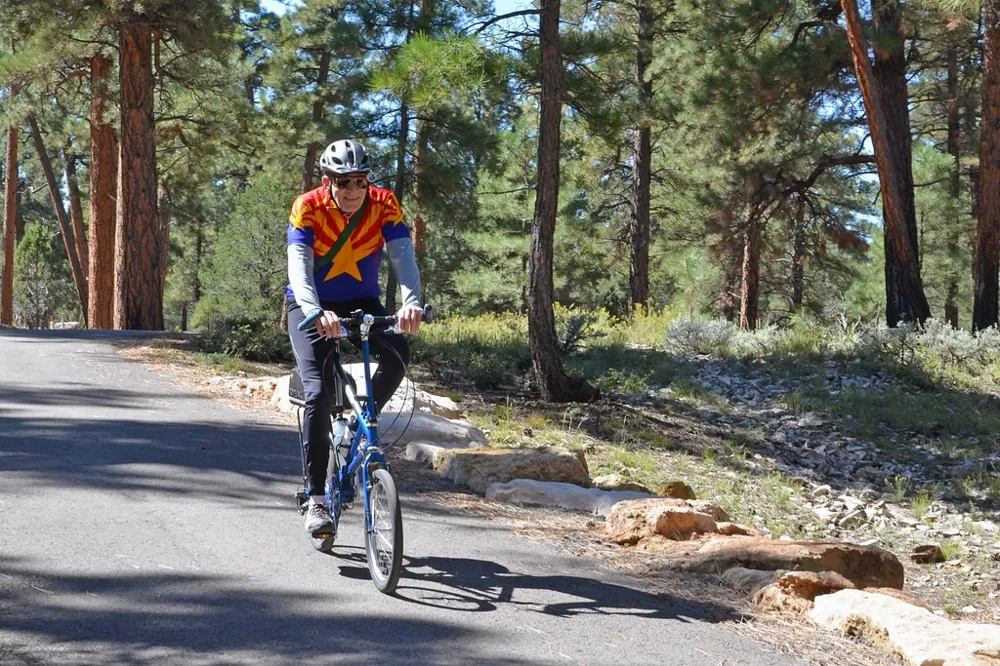
Most hybrids use 700c wheels, the same diameter as road bikes, because they roll efficiently on pavement. Some all-surface and smaller-size hybrids use 650b (27.5-inch) wheels, which leave room for wider, cushier tires, and a few touring and cruiser-style hybrids use 26-inch wheels.
- Tire width: 32–35mm tires are quick on pavement; 38–45mm tires are more comfortable on rough streets and gravel. Check the frame's maximum tire clearance before fitting wider tires.
- Tread: slick or semi-slick tires roll fastest on roads; light knobs help on dirt and gravel but hum and drag on pavement.
- Puncture protection: tires with a protective belt reduce flats on city streets, though none are puncture-proof. Learn how to fix a flat bike tire and carry a spare tube.
- Pressure: wider tires can run lower pressure for comfort. Stay within the range printed on the sidewall and check it weekly with a floor pump.
- Valves: hybrids use either Presta or Schrader valves; see Presta vs Schrader so you buy the right pump head and tubes.
Suspension forks are common on comfort and dual-sport hybrids. They help on rough paths, but budget forks add weight, have little damping and can wear out. BikeRadar and Cyclingnews both advise against cheap suspension forks, and Cyclingnews notes that wider tires generally give a smoother ride. A suspension seatpost is a lighter alternative if your main complaint is bumps through the saddle.
Frame Materials and Weight
- Aluminum is the most common hybrid frame material. It's light for the cost and doesn't rust, and it's often paired with a carbon or steel fork.
- Steel is durable and smooth-riding but heavier. It's common on retro city bikes and touring-style hybrids.
- Carbon is light and comfortable but expensive and more vulnerable to theft and knocks, so it's rare on everyday hybrids.
Hybrids have a reputation for weight, but that mostly applies to budget models with steel frames, suspension forks, racks and fenders. Rigid aluminum fitness hybrids are much lighter. Unless you carry your bike up stairs or ride steep hills daily, fit, tires and reliable components matter more than a pound or two. For context on how weight varies, our page on e-bike weight compares pedal bikes and e-bikes.
Hybrid Bike Sizing and Fit
Hybrids are usually sold in letter sizes (XS to XL) or by seat tube length in inches. Your height gets you to the right size range, and your inseam helps when two sizes overlap. Here are two makers' charts as examples:
| Size | Trek FX 2 Gen 4 Rider Height | Giant Escape Rider Height |
|---|---|---|
| XS | 4'10"–5'1" (147–155 cm) | n/a |
| S | 5'1"–5'5" (155–165 cm) | 5'3"–5'7" (160–170 cm) |
| M | 5'5"–5'9" (165–175 cm) | 5'7"–5'11" (170–180 cm) |
| L | 5'9"–6'1" (175–186 cm) | 5'11"–6'3" (180–190 cm) |
| XL | 6'1"–6'6" (186–197 cm) | 6'3"–6'7" (190–200 cm) |
Sources: Trek FX 2 Gen 4 size chart via an authorized Trek dealer listing; Giant's own Escape size chart. Charts change between models and years, so always check the one for the exact bike.
- Standover: you should be able to stand over the top tube with a little clearance. One UK retailer's Giant sizing guide suggests about 3–5 cm for hybrid and gravel bikes, measured in socks.
- Between sizes: many shops suggest the smaller hybrid for easier handling and a more upright position, or the larger if you have long legs or arms. Test ride both if you can.
- Reach: you should reach the grips with a slight bend in your elbows, without locking your arms or hunching.
- Saddle height: with the ball of your foot on the pedal at the bottom of the stroke, your knee should be only slightly bent.
For full sizing charts, inseam measuring and how hybrid sizing differs from road sizing, see our road bike size chart, which includes a hybrid section.
Accessories for Commuting and Fitness
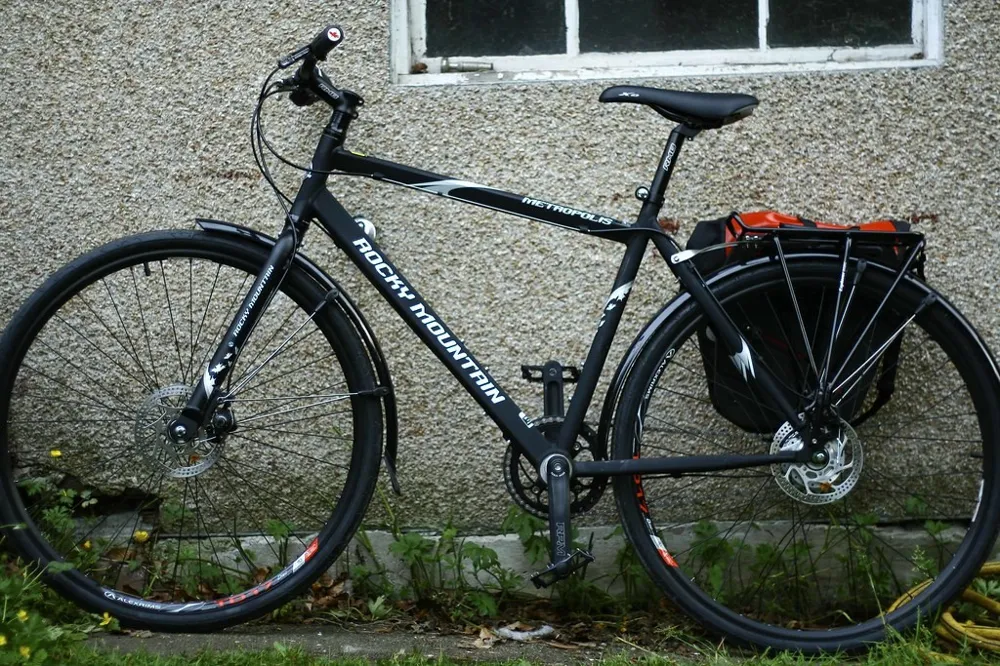
- Fenders: keep spray off your back and drivetrain. If your bike doesn't have them, look for fender mounts on the frame and fork; see bike fenders.
- Rack and panniers: carrying weight on the bike instead of your back is cooler and more comfortable. See bike panniers.
- Lights: a white front light and red rear light help you see and be seen, day and night. See bike lights.
- Lock: a quality U-lock or chain is essential for city parking. See bike locks.
- Helmet: see our road and commuter bike helmets.
- Kickstand and bell: handy for errands and shared paths; check for a kickstand mount.
- Saddle and grips: a saddle that supports your sit bones matters more than thick padding. See bike saddles.
- Bottle cage and repair kit: see water bottles and multi-tools.
Hybrid vs Road, Gravel, Mountain and Cruiser Bikes
| Bike | Handlebars and Position | Tires | Choose It If |
|---|---|---|---|
| Hybrid | Flat bars, upright | Medium (32–45mm), 700c | You want one bike for commuting, fitness and paths |
| Road bike | Drop bars, low and stretched | Narrow (25–32mm) | You want speed and long road rides; see entry-level road bikes |
| Gravel bike | Drop bars, more relaxed than road | Wide (38–50mm) | You want speed on mixed surfaces; see gravel bikes |
| Mountain bike | Wide flat bars, suspension | Very wide, knobby | You ride rough trails; see types of mountain bikes |
| Cruiser | Swept-back bars, very upright | Wide balloon tires, 26-inch | You ride short, flat routes; see cruiser bikes |
If you're torn between a hybrid and a drop-bar bike, think about distance and speed. A hybrid is easier to control in traffic and more comfortable for short rides; drop bars give more hand positions and a lower, faster position for long miles. Our mountain bike vs road bike comparison and the bike buying guide go deeper.
Buying Online vs From a Bike Shop
- Online bikes usually arrive partly assembled in a box. You'll typically attach the handlebars, front wheel, pedals and saddle, then adjust brakes and gears. A shop can do this for a fee if you're not comfortable with it.
- Shop bikes come built, adjusted and sized on the spot, often with a free follow-up tune once cables settle.
- Check the size range: some budget online hybrids come in one or two frame sizes; shop brands usually offer four to six.
- Read the spec, not the speed count: look for disc brakes, double-wall rims and named component groups rather than the number of gears alone.
Every new bicycle sold in the US must meet the CPSC bicycle rule (16 CFR Part 1512), which requires front, rear, pedal and wheel reflectors. Reflectors aren't a substitute for lights after dark.
Hybrid Bike Care and Maintenance
- Before each ride: squeeze both brakes, check tire pressure and make sure the quick-release levers or axles are tight.
- Every week or two: wipe and lube the chain, especially after wet rides; see how to clean a bike chain.
- Monthly: check brake pads for wear, look for cuts in the tires and test that gears shift cleanly.
- Every season or so: a shop tune-up adjusts cables, checks wheels for true and catches worn parts early. A repair stand makes home maintenance easier.
- Storage: keep the bike dry and out of direct sun. Wall or floor racks save space; see garage bike racks.
Riding a Hybrid Safely
- Wear a helmet that meets the CPSC standard and fits snugly.
- Use lights at night and in poor weather. Lighting and equipment laws vary by state, so check your state's vehicle code or DMV site (last checked November 2026).
- Signal your turns and ride predictably in traffic; see bike hand signals.
- Slow down on shared paths, use a bell and pass with plenty of room.
- Take extra care on wet paint, metal grates and leaves, where any tire can slip.
This is general guidance, not legal advice. Local rules on helmets, lights and where you can ride differ, so check with your city or state.
Frequently Asked Questions
What is a hybrid bike good for?
Commuting, fitness rides, errands and bike paths. Hybrids mix a road bike's light, efficient wheels with flat handlebars and an upright position, so they're comfortable and quick on pavement and can handle smooth gravel.
Is a hybrid bike good for beginners?
Yes. The upright position, flat bars and wide-range gears make hybrids one of the easiest bikes to learn on, and most have mounts for racks and fenders so they stay useful as your riding grows.
Is a hybrid bike slower than a road bike?
Usually a little, because of the upright position, wider tires and extra weight. On short commutes and city rides the difference is small, but on long, fast group rides a road bike is more efficient.
Can you ride a hybrid bike on trails?
Smooth gravel, packed dirt and rail trails are fine, especially on a dual-sport hybrid with wider tires. Hybrids aren't built for rocky singletrack, jumps or steep technical descents; use a mountain bike for that.
Do I need suspension on a hybrid bike?
Not usually. Cheap suspension forks add weight and need care, and several bike reviewers suggest wider tires at lower pressure instead. A suspension fork makes more sense if you ride a lot of rough paths or have sore wrists.
What size hybrid bike do I need?
Start with the maker's chart for your height, then check inseam and standover. Many hybrids come in S to XL; a rider around 5'7" to 5'11" is often a medium, but charts vary by brand, so check before buying.
Are hybrid bikes heavy?
Budget hybrids with steel parts, suspension forks and racks can be heavy. Rigid aluminum hybrids are lighter; Specialized, for example, lists its Sirrus X 2.0 at about 12 kg (26.6 lb) in size large.
Can you ride a hybrid bike long distances?
Yes. Many riders tour and do day rides on hybrids, especially with a good saddle, padded shorts and a rack for luggage. For long, fast road miles, a road or gravel bike with drop bars offers more hand positions.