What Size Road Bike Do I Need? Chart and Fit Guide (2026)
Match your height and inseam to a frame size, compare Trek and Giant charts, and fine-tune with standover, reach and saddle height. Hybrid sizing included.
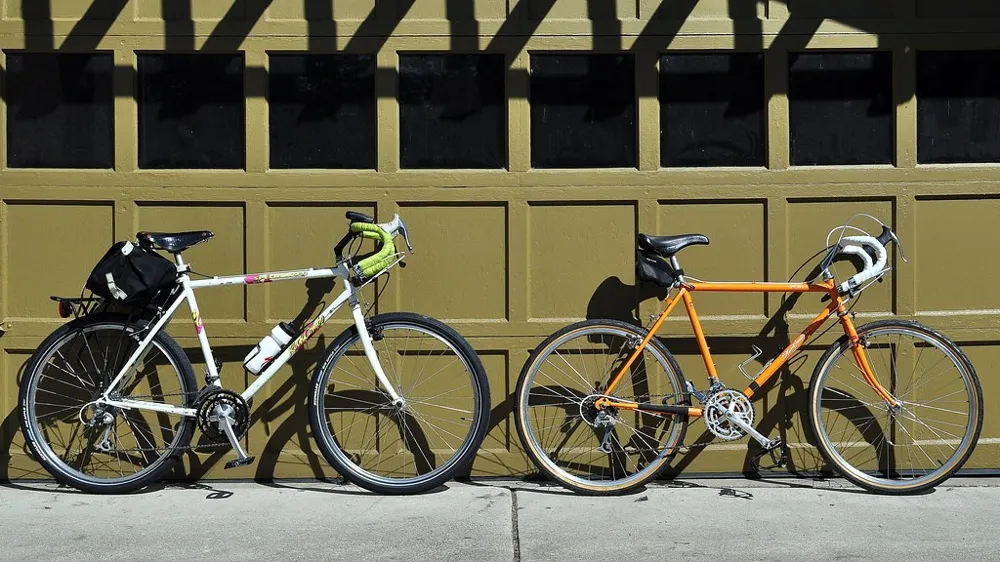
How Road Bike Sizing Works
Road bikes are sized by frame. Traditionally the size is a length in centimeters, such as 52, 54 or 56 cm, based on the seat tube or the effective top tube (a horizontal line from the top of the head tube to the seatpost). Because modern frames have sloping top tubes, many brands now quote effective top tube length or simply use letter sizes from XXS to XXL. Trek, for example, has moved its road bikes from numbered sizes to letter sizes.
Your height gets you into the right size range and your inseam helps you choose between overlapping sizes. Every brand designs its frames differently, so the chart below is a starting point, not a substitute for the maker's own chart for the exact bike you're buying. A frame that fits is more comfortable, handles better and puts your pedaling power to better use.
Road Bike Size Chart by Height
This chart combines the ranges published by several retailers and size calculators (eBicycles and Academy Sports + Outdoors print the same height bands, and BikeRadar's chart covers the same 148–198 cm span). Treat every range as approximate; the overlaps are real, and your inseam and riding style decide which side you fall on.
| Rider Height | Height (cm) | Frame Size (cm, Approx.) | Letter Size |
|---|---|---|---|
| 4'10"–5'0" | 148–152 | 47–48 | XXS |
| 5'0"–5'3" | 152–160 | 49–50 | XS |
| 5'3"–5'6" | 160–168 | 51–53 | S |
| 5'6"–5'9" | 168–175 | 54–55 | M |
| 5'9"–6'0" | 175–183 | 56–58 | L |
| 6'0"–6'3" | 183–191 | 58–60 | XL |
| 6'3"–6'6" | 191–198 | 61–63 | XXL |
Other published charts shift the bands slightly. RoadBikeRider's chart, for instance, puts 5'7" to 5'10" on a 54–56 cm medium and 5'10" to 6'1" on a 56–58 cm large. That's why the maker's chart for your bike always wins.
Brand Examples: Trek and Giant Road Bike Charts
Here's how two major brands publish their road sizing. Trek's numbered chart (as reproduced by an authorized UK Trek dealer for Domane, Emonda, Madone and Checkpoint models) includes inseam, which makes it useful for checking a borderline height.
| Trek Size (cm) | Rider Height | Inseam |
|---|---|---|
| 47 | 152–158 cm (4'11"–5'2") | 71–75 cm (28.0"–29.5") |
| 49 | 156–162 cm (5'1"–5'4") | 74–77 cm (29.1"–30.3") |
| 50 | 158–163 cm (5'2"–5'4") | 74–77 cm (29.1"–30.3") |
| 52 | 163–168 cm (5'4"–5'6") | 76–79 cm (29.9"–31.1") |
| 54 | 168–174 cm (5'6"–5'8.5") | 78–82 cm (30.7"–32.3") |
| 56 | 174–180 cm (5'8.5"–5'11") | 81–85 cm (31.9"–33.5") |
| 58 | 180–185 cm (5'11"–6'1") | 84–87 cm (33.1"–34.3") |
| 60 | 185–190 cm (6'1"–6'3") | 86–90 cm (33.9"–35.4") |
| 62 | 190–195 cm (6'3"–6'5") | 89–92 cm (35.0"–36.2") |
Newer Trek road bikes use letter sizes, so use Trek's online Size Finder for current models.
| Giant Road Size | Rider Height |
|---|---|
| XS | 157–163 cm (5'2"–5'4") |
| S | 163–170 cm (5'4"–5'7") |
| M | 170–178 cm (5'7"–5'10") |
| M/L | 178–183 cm (5'10"–6'0") |
| L | 183–191 cm (6'0"–6'3") |
| XL | 191–198 cm (6'3"–6'6") |
Giant's chart (as published in Edinburgh Bicycle Co-operative's Giant sizing guide) is shared by the Defy, TCR and Propel, but the bikes don't fit the same: the Defy has a taller front end and shorter reach, the TCR is lower and longer, and the Propel lower still. The same letter size on two models can feel quite different, which is why geometry matters.
How to Measure Your Height and Inseam
- Height: stand barefoot against a wall, heels touching it, and mark the top of your head with a book or ruler held flat. Measure from the floor to the mark.
- Inseam: wear cycling shorts or thin underwear and stand barefoot with your back to the wall and feet about shoulder-width apart.
- Push a hardback book up between your legs, spine up, as firmly as a saddle would press. Keep it level against the wall.
- Mark the top edge of the book on the wall and measure from the floor to the mark. That's your cycling inseam.
- Repeat two or three times and use the average. A helper makes this much easier.
Your cycling inseam can differ from the inseam size on your jeans, because trousers don't sit right up against your body. Use the book measurement for bike sizing.
Standover Height: The Quick Fit Check
Standover height is the height of the top tube where you stand over it. Straddle the bike with both feet flat on the floor in socks or flat shoes: you should have some clearance between you and the top tube.
- Edinburgh Bicycle Co-operative's Giant guide suggests about 2–3 cm of clearance on a road bike and 3–5 cm on a gravel or hybrid bike.
- Academy's road bike guide suggests a standover height of roughly your inseam minus 2 inches.
- Sloping top tubes give more clearance than older level top tubes, so standover alone can't tell you if the reach is right.
Makers list standover height for each size in their geometry charts. Compare it with your inseam before you buy online.
Stack, Reach and Road Bike Geometry
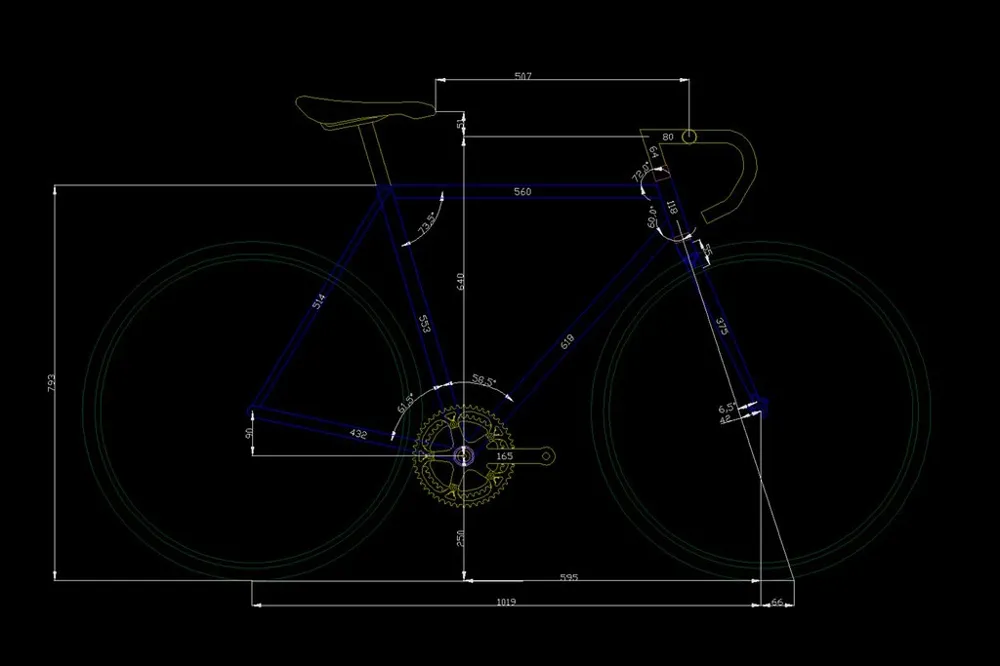
Two bikes with the same "56 cm" label can fit very differently. Geometry charts explain why:
| Measurement | What It Is | Why It Matters |
|---|---|---|
| Stack | Vertical distance from the center of the bottom bracket to the top of the head tube | Higher stack means a taller front end and a more upright position |
| Reach | Horizontal distance from the center of the bottom bracket to the top of the head tube | Longer reach means a more stretched-out position |
| Effective top tube | Horizontal length from the head tube to the seatpost | A common way to compare sizes on frames with sloping top tubes |
| Seat tube length | Bottom bracket to the top of the seat tube | The traditional size number, less useful on sloping frames |
| Standover | Height of the top tube above the ground | Clearance when you stop and straddle the bike |
Endurance road bikes (such as Giant's Defy) have more stack and less reach, which suits new riders and long days. Race bikes are lower and longer for speed. If you're new to road riding, an endurance frame in the right size is usually the more comfortable choice; see our picks for entry-level road bikes.
What If You're Between Two Sizes?
- The general rule is to size down. BikeRadar, eBicycles and Giant's retailer guide all give this advice: being overstretched is the bigger problem, and a shorter frame is easier to adjust with a longer stem or seatpost than a big frame is to shrink.
- Use your inseam. Long legs for your height often suit the larger size; a longer torso and shorter legs can suit the smaller one, depending on the brand's geometry.
- Check your arm span. Academy suggests the "ape index" (arm span minus height): a positive number points toward the larger size, a negative one toward the smaller.
- Think about your riding. RoadBikeRider notes that endurance and touring riders often prefer the larger size, while riders who want a low, racy position tend to size down.
- Test ride both when you can. Two riders of the same height can need different sizes.
Signs Your Road Bike Is Too Big or Too Small
| Too Big | Too Small |
|---|---|
| No clearance when standing over the top tube | Knees come close to the handlebars or your elbows |
| Stretched to reach the brake hoods, arms locked | Cramped, hunched upper body |
| Neck, shoulder or hand pain on longer rides | Saddle needs to be raised past the seatpost's minimum insertion mark |
| Saddle has to sit very low, with little seatpost showing | Lots of exposed seatpost and handlebars far below the saddle |
Small reach problems can be fixed with a shorter or longer stem, but a stem can't make a frame that's a full size wrong fit well.
Setting Your Saddle Height
Once you have the right frame, saddle height is the most important adjustment. A common starting point is the LeMond formula: multiply your cycling inseam by 0.883 to get the distance from the center of the bottom bracket to the top of the saddle, measured along the seat tube. With a 78 cm inseam, that's about 68.9 cm.
- Treat it as a starting point. Crank length, pedals, shoe soles and flexibility all change the ideal height, as RoadBikeRider and BikeTips both point out.
- Check it on the bike: at the bottom of the pedal stroke your knee should stay slightly bent. Academy suggests a knee bend of roughly 23–30 degrees, with the ball of your foot over the pedal axle.
- If your hips rock side to side, the saddle is probably too high; if your knees ache at the front, it may be too low.
- Make changes in small steps of a few millimeters and ride between adjustments.
Saddle shape matters too; see our guide to bike saddles. If you ride clipless, see road cycling shoes, since cleats change your effective leg length.
Hybrid Bike Size Chart
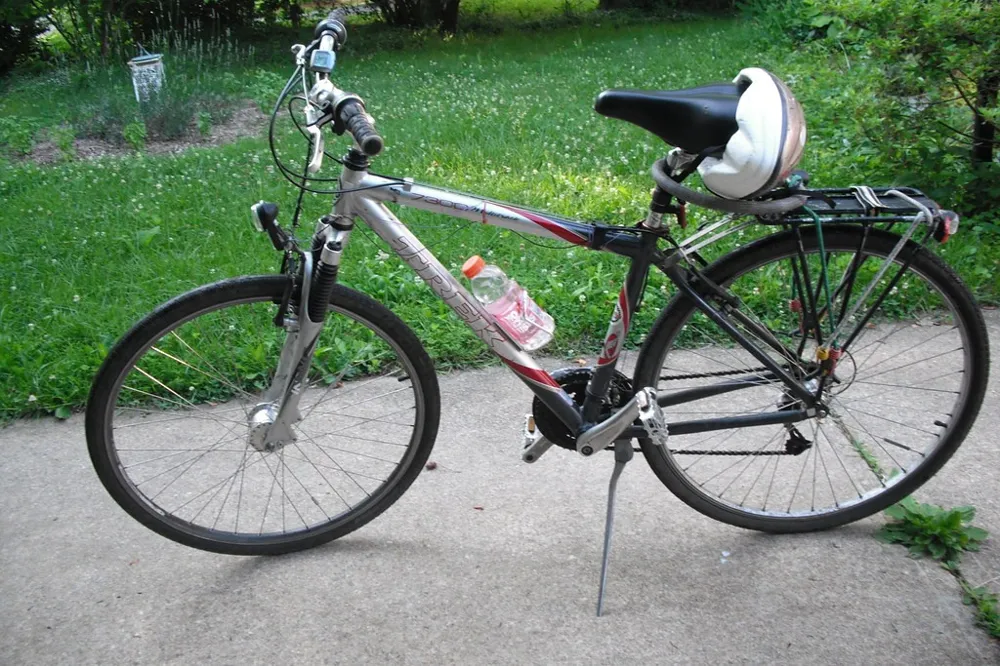
Hybrid bikes are often sized in letters or by seat tube length in inches, and the same letter can differ from a road bike's. Hybrids also have a more upright position, so reach is less critical than on a drop-bar bike. Here are two manufacturer charts:
| Size | Trek FX 2 Gen 4 Rider Height | Trek FX Inseam | Giant Escape Rider Height |
|---|---|---|---|
| XS | 4'10"–5'1" (147–155 cm) | 27"–29" (69–73 cm) | n/a |
| S | 5'1"–5'5" (155–165 cm) | 28"–31" (72–78 cm) | 5'3"–5'7" (160–170 cm) |
| M | 5'5"–5'9" (165–175 cm) | 30"–33" (77–83 cm) | 5'7"–5'11" (170–180 cm) |
| L | 5'9"–6'1" (175–186 cm) | 32"–35" (82–88 cm) | 5'11"–6'3" (180–190 cm) |
| XL | 6'1"–6'6" (186–197 cm) | 34"–37" (87–93 cm) | 6'3"–6'7" (190–200 cm) |
Sources: Trek FX 2 Gen 4 chart via an authorized Trek dealer listing; Giant's own Escape chart. For bikes sized in inches, this approximate guide follows RoadBikeRider's hybrid chart:
| Rider Height | Hybrid Frame (Inches, Approx.) | Letter Size |
|---|---|---|
| 5'0"–5'4" | 13"–15" | XS/S |
| 5'4"–5'8" | 15"–17" | S/M |
| 5'8"–5'10" | 17"–19" | M |
| 5'10"–6'1" | 19"–21" | L |
| 6'1"–6'4" | 21"–23" | XL |
| 6'4"+ | 23"+ | XXL |
If you're between hybrid sizes, Giant's retailer guide suggests the smaller one for a more manageable bike and a more comfortable, upright position. Step-through and midstep hybrids make standover less of an issue. For bike picks, see our best hybrid bikes.
Gravel and Cyclocross Bike Sizing
Gravel and cyclocross bikes use drop bars and are sized much like road bikes; BikeRadar's gravel chart uses the same height bands as its road chart. The differences are in geometry: gravel bikes often have a slightly taller front end, a longer wheelbase and more tire clearance. RoadBikeRider suggests riders on the border between two gravel sizes choose the smaller one for easier handling on rough ground. See gravel bikes and cyclocross bikes.
Women's Road Bike Sizing
Trek says gender matters much less than height and inseam when choosing a road bike size, and many brands now sell unisex frames in a wide size range. Some still offer women's-specific options: Liv (Giant's women's brand) uses women's-specific geometry, and Canyon's WMN road bikes use smaller 650b wheels on smaller sizes, according to BikeRadar. If you're shorter, look for brands that make XXS or 47–49 cm frames, check the standover height, and consider narrower handlebars and shorter cranks, which some brands fit to their smallest sizes.
Size Chart vs Professional Bike Fit
A size chart picks the frame. A bike fit adjusts the contact points on that frame: saddle height and setback, handlebar height and width, stem length, crank length and cleat position. A fitter may swap the saddle, stem or bars to match your body and flexibility.
- Basic shop fit: many bike shops set saddle height and check reach when you buy a bike.
- Professional fit: worth considering if you ride long distances, race, or have knee, back, neck or hand pain.
- Before buying online: some fitters can recommend a frame size from your measurements, which reduces the risk of ordering the wrong size.
Buying a Road Bike Online: Size Checklist
- Measure your height and cycling inseam carefully, twice.
- Find the size chart and geometry table for the exact model and year.
- Compare stack, reach and standover with a bike you already ride comfortably, if you have one.
- Use the brand's size calculator if it has one, such as Trek's Size Finder.
- If you're between sizes, read the advice above and lean toward the smaller size unless your proportions say otherwise.
- Check the return or exchange policy before ordering.
Sizing a different kind of bike? See our mountain bike size chart, BMX size chart and kids' bikes guide, or compare styles in mountain bike vs road bike and the bike buying guide.
Frequently Asked Questions
What size road bike do I need for my height?
As an approximate guide from published charts: about 5'3" to 5'6" suits a 51–53 cm (S) frame, 5'6" to 5'9" a 54–55 cm (M), 5'9" to 6'0" a 56–58 cm (L) and 6'0" to 6'3" a 58–60 cm (XL). Always confirm with the maker's chart for the exact bike.
What does 54cm mean on a road bike?
It's the frame size, traditionally the length of the seat tube or the effective top tube in centimeters. A 54 cm frame is usually a medium and often suits riders around 5'6" to 5'9", though brands measure differently.
Should I size up or down on a road bike?
The common advice from brands and retailers is to take the smaller size if you're between two, because it's easier to add reach with a longer stem than to make a big frame smaller. Riders with a long torso or arms may suit the larger size, so test ride both if you can.
How do I know if my road bike is too big?
Signs include no clearance when you stand over the top tube, feeling stretched to reach the hoods, and neck, shoulder or hand pain. A bike that's too small can feel cramped, with your knees close to the handlebars.
Is bike sizing the same as a bike fit?
No. Sizing picks the right frame; a bike fit then adjusts saddle height, saddle position, handlebar height and reach to your body. A professional fit is worth considering if you ride long distances or have pain.
Do women need a women's road bike size chart?
Not necessarily. Trek says height and inseam matter much more than gender, and many brands now make unisex frames. Some brands offer women's-specific models or smaller sizes with 650b wheels, which can help shorter riders.
Are hybrid bikes sized the same as road bikes?
No. Road bikes are usually sized in centimeters or letters, while hybrids often use letter sizes or inches, and the same letter can differ between them. Use the hybrid chart for the specific model.