Onewheel or EUC? Single-Wheel Electric Rides Compared (2026)
Both balance on one motorized wheel, but you ride them very differently. Here's how a Onewheel and an electric unicycle compare on learning, speed, range, carrying and safety.
The Short Answer
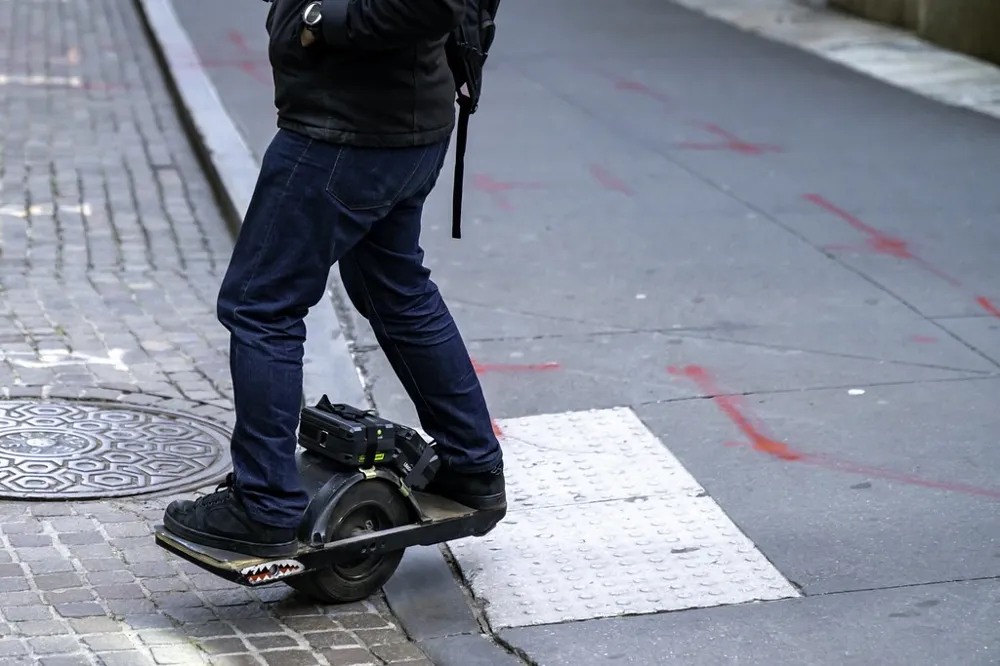
A Onewheel is a self-balancing electric board: you stand sideways, like on a skateboard or snowboard, with one wide wheel in the middle. An electric unicycle (EUC) has you facing forward, standing on pedals on either side of a single wheel. Both speed up when you lean forward and slow when you lean back.
Pick a Onewheel if you want a board-sport feel for carving, trails and shorter fun rides and you'd rather learn quickly. Pick an EUC if you want more range and speed for commuting, a trolley handle for rolling it indoors and lots of brands and models to choose from, and you're willing to put in more practice. Either way, a helmet and wrist protection are a must.
Onewheel vs Electric Unicycle at a Glance
| Onewheel | Electric Unicycle (EUC) | |
|---|---|---|
| Stance | Sideways, feet either side of the wheel | Facing forward, wheel between your legs |
| Who makes it | One company (Future Motion) | Many brands, mostly China-based |
| Learning curve | Generally quicker to learn | Steeper; standing still is harder |
| Listed top speeds | About 16–25 mph by model | From about 15 mph to far higher on performance models |
| Listed range | About 6–32 miles by model | From about 10–15 miles to over 100 miles |
| Carrying | Carried by hand or a handle | Most roll on a pull-out trolley handle |
| Feel | Carving, surfing, snowboarding | Hands-free, upright, commuter-friendly |
| Suspension | Relies on the tire | Many models have air or spring suspension |
Figures are maker or listing claims compiled from the sources below; real-world speed and range drop with rider weight, hills, temperature and riding style.
What Is a Onewheel?
Onewheel is a brand, not a category. It's made by Future Motion, a private company based in Santa Cruz, California, founded by engineer Kyle Doerksen. The original Onewheel launched on Kickstarter and was shown at CES in January 2014. Since then the company has sold several generations, including the Pint, Pint X, Pint S, XR, GT and GT S-Series, and Wikipedia lists a newer model, the Rally XL, as released in August 2025.
The rider stands across a board with a single, wide tire exposed in the center. Because the board sits low and looks like a skateboard, it's often grouped with electric skateboards, and many riders compare the feel to surfing or snowboarding.
What Is an Electric Unicycle (EUC)?

An electric unicycle is a self-balancing personal transporter with one wheel. You stand facing the direction of travel on pedals mounted on each side of the wheel, with the wheel between your legs. There are no handlebars and, on most current models, no seat.
The idea is older than it looks. Trevor Blackwell demonstrated a working self-balancing unicycle in 2004, Shane Chen's seatless Solowheel launched in 2011, and Segway launched its Ninebot One S1 in 2017. Around 2020, makers such as Inmotion, Kingsong and Gotway (now Begode) brought out suspension models and began pushing speeds and motor voltages higher. Most manufacturers are based in China, including Segway, Inmotion, Kingsong, Begode and Leaperkim.
How Each One Balances, Accelerates and Stops
Both use the same basic idea as a hoverboard: gyroscopes and accelerometers measure tilt, and a controller drives the hub motor to keep the wheel under you, like balancing an inverted pendulum.
- Onewheel: Wikipedia describes accelerometers and gyroscopes checking the board's orientation about 14,000 times per second. A pressure-sensitive pad under your front foot tells the board you're on. Lean forward to go, lean back to slow, and lean slightly the way you want to turn. To stop and step off, you slow down and lift your heel off the front pad; an optional mode called Simplestop lets the board stop gradually when you lean back.
- Electric unicycle: the wheel balances itself front to back, but side-to-side balance is up to you, much like a bicycle. You lean forward or back to change speed and steer by tilting or twisting the wheel with your legs and hips.
Neither has a hand brake. On both, slowing down means leaning back and letting the motor brake, so the motor and battery need power in reserve to stop you.
Which Is Easier to Learn?
Most comparisons agree the Onewheel is easier to pick up. Because you stand on a board, the self-balancing keeps you stable even when you're barely moving, and the stance feels familiar to anyone who skates, surfs or snowboards. One rider who moved from a Onewheel to an EUC wrote that the board took minutes to learn while the EUC still felt uncomfortable after two weeks. That's one person's account, but it matches the general view.
An EUC is more like learning a bicycle. It's hard to balance on at a standstill, so you need speed for stability, and turning uses your whole lower body. Comparison writers note the payoff: EUC fans value it for long-distance riding once the skill is in place. EUC apps on some models offer a beginner mode; the Kingsong 14DPro's Amazon listing, for example, mentions one.
Whichever you pick, learn in a quiet, open space like an empty parking lot. Our hoverboard riding guide covers the same lean-to-go basics, and how to fall on a skateboard is worth reading before you start.
Speed and Range Compared
This is where the two split most. Onewheel models sit in a fairly narrow band, while EUCs run from beginner wheels to very fast, long-range performance machines.
| Model | Listed Top Speed | Listed Range | Source |
|---|---|---|---|
| Onewheel Pint | 16 mph | 6–8 miles | Wikipedia |
| Onewheel Pint X | 18 mph | 12–18 miles | Wikipedia |
| Onewheel Pint S | 20 mph | 12–18 miles | Wikipedia |
| Onewheel XR Classic | 20 mph | 17–24 miles | Wikipedia |
| Onewheel GT | 20 mph | 20–32 miles | Wikipedia |
| Onewheel GT S-Series | 25 mph | 16–25 miles | Wikipedia |
| Low-end EUCs (general) | Up to about 15 mph | About 10–15 miles | Wikipedia |
| Kingsong 14DPro EUC | 19 mph | Up to 25 miles | Amazon listing |
| Inmotion V11Y EUC | Up to 37 mph | Up to 75 miles (ideal conditions) | Amazon listing |
| Performance EUCs (2025 models) | Some can reach 90 mph | Over 100 miles | Wikipedia |
Onewheel figures are as listed on Wikipedia's Onewheel article as of November 2026; check Future Motion for current models and specs. The Inmotion V11Y listing showed as unavailable when we checked. These top speeds are what the hardware can do, not what's legal or sensible on shared paths. For context, see how fast electric scooters go and how fast electric skateboards go.
Portability, Weight and Terrain
Carrying: a Onewheel has to be carried, and that gets tiring over any distance. Most EUCs have a pull-out trolley handle, so you can roll the wheel through a store, an office lobby or a train station while the self-balancing helps it along. For many commuters, that handle is the deciding feature.
Weight: Wikipedia lists the Onewheel GT at 35 lb, with the GT S-Series about 2 lb lighter. Suspension EUCs are often heavier; the Amazon listing for the Inmotion V9 gives 50.7 lb and calls it a lightweight suspension EUC. Smaller beginner EUCs are lighter, so check the listed weight before you buy, especially if you'll lift it onto a bus or up stairs.
Terrain: the Onewheel's wide tire and low board suit grass, dirt and trails, which is a big part of its appeal. Its footpads sit close to the ground, though, so curbs and rocks can catch the board. An EUC is essentially one tall tire, and many models add air or spring suspension that helps on potholes and gravel.
Safety: Pushback, Nosedives and Recalls
Both devices only stay upright while the motor can keep the wheel under you. If you ask for more than the motor and battery can deliver, the wheel can stop balancing and the rider can fall forward. Onewheel riders call this a nosedive; EUC riders often call it a cut-out or overlean.
Both have warnings built in. Onewheel's pushback gently raises the nose as you approach unsafe speed, and Haptic Buzz also warns you. EUCs typically use tilt-back, and many also sound audible alarms. Learn what your device's warnings feel and sound like, and treat them as a signal to slow down, not a suggestion.
Onewheel's safety history (as of November 2026):
- August 2022: Future Motion recalled about 20,500 Onewheel GT front footpads after 813 reports of the pad failing to disengage after the rider stepped off.
- November 16, 2022: the U.S. Consumer Product Safety Commission (CPSC) warned consumers to stop using Onewheels. Future Motion objected at the time, saying the boards are safe when ridden with standard safety practices.
- September 2023: Future Motion and the CPSC announced a recall of Onewheel boards for a crash hazard; the CPSC's recall notice reports four deaths. The fix was a firmware update rather than a return, adding haptic feedback when the board reaches its performance limits on the GT, Pint X, Pint and XR. If you own or are buying a used board, make sure it has current firmware and check CPSC.gov for details.
Battery safety applies to both. Look for UL 2272 certification on the whole device; the Inmotion E20 and Kingsong 14DPro listings both say they're certified. On June 24, 2026, the CPSC proposed making lithium-ion battery standards mandatory for micromobility products, with electric unicycles and electric skateboards in scope; as of November 2026 the rule wasn't final. Our hoverboard safety guide explains UL 2272 and safe charging in more detail.
Safety Gear for Single-Wheel Riding
Nosedives and cut-outs tend to pitch riders forward, so protect your head and hands first:
- Helmet: a certified helmet is the minimum. A full-face helmet adds chin protection for faster riding; see full-face helmets and skate helmets.
- Wrist guards: the classic forward fall lands on outstretched hands. See wrist guards.
- Knee and elbow pads: useful while learning and on trails; protective gear sets cover all three.
- Shoes and visibility: closed shoes with grippy soles, plus lights and bright clothing at night. Many EUCs include headlights; check the listing.
Our skateboard safety gear guide explains fit and what each piece protects.
Laws: Where You Can Ride a Single-Wheel Electric Scooter
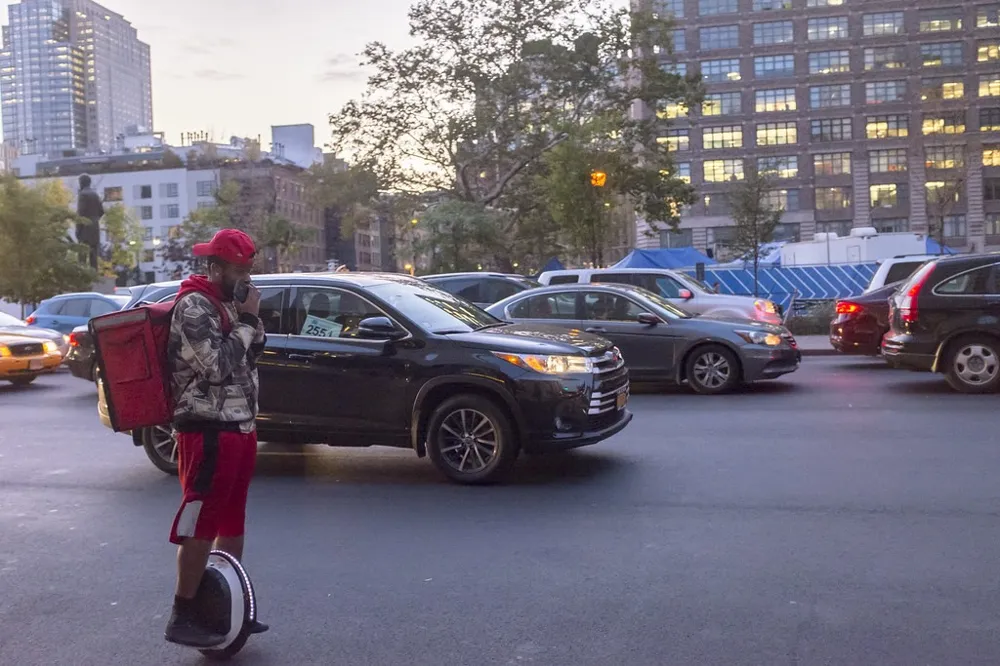
Rules for one-wheel devices are patchy. In the US, most states write laws for e-bikes and e-scooters, and far fewer mention electric skateboards or unicycles, so a Onewheel or EUC often falls into a gray area that cities, campuses and transit agencies fill with their own rules. Some cities ban motorized devices from sidewalks or specific paths. In the UK, government guidance treats powered transporters, such as hoverboards and Segways, as motor vehicles that can't legally be ridden on public roads or pavements, so one-wheel devices are generally limited to private land with the owner's permission.
Before you ride, check your state and city rules, and your transit agency's rules if you plan to bring the device on board. Our guides to electric skateboard laws, e-scooter laws and scooter license rules go into detail. Rules last checked November 2026; this isn't legal advice.
Ownership: Brands, Repairs and Batteries
- Choice: Onewheel comes from one company, so models, parts and firmware all come from Future Motion. EUCs come from many makers, which means more models, wheel sizes and features to compare, but also more variation in support from brand to brand.
- Repairs: Future Motion has been criticized for limiting third-party repairs and modifications. In 2024 it began selling replacement parts through its website and stopped treating third-party tires as voiding the warranty. For EUCs, check whether the brand or seller has a US service center and spare parts.
- Where to buy: Onewheel boards are sold mainly by Future Motion and its dealers; as of November 2026, Amazon showed no Onewheel listing. Several EUC brands sell through Amazon as well as specialist shops.
- Batteries: both use lithium-ion packs. Charge with the supplied charger, avoid charging a hot or damaged pack and store it partly charged. See how long e-scooter batteries last for the basics that apply here too.
Which Should You Choose?
| If You... | Lean Toward |
|---|---|
| Surf, skate or snowboard and want that feel on land | Onewheel |
| Want to ride grass, dirt and trails for fun | Onewheel |
| Want to learn quickly | Onewheel |
| Commute several miles each way | EUC |
| Need to roll it into shops, offices or stations | EUC (trolley handle) |
| Want the most range or speed options | EUC |
| Want many brands and models to compare | EUC |
| Want handlebars, a seat or easy braking | Neither; look at an electric scooter or e-bike |
If possible, try both before you buy, through a friend, a local riders' group or a shop demo. Fit matters as much as specs.
Electric Unicycles Listed on Amazon
These two beginner-friendly EUCs were available on Amazon when we checked in November 2026. Details come from the listings; check them for current specs.
1. INMOTION E20 Electric Unicycle
The E20 is listed as having a single wheel with two tires side by side, a design the listing says is meant to make self-balancing easier than a traditional single-tire EUC. It's a good fit for riders worried about the EUC learning curve.
Good to Know
- Listed as certified to ANSI/CAN/UL 2272
- Dual-tire design aimed at easier balancing
Watch Out For
- A beginner design, not built for high speeds
- Check the listing for speed, range and weight
2. KINGSONG 14DPro Electric Unicycle
A compact EUC listed at a 19 MPH top speed and up to 25 miles per charge, with hill climbing up to 32 degrees per the listing. Its app includes a beginner mode and tilt calibration.
Good to Know
- Listed as UL 2272 certified
- App beginner mode for learning
- Lights and a built-in Bluetooth speaker, per the listing
Watch Out For
- Check the listing for wheel size and weight
- No suspension mentioned in the listing
Related Guides
Comparing other rides? See hoverboard vs electric scooter, electric scooter vs e-bike, skateboard vs scooter, the best electric skateboards and all of our electric scooter guides.
Frequently Asked Questions
Is a Onewheel easier to learn than an electric unicycle?
Usually, yes. Comparison writers and riders who have tried both generally describe the Onewheel as quicker to pick up, while an EUC takes more practice because it is hard to balance on at a standstill and you have to learn to steer it with your legs and hips.
Which is faster, a Onewheel or an electric unicycle?
Electric unicycles cover a much wider range. Wikipedia lists low-end EUCs at up to about 15 mph and some 2025 models at far higher speeds, while Onewheel models are listed at roughly 16 to 25 mph depending on the model.
What is a Onewheel nosedive?
Riders use the term for the board's nose dropping to the ground when the board stops balancing, which can throw the rider. Future Motion has said its boards can stop balancing when pushed past their performance limits, and its 2023 recall fix added haptic warnings when those limits are reached.
Can you ride a Onewheel or an EUC on the sidewalk?
It depends on where you live. Many US states have no rule written for one-wheel devices, cities often set their own, and UK guidance treats powered transporters as motor vehicles that can't be ridden on pavements. Check local rules before you ride.
Is a single wheel electric scooter the same as an electric unicycle?
People use "single wheel electric scooter" and "1 wheel scooter" for both. An electric unicycle has you facing forward with the wheel between your legs; a Onewheel is a board you stand on sideways with the wheel in the middle.
Do electric unicycles have seats?
Early self-balancing unicycles often had seats. Most current models are seatless, which lets the rider tilt the wheel more to turn.