How Fast Can an Electric Skateboard Go? Speeds by Board Type (2026)
Most consumer electric skateboards are listed at roughly 20 to 30 mph, entry-level boards are slower, and all-terrain boards reach the low 30s. Here's what each type is listed at, how long it takes to stop and what the law allows.
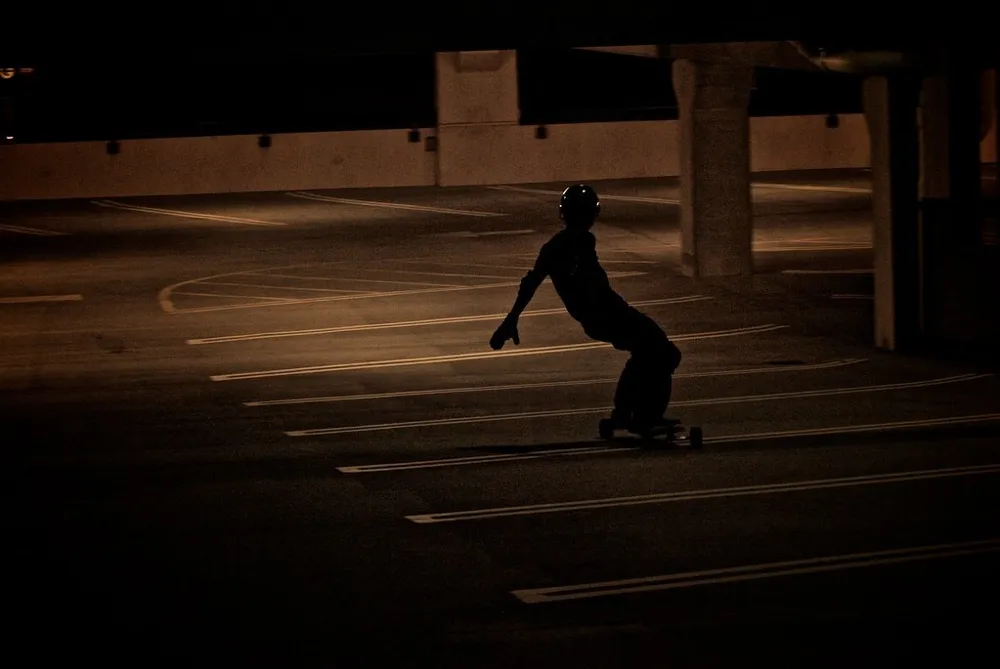
The Short Answer: How Fast Electric Skateboards Go
Most consumer electric skateboards have a listed top speed of roughly 20 to 30 mph (about 32 to 48 km/h). Brand speed guides from Gyroor, isinwheel and Maxfind all put the typical range at about 18 to 28 mph. Small entry-level boards are listed lower, at around 12 mph, while big all-terrain boards are listed at 31 to 32 mph. The fastest electric skateboard on record, a prototype ridden for Guinness World Records, hit 82.25 mph.
Those numbers are maker claims under good conditions. The speed you actually ride depends on your weight, the battery level, hills, wind, the surface and, above all, which speed mode the board is in. Most boards have several modes, and new riders should spend their first rides in the slowest one. Speed on a public road is also capped by law in some places: California limits electric boards to 15 mph.
Typical Electric Skateboard Speeds by Board Type
Electric boards fall into rough classes. The ranges below come from the listed specs of the boards in the next section, not from our own measurements.
| Board Type | Typical Build | Listed Top Speeds | Who It Suits |
|---|---|---|---|
| Entry-level and compact boards | Short deck, small hub motors | Around 12 mph | Teens and adults learning the basics on smooth pavement |
| Commuter longboards | Full-size deck, dual hub or belt motors | About 22–29 mph | Commuting and cruising in bike lanes |
| Performance mini boards | Short deck, dual motors | About 26–32 mph depending on version | Experienced riders who carry the board on transit |
| All-terrain boards | Large pneumatic tires, powerful belt motors | About 31–32 mph | Experienced riders on rough roads, gravel and grass |
| Record prototypes | Custom builds | Up to 82.25 mph | Speed record attempts only |
Maxfind's guide makes the same split: entry-level boards sit at the lower end of the speed range and high-performance boards at the top. Gyroor calls anything over 30 mph very fast, which is where the all-terrain class sits.
Listed Top Speeds of Popular Electric Skateboards
These are top speeds published by the makers or shown on retail listings in November 2026. They're manufacturer claims, not test results, and listings change, so check the current product page before you buy.
| Electric Skateboard | Listed Top Speed | Listed Motor | Other Listed Specs | Source |
|---|---|---|---|---|
| isinwheel V6 | Up to 12.4 mph | Check listing | Speed settings on the remote | isinwheel speed guide |
| Gyroor R1 | 22 mph | 1,100W | 23-mile range; 90mm PU wheels; 36V 6Ah battery | Gyroor speed guide |
| Backfire G2 Black | 24 mph | Check listing | 11–12.5 mile range; 187Wh battery; UL 2272 compliant | Amazon listing |
| Meepo V5 | 28 mph (45 km/h) | Dual 500W hub | Four riding modes; 11-mile range; 330 lb max load; IPX5 | Meepo |
| isinwheel V8 | 28 mph | Check listing | Switchable speed modes | isinwheel speed guide |
| Meepo Mini series (Mini5 and others) | 26–32 mph depending on version | Check listing | 11–24 mile range; 330 lb max load; UL 2272 tested battery protection | Amazon listing |
| Evolve Diablo Carbon All Terrain | 31 mph (50 km/h) | Dual 3,500W rated | 7-inch pneumatic tires; ECO and Sport modes; regenerative braking | Evolve |
| isinwheel V10 Off-Road | 32 mph | Dual 1,500W belt | Up to 28-mile range; 6-inch pneumatic tires | Amazon listing |
Two things stand out. First, motor power doesn't map neatly onto top speed: the Evolve Diablo is listed with several times the motor power of the isinwheel V10, yet their listed speeds are within 1 mph. Big motors on all-terrain boards mostly buy torque for hills, heavy riders and soft ground. Second, compact boards aren't always the slow ones; Meepo's short Mini series is listed as fast as its full-size longboards. A short wheelbase is less stable at speed, though, so a high number on a small board calls for extra caution.
For full write-ups of several of these boards, see our best electric skateboards guide.
What Affects Electric Skateboard Speed
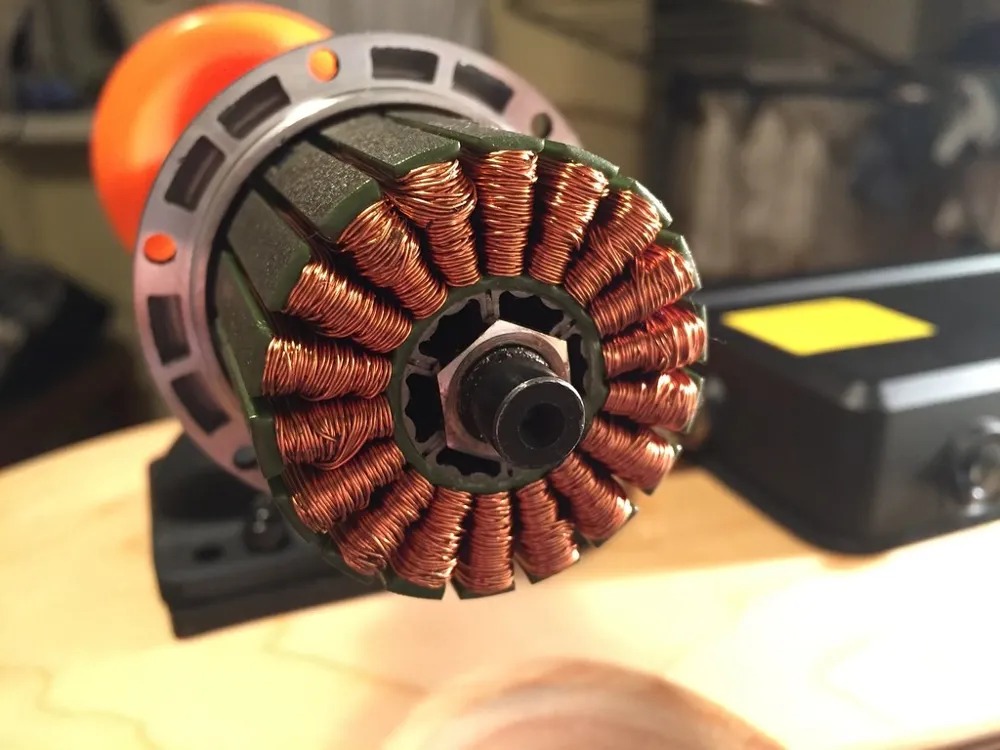
A board's listed top speed is a ceiling, not a promise. These factors decide how close you get to it.
Motor Power and Drive Type
Gyroor notes that electric skateboard motors range from about 100W to 4,500W, and more power generally means more speed and better hill climbing. Maxfind points to around 1,500W or more for higher speeds and hills. Hub motors sit inside the wheels and are quiet and low-maintenance; belt motors drive the wheels through a pulley and give more torque. The maker's controller still sets the final speed limit, which is why boards with very different motors can be listed at similar speeds.
Battery Voltage and Charge Level
A powerful motor needs a battery that can deliver matching power. Gyroor and Maxfind both say top speed drops as the battery drains and its voltage falls, so a board feels quickest on a full charge and noticeably flatter near empty. An aging battery that no longer holds a full charge has the same effect.
Wheel Size and Type
Larger wheels can raise top speed, though Gyroor says they reduce acceleration and torque. Off-road and pneumatic tires smooth out rough ground but, per Gyroor, cost some top speed on pavement. Soft, large urethane wheels roll over cracks that would jolt a small hard wheel, which makes a steady pace easier to hold. See our skateboard wheel size guide for how diameter and hardness change the ride.
Rider Weight
Every brand speed guide we checked agrees that heavier riders go slower. Extra weight also shortens range. Stay under the board's listed maximum load; Meepo, for example, lists 330 lb for the V5.
Terrain, Hills and Wind
Smooth, flat pavement is where listed speeds come from. Climbing slows the board, rough or wet surfaces force you to slow for grip, and Gyroor notes that a headwind slows you while a tailwind speeds you up. Downhill, gravity can push a board past its motor-limited top speed, which is where most high-speed trouble starts.
Rider Skill and Stance
Experienced riders crouch lower, which cuts wind resistance, and they're comfortable using more of the board's range. A new rider standing upright in a low mode may never get near the listed figure, and that's exactly right while learning.
Speed Modes and Remote Settings
Almost every electric skateboard is controlled by a handheld wireless remote, and the remote's speed mode sets the maximum speed available. Gyroor's guide notes that you only reach a board's top speed in its highest performance mode.
- Several fixed modes. Meepo lists four riding modes on the V5, including a beginner-friendly LO mode. isinwheel says its V8 remote switches between speed modes so beginners can start slow.
- Named eco and sport modes. Evolve's Diablo has ECO and Sport modes, and its app lets riders adjust braking and acceleration curves.
- Capping speed for local rules. Maxfind notes that adjustable speed settings let riders limit top speed to stay within local limits, and that an eco mode helps stretch battery life.
Mode names, the number of modes and the speed in each vary by brand, and makers rarely publish a per-mode speed, so check your manual or the remote's display. A sensible progression is to stay in the lowest mode until you can accelerate, carve and brake to a full stop smoothly, then move up one step at a time.
Braking Distance: How Far It Takes to Stop
Speed matters most when you need to stop. Electric boards brake through the motors, controlled by the remote's trigger or thumbwheel, and stopping distance grows with the square of your speed: double the speed and the braking distance roughly quadruples.
Maxfind has published stopping distances calculated from a deceleration of about 1.4 m/s², a figure measured on a 350W electric skateboard in a Virginia Tech closed-track study. They're estimates for one braking rate, not tests of any specific board, and stronger or weaker brakes change them.
| Starting Speed | Braking Distance (Calculated) | With a 1-Second Reaction (Calculated) |
|---|---|---|
| 8 mph | About 15 ft (4.6 m) | About 27 ft (8.1 m) |
| 10 mph | About 23 ft (7.1 m) | About 38 ft (11.6 m) |
| 12 mph | About 34 ft (10.3 m), extrapolated | About 51 ft (15.6 m), extrapolated |
| 15 mph | About 53 ft (16.1 m), extrapolated | About 75 ft (22.8 m), extrapolated |
Applying the same formula (speed squared divided by twice the deceleration) at 20 mph gives roughly 94 feet of braking before you add any reaction time. Real distances depend on brake settings, the road surface and grit, slope, tire or wheel condition, and how well you brace. At 10 mph you travel about 15 feet every second before you even start braking, so leave far more space than you think you need.
Regenerative Braking and a Full Battery
Most electric boards use regenerative braking, which turns motion back into battery charge. Gyroor warns that a fully charged battery can't absorb that energy, so the electric brake can weaken or stop working. Don't start a ride with a long descent right after charging, and learn to slow down by foot or by stepping off at low speed. On downhills, Gyroor advises steady braking rather than repeated stabs at the brake.
For foot-braking and other stopping methods, see how to stop on a longboard.
Electric vs Regular Skateboard Speed (and the Record)
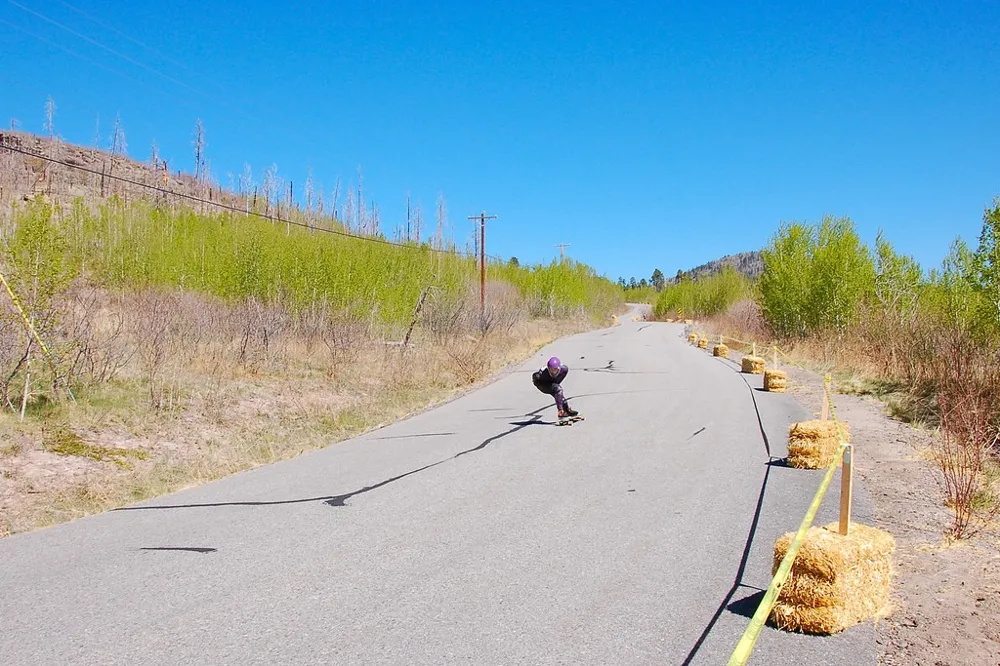
On flat ground, motors give electric boards a big edge. Gyroor puts a regular skateboard at about 10 to 12 mph on the flat, against 20 mph or more for most electric boards. Downhill is different: Gyroor says regular skateboards can reach up to 60 mph downhill, which is why downhill longboards are built for stability rather than motors.
The electric record is far beyond any production board. Guinness World Records lists the fastest speed on an electric skateboard as 132.37 km/h (82.25 mph), set by Raine Kent at Bullsbrook, Western Australia, on 17 September 2022. Only prototype or modified boards are eligible for that record, not commercially available models. The earlier record, 95.83 km/h (59.55 mph), was set by Mischo Erban in 2016. Guinness notes that records can change before they appear online.
How Fast Is Too Fast? Wobbles, Wheelbase and Control
Gyroor puts it plainly: fast doesn't mean safe. Higher speed means a longer stopping distance and a harder impact if you fall or collide. An electric board also has no handlebar, so all of your balance comes from your feet and stance while one hand works the remote.
- Speed wobbles. At speed, a board can start to shake side to side. Loose trucks, soft bushings and a tense, upright stance all make it worse. See speed wobbles on a skateboard for causes and fixes.
- Wheelbase. A longer board is generally more stable at speed than a short one, which is worth remembering when a compact board is listed at 30 mph or more.
- Surface hazards. Small stones, cracks and wet leaves can stop a small wheel dead. That risk rises sharply with speed, and larger, softer wheels help.
- Acceleration. Sudden throttle or brake input can throw you off the front or back. Keep a wide stance, bend your knees and lean into acceleration and braking.
Maxfind suggests practicing in open areas before riding in crowded or urban spaces. A practical rule is to ride no faster than the distance you can see clearly ahead allows you to stop.
Legal Speed Limits for Electric Skateboards
A board's top speed and the speed you're allowed to ride are two different numbers. There's no national US speed limit for electric skateboards, and many states don't mention them at all. Where states have written rules, the caps sit well below many boards' top speeds:
| Place | Speed Rule | Other Key Rules |
|---|---|---|
| California | No faster than 15 mph on a highway, bikeway, path, sidewalk or trail. The state's definition only covers boards capable of no more than 20 mph on a paved, level surface, with a motor averaging less than 1,000 watts. | Riders 16 and older; bicycle helmet required; roads posted 35 mph or less unless in a Class II or IV bikeway; lights and reflectors in darkness |
| Virginia | No faster than 20 mph, even if the board can go faster | Under 14 only with immediate supervision by someone 18 or older; banned on Interstates with narrow exceptions |
| United Kingdom | No legal riding speed on public roads or pavements | Treated as powered transporters; legal only on private land with the owner's permission |
Cities, campuses and transit agencies often add their own bans. If your board has selectable modes, riding in a lower mode helps you stay inside a riding limit, but whether it changes the board's legal classification depends on your state's rules. Our guide to whether electric skateboards are legal covers each rule in detail. Laws vary and change; this was last checked in November 2026 and isn't legal advice.
Safety Gear by Speed
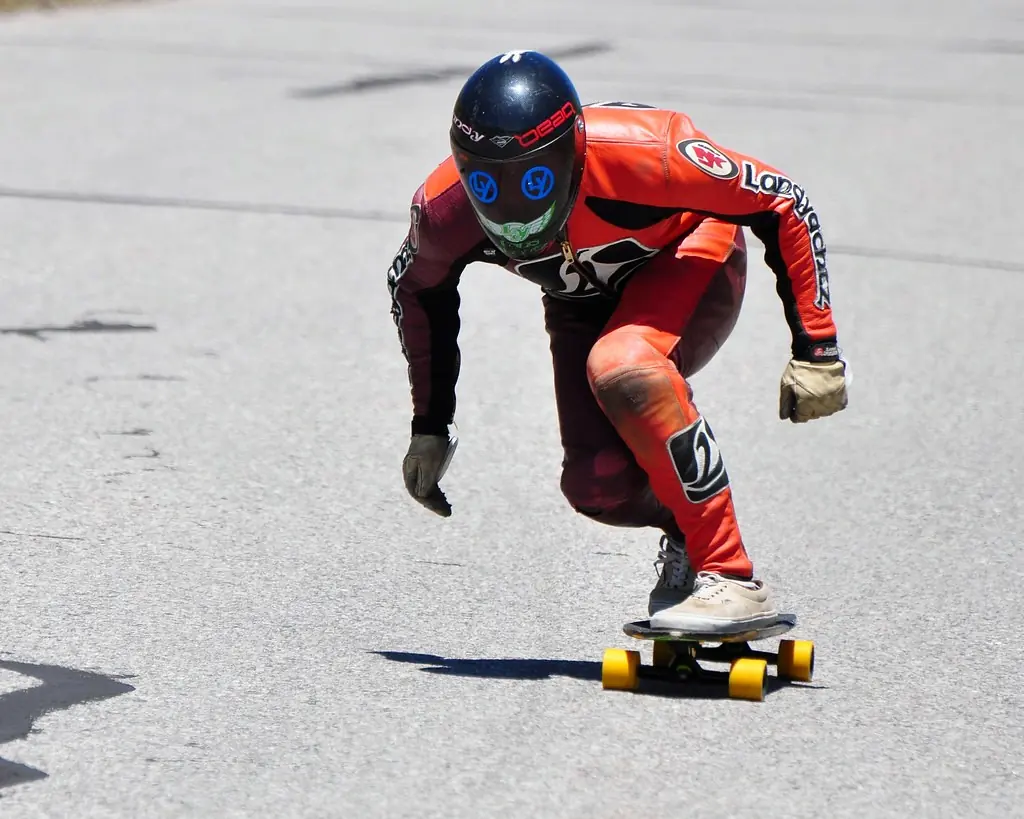
There's no official gear standard tied to electric skateboard speeds, but the energy of a fall rises with the square of speed, so a crash at 25 mph carries far more energy than one at 12 mph. Gyroor recommends a certified helmet, knee, elbow and wrist pads, gloves and protective clothing for electric board riders, and California requires a properly fitted and fastened bicycle helmet for every rider. Here's a common-sense way to scale your gear:
| Speed You Ride | Gear to Wear |
|---|---|
| Learning, beginner mode | Certified helmet, wrist guards, knee and elbow pads |
| Cruising, about 10–20 mph | Certified helmet, wrist guards or gloves with palm protection, knee pads, closed shoes |
| Fast riding, over 20 mph | Full-face helmet, padded gloves, knee and elbow pads, durable long sleeves and trousers or protective jacket |
| Night riding at any speed | Front light, rear light or reflector, and reflective clothing |
For skating, look for a helmet certified to ASTM F1492, the US skateboarding helmet standard; many skate helmets are also certified to the CPSC bike standard, which matters where a law calls for a bicycle helmet. A full-face helmet adds face and jaw protection for fast riding. Compare options in best skateboard helmets and skateboard safety gear, and learn how to fall on a skateboard before you go fast.
Can You Make an Electric Skateboard Go Faster?
You can help a board reach its listed speed: charge it fully before rides, keep pneumatic tires at the pressure in the manual, keep bearings clean and wheels in good shape, tuck lower to cut wind resistance and switch to a higher mode once your skills are ready.
Pushing past the maker's limit is a different matter. Gyroor warns riders not to try to beat a board's speed limit by sprinting downhill. Fitting a bigger battery, swapping motors or reflashing the controller can void the warranty, strain a battery pack that wasn't built for the extra load and leave you on a board whose brakes weren't designed for the new speed. Look for boards that state compliance with UL 2272, the electrical safety standard for personal e-mobility devices. If you want more speed, buy a board that's listed for it and build up to it.
Boards Mentioned on Amazon
Three of the boards in the speed table, at different speed levels:
Backfire G2 Black, listed at 24 mph and described as beginner-friendly.
Check Price on AmazonMeepo V5 (sold as part of the Campus V3 series listing), listed at 28 mph with four riding modes.
Check Price on AmazonMeepo Mini series, a compact board listed at 26 to 32 mph depending on version.
Check Price on AmazonRelated Guides
Compare the best electric skateboards, check electric skateboard laws or learn how to longboard first. For other rides, see how fast hoverboards go and how fast electric scooters go.
Frequently Asked Questions
How fast does an average electric skateboard go?
Several brand speed guides put most electric skateboards at about 18 to 28 mph (29 to 45 km/h). Popular commuter boards checked for this guide are listed at 22 to 29 mph, with lower beginner modes.
What is the fastest electric skateboard?
Among production boards checked for this guide, the isinwheel V10 Off-Road (32 mph) and Evolve Diablo Carbon All Terrain (31 mph) have the highest listed speeds. Guinness World Records lists 132.37 km/h (82.25 mph) by Raine Kent in 2022 on a prototype or modified board, which is the only kind eligible for the record.
Is 20 mph fast on an electric skateboard?
Yes. At 20 mph you cover about 29 feet every second, there's no handlebar to hold, and braking distance grows with the square of speed. Many riders cruise well below their board's top speed, and California caps riding speed at 15 mph.
How fast should a beginner ride an electric skateboard?
Start in the board's slowest mode in an empty, smooth area and stay there until you can accelerate, carve and brake smoothly. Move up one mode at a time.
Are electric skateboards faster than regular skateboards?
On flat ground, yes. Gyroor puts a regular skateboard at about 10 to 12 mph on the flat, while most electric boards are listed at 20 mph or more. Downhill, gravity can push either kind much faster.
Why does my electric skateboard feel slower than its listed top speed?
Listed speeds are measured in ideal conditions. Rider weight, hills, rough pavement, headwind, a low battery and a lower speed mode all reduce the speed you actually reach.
Why don't the brakes work as well on a full battery?
Most boards use regenerative braking, which sends energy back into the battery. A full battery can't take that energy, so some boards limit braking right after charging. Avoid steep descents on a full charge.
Can I make my electric skateboard faster?
Within its limits, yes: charge fully, use the highest mode you can control and keep the board maintained. Swapping batteries or flashing the controller to exceed the maker's limits can void the warranty and add battery and control risks.