How Do Hoverboards Work? Inside a Self-Balancing Scooter (2026)
Hoverboards don't hover, but they do balance themselves. Here's how the sensors, logic board, wheel motors and battery work together, and why safety standards changed after 2016.
The Short Answer
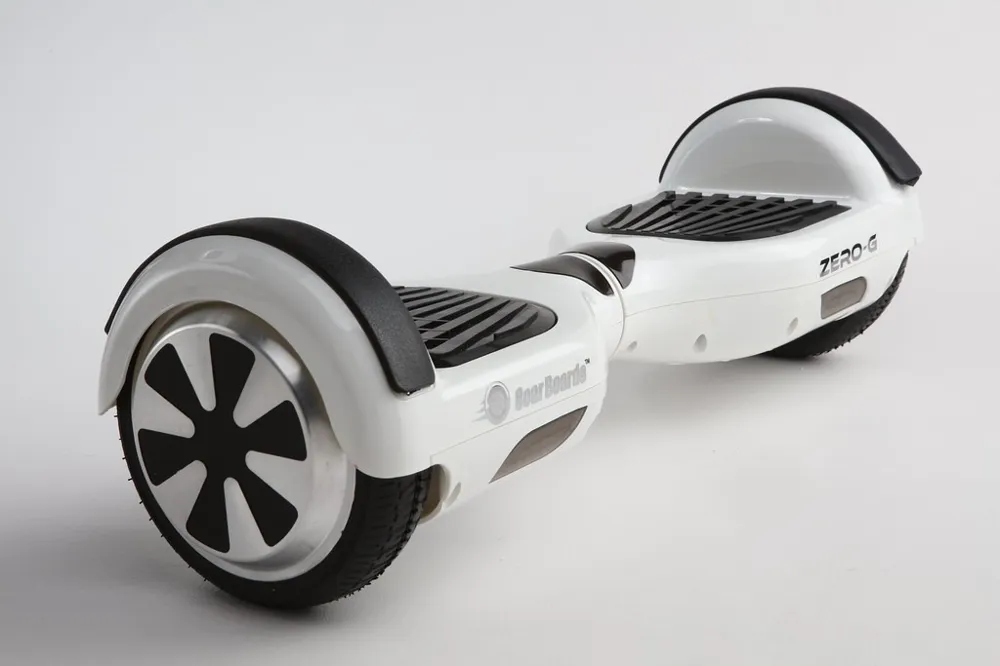
A hoverboard is a two-wheeled, self-balancing scooter. Sensors under each foot platform measure how far you're leaning, a logic board reads those signals, and an electric motor in each wheel speeds up, slows down or reverses to keep you balanced. Lean forward and the board moves forward; lean back and it slows or reverses; press harder with one foot and the board turns. Everything runs on a rechargeable lithium-ion battery pack.
What's Inside a Hoverboard
| Part | Where It Is | What It Does |
|---|---|---|
| Frame | The body, hinged in the middle | Lets each half tilt independently |
| Foot pads with switches or IR sensors | Under each foot platform | Detect when a foot is on the pad |
| Gyroscope and tilt sensors | On a sensor board on each side | Measure the angle of each platform |
| Speed sensors | In each wheel | Measure how fast each wheel turns |
| Logic board (mainboard) | Center of the board | The "brain" that processes signals and controls the motors |
| Wheel motors | Inside each wheel | Drive each wheel directly, with no gears |
| Battery pack | Inside the body | Lithium-ion, typically 36 volts nominal |
| Charging port and power button | Back or side of the board | Charging and switching on |
| LED lights and indicators | Front, wheels or top | Battery level, status and visibility |
How Self-Balancing Works, Step by Step
- You step on. Pad switches or infrared sensors detect your feet, telling the board someone is riding. Pressure pads and sensors also tell the board when you're standing still, so the motors stay off.
- The gyroscope sets the baseline. When the platforms are level, the board treats that as "balanced" and holds the wheels still.
- You lean. Tilting your feet forward changes the angle of each platform.
- Sensors report the tilt. Gyroscope and tilt sensors on each side detect the change and send signals to the logic board.
- The logic board responds. It tells each wheel's motor to turn so the wheels move back under you and the platforms return toward level.
- It repeats constantly. The board keeps correcting as you ride. The more you lean, the faster the motors drive to keep up, which is how leaning controls speed.
This is the same basic idea as the original Segway: a computer keeps the wheels underneath the rider's center of gravity. Jetson describes each foot surface as having two pressure-sensitive switches, front and rear, so each side can sense both the direction and the intensity of your lean. Some kids' and beginner boards add a self-leveling feature (Jetson calls it Active Balance) that holds the two foot pads level while you step on.
There's no hand brake. To slow down or stop, you shift your weight back and the motors resist, then reverse if you keep leaning. Some brands describe this as electromagnetic braking.
How Turning Works
Each half of a hoverboard has its own wheel and its own sensors, so the two wheels can spin at different speeds or in opposite directions.
| You Do This | The Board Does This |
|---|---|
| Lean both feet forward | Both wheels drive forward |
| Lean both feet back | Both wheels slow, then reverse |
| Push your right toes forward | The right wheel speeds up, turning you left |
| Push your left toes forward | The left wheel speeds up, turning you right |
| One foot forward, one foot back | The wheels turn opposite ways and the board spins in place |
Learn the riding technique in how to ride a hoverboard.
Motors, Battery and Performance
Wheel Motors
Most hoverboards have two electric motors, one built into each wheel hub. Because the motor drives the wheel directly, there's no transmission or gears, which keeps the board compact and lets each wheel respond instantly.
Battery
Almost all hoverboards use lithium-ion battery packs, typically 36 volts nominal, reaching about 42 volts when fully charged. Brands list capacities from roughly 2 to 8.8 amp-hours; bigger batteries usually mean longer range and longer charging. See our hoverboard charging guide for charge times and safety.
Speed and Range
| What Sources Report | |
|---|---|
| Typical top speed | About 6–10 mph; some boards 12–15 mph |
| Learning or beginner mode | Caps top speed; one brand cites about 7.5 mph for speed-limited boards |
| Range per charge | Roughly 7–15 miles, varying by model |
| Charge time | Typically about 2–5 hours |
Range and speed depend on rider weight, terrain, temperature, tire size and riding style, so real-world numbers vary. Check the board's weight limit too: see hoverboard weight limits.
Calibration: Resetting the Sensors
If a hoverboard pulls to one side, vibrates, beeps or won't balance, the gyroscope sensors may need recalibrating so "level" reads as zero again. Jetson's procedure is typical:
- Turn the hoverboard off and place it on a flat, level surface.
- Adjust the platforms so both foot pads are horizontal and parallel to the floor.
- Press and hold the power button for about 3 to 5 seconds.
- Release it when the lights or beeps signal that recalibration is complete.
- Turn the board off, then back on.
Keep your weight off the board while it calibrates, and repeat if needed; Jetson says it can take up to three tries. Procedures vary, so check your manual. On some boards, flashing red lights or beep patterns indicate specific faults, such as a sensor or mainboard problem.
Why Are They Called Hoverboards?
They don't hover. The word "hoverboard" was first used in a 1967 science fiction novel and became famous through the floating board in Back to the Future Part II (1989). When self-balancing scooters became popular, the name stuck. Real flying hoverboards exist only as experimental machines; one propeller-driven design holds a Guinness record for a hoverboard flight of about 905 feet.
A Short History
| Year | Milestone |
|---|---|
| 1967 | "Hoverboard" first appears in a science fiction novel |
| 1989 | Back to the Future Part II popularizes the idea |
| 2013 | Inventor Shane Chen files a patent (February) and launches a Kickstarter (May) for a two-wheeled self-balancing board |
| 2015 | Self-balancing scooters boom as many companies sell similar boards |
| 2015–2016 | Battery fires prompt warnings, bans and safety concerns |
| 2016 | UL begins certifying hoverboards; the CPSC announces a recall of about 501,000 units (July); UL publishes the UL 2272 standard (November) |
| 2026 | The CPSC proposes a mandatory lithium-ion battery safety rule for micromobility products, including hoverboards |
Hoverboard Safety Standards
The 2016 Recall
On July 6, 2016, the US Consumer Product Safety Commission announced a recall of about 501,000 self-balancing scooters from 10 firms, sold from June 2015 to May 2016. The lithium-ion battery packs could overheat, smoke, catch fire or explode, and the CPSC had received at least 99 reports of incidents.
UL 2272
UL 2272 is the safety standard for personal e-mobility devices, including hoverboards. It evaluates the electrical drive train, battery and charger together as a system, rather than each part alone. Look for UL 2272 certification when buying a board.
Proposed CPSC Rule
On June 24, 2026, the CPSC published a proposed mandatory safety standard for lithium-ion batteries in micromobility products, explicitly including self-balancing scooters such as hoverboards. It would reference UL 2272 for these devices and their chargers. The written comment period closed on August 24, 2026, and the CPSC held a webinar for oral comments on October 21, 2026. As of November 2026, the rule had not been finalized; check the CPSC for its current status.
Safe charging matters as much as certification. See our hoverboard charging guide for CPSC and fire department advice.
Popular Hoverboards
Jetson Pixel
A kids' and beginner hoverboard from Jetson, one of the best-known hoverboard brands.
Check Price on AmazonHover-1 Ultra
A Hover-1 hoverboard aimed at everyday riding, from another major hoverboard brand.
Check Price on AmazonCompare more in the best hoverboards and the best hoverboards for kids, or turn your board into a kart with hoverboard go-kart attachments.
Related Guides
Thinking about other rides? Read our electric scooter guides and the electric scooter charger guide.
Frequently Asked Questions
How does a hoverboard balance itself?
Gyroscope and tilt sensors measure the angle of each foot platform, and a logic board constantly adjusts each wheel motor to keep the platforms level. When you lean forward, the board drives the wheels forward to stay under you.
Do hoverboards actually hover?
No. Hoverboards are two-wheeled self-balancing scooters. The name comes from science fiction; the word was first used in a 1967 novel and made famous by Back to the Future Part II in 1989.
How do you turn on a hoverboard?
Place it on a flat, level surface, press the power button and wait for the indicator lights before stepping on. Step on one foot at a time, keeping your feet near the wheels.
How do you steer a hoverboard?
By pressing your toes or heels on one side. Each foot platform controls its own wheel, so tilting one side forward more than the other makes the wheels turn at different speeds and the board turns.
How fast do hoverboards go?
Most go about 6 to 10 mph, and some reach around 12 to 15 mph. Many have a beginner or learning mode that limits top speed.
How far can a hoverboard go on one charge?
Range depends on the model, rider weight, terrain and speed. Sources cite roughly 7 to 15 miles for many boards, with some smaller models getting less.
Who invented the hoverboard?
Inventor Shane Chen of Inventist filed a patent for this type of self-balancing board in February 2013 and launched it on Kickstarter that May. Many companies began selling similar boards around 2015.
Why did hoverboards catch fire?
In 2015 and 2016, many boards had lithium-ion battery packs that could overheat, smoke or catch fire. In July 2016 the CPSC announced a recall of about 501,000 hoverboards from 10 firms.
What does UL 2272 mean?
UL 2272 is a safety standard for personal e-mobility devices like hoverboards. It evaluates the electrical drive train, battery and charger together as a system to reduce fire and shock risks.
Do hoverboards have brakes?
Not hand brakes. You slow down and stop by leaning back, which makes the motors resist and eventually reverse; some brands call this electromagnetic braking.
How do you recalibrate a hoverboard?
On many boards, you power it off on a flat surface, level both foot platforms, hold the power button for several seconds until the lights signal it's done, then restart it. Follow your model's manual.