How to Ride an Electric Scooter Safely From Day One (2026)
Most people learn the basics in one short session. Here's how to set up, start, brake, turn and handle real streets without the beginner wobbles.
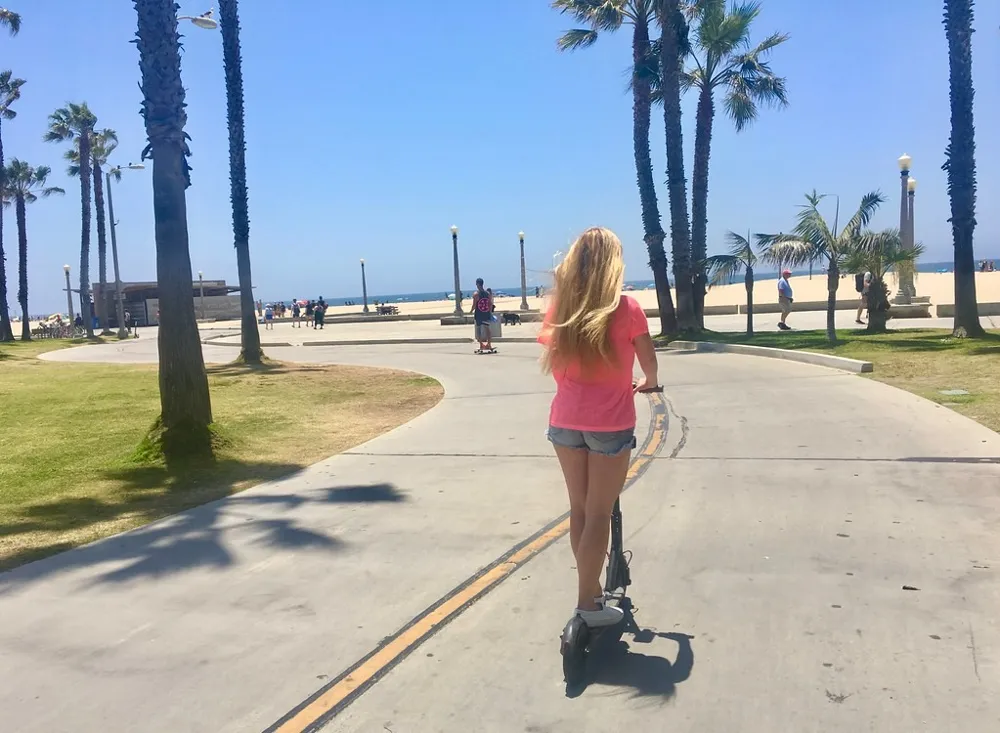
Before Your First Ride
An electric scooter is easy to learn, but it is faster and less stable than it looks. A few minutes of setup avoids most first-day falls. Before you step on:
- Read the manual. Learn where the throttle, brakes, speed modes and lights are, and how your scooter starts.
- Charge the battery. A low battery can cut power suddenly on some models.
- Check tire pressure on air-filled tires. Use the pressure printed on the tire or in the manual.
- Test the brakes while walking the scooter. Each lever should stop the wheel firmly.
- Lock the folding latch and make sure the stem and handlebars don't wobble.
- Know the rules. Speed limits, helmet rules and where you can ride vary by state and city. See are electric scooters street legal? and do you need a license for a scooter?
The US Consumer Product Safety Commission (CPSC) also recommends checking the handlebars, throttle, bell, lights, cables and frame for damage before you ride.
Safety Gear
| Gear | Why It Matters |
|---|---|
| Helmet | The CPSC says to always wear a bicycle helmet. Look for a CPSC certification label; at higher speeds, consider more coverage. |
| Wrist guards, knee and elbow pads | Hands and knees take the hit in most low-speed falls; pads are worth wearing while you learn. |
| Closed-toe, flat-soled shoes | Grip the deck and protect your feet when you put a foot down. |
| Gloves | Better grip and fewer scrapes. |
| Bright or reflective clothing | Helps drivers see you, day and night. |
| Lights | Front and rear lights for dusk and night; many places require them. |
A good rule of thumb: the faster you ride, the more protection you need. See bike helmets and electric scooter accessories for lights, mirrors and bells.
Where to Practice

Pick a flat, smooth, open space with no traffic: an empty parking lot, a quiet cul-de-sac or a wide paved path at a quiet time. Avoid slopes, gravel, wet patches and crowds until you can start, stop and turn without thinking. Daylight and dry pavement make the first session much easier.
Know Your Controls
| Control | What It Does | Beginner Tip |
|---|---|---|
| Throttle (thumb or twist) | Speeds up the motor | Press gently; it can be more sensitive than you expect |
| Hand brake lever | Works a disc or drum brake, often on one wheel | Squeeze progressively, never grab |
| Electronic or regenerative brake | Slows the motor; on many scooters it engages with the brake lever | Feels gentle; don't rely on it alone in an emergency |
| Rear foot brake (fender) | Pressing the rear fender rubs the tire | A backup on many budget scooters |
| Speed modes | Cap the top speed and acceleration | Start in the lowest mode |
| Display | Shows speed, battery and mode | Glance, don't stare |
| Bell or horn, lights | Warn others and help you be seen | Find them before you need them |
Kick-start vs zero-start: many scooters only engage the motor after you push off to a walking pace, a safety feature that stops it shooting forward if the throttle is bumped. Others start from a standstill. Some let you switch between the two in an app or menu. If the throttle does nothing at a standstill, push off first. For how the parts work together, see electric scooter parts.
Step by Step: Your First Ride
- Power on and pick the lowest speed mode. Keep both hands on the grips.
- Raise the kickstand while holding the handlebars so the scooter doesn't tip.
- Put your front foot on the deck, near the stem and pointing forward. Most riders use their weaker foot here; use whichever feels natural.
- Push off with your other foot two or three times, like a kick scooter, until you are rolling at walking pace.
- Place your back foot on the deck behind the front foot, angled slightly sideways. Keep feet about shoulder-width apart if the deck allows.
- Press the throttle gently. Keep knees slightly bent and your weight centered, not leaning on the bars.
- Look ahead, 15 to 20 feet down the path, not at your feet or the display.
- Release the throttle and brake gently to stop. Put a foot down only once you have nearly stopped.
Repeat until starting and stopping feel automatic. Then try longer runs, gentle curves and a slightly higher speed mode.
How to Brake and Stop Safely
- Release the throttle first. Braking with the throttle still pressed makes the brakes fight the motor.
- Squeeze progressively. Start light, then add pressure. Grabbing a front brake hard can pitch you forward.
- Shift your weight back. Bend your knees and lower your hips slightly over the rear wheel during hard stops.
- Brake in a straight line. Straighten up before braking hard; braking mid-turn can make the wheels slide.
- Use both brakes if your scooter has two, for shorter, more stable stops.
- Allow more distance on wet, sandy or leafy surfaces, and when riding downhill.
Practice emergency stops at low speed in your practice space so the motion is familiar before you need it.
How to Turn
At walking pace, steer by turning the handlebars gently. As speed rises, the bars should move less and your body more:
- Slow down before the turn, not in the middle of it.
- Look through the turn to where you want to go; the scooter follows your eyes.
- Lean gently with your body and the scooter together at higher speeds, rather than twisting the bars.
- Keep your weight low with bent knees, and avoid sharp, jerky handlebar movements.
Practice wide circles in both directions, then figure eights, then tighter turns. Most riders find one direction harder at first.
Potholes, Curbs and Rough Ground
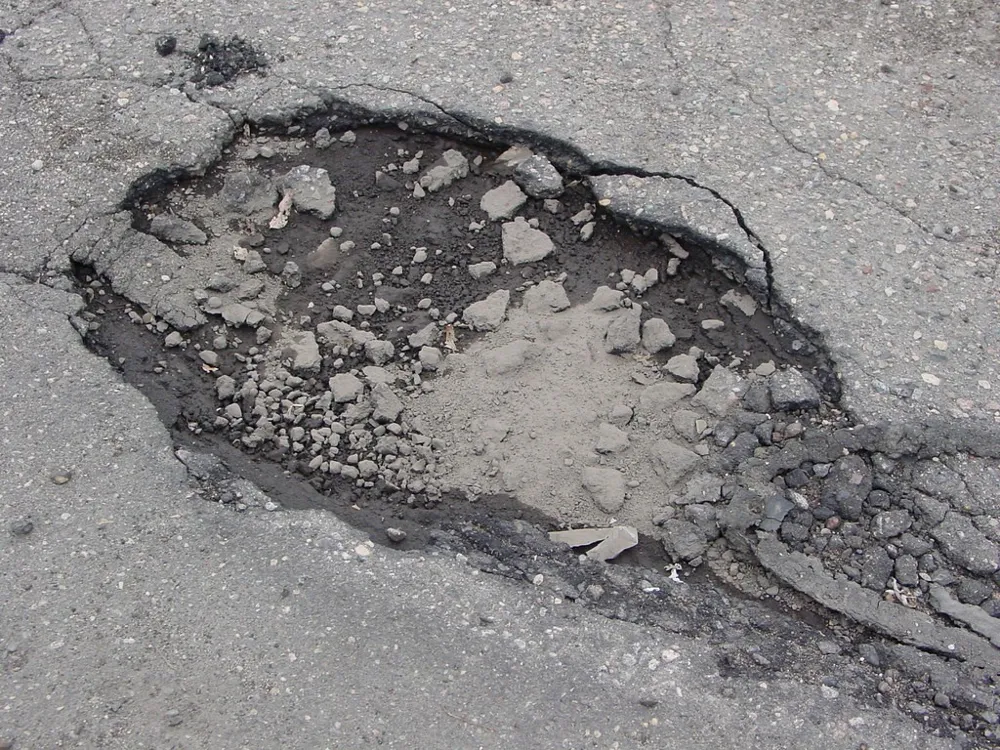
Small scooter wheels catch on things a bike would roll over. The CPSC warns that small tires can stop abruptly on bumps and uneven ground, and advises slowing down and leaning back when crossing them.
- Scan ahead for potholes, cracks, drain grates, rail tracks and loose gravel.
- Bend your knees and keep your weight slightly back to absorb bumps.
- Cross tracks and cracks at a right angle, never along them.
- Don't jump curbs. Slow right down and use a ramp, or step off and lift the scooter. Hard curb hits can damage the scooter and throw you.
- Avoid puddles and wet leaves, which can hide holes and are slippery.
Riding mostly on rough roads? Larger air-filled tires and suspension help; see electric scooter tires and off-road electric scooters.
Riding Up and Down Hills
- Uphill: build a little speed before the slope and lean slightly forward. Steep hills drain the battery fast and can slow small motors to a crawl; a short kick helps.
- Downhill: control speed with light, steady braking from the top, rather than braking hard at the bottom. Shift your weight back.
- Stopping on a slope: keep a brake on and a foot ready, since the scooter will roll.
Hill-climbing ability depends on motor power, rider weight and battery level; see how fast electric scooters go.
Riding at Night and in Wet Weather
At night, use a bright front light and a red rear light, wear reflective clothing and choose well-lit routes. Many built-in scooter headlights sit low on the stem, so a handlebar or helmet light helps you spot potholes.
In wet weather, brakes need more distance, painted road lines and metal covers get slippery, and water can damage electronics. Check your scooter's water-resistance rating and warranty, and see can you ride an electric scooter in the rain?
Riding in Traffic and Bike Lanes
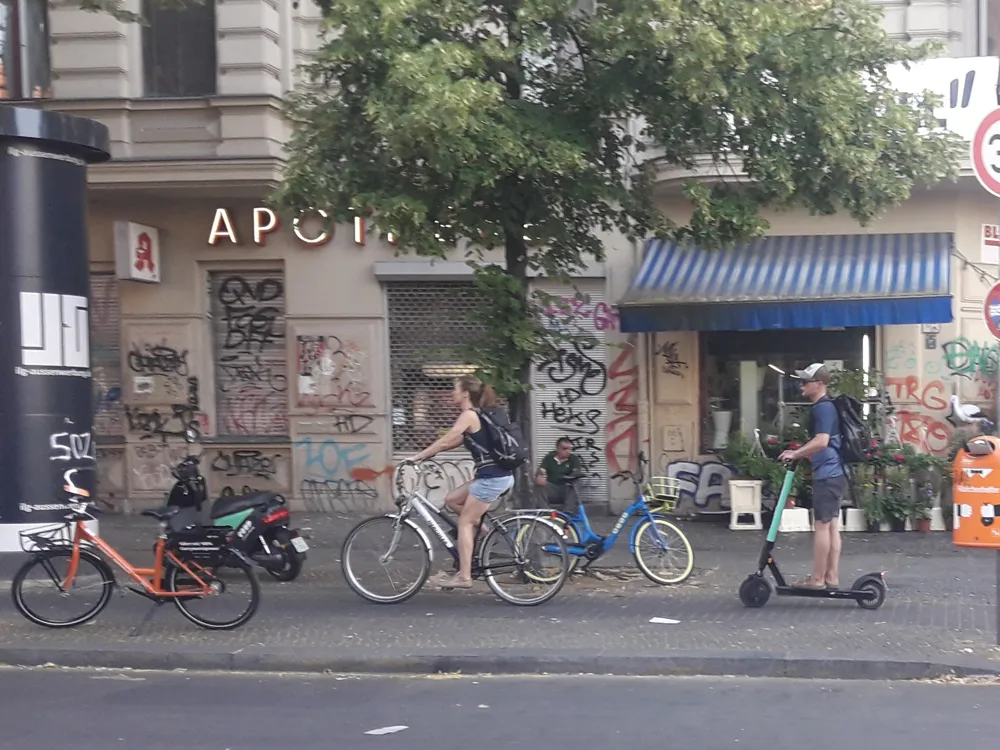
The CPSC says to assume drivers and pedestrians may not see you. Ride as if you're invisible:
- Use bike lanes where your local rules allow, and ride with the flow of traffic.
- Ride predictably. Hold a straight line and avoid weaving between cars.
- Watch for opening car doors and leave space between you and parked cars.
- Signal turns with your arm: left arm straight out for left, right arm straight out (or left arm bent up) for right. Slow down first, because signaling means riding one-handed.
- Be careful at driveways and intersections, where turning drivers may not expect you.
- Yield to pedestrians and use your bell, especially on shared paths. Where sidewalk riding is allowed, ride at walking speed.
- No phones or headphones, and never ride after drinking or using drugs.
Common Beginner Mistakes
| Mistake | What Happens | Fix |
|---|---|---|
| Punching the throttle | The scooter lurches and you lose balance | Press slowly; use the lowest mode |
| Grabbing the brake | Sudden stop throws you forward | Squeeze progressively, weight back |
| Over-turning the bars | The front wheel tucks and you fall | Slow down, lean gently |
| Riding one-handed | Less control over bumps | Both hands on the grips |
| Bags on the handlebars | Unbalanced steering | Use a backpack or deck-mounted bag |
| Carrying a passenger | Overloaded brakes and frame | One rider only |
| Ignoring tire pressure | Poor handling and more flats | Check before rides |
| Changing to a lower mode at speed | Sudden deceleration on some models | Slow down first, then switch |
How Safe Are Electric Scooters?
E-scooters can be ridden safely, but injuries are common. The CPSC's micromobility report estimates about 79,300 emergency department visits linked to e-scooters in 2024 and a total of about 380,000 from 2017 through 2024. It counted 206 reported e-scooter deaths in that period, and collisions with motor vehicles were the leading cause of those deaths. The most frequently injured body parts across micromobility products were the arms, legs, head and neck.
The practical takeaways: wear a helmet, be visible, ride predictably around traffic, slow down for rough ground and keep your scooter maintained. Battery fires are a separate risk, so charge with the original charger and follow the advice in how long electric scooter batteries last and our charger guide. Read the manufacturer's weight and age limits too.
Practice Drills and What to Learn Next
- Start-stop drill: roll 30 feet, stop smoothly, repeat. Then stop at a chosen line.
- Slow-speed control: ride as slowly as you can in a straight line without putting a foot down.
- Circles and figure eights: both directions, getting tighter.
- Cone weave: set out water bottles or cones and weave through them.
- Emergency stop: on a signal, stop as quickly as you safely can, weight back.
- Look-back drill: glance over your shoulder while holding a straight line, ready for traffic.
Next, learn basic care in electric scooter maintenance, keep it safe when parked with a good lock, and if you also ride a board, compare how to ride a hoverboard.
Beginner-Friendly Scooters and Gear
A scooter with modest top speed, dual braking and a low starting mode makes learning easier. These are good starting points; see the best electric scooters and budget electric scooters for more.
1. Hiboy S2 Lite
Hiboy's entry model lists up to 13 mph, up to 10.6 miles of range and a 350W peak motor. Its gentler top speed suits newer riders on short, flat trips.
Good to Know
- Lower top speed for learning
- Folds for storage
Watch Out For
- Short listed range
- Best on smooth, flat routes
2. Segway Ninebot E2 Plus II
Segway's more affordable line. The E2 Plus II folds, has a dual braking system and is listed as UL 2272 and 2271 certified.
Good to Know
- Dual braking system
- Listed UL 2272 and 2271 certification
Watch Out For
- Suited to shorter commutes
- Check the listing for speed and range
3. Lumos Ultra MIPS Helmet
A helmet built around visibility. Lumos lists 30 white front LEDs and 64 red rear LEDs, turn signals triggered by an included handlebar remote or the app, CPSC and EN 1078 certification and an IPX6 water-resistance rating. It charges over USB-C.
Good to Know
- Lights at head height
- Turn signals for traffic
Watch Out For
- Heavier than unlit helmets
- Needs regular charging
Frequently Asked Questions
Is it hard to ride an electric scooter?
No. Most people get comfortable with starting, braking and gentle turns in one practice session. Start in the lowest speed mode in an empty, flat space.
Do you have to kick to start an electric scooter?
Many do. Some scooters only engage the motor after you push off to a walking pace, while others start from a standstill. Your manual explains which setting yours uses.
Which foot goes in front on an electric scooter?
Use whichever feels natural. Most riders put their weaker foot forward on the deck and push off with the stronger foot, then place it behind the front foot.
How do you stop an electric scooter quickly?
Release the throttle, keep the handlebars straight, shift your weight back and squeeze the brakes firmly but progressively. Avoid grabbing the brake hard while turning.
Should you lean when turning on an electric scooter?
At walking pace, steer with the handlebars. At higher speeds, lean your body gently into the turn and look where you want to go, rather than twisting the bars sharply.
Do I need a license to ride an electric scooter?
It depends on your state. Some states require a driver's license or learner's permit and many don't. See our scooter license guide and check your state's current rules.
Can you ride an electric scooter on the sidewalk?
Some states and cities ban it and others allow it. Check your local rules, and ride slowly and yield to pedestrians anywhere it is allowed.