Parts of an Electric Scooter and How They Work Together (2026)
An e-scooter is a battery, a controller and a motor wrapped in a folding frame. Here's what every part does, how they work together and how to read the numbers on a spec sheet.
Electric Scooter Parts at a Glance
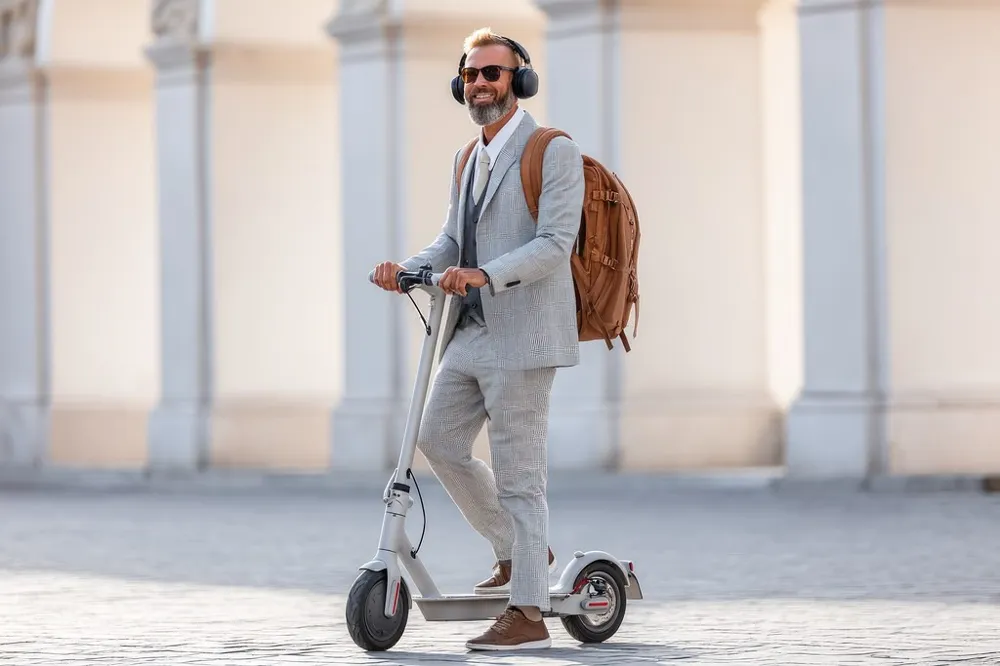
An electric scooter is a kick scooter with an electrical system added: a battery stores energy, a controller decides how much of it to release, and a motor in the wheel turns it into motion. Everything else, from the stem to the brakes, is there to carry you, steer and stop safely. Here is every major part and what it does.
| Part | What It Does | Spec to Look For |
|---|---|---|
| Battery | Stores the energy that powers the scooter | Volts (V), amp-hours (Ah), watt-hours (Wh) |
| Battery management system (BMS) | Protects the cells from overcharge, over-discharge, short circuits and heat | Part of the battery; look for UL 2271 or UL 2272 certification |
| Controller | Sends current from battery to motor based on your inputs | Voltage and current (amps) rating |
| Motor | Drives the wheel | Nominal and peak watts; single or dual |
| Throttle | Tells the controller how much power you want | Thumb, trigger or twist |
| Display | Shows speed, battery level and riding mode | Screen type, ride modes |
| Brakes | Slow and stop the scooter | Disc, drum, foot or electronic; how many systems |
| Wheels and tires | Grip, comfort and puncture resistance | Size in inches; pneumatic or solid |
| Suspension | Absorbs bumps | Spring, hydraulic or rubber; front, rear or both |
| Deck | Platform you stand on; often houses the battery | Length, width, grip surface |
| Stem and folding mechanism | Connects the handlebars to the front wheel and folds for carrying | Latch design, height adjustment |
| Lights | Help you see and be seen | Headlight, brake light, reflectors |
How the Parts Work Together
Every ride follows the same chain of events:
- You press the throttle. It sends a signal to the controller saying how much power you want.
- The controller reads that signal and draws current from the battery, within the limits set by the battery management system and the selected riding mode.
- The motor turns the wheel. More current means more torque and faster acceleration, up to the scooter's top speed.
- When you brake, the controller cuts motor power. Mechanical brakes slow the wheel with friction, and on scooters with electronic or regenerative braking the controller also uses the motor to slow you down.
- The display shows your speed and how much charge is left, and the BMS keeps watching the cells the whole time.
The same basic layout (battery, controller, motor, sensor or throttle) powers e-bikes and hoverboards too. If you're curious how the other rideables compare, see how electric bikes work and how hoverboards work.
The Battery
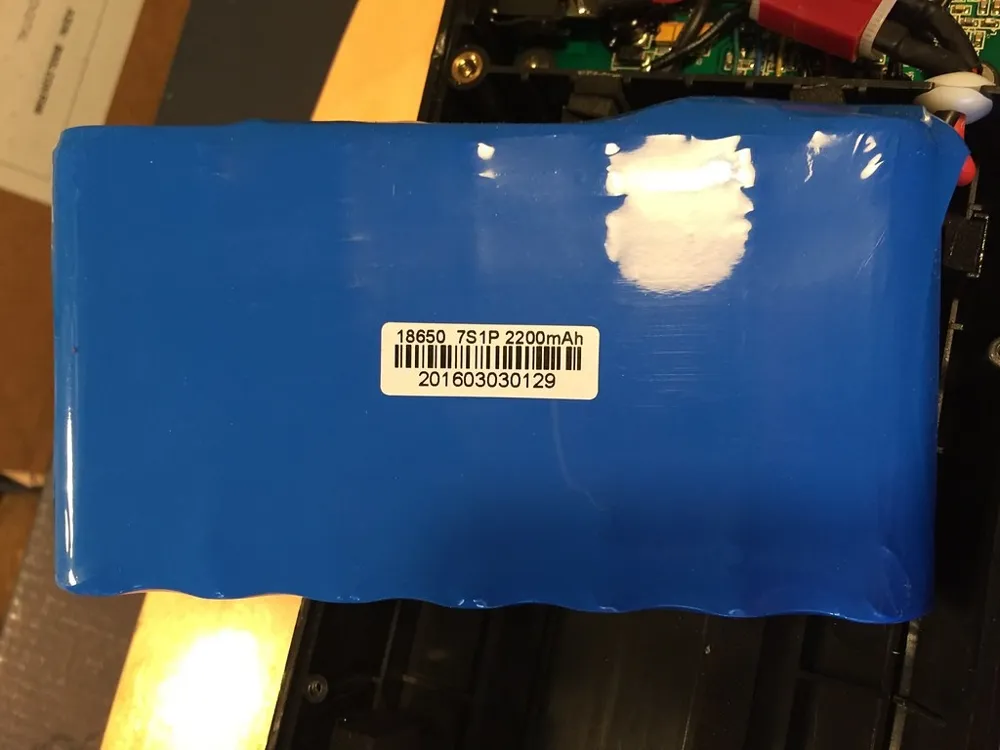
The battery is usually the single most important and most expensive part of an e-scooter. Almost all modern scooters use lithium-ion packs, built from many small cylindrical cells joined together. Commuter scooters commonly use 18650 cells (18 mm wide and 65 mm long), and long-range models often use the larger 21700 cells. A single lithium-ion cell runs from about 3.0 volts when empty to 4.2 volts when full, so packs link cells in series to reach a useful voltage and in parallel to add capacity. A label such as "10S2P" means 10 cells in series, in 2 parallel groups.
Three numbers describe a battery:
- Voltage (V): the pack's nominal voltage. Common e-scooter voltages include 24, 36, 48, 52, 60 and 72 volts. Higher voltage generally means more speed and better hill climbing, and 52V and up is typical of performance scooters.
- Amp-hours (Ah): how much charge the pack holds. More amp-hours means more energy at the same voltage.
- Watt-hours (Wh): total stored energy, found by multiplying volts by amp-hours. A 36V, 10Ah battery holds 36 x 10 = 360 Wh. Watt-hours are the best single number for comparing range between scooters.
Battery size drives both range and weight, which is why long-range scooters are heavy. Compare models on our long-range and lightweight lists, and see how long electric scooter batteries last for charge cycles, storage and care.
The Battery Management System (BMS)
The BMS is a small circuit board attached to the battery pack. It monitors the cells and protects them from overcharging, over-discharging, overcurrent, short circuits and overheating, which are the conditions that wear batteries out or, in the worst case, start fires. On many packs it also balances the cells so they charge evenly.
You won't see the BMS from the outside, but it matters when you buy or replace a battery. Look for scooters certified to UL 2272, which evaluates the electrical system of the whole device (battery, BMS, controller, wiring and charging together), and replacement batteries certified to UL 2271, the standard for the battery pack itself. Never bypass or remove a BMS, and never charge with a charger that doesn't match your battery (our electric scooter charger guide explains voltages and connectors).
The Controller
The controller, sometimes called the ESC (electronic speed controller), is the scooter's brain. It sits between the battery and motor, usually inside the deck or stem, and turns your throttle and brake inputs into motor commands. It controls acceleration, enforces the top speed of each riding mode and, on many scooters, handles electronic and regenerative braking.
Controllers are rated by the voltage and current (amps) they can handle, and a more powerful motor needs a controller with a higher rating. Power is voltage multiplied by current: a 36V system drawing 7 amps produces about 252 watts. That's why a high-voltage scooter with a high-current controller accelerates much harder than a budget model, even with a similar-looking motor. Dual-motor scooters usually have one controller per motor.
The Motor
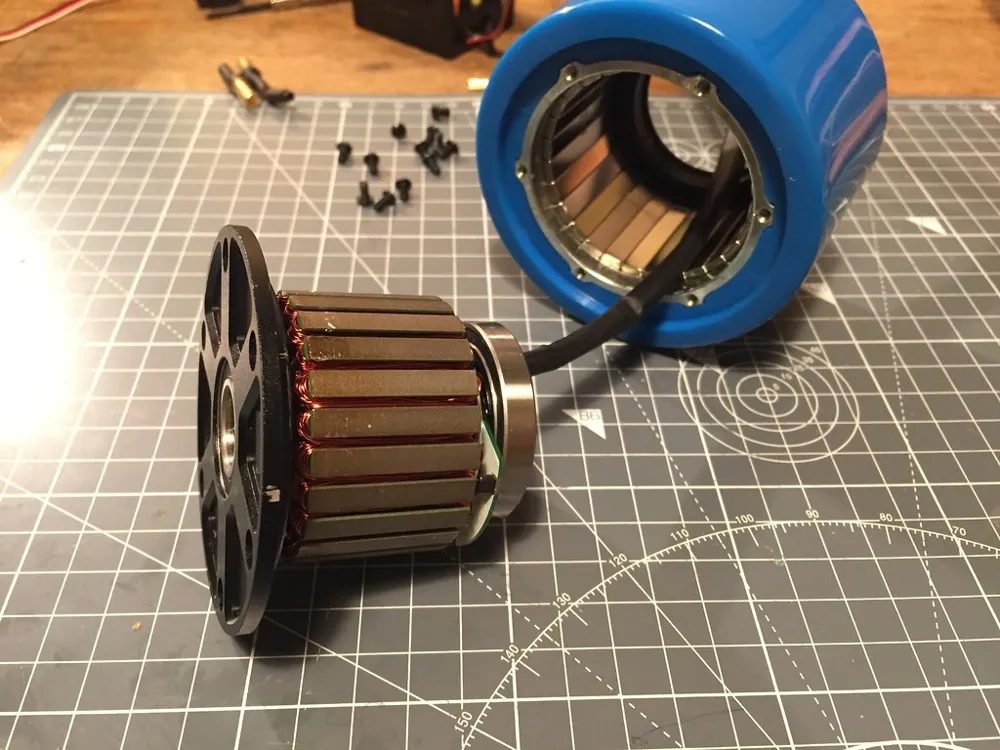
Most electric scooters use a brushless DC (BLDC) hub motor built directly into the wheel. The fixed center (the stator) carries copper windings, and the outer shell, lined with magnets, spins around it and turns the tire. Hub motors have no chain or belt, so they're quiet and need very little maintenance. Brushless motors are also more efficient than older brushed motors.
Motor power is listed in watts, and spec sheets often give two figures:
- Nominal (continuous) power: what the motor can sustain for long periods.
- Peak power: the highest output it can produce for short bursts, such as starting on a hill.
| Scooter Type | Typical Motor Power |
|---|---|
| Kids' scooters | Around 150 W |
| Budget commuters | About 350–500 W |
| Mid-range commuters | About 500–1,000 W |
| Performance scooters | About 1,200–4,000 W or more, often dual motors |
Dual-motor scooters put a motor in each wheel for more torque, better traction and stronger hill climbing, at the cost of weight and battery drain. Compare them on our dual-motor electric scooters page, and see how fast electric scooters go for what motor power means for speed. Listed watts and speeds are manufacturer claims, and real performance depends on rider weight, battery charge and terrain.
Throttle and Display
The throttle sits on the handlebar and tells the controller how much power you want. There are three common styles:
- Thumb throttle: a lever you push with your thumb.
- Trigger (finger) throttle: a lever you pull with your index finger.
- Twist throttle: a rotating grip like a motorcycle's.
Many scooters are kick-to-start: the throttle only works once you're rolling, which prevents the scooter from shooting off from a standstill. Others allow a zero start from a standstill. The display, usually an LED or LCD screen on the stem or handlebar, shows speed, battery level and riding mode, and on some models the trip distance, lights and cruise control. Our guide to how to ride an electric scooter covers throttle control for beginners.
Brakes
Brakes are the most safety-critical part on the scooter, and most models combine more than one type:
| Brake Type | How It Works | Good to Know |
|---|---|---|
| Mechanical disc | A cable squeezes pads onto a rotor on the wheel | Strong stopping; pads and cable need adjusting as they wear |
| Hydraulic disc | Fluid-filled lines push the caliper pistons | Strong, consistent stopping power |
| Drum | Brake shoes press outward inside a sealed hub | Enclosed inside the wheel hub |
| Foot (fender) brake | You press the rear fender onto the tire | Simple backup brake on lighter scooters |
| Electronic / regenerative | The controller uses the motor to slow the wheel; regenerative systems send a little energy back to the battery | No pads to wear or adjust, but weaker than mechanical brakes |
Mechanical brakes generally stop harder, while electronic brakes need no adjustment. A scooter with at least two braking systems gives you a backup if one fails. Regenerative braking returns only a little energy to the battery, so don't count on it for extra range.
Wheels and Tires
E-scooter wheels are small, so the tires do a lot of the work of soothing the ride. There are two families:
- Pneumatic (air-filled) tires, with an inner tube or tubeless, give the smoothest ride and the best grip, especially in the wet, but they can puncture and need their pressure checked.
- Airless tires (solid, honeycomb or polymer-filled) can't go flat and need almost no upkeep, but they ride harsher and grip less well.
Wheel size matters too: a 10-inch wheel rolls over cracks and potholes more easily than an 8-inch wheel. For tire sizes, pressure, sealant and fixing a flat, see our full guide to electric scooter tires.
Suspension
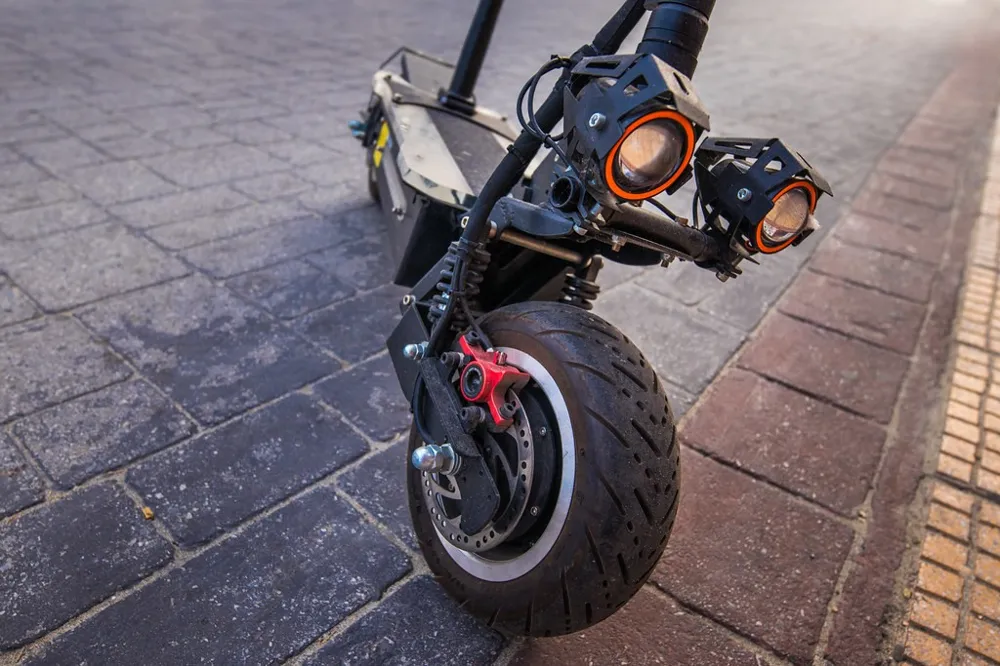
Many commuter scooters have no suspension at all and rely on air-filled tires to soak up bumps. Others add suspension at the front, the rear or both. The three main types are:
- Spring: a coil spring compresses over bumps. Simple and common, but it can feel bouncy.
- Hydraulic: fluid-filled shocks damp the movement for a smoother, more controlled ride.
- Rubber: rubber blocks or cartridges compress over bumps; compact and low-maintenance.
The smoothest systems combine a spring with a damper (coil-over-hydraulic or coil-over-air). Suspension adds weight and parts to maintain, so it matters most on rough roads and on off-road scooters.
Deck, Stem and Folding Mechanism
The deck is the platform you stand on. It's usually aluminum with a rubber or grip-tape surface, and on most scooters it houses the battery, so a bigger battery often means a thicker, heavier deck. Ground clearance under the deck matters for curbs and rough ground.
The stem is the vertical tube that connects the handlebars to the front wheel. Nearly every e-scooter has a folding mechanism on the stem, with a latch, clamp or locking pin, so you can fold it for carrying and storage, and some stems adjust for rider height. The weak point is the latch: a loose folding mechanism causes stem wobble, which feels unsettling at speed. Check that the latch closes firmly before every ride and tighten it if you feel any play. If folding matters to you, see our folding electric scooters guide.
The handlebars carry the throttle, brake levers, display, bell and light switch. On some scooters the bars also fold down for a slimmer package.
Lights and Water Resistance
Nearly every e-scooter has an LED headlight and a tail light that brightens when you brake, and some add turn signals or deck lighting. Built-in lights are often aimed low and are fairly weak, so many riders add a brighter handlebar light and a helmet light for night riding (see our electric scooter accessories). Check your local rules too, since some states and cities require lights and reflectors at night (our street-legal guide covers equipment rules).
Water resistance is listed as an IP (Ingress Protection) rating under the IEC 60529 standard. The first digit covers dust and solids and the second covers water, with an X when a category wasn't tested. On the water side, IPX5 and IPX6 mean the scooter resists water jets, while only IPX7 and up are tested for immersion. An IP rating isn't permission to ride through deep puddles, and many brands exclude water damage from their warranty. See riding an electric scooter in the rain for details.
How to Read an Electric Scooter Spec Sheet
Once you know the parts, the spec sheet makes sense. Here's what the common lines mean:
| Spec Line | What It Tells You |
|---|---|
| Battery: 48V 15Ah (720 Wh) | Nominal voltage, capacity and total energy; Wh is the best guide to range |
| Motor: 500W nominal / 1,000W peak | Sustained power vs short bursts for hills and starts |
| Single or dual motor | One driven wheel or two |
| Brakes: front drum, rear disc + E-ABS | Brake types and where they are; more than one system is safer |
| Tires: 10-inch pneumatic | Wheel size and tire type |
| Max load | Highest rider weight the maker rates the scooter for |
| Top speed and range | Manufacturer claims, usually measured with a light rider on flat ground |
| Weight | What you'll carry up stairs or onto a train |
| IP rating | Dust and water resistance |
| Certification | Look for UL 2272 on the scooter |
Treat claimed range and top speed as best-case figures. Real range falls with heavier riders, hills, cold weather and higher speeds. If you're a heavier rider, check the max load first; our electric scooters for heavy adults list sorts by it. Ready to compare models? Start with the best electric scooters, budget picks or the main electric scooter brands.
Replacement Parts and Safety
Parts wear at very different rates. Tires, inner tubes and brake pads are routine wear items, and grips, fenders, kickstands, lights and chargers are easy swaps on most models. Batteries usually last a few hundred full charge cycles before range drops noticeably. A few rules keep repairs safe:
- Match the part to your model. Tire size, brake rotor size, throttle connectors and charger voltage all vary between scooters, even within one brand.
- Leave the electrical core to the pros. For batteries, controllers and motors, use parts approved by the manufacturer or an authorized service center, especially while the scooter is under warranty. Opening a scooter yourself may void the warranty.
- Use certified batteries and the right charger. Never fit a cheap, uncertified pack, a battery with a different voltage, or a charger that doesn't match.
- Don't modify for more speed. Swapping controllers or batteries to raise power can make a scooter illegal to ride on public roads and can overload parts that weren't designed for it.
- Recycle old batteries properly. Lithium-ion packs never go in household trash; take them to a battery drop-off or a household hazardous waste site.
For routine checks such as bolts, brake adjustment, tire pressure and folding-latch play, follow our electric scooter maintenance checklist. This guide is general information; for repairs on your scooter, follow your owner's manual or see a qualified repair shop.
Related Guides
Learn how to ride an electric scooter, read up on tires and battery life, compare the fastest electric scooters, protect your ride with a good electric scooter lock, or browse all our electric scooter guides.
Frequently Asked Questions
What are the main parts of an electric scooter?
The core electrical parts are the battery, the battery management system (BMS), the controller, the motor and the throttle. The rest of the scooter is the deck, stem and folding mechanism, handlebars and display, brakes, wheels and tires, suspension (on some models) and lights.
What is the controller on an electric scooter?
The controller is the scooter's brain. It reads the throttle and brake inputs and decides how much current to send from the battery to the motor. On scooters with electronic or regenerative braking, it also runs the braking.
Where is the motor on an electric scooter?
On most e-scooters the motor is a brushless hub motor built into the front or rear wheel. More powerful scooters have two, one in each wheel.
Where is the battery on an electric scooter?
Usually inside the deck, under your feet. Some scooters carry it in the stem or in a removable pack.
What does the BMS do on a scooter battery?
The battery management system monitors the cells and protects the pack from overcharging, over-discharging, overcurrent, short circuits and overheating. Never bypass or remove it.
What does 36V 10Ah mean on an electric scooter?
36V is the battery's nominal voltage and 10Ah is its capacity. Multiply them to get energy: 36 x 10 = 360 watt-hours (Wh). More watt-hours generally means more range.
Can you replace parts on an electric scooter?
Many parts can be replaced, including tires, tubes, brake pads, throttles, displays and chargers. For batteries, controllers and motors, use parts approved by the manufacturer or an authorized service center, especially while the scooter is under warranty.