Best All-Terrain Hoverboards for Rough Ground (2026)
Three UL 2272 listed hoverboards for grass, dirt and packed paths, and how tire size, tire type, weight limits and water ratings change what a board can handle.
What Makes a Hoverboard Off-Road Ready?
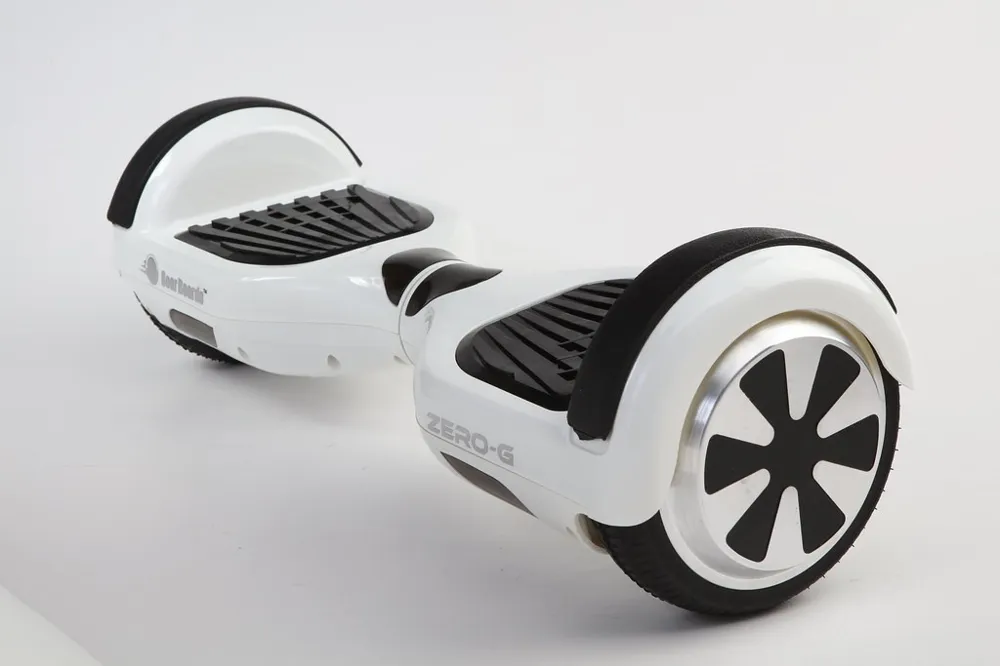
Most hoverboards are built for smooth sidewalks and driveways. An off-road (or all-terrain) hoverboard swaps the small, hard 6.5-inch wheels for larger tires, usually 8.5 to 10.5 inches, with a deeper tread, and pairs them with more motor power to push through grass and over bumps. That combination is what lets a board roll across a lawn, a dirt path or a packed gravel driveway without stalling or pitching you forward.
Bigger tires don't make a hoverboard an off-road vehicle, though. Every self-balancing board still has a short wheelbase and no suspension, so it works best on firm, fairly even ground. Before tire size, the first thing to check is the same as with any hoverboard: UL 2272 certification. Every board below is listed as UL 2272 certified by its maker or on its Amazon listing; check the label on the box and board too.
Gyroor Warrior G2
Best for mixed terrain on a budget
- 8.5-inch solid off-road tires
- Listed as UL 2272 certified
- 700W listed motor power
Segway Ninebot S2
Best for teens and adults on rough ground
- 10.5-inch tubeless pneumatic tires
- Listed IP54 and UL 2272
- Knee control bar
Gyroor G13
Best for lighter riders on grass
- Smaller 6.5-inch all-terrain wheels
- Listed as UL 2272 certified
- LED lights and Bluetooth
Off-Road Hoverboards Compared
| Board | Tires | Listed Motor Power | Listed Top Speed | Water Rating | Safety Listing |
|---|---|---|---|---|---|
| Gyroor Warrior G2 | 8.5" solid, off-road tread | 700W | Up to 10 mph (retail listings) | Not stated on product page | UL 2272 |
| Segway Ninebot S2 | 10.5" tubeless pneumatic | 1,600W max (800W × 2) | 11.2 mph | IP54 | UL 2271 and UL 2272 |
| Gyroor G13 | 6.5" all-terrain | Check listing | Check listing | Check listing | UL 2272 (listing) |
Specs are as published by the makers or shown on retail listings in November 2026. Listings change, so confirm before buying.
The Best Off-Road Hoverboards
1. Gyroor Warrior G2
The Warrior is the board most often named in off-road hoverboard roundups, and it's built around the features that matter on rough ground. Gyroor lists it with 8.5-inch solid off-road tires and a 700W motor, and states that it is UL 2272 certified. Retail listings describe that as two 350W motors with a top speed of up to 10 mph. It has LED lights and a Bluetooth speaker, and Gyroor sells it with or without its K2 go-kart attachment if you want to add a seat.
Gyroor markets the Warrior for kids, teens and adults without giving a specific age range on its product page. The listed maximum load differs by seller: Gyroor's own page states 300 lb, while some retail listings show 265 lb. Use the lower figure unless the manual for your unit says otherwise.
Good to Know
- 8.5-inch treaded tires that can't puncture
- Listed as UL 2272 certified
- Optional go-kart attachment
Watch Out For
- Solid tires pass more vibration on bumpy ground
- No water rating stated on the product page
- Maximum load differs between listings
2. Segway Ninebot S2
The S2 is the most capable board here and the only one with air-filled tires. Segway lists 10.5-inch "off-road tubeless pneumatic tires," dual 800W motors (1,600W max), a top speed of 11.2 mph and a 15° climbing slope. You steer with a knee control bar rather than foot tilt alone, and the bar adjusts for a recommended rider height of 4'3" to 6'6", which Segway says suits both teenagers and adults.
Segway lists a typical range of 21.7 miles, measured on pavement with a 165.3 lb rider at 77°F and about 60% of top speed, so expect less on grass and dirt. It carries an IP54 rating, which Segway describes as protection from "dust and splashes," and Segway states it is certified to UL 2271 (batteries) and UL 2272. Charging takes around 4.5 hours. Segway's product page doesn't list a maximum load, so check the listing or manual.
Good to Know
- Largest tires and most motor power here
- Pneumatic tires soak up bumps
- IP54 rated, UL 2271 and UL 2272 listed
Watch Out For
- Air tires need pressure checks and can go flat
- Heavier and bulkier than a standard board
- Knee bar takes a little getting used to
3. Gyroor G13
The G13 is one of the best-known "all-terrain" hoverboards, but it's a lighter-duty option: retail listings show 6.5-inch wheels with a chunky all-terrain tread rather than the 8.5-inch tires of a full off-road board. It's listed as UL 2272 certified and has LED lights and Bluetooth. It suits lighter riders who mostly ride on short grass, driveways and packed paths. Check the age and weight rating on the current listing, since figures vary between sellers.
Good to Know
- Listed as UL 2272 certified
- Lighter and smaller than 8.5-inch boards
- Kart bundles are available
Watch Out For
- 6.5-inch wheels catch on roots and ruts
- Not meant for gravel or rough trails
Tire Size: 6.5, 8.5 and 10-Inch Boards
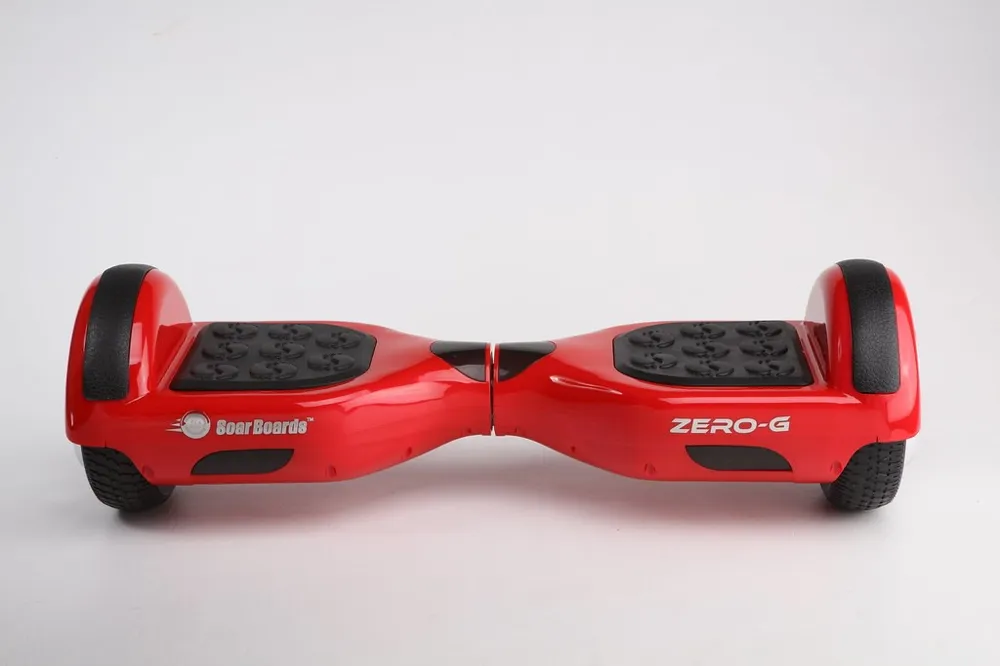
Wheel diameter is the biggest single factor in how a hoverboard copes with rough ground. A larger wheel rolls over a crack, root or tuft of grass that would stop a small wheel, and it sits the deck higher above the ground.
| Wheel Size | Off-Road Ability | Typical Rider | Example |
|---|---|---|---|
| 6.5" | Smooth pavement; short grass with treaded "all-terrain" versions | Kids and lighter riders | Gyroor G13 |
| 8.5" | Grass, dirt paths, packed gravel, bumpy pavement | Older kids, teens and adults | Gyroor Warrior G2 |
| 10" and up | The roughest ground a hoverboard can manage; best comfort | Teens and adults | Segway Ninebot S2 (10.5") |
Larger wheels add weight, so an 8.5-inch or 10-inch board is heavier to carry and to lift into a car. Some brands also sell 6.5-inch boards with rubber "all-terrain" tires; Jetson's Rogue, for example, used 6.5-inch all-terrain rubber tires and is now marked as retired on Jetson's site. Those boards handle a lawn better than a smooth-wheeled board but are still closer to a sidewalk board than a true off-roader. For a wider look at sizes, see our best hoverboards guide.
Pneumatic vs Solid Tires
Off-road hoverboards use one of two tire types, and each has a clear trade-off.
| Pneumatic (Air-Filled) | Solid Rubber | |
|---|---|---|
| Comfort | Cushions bumps and vibration | Passes more vibration to your feet |
| Grip | Tire flexes to the ground for better traction | Relies on tread pattern |
| Flats | Can puncture or go soft | Can't go flat |
| Maintenance | Check pressure regularly | Inspect for cracks and wear |
| Example | Segway Ninebot S2 | Gyroor Warrior G2 |
Gyroor's own all-terrain guide says that "authentic all-terrain hoverboards use large, pneumatic (air-filled) tires, typically 8.5 inches or larger," and that solid rubber wheels with tread "lack the cushioning effect of air." In practice, many popular off-road boards, including Gyroor's own Warrior, use solid tires because they are maintenance-free. If you ride mostly on grass and dirt paths, solid treaded tires work; if you ride rough, bumpy ground often, air-filled tires are more comfortable. Tubeless pneumatic tires, like the S2's, avoid separate inner tubes. Keep air tires at the pressure shown in the manual or on the tire sidewall.
UL 2272: Only Buy a Certified Board
UL 2272 is the safety standard for the electrical systems of personal e-mobility devices, including hoverboards. It evaluates the drive train, battery and charger together as a system, to reduce fire and electrical hazards. It doesn't rate how well a board rides off-road or how durable it is. UL began certifying hoverboards in 2016 after a wave of battery fires and recalls; our guide to how hoverboards work covers that history, and are hoverboards safe? covers the risks in more detail.
- Look for UL 2272 on the listing, the box and the label on the board itself.
- Buy from the brand or an authorized seller. Certification claims on unbranded listings are harder to trust.
- UL 2271 is a related standard for the battery pack alone. Segway lists both for the S2.
Off-road riding works the motors and battery harder than cruising a smooth sidewalk, which is one more reason to start with a certified board.
Weight Limits, Age Ratings and Rider Height
Every hoverboard has a maximum rider weight, and many list a minimum, because the pad sensors need enough load to read your movements. Off-road boards often list higher limits than small kids' boards, but always check the exact model.
| Board | Listed Rider Limit | Listed Age or Height |
|---|---|---|
| Gyroor Warrior G2 | 300 lb (Gyroor); 265 lb on some retail listings | "Kids, teens and adults"; no specific age stated |
| Segway Ninebot S2 | Not stated on the product page; check the manual | Height 4'3" to 6'6" |
| Gyroor G13 | Check listing (varies by seller) | Check listing |
Figures are from maker pages and listings in November 2026. Hills, grass and rough ground all demand more from the motors than pavement, so riders close to a board's limit will notice slower climbs and shorter range. Pick a board whose maximum is comfortably above your weight. Our guide to hoverboard weight limits explains minimums and what happens if you go over. Buying for a child? Start with our hoverboards for kids guide and follow the maker's age rating.
Water Resistance and IP Ratings
Off-road riding means wet grass and the odd puddle, so it's worth knowing what a board's water rating actually promises. IP ratings use two digits: the first for dust, the second for water. An "X" means that part wasn't rated.
| Rating | What the Maker Says It Means | Example |
|---|---|---|
| IP54 | Protection from "dust and splashes" (Segway) | Segway Ninebot S2 |
| IPX4 | Protection "against water splashes from any direction" (Gyroor guide) | Common on hoverboards |
| IPX5 | Can withstand "low-pressure water jets" (Gyroor guide) | Gyroor says its all-terrain models carry IPX5 |
Gyroor's all-terrain guide says its all-terrain models are IPX5 rated, but the Warrior's own product page doesn't state a rating, so check the manual for your unit. None of these ratings means a board is waterproof. A splash rating is protection against accidental spray, not permission to ride through standing water, and warranty terms on water damage vary, so read yours. Treat puddles, streams and wet mud as off limits, and dry the board before charging if it gets wet. Wet grass and wet pavement also cut grip, so slow down. Our how to ride a hoverboard guide covers wet surfaces.
What Terrain Can an Off-Road Hoverboard Handle?

| Surface | Off-Road Board | Notes |
|---|---|---|
| Short, dry grass | Good | Expect lower speed and range than on pavement |
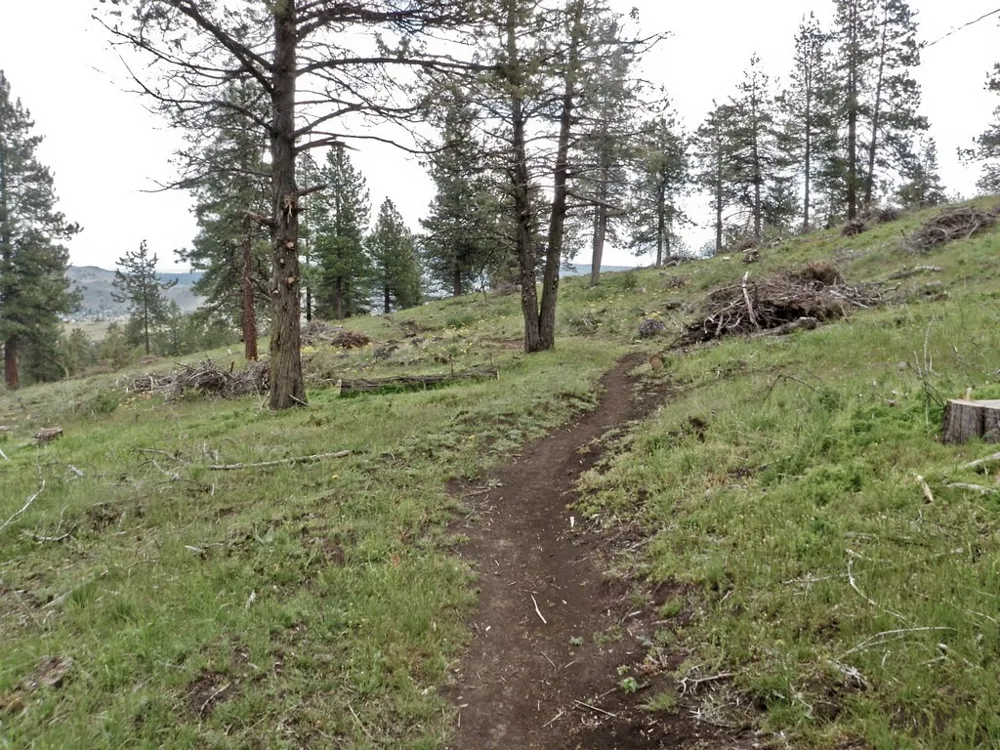
| Hard-packed dirt paths | Good | Watch for roots and ruts |
| Packed gravel | Fair | Go slowly; larger wheels help |
| Loose gravel or deep sand | Avoid | Wheels dig in and the board can stop suddenly |
| Mud, puddles, streams | Avoid | Traction loss plus water damage risk |
| Steep or rocky trails | Avoid | Beyond the climbing and balance limits of any hoverboard |
This lines up with Gyroor's guidance, which describes its all-terrain boards as suited to "grass, dirt paths, and mild trails" and advises avoiding "loose gravel, deep sand, mud, or steep, rocky trails." Climbing is limited too: Segway lists a 15° slope for the S2. Even a capable board has no suspension and only two wheels side by side, so a hidden hole, a curb edge or a sudden stop in soft ground can throw a rider forward. Ride at walking pace on any new surface until you know how the board reacts.
Battery Safety for Off-Road Boards
Off-road riding is harder on the battery than smooth-pavement cruising: more load, more heat and more vibration. The same fire-safety rules apply to every board, and they matter a little more here.
- Use only the charger that came with the board or one the maker recommends.
- Let the board cool down after a hard ride before you charge it.
- Charge on a hard surface away from beds, sofas and exits, stay nearby and unplug when it's full.
- After a crash or heavy impact, look for cracks or damage to the casing before charging.
- Stop using a board that smells, smokes, leaks, swells or gets unusually hot.
- Dry a wet board fully before charging, and keep dirt out of the charging port.
Our hoverboard charging guide covers charge times, light codes and replacement chargers, and the battery replacement guide covers worn packs. If a board stops working after a ride, start with hoverboard troubleshooting.
Riding Off-Road Safely
- Gear: wear a certified helmet every time (see our skate helmets), plus wrist guards and knee and elbow pads. Falls on dirt and gravel scrape more than falls on grass.
- Learn on pavement first. Get comfortable starting, stopping and turning on smooth, flat ground before you ride off-road.
- Keep your knees bent so your legs absorb bumps, and look ahead to spot holes and roots.
- Slow down on new ground. Speed makes small obstacles dangerous on a board with no suspension.
- Go straight up and down slopes rather than across them, and skip anything steep.
- Ride where it's allowed. Many trails and parks ban motorized devices. Your own yard or a permitted open space is the safest place to start. Check local rules before riding anywhere public.
- Supervise kids and keep them to easy ground and their board's age and weight rating.
Cleaning and Care After a Dirt Ride
- Wipe the board down with a dry or slightly damp cloth after dusty or muddy rides. Never hose it down or submerge it.
- Brush dirt and grass out of the tire tread and wheel wells.
- Check air tires for pressure and punctures, and solid tires for cracks and chunks missing from the tread.
- Look over the casing and footpads for cracks after any hard knock.
- Store it indoors at room temperature, partly charged if it won't be used for a while.
- Recalibrate as the manual describes if the board starts leaning or pulling to one side.
Off-Road Hoverboard or Something Else?
An off-road hoverboard is a fun way to ride across a lawn, a park path or a dirt track, but it's still a short-range, low-speed toy without suspension. If you want to cover real trails or longer distances, an off-road electric scooter adds suspension, larger tires and much more range; see hoverboard vs electric scooter for how the two compare. For speed figures, see how fast hoverboards go. To turn a board into a seated kart, see hoverboard go karts.
Frequently Asked Questions
Can a hoverboard go off-road?
Some can handle light off-road ground such as short grass, dirt paths and packed gravel if they have larger treaded tires and enough motor power. No hoverboard is built for loose gravel, deep sand, mud or rocky trails.
What size tires does an off-road hoverboard need?
Most boards sold as off-road or all-terrain use 8.5-inch or larger tires. Some 6.5-inch boards are sold as all-terrain too, but their smaller wheels suit grass and smooth paths better than bumps and roots.
Are pneumatic or solid tires better off-road?
Air-filled (pneumatic) tires cushion bumps and grip better on uneven ground, but they can go flat and need pressure checks. Solid tires never puncture but pass more vibration to your feet.
Can you ride an off-road hoverboard in the rain or through puddles?
It's best not to. Ratings such as IP54 or IPX4 mean protection against splashes, not submersion. Check your manual and warranty terms before riding on wet ground.
Are off-road hoverboards safe?
Choose a board listed as UL 2272 certified, stay within its weight and age ratings, wear a helmet and pads, and start slowly on easy ground. Rough terrain raises fall risk, so ride within your skill level.
Do off-road hoverboards work for heavier riders?
Many off-road boards list higher maximum rider weights than small kids' boards, but limits vary by model and even by listing. Pick a board whose listed maximum is comfortably above your weight.
Can I ride an off-road hoverboard on hiking trails?
Only where it's allowed. Many trails and parks ban motorized devices, so check the rules of the park or land manager before you ride.