Beginner Skis That Make Your First Turns Easier (2026)
Soft, narrow, rockered skis from Rossignol, Atomic, K2, Nordica, Elan and Salomon, with a plain guide to sizing, system bindings, renting and moving up.
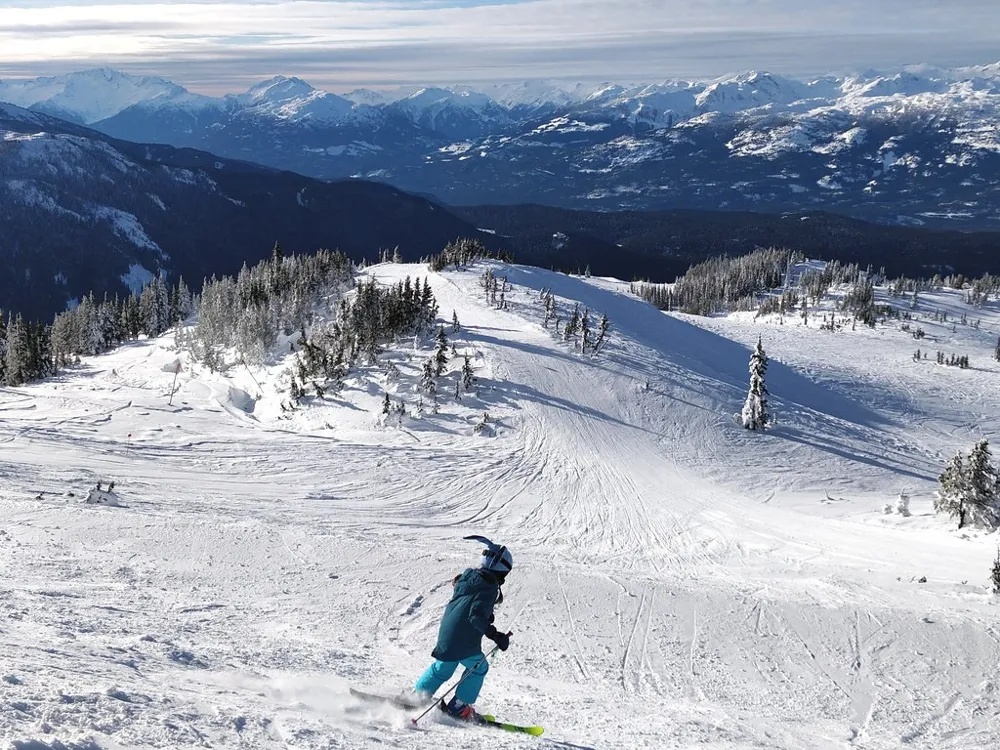
What Makes a Ski Good for Beginners
Beginner skis are built to forgive. They bend easily, start turns with little effort, slide sideways when you need to slow down and don't punish you for leaning back. Four design choices do most of that work: a soft flex, a rockered tip (often the tail too), a narrower waist of roughly 75–90mm, and a shorter length, usually around chin height. Most beginner skis are also sold as system skis with a matching binding already fitted.
This guide is for adults and teens in their first seasons. Every ski below is easy to turn at slow speeds but still useful as you start linking turns on blue runs. If you want the full all-mountain lineup, see the best skis; for lighter, women-specific options see the best women's skis; and for children, see the best kids' skis.
Rossignol Experience 82 Basalt
Best for fast learners who want room to grow
- Sold with Xpress 10 bindings
- Frontside shape for groomers
- Predictable, smooth carving
Atomic Maven 84 + M 10 GW
Best women's ski-and-binding package
- M 10 GW binding included
- Tip and tail rocker with camber underfoot
- Lengths from 144cm
K2 Omen 85
Best for beginners curious about the park
- Full twin tip for skiing switch
- Rocker at both tip and tail
- Light aspen wood core
Beginner Skis Compared
| Ski | Waist (mm) | Lengths (cm) | Binding Included | Best For |
|---|---|---|---|---|
| Rossignol Experience 82 Basalt | About 82 | Check listing | Yes, Xpress 10 | Fast learners who carve groomers |
| Atomic Maven 84 + M 10 GW (W) | 83–84.5 | 144–171 | Yes, M 10 GW | Women learning to link turns |
| K2 Omen 85 | About 85 | 139–169 | No | Beginners who want the terrain park |
| Nordica Steadfast 75 CA + TP2 Compact 10 | 75 | 150–174 | Yes, TP2 Compact 10 FDT | First season on groomers |
| Elan Wingman 78 C + EL 10.0 GW | 75–78 (by length) | 130–178 | Yes, EL 10.0 GW Shift | Learning to carve, wide size range |
| Salomon Stance W 80 + M10 (W) | 78–80 (by length) | 141–175 | Yes, M10 | Women moving from first turns to blues |
Widths, lengths and binding details come from each maker's listing (the K2 Omen 85 figures come from evo's listing). Models change most seasons, and widths and turn radii change with length, so check the exact version and size before you buy. "(W)" marks a women's model.
The Best Skis for Beginners
1. Rossignol Experience 82 Basalt
The Experience 82 Basalt is a frontside-oriented ski built for smooth carving and predictable control on groomed runs. It's sold as a system ski with Rossignol's Xpress 10 binding, so it arrives as a complete package that a shop only needs to adjust to your boots. At about 82mm underfoot it sits in the sweet spot for learning on groomers, and it has enough shape to keep up as you move from wedge turns to parallel turns. It's the most "grow-into" ski here: a good choice for athletic beginners who expect to progress quickly, less so for anyone nervous about speed.
Good to Know
- Complete ski-and-binding package
- Built for groomed runs, where beginners spend most days
- Stays useful into the intermediate stage
Watch Out For
- Firmer and more carving-focused than the softest skis on this list
- Not meant for deep snow
2. Atomic Maven 84 + M 10 GW (Women's)
The Maven 84 is Atomic's women's all-mountain ski, sold with the M 10 GW binding. Atomic's All Mountain Rocker splits the ski into about 15% tip rocker, 75% camber and 10% tail rocker, so turns start easily while the camber underfoot still grips. It uses a light poplar wood core with Densolite, a titanal "TI Stabilizer" layer under the core and Atomic's Duracap sidewall. Lengths start at 144cm and run to 171cm, waist widths run from 83 to 84.5mm and the radius from 13 to 16m. Atomic describes it as "easy to maneuver and highly stable."
Good to Know
- Short lengths for smaller skiers
- Binding included and ready to adjust
- Rocker at both ends forgives mistakes
Watch Out For
- The titanal layer adds some stiffness compared with foam-core beginner skis
- Package bindings are heavier than many flat-ski setups
3. K2 Omen 85
The Omen 85 is K2's entry park ski, and evo lists it for beginner to intermediate skiers. It's a full twin tip, so you can practice skiing backward (switch) once you're comfortable, and it uses K2's All-Terrain Twin Rocker: early rise at both tip and tail with camber underfoot. A lightweight aspen wood core, Spectral Braid reinforcement and DuraCap construction keep it light and easy to pivot. Lengths run from 139 to 169cm, so it also suits teens and smaller adults. If you have no interest in the park, a narrower frontside ski grips better on hard snow; see twin tip skis for more on park shapes.
Good to Know
- Forgiving rocker at both ends
- Twin tail for switch skiing and small jumps
- Wide length range
Watch Out For
- Sold without bindings, so budget for bindings and mounting
- Light and narrow, so less stable at higher speeds
More Beginner Skis Worth a Look
The next three are some of the most beginner-focused packages from their makers. Lengths and binding bundles vary by listing, so check the size before you buy; the Salomon wasn't on Amazon when we checked (November 2026).
4. Nordica Steadfast 75 CA + TP2 Compact 10
Nordica says the Steadfast 75 CA is "designed for beginner and intermediate skiers." Its 75mm waist is the narrowest on this list, and Nordica pairs it with a rocker-camber blend (its "On Piste" rocker) to make it "especially easy to maneuver." The construction is a composite build with sidewalls, using wood stringers and a layer of carbon to keep weight down. It comes with the TP2 Compact 10 FDT binding (DIN 3–10) on an FDT demo plate that adjusts to different boot sizes. Lengths run from 150 to 174cm, with turn radii from 12m to 15.5m, and the dimensions are listed as 123-75-103mm.
Good to Know
- Narrow and quick from edge to edge
- Short turn radius for slow, controlled turns
- Adjustable binding plate
Watch Out For
- Shortest length is 150cm, so very small adults may need a women's or junior ski
- Too narrow for powder days
5. Elan Wingman 78 C + EL 10.0 GW
Elan calls the Wingman 78 C "an intuitive ride for improving skiers on the groomers" and sums it up as "stable, easy, and light on its feet." It has a Dual Woodcore with carbon reinforcement, Elan's RST (Racing Sidewall Technology), an extruded base and an Early Rise Rocker profile. It ships with the EL 10.0 GW Shift binding (DIN 3–10). The size range is the widest here, 130 to 178cm, and the shape changes with length: the 130cm ski is 75mm underfoot with a 10.3m radius, while the 178cm is 78mm with a 16.9m radius. That makes it a good fit for very short or very tall beginners alike.
Good to Know
- Seven lengths from 130 to 178cm
- Narrow, groomer-friendly shape
- Wood core and carbon keep it lively
Watch Out For
- Extruded base needs regular waxing to glide well
- Built for groomers rather than soft snow
6. Salomon Stance W 80 + M10 (Women's)
Salomon rates the women's Stance 80 for beginner and intermediate skiers on hard to mixed snow, and calls it the narrowest ski in the Stance line. It has a poplar wood core, which Salomon describes as offering "stability, liveliness, and forgiveness", with a single layer of titanal on top for edge grip, semi-sandwich sidewalls and an all-mountain rocker-camber-rocker profile. The included M10 binding has a 3–10 DIN scale and accepts both GripWalk (ISO 23223) and standard alpine (ISO 5355) adult boot soles. Lengths run from 141 to 175cm; the 141cm ski is 78mm underfoot with a 10m radius, and the longer sizes are 80mm with radii from 12m to 15m.
Good to Know
- Works with GripWalk and standard alpine soles
- Short turn radius in small sizes
- Titanal adds grip on icy groomers
Watch Out For
- The metal layer makes it a little firmer than the softest beginner skis
Beginner-Friendly Features Explained
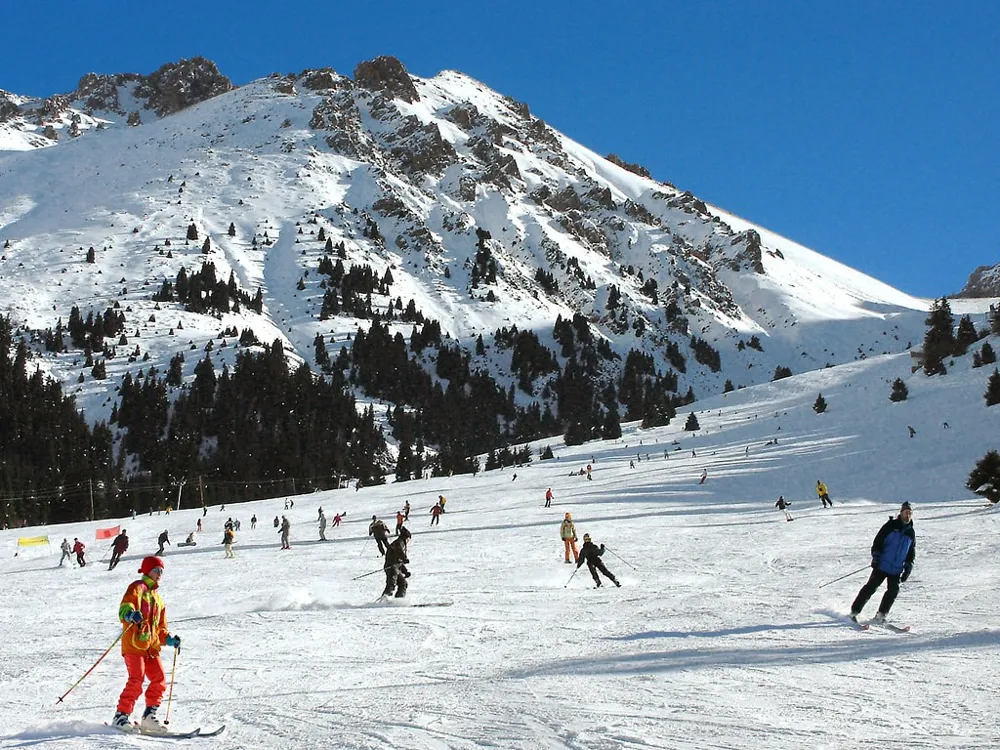
Every ski on this list shares a few traits. Knowing what they do helps you read spec sheets and avoid buying a ski that's too much for you.
Soft, Forgiving Flex
Flex is how easily a ski bends. A soft ski bends at low speed and with little body weight, which is what starts a turn. Stiff skis need speed and strong, centered pressure to bend; at beginner speeds they feel like planks and punish leaning back. Soft skis also absorb small mistakes instead of throwing you off balance. The tradeoff is stability: soft skis feel nervous at high speed, which is one sign it's time to upgrade.
Rocker Profile
Rocker means the tip (and sometimes the tail) rises off the snow earlier than on a traditional cambered ski. A rockered tip is less likely to catch an edge, pivots more easily and makes turns start sooner. Most beginner skis use rocker-camber-rocker or tip rocker with camber: rocker at the ends for easy turn starts, camber underfoot for grip on firm snow. Fully cambered race-style skis grip hard but demand precise technique. Our ski buying guide compares every profile in a table.
Narrower Waist
The waist is the ski's width under your boot. Beginners do best at roughly 75–90mm. A narrow ski rolls from edge to edge quickly and with little effort, which matters when you're learning to turn on groomed runs. Wide skis (100mm and up) float in powder but are slower to tip on edge and harder on your knees on hardpack. Beginner skis with a narrow waist are the right tool for the groomed runs where you'll spend most of your first season.
Short Turn Radius
The sidecut radius, listed in meters, is the arc a ski makes when it's tipped on edge. Beginner skis in the short lengths have radii around 10–14m (the Elan Wingman 78 C runs from 10.3m at 130cm, the Salomon Stance W 80 from 10m at 141cm), which makes smaller, slower turns that are easy to control. Longer, straighter skis want bigger, faster turns.
Light Construction and Cap Sidewalls
Beginner skis are usually light: foam or composite cores, light woods such as poplar and aspen, and little or no metal. Light skis are easier to carry, lift and turn. Many use cap construction, where the topsheet wraps down to the edge, which saves weight and resists chips. Heavier sidewall skis with metal laminates are smoother at speed but need more effort, so they suit stronger skiers.
System Skis, Bindings and DIN
Most beginner skis are system skis: the binding comes with the ski, mounted on a track or plate that adjusts to your boot sole length. For a first pair that has real advantages:
- Simple setup. No separate binding to choose and no holes drilled; a shop slides the binding to your boot size and sets the release value.
- Easy to resell or share. The binding can be readjusted for another skier's boots.
- Matched to the ski. The binding's release range suits the skier weights the ski is built for.
The downside is weight and limited binding choice, which matter little to beginners. Flat skis, such as the K2 Omen 85, come without bindings, so you'll need to buy a binding with a brake wide enough for the ski and have it mounted.
Either way, a qualified ski technician should set the DIN (release value) from your height, weight, age, ability and boot sole length using an industry table, then check that your boots release properly. Beginner packages such as the Steadfast, Wingman and Stance W 80 come with bindings rated 3–10 DIN. Also check boot sole compatibility: many current boots have GripWalk soles, so pick a binding marked GW or one that lists both GripWalk and alpine soles. More detail is in our guide to ski bindings. This isn't a substitute for a shop check; never adjust release settings yourself.
What Size Skis Should a Beginner Get?
Stand the ski on its tail. For most beginners it should reach about chin height. Shorter skis are easier to turn and stop at low speeds, which is what you need while you learn. Our ski size chart has the full table; here's the beginner column for common heights:
| Skier Height | Beginner Ski Length |
|---|---|
| 5'0" (152cm) | About 140cm |
| 5'4" (163cm) | About 150cm |
| 5'8" (173cm) | About 160cm |
| 6'0" (183cm) | About 170cm |
| 6'4" (193cm) | About 180cm |
Then adjust within a few centimeters:
- Size down if you're light for your height, cautious, or skiing mostly short, narrow beginner runs.
- Size up if you're heavier for your height, athletic, or expect to progress quickly and keep the skis for several seasons.
- Rocker skis ski shorter, because the rockered tips don't touch firm snow. With a lot of rocker, staying at chin height or a touch longer is fine.
Lengths don't line up exactly between brands. If you're between two sizes, beginners are usually better off with the shorter one. Don't size up so you can "grow into" a ski; a ski that's too long slows learning.
Beginner vs Intermediate and Expert Skis
| Feature | Beginner | Intermediate | Advanced and Expert |
|---|---|---|---|
| Flex | Soft | Soft to medium | Medium to stiff |
| Waist | About 75–90mm | About 80–95mm | Matched to terrain |
| Profile | Tip rocker or rocker-camber-rocker | Rocker-camber-rocker | More camber for grip, or more rocker for powder |
| Construction | Light cores, cap or light sidewall, little metal | Wood core, some carbon or a light metal layer | Wood core, metal or carbon for damping |
| Length | Around chin | Around nose to eyes | Around head height or longer |
| Bindings | System binding, low DIN range | System or flat | Usually flat skis with chosen bindings |
The biggest difference is stiffness and damping. Expert skis are stable at speed and grip ice, but they need strong, precise input to turn. Beginner skis turn easily at low speeds and forgive mistakes. That's why "buying a better ski" usually backfires for new skiers.
How to Choose Your First Skis: Four Questions
1. Where Will You Ski Most?
Snow type matters even for beginners. On the firm, often icy groomers common at many Eastern and Midwestern resorts, a narrow ski in the mid-70s to about 80mm (the Steadfast, Wingman or Stance W 80) grips and turns most easily. At Western resorts with softer snow, a ski in the low-to-mid 80s (the Experience 82 Basalt, Maven 84 or Omen 85) is a little more stable in chopped-up afternoon snow while still being easy to turn. Indoor slopes and small local hills reward the narrowest, shortest option.
2. How Many Days Have You Skied?
If you're brand new, rent first; any purchase should be at the soft, short end of this list. If you've had a few days and can already make wedge turns down green runs, you can buy a ski you'll keep for a season or two, such as the Wingman 78 C or Experience 82 Basalt, and size it nearer the top of the beginner range.
3. What Kind of Ride Do You Want?
Want to carve clean turns on groomers? Choose a narrow frontside ski with camber underfoot. Want to play around, ski backward and hit small side hits? A soft twin tip like the K2 Omen 85 fits. Not sure? A system ski in the high 70s to mid 80s keeps both doors open.
4. What's Your Budget?
Beginner skis are mostly in the budget to mid-range tiers, because they skip expensive metal and carbon layups. Packages with bindings are usually better value than buying a flat ski and a separate binding, and last season's models or used skis stretch the budget further. Spend first on boots that fit; that money does more for your skiing than a premium ski.
Do Beginners Need Powder Skis?
No. Beginners spend almost all their time on groomed runs, and wide powder skis are slower edge to edge and harder to control on hard snow. On the occasional powder day, rent or demo a wider ski, or stick to groomed runs, which are usually the best place to learn anyway.
Men's, Women's and Unisex Beginner Skis
Women's skis are usually lighter, softer and offered in shorter lengths, and some brands move the mount point slightly forward. The Atomic Maven 84 and Salomon Stance W 80 here are women's models; their 141–144cm sizes suit shorter skiers. You don't have to choose by label: a light skier of any gender may prefer a women's ski, and a tall or heavy woman may prefer a unisex model in a longer length. Choose by length, flex and width. For more women's options, see the best women's skis, and for help with boots, women's ski boots.
Teens and small adults can also look at the longest junior skis, which are soft and light, or at short sizes such as the 130cm Elan Wingman 78 C and the 139cm K2 Omen 85.
Should Beginners Rent or Buy Skis?
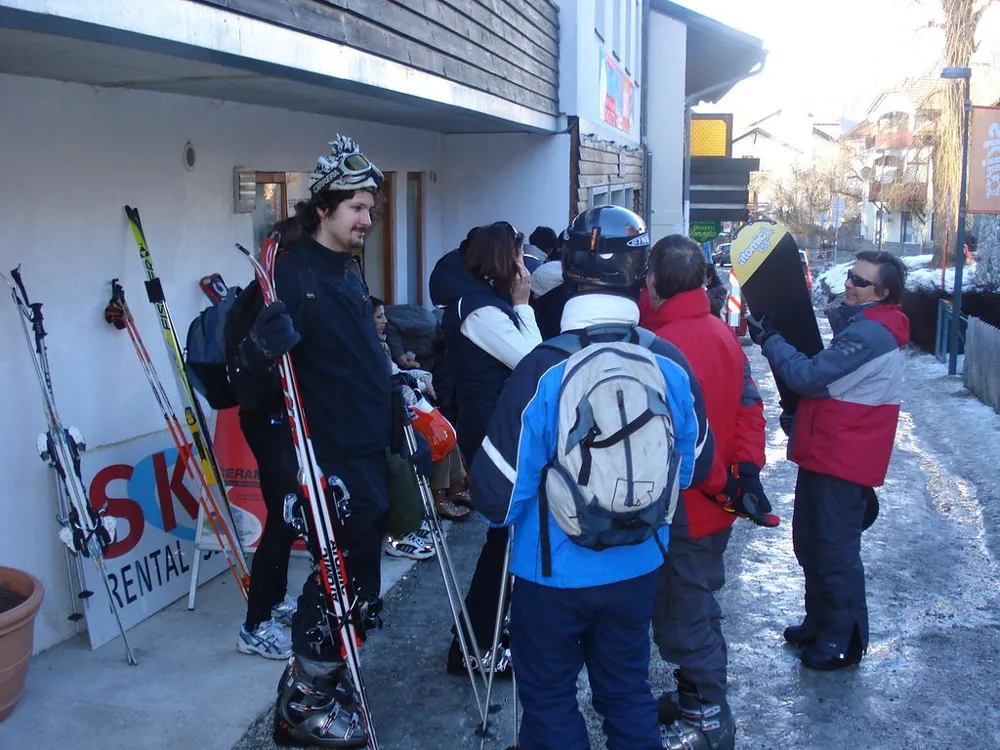
For your first few days, rent. Rental skis are short, soft and set up for you on the spot, and you'll learn which length and feel you like before you spend anything. After that, it depends on how often you ski:
| Your Situation | Best Option | Why |
|---|---|---|
| First trip or one or two days a season | Rent skis and boots | No storage, tuning or travel hassle |
| A handful of days a season | Buy boots, rent or demo skis | Boots affect comfort more than anything; skis can wait |
| Skiing most weekends | Buy boots and skis | Your own tuned setup every day, and no rental lines |
| Unsure which ski you want | Demo | Try several models back to back; some shops put demo fees toward a purchase |
| Fast-growing teen | Seasonal lease or used skis | Avoids buying a length they'll outgrow in a season |
Rental shops at resorts and in town both set bindings to your boots. Booking ahead can save time on busy mornings. If you're traveling to ski, our ski trip packing list covers what to bring and what to rent.
Buy Boots Before Skis
If you buy one thing, make it boots. Rental boots are fitted for the masses, and sore, sloppy boots hold back learning more than any ski. Your own boots, fitted by a bootfitter, give you better control and fewer cold, cramped feet. Beginners usually do best with a softer flex boot that still holds the heel firmly. See how to choose ski boots, ski boot flex explained and the best ski boots. Wide feet? Start with ski boots for wide feet.
Bring your boots when you rent or demo skis so the bindings can be set to them, and buy a helmet of your own rather than renting one.
Used and Last Season's Beginner Skis
Beginner skis are a good category to buy used or on closeout, because the designs change slowly and their bindings are usually simple system bindings. Two things to check first:
- Bindings: ask a shop whether the binding model is still on the maker's indemnified list, or they won't adjust it. Have it release-tested with your boots before you ski.
- Length and condition: make sure the length suits you (not the seller), and look for core shots, cracked edges and delamination.
Last season's model is often identical underneath with new graphics, so check what actually changed before paying for the newest version. Our guide on how to buy used skis has a full inspection checklist.
When to Upgrade From Beginner Skis
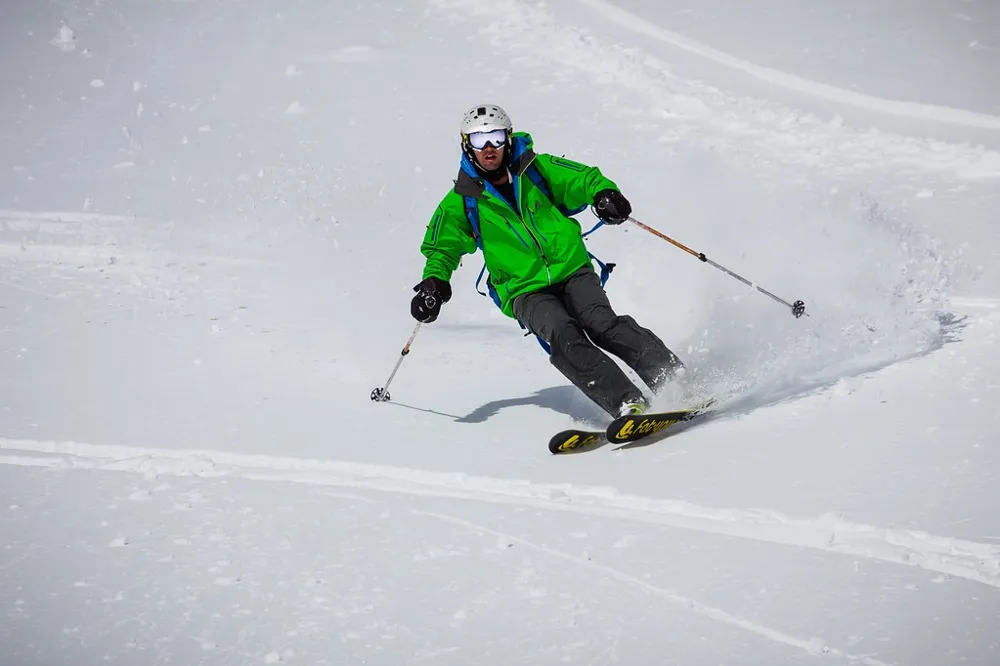
Beginner skis have a ceiling. Signs you've reached it:
- You link parallel turns on blue runs without thinking about them, and you're starting on easier black runs.
- The skis feel unstable, chattery or "flappy" when you pick up speed, or bounce around in chopped-up snow.
- You want to ski more varied terrain: soft snow, bumps, trees or the park.
- Your skis feel short under you; you've gained confidence and want a longer, more stable ski.
For many skiers that comes after one or more full seasons, sooner if you ski often or take lessons. The usual next step is an intermediate all-mountain ski: soft to medium flex, about 80–95mm underfoot, rocker-camber-rocker and a length nearer your nose or eyes. The Rossignol Experience 82 Basalt on this list already sits at the start of that range, which is why it's a good pick for fast learners. When you're ready, compare models in the best skis, or twin tips if the park is calling. Upgrade boots first if yours are packed out or loose; the ski can only do what your boots tell it.
Caring for Your First Skis
- Wax regularly. Waxed bases glide better and resist drying out; extruded bases on many beginner skis benefit from frequent waxing. See how to wax and tune skis.
- Keep edges sharp. A shop tune once or twice a season helps you grip on icy mornings.
- Dry skis after use to prevent edge rust, and don't leave them in a hot car.
- Store them in a cool, dry place over summer with a coat of storage wax.
- Re-check bindings with a shop if you change boots or your weight changes significantly.
Your Next Steps on Skis
The right skis help, but lessons help more. Start with our how to ski guide, then work on turning and stopping. Dress in layers with our what to wear skiing guide, pick a mountain with plenty of easy terrain from our best ski resorts for beginners or family ski resorts, and get your legs ready with a ski workout. Still deciding between two planks and one? Read skiing vs snowboarding or see the best snowboards for beginners.
Frequently Asked Questions
What skis should a beginner buy?
A soft, light ski about 75 to 85mm underfoot with tip rocker, sold as a system with bindings, is the easiest to learn on. Size it around chin height and have a shop set the bindings to your boots.
What length skis should a beginner get?
Start around chin height. Go a little shorter if you are light for your height or nervous about speed, and a little longer if you are heavier, athletic or expect to progress quickly.
Should a beginner rent or buy skis?
Rent for your first few days. Rental skis are short, soft and adjusted for you, and renting lets you learn what you like before spending money. Buy boots before skis if you plan to keep skiing.
What ski width is best for beginners?
About 75 to 90mm underfoot. Narrower skis roll from edge to edge with less effort, which makes learning to turn on groomed runs easier.
Can a beginner learn on advanced skis?
It is possible but harder. Stiff, long or metal-heavy skis need more speed and strength to bend and turn, so they punish the backseat stance most beginners have.
When should I upgrade from beginner skis?
When you link parallel turns on blue runs, want to ski faster or more varied terrain, and your skis feel unstable or chattery at speed. For many skiers that comes after one or more full seasons.
Are system skis good for beginners?
Yes. The bindings come matched to the ski on a track that adjusts to your boot size, which keeps setup simple and makes the skis easy to resell or pass on.
Do beginner skis come with bindings?
Most do. Every package on this list except the K2 Omen 85 is sold with a binding included, but check the listing before you buy.