Ski Boots for Wide Feet: Wide-Last Picks and Fit Fixes (2026)
Five wide-last ski boots with the width each maker lists, plus how to measure your foot, when to stretch a shell and what a bootfitter can do.
What Counts as a Wide Foot?
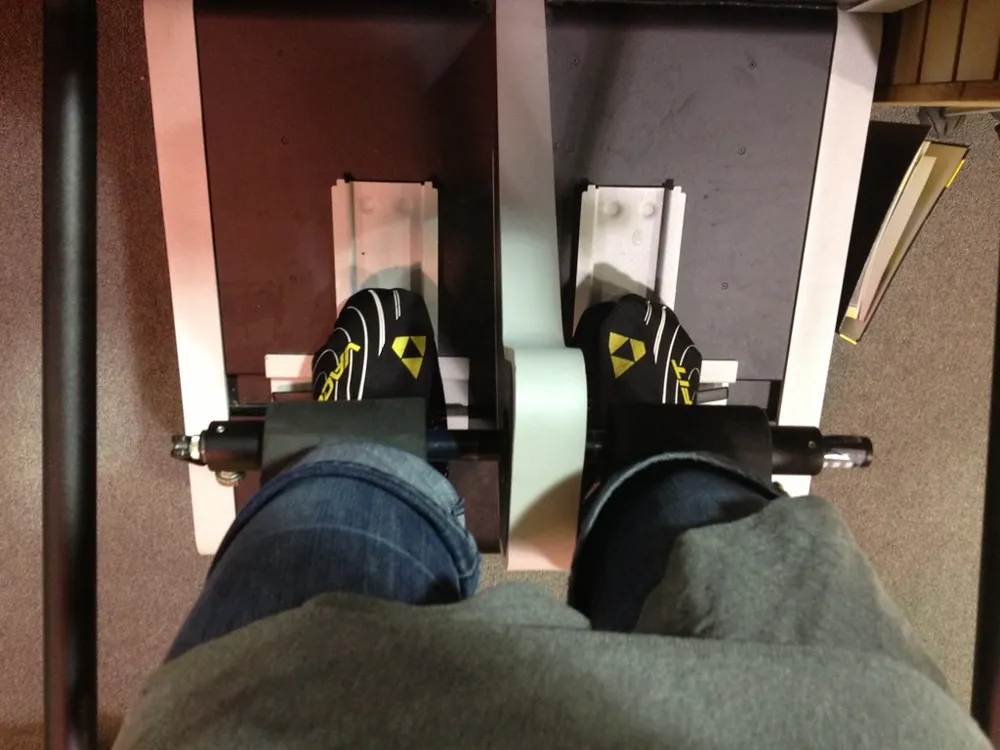
If medium ski boots squeeze the sides of your feet, numb your toes or press on your little toe and bunion area, you probably need a wider last. A last is the form a boot is built around, and makers describe it by its forefoot width in millimeters at a reference size. Narrow boots sit around 97–98mm, medium around 100mm and wide boots around 102–104mm, with a few as wide as about 105mm. One bootfitter guide puts the start of a "wide" foot at about a D width on a Brannock shoe measure, which lines up with a 102mm or wider ski boot, and calls a double-E or triple-E foot truly wide. The picks below are boots their makers describe as wide or high volume, with the width each maker lists. For general sizing, see how to choose ski boots.
Atomic Hawx Magna 110 S
Best wide boot for strong skiers
- 102mm anatomical last, high volume
- Memory Fit heat-fit shell and cuff
- 110 flex, GripWalk soles
K2 BFC 100
Best for high-volume feet and calves
- Relaxed 103mm fit
- Heat-moldable shell and cuff
- 100 flex, hands-free entry
Atomic Hawx Magna 95 W
Best women's wide boot
- 102mm last
- 95 flex for progressing skiers
- Comfort-focused fit
Wide Ski Boots Compared
| Boot | Last Width (Maker) | Flex | Fit Customization | Best For |
|---|---|---|---|---|
| Atomic Hawx Magna 110 S | 102mm, high volume | 110 | Memory Fit heat-fit shell and cuff, heat-moldable liner | Strong intermediate to advanced skiers |
| K2 BFC 100 | 103mm, high volume | 100 | Heat-moldable shell and cuff | Comfort, easy entry, bigger calves |
| Atomic Hawx Magna 95 W | 102mm | 95 | Check listing | Women with wider feet |
| Nordica Cruise 120 | 104mm, wide | 120 (per model name) | Infrared shell and liner customization | The widest fit in this list |
| Tecnica Mach1 HV 110 | 103mm, high volume | 110 | C.A.S. anatomical shell, heat-moldable liner | Wide feet that still want precision |
Specs come from each maker's product page as of November 2026 and can change between model years. Last widths are for the maker's reference size.
The Best Ski Boots for Wide Feet
1. Atomic Hawx Magna 110 S
Atomic describes the Hawx Magna 110 S as a responsive wide-fit boot with an anatomical 102mm last that "combines a wide width and higher volume." Its Memory Fit system uses heat to reshape the plastic shell and cuff to your foot and leg, and the Mimic Gold liner has heat-moldable material at the heel and ankle. It has four buckles, a 40mm power strap, GripWalk soles and adjustable forward lean (13°, 15° or 17°). Atomic lists a weight of about 2,002g per boot at size 26/26.5.
Good to Know
- Shell and cuff can both be heat-fitted
- Supportive 110 flex
- Also comes in softer and stiffer Magna versions
Watch Out For
- Not the widest last here
- Too stiff for many beginners
2. K2 BFC 100
K2's BFC ("Built for Comfort") line is built on a high-volume last, and K2 describes the BFC 100 as delivering "a relaxed 103mm fit" with hands-free entry. K2 says both the TPU shell and the cuff can be heat-molded, and it pairs them with a CushFit Comfort liner that has extra foam in key areas. Soles are removable GripWalk pads, and K2 lists sizes 24.5 to 30.5. One bootfitter guide singles out the BFC as having one of the roomiest real-world fits, including for big calves and high insteps.
Good to Know
- High-volume shell for wide, thick feet
- Easy to get on and off
- Heat-moldable shell and cuff
Watch Out For
- 100 flex may feel soft for strong or heavy skiers
- Can feel loose on a wide but low-volume foot
3. Atomic Hawx Magna 95 W (Women's)
The women's Hawx Magna uses a 102mm last for higher-volume and wider feet, with a 95 flex suited to progressing intermediate skiers. It's the comfort-focused wide boot in Atomic's women's range; check the listing for current liner and shell features.
Good to Know
- Women-specific cuff shape
- Wide forefoot
Watch Out For
- Advanced skiers may want a stiffer flex
4. Nordica Cruise 120
The Cruise sits in Nordica's 104mm "wide" category, the widest last in this list. Nordica says the boot's "wider fit enhances comfort" while an anatomical shape keeps it responsive. It has a PU shell and cuff with an adjustable cuff profile, a PrimaLoft-insulated liner, GripWalk soles and four micro aluminum buckles, and Nordica lists sizes 24.5 to 32.5 and a weight of about 1,940g per boot. Nordica's Infrared Technology lets a fitter heat a specific pressure point and push it out. The Cruise also comes in 100 and 130 flex versions and a women's Cruise 95 W.
Good to Know
- Widest stated last here (104mm)
- Large size range
- Shell and liner can be customized
Watch Out For
- Check the flex on the current listing; Nordica's page doesn't state it
5. Tecnica Mach1 HV 110
Tecnica's HV (high volume) Mach1 boots use a 103mm last, and Tecnica says the HV 110 is built for skiers with wider feet and larger frames. The C.A.S. (Custom Adaptive Shape) shell has an anatomical shape that follows the foot, and the liner can be heat-molded. Tecnica notes that shell work on this model is punching for more room, done with its C.A.S. Pro tools. It has GripWalk soles, sizes 25.5 to 32.5 and a listed weight of about 1,890g. A women's Mach1 HV 95 W and stiffer HV models are also made.
Good to Know
- Wide last with a precise, anatomical shape
- Big size range
Watch Out For
- Shell stretching needs a fitter with Tecnica's tools
More Wide-Last Models to Try On
Most major brands make a wide or HV boot. These are listed with the last widths given in one bootfitter's wide-boot guide; confirm the current width on the maker's page before buying.
| Model | Listed Last | Notes |
|---|---|---|
| Dalbello Cabrio Max | 103mm | Three-piece Cabrio design, high volume |
| Lange Concept | 103mm | Wide forefoot with a tighter heel hold |
| Lange Shadow HV | 102mm | Wide forefoot with a performance feel |
| Nordica Sportmachine | 102mm | Wide but less roomy than the Cruise |
| Tecnica Mach BOA HV | 103mm | Dial closure in place of some buckles |
| Rossignol Track HV | 104mm | Reported to fit wide and run long |
| Salomon S/Pro Delta | 102mm | Shell is designed to be heat-molded |
Last Width Explained
| Last Width | Fit | Who It Suits |
|---|---|---|
| About 97–98mm | Narrow, low volume | Narrow, low-volume feet; race and performance fits |
| About 100mm | Medium | Most feet |
| About 102–104mm | Wide, high volume | Wide feet, high insteps, comfort fits |
| About 105mm and up | Extra wide | A few comfort and beginner models |
Two things trip people up. First, last width is quoted for a single reference size, usually 26.5 (some brands use 26), and the width grows by roughly 1–2mm per shell size. Atomic's size chart for the Hawx Magna, for example, lists widths from 98mm in size 24/24.5 to 114mm in size 31/32.5 for the same "102mm" boot. Second, two boots with the same number can fit very differently, because height over the instep, heel shape and cuff size vary. Treat the number as a shortlist filter, not a guarantee. More on how width fits with length and stiffness in the ski boot size chart and ski boot flex explained.
How to Measure Your Foot Width
- Put on a thin ski sock and stand with your full weight on a sheet of paper, heel against a wall.
- Mark the tip of your longest toe and measure the length in centimeters. That's your Mondopoint size.
- Mark the widest points of the forefoot, usually across the big-toe and little-toe joints, and measure straight across in millimeters.
- Measure both feet. Feet are often slightly different, so fit the bigger one.
- Compare your numbers with published last widths as a rough guide, then try boots on. A fitter can also measure width on a Brannock-style device, where a D width or wider usually points to a wide last.
A narrow heel with a wide forefoot is a common shape. It often does best in a medium boot with the forefoot stretched, rather than a fully wide boot.
Width vs Volume
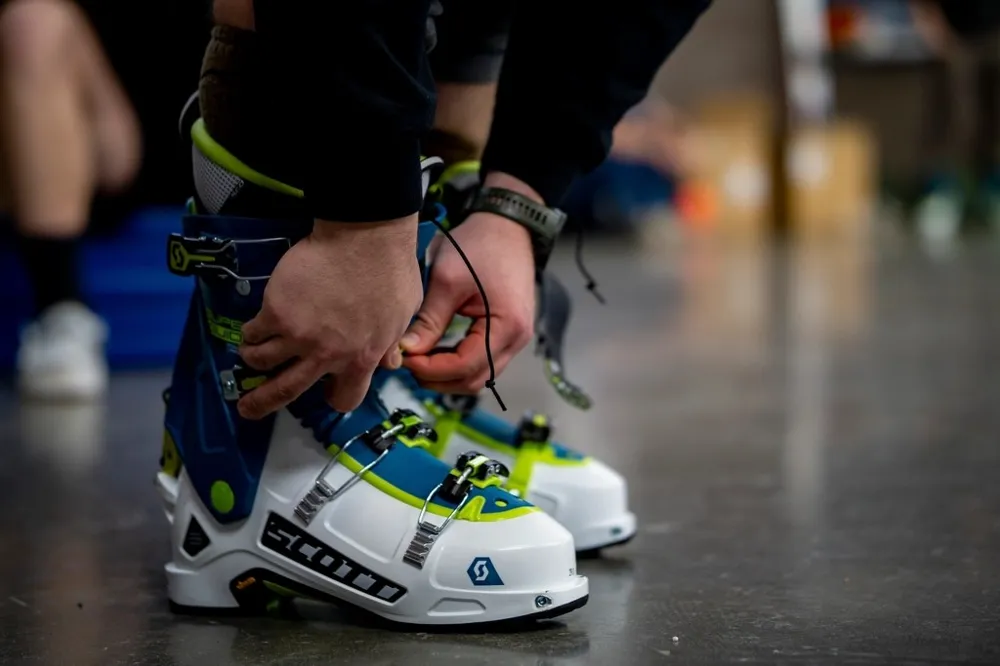
Width is only one dimension. Volume covers the whole space inside the boot: forefoot width, instep height, ankle and heel size, and calf. Bootfitters point out that volume matters as much as forefoot width.
| Your Foot | What Often Works |
|---|---|
| Wide forefoot, high instep, big calf | A truly high-volume boot (such as the K2 BFC or Nordica Cruise) |
| Wide forefoot, average heel and leg | A wide boot with better heel hold (such as the Lange Concept or Tecnica Mach1 HV) |
| Wide forefoot only, narrow heel | A 100–102mm boot with the forefoot stretched by a fitter |
| Average foot, big calf or high ankle | Cuff and instep adjustments, or a high-volume boot in your normal size |
Should You Size Up for Wide Feet?
Almost never. A longer boot gives you more length but only a little more width, and your heel will lift once the liner packs out after a few days of skiing. That leads to sloppy control and more pressure points, not fewer. Buy the right length, choose a wider last and let a fitter add space where you need it. If you're between sizes, fitters often suggest the smaller one. See how to choose ski boots for the toe-touch and shell fit checks.
Heat-Moldable Shells and Liners
Many boots have heat-moldable liners. A shop typically warms the liner, you step in and stand in a ski stance while it cools, and the foam settles around your foot. Some brands go further and let the plastic shell be heat-fitted:
- Atomic Memory Fit: heat reshapes the shell and cuff to the foot and leg.
- K2 BFC: K2 says the shell and cuff can be heat-molded.
- Salomon custom shells: a bootfitter guide notes that padding the width and instep during shell molding can open some Salomon models significantly.
- Nordica Infrared: an infrared lamp heats a single pressure point so a fitter can push it out.
Leave molding to a shop that follows the maker's process, since each brand sets its own temperatures and times.
Shell Punching and Grinding
When a boot fits well overall but presses in one spot, a bootfitter can change the shell itself.
| Fix | What It Does | Typical Use |
|---|---|---|
| Punching (stretching) | Heats the plastic and presses it outward at one spot | Little-toe joint, bunions, wide forefoot |
| Grinding | Removes plastic from the inside of the shell | Bony spots, ankle bones, areas a punch can't reach |
| Whole-shell molding | Heats the shell so it expands over padding | Boots built for it, such as Memory Fit |
| Liner work | Heat-molding or adding or removing foam pads | Small pressure points, heel hold |
Shell work has limits. It adds room in specific places (Atomic reportedly claims up to about 6mm of extra width from Memory Fit), but it can't turn a narrow race boot into a wide comfort boot. Some shells need the brand's own tools (Tecnica uses its C.A.S. Pro system), so take boots to a fitter who works on that brand.
Footbeds and Foot Position
Bootfitters say a supportive or custom footbed typically helps feet that roll inward (pronate) by holding the arch, which can sometimes ease a "width" problem without a wider boot. Bootfitters also note that a foot that rolls outward (supinates) can feel like it needs more width or height when the real issue is foot position; small wedges under the footbed can help. A fitter can assess this when you try boots on.
Working With a Bootfitter
Wide feet are where a bootfitter earns their keep. Bring your ski socks and any footbeds, and expect to:
- Have your feet measured for length, width and instep, standing and sitting.
- Do a shell fit with the liner removed to check length and width at the same time.
- Try several wide or HV models for 10–15 minutes each, flexing into a ski stance.
- Get the liner heat-molded and, if needed, the shell punched or ground.
Some shops include follow-up adjustments when you buy boots from them, so ask about the policy. Buying online without trying boots on is riskier with wide feet, since two "wide" boots can fit very differently.
Signs Your Boots Are Too Narrow
- Pain on the outside of the little-toe joint or on a bunion.
- Numb or tingling toes after a run, especially when buckles are tight.
- Cold feet caused by restricted circulation; see heated ski boots if your feet still run cold after a proper fit.
- You loosen the bottom buckles to stop pain and lose control as a result.
Before replacing boots, ask a fitter whether a stretch, a new footbed or liner work could fix the problem.
Complete Your Ski Setup
Compare more boots in best ski boots and women's ski boots. Make sure your soles match your ski bindings, carry boots in a ski boot bag, and pick skis sized with the ski size chart. Explore more at our skiing hub.
Frequently Asked Questions
What last width do I need for wide feet?
Most wide or high-volume ski boots have a last of about 102 to 104mm, and a few go to about 105mm. Narrow boots are about 97 to 98mm and medium boots about 100mm. Last widths are quoted for one reference size, so a fitter should check the actual shell.
Should I buy a bigger ski boot if I have wide feet?
Usually not. A longer boot is not much wider, and the extra length lets your foot slide around once the liner packs out. Buy the right length in a wider last and have the shell stretched if needed.
Can a ski boot shell be stretched?
Yes. A bootfitter can heat the plastic and push it outward at a pressure point, often called punching, or grind material away inside the shell. Some brands require their own tools for this, so ask a fitter who knows the model.
Are heat-moldable boots good for wide feet?
They can help. Heat-moldable liners shape around the foot, and some shells, such as Atomic's Memory Fit and K2's BFC, can be heat-molded to give a little more room where you need it.
How do I know if my feet are wide?
Measure the widest part of your forefoot in millimeters while standing, and compare it with your foot length. A bootfitter can tell you whether your width and volume fit a medium or wide last. Pain on the sides of the foot in a 100mm boot is a common sign.
Do women's wide ski boots exist?
Yes. Several wide lines come in women's versions, such as the Atomic Hawx Magna 95 W, Nordica Cruise 95 W and Tecnica Mach1 HV 95 W. Women's models usually have a lower, flared cuff.