Cheap Kayaks: Good Value Boats and What You Give Up (2026)
Six budget kayaks with their published specs, the trade-offs a low price brings, and the extra costs (paddle, life jacket, transport) to plan for before you buy.
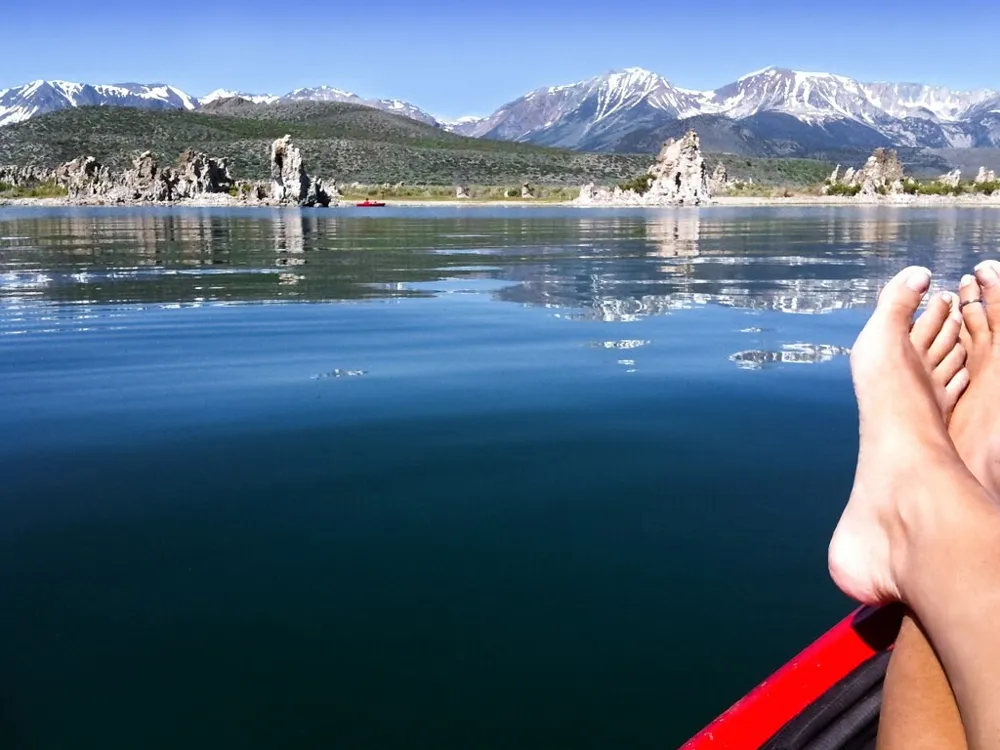
Are Cheap Kayaks Any Good?
Yes, for the paddling most people actually do. A budget kayak is usually a short, wide recreational boat or a basic inflatable built for calm lakes, ponds and slow rivers. On that kind of water a low-cost boat floats, steers and carries you just fine. What you pay less for shows up in comfort, speed, tracking, weight and how long the boat lasts. Fishing on a budget? Our cheap fishing kayaks guide covers rod holders and rigging. If you're brand new and price isn't the first filter, start with the best kayaks for beginners.
The six kayaks below are among the lowest-cost models from established makers, with their published specs. We list price tiers rather than prices, because kayak prices change week to week and between stores. Check the listing for the current figure.
Sun Dolphin Aruba 10
Best budget sit-inside
- Rotomolded polyethylene hull, about 40 lb
- 250 lb listed capacity
- Stern storage and a large, easy cockpit
Intex Challenger K1
Best lowest-cost inflatable
- 9 ft x 30 in inflated, 220 lb capacity
- Removable skeg for straighter tracking
- Paddle and hand pump in the box
Lifetime Lotus
Best small sit-on-top
- 8 ft, about 36.5 to 39 lb
- 250 lb maximum capacity
- Self-bailing deck, paddle included
Budget Kayaks Compared
Specs come from maker pages, retailer listings and independent reviews. Where sources disagree, we give a range.
| Kayak | Type | Length | Listed Weight | Max Capacity | Best For |
|---|---|---|---|---|---|
| Sun Dolphin Aruba 10 | Hard-shell sit-inside | About 9 ft 7 in (sold as a 10 ft) | About 40 lb | 250 lb | Calm lakes, cooler days |
| Intex Challenger K1 | Inflatable sit-inside | 9 ft | About 26 to 29 lb | 220 lb | Lowest cost, no roof rack |
| Lifetime Lotus | Hard-shell sit-on-top | 8 ft | About 36.5 to 39 lb | 250 lb | Small adults, warm-water play |
| Sevylor Quikpak K1 | Inflatable sit-on-top | 8 ft 7 in | About 18 to 20 lb | 400 lb (listed) | Carrying to the water in a backpack |
| Pelican Sentinel 100X | Hard-shell sit-on-top | 9 ft 6 in | 44 lb | Check listing | Easy re-entry, swimming stops |
| Intex Challenger K2 | Inflatable tandem | 11 ft 6 in | 36.41 lb | 400 lb, 2 people | Two paddlers on one budget |
The Best Cheap Kayaks
1. Sun Dolphin Aruba 10
The Aruba 10 is a widely sold budget sit-inside kayak, stocked at big-box and farm stores across North America. It's rotomolded from high-density polyethylene (listed as Fortiflex), which shrugs off scrapes on gravel launches. Paddling Magazine lists it at 9 ft 7 in long and 29 in wide, about 40 lb, with a 250 lb capacity and a roomy 38.5 x 18.5 in cockpit that's easy to get into. It has a flat-bottomed hull, a stern storage hatch and a portable accessory carrier, and some bundles include a paddle. The trade-offs are typical of the tier. The seat is basic plastic with little padding, there are no thigh braces, and the stern compartment has no bulkhead, so it isn't watertight. Keep gear in dry bags. Sun Dolphin is now part of Pelican Intl, which also owns Pelican and Perception (see our kayak brands guide).
Good to Know
- Tough rotomolded plastic
- Large cockpit is easy to enter and exit
- Sit-inside keeps you drier on cool days
Watch Out For
- Thin seat padding; a cushion helps
- Stern hatch isn't watertight
- Modest speed; calm water only
2. Intex Challenger K1
If the goal is simply the lowest-cost way onto the water, the Challenger K1 is the usual answer. It's a one-person vinyl inflatable that measures about 9 ft x 30 in inflated with a 220 lb maximum load. Listed weights vary between sources, from about 26 to 29 lb. It has two main air chambers, an inflatable seat, a removable skeg to help it go straight, and a closed-deck sit-inside shape. A paddle and a hand pump come in the box, and reviews mention a repair kit. Independent reviews call it slow, with tight legroom for tall paddlers, and the included paddle is basic. Treat it as a pond, small-lake and lazy-river boat that packs into a closet and rides in a car trunk. Two chambers mean a puncture can cost you a lot of buoyancy, so stay close to shore. Our inflatable kayak reviews cover sturdier options.
Good to Know
- Bottom of the price range
- No roof rack needed
- Paddle and pump included
Watch Out For
- Slow, and catches the wind
- Vinyl is less puncture-resistant than heavier PVC
- Snug fit for taller adults
3. Lifetime Lotus
The Lotus is a short, simple sit-on-top: 8 ft long, made from UV-protected high-density polyethylene, with a 250 lb maximum capacity. Listings give its weight as about 36.5 to 39 lb. It has a flat bottom with chine rails, tracking channels, a rear tank well with bungee lacing, an adjustable seat back, multiple footrest positions and self-bailing scupper holes. There are carry handles front, rear and center, and a paddle comes in the box. Lifetime lists a 5-year limited warranty. Being so short, it turns quickly but wanders between strokes and won't keep up with longer boats. It's a good fit for small adults, warm-water play and short trips close to shore. Taller or heavier paddlers will be more comfortable in a 10-foot boat.
Good to Know
- Easy to climb back onto after a swim
- Short enough for small cars and garages
- Paddle included
Watch Out For
- Slow and zig-zags on open water
- Small for larger adults
- You'll sit in some water on a sit-on-top
4. Sevylor Quikpak K1
The Quikpak K1 is an open, coverless inflatable sit-on-top built around portability. It folds into a backpack for carrying, and the setup is advertised at about five minutes. Listings give it as 8 ft 7 in x 36 in, at about 18 to 20 lb, with a 400 lb listed capacity, and in 21-gauge PVC. A hand pump and paddle are included. It's the lightest boat here and the one to choose if you have to walk to the water, take the bus or store it in a small apartment. The wide, short shape is stable but slow, and like any small inflatable it gets pushed around by wind. A capacity that high on an 8-foot boat doesn't mean it handles well near the limit, so pack light.
Good to Know
- Lightest kayak on this list
- Packs into its own backpack
- Wide, stable open deck
Watch Out For
- Slow, and drifts in wind
- Open design means wet legs
5. Pelican Sentinel 100X
The Sentinel 100X is a 9 ft 6 in sit-on-top, listed at 44 lb, made from Pelican's thermoformed Ram-X plastic. It has an open, stable deck that's easy to climb back onto after a swim, molded footrests, an adjustable padded backrest and a rear tank well with bungee cords. It suits warm-weather paddlers who want a hard-shell that one person can load. Pelican's own guidance is that its boats are meant for calm water. Thermoformed plastic is lighter than rotomolded at a similar size but less forgiving of hard knocks. Our Pelican kayaks review explains Ram-X, the warranty and the rest of the lineup.
Good to Know
- Light for a 9.5-foot hard-shell
- No cockpit to get stuck in
Watch Out For
- You'll get wetter than in a sit-inside
- Calm water only, per Pelican
6. Intex Challenger K2
The Challenger K2 is a low-cost way to get two people on the water. Intex lists it at 11 ft 6 in long with a 400 lb maximum load and a weight of 36.41 lb. It's made of vinyl with high-buoyancy side chambers, an inflatable I-beam floor and a removable skeg. Two aluminum paddles, a hand pump, a cargo net and a repair patch are included. One tandem inflatable usually costs less than two solo kayaks, but two people in one boat have to coordinate strokes, and it's best on calm lakes and slow rivers. For more two-seat choices, see our 2-person inflatable kayaks and tandem kayaks guides.
Good to Know
- Two seats, two paddles, one box
- Light for a tandem
Watch Out For
- Vinyl is best kept off sharp rocks
- Slow, and wind-prone when loaded
What You Give Up with a Cheap Kayak
A low price doesn't make a kayak bad. It means the maker saved money somewhere. These are the usual places, and whether each one matters depends on how you'll paddle.
| Area | Typical Budget Kayak | Typical Mid-Range or Premium Kayak | When It Matters |
|---|---|---|---|
| Seat and outfitting | Molded or thinly padded seat, fixed or simple footrests, no thigh braces | Framed or well-padded adjustable seat, adjustable foot braces, thigh pads | Trips longer than an hour or two |
| Hull shape | Short and wide; very stable but slow, wanders between strokes | Longer, more refined hull; tracks straighter, glides further | Big lakes, wind, longer distances |
| Material | Single-layer polyethylene or vinyl/PVC | Multi-layer plastic, drop-stitch PVC, composites | Weight to carry and long-term durability |
| Storage | Bungee tank well, open or non-sealed hatch | Sealed bulkheads, larger hatches | Overnight trips and keeping gear dry |
| Capacity | Often about 220 to 300 lb | Often 300 lb and up | Larger paddlers and gear loads |
| Accessories | Basic heavy paddle, if any | Sold separately, often lighter | Every stroke you take |
Comfort is the gap you notice first. A thin seat feels fine for half an hour and much less so after two. A clip-in padded seat or a foam cushion is a low-cost fix; see our kayak seat picks.
Tracking and speed come next. Short, wide hulls are stable and turn easily, but they yaw side to side and slow down quickly between strokes. That's fine on a pond and tiring on a windy lake. Good technique helps more than most people expect; see how to paddle a kayak.
Water limits are the most important trade-off. Most budget kayaks are made for calm, sheltered water near shore. They aren't designed for the ocean, whitewater or long crossings. If those are your plans, look at ocean kayaks, touring kayaks or whitewater kayaks instead.
What you usually don't give up is stability. Wide budget boats are often more stable at rest than narrow, expensive ones, which is one reason they suit beginners and casual paddlers.
Budget Kayak Types: Sit-Inside, Sit-On-Top and Inflatable
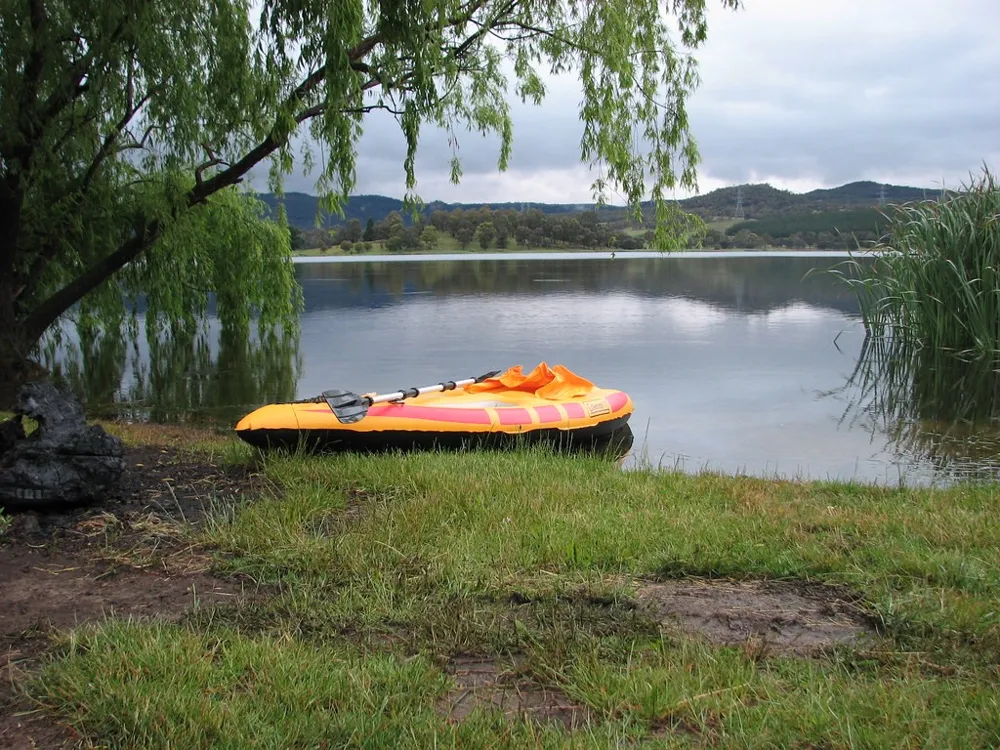
Every price tier includes all three main styles. Pick the type first, then the cheapest good boat within it. Our types of kayaks guide covers the full range.
| Type | Strengths on a Budget | Weaknesses | Example Here |
|---|---|---|---|
| Sit-inside (hard-shell) | Drier and warmer, a little more efficient to paddle | Can fill with water if you capsize; harder to re-enter in deep water | Sun Dolphin Aruba 10 |
| Sit-on-top (hard-shell) | Easy to get on and off, self-bailing, good for swimming stops | You'll get wet; often heavier for the length | Lifetime Lotus, Pelican Sentinel 100X |
| Inflatable | Lowest cost, light, no roof rack or garage needed | Slow, wind-prone, can puncture, needs inflating and drying | Intex Challenger K1, Sevylor Quikpak K1 |
As a rule of thumb, choose a sit-on-top for warm weather, kids and swimming, and a sit-inside for cooler water or if you want to stay dry. Choose an inflatable if storage or transport is the real problem. Our sit-in vs sit-on-top guide goes deeper. A budget tandem can be good value for couples, but two solo kayaks give each paddler more freedom.
Budget Kayak Materials: Rotomolded, Thermoformed and PVC
The material explains much of the price, weight and durability difference between budget boats.
- Rotomolded polyethylene. Plastic powder is melted inside a spinning mold to make a one-piece hull. It's tough, inexpensive to make and common on budget hard-shells such as the Aruba and Lotus. It's also fairly heavy, and long sun exposure can fade and weaken it over time.
- Thermoformed plastic. Sheets of plastic are heated and formed over a mold, then the deck and hull are joined. Pelican's Ram-X is the best-known budget example. It's lighter than rotomolded plastic for the size but less forgiving of hard impacts, and repairs usually need plastic welding.
- Vinyl and PVC (inflatables). The cheapest inflatables use vinyl or thin PVC with separate air chambers. Thicker PVC, protective covers and drop-stitch floors cost more but resist punctures better and paddle stiffer.
Composite boats (fiberglass, carbon and Kevlar) are rarely found in the budget tier new. They do turn up used, which is one reason the used market is worth a look.
How to Choose a Cheap Kayak
Once you know the type, a few numbers do most of the work.
Length and Width
Most budget kayaks are about 8 to 10 feet long and roughly 28 to 36 inches wide. Shorter, wider boats are more stable and turn quickly. Longer, narrower boats track straighter and go further per stroke. For most adults, around 10 feet is the sweet spot. Kids and small adults can go shorter, and see our kids kayaks for youth-sized boats. Our kayak size chart matches length to paddler height and weight.
Weight Capacity
Add your body weight, your gear and any passenger such as a dog, then leave a margin. Many paddlers aim to stay well under the listed maximum, because a boat loaded near its limit sits low, feels sluggish and ships water. Our kayak weight limit guide explains the math.
Boat Weight
Budget hard-shells often weigh about 35 to 50 lb, and that weight is what you'll lift onto a car alone. If that sounds like a lot, a lighter boat or an inflatable may get used more often. See how much a kayak weighs and our lightweight kayaks.
Features Worth Having
- An adjustable seat back and footrests, which make the biggest comfort difference for the money.
- Carry handles at both ends.
- Some storage, such as a bungee tank well or a hatch. Use dry bags either way.
- Built-in flotation in hard-shells. Pelican, for example, fits foam blocks so the boat stays afloat if swamped.
- A skeg or tracking channels, which help a short boat go straight.
- A paddle in the box, which is convenient, though included paddles tend to be heavy and basic.
Features You Can Skip
Rudders, pedal drives, gear tracks and fishing consoles add cost fast. If you might fish later, a plain sit-on-top can take add-on rod holders. Our cheap fishing kayaks guide covers low-cost rigging.
When to Spend More Than a Budget Kayak
A budget kayak is the right call for most first boats. Spending more makes sense in a few clear cases:
- You'll paddle for hours at a time. Better seats, adjustable foot braces and thigh pads reduce back and leg fatigue, and a longer hull covers distance with less effort.
- You'll paddle big lakes, the coast or in wind. Longer, more refined hulls with sealed bulkheads, deck lines and a skeg or rudder handle conditions that short budget boats aren't made for.
- You're a larger paddler or carry a lot of gear. Higher-capacity boats sit higher in the water and feel more stable when loaded.
- You'll fish seriously. Wider, standing-friendly decks, gear tracks and higher seats are worth it for regular anglers; see our fishing kayaks.
- Weight is the problem. Lighter materials such as thermoformed ABS, folding designs and drop-stitch inflatables cost more but are easier to carry. See our folding kayaks.
If you're unsure, start cheap or used. Plastic budget kayaks hold some resale value, and a season of paddling will tell you far more about what to buy next than any spec sheet. Many paddlers keep the budget boat as a spare for guests.
Where and When to Buy a Cheap Kayak
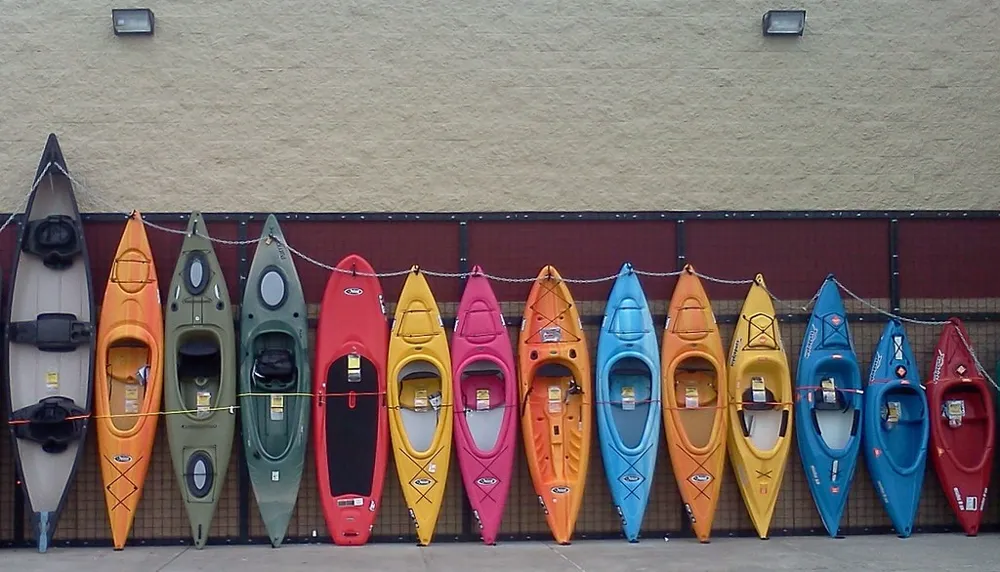
- Big-box and sporting goods stores carry the widest range of budget kayaks, and you can see the boat before you buy. Staff advice varies, so know your size and capacity needs before you go.
- Online retailers are handy for a specific model, especially inflatables, which ship in a box. Large hard-shells may ship freight or be store-pickup only.
- Paddling specialty shops have fewer cheap boats but give expert fitting advice, and some hold demo days so you can paddle before you buy. Entry-level models from better brands can be worth the step up.
- Rental outfitters and clubs sometimes sell older fleet boats at the end of the season.
Timing matters too. Late-season clearance and the off-season (fall and winter) often bring marked-down stock and more used boats for sale, though selection shrinks. Spring and early summer are usually the busiest, highest-demand months. Whatever the season, read the return policy, since a big hard-shell is awkward to send back.
Brands in the budget tier include Sun Dolphin, Lifetime, Pelican, Intex and Sevylor. Better-known paddling brands such as Perception, Old Town and Wilderness Systems also make entry-level recreational models that sit just above the cheapest tier. For brand background, including which budget names share an owner, see our kayak brands guide.
Buying a Used Kayak Instead
A used kayak is often the best value of all, because plastic boats are hard to destroy and a used boat from a better range can paddle much better than a new entry-level one. Local marketplaces, paddling clubs and rental fleets are the usual sources.
The checks are simple:
- Look along the hull for cracks, deep gouges, soft spots, warping or old patches.
- Check for sun damage such as faded, chalky or brittle plastic.
- Make sure the seat, footrests, hatch covers and drain plugs are there.
- For inflatables, ask to see it fully inflated and check that it holds air.
- Paddle it first if you can, wearing what you'd normally wear.
Most warranties cover the original buyer only, so expect none on a used boat. Our cheap fishing kayaks guide has a longer used-boat checklist.
The Hidden Costs: Paddle, Life Jacket and Transport

The kayak is only part of the cost. Budget for these before you pick a boat, or a cheap kayak can end up sitting in the garage.
| Item | Needed? | Why It Matters | Our Guide |
|---|---|---|---|
| Life jacket (PFD) | Required on board in the US | The single most important safety item; a paddling-cut PFD is more comfortable to wear all day | Kayak PFDs |
| Paddle | Yes, if not included | A lighter, correctly sized paddle makes every stroke easier | Kayak paddles, paddle length guide |
| Whistle | Required in the US | Sound signal for help | Kayak safety |
| Roof rack or foam blocks | For hard-shells | Safe transport on a car | Kayak roof racks, kayak transport |
| Cart | Optional | Rolls a heavy boat from the parking lot | Kayak carts |
| Dry bag | Recommended | Keeps phone, keys and layers dry | Kayak accessories |
| Storage | Recommended | Keeps plastic hulls from warping and out of the sun | Kayak storage racks |
If the paddle included with your kayak feels heavy, upgrading it later is one of the most noticeable improvements you can make. Never cut corners on the life jacket.
Safety and Rules on a Budget Kayak
A cheap kayak follows the same rules as an expensive one. US Coast Guard requirements call for a wearable life jacket for each person on board and a sound-producing device such as a whistle, plus a light if you're out between sunset and sunrise. Many states add their own rules, such as requiring life jackets to be worn at certain times of year or by children under a set age. Some states require registration or a launch permit even for kayaks without a motor; see our kayak registration laws guide. Rules last checked November 2026. Check your state boating agency before you go. This is general information, not legal advice.
- Wear the life jacket, don't just carry it.
- Stay on calm, sheltered water near shore, which is what most budget boats are made for. Avoid strong wind, waves, fast current and the ocean.
- Dress for the water temperature, not the air; see what to wear kayaking.
- Practice getting back in in shallow, warm water. Our guide on getting in and out of a kayak shows how.
- Tell someone your plan and carry a phone in a dry bag.
- Don't paddle after drinking. Boating-under-the-influence laws apply to paddlecraft in many places.
A basic paddling or boating safety course is inexpensive and teaches more than any upgrade. See our kayak safety guide for more.
Keep Exploring
- Best kayaks for beginners
- Best cheap fishing kayaks
- Best inflatable kayaks
- Best sit-on-top kayaks
- Pelican kayaks review
- Kayaking hub
Frequently Asked Questions
Are cheap kayaks worth it?
For calm lakes, ponds and slow rivers, yes. A budget kayak gets you on the water and is easy to resell if you move up. What you give up is mostly comfort, speed, tracking and durability, which matter more on long trips, in wind and on big water.
What is the cheapest type of kayak?
Vinyl or PVC inflatables such as the Intex Challenger K1 usually sit at the bottom of the price range, followed by short polyethylene recreational kayaks around 8 to 10 feet. Prices change often, so compare current listings.
Are cheap kayaks safe?
A budget kayak is safe on the water it's designed for when you wear a life jacket and stay close to shore in good weather. Most budget boats are built for calm water only, so avoid strong wind, waves, fast current and the open ocean.
When are kayaks cheapest?
Late-season clearance and the off-season (fall and winter) are often good times to look for marked-down stock and used boats, though choice is smaller. Spring and early summer are usually busiest.
Is a cheap inflatable kayak better than a cheap hard-shell?
An inflatable is better if you have no roof rack or storage space. A hard-shell is usually faster, tracks straighter, handles wind better and resists punctures. On a budget, hard-shells are often heavier to carry than inflatables of similar length.
Is it better to buy a used kayak than a cheap new one?
Often, yes. A used boat from a better range can paddle better than a new entry-level one, as long as the hull has no cracks, soft spots or warping and the seat and fittings are present. Used boats rarely carry a warranty.
What else do I need to buy with a cheap kayak?
At minimum a properly fitted life jacket, a paddle if one isn't included, a whistle and a way to carry the boat. A light is needed if you paddle between sunset and sunrise, and some states require registration or a launch permit.