Cheap Fishing Kayaks That Still Fish Well (2026)
Six budget fishing kayaks with their published specs, an honest look at what a low price costs you, and the inexpensive upgrades that close the gap.

Can a Cheap Fishing Kayak Be Any Good?
Yes, as long as you match it to the right water. A budget fishing kayak is usually a short, wide plastic sit-on-top with a few rod holders, a basic seat and a tank well for a crate. On ponds, small lakes, creeks and slow rivers, that is often all you need to reach fish a bank angler can't. Where cheap boats fall short is comfort on long days, speed and tracking on open water, and the quality of the seat and fittings.
This guide stays at the value end. The picks below come from established makers, and every spec is taken from the maker's page or a published buyer's guide. We don't list prices because they change constantly; "cheap" here means the entry tier of each brand's fishing range. For the general fishing kayak picks, including pedal boats, see the best fishing kayaks. For non-fishing boats at a low cost, see the best cheap kayaks.
Pelican Catch Classic 100
Best value overall
- 10 ft, 34 in wide, listed at 57 lb
- 350 lb maximum capacity
- High/low Ergocast Classic seat, standing-friendly
Lifetime Tamarack Angler 100
Best simple starter boat
- 10 ft, 31 in wide
- 275 lb capacity
- Rod holders, two hatches, padded seat
Intex Excursion Pro K1
Best if you have no roof rack
- Inflatable, listed at about 37 lb
- Rod holders on each side
- Paddle and pump included
Budget Fishing Kayaks Compared
Lengths, widths, weights and capacities are as listed by each maker or by Paddling Magazine's buyer's guide and review. Capacity is the maker's maximum, which includes you, your gear and anything else on board.
| Kayak | Type | Length | Width | Weight | Capacity | Rod Holders |
|---|---|---|---|---|---|---|
| Pelican Catch Classic 100 | Sit-on-top (Ram-X Premium) | 10 ft | 34 in | 57 lb | 350 lb | Check listing; accessory tracks |
| Lifetime Tamarack Angler 100 | Sit-on-top (polyethylene) | 10 ft | 31 in | About 52 lb | 275 lb | Built in |
| Intex Excursion Pro K1 | Inflatable (PVC) | 10 ft | 36 in | About 37 lb | 220 lb | One each side |
| Pelican Sentinel 100X Angler | Sit-on-top (Ram-X) | 9 ft 6 in | Check listing | 44 lb | 275 lb | 4 (2 flush, 2 vertical) |
| Perception Pescador Pro 10.0 | Sit-on-top (rotomolded) | 10 ft 6 in | 32 in | 62 lb | 325 lb | 2 molded-in, plus gear tracks |
| Sun Dolphin Journey 10 SS | Sit-on-top (HDPE) | 9 ft 6 in | 29.5 in | 44 lb | 250 lb | 3 (2 flush, 1 swivel) |
Retailer-specific versions sometimes differ in seat, color or included paddle, so check the listing you're buying from.
The Best Cheap Fishing Kayaks
1. Pelican Catch Classic 100
The Catch Classic 100 is the most fishing-focused boat here and the one to stretch for if you can. Pelican lists it at 10 feet long, 34 inches wide and 57 pounds, with a 350-pound maximum capacity, made from its stiffer Ram-X Premium material. The Ergocast Classic seat sets in a high or low position, so you can sit up to cast and drop down in wind, and Pelican says the deck allows standing while you fight a fish. It also has rigging tracks for accessories, a storage hatch and a rear tank well. More on Pelican's materials and warranty is in our Pelican kayaks review.
Good to Know
- Highest capacity in this list
- Two-position framed seat
- Designed to allow standing
Watch Out For
- Heavier than Pelican's recreational boats
- Rod holder count varies by version; check the listing
2. Lifetime Tamarack Angler 100
The Tamarack Angler is one of the most common first fishing kayaks in big-box stores. Paddling Magazine's buyer's guide lists it at 10 feet long, 31 inches wide and about 51 to 52 pounds, with a 275-pound capacity and blow-molded polyethylene construction. It has fishing rod holders, a padded seat and backrest, two storage hatches and multiple footrest positions for paddlers of different heights. Some retail versions come with a paddle, so check the listing. Lifetime lists a 5-year limited warranty on its Tamarack models.
Good to Know
- Rod holders and hatches built in
- Flat, stable bottom for calm water
- Footrests fit a range of heights
Watch Out For
- Basic seat, low to the deck
- No gear tracks for electronics
3. Intex Excursion Pro K1
If you have no roof rack, truck or storage space, an inflatable is the cheapest way around the problem. Paddling Magazine's buyer's guide lists the Excursion Pro K1 at 10 feet long, 36 inches wide and about 37 pounds, with a 220-pound capacity and PVC construction. It has an adjustable seat, built-in footrests, fishing rod holders on each side, a waterproof bag that latches into the front, and carry handles at both ends, and it comes with an aluminum paddle and an air pump. Expect it to be pushed around by wind more than a hard shell. Higher-end options are in the best inflatable fishing kayaks.
Good to Know
- Packs into a car trunk
- Lightest boat here
- Paddle and pump included
Watch Out For
- Lowest capacity here
- Catches wind; slower than hard shells
4. Pelican Sentinel 100X Angler
The Sentinel 100X Angler is the light choice. Pelican lists it at 9.6 feet (9 feet 6 inches) and 44 pounds, with a 275-pound maximum capacity, which makes it one of the easier fishing kayaks to lift onto a car alone. It has four rod holders in total: two flush-mounted and two vertical holders in the removable ExoPak storage compartment. The Ergolounge seat has extra-thick cushioning and a high, wide padded backrest. Storage includes a covered front platform, a center console with molded compartments, a tank well with a mesh cover and two accessory eyelets for a paddle leash or scupper plugs.
Good to Know
- Light enough for many people to load solo
- Four rod holders out of the box
- Removable ExoPak storage box
Watch Out For
- Shorter hull is slower over distance
- No gear tracks mentioned by Pelican
Sold mainly through retailers such as Walmart and Canadian Tire; check availability locally.
5. Perception Pescador Pro 10.0
The Pescador Pro 10.0 is the upper edge of "budget," but it brings features usually found on pricier boats. Perception lists it at 10 feet 6 inches, 32 inches wide and 62 pounds, with a 325-pound capacity. The removable Pro seat has two height settings and breathable mesh, and there are two molded-in rod holders, gear tracks, a fish-finder console and large front and rear open storage with bungee lashing. Perception boats are built in Greenville, South Carolina, and the brand lists a 5-year warranty. The longer Pescador Pro 12 is covered in the best fishing kayaks.
Good to Know
- Raised, removable mesh seat
- Gear tracks and fish-finder console
- Open decks fit a crate and cooler
Watch Out For
- Heaviest kayak here
- Costs more than the other picks
6. Sun Dolphin Journey 10 SS
The Journey 10 SS is the most basic boat on the list, sold widely through farm and sporting goods stores. Paddling Magazine's review lists it at 9 feet 6 inches long, 29.5 inches wide and 44 pounds, with a 250-pound capacity and UV-stabilized high-density polyethylene construction. It has three rod holders (two flush mounts behind the seat and one swiveling holder in front), bow and stern tank wells, a small cockpit hatch, a molded-in paddle holder and a skeg. The same review notes lower initial stability than wider boats, limited tracking, a wet seat from water coming up the scuppers and tank wells that don't fit a standard milk crate. Sun Dolphin's maker, KL Outdoor, has been owned by Pelican Intl since March 2026.
Good to Know
- Three rod holders including a swivel holder
- Light at 44 lb
Watch Out For
- Narrowest and least stable hull here
- Unpadded molded seat; expect a wet seat
Sold mainly through retailers such as Tractor Supply, Academy and Dick's; check availability locally.
Also consider: sit-inside budget anglers such as the Sun Dolphin Excursion 10 SS and Pelican's Argo 100X Angler keep you drier in cool weather. Sea Eagle's 285fpb is sometimes listed alongside budget fishing kayaks, but it is a small frameless inflatable pontoon boat rather than a kayak; see the best inflatable boats for that style.
What You Give Up with a Budget Fishing Kayak
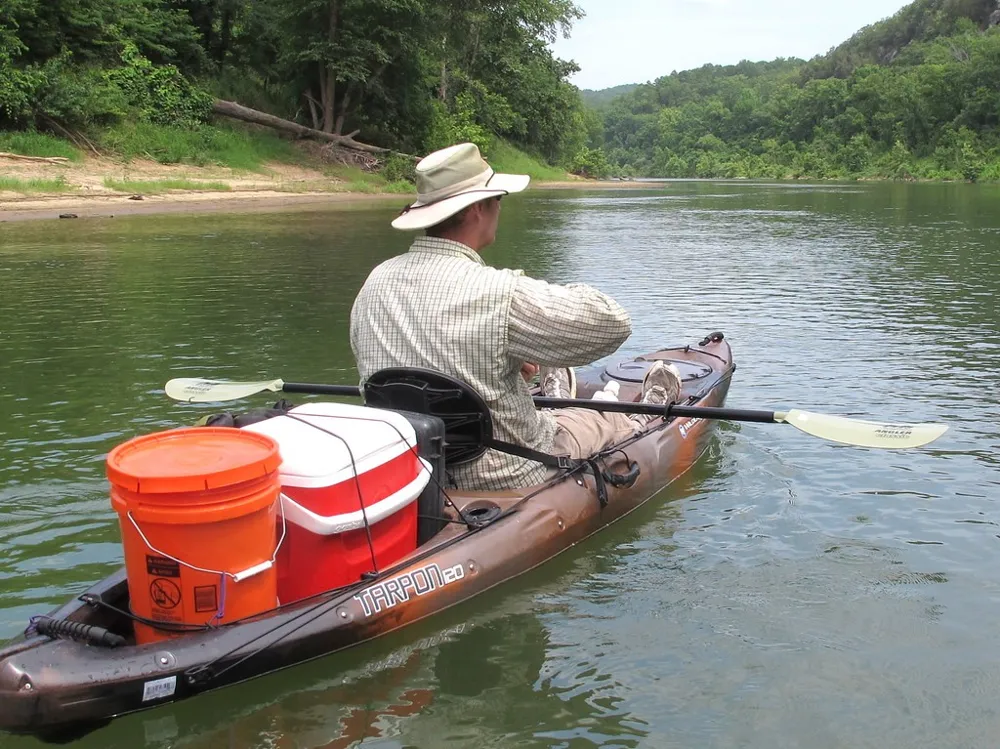
A low price is mostly saved in five places. Knowing which ones matter for your fishing makes it easier to choose.
| Area | Typical Budget Boat | Typical Mid-Range Boat | Does It Matter? |
|---|---|---|---|
| Seat | Molded seat with a padded backrest or low cushion | Raised, framed seat, often adjustable | Most on trips longer than a couple of hours |
| Tracking and speed | Short, wide hull that wanders between strokes | Longer hull, keel or rudder options | Most on big lakes, wind and long paddles |
| Rigging | A few rod holders, maybe one hatch | Gear tracks, consoles, transducer mounts | Can be added later, within limits |
| Stability | Good at rest when wide; narrow boats feel tippy | Wider, flatter hulls built for standing | Most if you want to stand or fish moving water |
| Weight and capacity | Often about 220 to 350 lb capacity | Often 350 to 450 lb or more | Most for larger anglers and heavy gear loads |
Seat comfort is the complaint you'll hear most. A low molded seat leaves you sitting in water that splashes through the scuppers, and it gets uncomfortable on long days. A clip-in padded seat is one of the best-value upgrades; see the best kayak seats.
Tracking is the next trade-off. A 10-foot boat turns quickly, which is handy in creeks and timber, but it yaws side to side on open water and slows down fast between strokes. Good paddle technique helps more than you'd expect, and a lighter paddle makes every stroke easier.
Fittings are simpler, too: hatches, handles and drain plugs are more basic, and some budget hatches aren't watertight, so keep phones and keys in a dry bag.
Must-Have Features on a Cheap Fishing Kayak
When everything is basic, a few features separate a good budget fishing boat from a frustrating one:
- Enough capacity. Add your weight (with clothes and life jacket) to your gear, then look for a rating comfortably above it. A common rule of thumb is to keep the load to about 60 to 70 percent of the maximum. Our kayak weight limit guide shows the math.
- A rear tank well that fits a crate. This is where your tackle, spare rods and catch go. Measure it if you plan to use a standard milk crate; some budget tank wells are too small or triangular.
- At least two rod holders. Flush-mount holders behind the seat are for trolling and storing rods. You'll still want one within reach in front of you, which you can add.
- A flat area or tracks for mounting. Gear tracks make adding rod holders, a fish finder or a phone mount easy without drilling. If the boat has none, look for flat, open deck space where a mount could go.
- Footrests that fit you. Adjustable or multi-position footrests let you brace properly, which helps stability and paddling efficiency.
- Carry handles and a manageable weight. If you can't load it alone, you'll fish less. Check the listed weight against what you can lift.
- Scupper holes and plugs (sit-on-tops). Scuppers drain the deck; plugs keep the seat area drier on calm days.
Sit-On-Top vs Sit-Inside vs Inflatable on a Budget
All three styles exist at the low end. Here's how they compare when cost is the main limit:
| Sit-On-Top | Sit-Inside | Inflatable | |
|---|---|---|---|
| Fishing layout | Open deck, tank well for a crate, easy to rig | Less deck space; rod holders behind the cockpit | Rod holders on the tubes; limited mounting |
| Stability | Good, especially wide hulls | Lower seat feels steady; narrower deck | Wide and steady at rest |
| Staying dry and warm | Wetter; self-bailing | Drier and warmer | Depends on design; often wet seat |
| If you capsize | Flip it and climb back on | Cockpit fills; harder to re-enter | Easy to climb back on in calm water |
| Transport and storage | Needs a rack, truck or trailer | Usually lighter than a comparable sit-on-top | Fits in a car trunk or closet |
| Best for | Most budget anglers, warm water | Cool weather, lighter boats, calm water | No rack, small homes, travel |
Most budget anglers choose a sit-on-top because it is the easiest style to rig and to climb back onto. Our sit-in vs sit-on-top comparison covers the differences in detail. Budget pedal-drive kayaks do exist, but at this price tier the drives are simpler and the boats heavier; compare them in the best pedal kayaks.
Cheap DIY Rigging Upgrades
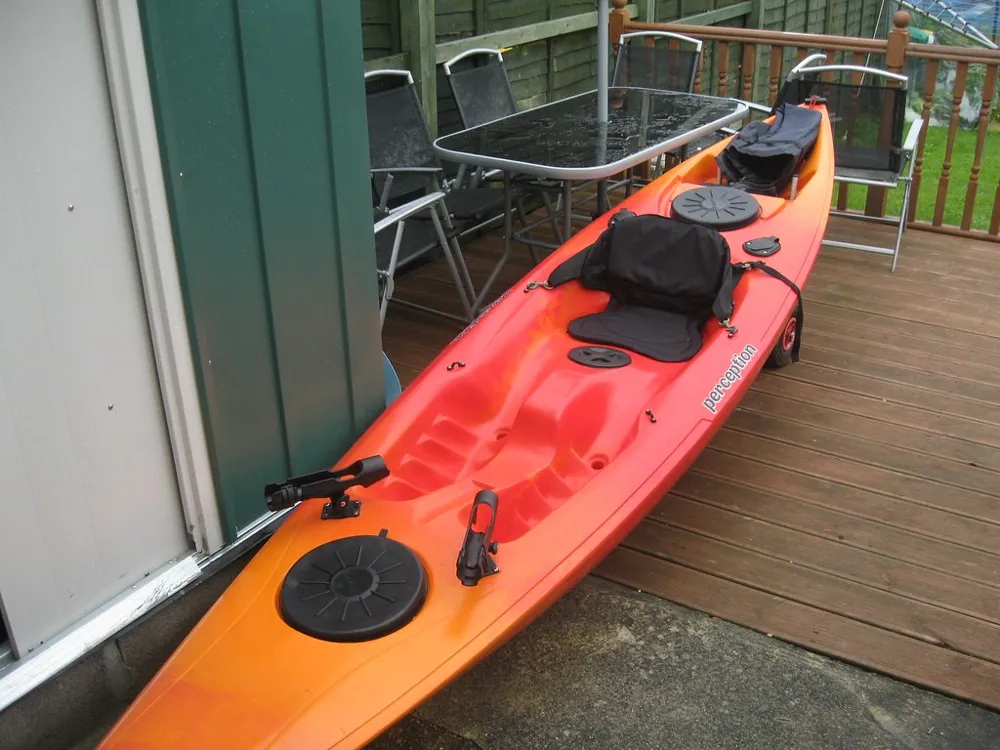
A basic kayak becomes a capable fishing boat with a few inexpensive add-ons. Add them one at a time, after you've fished the boat and know what you're missing.
A Crate with Rod Holder Tubes
The classic first upgrade is a plastic milk crate or a purpose-made kayak crate strapped into the tank well. Zip-tie or bolt two or three lengths of PVC pipe to the corners as vertical rod holders, and use the crate for tackle boxes, pliers and a small first-aid kit. Strap it down with the deck bungees or a cam strap so it stays with the boat if you tip.
Extra Rod Holders
Most budget boats put rod holders behind you, where they're hard to reach. A track-mounted or deck-mounted adjustable holder in front lets you troll and watch the rod tip. If your boat has gear tracks, a track-mount holder such as the YakAttack Omega Pro bolts on without drilling.
Check Price on AmazonAn Anchor Trolley
An anchor trolley is a pulley-and-line loop that runs along the side of the kayak, so you can move the anchor point to the bow or stern. Anchoring from the side can tip a kayak, especially in current. Trolley kits use a couple of pad eyes and a ring, and a small folding grapnel anchor is enough for most calm water. Never anchor in strong current, and keep a knife within reach to cut the line. See the best kayak anchors for options.
Check Price on AmazonLeashes, a Seat Pad and Lights
Coiled leashes for your paddle and rods are cheap insurance. A clip-in padded seat or a simple foam pad is the biggest comfort upgrade on a molded seat. If you fish at dawn or dusk, a clip-on or pole-mounted light helps other boaters see you.
Before You Drill
Many budget hulls can take screwed or riveted fittings, but drilling has consequences. Pelican, for example, says drilling or cutting the hull voids its warranty in that area. Use well nuts or rivets with sealant, avoid drilling below the waterline, and use existing tracks or straps wherever possible. More add-ons are in our kayak accessories checklist.
Length, Width and Capacity on a Budget
Almost every budget fishing kayak is about 9.5 to 10.5 feet long, which is easy to store, quick to turn and well suited to ponds, small lakes, creeks and slow rivers. Width is where budget boats vary most: in this list, from 29.5 inches on the Journey 10 SS to 36 inches on the inflatable Excursion Pro K1. Wider boats feel steadier at rest and when you twist to cast or net a fish, but they push more water and are slower.
Capacity ranges from 220 to 350 pounds here. A larger angler with a full crate and cooler can approach the limit of the lower-rated boats, which makes a kayak sit low, feel sluggish and take water over the deck more easily. If you're near the limit, choose a higher-rated hull such as the Catch Classic 100 or Pescador Pro 10.0. The kayak size chart covers fit by height and weight, and how much a kayak weighs compares hull weights by type.
Buying a Used Fishing Kayak
Plastic kayaks are hard to destroy, so used boats can be good value. Look on local marketplaces, at paddling clubs and with rental outfitters that sell off older fleet boats. Check for:
- Hull damage. Run your hand along the bottom. Light scratches are normal; cracks, deep gouges, soft spots, warping (often from strapping it down too tightly or storing it on a hard edge) and old patches are warning signs.
- Leaks. Check around the scupper holes, hatches, handles and any drilled fittings. A float test in shallow water, followed by a look inside the hatch, is the best check.
- Sun damage. Faded, chalky or brittle plastic suggests long outdoor storage in direct sun.
- Missing parts. Seats, hatch covers, footrests and drain plugs can be hard to source for discontinued models. Ask the maker before you buy if parts are missing.
- Paperwork. If your state requires registration or a title, ask for a bill of sale and any existing registration, and note the hull identification number if there is one.
Most kayak warranties cover the original buyer only, so a used boat almost always comes with none. A used boat from a better brand is often a better buy than a new boat from the bottom of the range, as long as it passes the checks. Leave room in your budget for a paddle and life jacket if they aren't included.
Safety Gear and Rules
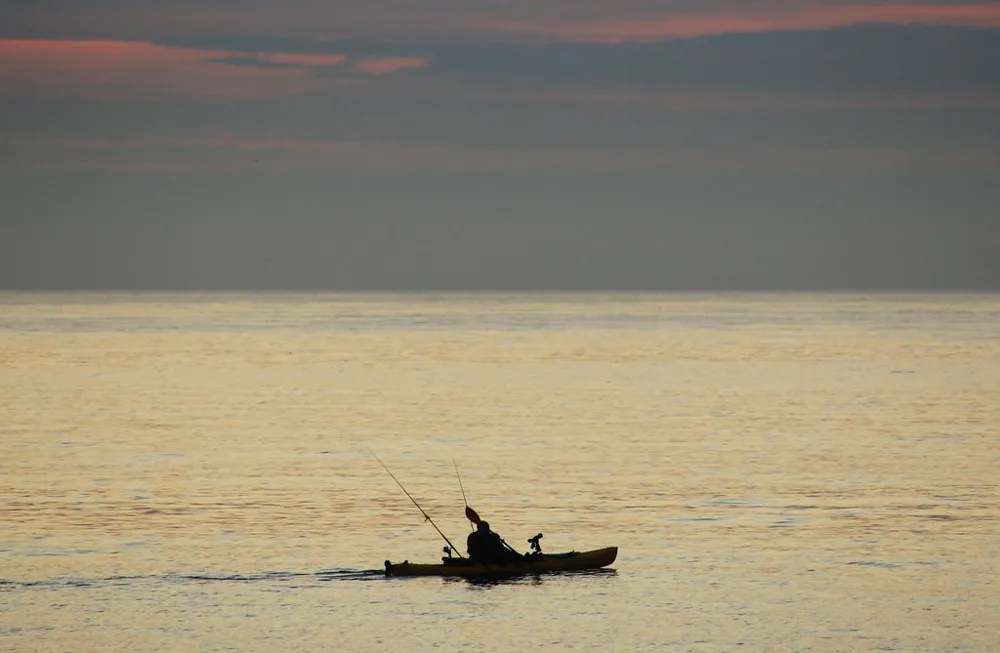
A cheap kayak doesn't change the rules. US Coast Guard requirements call for a wearable life jacket for each person on board and a sound-producing device such as a whistle, plus a light if you're out between sunset and sunrise. Many states add their own rules, such as requiring life jackets to be worn at certain times of year or by children of certain ages. Many states don't require registration for a kayak without a motor, but some do or require a launch permit, and adding a trolling motor usually means registering the kayak. Fishing licenses work the same from a kayak as from shore. Rules last checked November 2026; check your state boating and wildlife agencies before you go. This is general information, not legal advice.
- Wear a life jacket, don't just carry it. Fishing-specific vests have high backs that work with kayak seats. See the best kayak PFDs.
- Dress for the water temperature, not the air. Cold water is the biggest risk for spring and fall anglers; see what to wear kayaking.
- Stay on water that suits the boat. Pelican, for example, says its boats are for calm water only. Avoid strong wind, big waves and fast current.
- Practice re-entry in shallow, warm water before you need it, and know how to get in and out of a kayak.
- Tell someone your plan and carry a phone in a dry bag.
More on staying safe is in our kayak safety guide and kayak fishing tips.
Transport and Storage Without Extra Spending
Getting the boat to the water is a real cost to plan for. A 10-foot sit-on-top fits in many pickup beds with the tailgate down; mark the overhang with a flag, which many states require past a certain length. For cars, foam blocks and cam straps are the cheapest roof setup, with bow and stern lines for highway driving; dedicated kayak roof racks are more secure. A kayak cart makes a 50- to 60-pound boat easy to roll from the parking lot. Our kayak transport guide covers loading step by step.
At home, store plastic kayaks out of direct sun on padded supports or on their side, not flat on a hard floor, and dry inflatables fully before packing them. See kayak storage racks for wall and freestanding options.
Keep Exploring
Fishing with a partner? See the best tandem fishing kayaks. Want to compare brands? Our kayak brands guide explains who makes and owns Pelican, Perception, Lifetime and Sun Dolphin. Add a kayak fish finder once you've rigged the basics, choose a lighter kayak paddle, or browse everything in our kayaking hub.
Frequently Asked Questions
Are cheap fishing kayaks worth it?
For calm ponds, small lakes and slow rivers, yes. A budget sit-on-top gets you on the water and can be upgraded with rod holders, a crate and an anchor trolley. If you plan long days on big, windy water, a mid-range boat with a better seat and hull is usually worth the step up.
What is the cheapest way to start kayak fishing?
Buy a basic 10-foot sit-on-top or a used fishing kayak, add a milk crate with a couple of rod holder tubes, and spend the rest on a proper life jacket and a decent paddle. Those two items matter more for comfort and safety than extra rigging.
Is a 10-foot kayak long enough for fishing?
For ponds, small lakes, creeks and slow rivers, about 10 feet is a common choice because it is stable, turns easily and is light enough to load. Longer boats around 12 feet track better and cover distance more easily on big lakes.
Can you stand up in a cheap fishing kayak?
Only in models the maker says are designed for it, such as Pelican's Catch Classic 100. Most narrow budget boats are not meant for standing. Practice in calm, shallow water near shore and always wear a life jacket.
Do I need to register a cheap fishing kayak?
It depends on your state. Many states don't require registration for a kayak without a motor, but some do or require a launch permit, and adding a trolling motor usually triggers registration. Check your state boating agency before you go.
Are inflatable fishing kayaks any good?
Budget inflatables are fine for sheltered water and are easy to store and carry, but they catch more wind, sit lower and have lower capacity than hard shells. Higher-end drop-stitch inflatables close much of that gap.
What should I look for in a used fishing kayak?
Check the hull for cracks, deep gouges, soft or warped spots and patched areas, test that scupper holes and hatches don't leak, and make sure the seat and handles are present and solid. A short float test before paying is the best check.