What Size Kayak Do I Need? Length and Width by Paddler (2026)
Your height, weight, the water you paddle and where you'll store the boat all point to a size. Here's the chart, and what each number changes.
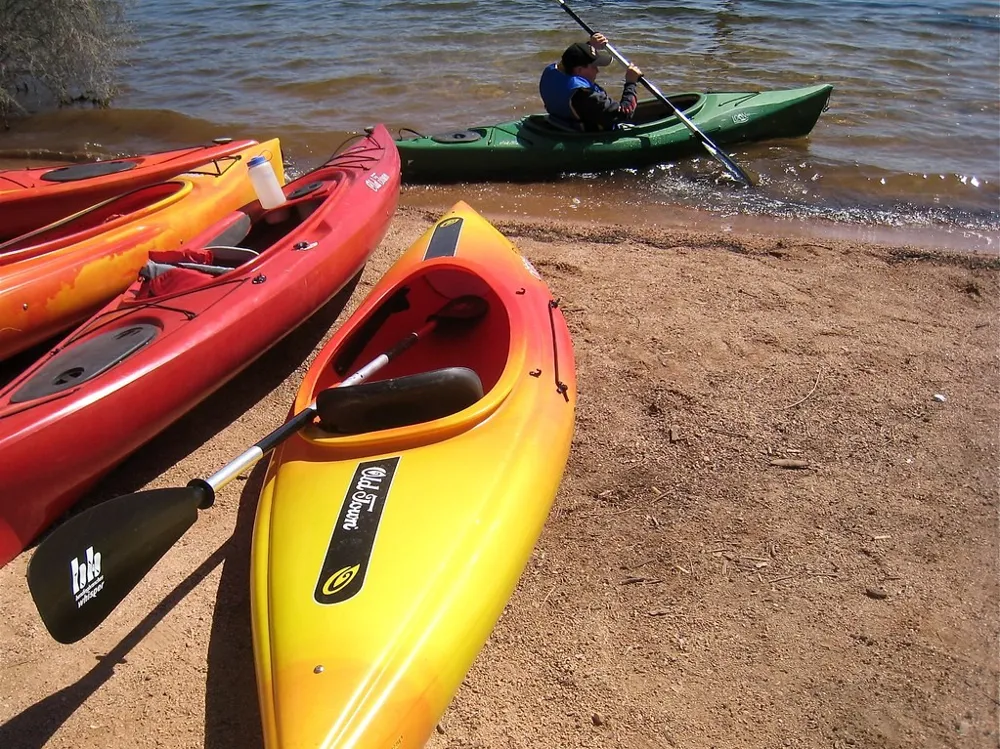
What Size Kayak Do I Need? The Short Answer
Kayak size comes down to four things: your body (height, weight and leg length), the water you'll paddle, what you'll carry and where you'll keep the boat. Length mostly controls speed, tracking and storage space. Width mostly controls stability. Volume and cockpit size decide whether you fit inside it at all.
| If You Are... | Start With |
|---|---|
| A beginner on calm lakes and slow rivers | A 10–12 ft recreational kayak about 28–32 inches wide |
| A smaller adult or teen who wants an easy-to-carry boat | About 8–10 ft, low- or medium-volume |
| Tall or heavier (over about 5'10" or 190 lb) | A high-volume kayak, usually 12 ft or more, or a wide sit-on-top |
| Planning long day trips or open water | A 12–14 ft day tourer, or a 14–18 ft sea kayak |
| Fishing | About 10–14 ft and wide (often 30 inches or more) |
| Paddling with a partner | A tandem around 12–14 ft |
| A child | A youth kayak around 6 ft |
| Short on storage | An inflatable or folding kayak |
These are starting points compiled from paddling guides and retailer charts, which differ a little from one another. The sections below explain how to fine-tune each number. If you're still choosing a style of boat, start with types of kayaks.
Kayak Size Chart by Height and Weight
Most sizing charts group paddlers into three body sizes that line up with low-, medium- and high-volume kayaks. The height and weight bands below are the ones used, with small variations, by Outdoorplay, Kayak Guru, Paddling Space and several other sizing guides.
| Paddler Size | Volume | Recreational | Day Touring | Fishing |
|---|---|---|---|---|
| Under about 5'6" and 140 lb | Low | About 8–10 ft | About 12–14 ft | About 10–12 ft |
| About 5'7"–5'10", up to about 180–190 lb | Medium | About 10–12 ft | About 13–15 ft | About 11–13 ft |
| Over about 5'10" or 190 lb | High | About 12 ft or more | About 14 ft or more | About 12–14 ft |
Two cautions. First, height and weight don't always land in the same row: a 6-foot, 150 lb paddler may need a high-volume boat for legroom but not for floatation, while a shorter, heavier paddler may need more capacity and width rather than length. Second, the chart assumes a single paddler with light day gear. If you carry camping or fishing gear, move up a row or check capacity (below).
Kayak Length by Type and Use
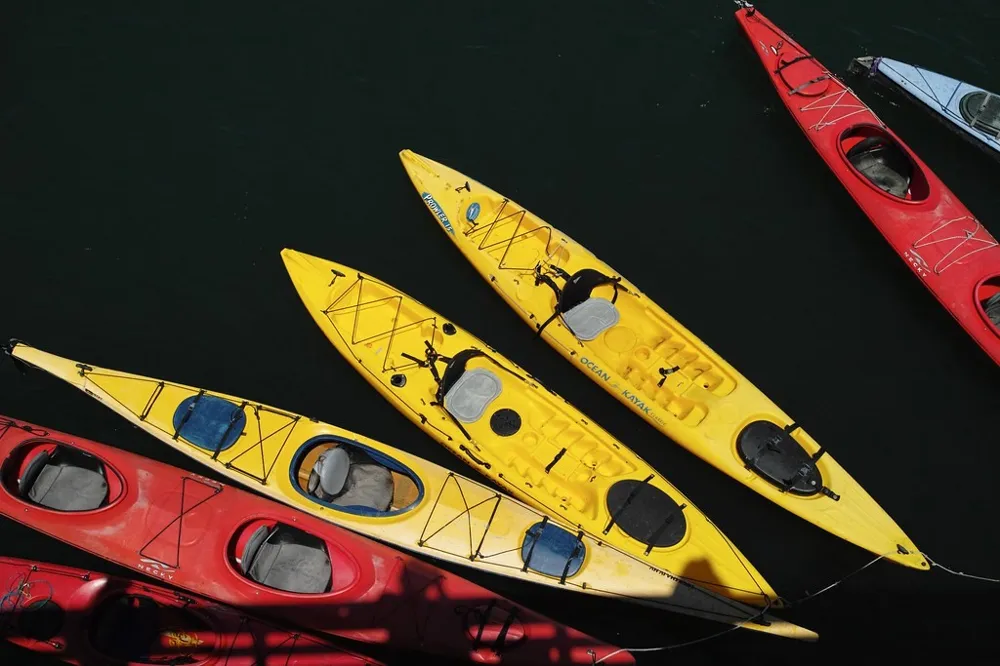
The kind of paddling you'll do narrows the range more than anything else. Typical lengths and widths by type:
| Type | Typical Length | Typical Width | Why This Size |
|---|---|---|---|
| Kids' / youth | About 6–8 ft | Up to about 26" on larger youth boats | Light and short enough for small paddlers to control |
| Recreational | About 9–12 ft | About 26–32" | Stable, easy to turn and store |
| Sit-on-top | About 9–13 ft | Usually wider than a comparable sit-in | Wide, open deck, easy on and off |
| Day touring | About 12–14 ft | About 24–28" | Faster and straighter, still manageable |
| Sea / touring | About 14–18 ft+ | About 22–24" | Efficient over distance, room for camping gear |
| Fishing | About 10–14 ft | About 30–42" | Stability for casting and standing, gear capacity |
| Whitewater | About 6–9 ft | About 23–27" | Short hulls turn quickly in rapids |
| Tandem | About 12–14 ft (some to 16 ft+) | About 32–40" | Room and capacity for two |
| Inflatable | Often about 8–14 ft | About 34–40" | Air tubes make them wider than hardshells |
Ranges are compiled from Paddling Magazine, REI and retailer sizing guides and vary by brand. Water type points the same way: small ponds and slow rivers suit shorter boats, big lakes favor 10–14 ft, and open coastal water generally calls for at least 12–14 ft, ideally a proper sea kayak with bulkheads. If you're choosing between styles, see sit-in vs sit-on-top kayaks.
8 ft vs 10 ft vs 12 ft vs 14+ ft Kayaks
Most shoppers end up comparing a handful of common lengths. Here's what changes as you add feet.
| 8 ft | 10 ft | 12 ft | 14 ft+ | |
|---|---|---|---|---|
| Best for | Kids, small adults, ponds | Beginners, lakes, slow rivers | Bigger lakes, longer outings, taller paddlers | Day touring, open water, camping trips |
| Speed and glide | Slow; stops gliding quickly | Moderate | Good | Fastest |
| Tracking (going straight) | Wanders | Fair | Good | Very good, often with a skeg or rudder |
| Turning | Very easy | Easy | Moderate | Slower; uses edging and sweep strokes |
| Gear space | Very little | Some, often one hatch or a tank well | More | Most, usually two hatches |
| Storage and transport | Easiest; fits many SUVs and small spaces | Easy | Needs a roof rack or truck bed | Needs a rack and a long storage spot |
8 ft Kayaks
The 8-foot class covers youth kayaks and small recreational boats. They are light, cheap to store and easy to turn, which makes them good for kids, smaller adults and short paddles near shore. For most adults they feel cramped, carry little gear and zig-zag with each stroke.
10 ft Kayaks
Ten feet is the most common beginner length. A 10-foot recreational kayak is stable, turns easily, and is short enough to store in a garage and lift onto a car. Old Town lists the Loon 106 at 10 ft 6 in, and Pelican lists the Maxim 100X at 10 ft. The trade-off is speed and space: you'll work harder to cover distance, and there's limited room for gear. See the best kayaks for beginners for 9- to 10-foot options.
12 ft Kayaks
A 12-foot kayak glides farther per stroke, tracks better and usually has more legroom and storage, which is why it's a common pick for taller paddlers and for people who already know they'll paddle often. The Wilderness Systems Pungo 120 is a well-known example at 12 ft 2 in. It's also the point where many people need a roof rack rather than a hatchback.
14 ft and Longer
From about 14 feet you're into day touring and sea kayaks: narrower, faster, with bulkheads and hatches for overnight gear. They reward good technique and are the right tool for open water, but they're harder to store, transport and turn. Compare options in the best touring kayaks.
How Long Is a Kayak?
A typical one-person recreational kayak is about 10 feet long, and most one-person kayaks fall between about 8 and 16 feet. At the extremes, playboats for whitewater can be shorter than 6 feet, and sea kayaks can run past 18 feet. Tandems add a few feet over solo boats of the same type.
Why Longer Is Faster
A displacement hull has a rough speed ceiling, called hull speed, that rises with waterline length. The classic rule of thumb is about 1.34 × the square root of the waterline length in feet, in knots. That works out to roughly 4.6 MPH for a 9-foot waterline, 5.3 MPH for 12 feet and 6.2 MPH for 16 feet. Treat these as illustrations: hull speed is not a hard limit, and long, narrow hulls such as racing kayaks can exceed it. In practice the point is simple. Add length and the same effort carries you farther.
Length-to-Width Ratio
Dividing length by width gives a quick sense of a hull's character. Sizing guides put sea kayaks at roughly 10–12 to 1, recreational and fishing kayaks at about 8–10 to 1, and whitewater boats at about 6–8 to 1. Higher ratios are faster and track better; lower ratios are steadier and turn more easily.
Kayak Width: Stability vs Speed
REI sums it up: wider hulls offer more initial stability, while narrower hulls can go faster. Width is the number most beginners should look at second, after length.
| Width | How It Feels | Typical Use |
|---|---|---|
| Under about 24" | Quick and efficient; feels tippy when you first sit in | Sea and touring kayaks, experienced paddlers |
| About 24–28" | Balanced; steady with some practice | Day touring, whitewater, sporty recreational boats |
| About 28–32" | Steady on flat water | Most beginner recreational kayaks |
| About 32"+ | Very stable, but slower and harder to paddle far | Fishing, sit-on-tops, tandems, inflatables, paddling with a dog |
Stability comes in two kinds. Primary stability is how steady the boat feels sitting flat on calm water; wide, flat hulls have lots of it. Secondary stability is how well it resists tipping when leaned on edge or hit by waves, which rounder, narrower hulls often handle better. A very wide boat isn't automatically safer in rough water. Width also affects your paddle: wider kayaks need a longer paddle, which our kayak paddle length guide covers in detail.
Cockpit Size and Fit for Sit-Inside Kayaks
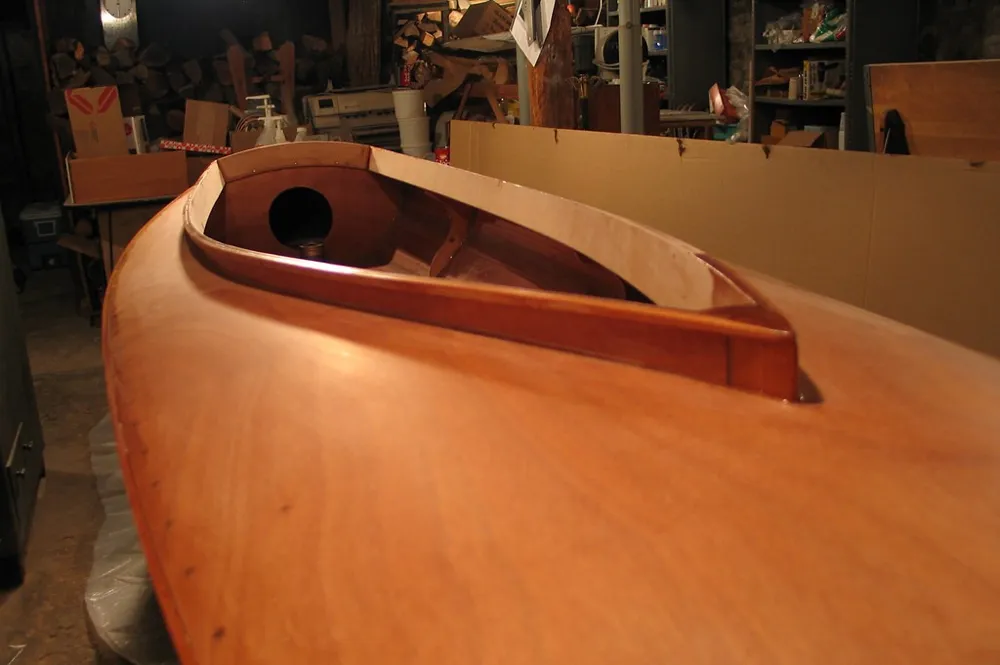
With a sit-inside kayak, length and width only matter if you fit in the cockpit. REI notes that a small, snug cockpit gives more control and protection in rough conditions, while a large cockpit makes getting in and out easier. Typical cockpit openings, per Paddling Magazine:
| Kayak Style | Typical Cockpit Opening | What It Means |
|---|---|---|
| Recreational | About 50" long × 22–23" wide | Easy entry; you can pull your knees up; won't hold a tight spray skirt seal in rough water |
| Modern sea kayak | About 30" long × 18–20" wide | Knees under the deck for bracing and rolling; slide in seat first |
| Small keyhole (older sea kayaks) | About 24" long × 18" wide | Very snug; harder to enter, best for experienced paddlers |
How a Sit-Inside Should Fit
- Feet: with the foot braces adjusted, the balls of your feet should rest on the pegs with your knees slightly bent. If the braces are at the last notch and your legs are still cramped, the boat is too small.
- Knees and thighs: in a touring or whitewater boat, your thighs should touch the thigh braces under the deck so you can edge the boat. In a recreational kayak you mainly want room to shift positions.
- Hips: a little space on each side is normal; hip pads can fill a big gap. If your hips press hard against the sides, size up.
- Depth: REI points out that deeper hulls give long-legged paddlers more room, while shallower hulls catch less wind. Big feet in bulky shoes need deck height too.
Sit-on-top kayaks avoid most of these questions because there's no cockpit to squeeze into; check the footwell range and seat height instead. Practice entry and exit with our guide to getting in and out of a kayak.
Hull Volume: Low, Medium or High
Many touring and sea kayaks come in versions sized for different bodies, sometimes labeled low, medium and high volume or small, medium and large. Volume is the space inside the hull, and it changes how high the boat floats under you, how much deck height you get for your legs, and how much gear fits.
| Volume | Commonly Suggested For | Feels |
|---|---|---|
| Low | Paddlers under about 5'6" and 140 lb, or day trips with light loads | Snug, sits lower, catches less wind |
| Medium | About 5'7"–5'10" and up to about 180–190 lb | All-round fit for most adults |
| High | Over about 5'10" or 190 lb, big feet, or multiday camping loads | Roomy, more deck height and storage |
A boat that's too big for you rides high, gets pushed around by wind and is hard to edge; one that's too small sits low, feels cramped and may not take your gear. Whitewater kayaks follow the same idea: the same design is often sold in small, medium and large, each with the maker's recommended paddler weight range, and those ranges often overlap. Pick by the range on the maker's spec sheet, not by length.
Weight Capacity: Size for Your Total Load
A kayak's listed maximum capacity is the most it can float, not the load at which it paddles well. A common rule is to keep your total load (you, your gear, any passenger or dog) to about 70% of the maximum; kayak maker Eddyline puts ideal capacity at about 60–70%. A paddler with gear totaling 200 lb would therefore look for a rating of roughly 285 lb or more. For overnight trips, Outdoorplay's guide suggests budgeting at least 25 lb of gear per person for one night plus about 10 lb for each extra night.
Capacity ratings aren't standardized, and some include the boat's own weight. Our kayak weight limit guide explains how to read them and has a full calculator table.
Sizing a Tandem Kayak
Most two-person kayaks are about 12 to 14 feet long and noticeably wider than solo boats. REI notes tandems are typically more stable than single kayaks, but you give up a second boat for rescues and the option to paddle alone. Size a tandem in this order:
- Capacity first: add both paddlers, all gear and any child or dog, then apply the same 70% margin.
- Legroom for both paddlers: check the foot brace range at each seat, especially for the taller paddler.
- Length for the trip: 12–13 ft suits lakes and family paddling; longer tandems and tandem sea kayaks track and glide better on open water.
- Solo use: some tandems let you move a seat to the center for paddling alone.
As an example of an inflatable tandem, Intex lists the Explorer K2 at 10 ft 3 in with a 400 lb capacity for two people. Compare hard-shell options in the best tandem kayaks and inflatable two-seaters in 2-person inflatable kayaks.
Kids' Kayak Sizes
Youth kayaks are usually around 6 feet long, light enough for a child to help carry, and wide enough to be forgiving. Lifetime lists the Dash 66 youth kayak at 6 ft 6 in with a 150 lb capacity. Paddling Magazine notes that 6-foot kids' kayaks typically suit children under about 5 feet tall and 100 pounds, that larger children can use boats around 8 feet long and 26 inches wide, and that once kids reach about 100 pounds or are taller than about 5'4", a small adult kayak with adjustable foot braces becomes an option.
- Short and light: a child can't control or carry a 10-foot adult boat.
- Sit-on-top or open design: easy to climb back onto after a swim.
- Adjustable footrests: let the boat fit for more than one season.
- A properly sized life jacket matters more than the kayak. US Coast Guard-approved child PFDs are commonly labeled by weight (infant, child and youth), and many states require children to wear one; check your state's rules.
Younger children are often better off in the front seat of a tandem with an adult. See the best kids' kayaks for specific models.
Inflatable and Folding Kayak Sizes
Inflatable kayaks are sized differently from hardshells. Because the hull is made of air tubes, they're usually wider for their length and float high, which makes them stable but slower and more affected by wind. REI describes purely recreational inflatables as best for close-to-shore play, and notes that wide, rugged inflatables are good for flowing rivers because they bounce off obstacles.
- Solo inflatables: often about 8–11 ft. NRS lists the Akamai 110 at 11 ft and about 17 lb.
- Tandem inflatables: often about 10–14 ft; many can also be paddled solo.
- Check inside space, not just length: thick tubes eat into legroom, so compare seat-to-bow measurements or try one first if you're tall.
Folding kayaks pack into a box and store in a closet. Oru lists its Lake at 9 ft and 17 lb, for paddlers under 6 ft 4 in, and its Bay at 12 ft 3 in and 26 lb. See inflatable kayaks and folding kayaks.
Storage and Transport: Will It Fit?
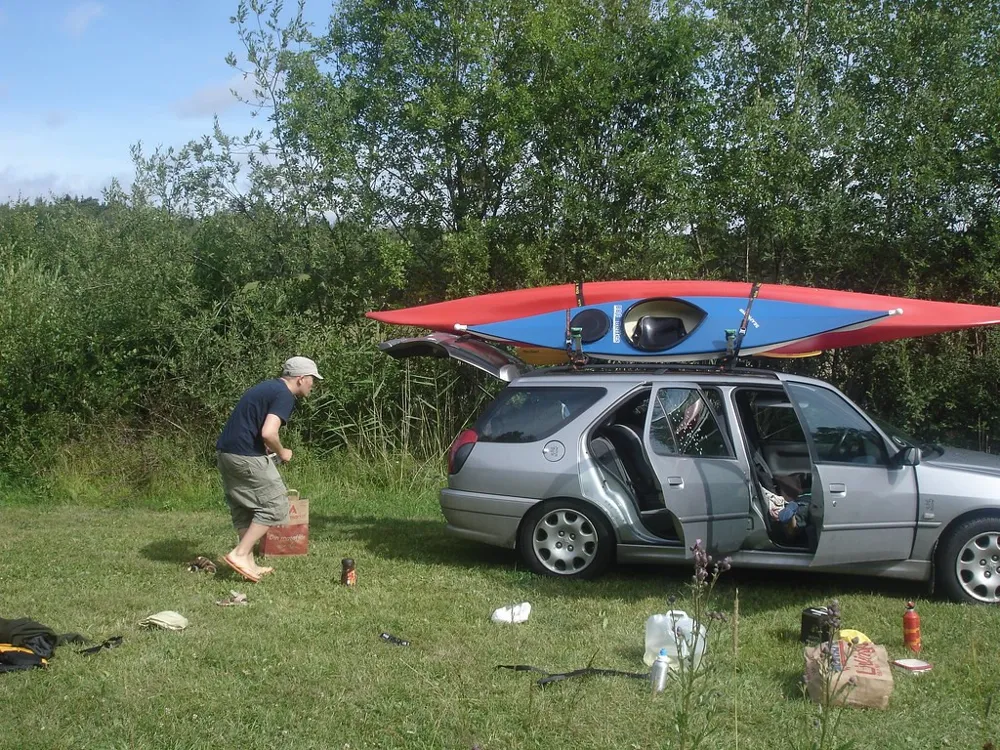
The best-sized kayak is useless if you can't get it to the water. Measure before you buy:
- Storage space: measure your garage wall, shed or balcony diagonally. A 14-foot touring kayak won't fit where a 10-footer will, and apartment dwellers often end up with an inflatable or folding boat.
- Inside a vehicle: a short kayak may fit inside a larger SUV or a pickup bed with the tailgate down. Anything longer usually needs a roof rack or a truck bed extender.
- On the roof: check your rack's weight rating and make sure the kayak's overhang can be secured with bow and stern lines.
- Carrying it: longer and wider boats weigh more. Recreational sit-ins often weigh about 30 to 55 lb, while fishing kayaks can run 40 to 80 lb or more. Our guide to how much a kayak weighs has model-by-model figures.
For loading and strapping, see how to transport a kayak, and for home storage, kayak storage racks.
Sizing for Tall, Short and Heavier Paddlers
Tall Paddlers (Over About 6')
Prioritize legroom over length. Look for a high-volume sit-in with a long foot brace range, a large recreational cockpit, or a sit-on-top with deep footwells. A 12-foot or longer boat usually gives the room you need. Check the maker's height guidance where it's published.
Short Paddlers (Under About 5'4")
Choose low-volume boats and check that the foot braces adjust far enough forward to reach. Lower decks and narrower beams also make for a shorter, more comfortable paddle stroke. Lighter boats in the 8–10 ft range are easier to carry and load.
Heavier Paddlers
Width and capacity matter more than length. Wide sit-on-tops and fishing kayaks often carry the highest ratings. Look for a sturdy seat and a hull that still sits with plenty of freeboard at your total load. The weight limit guide shows the rating to look for at each body weight.
Anglers
Fishing kayaks are wider and heavier for casting stability and gear. Ten to 12 feet suits ponds and small rivers; 12 to 14 feet tracks better on big lakes and the coast. See the best fishing kayaks.
Example Kayaks at Common Sizes
Three widely sold kayaks that show the size classes above. Specs are from the manufacturers' listings; weights and capacities match those on our weight and capacity guides.
Lifetime Dash 66 (Youth, 6 ft 6 in)
A youth sit-on-top that Lifetime lists at 6 ft 6 in with a 150 lb capacity, a swim-up deck with molded hand grips and multiple footrest positions for growing kids.
Check Price on AmazonIntex Explorer K2 (Inflatable Tandem, 10 ft 3 in)
An inflatable two-person kayak that Intex lists at 10 ft 3 in, about 37 lb, with a 400 lb capacity for two. It packs into a bag for car-trunk transport and closet storage.
Check Price on AmazonWilderness Systems Pungo 120 (Recreational, 12 ft 2 in)
A 12 ft 2 in recreational sit-inside with a 325 lb capacity, a common choice for taller paddlers and longer lake days. OutdoorGearLab measured it at 49 lb.
Check Price on AmazonHow to Check Fit Before You Buy
- Narrow the type (recreational, touring, fishing, whitewater, tandem) using the water you'll paddle most.
- Pick a length from the charts above, then confirm it fits your storage space and vehicle.
- Check capacity against your total load at about 70%.
- Sit in it. Adjust the seat and foot braces, rock side to side, and check knee and hip room. Wear the shoes you'll paddle in.
- Paddle it if you can. Rentals, outfitters and demo days are the best way to feel the difference between 10 and 12 feet, or 28 and 32 inches of width.
- Lift it. If you can't load it on your car, you'll paddle less.
Related Sizing Guides
Once you've chosen a kayak, size your paddle with the kayak paddle length guide (most recreational paddlers use about 220–240 cm) and pick a life jacket from kayak PFDs. Choosing between craft? Compare sizes in the paddle board size chart and read kayak vs paddle board. Ready to shop? Start with beginner kayaks, sit-on-top kayaks or touring kayaks.
Frequently Asked Questions
What size kayak do I need for my height?
As a starting point, paddlers under about 5'6" often fit 8 to 10 ft recreational kayaks, average-height paddlers 10 to 12 ft, and paddlers over about 5'10" a high-volume boat of 12 ft or more. Legroom and cockpit fit matter more than length alone, so sit in the boat if you can.
Is a 10 ft kayak big enough for an adult?
Yes, for most adults on calm lakes and slow rivers. A 10 ft recreational kayak is stable and easy to store, but it holds less gear and is slower than a 12 ft boat. Check the weight capacity and legroom if you're tall or heavier.
How long is a kayak?
Most one-person recreational kayaks are about 9 to 12 feet long, day touring kayaks about 12 to 14 feet and sea kayaks about 14 to 18 feet or more. Whitewater kayaks are usually under 9 feet, and kids' kayaks are often around 6 feet.
Is an 8 ft kayak too small?
Not for kids, smaller adults or short trips on ponds and slow rivers. Most adults will find an 8 ft kayak cramped, slow and prone to wandering, and it carries little gear.
What size kayak for a 6 ft person?
A 6 ft paddler usually needs a medium- or high-volume kayak with good legroom, often 10 to 12 ft for recreation and 12 to 14 ft or more for day touring. Check the foot brace range and cockpit length before you buy.
What size kayak do I need for two people?
Most tandem kayaks are about 12 to 14 feet long. Add both paddlers' weights and all gear, and pick a tandem whose capacity leaves a healthy margin.
What size kayak should a child use?
Kids' kayaks are typically around 6 feet long. Paddling Magazine notes that kids' kayaks suit children under about 5 feet and 100 pounds, and larger kids can move to a small adult kayak.