How to Tre Flip (360 Flip) on a Skateboard (2026)
A tre flip is a kickflip and a backside 360 shove-it in one trick. Here's what to learn first, where to put your feet, how to scoop, flick, catch and land, and how to fix the usual problems.
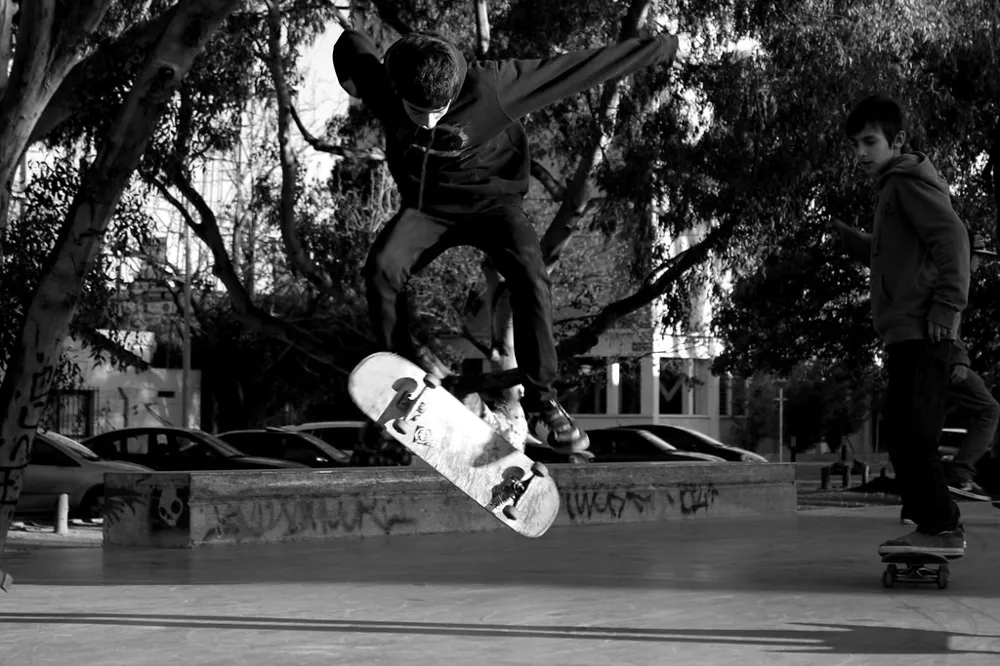
What Is a Tre Flip?
A tre flip, also called a 360 flip or 360 kickflip, is a kickflip combined with a backside 360 shove-it. Your back foot scoops the tail so the board spins a full turn under you, while your front foot flicks so it also flips once along its length. Done well, the board spins and flips at the same time and comes back up griptape-first for you to catch.
Rodney Mullen is credited with inventing the 360 flip, usually dated to 1983. It's a common goal for intermediate skaters rather than a pro-only trick, but a clean, level tre flip takes most people a long time. Our list of the hardest skateboard tricks shows where it sits among the other flip combos.
What to Learn Before the Tre Flip
A tre flip is built from tricks you can learn on their own first. The 360 shove-it is the part most people underestimate, because the spin comes almost entirely from it.
| Prerequisite | What It Gives You | Guide |
|---|---|---|
| Ollie | Pop, timing and a straight jump | How to ollie |
| Backside pop shove-it | The back-foot scoop and spin direction | How to pop shove-it |
| Backside 360 shove-it | A scoop strong enough to turn the board a full 360 | Learn after the pop shove-it |
| Kickflip | The front-foot flick and the catch | How to kickflip |
| Varial kickflip (helpful) | Flick and scoop together at half the spin | Kickflip plus backside shove-it |
Big spins and 180s also help, because they teach you to stay over a board that's moving under you. If you're not sure what comes next for you, check our trick learning order.
Tre Flip Foot Position
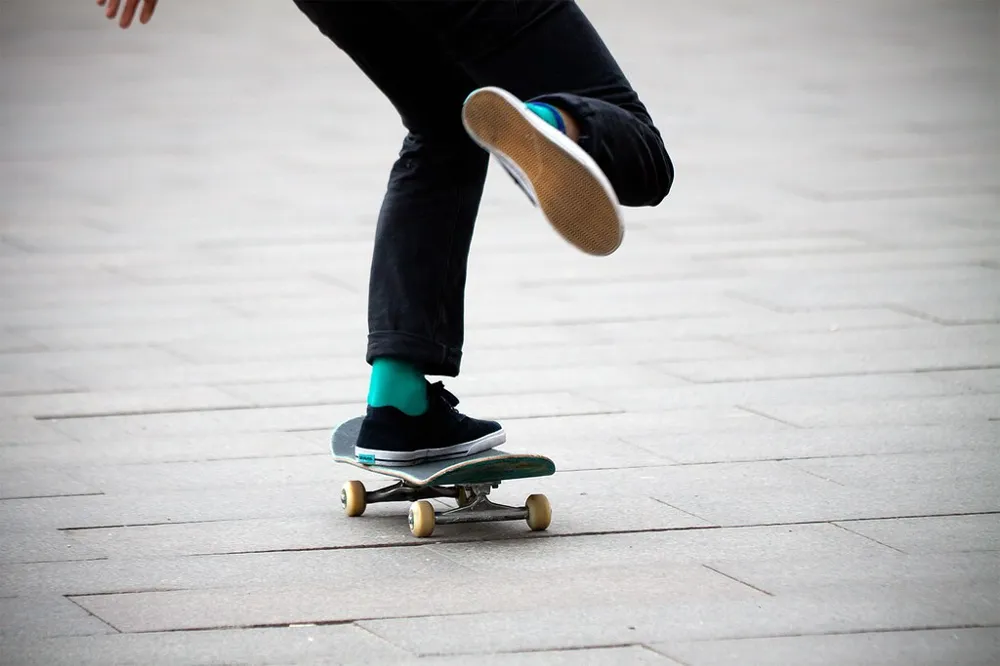
The tre flip stance is a mix of your shove-it back foot and your kickflip front foot. Small changes matter, so expect to experiment by an inch or so at a time.
| Body Part | Position | Why |
|---|---|---|
| Back foot | In the tail pocket on the toe-side edge, toes hanging slightly off, roughly like a pop shove-it | Gives the leverage to scoop the tail around a full 360 |
| Front foot | Angled like a kickflip, a little farther back than your kickflip spot (just behind the front bolts or toward the middle) | Lets the board spin before your flick, and leaves room for a light flick |
| Weight | Centered, on the balls of both feet | Too much front-foot weight slows the spin; leaning back sends the board away |
| Shoulders | Parallel to the board | Opening your shoulders turns your body with the board |
Sources differ on how far back the front foot should go, from just behind the bolts to nearly the middle of the board. Start at your kickflip spot and slide back until the flip and spin finish together.
How to Tre Flip, Step by Step
1. Roll Slowly and Set Your Feet
Start on smooth, flat ground at walking speed or slower. Set your feet in the tre flip position and keep your shoulders square to the board.
2. Crouch
Bend your knees and compress like you would for an ollie. Keep your back fairly straight and your weight centered.
3. Pop and Scoop With the Back Foot
Push the tail down and back, scooping it toward the heel side so the board starts a backside spin. Think of it as a scooping pop, not a straight ollie snap: the tail brushes the ground on its way around. Keep a little forward motion in the scoop so the board travels with you instead of shooting out behind. This is the hardest part of the trick, and it does most of the work.
4. Flick Lightly With the Front Foot
As the tail pops, drag your front foot up and give a light flick, the same family of motion as your kickflip but softer. Because the board is already spinning, your foot comes off the side of the board rather than the corner of the nose. A full kickflip-strength flick usually makes the board over-flip or fly away.
5. Jump Up and Slightly Forward
Jump high enough to give the board time to spin and flip, and a little forward, because the board moves ahead of your takeoff point. Lift both knees so the board has room to rotate. A low jump lets the board hit your feet and stop turning.
6. Watch the Board
Keep your eyes on the board the whole time. The tre flip's timing window is small, and looking away is one of the most common reasons for a missed catch.
7. Catch and Land
When the griptape comes back around and the board has finished its spin, set your feet on it, then land over the bolts with bent knees. The next section covers the catch in more detail.
8. Roll Away
Stay low, keep your shoulders and hips square, and look ahead as you ride out.
Scoop vs Flick: Getting the Balance Right
Most tre flip problems come from the mix between the two feet. The back foot creates the spin, and the front foot only adds the flip.
| Trick | Back Foot | Front Foot | Board Rotation |
|---|---|---|---|
| Kickflip | Ollie pop | Strong flick | One flip |
| Backside 360 shove-it | Strong scoop | Lifts out of the way | 360 spin, no flip |
| Varial kickflip | Medium scoop | Medium flick | 180 spin plus one flip |
| Tre flip | Strong scoop | Light flick | 360 spin plus one flip |
If the board spins but barely flips, add a little flick. If it flips but stops at 180 or 270, scoop harder and lighten the flick. Getting the pop right matters too: a scoop with no pop keeps the board low, and you won't have time to catch it.
Catching and Landing Your Tre Flip
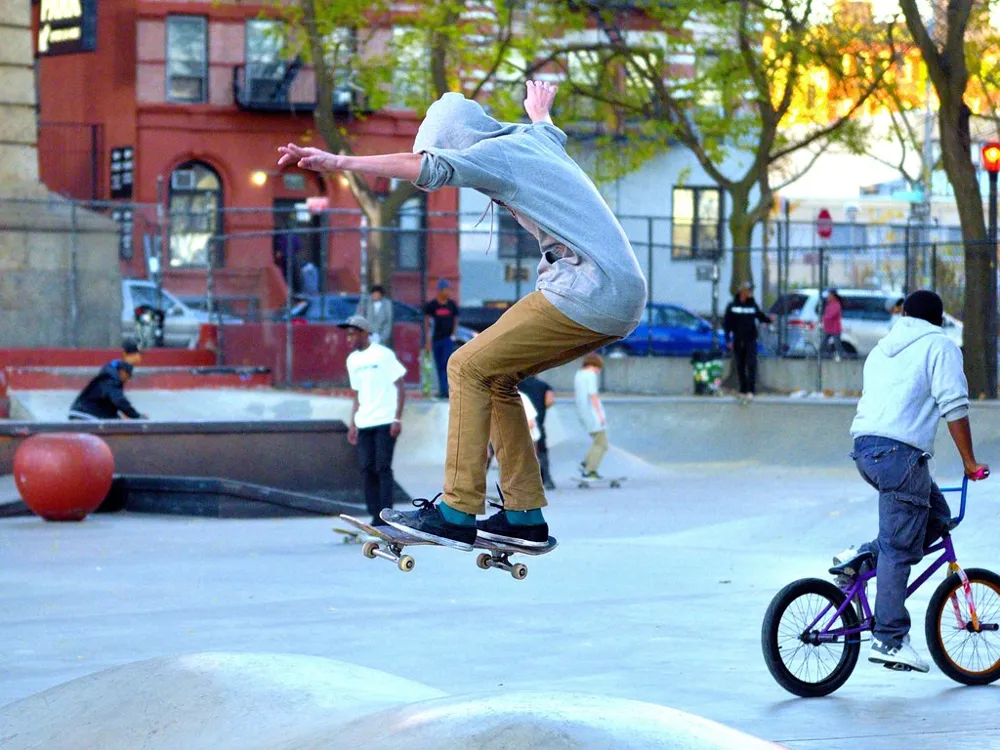
On your first tre flips, the board will often finish its rotation on the ground and you'll simply land on it. Once you pop higher or flip over something, you'll need to catch it in the air to stop it over-rotating.
- Front foot often catches first. After the flick, your front foot is already close to the board, so it naturally meets the griptape. Then bring the back foot down quickly.
- Back-foot-first catches also happen, and some skaters see them as a sign of good control. Either works if the board lands level.
- Catch gently. Touch the top of the board to stop the rotation; don't stomp it down mid-spin.
- Level landing: aim for all four wheels to touch together, feet over the bolts, knees bent, arms out for balance.
- Square up: keep your shoulders and hips facing the same way as the board. Turning with the spin can make the board slide out on landing.
Common Tre Flip Mistakes and Fixes
| Problem | Likely Cause | Fix |
|---|---|---|
| Board only spins 180 or 270 | Weak scoop, or front foot weight slowing the spin | Scoop harder with the toes; keep weight centered |
| Board spins but doesn't flip | Flick too soft or too late | Add a little flick right after the pop |
| Board over-flips or double flips | Kickflip-strength flick | Lighten the flick; let the scoop do the work |
| Board shoots out behind you | Scooping straight back | Keep some forward motion in the scoop |
| Board lands in front of you | Leaning back | Keep weight centered and jump with the board |
| Board hits your feet mid-air | Jumping too low | Jump higher and pull your knees up |
| Body turns with the board | Shoulders opening up | Keep shoulders parallel to the board |
| Landing on the edge or slipping out | Catching before the rotation ends, or landing off the bolts | Watch for the griptape; land over the bolts with bent knees |
| Board stays low | All scoop and no pop | Pop the tail as you scoop |
Tre Flip Drills
- One-foot scoop drill: keep your front foot on the ground and practice scooping 360s with only your back foot. This builds the scoop without the flick.
- 360 shove-it reps: stationary first, then rolling. If you can't land these, the tre flip will be very hard.
- Flick-outs: scoop and flick without trying to land, and watch whether the board spins and flips together. Focus on getting a consistent rotation before worrying about the catch.
- Stationary on grass or carpet: the wheels can't roll, so you can learn the motion with softer falls. Popping is harder on soft ground, so don't stay there long.
- Front-foot catches: land with only your front foot to learn when the rotation ends.
Training aids such as rubber wheel stoppers can hold the board still on hard ground while you learn. See do Skater Trainers work.
A Tre Flip Progression Plan
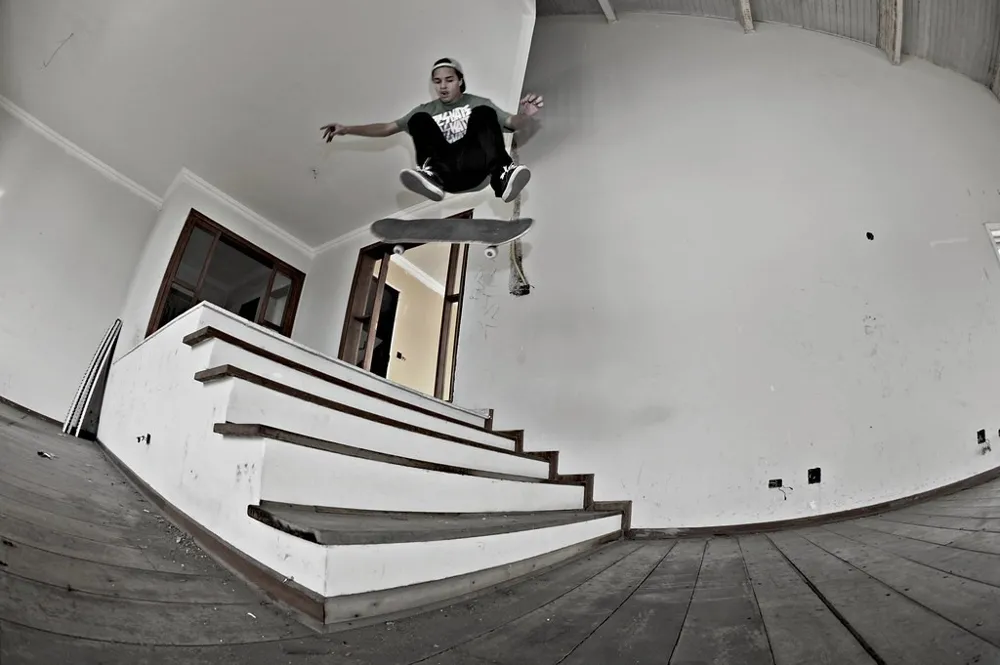
| Stage | Goal | Move On When |
|---|---|---|
| 1. Backside 360 shove-it | Full spin with a level board | You land it rolling most of the time |
| 2. Varial kickflip | Flick and scoop together | The board spins and flips evenly |
| 3. Stationary tre flip flick-outs | Full spin plus one flip | Rotation looks the same most tries |
| 4. Stationary landings | Both feet on the bolts | You commit to both feet without hesitating |
| 5. Rolling at walking speed | Slight roll, flat ground | You ride away from several in a session |
| 6. Higher, caught tre flips | Catch it in the air, level | The catch feels controlled |
| 7. Over a crack, then a curb or gap | Tre flips with some distance | You're consistent on flat ground first |
Don't try tre flips at speed or on slopes until you're landing them on flat ground. Short, regular sessions beat long frustrated ones, and taking breaks when you're tired helps your pop stay sharp. For a wider view of the timeline, read how long it takes to get good at skateboarding.
Board and Shoe Setup for Tre Flips
- Deck: a standard popsicle deck with medium concave is easiest to scoop and flick. Narrower decks spin a little faster; wider ones feel steadier to land on. See skateboard decks and the skateboard size chart.
- Griptape: fresh grip on the toe-side edge of the tail helps your scoop catch; see grip tape.
- Tail edge: on rough ground, a little skate wax on the edge of the tail can help it scrape around.
- Trucks: medium-tight trucks feel steadier on landings; see how tight trucks should be.
- Shoes: the scoop wears the toe of your back shoe and the flick wears your front shoe. Suede uppers last longer than canvas; see skate shoes.
Where to Practice and Staying Safe
- Smooth, flat ground such as an empty court or the flat area of a skatepark. See where to skateboard and follow skatepark etiquette.
- Away from traffic and people; a spinning board can roll a long way.
- Helmet and shin guards: a board that's both spinning and flipping often hits your shins and ankles. See skateboard safety gear.
- Bail cleanly: step off when the rotation is wrong instead of forcing a landing. See how to fall on a skateboard.
Tre Flip Variations and What to Learn Next
| Trick | What It Adds |
|---|---|
| Fakie tre flip | The same trick while rolling backward |
| Nollie tre flip | Popped off the nose; see ollie vs nollie |
| Switch tre flip | Done in your non-natural stance |
| Laser flip | The heelflip version: a heelflip with a frontside 360 shove-it |
| Tre flips over gaps and stairs | More pop, more commitment |
Once tre flips feel consistent on flat ground, try them up a curb or over a small gap, then work on fakie and nollie versions. Browse the full list of skateboard tricks for more ideas, or compare the two basic flips in heelflip vs kickflip.
Frequently Asked Questions
Is a tre flip the same as a 360 flip?
Yes. Tre flip, 360 flip and 360 kickflip are names for the same trick: a kickflip combined with a backside 360 shove-it.
Should I learn the varial kickflip before the tre flip?
It helps. The varial kickflip mixes a kickflip with a 180 backside shove-it, so it teaches the same flick-plus-scoop timing at half the spin. Many skaters learn it first, but it isn't strictly required.
Is the tre flip mostly back foot or front foot?
Mostly back foot. The back-foot scoop creates the 360 spin, while the front foot only adds a light flick for the flip. Most failed tre flips come from a weak or off-angle scoop.
Why does my tre flip land behind me?
You're probably scooping straight back and jumping straight up. The board moves slightly forward during a tre flip, so jump up and a little forward with it, and keep some forward motion in your scoop.
How long does it take to learn a tre flip?
It varies a lot. A clean, level tre flip often takes skaters much longer than a kickflip, sometimes months of regular practice. A consistent 360 shove-it and kickflip shorten the process.
Who invented the tre flip?
Rodney Mullen is credited with inventing the 360 flip, usually dated to 1983, during his freestyle years.
Can I learn a tre flip on carpet or grass?
You can practice the scoop and flick there, because the board won't roll away. Popping is harder on soft surfaces, so move to smooth concrete and slow rolling attempts once the motion feels familiar.