How to Do Frontside and Backside 180 Ollies, Step by Step (2026)
A 180 is an ollie where you and the board turn halfway around together. Learn the frontside and backside versions, the shoulder wind-up that drives the spin and the drills that make it click.
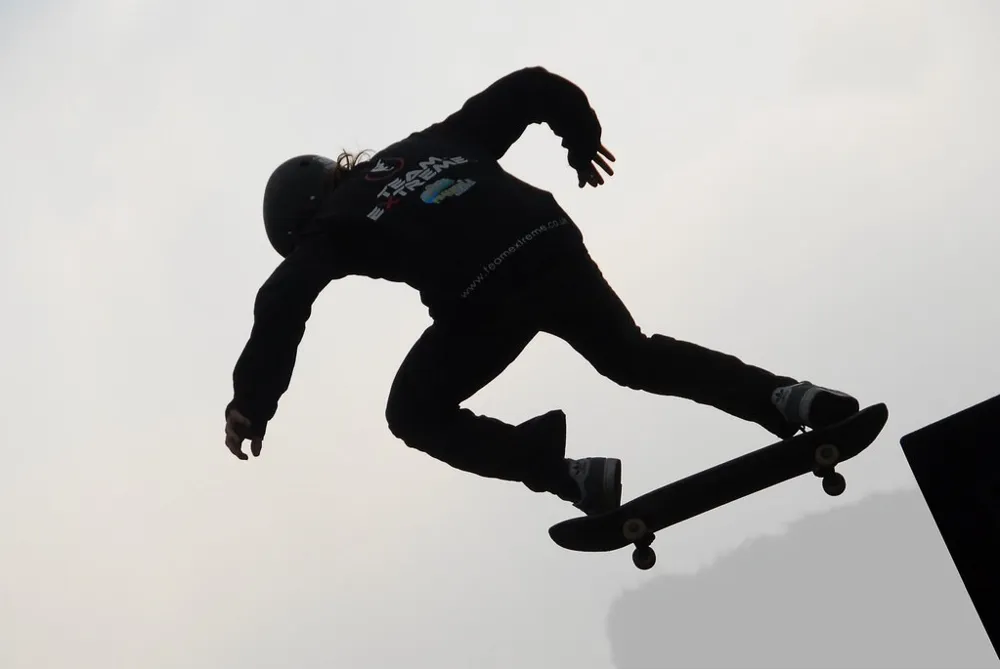
What Is a 180 on a Skateboard?
A 180 (or 180 ollie) is an ollie where your body and the board turn 180 degrees together in the air, so you land rolling the other way around. It comes in two directions: frontside and backside. Both are classic early flat-ground tricks, usually learned after the ollie and the pop shove-it (see our trick learning order).
The 180 is easy to confuse with two other half-turn tricks on our site:
- Pop shove-it: only the board spins. Your shoulders stay square and your body does not turn.
- Revert: the board and body turn 180 degrees with all four wheels on the ground. See how to revert.
- 180 ollie: body and board turn together, in the air, off a pop.
The 180 is worth learning well because the same rotation shows up later in frontside and backside 180 flips, big spins, half cabs and turning tricks on ledges and ramps.
Frontside vs Backside 180: What's the Difference?
The direction is named for which side of your body leads the turn. In a frontside rotation you turn to face the direction you are traveling for the first part of the spin; in a backside rotation your back leads. For a regular skater (left foot forward), frontside is counterclockwise seen from above and backside is clockwise. Goofy skaters are the opposite. Not sure which you are? See goofy vs regular.
| Frontside 180 | Backside 180 | |
|---|---|---|
| What leads the turn | Chest and toes | Back and heels |
| Regular stance, seen from above | Counterclockwise | Clockwise |
| Goofy stance, seen from above | Clockwise | Counterclockwise |
| Where you look mid-spin | Forward, then back over your lead shoulder | Back over your shoulder, then at the landing |
| Wind-up | Shoulders twist back toward the tail first | Shoulders twist toward the nose first |
| Ride-away | Fakie (tail first) | Fakie (tail first) |
Guides disagree on which is easier. Some rate the backside 180 a bit harder; others find the frontside version scarier because the landing is out of view for longer. Most skaters find one direction comes quickly and the other takes longer. Try both and learn whichever feels natural first, then go back for the other.
Before You Start: Skills and Gear
- A solid rolling ollie. A 180 is an ollie with a turn. If your ollie is shaky, work on it first with how to ollie and how to ollie higher.
- Comfort rolling fakie. Every 180 ends with you rolling backward, so practice pushing off and riding tail-first for a few minutes each session.
- Kickturns. Turning the board on its back wheels teaches the same shoulder lead. See how to kickturn.
- Gear: a helmet, flat-soled skate shoes and, if you like, wrist guards. Spinning tricks can send you backward, so learn how to fall safely too.
- Trucks: very tight trucks make the landing harder to steer. Medium tightness works for most people; see how tight trucks should be.
Stance and Foot Position
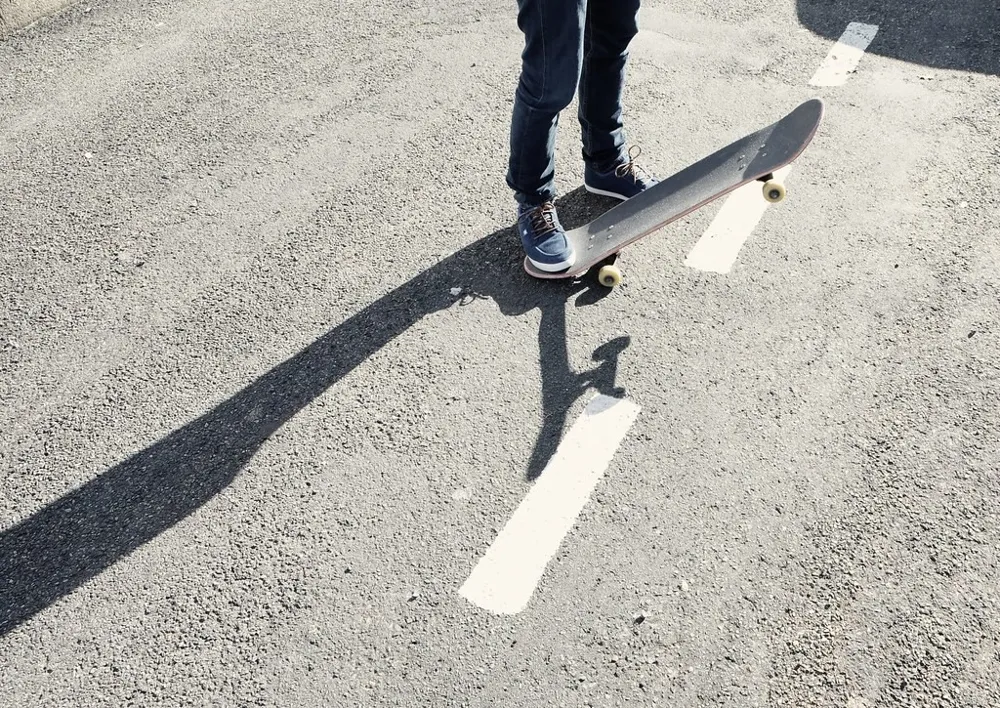
Start from your normal ollie setup, then make small changes depending on the direction:
| Foot | Frontside 180 | Backside 180 |
|---|---|---|
| Front foot | Ollie position, just behind the front bolts | Ollie position, just behind the front bolts |
| Back foot | On the tail, set a little toward the outside (heel-side corner) so it can push the tail around as you pop | In the middle of the tail, because you pop mostly straight down |
| Weight | Centered, on the balls of your feet | Centered, on the balls of your feet, back straight |
Stay on the balls of your feet rather than flat-footed. It gives you a snappier pop and lets your feet turn with your hips. Keep your back fairly straight: hunching forward tends to leave the board behind you as you turn.
The Shoulder Wind-Up: Where the Spin Comes From
Most of the turn in a 180 comes from your shoulders and head, not your feet. Your hips, legs and board follow your upper body. The trick is to store that rotation before you pop:
- As you crouch for the ollie, twist your shoulders a little the opposite way from the spin, like a coiled spring.
- As the tail snaps, unwind: turn your head and shoulders hard in the direction of the 180.
- Keep turning your head toward where you want to land. The rest of the body follows.
If you try to steer the board around with your feet alone, they tend to lose grip on the board and you land with one foot on and one off. A good wind-up gives enough momentum that you don't need to force it.
How to Frontside 180, Step by Step
- Roll at a slow, steady speed. Walking pace is plenty while learning.
- Set your feet. Front foot in ollie position, back foot on the tail slightly toward the heel-side corner.
- Crouch and wind up. Bend your knees and twist your shoulders slightly back toward the tail.
- Pop and turn together. Snap the tail and, in the same moment, unwind your shoulders frontside, opening your chest toward the direction you are traveling. Push the tail around in front of you a little with your back foot as it pops.
- Steer with the front foot. Slide it up toward the nose as in an ollie, guiding the board around with you. Look over your lead shoulder toward where you will land.
- Bring the board under you. Lift your knees so the board can level out and turn beneath your feet.
- Land and finish the turn. Land with bent knees over the bolts. If you are short of a full 180, it is fine at first to land with weight over the front truck and pivot the last part on the ground.
- Ride away fakie.
All of this happens in one motion, just like an ollie. Pop, turn and lift are not separate steps once you have it.
How to Backside 180, Step by Step
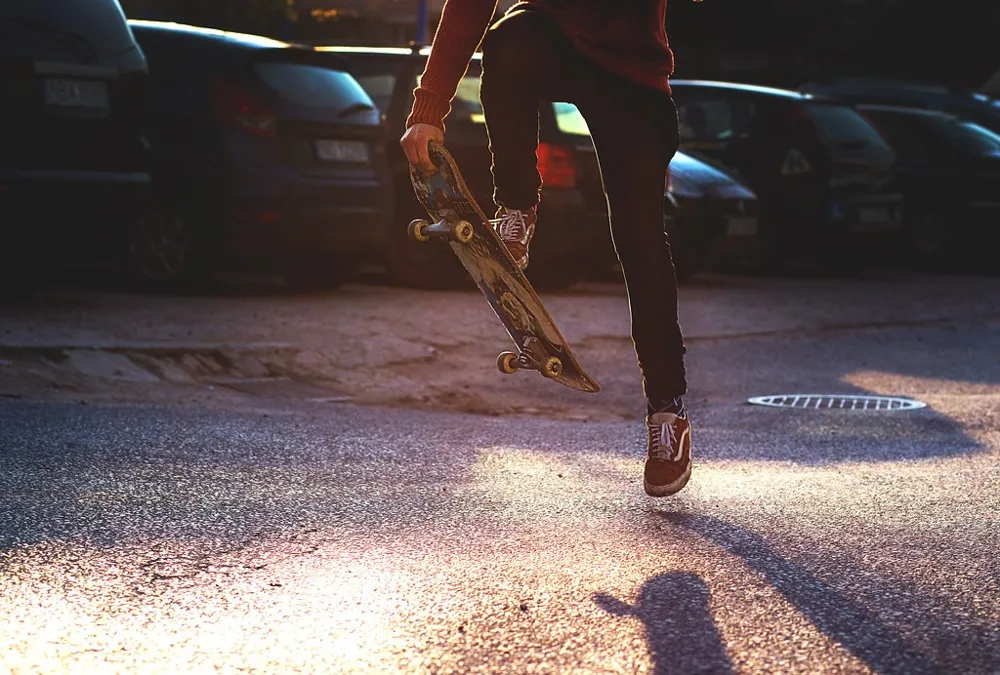
- Roll slowly and set your feet: front foot in ollie position, back foot in the middle of the tail.
- Crouch and wind up. Bend your knees and twist your shoulders slightly toward the nose, keeping your back straight.
- Pop and start the turn. Snap the tail. Just before it hits the ground, turn your head and shoulders backside, so your back starts leading.
- Slide the front foot. Drag it up the grip tape toward the nose as in an ollie, carrying the board around with you.
- Hit 90 degrees at the top. By the peak of the ollie, your head and shoulders should already be turned about a quarter turn. Keep turning to complete the second 90 degrees; your hips and legs will bring the board around.
- Spot the landing. Look over your shoulder at the ground where the board will land.
- Land and ride away fakie with bent knees.
The backside 180 often feels more natural on the turn but less natural on the landing, because you finish rolling backward without having watched the ground for most of the spin.
Landing and Riding Away Fakie (or Switch)
After any 180 ollie, your feet are still on the same ends of the board, but the tail is now in front. Rolling backward in your normal stance is called fakie. Many tutorials say you "ride away switch" instead, because your usual back foot is now leading the way; both phrases describe the same landing. (Strictly, switch means riding with your opposite foot forward.)
- Land on the bolts with both feet over the trucks and your knees bent to absorb the impact.
- Keep your shoulders over the board. Landing with your weight hanging off the heel or toe edge is the main cause of stepping off.
- Be ready to roll backward. If riding fakie still feels strange, your body will step off by instinct. Practice fakie riding until it feels normal.
- Short of 180? Under-rotated landings are common at first. Pivoting the rest of the way on the ground is fine while learning, but aim to land the full rotation in the air over time.
Drills to Build Your 180s
These drills break the 180 into parts. Pick whichever matches where you are getting stuck.
Stationary on Grass or Carpet
Set the board on grass or carpet so it can't roll. Do the full motion: wind up, pop, turn, land. Start with 90-degree turns and work up to a full 180. This builds the shoulder timing without speed and is the safest place to commit to the landing. Then try it standing still on smooth concrete.
Kickturn 180s
Roll slowly, press the tail to lift the front wheels and turn the board 180 degrees on the back wheels in one smooth move. Lead with your head and shoulders, as you will in the ollie version. Do them frontside and backside until you can link several in a row. Our kickturn guide covers the basics.
Quarter-Turn Ollies
Ollie while rolling and turn only 90 degrees, landing sideways and pivoting the rest. Add a little more rotation each attempt until you are landing close to 180.
Ollie Pivot Drill
Ollie, land with your weight on the front truck and pivot the rest of the 180 on the front wheels, then roll away fakie. Gradually pivot less and rotate more in the air until you no longer need the pivot.
Fakie Riding Laps
Push, then ride fakie across the lot or park and back. The more relaxed you are rolling backward, the fewer 180s you will step off.
Common Mistakes and Fixes
| Problem | Likely Cause | Fix |
|---|---|---|
| Board only turns 90 degrees | No wind-up, or turning the shoulders too late | Twist your shoulders the opposite way while crouching; start the turn as the tail snaps |
| Body turns but the board doesn't | Feet leave the board too early | Keep your front foot dragging on the grip tape and lift your knees, not your feet |
| Board lands behind you | Leaning forward or hunching | Keep your back straight and your shoulders over the board |
| Landing with one foot on | Forcing the spin with your feet | Drive the rotation from your shoulders and let the board follow |
| Board shoots away | Kicking the tail out instead of popping it | Pop down first; the turn comes from the body |
| Stepping off after landing | Not comfortable rolling fakie | Practice fakie riding laps and land with bent knees |
| Over-rotating | Too much wind-up for a small ollie | Ease off the shoulder twist and spot the landing earlier |
| Low, sketchy 180s | Weak ollie underneath | Go back to plain ollies, then add the turn |
Variations: Half Cab, Nollie 180 and Ramp 180s
Once your 180s land clean, the same rotation opens up a lot of tricks:
| Variation | What It Is | Tip |
|---|---|---|
| Half cab | A fakie backside 180 ollie; the half version of the caballerial (a fakie backside 360) | Get backside 180s and fakie ollies solid first |
| Fakie frontside 180 | A frontside 180 ollie from fakie | Feels like the half cab in the other direction |
| Nollie backside / frontside 180 | A 180 popped off the nose with your front foot | Learn the plain nollie first; see ollie vs nollie |
| Switch 180s | A 180 from your opposite stance | Harder; learn switch ollies first |
| 180 off a curb or up a curb | A 180 onto or off a small obstacle | Start with off-curb 180s, which give you more air time |
| Frontside / backside 180 flips | A kickflip or heelflip combined with a 180 | Learn the kickflip and both 180s first |
180s on Ramps
On a mini ramp or quarter pipe, the 180 shows up in a different form. Riding up the wall and turning around at the top is a kickturn 180, and popping off the tail while you turn becomes a frontside or backside ollie on the transition. Ramp skating also means a lot of fakie riding: a rock to fakie, for example, rolls you back down tail-first, which is good practice for riding away from flat-ground 180s. See mini ramp tricks for beginners for the order to learn them.
Where to Practice and Staying Safe
- Smooth, flat ground is best: an empty basketball court, a smooth parking area or the flat section of a skatepark. Rough ground can stop a wheel as you land a rotation. See where to skateboard.
- Clear space behind you. You land rolling backward, so check behind before each try.
- Keep speed low until you are landing most attempts.
- Short sessions help. Practice for a while, take a break and come back; tired legs lead to sketchy landings.
What to Learn Next
With frontside and backside 180s down, try them off a curb, then from fakie (including the half cab) and nollie. On the flip-trick side, the kickflip and heelflip lead to 180 flips, and frontside and backside big spins combine a board spin with the same body turn. Browse the full skateboard tricks list or the learning order to plan what comes next.
Frequently Asked Questions
Is a frontside or backside 180 easier?
It depends on the skater. Some guides call the backside 180 slightly harder, but many skaters find one direction feels natural and the other takes longer. Try both and learn the easier one first.
Do you land a 180 fakie or switch?
With your feet in their normal spots, you land rolling tail-first, which is fakie. Many tutorials say you ride away switch because your usual back foot is now leading, so both terms are common.
Do I need to ollie before learning a 180?
Yes. A frontside or backside 180 is an ollie with a half turn, so a steady rolling ollie comes first. Kickturn 180s and stationary drills can start earlier.
Why does my board not turn all the way?
Usually the shoulders are not wound up enough before the pop, or they start turning too late. Wind up while you crouch and start the turn as the tail snaps.
What is a half cab?
A half cab is a 180 ollie done from fakie, in the backside direction. It is the half version of the caballerial, which is a fakie backside 360 ollie.
Can you do a 180 without ollieing?
Yes. A kickturn 180 spins the board on its back wheels, and a revert spins it with all four wheels on the ground. Both build the same shoulder rotation.