How to Kickflip on a Skateboard, Step by Step (2026)
The kickflip is the classic first flip trick. Here's how to set your feet, flick, catch and land it, and how to fix the most common problems.
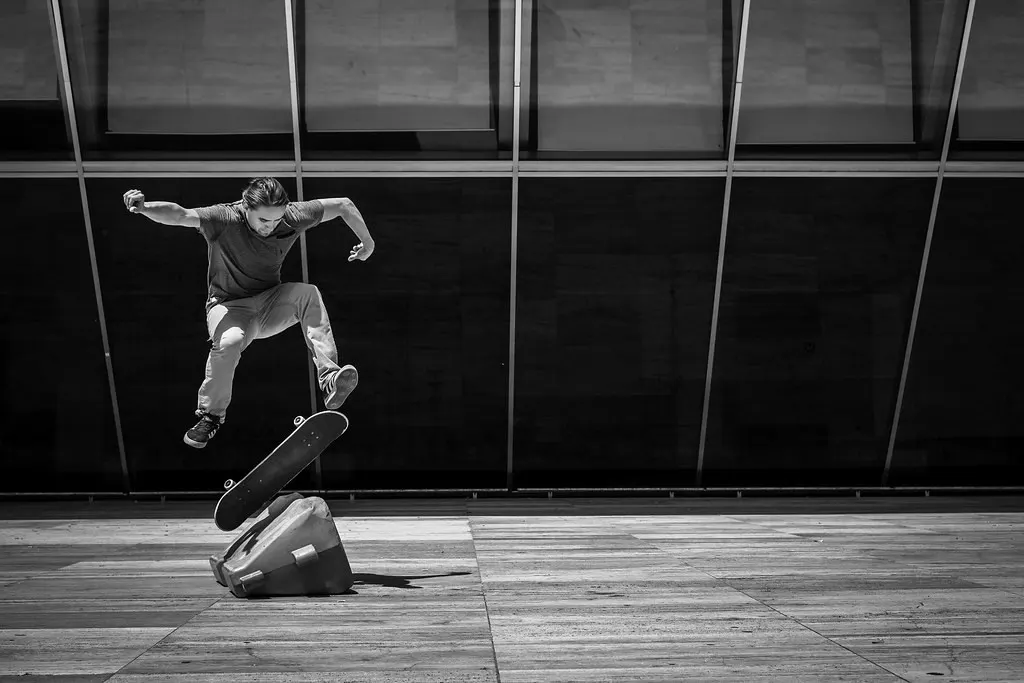
What Is a Kickflip?
A kickflip is an ollie where you flick the board with your front foot so it spins along its length, then catch it with your feet and land. It's usually the first flip trick skaters learn and the foundation for many others. You'll need a solid ollie first; if yours isn't consistent yet, start with how to ollie.
Step 1: Foot Position
Put your back foot on the tail like an ollie, with the ball of your foot near the middle or slightly toward the heel edge. Place your front foot just behind the front bolts, angled with your toes pointing slightly toward the nose and your heel hanging a little off the heel edge. This angle lets your foot slide up and off the corner of the board.
| Foot | Position |
|---|---|
| Back foot | On the tail, like an ollie |
| Front foot | Just behind the front bolts, angled toward the nose |
| Shoulders | Parallel to the board, not turning |
Step 2: Crouch and Pop
Crouch with your weight centered, then pop the tail down sharply as you would for an ollie.
Step 3: Slide and Flick
As the board pops up, slide your front foot up toward the nose, then flick off the heel-side corner of the nose with the side of your toes. Kick out and slightly forward. The flick makes the board spin.
Step 4: Get Your Feet Out of the Way
After the flick and the pop, lift both feet up and out so the board has room to rotate. Keep your shoulders square and stay centered over the board.
Step 5: Catch the Board
Watch the board flip. When you see the griptape coming back up, bring your feet down onto it. Many skaters catch with the back foot first, then the front.
Step 6: Land and Roll Away
Land with your feet over the bolts and your knees bent to absorb the impact. Ride away smoothly.
Common Problems and Fixes
| Problem | Likely Cause | Fix |
|---|---|---|
| Board doesn't flip fully | Weak or late flick | Flick harder off the corner of the nose |
| Board flips too far or double flips | Flick too strong | Flick lighter and catch earlier |
| Board shoots away to the side | Kicking too far out | Flick forward as well as out; stay over the board |
| Board turns in the air | Shoulders rotating | Keep shoulders parallel to the board |
| Front foot lands on the board's edge | Feet not lifted high enough | Lift your knees higher after the flick |
| Afraid to commit | Fear of landing on the board | Practice stationary; wear pads; commit to both feet |
Practice Progression
- Practice the flick standing still on grass or carpet, holding a rail if needed.
- Try stationary kickflips on smooth concrete, landing with one foot to start.
- Commit to landing with both feet.
- Try rolling kickflips at walking speed.
- Work on catching cleanly and landing on the bolts.
Gear Tips
Kickflips wear through shoes quickly where you flick. Durable suede skate shoes last longer; see skate shoes. Fresh, grippy griptape helps your flick catch; see how to clean griptape. A deck around 8 inches is a good size for flip tricks; see skateboard decks.
Stay Safe
- Wear a helmet and consider shin guards; kickflips often hit your shins.
- Practice on smooth ground away from traffic.
- Learn to bail by stepping off the board when a trick goes wrong.
What to Learn Next
After the kickflip, try the heelflip, varial flip and kickflips over small obstacles. Compare heelflip vs kickflip and see our list of skateboard tricks for beginners.
Frequently Asked Questions
Do I need to ollie before learning a kickflip?
Yes. A kickflip is an ollie with a flick, so you need a consistent ollie first. If your ollie is shaky, focus on it before trying kickflips.
Why does my board not flip all the way?
Your flick may be too weak or too early. Flick off the corner of the nose with the side of your toes, kicking out and slightly forward.
Why does my board fly away from me?
You're probably kicking too far out to the side or leaning back. Keep your shoulders over the board and flick forward as well as out.
Should I learn kickflips stationary or rolling?
Many skaters start stationary on grass or carpet to learn the flick, then move to rolling slowly. Rolling kickflips often feel easier because the board stays under you.
How long does it take to learn a kickflip?
It varies. Some skaters land one within days of learning the ollie; for others it takes weeks or months. Consistent practice and patience matter most.