How to Heelflip on a Skateboard, Step by Step (2026)
A heelflip is an ollie with a forward-and-out kick of your front heel. Here's where to put your feet, how to kick, catch and land, and how to fix the usual problems.
What Is a Heelflip?
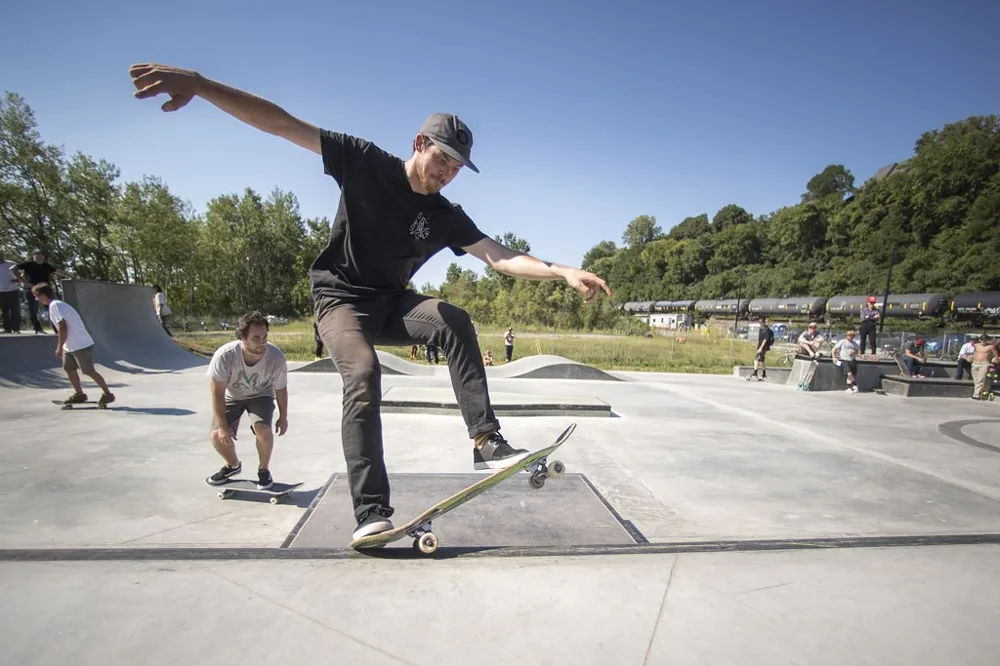
A heelflip is an ollie where your front foot kicks forward and out, and your heel drags off the toe-side edge of the nose. That flicks the board one full rotation along its length before you catch it and land. It's the mirror image of the kickflip, which is flicked with the side of the toes off the heel-side edge and spins the opposite way. Rodney Mullen is widely credited with inventing the heelflip, usually dated to 1982.
For a side-by-side look at the two tricks, see heelflip vs kickflip. This page is the full how-to.
What to Learn Before Heelflips
Every flip trick sits on top of the ollie, so get that consistent first. These skills make heelflips much easier to learn:
- A steady rolling ollie with your shoulders level and both feet leaving the board. Ollie height helps; see how to ollie higher.
- Pop shove-its and 180s for board control and a feel for the board moving under you. See how to pop shove-it.
- Bailing safely, because you'll step off a lot of half-flipped boards. See how to fall on a skateboard.
You can try heelflips earlier, but they tend to take longer without these basics. Where they fit in the bigger picture is covered in our trick learning order.
Heelflip Foot Position
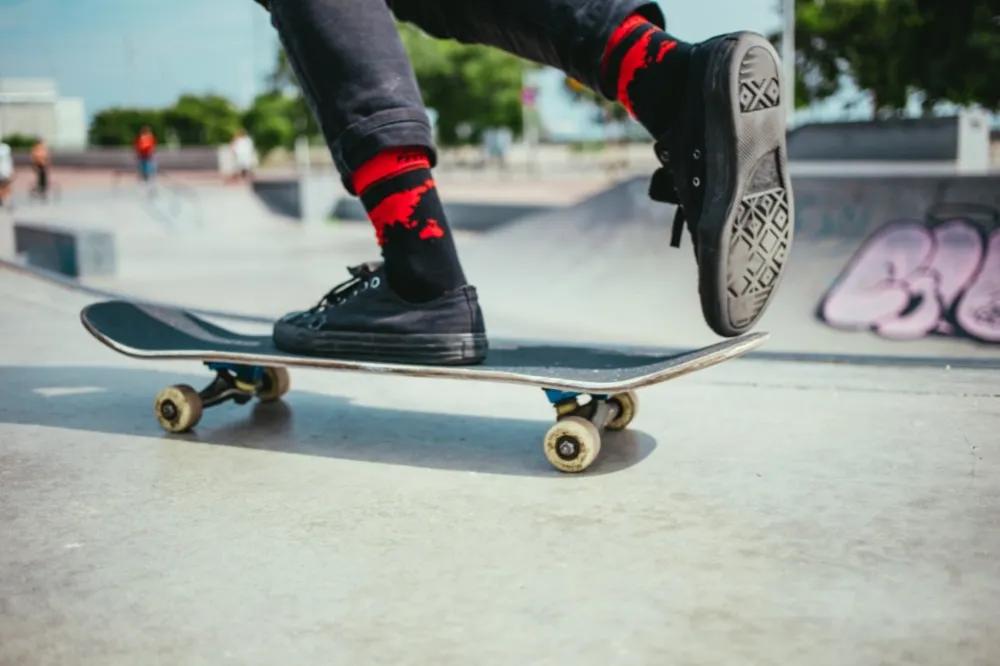
Foot position is where most heelflips succeed or fail. Small changes of an inch or so make a big difference, so experiment.
| Body Part | Position | Why |
|---|---|---|
| Back foot | In the tail pocket, on the ball of the foot, often a little toward the heel side, heel turned slightly in | Gives a clean, centered pop |
| Front foot | Just behind or near the front bolts, fairly straight across the board | Leaves room to slide up before the kick |
| Front toes | Hanging a little off the toe-side edge | Puts your heel near the toe-side edge, ready to catch it on the way out |
| Weight | On the balls of both feet | Keeps you ready to pop and jump |
| Back and shoulders | Back straight, chest up, shoulders parallel to the board | Stops you jumping forward or turning |
Moving your front foot a little closer to your back foot gives a faster flick and more room to slide up. Moving it farther forward gives a slower, lazier flip.
How to Heelflip, Step by Step
1. Roll Slowly and Set Your Feet
Start at walking speed with your feet in the heelflip position. Keep your back straight and your chest facing out, not down at the griptape.
2. Crouch and Pop
Bend your knees and pop the tail hard, like an ollie. Jump straight up from the balls of your feet.
3. Slide Up and Kick Out
As the nose rises, slide your front foot up toward the nose, then kick it forward and out toward the toe side at a slight diagonal. Your heel drags off the toe-side edge of the nose last. That heel contact is what makes the board flip.
4. Lift Both Feet
After the kick, pull your knees up toward your chest so the board has room to rotate. Your back foot also needs to come up and out of the way.
5. Watch and Catch
Keep your eyes on the board. When the griptape comes back around, stop the flip with your feet. Many skaters catch with the back foot first, then set the front foot down. If the flip is slow, wait for it.
6. Land on the Bolts and Roll Away
Land with your feet over the truck bolts and your knees bent to absorb the impact. Keep your weight centered and ride away.
Heelflip Practice Drills
- Stationary on grass or carpet: the wheels can't roll, so you can focus on the kick. Hold a rail or a friend's shoulder if needed.
- Pop-and-drag drill: pop the board so it stands on its tail, then drag your front foot up and off the toe-side edge with your heel to feel the motion.
- Front-foot landings: heelflip and land with only your front foot. This teaches the rotation without worrying about the catch.
- Stationary on smooth concrete: commit to landing with both feet.
- Rolling at walking speed: the board tends to stay under you better when rolling, so move on to this as soon as you can.
Training aids such as rubber wheel stoppers can hold the board still on hard ground while you learn the motion. See do Skater Trainers work.
Common Heelflip Mistakes and Fixes
| Problem | Likely Cause | Fix |
|---|---|---|
| Board flips only halfway | Weak kick, or heel leaves the board too early | Kick forward and out, letting the heel drag off the edge |
| Board shoots out in front | Kicking straight forward | Kick out to the side as well as forward |
| Board shoots out sideways | Kicking straight out only | Add more forward motion to the kick |
| Board lands behind you | Hunching forward and jumping ahead | Back straight, chest up, jump straight up |
| Board turns in the air | Shoulders or hips rotating | Keep shoulders parallel to the board |
| Landing on the edge (primo) | Catching before the flip finishes | Wait to see the griptape before stomping down |
| Not enough height | Weak pop or feet not lifted | Pop harder and pull your knees up |
Board and Shoe Setup for Heelflips
- Deck: a standard popsicle deck with medium concave is easiest to flip. Cruisers with little concave and soft wheels make flip tricks harder. See skateboard decks and the skateboard size chart.
- Griptape: fresh grip near the nose helps your foot slide up and catch the edge; see grip tape.
- Trucks: medium-tight trucks feel steadier on landings; see how tight trucks should be.
- Shoes: heelflips wear the heel and the inside edge of your front shoe. Suede uppers last longer than canvas. See skate shoes and make skate shoes last longer.
Vans Old Skool
A suede and canvas classic with Vans' waffle-tread vulcanized sole for grip. Vans also sells a skate-specific version with extra reinforcement; check which version a listing is for.
Check Price on AmazonWhere to Practice and Staying Safe
- Smooth, flat ground such as an empty basketball court, a quiet parking area or the flat part of a skatepark. See where to skateboard.
- Stay away from traffic and crowded paths; a flipped board can roll a long way.
- Wear a helmet, and consider shin guards, because a spinning board often hits your shins. See skateboard safety gear.
- Take breaks. Tired legs lead to sloppy pops and bad landings.
What to Learn After the Heelflip
| Trick | What It Adds |
|---|---|
| Fakie heelflip | The same trick while rolling backward |
| Varial heelflip | A heelflip combined with a frontside shove-it |
| Inward heelflip | A heelflip combined with a backside shove-it |
| Frontside or backside heelflip | A heelflip with a 180 body rotation |
| Laser flip | A heelflip combined with a frontside 360 shove-it |
Once heelflips feel consistent, try them up curbs, over small gaps and down a single step. Browse the full list of skateboard tricks and learn your first grind with how to grind on a skateboard.
Frequently Asked Questions
Is a heelflip easier than a kickflip?
It depends on the skater. Many people learn the kickflip first, but some find the heelflip's straight forward-and-out kick more natural. Try both and practice the one that feels closer.
Why does my heelflip only flip halfway?
Your heel is probably leaving the board too early or kicking too softly. Let your heel drag off the toe-side edge of the nose, and kick forward as well as out.
Why does my board land behind me on heelflips?
You're likely hunching forward and jumping ahead of the board. Keep your back straight and your chest up, and jump straight up over the board.
Do I need to ollie before I heelflip?
Yes. A heelflip is an ollie plus a heel kick, so you need a consistent ollie first. Shove-its and 180s also build the board control that helps.
Where should my toes be for a heelflip?
Your front toes hang a little off the toe-side edge, with the foot just behind or near the front bolts. Your heel should stay on the board so it can catch the edge as you kick out.
Who invented the heelflip?
Rodney Mullen is widely credited with inventing the heelflip, with 1982 the date most often given.