How to Grind on a Skateboard: 50-50, 5-0 and Wax (2026)
Your first grind is a 50-50 on a low ledge or curb. Here's how to pick the spot, approach, ollie up, lock in and ride away, then move on to the 5-0, rails and coping.
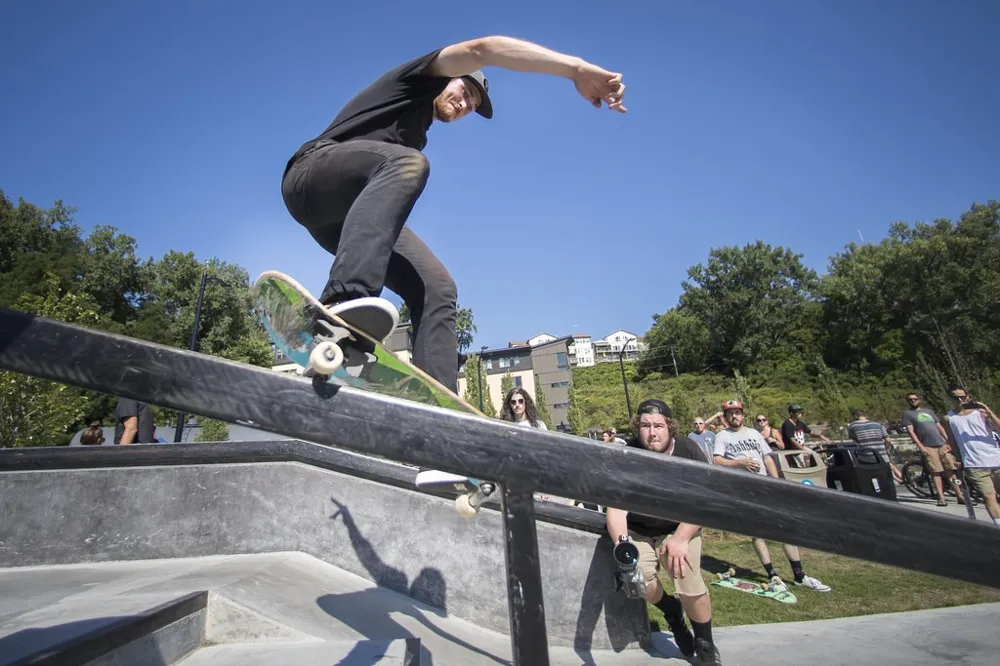
What Is a Grind?
A grind is when your trucks scrape along an edge such as a curb, ledge, rail or ramp coping. A slide uses the wood of the deck instead. Almost everyone's first grind is the 50-50, where both trucks grind the edge at once, so that's the focus here. For the names and differences of every grind and slide, see types of skateboard grinds.
Before Your First Grind
You'll need these basics first:
- A consistent rolling ollie that clears a few inches. See how to ollie and how to ollie higher.
- Ollies up onto a curb while rolling, landing with both trucks on top.
- Comfort at moderate speed, because grinds need momentum to keep moving.
- Some balance on two wheels. A manual helps later with the 5-0.
- Knowing how to bail. See how to fall on a skateboard.
Pick the Right Spot
| Obstacle | Good For | Notes |
|---|---|---|
| Low curb or parking block | First 50-50s | Low and easy to step off; often rough, so wax helps |
| Skatepark ledge or manual pad | 50-50s and 5-0s | Smooth, predictable edges, usually with metal angle iron |
| Low flat bar | 50-50s once ledges feel easy | Narrow, so locking in takes more precision |
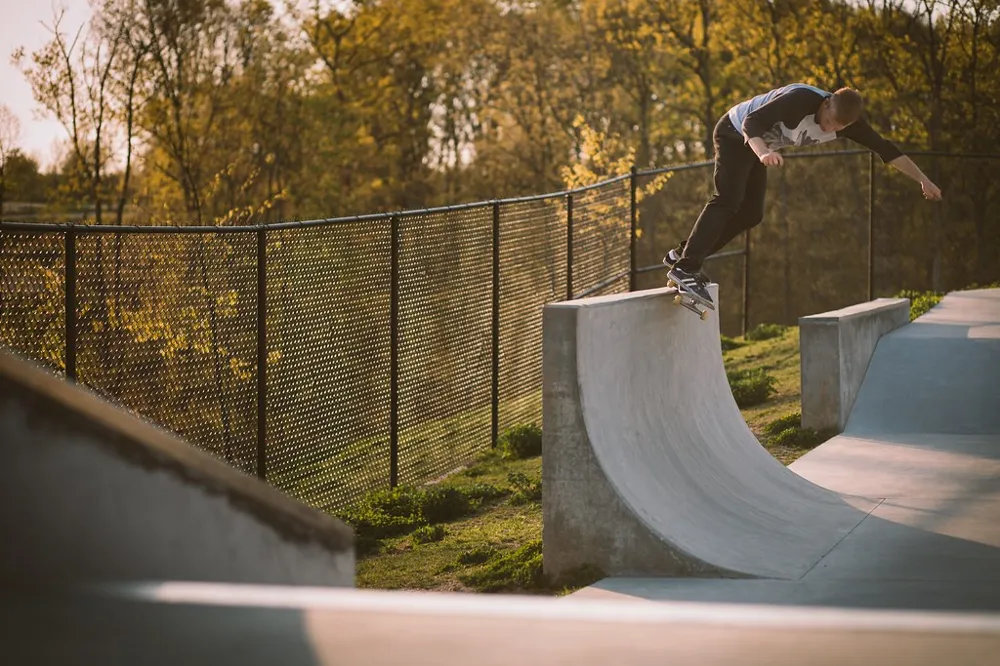
| Mini ramp or quarterpipe coping | Transition 50-50s and 5-0s | Needs comfort with kickturns and stalls first |
Choose something low, long enough to grind for a moment, with a smooth run-up and a clear landing. Only skate where skating is allowed and check edges for chips or cracks, which can stop your trucks dead. If you want a practice spot at home, see skateboard ramps and rails or how to make a skateboard rail.
How to 50-50 Grind a Ledge, Step by Step
1. Set Your Feet
Use your normal ollie stance: back foot on the tail, front foot around the middle of the board or just behind the front bolts.
2. Approach at a Slight Angle
Roll toward the ledge almost parallel to it, at a slight angle of approach, with a little more speed than feels comfortable. Too slow and the grind stalls; too steep an angle and you'll cross over the ledge.
3. Ollie Up
When your front truck is close to the ledge, ollie high enough for both trucks to clear the edge. Bend your knees and look at the spot where you want your trucks to land.
4. Lock In
Land with both trucks on the edge at the same time, so the board sits roughly half on and half off the obstacle. Land softly; slamming down too hard can make the trucks stick.
5. Balance and Grind
Keep your weight centered over the board, your knees bent and your shoulders lined up with the ledge. Don't lean away from the ledge; that's the most common way to slip off.
6. Exit and Ride Away
At the end, put slight pressure on the tail so the nose lifts as the front truck leaves the edge. This stops the nose from dropping and pitching you forward. Land with knees bent and roll away. Once you're comfortable, you can also turn out or ollie off before the end.
Frontside vs Backside 50-50
- Frontside: the ledge is in front of your toes as you approach, so you can see it. Many skaters learn this one first.
- Backside: the ledge is behind your heels. You'll need to look over your shoulder to line up, but some skaters find the balance more natural.
The steps are the same for both. Pick whichever feels steadier, then learn the other side. For what "frontside" and "backside" mean in general, see skateboard terms.
How to 5-0 Grind
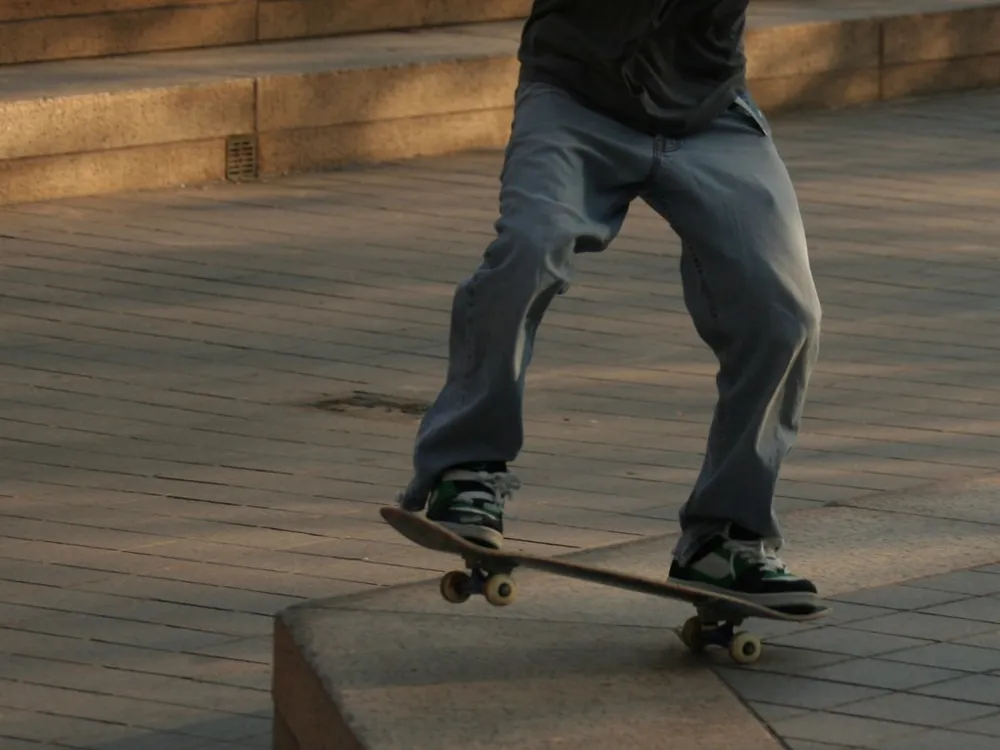
A 5-0 is a grind on the back truck only, with the nose held up, a bit like a manual on top of the ledge.
- Approach almost parallel to the ledge with your feet in ollie position.
- Ollie and aim your back truck at the edge.
- Land smoothly with your weight on the back foot and the nose up.
- Hold the balance point. Lean back too far and the tail scrapes or you slip out; too little and the front truck drops into a 50-50.
- Your weight is already on the tail at the end, so ride off and set the nose down.
Many skaters find the frontside 5-0 easier to learn than the backside version because the ledge is in front of them.
Grinding Rails and Coping
Flat Bars and Rails
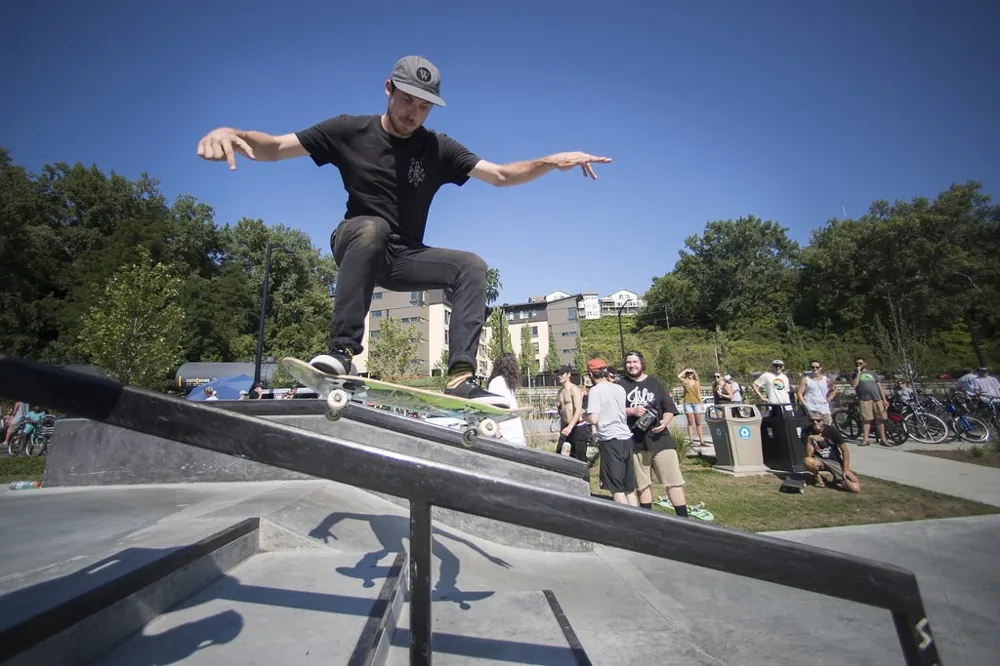
Rails are much narrower than ledges, so your trucks must land right on top. Start on a low flat bar, ideally one you can practice hopping onto from a standstill first. Some skaters set a portable rail over grass while learning so falls on either side land softer. Skaters usually lock in either cross-locked, with the rail centered under both trucks between the wheels, or with the rail on the heel side of the trucks. Try both and keep what feels most stable.
Mini Ramp and Quarterpipe Coping
On transition, a 50-50 builds on the axle stall: you ride up at an angle with more speed than a stall, lift onto the coping with both trucks, grind along it and then turn back in. Learn dropping in and kickturns first. Many skaters learn the frontside 5-0 on coping before the frontside 50-50.
Handrails and down rails are advanced, with serious consequences if things go wrong. Build up slowly and always wear a helmet.
Using Skate Wax
Wax makes rough edges slick so your trucks slide instead of catching. Rub a thin layer along the top edge of a curb or ledge, try a grind, then add more only if it still sticks. Too much wax makes an edge slippery and unpredictable. Skatepark ledges and metal coping often don't need any. Ask before waxing anything that isn't a skate spot, because wax can damage property and get spots skate-stopped. You can buy wax or make your own skate wax.
Common Grinding Mistakes and Fixes
| Problem | Likely Cause | Fix |
|---|---|---|
| Trucks stick and you stop dead | Too slow, rough edge or landing too hard | Add speed, wax lightly, land softly |
| Front truck clips the edge | Ollie too low or too early | Ollie higher and later, closer to the ledge |
| Slipping off the back of the ledge | Leaning away or landing on the toe side of the trucks | Keep weight centered over the edge |
| Crossing over the ledge | Approach angle too steep | Come in more parallel |
| Nosediving at the end | No tail pressure on exit | Press the tail slightly as the front truck leaves |
| Hesitating before the ollie | Obstacle too high or fear of falling | Go lower and practice ollying up from a slow roll |
Practice Progression
- Ollie up onto a curb and roll along the top of a wide, low ledge or manual pad.
- Ollie onto a low curb and try a short 50-50, stepping off if you need to.
- Grind the whole curb and roll away cleanly.
- Repeat on a smooth skatepark ledge at slightly more speed.
- Learn the other side (frontside or backside).
- Try 5-0s on the same ledge.
- Move to a low flat bar, then to coping on a mini ramp.
Gear, Safety and Skatepark Rules
- Helmet: wear one, especially on rails. See skateboard helmets.
- Pads: knee pads and wrist guards help with the slams that come with learning. See knee pads and wrist guards.
- Trucks: grinding wears hangers and axles; that's normal. See skateboard trucks and high vs low trucks.
- Shoes: flat, grippy soles help you feel the board; see skate shoes.
Skatepark gear rules: some places require safety gear in public skateparks. In California, for example, Health and Safety Code section 115800 says a skatepark operator must not let anyone skate unless they wear a helmet, elbow pads and knee pads. Other states and cities set their own rules, so check the signs at your park and your local regulations. Last checked November 2026; this is not legal advice.
What to Learn Next
After the 50-50 and 5-0, common next steps are the boardslide, the nosegrind and the crooked grind, then smith and feeble grinds. See how to boardslide, the full guide to grinds and slides, our trick learning order and, for flat ground, how to heelflip.
Frequently Asked Questions
What is the easiest grind to learn?
The 50-50, where both trucks grind the edge. Most skaters learn it on a low curb or ledge before trying the 5-0 or rails.
How high do I need to ollie to grind?
Just high enough for both trucks to clear the edge. Start on obstacles a few inches tall so a small ollie is enough.
Is frontside or backside easier for a first grind?
It varies. Many beginners start frontside on a ledge because the ledge is in front of their toes where they can see it. Try both and stick with the one that feels steadier.
Do I need wax to grind?
Not always. Skatepark ledges and metal rails are often slick already, but a little wax helps on rough curbs and concrete. Too much makes an edge unpredictable.
Why do my trucks stick when I grind?
Usually the edge is rough or unwaxed, you are going too slowly, or you are landing with your weight too far forward. Add speed, wax lightly and keep your weight centered.
Does grinding damage my trucks?
Grinding wears the hangers and axles over time, which is normal. Trucks are built to take it; replace them if the axle threads or kingpin get damaged.