Best Skateboard Decks: Picks for Street, Park and Budget (2026)
Six decks worth considering, from reinforced long-lasting boards to budget blanks, and how to pick the right width and concave.
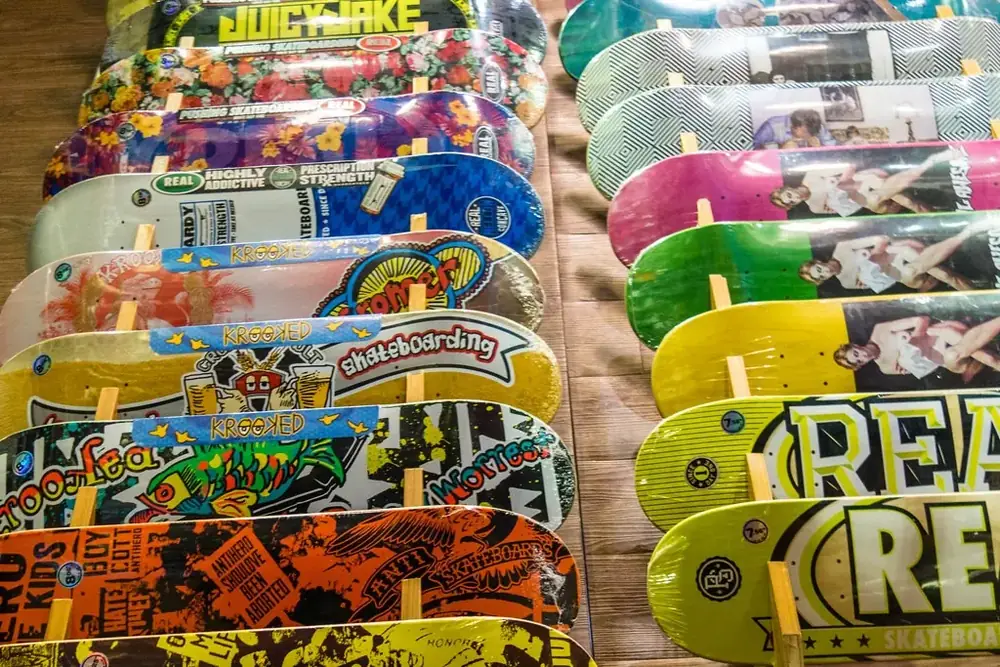
What Makes a Good Skateboard Deck?
Most decks are made from 7 layers of maple pressed into shape with glue. Good decks stay stiff, keep their pop and hold their shape. Cheaper decks may use lower-grade wood or less consistent pressing, which makes them feel soft sooner. Some brands add carbon fiber, fiberglass or other reinforcement to extend a deck's life.
The best deck for you depends on how you skate. Below are six options, then a guide to choosing width, concave and wheelbase.
Real Skateboards Deck
Best all-round traditional maple deck
- Classic 7-ply maple feel
- Popsicle and oval shapes
- Wide range of widths
Powell Peralta Flight Deck
Best for longevity
- Composite construction with fiberglass
- Designed to keep its pop longer
- Thinner and lighter than standard maple
CCS Blank Skateboard Deck
Best budget deck
- Plain, low-cost blank
- 7-ply maple
- Many widths to choose from
Skateboard Decks Compared
| Deck | Construction | Best For |
|---|---|---|
| Real Skateboards | Traditional 7-ply maple | All-round street and park |
| Powell Peralta Flight | Composite with fiberglass | Skaters who wear decks out fast |
| CCS Blank | 7-ply maple blank | Budget setups |
| Santa Cruz VX | Reinforced composite | Durability with a lighter feel |
| Almost Impact Light | Reinforced maple | Longer-lasting pop at a moderate price |
| Baker Brand Logo | Traditional maple | Street skating |
The Best Skateboard Decks
1. Real Skateboards Deck
Real is a long-running skater-owned brand known for consistent maple decks. It offers both standard popsicle shapes and oval shapes in a wide range of widths, which makes it easy to find a deck for street, park or transition. If you want a traditional maple deck from an established brand, it's a dependable choice.
Check Price on Amazon2. Powell Peralta Flight Deck
Powell Peralta's Flight decks use a composite construction that includes fiberglass layers rather than all-maple plies. The brand designs them to be thinner and lighter than a standard deck while keeping their pop longer. They cost more up front, which makes the most sense for skaters who go through regular decks quickly.
Check Price on Amazon3. CCS Blank Skateboard Deck
A blank deck skips the graphic and the pro-brand price but keeps a standard 7-ply maple build. CCS sells blanks in many widths, which makes them a practical way to try a new size without spending much, or to keep a spare deck on hand.
Check Price on Amazon4. Santa Cruz VX Deck
Santa Cruz's VX decks use a reinforced composite construction instead of plain maple. Like other reinforced decks, they're aimed at skaters who want a board that holds up and keeps its pop longer, with a lighter feel than a standard deck.
Check Price on Amazon5. Almost Impact Light Deck
Almost's Impact decks add reinforcement to a maple deck, and the Impact Light version is designed to keep weight down. That sits between a plain maple deck and a full composite deck: a bit more durability without the top-end price. Check the listing for the current construction details.
Check Price on Amazon6. Baker Brand Logo Deck
Baker is a street-focused brand with a loyal following, and the Brand Logo deck is one of its best-known boards. Its traditional maple decks come in popular street widths with a familiar concave. Choose it if you want a classic maple deck from a well-known street brand.
Check Price on AmazonHow to Choose a Skateboard Deck
Width Comes First
Width is the most important measurement. Pick it based on your shoe size and the kind of skating you do.
| Skating Style | Common Width Range | Why |
|---|---|---|
| Technical street and flatground | About 7.75"–8.25" | Lighter and quicker to flip |
| All-round street and park | About 8.0"–8.5" | Balance of flip and stability |
| Mini ramp and bowl | About 8.5"–9.0" | Stable landings and more room for your feet |
| Big feet (US 11+) | About 8.25"–8.5"+ | Less toe and heel overhang |
Kids need narrower decks. The skateboard size chart covers every age and shoe size.
Match Your Trucks to the Deck
Truck axles should line up roughly with the edges of the deck. Trucks that are too narrow feel unstable, and trucks that are too wide catch on ledges and your shoes. Each truck brand publishes a width chart. See skateboard trucks and how to measure skateboard trucks.
Concave
Concave is the curve across the deck's width. Steeper concave locks your feet in and helps with flip tricks. Mellow concave feels flatter and more comfortable for cruising and transition. If you're unsure, start with medium.
Wheelbase and Length
Wheelbase is the distance between the inner truck holes. A longer wheelbase feels stable at speed. A shorter one turns and spins more quickly. Most decks are around 31" to 32.5" long, and wheelbase usually grows with width.
Shape
Most decks are symmetrical "popsicle" shapes. Shaped decks such as ovals, fish and old-school shapes have become popular for transition and cruising. If you mostly skate parks and bowls, read skateboard setup for bowl and pool.
Griptape
Many decks ship without griptape. Our guide to skateboard grip tape covers options, and how to apply grip tape shows how to do it yourself.
How Skateboard Decks Are Made
A standard deck is made from thin sheets of maple veneer, usually seven, glued and pressed in a mold that sets the concave, nose and tail. The grain of the layers is alternated to add strength. After pressing, the deck is cut to shape, drilled for trucks, sanded and printed with a graphic. Quality depends on the wood, the glue and how evenly the deck is pressed, which is why decks from established brands tend to be more consistent.
Some decks swap or add materials:
| Construction | What It Means | Trade-Off |
|---|---|---|
| 7-ply maple | The standard: seven layers of maple | Familiar feel; wears out with heavy use |
| Carbon fiber or fiberglass reinforced | Maple with added stiffening layers | Keeps pop longer; costs more |
| Composite (non-traditional plies) | Fewer maple plies plus synthetic layers | Lighter and stronger; feel can differ |
| Bamboo hybrid | Bamboo layers combined with maple | Flexible and durable; slightly different feel |
| Birch or mixed wood | Lower-cost wood | Cheaper; less pop |
Reading Deck Measurements
Most listings give width, length and wheelbase, and sometimes nose and tail length:
- Width: the most important number for feel and stability.
- Length: usually grows with width, around 31" to 32.5" for standard decks.
- Wheelbase: distance between the inner truck holes, often around 14" for standard decks.
- Nose and tail: a slightly longer or steeper nose helps you tell front from back and adds pop on nose tricks.
Pro Decks, Team Decks and Blanks
Pro decks carry a professional skater's name and graphic, and often support that skater directly. Team decks feature the brand's logo or artwork. Blank decks have no graphic and cost less, and many are made in the same kinds of factories as branded decks. Shape and construction matter more than the graphic, so a blank is a good way to try a new width. If you want to support the brands that sponsor skaters and events, buying their decks is how many skaters do it.
Deck Sizes for Kids
| Age (Approx.) | Deck Width | Common Name |
|---|---|---|
| 5 and under | About 6.5"–6.75" | Micro |
| 6–8 | About 7.0" | Mini |
| 9–12 | About 7.25"–7.5" | Mid |
| 13 and up | About 7.75"+ | Full size |
Shoe size matters more than age. See kids' skateboards for complete boards.
Warranties and Breakage
Some brands offer limited warranties against manufacturing defects such as delamination, but snapping a deck while skating is usually treated as normal wear. Keep your receipt and check the brand's policy if a deck fails early without obvious impact damage.
When to Replace Your Deck
Replace a deck when it loses its pop and feels soft, when the nose or tail is worn down or chipped badly, or when it has a crack. A cracked deck can snap under you. Water damage also softens decks quickly, so avoid skating in the rain; see can you skateboard in the rain? For general care, read skateboard maintenance.
Frequently Asked Questions
What size skateboard deck should I get?
Most adults ride between 8.0" and 8.5". Street skaters often prefer 8.0" to 8.25", while transition and bowl skaters often go 8.5" or wider. Bigger feet suit wider decks.
How long does a skateboard deck last?
It depends on how hard and how often you skate. A deck can last months for casual riding or weeks for heavy street skating. Decks lose pop over time and may chip, crack or snap.
Are carbon fiber or fiberglass decks worth it?
They usually cost more but are designed to keep their pop and resist breaking for longer. For skaters who break or wear out decks quickly, they can work out better value.
What is concave on a skateboard?
Concave is the curve across the deck's width. More concave locks your feet in for flip tricks. Less concave feels flatter and more relaxed for cruising and transition.
Do I need new griptape when I buy a deck?
Many decks come without griptape, though some shops apply it for free. Check the listing, and see our griptape guide if you need to apply it yourself.