Skatepark Etiquette: How to Share the Park Like a Local (2026)
Skateparks run on a few unwritten rules. Learn how turns work, what snaking means, where to wait, how to share with scooters and bikes, and which rules are posted on the gate.
Why Skatepark Etiquette Matters
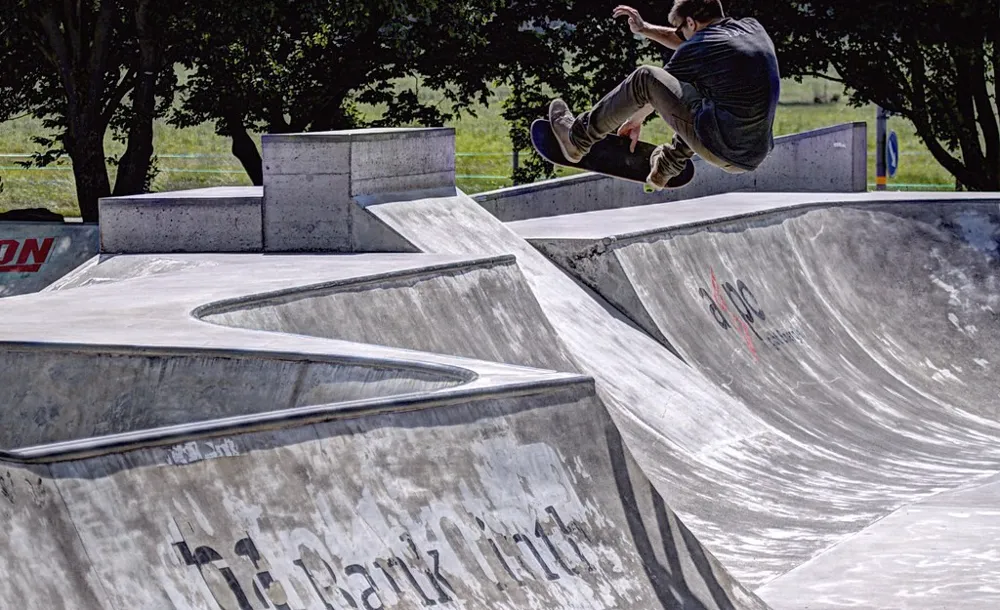
A skatepark is a shared space where people of every age and level ride the same ramps at speed, often from different directions. There is no referee, so the park runs on a mostly unwritten code: wait your turn, look before you go, keep the landings clear and respect the people around you. Follow it and you'll get more runs, avoid collisions and fit in quickly.
This guide covers the core rules every skater, scooter rider and BMX rider should know, plus the posted rules (helmets, age limits and allowed wheels) that vary from park to park. If you surf, a lot of it will feel familiar: our surf etiquette guide covers the lineup version of the same ideas.
Skatepark Etiquette at a Glance
| Rule | In Short |
|---|---|
| Watch first | Learn the flow before you ride |
| Take turns | One rider at a time on busy obstacles |
| Don't snake | Never cut in front of whoever is next |
| Wait on the deck | Stand back from the coping until it's your go |
| Keep obstacles clear | Don't sit, stand or leave bags on ledges, rails or ramps |
| Look before you go | Check every line that crosses yours |
| Clear the landing | After a fall, get you and your board out fast |
| Yell "Board!" | Warn people when your board gets away |
| Go at quiet times | Learn basics when the park is less busy |
| Share the park | Skaters, scooters, BMX and skates all take turns where allowed |
| Follow posted rules | Helmets, pads, age limits and allowed wheels |
| Film politely | Stay out of lines and ask before filming strangers |
| Clean up | Take your trash home |
| Respect locals | Learn how the park works, then join in |
| Apologize | Own your mistakes |
1. Watch the Flow Before You Skate
Before you roll in, stand somewhere safe and watch for a few minutes. Every park has its own flow: which direction people travel, which obstacles they link together, where they drop in and where they land. Notice which sections are busy with advanced riders and which corners are free for practice. It tells you most of the other rules for that park.
2. Take Turns and Don't Snake
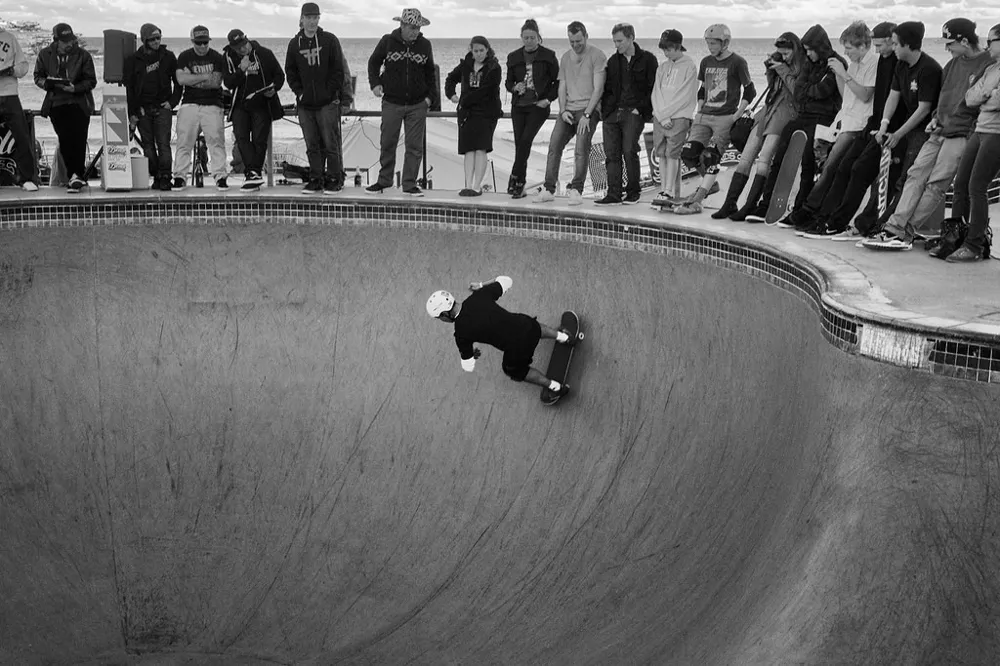
On a busy bowl, mini ramp or rail, riders take turns. Usually the order is simply who arrived first, and whoever has their tail on the coping or is standing at the start of the obstacle is next.
Snaking means cutting in front of someone whose turn it is, for example dropping in when another skater is about to go or rolling onto a ledge they're already heading for. It's the most common etiquette mistake and the one most likely to cause a collision. Fresno's skate and bike park spells it out on its etiquette sign: don't drop in on another rider in the middle of their run.
- Don't hog it. Fresno's sign also lists no marathon runs. Take a run or a few tries, then let others go.
- Share the mini ramp. If it's empty, skate it as much as you like. When others are waiting, take turns.
- If you're unsure, ask. "Are you going?" or a nod and eye contact sorts out most confusion.
3. Wait at the Deck, Not on the Coping
The deck is the flat platform at the top of a ramp or bowl, and the coping is the metal or concrete edge. While you wait, stand a few feet back from the edge. Crowding the coping blocks riders who need the deck, and a board resting on the edge can slip into the bowl or into someone's path. Only put your tail on the coping when you are actually next to drop in. Learning to drop in? See how to drop in on a skateboard.
4. Don't Sit or Stand on Obstacles
Ledges, rails, boxes and benches inside the skating area are for skating, even if they look like seats. Sitting on a ledge or standing on a ramp blocks it for everyone else. Take breaks in the seating area or outside the riding surface, and keep bags, water bottles and spare parts at the side of the park, not on ramps or walkways where someone can trip or roll over them. Many parks keep non-riders off the surface entirely: San Diego's city rules say spectators must stay outside the fenced area.
5. Read the Lines and Look Before You Go
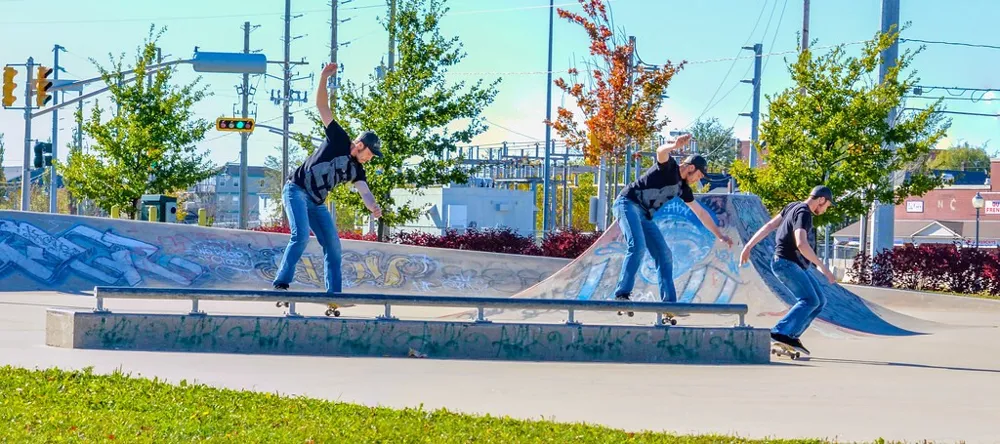
A line is the route a rider takes through the park, often linking several obstacles in one run. In a big street plaza or bowl, several lines can cross. Before you go, look at every entry point that feeds into your path, not just the one in front of you, and wait until it's clear. Keep using your peripheral vision while you ride, because people may be coming from more than one direction.
- Don't cut across the bottom of a ramp or the flat bottom of a bowl to get somewhere. Walk around.
- Signal your intentions. A nod, a point or calling out which way you're going helps others plan.
- Stay off a line someone is clearly working on. If a rider keeps trying the same trick, give them space between attempts.
Most terms here, from coping to flat bottom, are in our skateboard terms glossary.
6. Clear the Landing After a Fall
Everyone falls. The rule is to get yourself and your board out of the landing zone or flat bottom as quickly as you safely can, then check yourself over. Lying in the middle of a ramp is how a second rider lands on you. If you are hurt, stay put and let others stop for you.
When your board shoots away toward other people, shout "Board!" so they can watch for it. If someone else's board rolls to you, stop it and send it back gently. Learning to slide out on your knee pads, and to roll rather than brace on your wrists, makes falls quicker to clear; see how to fall on a skateboard.
7. Best Times to Go for Beginners
Busy parks are hard places to learn. At peak times, experienced riders run the big bowls and ramps, and practicing basics there means constant waiting and close calls. Quieter sessions make learning easier and safer:
- Early mornings and weekday mornings while school is in are usually the calmest times at public parks.
- Busy evenings and weekends are better for watching and for skating the beginner area.
- Use the easy sections. Many parks have small quarter pipes, low boxes or flat areas that suit basics.
- Check opening hours and closures. Parks may close for events, classes, weather or a wet surface. Some are lit at night; see skateboarding at night.
Our beginner ramp tricks and easy beginner tricks guides give a learning order.
8. Scooters, BMX and Skates: Sharing the Park
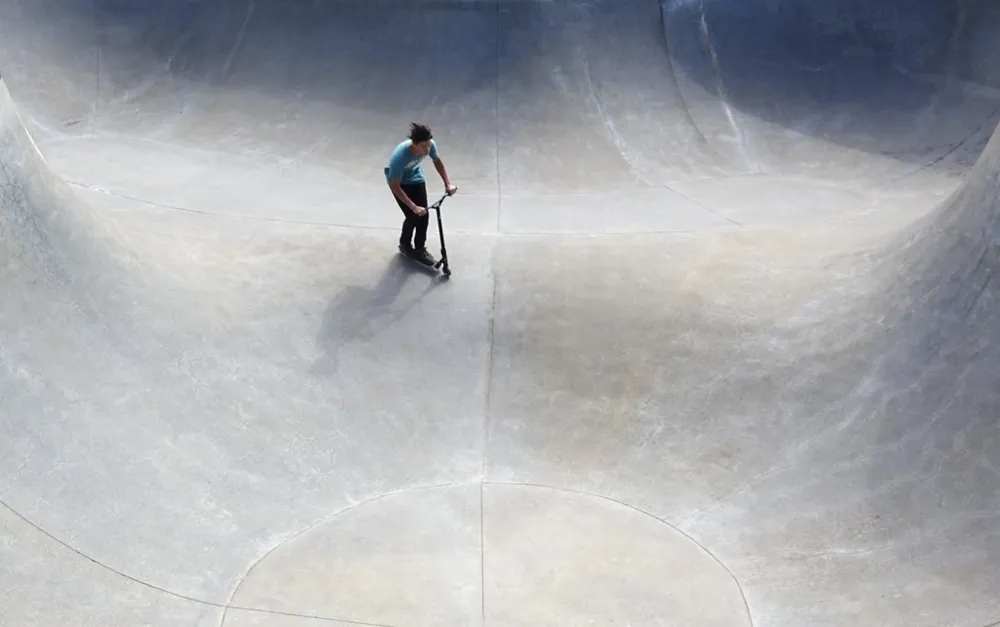
Whether scooters, bikes and skates are allowed depends entirely on the park. Some public parks welcome all of them, and others are skateboard and skate only. A few real examples, as listed on the cities' own rule pages (checked November 2026):
| Park | Bikes | Scooters |
|---|---|---|
| City of San Diego skate parks | Not allowed | Not allowed |
| Tampa skate park (city rules page) | BMX not allowed | Not addressed on the rules page |
| Fresno skate and bike park rules | BMX riders allowed | Not allowed |
Where everyone shares, the same rules apply to every set of wheels: one rider at a time, no snaking, look before you go and keep the landings clear. Bikes are heavier and faster and scooters turn tighter, so each uses obstacles a little differently. Give riders on different wheels the same respect you want for your own turn. For how the two compare, see skateboard vs scooter and skateboarding vs BMX; scooter riders can start with scooter tricks for beginners.
9. Kids and Parents at the Skatepark
Young riders move unpredictably and fall a lot, so give them extra space and patience. If a kid snakes you, explain the rule calmly rather than yelling. Fresno's etiquette sign asks riders to be patient and mentor young riders.
For parents, the posted rules often set age limits for supervision:
- San Diego's city parks require children under 12 to be accompanied by a parent or legal guardian.
- Tampa's skate park requires children 10 and under to be accompanied at all times, and a parent or guardian must sign a waiver for anyone under 18.
- Fresno's sign asks parents not to leave children unsupervised.
Parents can help most by bringing kids at quieter times, keeping them in the beginner sections at first and staying off the riding surface unless the rules allow it. Teaching a child the basics first? See how to teach a kid to skateboard.
10. Helmets, Pads and Posted Park Rules
Etiquette is the unwritten part; the sign on the gate is the written part, and it can be enforced. Some places require safety gear in public skateparks. In California, for example, Health and Safety Code section 115800 says a skatepark operator must not let anyone skate unless they wear a helmet, elbow pads and knee pads. The statute counts nonmotorized bikes, scooters, inline and roller skates as "wheeled recreational devices" too. Other states and cities set their own rules, so check the signs at your park and your local regulations. Last checked November 2026; this is not legal advice.
| Park Rules Page | Gear Rule | Other Rules Worth Knowing |
|---|---|---|
| City of San Diego | Helmet, elbow pads and knee pads designed for skateboarding | No food, drinks or glass inside; no unauthorized ramps or obstacles |
| City of Tampa | Helmet at all times on the skating surface; elbow and knee pads under 18 | Check-in and waiver; skate wax prohibited; closed when the surface is wet |
| City of Fresno | Helmet with a buckled chin strap; knee and elbow pads highly recommended | No added obstacles; no spectators in the park |
Even where the rules don't require one, wear a certified helmet: head injuries are the most serious risk in skateboarding. See do you need a helmet to skateboard?, the best skateboard helmets and skateboard safety gear.
11. Filming and Photos at the Skatepark
Filming friends is part of skating, but cameras add their own hazards:
- Stand where you can't end up in a rider's line or landing, and move if someone needs the space.
- Keep tripods, phones and bags off the riding surface.
- Don't hog an obstacle for a single clip when others are waiting; let riders go between your attempts.
- Ask before you film strangers, and don't post close-ups of people, especially kids, without their consent.
12. Keep the Park Clean
A bottle cap or pebble on the surface can stop a wheel dead and throw a rider. Use the bins or take your trash home, pick up anything you see on the surface and leave the park cleaner than you found it. Graffiti and damage get parks closed, and many city rules ban both. Report broken coping, cracks or hazards to the parks department.
13. Local Unwritten Rules
Every park has regulars who know how it works, and most are happy to share with anyone who follows the basics. A few habits help you fit in anywhere:
- Say hello and be friendly. Locals often know the best session times and which sections are free.
- Cheer people on. Tapping your board on the coping or ground when someone lands a trick is a common way to show respect. Don't mock falls.
- Don't one-up. Showing off a trick right after someone else has been struggling with it comes across as rude.
- Don't bring your own obstacles without checking. City rules in San Diego and Fresno ban added ramps and obstacles.
- Respect DIY spots. Skater-built parks rely on their builders; ask before you skate, and help maintain them if you become a regular.
- Know the park's quirks. Some ban skate wax (Tampa's rules page does) or close when the surface is wet.
14. What to Do If Someone Breaks the Rules
Stay calm. Most snakes and near-misses are accidents, especially from beginners and kids who haven't learned the code yet. A friendly "Hey, I was going" usually fixes it. If you're the one who messed up, apologize; Fresno's etiquette sign asks riders to do exactly that, and a quick "sorry" resolves most incidents. If a young rider keeps breaking the rules, talk to their parent. For dangerous behavior, leave the area and report it to park staff or the parks department.
Related Guides
Looking for somewhere to ride? See where to skateboard, the best skateparks in the US and the best skateparks in the world. New to skating? Start with learn how to skateboard and how to kickturn, or explore the skating hub.
Frequently Asked Questions
What is snaking at a skatepark?
Snaking is cutting in front of someone whose turn it is, usually by dropping in or rolling onto an obstacle while they are about to go or are mid-run. It is the most common way to annoy other skaters and can cause collisions.
How do you know whose turn it is at a skatepark?
Watch for a few minutes. Skaters waiting on the deck usually go in the order they arrived, and the person with their tail on the coping is next. If you are unsure, ask or make eye contact before you go.
When is the best time for beginners to go to a skatepark?
Quieter times, such as early mornings and weekday mornings when school is in, are usually easiest. Busy evenings and weekends are harder for learning, so check when your local park is least crowded.
Can you ride a scooter or BMX bike at a skatepark?
It depends on the park. San Diego's city parks ban bikes and scooters, Tampa's skatepark bans BMX bikes, and Fresno's skate and bike park allows BMX but not scooters. Check the posted rules at your park.
Do you have to wear a helmet at a skatepark?
Many parks require one. In California, Health and Safety Code section 115800 says a skatepark operator must not let anyone skate unless they wear a helmet, elbow pads and knee pads. Check your park's signs and local rules.
What should you do if you fall in the middle of a ramp?
Get yourself and your board out of the way as quickly as you safely can, then check you are OK. If your board shoots away toward other people, shout "Board!" so they can watch for it.
Is it rude to film at a skatepark?
Filming your friends is normal, but stay out of other skaters' lines, keep tripods and bags off the riding surface, and ask before you film or post clips of strangers.