The Benefits of Kayaking for Body and Mind, Stroke by Stroke (2026)
Kayaking can be a gentle float or a hard upper-body and cardio workout, depending on how you paddle. Here's what each stroke works, how many calories it burns and where the evidence is solid or thin.

The Short Answer: Is Kayaking Good Exercise?
Yes. Kayaking is a real workout when you paddle steadily, and an easy, low-key outing when you don't. It mainly trains the muscles of your back, shoulders and arms, uses your trunk to turn each stroke into forward motion, and can raise your heart rate as much as you choose to push it. On top of that, it gets you onto quiet water and into nature, which is where many of its mental benefits seem to come from.
The honest caveats: there is far less research on recreational kayaking than on sprint racing, and how much you gain depends almost entirely on effort. A slow drift with the paddle across your lap is pleasant but light exercise. Below is what the evidence supports, with calorie figures from the official activity compendium rather than guesswork. This is general information, not medical advice; check with a doctor before taking up a new sport if you have a health condition.
Benefits of Kayaking at a Glance
| Benefit | What the Evidence Says | Strength of Evidence |
|---|---|---|
| Upper-body and back endurance | Lats, shoulders, upper back and arms drive every stroke | Stroke biomechanics; coaching sources |
| Core and trunk | The trunk rotates to power the stroke and keep you balanced | Biomechanics research and coaching sources |
| Cardio fitness | 5.0 METs at moderate effort, up to 13.5 METs in competition | Compendium estimates |
| Calories burned | About 260 to 370 per hour for a 155-pound person at recreational to moderate effort | Compendium estimates |
| Mental well-being | Time near "blue space" is linked to better well-being | Systematic review of observational studies |
| Low impact | No running-style pounding, but a repetitive load on the shoulders | Nature of the movement; health guidance |
| Accessibility | Adaptive seating and teaching open paddling to many people with disabilities | Established adaptive programs |
We found no controlled training study of recreational kayakers comparable to the six-week paddle boarding study, so treat fitness claims about kayaking as likely rather than proven.
Muscles Kayaking Works, Stroke by Stroke
Every forward stroke has the same cycle on alternating sides. Coaches describe it in slightly different terms, and researchers split it up in their own way, but the basic phases are these:
| Stroke Phase | What Happens | Main Muscles |
|---|---|---|
| Wind-up and catch | You rotate your torso and plant the blade in the water near your feet | Obliques and trunk rotators, front shoulders, chest |
| Pull (power phase) | You unwind your torso and draw the blade back alongside the boat, pressing the foot peg on the same side | Lats, rear shoulders, upper back, biceps, obliques; thigh muscles through the foot press |
| Exit | The blade comes out at your hip | Rear shoulders, rhomboids and trapezius, triceps |
| Recovery and transition | The top hand pushes across as the other blade swings forward for the next catch | Triceps, shoulders, forearms and grip |
These phase-by-phase muscle roles come from coaching descriptions and limited research, and they shift with your technique and boat.
Two points surprise new paddlers. First, good kayaking is not an arm exercise. The power is meant to come from rotating your torso, which is why our how to paddle a kayak guide lists "paddling with arms instead of rotating your torso" as the top beginner mistake. Harvard Health likewise notes that paddling uses the core muscles to generate power.
Second, your legs matter. In a 2021 case study in Frontiers in Sports and Active Living, a novice paddler trained for four weeks in a surfski, a long sit-on-top racing kayak; afterward, the front thigh muscle (vastus lateralis) was the most active muscle measured during the pull phase, followed by the lats and, late in the pull, the biceps. Because it followed a single person, it cannot be generalized, but it fits standard coaching advice to brace and push with your feet. A sit-inside kayak with adjustable foot pegs makes that easier; see sit-in vs. sit-on-top kayaks.
Can Kayaking Build Muscle?
Kayaking builds muscular endurance more than size. Each stroke is a light load repeated thousands of times, which is great for stamina in your back, shoulders and arms, but it is not the same stimulus as lifting heavy weights. Regular, harder sessions with sprints will build more than gentle touring. If muscle growth is your main goal, pair paddling with strength training.
Cardio: How Hard Is Kayaking?
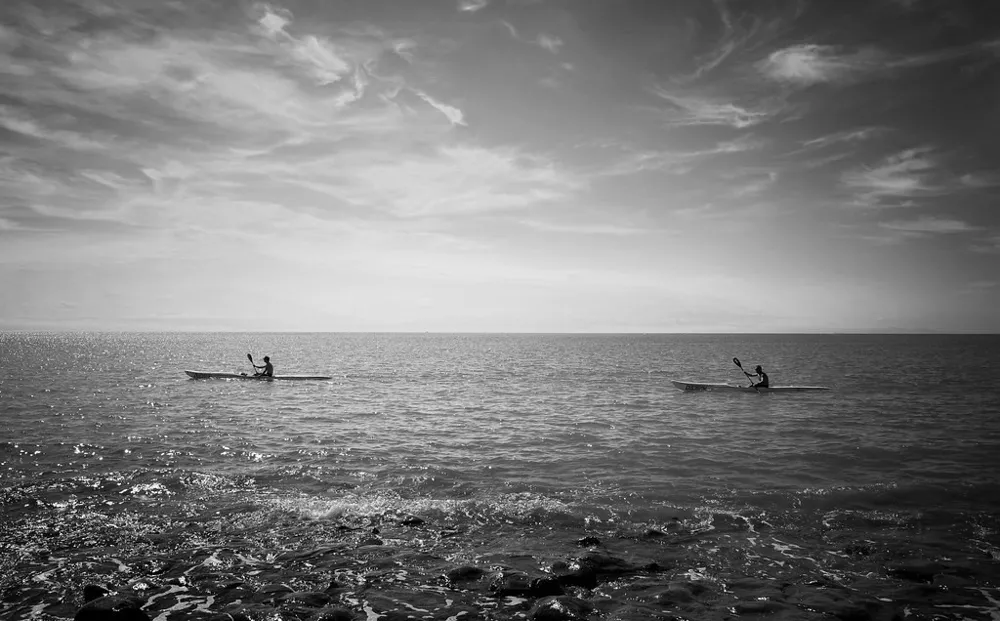
Kayaking can be anything from a light activity to one of the hardest efforts measured, and the 2024 Adult Compendium of Physical Activities shows how much speed changes things. Its values are METs, multiples of the energy you use at rest:
| Compendium Activity (Code) | MET Value |
|---|---|
| Canoeing, rowing, 2.0 to 3.9 MPH, light effort (18040) | 2.8 |
| Canoeing, rowing, for pleasure, general (18070) | 3.5 |
| Canoeing, on a camping trip (18020) | 4.0 |
| Kayaking, moderate effort (18100) | 5.0 |
| Whitewater rafting, kayaking or canoeing (18370) | 5.0 (estimated) |
| Canoeing, rowing, 4.0 to 5.9 MPH, moderate effort (18050) | 5.8 |
| Canoeing, portaging (18030) | 7.0 (estimated) |
| Kayaking, slalom, flat water (18106) | 9.0 |
| Canoeing, rowing, kayaking, competition, over 6 MPH, vigorous (18060) | 12.5 |
| Kayaking, competition (18104) | 13.5 |
The Compendium flags the whitewater and portaging values as estimates; the others are supported by published research. The takeaway: the same boat can give you a light or a vigorous workout. A relaxed paddle sits near the bottom of the table, while a brisk, steady pace pushes you into the middle. For better cardio, paddle at a pace where you can talk but it takes effort, and add short faster intervals, such as a minute hard and a short rest, repeated several times.
Calories Burned Kayaking
Many websites quote calorie numbers with no source. The figures below apply Compendium MET values to ACE's formula of METs x 3.5 x body weight in kg / 200 = calories per minute, rounded to the nearest 5.
| Activity (Compendium MET) | 125 lb | 155 lb | 185 lb |
|---|---|---|---|
| Light paddling, 2 to 3.9 MPH (2.8) | About 165 per hour | About 205 per hour | About 245 per hour |
| Recreational paddling, general (3.5) | About 210 per hour | About 260 per hour | About 310 per hour |
| Kayaking, moderate effort (5.0) | About 300 per hour | About 370 per hour | About 440 per hour |
| Brisk paddling, 4 to 5.9 MPH (5.8) | About 345 per hour | About 430 per hour | About 510 per hour |
| Flatwater slalom (9.0) | About 535 per hour | About 665 per hour | About 795 per hour |
The 18040, 18050 and 18070 codes are written for canoeing and rowing; they are a reasonable guide for kayakers at similar speeds, but they are not kayak-specific. Wind, current, your boat's speed and how often you stop all change the real number, so treat these as rough guides. Competition values are higher still but describe trained racers.
Is Kayaking Good for Weight Loss?
Kayaking burns calories, and because it is enjoyable, many people paddle often and for hours, which adds up. But we found no study showing that kayaking on its own causes weight loss. As with any activity, diet and your total weekly movement matter more than any single sport.
Low Impact, but Hard on the Shoulders
Kayaking involves no jumping, running or pounding, and you sit supported in a seat, which is why it appeals to people who want to stay active without stressing their knees and hips. The trade-off is a repetitive load on the upper body. Harvard Health notes that paddling can stress the shoulder tendons and that it is not a good idea if you already have tendinitis at the shoulder, elbow or wrist. It recommends checking with your doctor, starting slowly with shorter sessions and taking a lesson before you commit.
Good technique helps spread the work: rotate from your trunk, hold the paddle with hands a little wider than shoulder-width, use a relaxed grip and choose the right paddle length with our kayak paddle length guide. A paddle that is too long or too heavy makes every stroke harder on your shoulders.
Back pain: there is little research on kayaking and back pain. An upright posture with good back support is the standard advice, and a supportive seat helps on long days; see our kayak seat guide. If you have back problems, talk with a doctor or physical therapist first.
Mental Health and Time on the Water
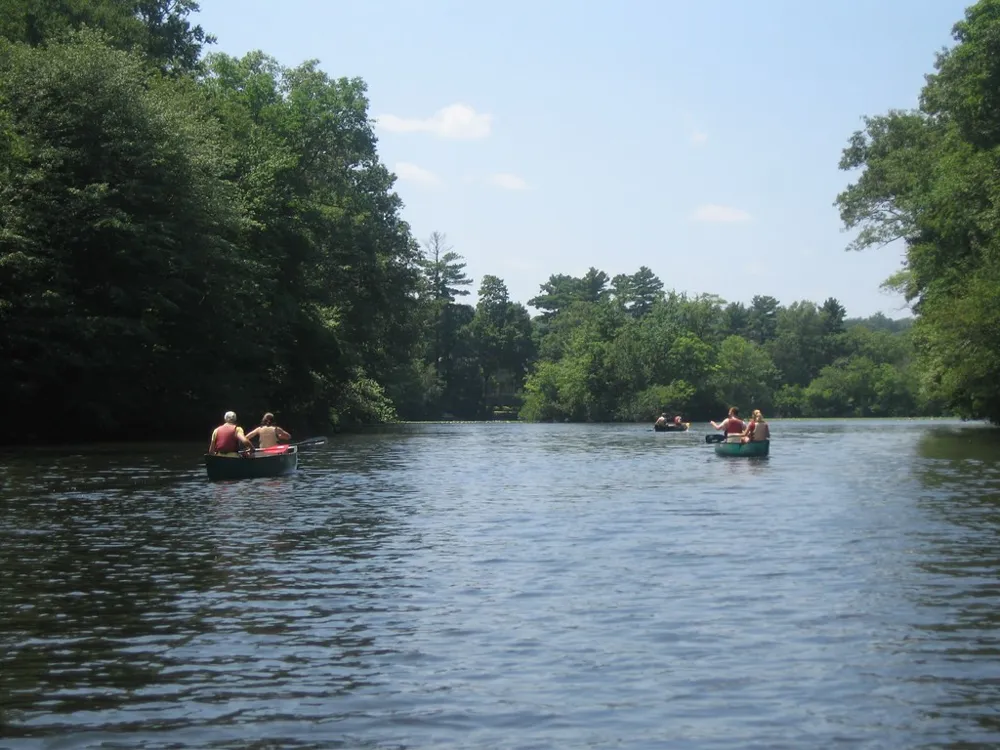
Many paddlers describe kayaking as calming: a steady rhythm, little noise and nothing to look at but water and shoreline. The research behind that feeling is mostly about being near water rather than kayaking specifically. A 2017 systematic review of 35 studies by Gascon and colleagues found that time around outdoor "blue spaces" like lakes, rivers and coasts was associated with better mental health and well-being and more physical activity. These studies show a link, not proof that water causes the benefit, and they weren't specific to kayaking.
Kayaking is not a replacement for professional care. If you are struggling, talk to a doctor or mental health professional, and in a crisis contact your local emergency number or crisis line.
Nature, Sunshine and Company
- Wildlife and quiet places. A kayak is quiet and sits low, which lets you reach marshes, coves and backwaters you can't see from shore. Give wildlife plenty of space, and keep phones and cameras in a dry bag.
- Sunshine and vitamin D. Your body makes vitamin D when bare skin is exposed to sunlight, according to the National Institutes of Health. But UV exposure also raises skin cancer risk, and water reflects sunlight. Treat it as a trade-off, not a reason to skip protection: NIH advises sunscreen of SPF 15 or higher when you're outside for more than a few minutes.
- Company. You can paddle alone, with a partner in a tandem kayak, with a club or on guided tours, and even with a dog on board.
- Room to grow. Once the basics feel easy, there is kayak fishing, kayak camping, touring, whitewater and racing to keep you motivated.
Adaptive Paddling: Kayaking for More People
Because you sit down and much of the work is done by the upper body, kayaking can be adapted for many people with physical disabilities. Adaptive paddling adapts the equipment, such as seating and outfitting, and the teaching methods so paddlers of different abilities can take part on equal terms.
In the US, the American Canoe Association's Universal Paddling program trains instructors, outfitters, recreation providers and rehabilitation professionals through Adaptive Paddling Workshops, which cover communication, adaptive outfitting and integrating paddlers with physical disabilities into regular programs, with practice in calm, protected water. The ACA website lets you search for courses, instructors and outfitters. Start with a program that has adaptive equipment and trained staff, and talk with your doctor or therapist about any specific limits. Surfers have similar options; see para surfing.
Kayaking vs. Other Water Workouts

| Activity | Compendium MET (2024) | Main Strength |
|---|---|---|
| Kayaking, moderate effort | 5.0 | Upper body and trunk rotation, stable seated position |
| Canoeing for pleasure, general | 3.5 | Relaxed paddling; see canoe vs. kayak |
| Stand-up paddle boarding, general | 6.5 | Core, legs and balance; see benefits of paddle boarding |
| Swimming, leisurely (not lap swimming) | 6.0 | Full body, steady effort |
| Surfing, general | 3.0 | Intervals and balance; see benefits of surfing |
On paper, moderate kayaking sits a little below paddle boarding and leisurely swimming, but kayaking's easy learning curve means most beginners can keep a steady pace sooner. Paddle boarding asks more of your legs and balance, while kayaking concentrates on the upper body. Weighing the two? Read kayak vs. paddle board.
Risks to Know Before You Start
- Cold water: water below 70°F is considered cold. Cold water shock can cause gasping and panic within the first 2 to 3 minutes, and a life jacket may be the most important factor in surviving a fall into cold water, according to the Minnesota DNR. Dress for the water, not the air; see what to wear kayaking.
- Capsizing: practice a wet exit and re-entry in shallow water with a partner or instructor; our guide to getting in and out of a kayak covers the basics.
- Wind and current: offshore wind and river current can carry you away faster than you can paddle back. Check the forecast and start into the wind so the return is easier.
- The law: under US Coast Guard rules you need a wearable life jacket for each person and a sound-producing device such as a whistle, children under 13 must wear a life jacket under federal rules, and you need a light after sunset. State rules on registration and life jackets vary, so check your state's boating agency.
- Shoulder strain, sun and dehydration: build up session length gradually, bring water and use sun protection.
- Tell someone your plans, paddle within your ability and, when you can, paddle with others.
Wear a life jacket made for paddling every time you go out.
How to Get More Out of Kayaking
- Take a lesson to learn torso rotation, the forward stroke and rescues; then practice with how to paddle a kayak.
- Get a boat that fits. A comfortable seat and adjustable foot pegs let you use your legs and trunk; start with kayaks for beginners and the kayak size chart.
- Paddle regularly. Short, frequent outings build endurance faster than an occasional long one.
- Mix your pace with steady cruising and short, harder intervals for better cardio.
- Use a lighter paddle of the right length to spare your shoulders; compare options in kayak paddles.
- Explore further. Longer trips in a touring kayak add distance; whitewater kayaks add intensity.
Keep Exploring
New to paddling? Start at our kayaking hub, learn the boat in types of kayaks and parts of a kayak, and see where the sport began in the history of kayaking. For similar research on other water sports, read benefits of paddle boarding and benefits of surfing.
Frequently Asked Questions
Is kayaking good exercise?
Yes, if you paddle with purpose. The 2024 Compendium of Physical Activities rates kayaking at moderate effort at 5.0 METs, the same as its value for competitive surfing, and competitive kayaking at 13.5 METs. A slow drift burns far less.
How many calories does kayaking burn?
About 370 calories an hour for a 155-pound person at moderate effort (5.0 METs), and roughly 260 an hour for relaxed recreational paddling (3.5 METs). Your burn depends on your weight, speed, wind and current, so treat these as estimates.
What muscles does kayaking work?
Mostly the lats, shoulders, upper back and arms, with the trunk rotating to power each stroke and the legs pressing on the foot pegs. Grip and forearms work throughout.
Can kayaking build muscle?
It builds muscular endurance in the back, shoulders, arms and core, especially with regular hard paddling. It is a light, repeated load, so it is not a substitute for strength training if your goal is muscle size.
Is kayaking good for weight loss?
It burns calories and is enjoyable enough that many people paddle often, which helps. We found no study showing kayaking alone causes weight loss; diet and total weekly activity matter more.
Is kayaking good for your back?
There is little research on kayaking and back pain. Sitting upright and rotating from the trunk is the recommended technique, but if you have back problems, check with a doctor or physical therapist before you start.
Is kayaking good exercise for seniors?
Many older adults paddle, and Harvard Health suggests starting slowly with shorter sessions and taking a lesson first. It notes that paddling can stress the shoulder tendons, so people with shoulder, elbow or wrist tendinitis should check with a doctor.
Can people with disabilities kayak?
Yes. Adaptive paddling uses modified seating, outfitting and teaching methods. The American Canoe Association runs Adaptive Paddling Workshops and lists instructors and courses on its website.