Where to Surf in England, Wales, Scotland and Beyond (2026)
Cornwall's Atlantic beaches, Devon's classic bays, the cold North Sea and Scotland's reefs: here's where the UK's waves break, who each spot suits and what to wear when you get there.
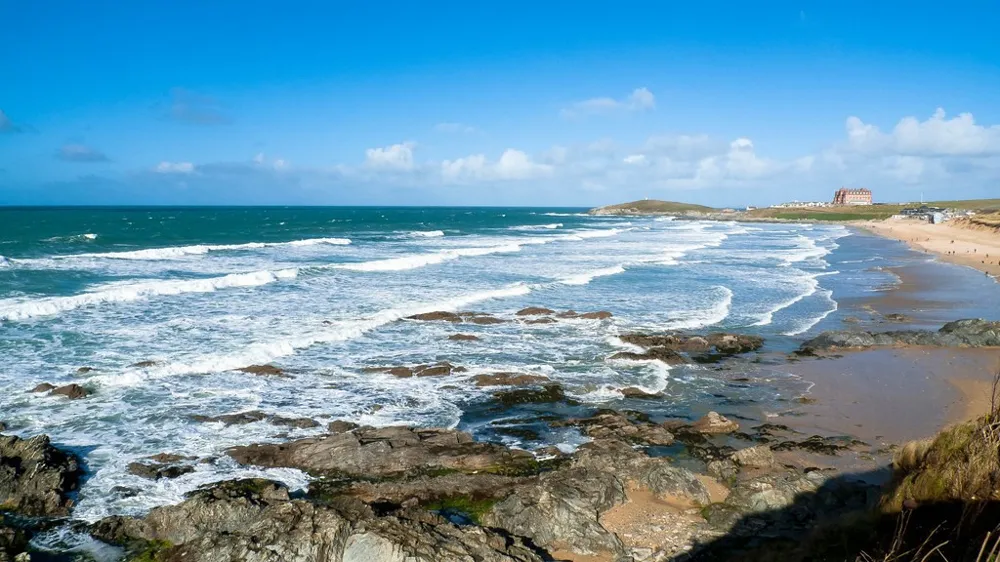
Where to Surf in the UK: The Short Answer
If you only have time for one region, head for Cornwall or North Devon. Their beaches face the Atlantic and pick up swell more consistently than most of England, and they have plenty of surf schools, board hire and lifeguarded beaches. Newquay calls itself the UK's surf capital, and Croyde, Saunton and Woolacombe in North Devon are the classic alternatives.
Beyond the South West, Wales has quality beach breaks on the Gower and in Pembrokeshire, the North East of England has a busy cold-water scene around Saltburn and Scarborough, and Scotland has some of the best reef waves in Europe at Thurso East. Northern Ireland's north coast and Jersey's St Ouen's Bay round out the list.
The UK is a cold-water destination with fickle weather, so the right spot on a given day depends on swell direction, wind and tide. Use this guide to pick an area, then check a forecast; our guide to reading a surf forecast explains how. For the bigger picture, see the best surf spots in the world and the best surf spots in the US.
Best UK Surf Spots at a Glance
Ability levels assume normal conditions. Almost every beach on this list turns serious in a big winter swell, and spots with reefs or fast low-tide waves are not for beginners at any time.
| Spot | Region | Wave Type | Ability | Best Time |
|---|---|---|---|---|
| Fistral Beach, Newquay | Cornwall, England | Beach break | Intermediate+ in big swell | Autumn–winter swells |
| Watergate Bay | Cornwall, England | Open beach break (about 2 miles) | Beginner to advanced | Year-round; low to mid tide |
| Sennen Cove and Gwynver | Cornwall, England | Exposed beach break | Mixed (bigger toward Gwynver) | Year-round; good in summer |
| Porthmeor, St Ives | Cornwall, England | Semi-sheltered beach | Beginner | Year-round |
| The Cribber, Newquay | Cornwall, England | Big-wave reef (lefts and rights) | Experts only | A few big winter swells a year |
| Croyde Bay | North Devon, England | Beach break | Intermediate (mid tide easier) | Summer for families; winter for power |
| Saunton Sands | North Devon, England | Gentle Atlantic beach break | Beginner, longboard | Late summer |
| Kimmeridge Bay | Dorset, England | Reef | Experienced | Southwest swells |
| Saltburn-by-the-Sea | North East England | Beach breaks by the pier | All levels (beginners by the pier) | Autumn–winter; good at high tide |
| Scarborough | North Yorkshire, England | East-facing beaches | Beginner+ (several schools) | Winter |
| Llangennith | Gower, Wales | Sand-bottom beach break | All levels | Consistent Atlantic swell |
| Freshwater West | Pembrokeshire, Wales | Sandbank beach break | Intermediate+ | Autumn–winter |
| Porth Neigwl (Hell's Mouth) | Llŷn Peninsula, Wales | Exposed beach with a reef at the north end | Strong surfers; no lifeguards | Colder months; mid to high tide |
| Thurso East | Caithness, Scotland | Fast right reef over flat rock | Experts | Oct–Mar |
| Outer Hebrides | Scotland | Exposed Atlantic beaches | Varies; remote | Autumn–spring swells |
| St Ouen's Bay | Jersey, Channel Islands | Long beach with whitewater rides | Beginners in summer; experienced in winter | Summer to learn; autumn–winter swell |
"Best Time" reflects the general UK pattern described in the seasons section below; any spot can be good or flat on a given day.
Cornwall: England's Surf Capital
Cornwall points straight into the Atlantic, so it catches swell from the west and northwest, and surf guides rate it England's most reliable region in summer. Its spots range from learner-friendly beaches to one of Britain's few big-wave reefs.
Fistral Beach, Newquay
Fistral is one of the UK's best-known surf beaches. It handles big swells, has hosted international competitions and sits right next to Newquay's surf shops, schools and accommodation. Because it is so popular, the lineup can be crowded on good days, and it is worth reading our surf etiquette guide before paddling out. On a solid swell it is a wave for intermediate and advanced surfers.
The Cribber
Off Towan Head at the end of Fistral, the Cribber is Newquay's big-wave spot. It breaks over a shallow reef at low tide on large winter swells, only a few times a year, with walls running both left and right. It is strictly for expert big-wave surfers: strong rips, very cold water and a shallow reef make any wipeout serious.
Watergate Bay
Watergate Bay is an open beach break about two miles long that is often described as having some of the most consistent surf in Cornwall. It suits first-timers through experienced surfers. The beach gets busy around high tide, so low to mid tide is the time to go if you want more space.
Sennen Cove and Gwynver
Less than a mile from the cliffs at Land's End, Sennen is fully exposed to long-distance Atlantic swell, which makes it one of the most consistent spots in the country; OS Maps calls it the most consistent in Britain. It offers some shelter from southwesterly winds, works well on a mid tide in bigger swell and has a lifeguard on duty in peak season. Waves get bigger as you walk north toward Gwynver, so mixed-ability groups can split up along the same stretch of sand.
Other Cornish Spots
- Porthmeor, St Ives: clean, semi-sheltered waves that suit beginners year-round, busiest in peak summer.
- Praa Sands: a beach known for good beginner waves.
- Porthleven: a reef for hardy, experienced surfers.
- Bude: peaky, exposed beaches that can be wild in winter storms.
North Devon and the Rest of the South West
North Devon has three of England's best-known surf beaches in Croyde, Saunton and Woolacombe, each suited to a different level.
Croyde Bay
Croyde is one of England's most famous breaks and is usually very busy. It is best suited to intermediates: mid tide is mellower, while low tide brings faster waves. In summer it works for families learning together, but winter swells can produce powerful walls. The village has several surf shops and schools.
Saunton Sands
Saunton is a long Atlantic-facing beach break with slower waves that suit beginners and longboarders. It has lifeguards in season, a surf school, board hire and a café, and its size means there is usually more room than at Croyde. Late summer, when the sea is at its warmest, is a good time to learn here. See our guide to surfboards for beginners if you are thinking of buying a first board.
Woolacombe
Woolacombe is another long beach with plenty of space for beginners and is surfable on all tides, which makes it a reliable backup when the tide is wrong elsewhere.
South Devon and Dorset
England's south coast is sheltered from most Atlantic swell, so it needs a big southwesterly or a winter storm to work. Dawlish and Teignmouth in South Devon pick up swell that wraps around from the west. In Dorset, Bournemouth's beaches catch southwest swells and have surf schools, with the pier giving some shelter; Southbourne is known as a winter spot, and there is no lifeguard at nearby Hengistbury Head. Kimmeridge Bay is a reef that can produce hollow, well-shaped waves for experienced surfers, and the Cobb at Lyme Regis has occasional, unreliable winter waves.
North East England and the East Coast
The North Sea is colder and more fickle than the Atlantic, but when a swell arrives the North East has quality waves and much quieter lineups than Cornwall.
- Saltburn-by-the-Sea: beach breaks on either side of the old pier, with more powerful peaks to the south. Beginners and intermediates should stay near the pier; it is particularly good at high tide. Walking toward Marske usually means fewer people. It is often described as the birthplace of the North East surf scene.
- Scarborough: North Yorkshire's most popular surf town, with east-facing beaches that work best in winter and several surf schools.
- Whitby: lessons are available, but expect bitingly cold North Sea water.
- Northumberland: long, empty beaches such as Alnmouth, which suits beginners and intermediates and is quietest in winter; Druridge Bay, about 15 miles south, offers lessons. Expect hard paddle-outs and changeable conditions.
- Norfolk and Kent: occasional winter waves at Cromer, West Runton (best on an incoming tide) and Great Yarmouth, and at Viking Bay and Botany Bay in Broadstairs. Viking Bay suits longboards; Botany Bay is rocky at low tide.
Wales
Wales picks up Atlantic swell along its south and west coasts and has a long list of beach, reef and point breaks. Visit Wales highlights the following as the best-known spots.
Llangennith (Llangynydd), Gower
On the Gower Peninsula, Llangennith is a consistent sand-bottom beach break with three main zones, fed by Atlantic swell. The peaks further north are the more high-performance waves, so newer surfers should stay away from them.
Rest Bay, Porthcawl
Rest Bay is a beach break with options on all tides. Nearby Porthcawl Point and the point breaks around Llantwit Major on the Glamorgan Heritage Coast are especially good in winter.
Pembrokeshire: Freshwater West, Newgale and Whitesands
Freshwater West has a wide range of sandbanks and draws crowds on good swells. Newgale is about two miles of flat sand with a Blue Flag, ideal for younger and newer surfers, though it is lifeguarded only during school holidays. Whitesands Bay is sheltered by Ramsey Island, can produce large, hollow waves for experienced surfers and is known for glassy evening sessions when the wind drops. In big southwesterly winter swells, Broad Haven South and Tenby South Beach can produce heavy, barrelling waves best left to experienced locals.
Porth Neigwl (Hell's Mouth), Llŷn Peninsula
This four-mile beach in Gwynedd is a swell magnet that can hold waves of up to about 8 feet, and OS Maps calls it the surf capital of Wales. It is exposed and has no lifeguards, so it is for strong swimmers and surfers only. The reef at the north end gets crowded around high tide.
Aberavon
Aberavon at Port Talbot can produce large peaks with well-known lefts on a good day. It gets crowded, so be polite and take turns.
Scotland
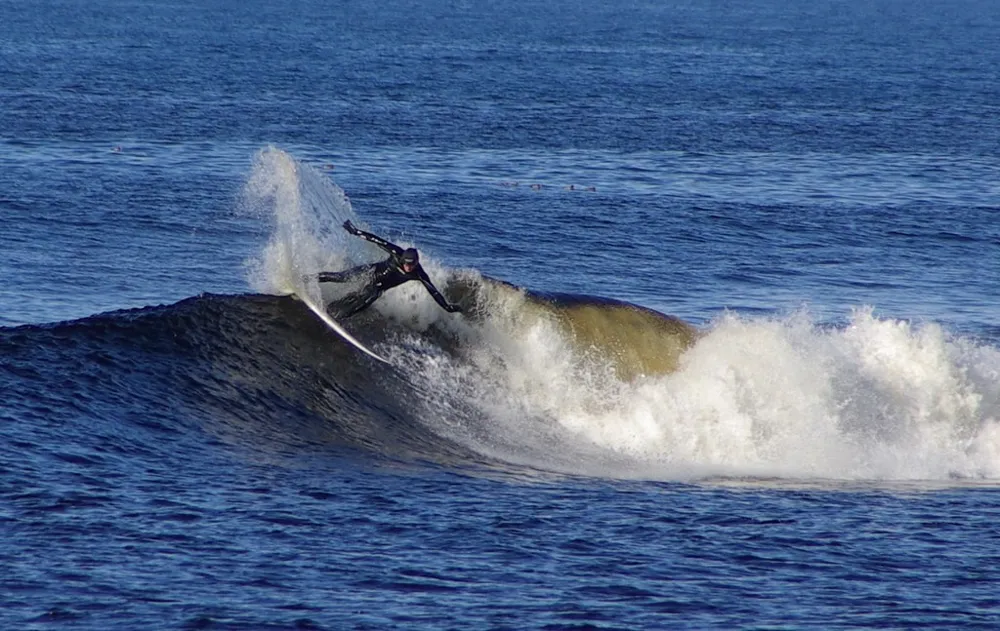
Scotland has surf on its north, east and west coasts and around the islands. Waves are most consistent in the colder months, and the Scottish Surfing Federation was established in 1975.
Thurso East, Caithness
Thurso East, at the mouth of the River Thurso on Scotland's north coast, is a fast right-hand reef break over a flat rock shelf with barrel sections. Waves usually run from about 2 to 8 feet and can get bigger. It works best from roughly October to March when northwest groundswells are most common, it has hosted international events including the O'Neill Highland Cup, and the Scottish surfing championships were reported to return to Thurso in 2025. It is an expert wave in cold water, so a thick wetsuit, boots, gloves and hood are essential. Dunnet Bay, nearby, is a better place to learn.
Other Scottish Spots
- Belhaven Bay, East Lothian: a safe beach that suits beginners, though the surf is unreliable.
- Moray Firth: fairly consistent conditions for beginners, and you may see marine wildlife, including occasional orcas.
- Outer Hebrides: exposed Atlantic beaches such as Valtos, Dalmore Bay and Barvas on Lewis, with more swell on Harris and the Uists. Expect a long journey, remote spots and very cold water; a 5mm wetsuit is recommended.
- Mull of Kintyre: Dunaverty Bay can produce a shoulder-high point break after a storm.
Northern Ireland and the Channel Islands
Northern Ireland
Northern Ireland's best-known surf is on the north coast of County Antrim, where surf-forecast sites list breaks such as Portrush East Strand. Pack full cold-water gear, ask a local surf shop or school which beach is working, and check the Causeway Coast and Glens council's beach flag guidance before you paddle out.
Jersey
Jersey is a small island with a surprisingly long surf history: Visit Jersey says Europe's first surf school opened there in 1923, and the Splash surf shack has been at the heart of island surfing since the early 1960s.
- St Ouen's Bay (west coast): the main surf beach. In summer it has long whitewater rides for beginners; in autumn and winter, bigger Atlantic swells suit experienced surfers. Lifeguards patrol designated safe zones at peak times.
- La Pulente: a fun, fast shore break for intermediate and advanced surfers, best at high tide with swell over about 1 metre.
- Plemont Bay and Grève de Lecq: north-coast spots that need a significant swell. Plemont's steep shore break is popular with bodyboarders, and Grève de Lecq can barrel at high tide.
- St Brelade's Bay: a gentler beach break sheltered from strong westerlies, where surfers go when St Ouen's is too big.
All of Jersey's spots are tide-dependent, and the wind can switch quickly from a calm morning to a choppy afternoon. Guernsey also has surf, with Vazon Bay its best-known spot.
Wave Pools and the Severn Bore
When the sea is flat, the UK has two unusual alternatives.
- The Wave, Bristol: an inland surf lake using Wavegarden technology, with machine-made waves from about 50cm to almost 2m and a new wave every 8 to 10 seconds. It suits all levels, but booking the right session for your ability matters. See our full guide to surf parks and wave pools.
- The Severn Bore, Gloucestershire: a tidal bore that runs up the River Severn and can give very long rides. It is biggest on very high tides around the spring and autumn equinoxes, one to three days after full and new moons, and a big Atlantic swell can push it to around six feet. It is for experienced surfers only: its size is unpredictable and it can be strong enough to tear branches from trees.
Best UK Surf Spots for Beginners
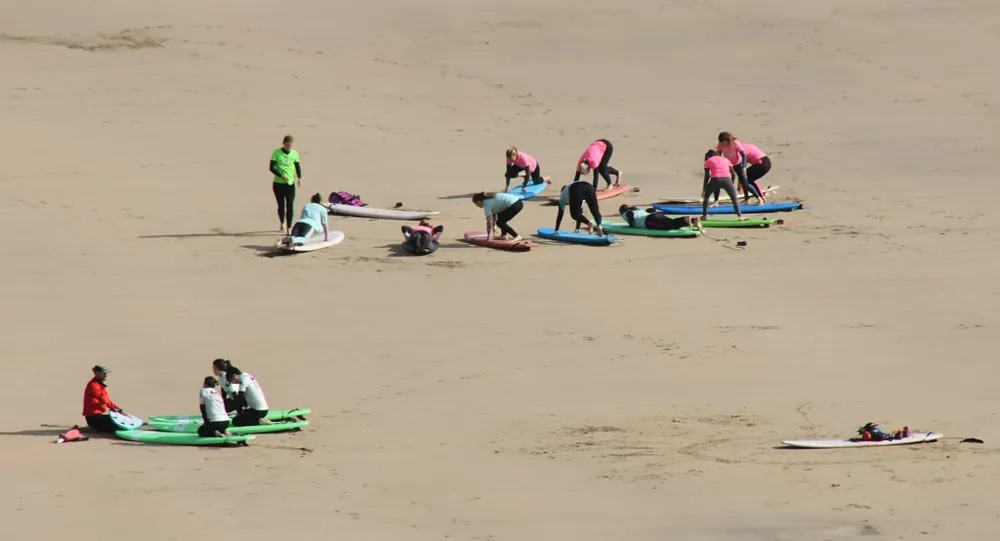
Good places to learn have gently sloping sandy beaches, a choice of surf schools and lifeguards in season. These stand out:
| Beach | Region | Why It Suits Beginners |
|---|---|---|
| Saunton Sands | North Devon | Slow, gentle waves, lots of space, lifeguards and a surf school |
| Woolacombe | North Devon | Long beach, plenty of room, surfable on all tides |
| Watergate Bay | Cornwall | Consistent waves, surf academy and hire on the beach |
| Porthmeor, St Ives | Cornwall | Clean, semi-sheltered waves |
| Praa Sands | Cornwall | Known for good beginner waves |
| Bournemouth | Dorset | Surf schools on the beach and some shelter from the pier |
| Saltburn (by the pier) | North East England | Smaller waves near the pier and a surf shop offering lessons |
| Newgale | Pembrokeshire | Two miles of flat sand; lifeguards in school holidays |
| Belhaven Bay | East Lothian | Safe beach for learners when there is swell |
| St Ouen's Bay | Jersey | Long whitewater rides in summer and lifeguarded zones |
Start in the whitewater on a big foam board, take a lesson, and stay out of the main peak until you can catch and control unbroken waves. Our how to surf guide covers the basics, and a leash is essential at every spot on this list.
When to Surf in the UK: Seasons
UK surf is driven by Atlantic low-pressure systems, so swell is generally bigger and more frequent from autumn through spring.
| Season | What to Expect | Best For |
|---|---|---|
| Autumn (Sept–Oct) | Often called the best season: regular west to northwest swell from north Cornwall to Cumbria and water that is still fairly mild | All levels; surf trips |
| Winter (Nov–Mar) | The biggest swells; storms can make exposed beaches unsurfable, but calm windows produce clean, hollow waves. The North Sea and sheltered south coast come alive | Experienced surfers; reefs and points |
| Spring (Apr–May) | Westerly groundswells continue and big spring tides add power; the water is still very cold | Intermediate and up |
| Summer (Jun–Aug) | Smaller, less frequent swell; Cornwall is the most reliable region. Beaches are crowded, but peak-season lifeguard patrols are running | Beginners and families |
The UK Met Office and dedicated surf-forecast sites are the places to check before you travel, and our surf forecast guide explains swell period, wind and tide.
Water Temperature and Wetsuit Guide
UK water is cool all year, so nearly everyone surfs in a full wetsuit. The far southwest is the warmest part of the country: surf-forecast.com's data for Gwenvor near Sennen puts the sea at about 9 to 10°C (48 to 50°F) around the start of March and 15 to 19°C (59 to 66°F) at the mid-August peak. The North Sea, Scotland and Northern Ireland are generally colder, and wind chill makes a big difference on land and in the water.
| Water Temperature | Typical UK Timing | Wetsuit | Extras |
|---|---|---|---|
| 18–20°C | Warmest summer days in the southwest | 2mm suit or shorty | None needed |
| 12–17°C | Summer and early autumn | 3/2mm or 4/3mm full suit | Boots optional (3mm) |
| 8–11°C | Late autumn to spring | 4/3mm or 5/4mm | Boots; gloves for long sessions |
| Below 8°C | Possible in the coldest northern water in winter | 5/4mm or thicker, hooded | Boots, gloves and hood |
Temperature bands follow O'Neill's thickness guide; add a hood whenever it is windy or the air is cold. For full advice on choosing a suit, see our wetsuit buying guide, plus what to wear under a wetsuit and wetsuit vs drysuit.
RNLI Lifeguards and Beach Safety
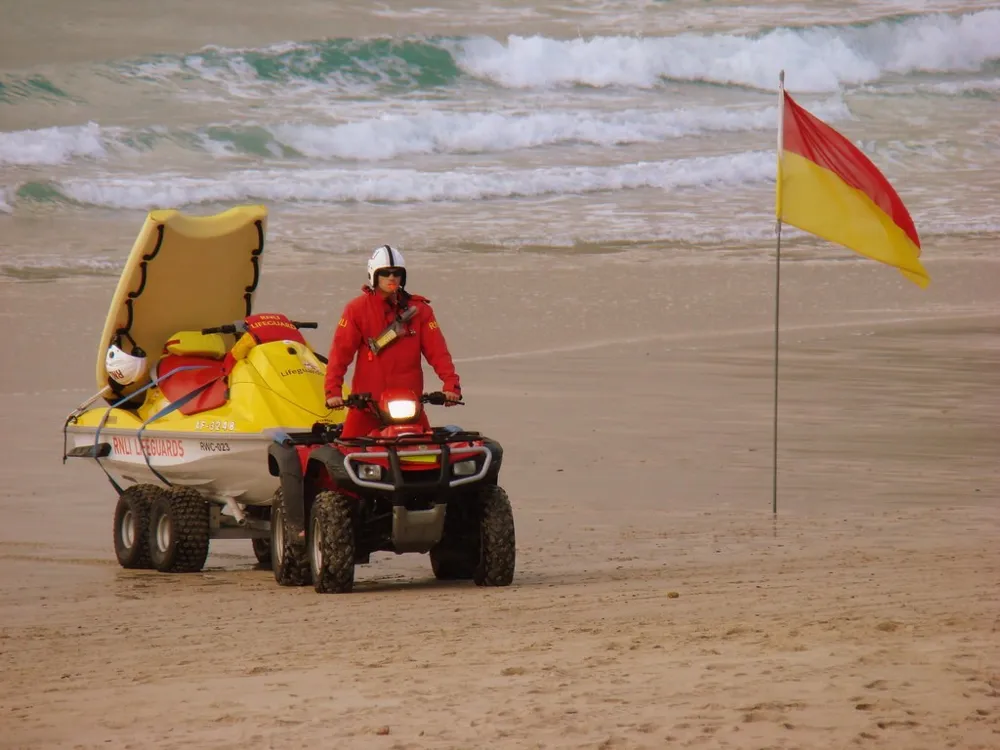
The RNLI runs lifeguard patrols on more than 239 beaches across the UK and the Channel Islands, and other beaches are covered by local councils. Patrols are seasonal: many run only in summer or school holidays, and some popular surf beaches, such as Hell's Mouth, have no lifeguards at all. Whenever you can, surf a lifeguarded beach and check the patrol dates before you go.
| Flag | Meaning |
|---|---|
| Black and white chequered | Zone for surfboards, stand-up paddleboards and other non-powered craft. Do not swim here. |
| Red and yellow | Lifeguarded area for swimming and bodyboarding. Do not take a surfboard in here. |
| Red | Danger: do not go in the water under any circumstances. |
- Rip currents: rips can quickly drag you out to sea. If you are struggling, the RNLI's Float to Live advice is to lean back, keep your ears in the water, use your hands to stay afloat, then call for help or swim to safety once your breathing is under control.
- Emergencies: call 999 in the UK (112 in Ireland) and ask for the Coastguard.
- Tides: big tidal ranges can change how a beach breaks from hour to hour, so check tide times as well as the swell.
- Know your limits: stick to waves that match your ability and avoid reefs and points until you are confident. Our guide to whether surfing is dangerous covers the main risks.
This is general safety information; always follow lifeguards' instructions and the RNLI's latest advice.
Planning a UK Surf Trip
- Pick a base with options: Newquay, Croyde, the Gower and Pembrokeshire all have several beaches facing different directions within a short drive, so you can find a sheltered spot when the wind is wrong.
- Plan around the tide: many UK breaks only work at certain stages of the tide, so check tide tables alongside the swell forecast.
- Expect crowds in summer: Fistral, Croyde and Freshwater West get busy at peak times. Arrive early or try a quieter beach nearby.
- Hire before you buy: most surf towns rent soft-top boards and wetsuits, and lessons usually include both.
- Travelling with boards: pack boards in a padded surfboard bag and use proper roof rack pads.
- Respect the locals: smaller spots, especially in Wales and the North East, have tight-knit lineups. Wait your turn and follow standard surf etiquette.
Related Guides
Explore our surfing hub, the world's best surf spots, surf parks and wave pools, surfboard size chart and best soft top surfboards.
Frequently Asked Questions
Where is the best place to surf in England?
Cornwall and North Devon have the most consistent surf in England. Fistral in Newquay, Watergate Bay, Sennen Cove and Croyde are among the best-known spots, and Saunton Sands and Watergate Bay are popular places to learn.
Where is the best place to learn to surf in the UK?
Long, sandy beaches with surf schools and lifeguards work best, such as Saunton Sands and Woolacombe in Devon, Watergate Bay and Porthmeor in Cornwall, Newgale in Pembrokeshire and Belhaven Bay in Scotland. St Ouen's Bay in Jersey is another summer favorite for learners.
When is the best time to surf in the UK?
Autumn, roughly September to October, is often called the best season, with regular Atlantic swell and water that is still fairly mild. Summer suits beginners in Cornwall, while winter brings the biggest waves and the coldest water.
How cold is the sea in the UK for surfing?
In far west Cornwall, surf-forecast.com puts sea temperatures at about 9 to 10°C around early March and 15 to 19°C at the mid-August peak. The North Sea and Scotland are generally colder, so most UK surfers wear a full wetsuit all year.
What wetsuit do I need to surf in the UK?
A 3/2mm or 4/3mm full suit covers most of summer and early autumn. In winter and early spring, most surfers use a 5/4mm or 5/3mm suit with boots, gloves and often a hood.
What do the black and white flags mean on UK beaches?
On RNLI lifeguarded beaches, the black and white chequered flags mark the zone for surfboards and other non-powered craft. Swimmers and bodyboarders should stay between the red and yellow flags, and a red flag means do not go in the water.
Is there surfing in Northern Ireland and the Channel Islands?
Yes. Northern Ireland's north coast has breaks such as Portrush East Strand in County Antrim, and Jersey's St Ouen's Bay is the Channel Islands' main surf beach.