Best Sit-In Kayaks to Keep You Drier on the Water (2026)
Recreational sit-inside kayaks from Wilderness Systems, Old Town, Perception, Pelican and Sun Dolphin, with specs side by side and a guide to choosing the right cockpit.

What Is a Sit-Inside Kayak?
A sit-inside kayak (often shortened to "sit-in") has a closed deck and a cockpit opening. You sit low inside the hull with your legs tucked under the deck, braced against foot pegs and, on many boats, thigh pads. That low seat and enclosed hull keep your legs out of the wind and splash, which is why sit-ins are popular for cool mornings, spring and fall paddling, and anyone who doesn't want to sit in a puddle all afternoon.
This guide covers recreational sit-inside kayaks: stable, roomy boats of about 9 to 12 ft for lakes, ponds and slow rivers. If you're still deciding between styles, start with our sit-in vs sit-on-top comparison. For longer, faster boats see touring kayaks, and for open decks see sit-on-top kayaks.
Wilderness Systems Pungo 120
Best all-round recreational sit-inside
- 12 ft 2 in long, 29 in wide
- Watertight rear bulkhead and hatch
- Phase 3 AirPro seat
Old Town Heron 9XT
Best compact rotomolded sit-inside
- 9 ft 6 in, 40 lb assembled
- 39.5 x 19 in cockpit
- Comfort Flex seat and thigh pads
Perception Joyride 10
Best 10-footer with a sealed stern hatch
- 10 ft long, 29.5 in wide
- Stern hatch with a bulkhead
- Adjustable seat and footrests
Sit-Inside Kayaks Compared
| Kayak | Length | Width | Weight | Listed Capacity | Hull Material |
|---|---|---|---|---|---|
| Wilderness Systems Pungo 120 | 12 ft 2 in | 29 in | 49 lb | 325 lb | Polyethylene |
| Old Town Heron 9XT | 9 ft 6 in | 28.5 in | 40 lb (assembled) | 300 lb total / 260 lb usable | Rotomolded polyethylene |
| Perception Joyride 10 | 10 ft | 29.5 in | 50 lb | 275 lb | Rotomolded polyethylene |
| Old Town Vapor 10 | 10 ft | 28.5 in | 47 lb (assembled) | 325 lb total / 278 lb usable | Rotomolded polyethylene |
| Pelican Mustang 100X | 10 ft | 30 in | 39 lb | 300 lb | Thermoformed Ram-X |
| Pelican Argo 100X | 10 ft | 28 in | 36 lb | 275 lb | Thermoformed Ram-X |
| Sun Dolphin Aruba 10 | 9 ft 7 in | 29 in | About 40 lb | 250 lb | Rotomolded HDPE (Fortiflex) |
Specs come from the makers' listings, Paddling Magazine's buyer's guide and retailer listings as of November 2026. Makers update models and colors often, so confirm the current version before buying. Old Town quotes two capacity figures; we explain the difference in kayak weight limits.
The Best Sit-Inside Kayaks
1. Wilderness Systems Pungo 120
The Pungo 120 is a long-running Wilderness Systems model, and it sits at the top end of what "rec kayak" means. Paddling Magazine lists it at 12 ft 2 in long and 29 in wide, weighing 49 lb with a 325 lb capacity. The extra length over a 10-footer helps it glide farther per stroke and hold a straighter line, while the width keeps it steady for calm-water paddling.
The cockpit is large and easy to get in and out of, and the padded Phase 3 AirPro seat adjusts for support on longer outings. Adjustable foot braces and a watertight rear bulkhead with a hatch round it out, so you can carry a lunch, a dry layer and a phone in a sealed compartment. It's a good fit for taller paddlers and for anyone who expects to paddle often and wants a boat they won't outgrow quickly. The kayak size chart explains why 12 ft is a common step up.
Good to Know
- Tracks and glides better than shorter rec boats
- Sealed rear storage
- Roomy, comfortable cockpit
Watch Out For
- At 12 ft and 49 lb, most people need a roof rack
- Still a calm-water boat, not a sea kayak
2. Old Town Heron 9XT
If storage space and lifting are your main limits, the Heron 9XT is about as compact as a rotomolded sit-inside gets. Old Town lists the 9 ft 6 in, 28.5 in wide hull at 40 lb assembled, made from single-layer polyethylene rotomolded in Maine. Capacity is quoted as 300 lb total (including the boat) and 260 lb usable for you and your gear.
The 39.5 x 19 in cockpit is easy to step into, and the adjustable Comfort Flex seat and thigh pads give you contact points for steering and bracing. Old Town aims it at beginners and recreational paddlers, and the short length makes it easy to turn on small ponds and twisting creeks. Rotomolded plastic also shrugs off gravel launches better than lighter thermoformed boats.
Good to Know
- Light enough for many people to load alone
- Fits in garages and small trailers
- Tough plastic for rocky launches
Watch Out For
- Short hull is slower and wanders more than a 12-footer
- Lower usable capacity for bigger paddlers
3. Perception Joyride 10
The Joyride is Perception's recreational sit-inside for adults and older kids, and its standout feature for a 10-footer is a stern hatch with a hinged lid and bulkhead, according to Paddling Magazine's buyer's guide. Many boats at this length have only an open rear area or a hatch without a bulkhead, so sealed storage is a real plus if you carry keys, a phone or a spare layer.
It's listed at 10 ft long, 29.5 in wide and 50 lb, with a 275 lb capacity. You also get an adjustable seat and footrests, a drink holder and a slot to hold a phone for photos. The hull is rotomolded and made in the USA.
Good to Know
- Sealed stern compartment
- Wide, stable 10 ft hull
- Adjustable seat and footrests
Watch Out For
- Heaviest boat here for its length
- 275 lb capacity is modest for larger paddlers with gear
4. Old Town Vapor 10
The Vapor 10 is the pick here for the easiest entry and exit. Old Town lists a 48 x 19.5 in cockpit opening, the longest in this list, so you can sit down first and swing your legs in rather than threading them under the deck. That suits paddlers with stiff knees or hips and people who feel closed in by smaller cockpits.
Specs are 10 ft long, 28.5 in wide and 47 lb assembled, with 325 lb total and 278 lb usable capacity. The single-layer polyethylene hull is rotomolded in Maine and has a skid plate underneath. Old Town adds its adjustable Comfort Flex seat, Glide Track foot braces, built-in thigh pads, a molded cockpit tray with cup holder, a paddle rest, carry handles and rear storage. An angler version also exists if you want rod holders. It's stocked by outdoor retailers such as REI and Dick's Sporting Goods; check current availability.
Good to Know
- Very large cockpit opening
- Highest listed capacity among the 10-footers here
- Skid plate for dragging on launches
Watch Out For
- Big open cockpit lets in more splash and is hard to fit with a spray skirt
- Heavier than the Pelican boats
5. Pelican Mustang 100X
At 30 in, the Mustang 100X is the widest boat in this list. Paddling Magazine's buyer's guide lists it at 10 ft long, 30 in wide and 39 lb, with a 300 lb capacity. It's thermoformed from Pelican's multi-layer Ram-X polyethylene, which keeps weight down compared with rotomolded boats, and it uses Pelican's twin-arched multi-chine hull for stability.
Storage includes a front hatch and a removable storage container that sits in the stern tank well, and the buyer's guide notes rod holders, which makes it a reasonable crossover for casual fishing from a sit-in. Pelican also sells an EXO version with a 17 L removable Exopod compartment. It's sold through sporting goods stores such as Dick's; check current availability. More on the brand's materials and lineup in our Pelican kayaks review.
Good to Know
- 30 in width for a steady feel
- Under 40 lb
- Rod holders for light fishing
Watch Out For
- Wide hulls are slower over distance
- Thermoformed plastic is less forgiving of hard knocks than rotomolded
6. Pelican Argo 100X
The Argo 100X is the lightest boat on this list. It's listed at 10 ft long, 28 in wide and 36 lb, with a 275 lb maximum capacity. Like the Mustang, it's made from thermoformed Ram-X and uses a twin-arched multi-chine hull. Inside, an Ergoform seat with an adjustable backrest, molded footrests and a small cockpit table with a bottle holder keep things simple.
It's our top beginner sit-inside in kayaks for beginners and a strong choice in lightweight kayaks, so look there if carrying weight matters most.
Good to Know
- Easiest boat here to lift and load
- Stable hull for calm water
Watch Out For
- Not designed for rough water or long trips
- Lower capacity than the Mustang
7. Sun Dolphin Aruba 10
The Aruba 10 is a widely sold budget sit-inside. Paddling Magazine lists it at 9 ft 7 in long and 29 in wide, about 40 lb, with a 250 lb capacity and a 38.5 x 18.5 in cockpit. It's rotomolded from high-density polyethylene that Sun Dolphin calls Fortiflex, with a flat-bottomed hull, a stern storage hatch and a portable accessory carrier.
The trade-offs are typical of the price tier: a basic seat with thin padding, no thigh braces and no bulkhead behind the stern hatch, so it isn't watertight. Our cheap kayaks guide covers it alongside other budget boats.
Good to Know
- Tough rotomolded plastic
- Easy-entry cockpit
Watch Out For
- Stern hatch isn't watertight
- Lowest capacity here; calm water only
Sit-Inside vs Sit-On-Top at a Glance
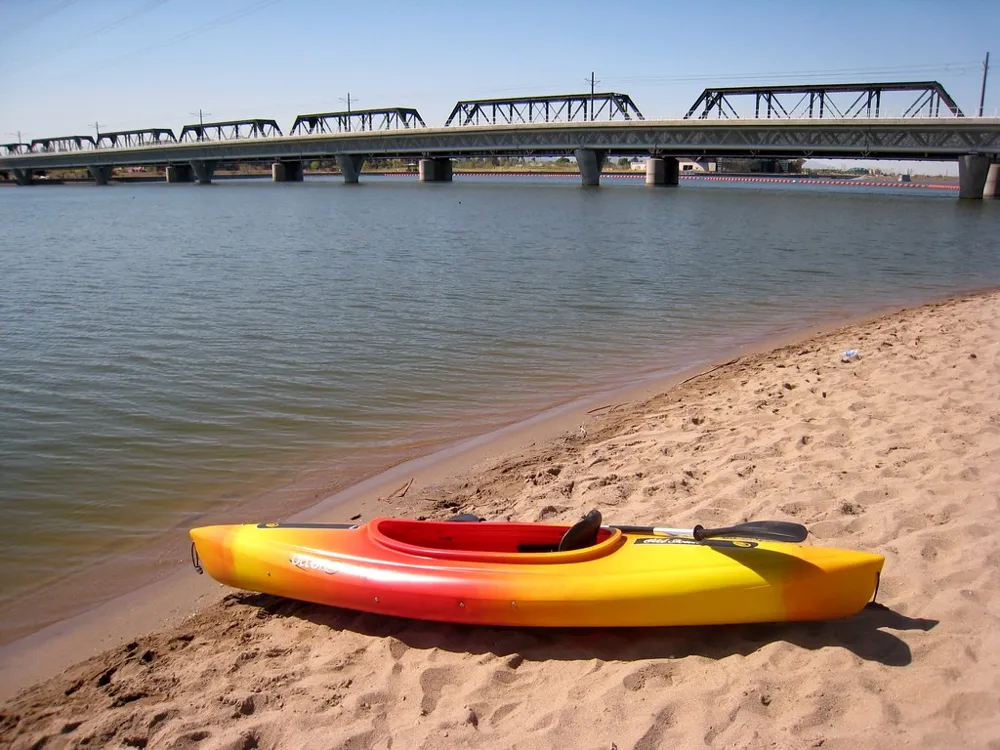
The two styles solve different problems. A sit-inside keeps you drier and warmer, puts your center of gravity lower and gives you knee and thigh contact for control, and its hatches keep gear out of the spray. A sit-on-top is easier to get on and off, drains itself through scupper holes and lets you climb straight back aboard after a fall, which is why it dominates warm-water, swimming and fishing use.
- Choose a sit-inside for cool water, spring and fall paddling, windy lakes, and covering a bit more distance.
- Choose a sit-on-top for hot weather, swimming stops, kids, dogs and fishing with lots of gear.
The full breakdown, including a decision table, is in sit-in vs sit-on-top kayaks.
Types of Sit-Inside Kayaks
"Sit-inside" describes the deck, not the purpose. Several kayak families use an enclosed cockpit, and they behave very differently on the water:
| Type | Typical Length | Cockpit | Best For |
|---|---|---|---|
| Recreational | About 9 to 12 ft | Large, easy entry | Lakes, ponds, slow rivers |
| Day touring / crossover | About 11 to 14 ft | Medium, often fits a skirt | Longer lake days, light chop |
| Touring / sea kayak | About 14 ft and up | Smaller, snug fit, bulkheads at both ends | Open water, multi-day trips |
| Whitewater | About 6 to 9 ft | Small, snug, always skirted | Rapids and moving water |
| Tandem sit-in | About 12 ft and up | One large or two separate cockpits | Two paddlers sharing a boat |
Lengths are typical ranges, not fixed rules. Every boat in our list is recreational. For the others, see touring kayaks, whitewater kayaks and tandem kayaks, or get the big picture in types of kayaks. Inflatable kayaks with a covered deck feel similar but are a separate category; see inflatable kayaks.
How to Choose a Sit-Inside Kayak
Length and Width
Longer boats glide farther and track straighter; shorter boats turn faster and are easier to store and carry. Wider boats feel steadier when you first sit down but take more effort to push along. For most adults on calm water, 10 to 12 ft and 28 to 30 in wide is the sweet spot. Paddling Magazine gives a typical sit-in width range of about 26 to 34 in.
Weight Capacity
Add up your body weight, clothing, water, gear and anything else you'll carry, then pick a boat whose maximum rating leaves plenty of room. A common rule is to keep your load to about 60 to 70% of the maximum. Our kayak weight limit guide explains the difference between maximum, performance and usable capacity.
Boat Weight
The boats here range from 36 to 50 lb. That difference matters more than it looks when you're lifting a kayak onto a roof alone at the end of the day. See how much a kayak weighs for typical weights by type.
Cockpit Size
Big cockpits are easy to enter and feel less confining, which helps nervous beginners and anyone with limited flexibility. Smaller cockpits give better thigh contact and seal more easily with a spray skirt, which matters in wind and waves. Recreational boats lean toward large openings.
Seat, Foot Braces and Thigh Pads
You'll sit in one position for hours, so an adjustable, padded seat with real back support is worth paying for. Adjustable foot braces let you set your leg position, and thigh pads give you something to push against when you steer and brace. Our kayak seat guide covers upgrades for boats with basic seats.
Storage and Bulkheads
A hatch with a bulkhead behind it creates a sealed compartment that keeps gear drier and traps air, which helps the boat float if it swamps. A hatch without a bulkhead is just a lid over the open hull. Open tank wells with bungees are handy for a dry bag but aren't sealed.
Hull Material
- Rotomolded polyethylene (Old Town, Perception, Wilderness Systems, Sun Dolphin): tough, abrasion-resistant and usually the heaviest option.
- Thermoformed plastic such as Pelican's Ram-X: lighter, with a stiffer, shinier finish, but less forgiving of hard hits.
- Composites (fiberglass, Kevlar, carbon): lightest and fastest, mostly found in touring kayaks, and the most expensive to buy and repair.
Price Tiers
Budget sit-ins from big-box stores keep things simple: basic seats, open or unsealed storage and short, flat hulls. Mid-range recreational boats add better seats, adjustable foot braces, thigh pads and sealed hatches. Premium sit-ins move into lighter materials, longer day-touring hulls and more refined outfitting. Spend on the seat and storage you'll use, not on features for water you won't paddle.
Sizing and Fit in the Cockpit
A sit-in should feel snug enough to control but not cramped. With the foot braces adjusted, the balls of your feet should rest on the pegs with your knees slightly bent, and your thighs should be able to reach the thigh pads when you lift your knees. A little room at the hips is normal; if your hips press hard against the sides, size up. If the braces are on the last notch and your legs are still cramped, the boat is too small.
- Taller paddlers usually fit better in 12 ft boats with more legroom and deck height, like the Pungo 120.
- Shorter and lighter paddlers often prefer narrower, shorter boats that are easier to reach over when paddling.
- Heavier paddlers should start with capacity, then check seat width and cockpit length.
Our kayak size chart has length recommendations by height and use, and the paddle length guide matches your paddle to your boat's width. If you can, sit in a boat at a shop before buying.
Where to Buy and Buying Used
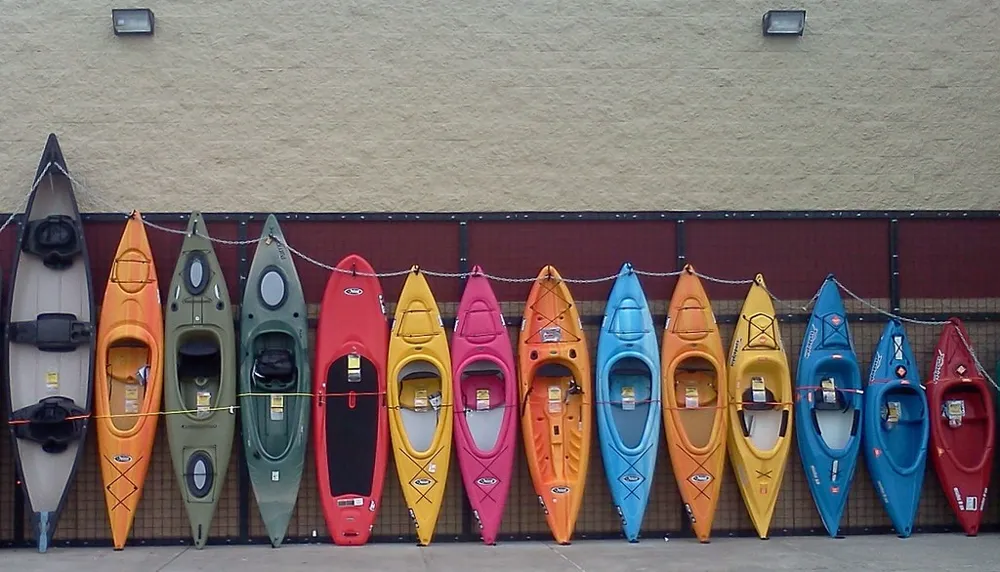
Paddling specialty shops tend to have more knowledgeable staff, wider selection and sometimes demo days where you can try boats on the water. Big-box and sporting goods stores carry budget and mid-range rec kayaks, and online retailers cover most of the models above. Shipping a kayak is bulky, so check delivery options and whether you'll need to collect it from a store.
Used sit-ins are common on local marketplace listings and at end-of-season rental sales. Before you buy:
- Check the hull: look for deep gouges, cracks, soft or flexible spots, fading from sun damage and dents that change the shape. Light scratches are normal.
- Look inside the cockpit: make sure the seat, backrest, foot braces and thigh pads adjust and aren't broken, and that any bulkhead is intact and sealed.
- Test hatches: lids should close firmly, and rubber gaskets shouldn't be cracked.
- Paddle it if you can: check entry and exit, comfort and whether it tracks straight.
- Ask about extras: sellers sometimes include a paddle, spray skirt or life jacket. Any life jacket should fit you and carry the right approval.
Safety: Capsizes, Re-Entry and Cold Water
The biggest difference between sit-ins and sit-on-tops shows up when you tip over. A sit-in can fill with water, so you'll need to wet exit (slide out of the cockpit), flip the boat, pump it out and climb back in. Without help, that usually means a paddle float self-rescue; with a partner, a T-rescue. Practice both in calm, shallow, warm water before you need them. Our guide to getting in and out of a kayak walks through the steps, and how to roll a kayak covers the skill that skips the swim entirely.
- Flotation: boats with bulkheads at one end float the sealed end high when swamped. Adding a flotation bag in any open end makes a swamped kayak easier to empty and recover.
- Spray skirts: a skirt keeps rain and waves out of the cockpit and warmth in, but it must match your cockpit rim and have a grab loop you can pull. Learn to wet exit before using one. Compare options in kayak spray skirts.
- Life jackets: US Coast Guard rules require a properly sized, approved life jacket for each person on most boats, including kayaks, and many states require children to wear one. Rules vary by state (last checked November 2026). See kayak PFDs.
- Cold water: a sit-in keeps you warmer in the boat, but a capsize in cold water is serious. Dress for the water temperature, not the air. See what to wear kayaking.
Recreational sit-ins are built for calm, sheltered water. Stay close to shore, avoid strong current and open water, and check the wind forecast. This is general safety information, not a substitute for a paddling course.
Accessories Worth Adding
- Paddle: a lighter paddle reduces fatigue more than almost any other upgrade. See kayak paddles.
- Bilge pump and paddle float: the two tools for emptying and re-entering a swamped sit-in.
- Dry bag: even sealed hatches can seep. Bag anything that must stay dry; see dry bags.
- Spray skirt: for wind, cold or rough days, if your cockpit size has a matching skirt.
- Seat cushion or upgraded seat: worth it on budget boats with thin padding.
- Cart: a two-wheeled kayak cart saves your back on long walks from the car.
More ideas in our kayak accessories guide.
Care, Storage and Transport

Rinse your kayak with fresh water after use, especially after salt water, and let the cockpit and hatches dry with the lids open to avoid mildew. UV breaks down plastic over time, so store the boat out of direct sun or under a cover. Support the hull at its strong points on padded rack arms or straps, or store it on its side; leaving a plastic hull on a hard edge for weeks can dent it. See kayak storage racks for options.
For the drive, carry the kayak on crossbars with pads or cradles, strap it down with cam straps and add bow and stern lines for longer boats. Our kayak transport guide covers loading alone and options without a roof rack.
Paddling and Fishing From a Sit-In
A sit-in's low seat and thigh contact make it efficient to paddle once you learn a proper forward stroke, which uses your torso rather than just your arms. Our how to paddle a kayak guide covers the basic strokes and turns.
Fishing from a sit-in works well for light tackle on calm water, especially in cool weather when staying dry matters. Look for rod holders, a deck surface for a small tackle box and enough capacity for your gear. For serious fishing setups, sit-on-tops still win on deck space; see fishing kayaks and kayak fishing tips.
Which Sit-Inside Kayak Should You Buy?
| If You Want… | Look At |
|---|---|
| One rec boat to grow into | Wilderness Systems Pungo 120 |
| A compact, tough boat to carry alone | Old Town Heron 9XT |
| Sealed storage in a 10 ft boat | Perception Joyride 10 |
| The easiest entry and exit | Old Town Vapor 10 |
| A wide, light boat with rod holders | Pelican Mustang 100X |
| The lightest hard-shell sit-in | Pelican Argo 100X |
| A simple budget boat | Sun Dolphin Aruba 10 |
Still comparing brands? Our kayak brands guide explains who makes what, and the kayaking hub links every boat and gear guide on the site.
Frequently Asked Questions
What is a sit-inside kayak?
A sit-inside (or sit-in) kayak has an enclosed deck with a cockpit opening. You sit low inside the hull with your legs under the deck, which keeps you drier and warmer than on an open sit-on-top.
Are sit-inside kayaks good for beginners?
Yes, wide recreational sit-ins around 10 to 12 ft are a common first kayak for calm lakes and slow rivers. The trade-off is that getting back in after a capsize is harder than on a sit-on-top, so stay near shore and practice a rescue.
Can a sit-in kayak sink?
A swamped sit-in can fill with water and float low, which makes it hard to empty and re-enter. Bulkheads and flotation bags trap air at the ends so the boat stays afloat and is easier to recover; check what your model has.
Do I need a spray skirt on a recreational sit-in?
Not for calm, warm days. A skirt helps in wind, waves, rain or cold weather by keeping water out of the cockpit, but it must fit your cockpit rim and you should practice a wet exit before using one.
Can you fish from a sit-inside kayak?
Yes. Some recreational sit-ins, like the Pelican Mustang 100X, have rod holders, and anglers in cool weather like the warmth. Sit-on-tops still offer more deck space for crates and standing.
What size sit-inside kayak do I need?
Most adults paddling lakes and slow rivers do well with 10 to 12 ft. Taller or heavier paddlers and anyone carrying gear should look at 12 ft and a capacity well above their total load.