Wakeboard Helmets That Drain, Fit and Protect (2026)
Water sports helmets for boat and cable riders, with what the EN 1385 and CE labels mean, why drainage and ear flaps matter, and how to get a fit that stays put.

How to Pick a Wakeboard Helmet
A wakeboard helmet protects your head from the board, the handle, cable park obstacles and hard falls on the water. Look for four things: a water sports certification on the label, vents that drain water quickly, a liner that copes with being soaked, and a snug fit that doesn't shift when you crash. Ear flaps are optional; many riders add them for cold water or trick sessions.
Don't confuse a helmet with flotation. Every rider being towed should wear a Coast Guard-approved life jacket as well; see our wakeboard life vests guide.
Liquid Force Hero
Best for most wake riders
- Listed as CE certified to EN 1385, the water sports standard
- Impact-rated ABS shell with dual-density foam
- 10 vents that drain water fast; for boat and cable
Pro-Tec Ace Water
Best classic multi-water-sport helmet
- Water version of Pro-Tec's Ace
- Listed for wakeboarding, kayaking, rafting and kiting
- Check the label for its certification
Sweet Protection Strutter
Best for riders who also paddle whitewater
- Low-volume paddling helmet
- Carbon-reinforced shell
- Occigrip fit system and EVA liner
Wakeboard Helmets Compared
| Helmet | Listed Standard | Shell and Liner | Fit System | Ear Protection |
|---|---|---|---|---|
| Liquid Force Hero | CE EN 1385 | ABS shell, dual-density foam, terry liner | Sized S–XL (52–61 cm) | Optional ear flaps, sold separately |
| Pro-Tec Ace Water | Check the label | Hard shell (see listing) | See listing | See listing |
| Sweet Protection Strutter | Check the label | Carbon-reinforced shell, EVA liner | Occigrip | See listing |
| Mystic Vandal Pro | CE and UKCA approved | ABS shell, EPP foam, mesh lining | 360 dial, magnetic Fidlock buckle | Not stated |
| Mystic Vandal | CE and UKCA approved | EVA foam lining | 180 dial, detachable fit pads | Optional ear covers, sold separately |
| Mystic Legacy | CE approved | Extended temple and jaw coverage | See maker's size chart | Built-in, sound-optimizing |
| Mystic Impact Cap | Soft cap, not a hard shell | Foam panels and neoprene | Velcro and chin strap | Perforated ear pieces |
Details come from each maker's product page or the product's store listing as of November 2026. Models and labels change, so check the label inside the helmet before you buy.
The Best Wakeboard Helmets
1. Liquid Force Hero
The Hero is Liquid Force's skate-style wake helmet, and it's one of the few that names the test it meets: the maker lists it as CE certified to EN 1385, the water sports standard. It has an impact-rated, high-density ABS shell over a dual-density foam liner, plus a Sweat Saver terry cloth liner for comfort. Its 10 vents let water drain out fast, and Liquid Force markets it for riding behind the boat and at the cable park. Stainless steel snaps take optional ear flaps, which are sold separately.
Sizes run Small to XL, about 52–61 cm head circumference (see the fit section below).
Good to Know
- Names a specific water standard
- Built for boat and cable
- Ear flaps can be added
Watch Out For
- No dial adjuster listed, so sizing matters
- Ear flaps cost extra
2. Pro-Tec Ace Water
Pro-Tec is a well-known skate helmet brand, and the Ace Water is the brand's water version of its Ace helmet. The current listing markets it for wakeboarding, kayaking, whitewater rafting and kite surfing, which makes it a good one-helmet option if you ride and paddle. Pro-Tec sells both certified and non-certified versions of some skate helmets, so check the label and listing for the standard this water model is tested to before you buy.
Good to Know
- Marketed for several water sports
- Familiar skate-style shape
Watch Out For
- Confirm the certification on the label
- Older listings may be closeouts
3. Sweet Protection Strutter
The Strutter is a whitewater paddling helmet rather than a wake-specific one, so it suits riders who also kayak or raft. It's a low-volume, carbon-reinforced design with Sweet Protection's Occigrip fit system and an EVA liner, the same helmet we feature in our whitewater kayaking gear guide. Paddling helmets are the category EN 1385 was written for; check the label for the standard on the version you buy.
Good to Know
- Built for paddling and river use
- Low-profile fit
Watch Out For
- Not designed around wake or cable riding
- Confirm the standard on the label
4. Mystic Vandal Pro
Mystic is a kite, wing and wake brand, and the Vandal Pro is its top water helmet. It pairs an ABS shell with EPP impact foam, which Mystic says doesn't absorb water, plus a mesh comfort lining. Fit is fine-tuned with a 360 dial, and the chin strap closes with a magnetic Fidlock buckle. Mystic lists it as CE and UKCA approved but doesn't name a specific standard.
Good to Know
- Foam that stays light when wet
- Dial fit and magnetic buckle
Watch Out For
- No specific test standard named
- Check availability in the US
5. Mystic Vandal
The standard Vandal uses an EVA foam lining, which Mystic notes is slightly bulkier than the Pro's, with a 180 dial, a quick-release chin closure and detachable fit pads. It's compatible with detachable ear covers, sold separately. Like the Pro, it's listed as CE and UKCA approved.
Good to Know
- Dial adjuster and swappable pads
- Add ear covers when needed
Watch Out For
- Bulkier lining than the Pro
6. Mystic Legacy
The Legacy has a slimmer, closer fit with extra side coverage that extends over the temples and jaw. It has water drainage channels and airflow channels, and built-in ear protection that Mystic says guards against cold and wind chill while still letting sound through. It's a good fit for riders who want ear coverage without extra parts.
Good to Know
- More coverage at the sides
- Drainage channels built in
Watch Out For
- Ear coverage isn't removable for hot days
Water Helmet Standards Explained
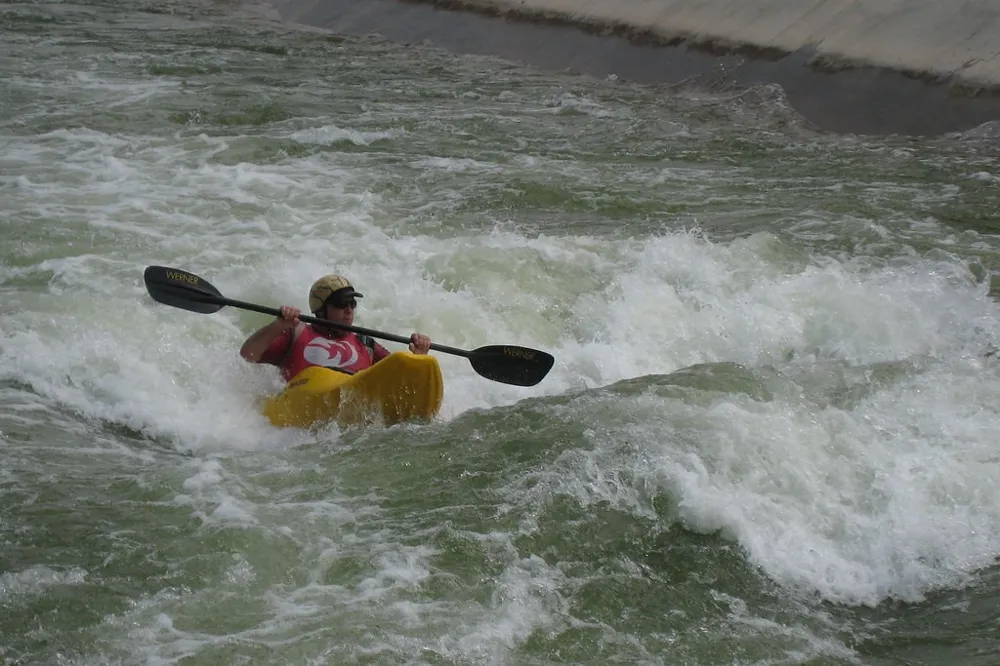
Bike, skate and snow helmets each have their own standards. For wake helmets, we found no standard written only for wakeboarding. Here's what you'll see on labels:
| Label | What It Means |
|---|---|
| EN 1385 | The European standard for helmets for canoeing and white water sports (current version EN 1385:2012). It covers helmets with and without holes in the shell, and its scope includes impact testing, buoyancy, straps, quick-release parts and marking. |
| CE | The maker's declaration that the product meets EU requirements. On its own, it doesn't tell you which helmet test was used. |
| UKCA | The UK marking for products that meet UK rules. |
| ASTM F1492 / CPSC / EN 1078 | Skate and bike standards. Useful on land, but not written for water use. |
EN 1385 was written for paddlers on rivers of classes 1 to 4. Its scope notes that most deaths in these sports come from drowning after concussion, which is the same risk a knocked-out wakeboarder faces. The standard excludes extreme whitewater such as running high waterfalls and doesn't cover visors or face guards. Because it's the closest fit, many wake brands test to it; Liquid Force, for example, lists the Hero as "CE Certified EN 1385 Water Sports Standard." When a helmet lists only "CE," ask the maker which standard it was tested to.
How Water Helmets Differ From Skate and Snow Helmets
A wake helmet looks like a skate helmet, but it's built for a different job. Water helmets are designed to drain quickly so they don't fill and drag on your neck after a fall, and their liners and foams are chosen to cope with being soaked. Snow helmets are built for warmth and certified to snow standards such as ASTM F2040. Skate and bike helmets are tested for falls on hard ground, which is still useful if you hit an obstacle, but their standards say nothing about water.
If you already own a certified skate helmet, it's better than riding bareheaded. For regular riding, a helmet sold and labelled for water sports is the better choice. See our skateboard helmet and ski and snowboard helmet guides for those sports.
Drainage, Vents and Liners
Drainage is the feature that most separates a water helmet from a land helmet. Look for:
- Vents that drain: the Liquid Force Hero uses 10 vents to let water out fast, and the Mystic Legacy has dedicated drainage channels.
- Liners that don't stay soaked: Mystic says the EPP foam in the Vandal Pro doesn't absorb water, and Jobe notes that many riders prefer a strong outer shell with a liner that dries quickly.
- Removable pads: pads that come out can be rinsed and dried separately and swapped to tune the fit.
- Corrosion-resistant hardware: stainless steel snaps, like those on the Hero's ear-flap mounts, hold up better to water.
Boat vs Cable: When to Wear a Helmet
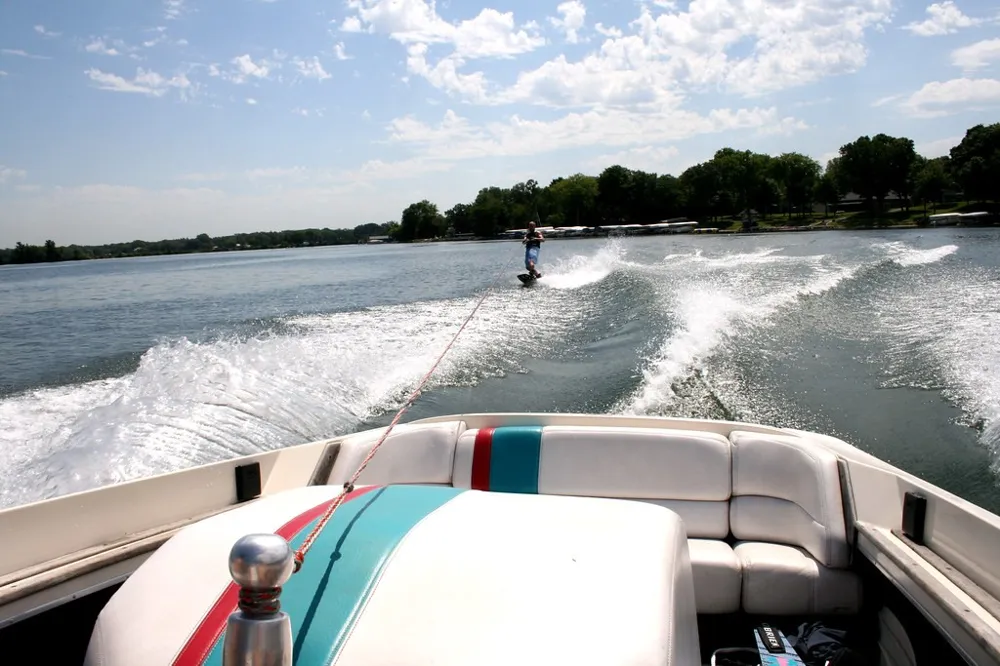
Mystic, which makes helmets for several board sports, sums up the risk well: it depends on your speed, how high you jump and how you hit the water. It recommends helmets for wakeboarding, kitesurfing and foiling for beginners and pros alike.
| Behind the Boat | At a Cable Park | |
|---|---|---|
| Main hazards | Hard edge catches, the handle, your own board, jumping the wake | Kickers, rails and boxes, plus the same water falls |
| Helmet rules | Usually your choice | Often required; set by each park |
| Who should wear one | Anyone learning to jump the wake or try inverts; kids | Everyone, especially on obstacles |
| Ear flaps | Optional; you need to hear the boat crew | Optional; useful for repeated hard falls |
Behind the boat, your board and the handle are the usual culprits when a fall goes wrong. Learn the basics in our how to wakeboard guide, then pick a board with our best wakeboards roundup.
Ear Protection
A sideways fall can slap water hard against your ear, and cold wind on wet ears is uncomfortable on cool days. That's why many wake helmets offer ear protection:
- Add-on ear flaps: the Liquid Force Hero takes optional ear flaps on snaps, and the Mystic Vandal takes detachable ear covers. Both are sold separately.
- Built-in ear protection: the Mystic Legacy has ear protection designed to let sound through.
- Perforated ear pieces: soft caps like the Mystic Impact Cap use holes to keep hearing clear.
The trade-off is hearing. Behind a boat you need to hear the driver and spotter, so go without flaps or choose a design that lets sound through. Agree on hand signals either way.
How to Size and Fit a Wake Helmet
- Measure your head. Wrap a soft tape around the widest part, starting in the middle of your forehead, as Liquid Force advises.
- Check the maker's chart. Sizes differ by brand. The Hero's chart, for example:
| Liquid Force Hero Size | Head Circumference | Hat Size |
|---|---|---|
| Small | 52–54 cm (20.6–21.3 in) | 6 1/2–6 7/8 |
| Medium | 54–56 cm (21.4–22 in) | 6 7/8–7 |
| Large | 56–58 cm (22.1–22.9 in) | 7–7 1/4 |
| XL | 58–61 cm (23–24 in) | 7 1/4–7 5/8 |
- Try it on. It should feel snug, stable and comfortable without pinching, and sit level on your head.
- Shake your head. The helmet shouldn't shift. Tighten the dial, add thicker pads or go down a size if it does.
- Close the chin strap. It should be firm but not restrictive. A loose strap can let the helmet shift on a hard fall.
Helmets without a dial rely on pads, so getting the size right matters more. If you're between sizes, try both on wet hair, since pads can feel different when soaked.
Cable Park Helmet Rules
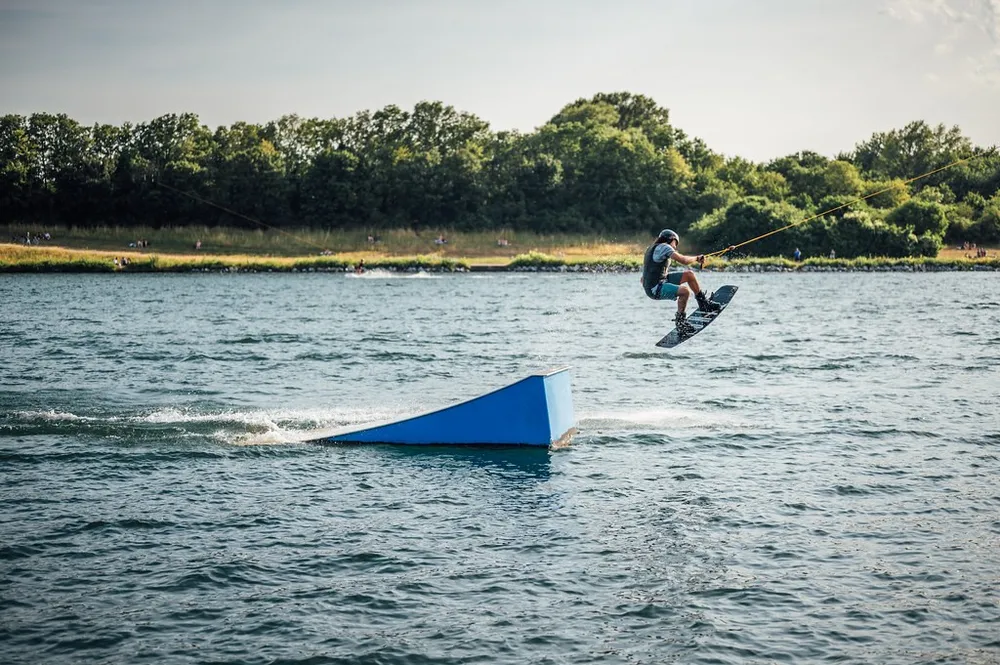
US towing laws focus mainly on life jackets and observers, while helmet rules usually come from the venue: many cable parks require one, and some lend helmets and vests with a session. Parks set their own rules, which can differ for beginners, kids and riders using obstacles. Before you go, check the park's website or call ahead to ask:
- Is a helmet required, and can I bring my own?
- What kind of vest is allowed? Some parks accept impact vests for experienced riders; others require Coast Guard-approved life jackets.
- Are there separate rules for the obstacles or the beginner cable?
Our guide to cable park wakeboarding covers what to expect on your first visit.
Surf Helmets and Impact Caps
Surfers rarely wear helmets, but they're used at shallow reef breaks, by beginners and kids around boards, and by some big-wave surfers. Surf helmets come in two styles:
- Hard-shell water helmets similar to wake helmets. Gath helmets are widely sold as surf helmets; check the maker's spec sheet for the model you're considering.
- Soft impact caps such as the Mystic Impact Cap, which uses foam panels and neoprene instead of a hard shell, with a slim fit, a brim, a Velcro fit adjustment, an adjustable chin strap and perforated ear pieces. Mystic positions it for lower-impact sessions.
A soft cap is not a substitute for a hard-shell helmet at a cable park or for wake tricks. For more on surfing risks, see is surfing dangerous? and our how to surf guide.
Kids' Wake Helmets
Kids spend a lot of time falling while they learn, so a helmet makes sense from their first rides. Measure their head and pick the smallest size that fits snugly; some brands offer XS sizes, such as Jobe's Base helmet. Choose a bright color so the driver and spotter can see them in the water, and pair it with a properly fitted children's life jacket. Start kids on a setup from our kids' wakeboard guide.
Care and When to Replace
- Rinse the helmet in fresh water after each session, especially after salt water.
- Remove the pads and let everything dry in the shade. Avoid leaving it in a hot car or direct sun for long periods.
- Check snaps, buckles and straps for corrosion or fraying.
- Replace the helmet after a significant impact, even if it looks fine, unless the maker says it's built for multiple impacts. Replace it too if the shell is cracked or the foam is crushed, and follow the maker's age guidance.
Related Guides
Complete your wake setup with wakeboard life vests, wakeboard bindings and the wakeboard size chart. Trying the boat's wave instead? See how to wakesurf and wakeboarding vs wakesurfing. For more water sports, browse the water sports hub.
Frequently Asked Questions
Do you need a helmet to wakeboard?
Boating laws focus on life jackets rather than helmets, but helmets are widely recommended for wakeboarding, especially at cable parks and once you start jumping. Many cable parks set their own helmet rules, so check before you ride. A helmet never replaces a Coast Guard-approved life jacket.
Is there a safety standard for wakeboard helmets?
We found no standard written only for wakeboarding. Water helmets that list a specific standard usually cite EN 1385, the European standard for canoeing and white water sports helmets. Others say only CE, which doesn't tell you which test was used.
Can I wear a skateboard or bike helmet for wakeboarding?
It will protect you better than nothing, but skate and bike standards such as ASTM F1492 and CPSC are written for land. Water helmets add drainage and liners meant to cope with being soaked, so a dedicated water helmet is the better choice.
Do cable parks require helmets?
Many do, and some lend helmets and vests with a session. Rules are set by each park and can differ for beginners and for riding obstacles, so check the park's website or ask at the desk.
Should a wakeboard helmet have ear pads?
Ear flaps help protect against hard water slaps and cold, but they muffle sound a little. Many wake helmets take optional ear flaps, so you can add them for cold days or tricks and leave them off when you need to hear the boat.
Do wakeboard helmets float?
Don't count on it. Some foams resist soaking up water, but a helmet is not flotation. Wear a properly fitted life jacket every time you ride.
Should surfers wear a helmet?
Surf helmets and soft impact caps are used at shallow reef breaks and by beginners, and some surfers wear them in big waves. Whether you need one depends on the break, so ask local surfers or a surf school.