Where to Kayak in the US: 9 Standout Waters and How to Plan (2026)
From Lake Superior's sea caves to Alaska's glacier bays and Georgia's blackwater swamp, these are America's top paddling destinations, with the permits, seasons and skills each one asks of you.
The Best Places to Kayak in the US at a Glance
The best kayaking spots in the US cover every kind of water: cold Great Lakes shoreline carved into sea caves, thousand-lake wilderness linked by portages, tidal saltwater with orcas and glaciers, and slow blackwater swamps. The nine destinations below were chosen for variety across regions and water types, and each one is run by a public agency that publishes paddling rules. Permits and seasons change, so treat every detail as accurate as of November 2026 and confirm with the managing agency before you go.
| Spot | State | Water Type | Skill Level | Main Season | Permit |
|---|---|---|---|---|---|
| Apostle Islands National Lakeshore | Wisconsin | Great Lake, sea caves | Guided for beginners; self-rescue skills to go alone | Summer | Camping permit |
| Pictured Rocks National Lakeshore | Michigan | Great Lake cliffs; inland lakes | Experienced on Lake Superior; beginners on inland lakes | Summer | Check park for camping |
| Boundary Waters Canoe Area Wilderness | Minnesota | Linked wilderness lakes | Beginner to advanced; portaging required | Quota season May 1–Sept 30 | Always required |
| San Juan Islands | Washington | Tidal saltwater | Intermediate to advanced; guided tours for beginners | Year-round water access; check seasonal site closures | Site fees; some reservations |
| Glacier Bay National Park | Alaska | Fjord, tidewater glaciers | Advanced, remote | Peak season May 1–Sept 30 | Free camping permit in peak season |
| Everglades National Park | Florida | Mangroves, marsh, bay | Beginner to advanced | Popular in winter | Wilderness permit for overnights |
| Okefenokee National Wildlife Refuge | Georgia | Blackwater swamp | Beginner to intermediate | Year-round, water levels permitting | Overnight permit |
| Buffalo National River | Arkansas | Free-flowing river | Upper: whitewater; lower: beginner-friendly | Spring upstream; lower river year-round | None for river camping |
| Lake Tahoe | California and Nevada | Alpine lake | Beginner to intermediate | Summer | Clean, Drain, Dry required |
Need a boat that suits the water? Our types of kayaks guide explains which hulls work on lakes, rivers and the sea, and the kayaking hub links to every paddling guide on the site.
Lake Superior Sea Caves: Apostle Islands and Pictured Rocks
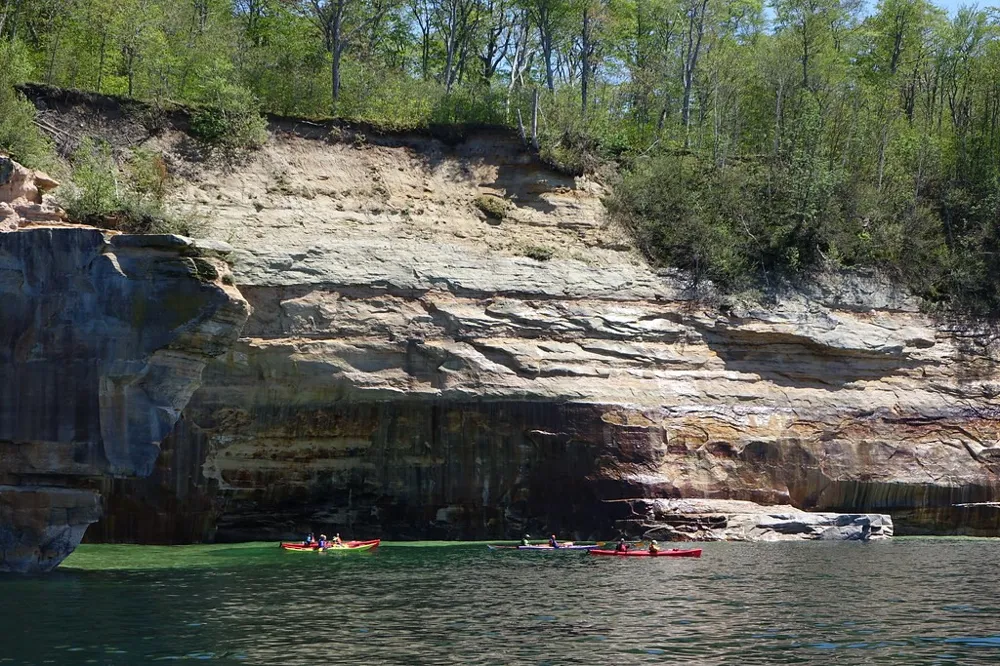
Lake Superior holds two of the most photographed paddles in the country. Both are national lakeshores, both have sandstone cliffs that drop straight into the water, and both demand respect for cold water and fast-changing weather.
Apostle Islands National Lakeshore, Wisconsin
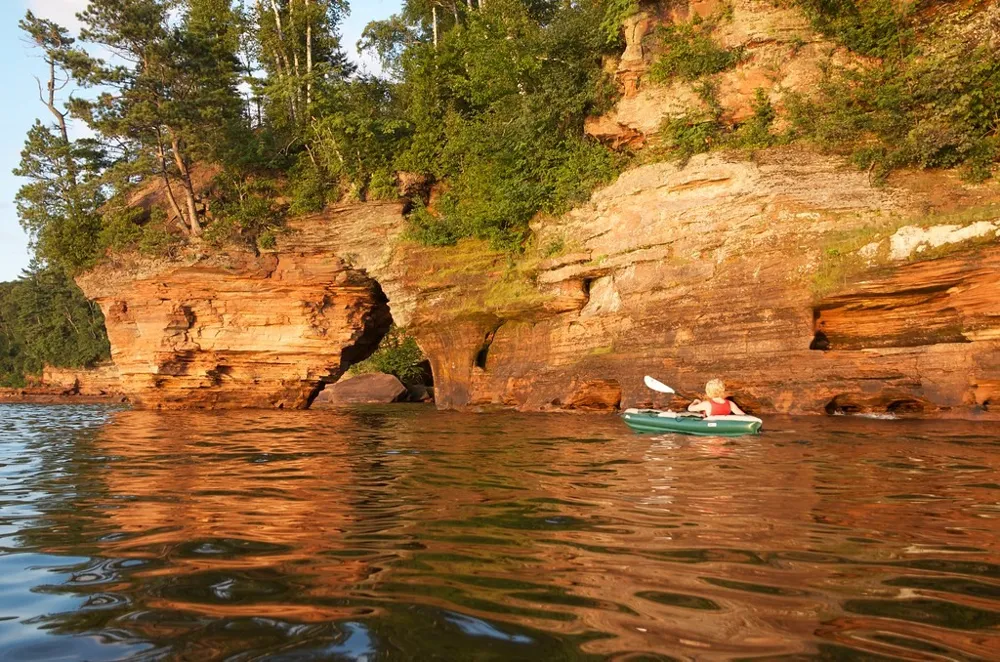
The mainland sea caves near Meyers Beach are the headline paddle. The National Park Service says they start about 1.5 miles from the launch and run roughly 3 more miles along the shore. In summer the caves can also be seen by boat at Devils Island and Sand Island, and the park lists 21 islands that paddlers can reach, many with beaches, trails and campsites.
- Water type: Open Great Lake; waves rebound off the rock walls and create confused, bouncing water near the caves.
- Skill level: The park recommends guided trips with authorized outfitters for beginners and says paddlers need to be able to self-rescue.
- Season: Summer paddling. Water averages in the 40s °F in May and June and rarely exceeds 60 °F in late summer, according to the park, which warns hypothermia can set in within about 10 minutes.
- Permits: Camping permits are required for all camping in the lakeshore and are reserved on Recreation.gov. Meyers Beach has a parking fee; Little Sand Bay Visitor Center parking is free (as of November 2026).
The park reports fatal kayaking accidents at the sea caves, notes that cell service is unreliable and that help may be at least 30 minutes away. Its advice is to check the marine forecast, avoid the caves in rough conditions, never paddle them alone, and wear a PFD, wetsuit and spray skirt.
Pictured Rocks National Lakeshore, Michigan
East of the Apostles on Michigan's Upper Peninsula, the Pictured Rocks run for 15 miles of sheer walls down to the waterline. The Park Service is blunt that these exposed cliffs "offer no way off the water if wind and waves increase," and it says a rescue time of 60 to 90 minutes or longer is more likely.
- Water type: Lake Superior cliffs, plus sheltered inland lakes.
- Skill level: Lake Superior shoreline is for paddlers who can self-rescue and read weather. Beginners can stay on the inland lakes: Grand Sable, Little Beaver and Beaver Lakes are reachable by vehicle, while Miners, Chapel and Legion Lakes require a carry.
- Season: Summer; tour boats run from Munising during the summer months. The park says a calm bay does not mean calm conditions along more distant shores, so check the afternoon forecast even for a morning trip.
- Permits: The park's kayaking page lists no paddling permit; check its camping page for overnight rules.
The park recommends a wetsuit, a life jacket worn at all times, a whistle or signal device, a float plan and paddling with others who know rescues. A long, decked touring kayak or sea kayak handles open Lake Superior far better than a short recreational boat.
Boundary Waters Canoe Area Wilderness, Minnesota
The Boundary Waters is one of the country's best-known lake-to-lake paddling wilderness. The U.S. Forest Service describes more than one million acres of boreal forest in northeastern Minnesota with over 1,200 miles of canoe routes, more than 1,100 lakes, several hundred streams and nearly 2,000 designated campsites, all first come, first served.
- Water type: Linked flatwater lakes and streams with portage trails between them.
- Skill level: Day trips from an entry point suit beginners; multi-day routes need navigation, portaging and camp skills. Canoes are the traditional boat here; see canoe vs kayak for the trade-offs and how to portage a canoe before a long route.
- Season: Open-water paddling centers on the quota season, May 1 to September 30.
- Permits: "A permit is always required." From May 1 to September 30, overnight trips need a quota permit reserved on Recreation.gov, where you also choose an issue station. Walk-up permits may be available on the entry date or the day before. Day paddlers, and everyone from October 1 to April 30, use a self-issued permit (as of November 2026).
Before reserving, the Forest Service asks groups to watch two Leave No Trace videos, then watch a third together when picking up the permit. Group size is capped at nine people, motors are allowed only in certain areas with a motor permit, dogs must be leashed, fireworks are banned and all trash must be packed out. Our kayak camping gear list covers what to pack.
San Juan Islands, Washington
The San Juans are the classic Pacific Northwest sea kayaking trip: island-hopping between rocky coves with chances to see orcas, seals, porpoises and bald eagles, all reported by paddling guides to the area. Ferries from Anacortes reach the main islands.
- Water type: Cold, tidal saltwater. Washington State Parks says Puget Sound waters average in the lower 50s °F year-round, tides can range 10 to 15 feet twice a day, and tidal flows can reach up to 8.5 knots, producing rips, boils and whirlpools.
- Skill level: Intermediate to advanced for independent trips; the State Parks brochure says the islands are "especially subject to fast tidal flows" that can be hazardous even in calm weather. Beginners should book a guided tour.
- Season: Paddlers use the water year-round, but some parks have seasonal closures, so call ahead.
- Permits: No paddling permit, but overnight trips use the Cascadia Marine Trail, which State Parks describes as 55 shoreline campsites for small, beachable, wind- or human-powered craft. Its brochure lists 20 sites in the San Juans, including Jones Island, Stuart Island, Posey Island, Spencer Spit and Obstruction Pass state parks. Designated water trail sites charge a nightly fee and some require reservations (brochure dated 2023; check current rules).
Carry tide and current tables and plan crossings around slack water. The brochure flags crossings north of Orcas Island to Sucia, Matia and Patos islands for reefs and fast currents, and warns that wind blowing against the current can raise steep, breaking waves.
Glacier Bay National Park, Alaska
For experienced sea kayakers, Glacier Bay in southeast Alaska offers fjords, glaciers and wilderness shoreline. Trips start from Bartlett Cove, where the park's campground runs first come, first served with no reservations.
- Water type: Cold, remote fjord saltwater.
- Skill level: Advanced. Independent trips are self-supported, far from help and on cold water, so newer paddlers should look for a guided trip.
- Season: The park's peak season runs May 1 to September 30.
- Permits: The Park Service says "all campers and boaters are required to have a free permit" during peak season, covering both Bartlett Cove Campground and the wilderness backcountry. Vessels entering the bay from June 1 to August 31 also need a permit; confirm with the park how that applies to your kayak (as of November 2026).
The park publishes a backcountry camping orientation video and a boater orientation video; watch both while planning. Pack for wet, cold conditions with a dry bag system, a drysuit or wetsuit and a reliable GPS or charts.
Everglades National Park, Florida
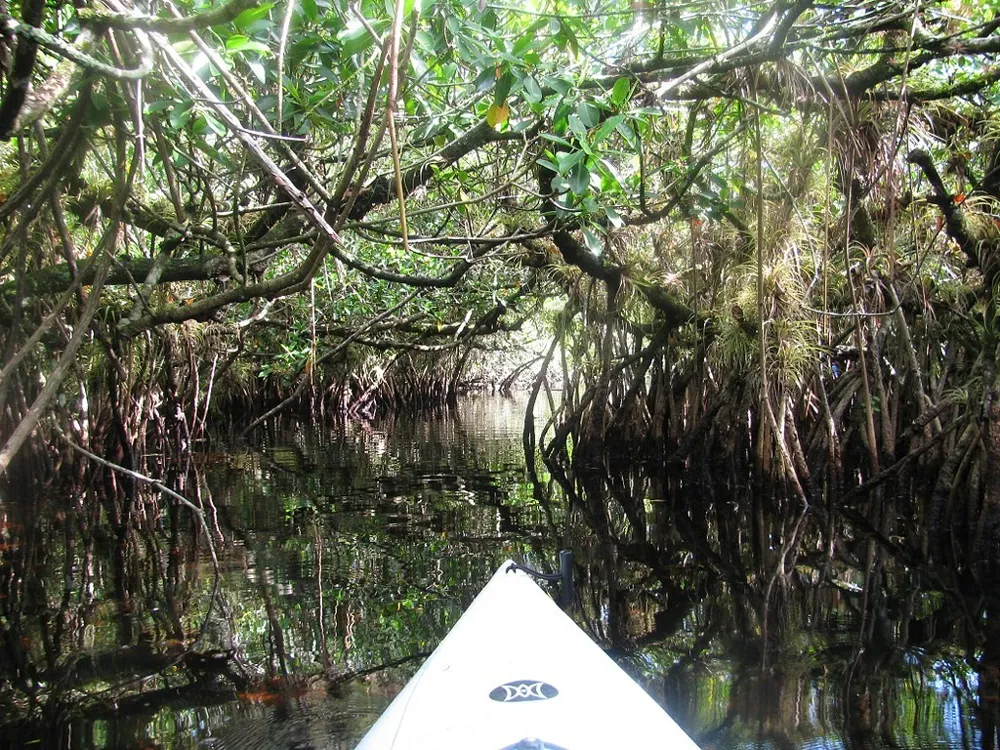
The Everglades is the country's best-known swamp and mangrove paddle, with trips from a couple of hours to many days. The Park Service says its trails "range from beginner to advanced."
- Water type: Mangrove tunnels, sawgrass marsh, open bay and the Ten Thousand Islands coastline.
- Skill level: Beginners do well on short marked trails; the 99-mile Wilderness Waterway and Florida Bay crossings need navigation and tide skills.
- Season: Winter is a popular time to visit; check the park's current conditions before any trip.
- Permits: Wilderness permits are required for all overnight backcountry camping. Reservations open on Recreation.gov on a rolling basis three months before the start date, your confirmation email serves as the permit, and walk-up permits are available in person (as of November 2026).
From the Gulf Coast launch at the Marjory Stoneman Douglas Visitor Center, the park lists the Sandfly Island Loop, Turner River and Halfway Creek. Near Flamingo, trails include Nine Mile Pond, Noble Hammock, Hell's Bay, West Lake, Bear Lake, the Mud Lake Loop and Florida Bay. The Everglades Institute runs guided Nine Mile Pond tours when water levels allow.
Most wilderness campsites can only be reached by water, and some are chickees, raised platforms over the water. Feeding wildlife is prohibited anywhere in the park, and many sites lack restrooms, so pack out everything you bring.
Okefenokee Swamp, Georgia
The Okefenokee National Wildlife Refuge in southeast Georgia offers a quieter blackwater swamp trip on marked canoe trails, with overnight stays on raised platforms. The U.S. Fish and Wildlife Service lists eight overnight platforms and two islands for trips of one to four nights, with one group per platform.
- Water type: Shallow blackwater swamp.
- Skill level: Beginner to intermediate for day trips; overnights need self-sufficiency. Paddlers may have to get out and push through shallow water or peat blowups.
- Season: Camping is available year-round except during closures for water levels, maintenance or trail work. March and April are peak season, when reservations are limited to two nights. The refuge was warning of low water and impassable trails when checked in November 2026.
- Permits: Overnight trips need a permit through Recreation.gov, reserved up to two months ahead. The permit holder must stay for the whole trip and every boat must carry a copy (as of November 2026).
Only canoes and kayaks are allowed on camping trips, and no motors of any kind are permitted, including trolling motors. Entrances are the Suwannee Canal Recreation Area and Kingfisher Landing on the east side and Okefenokee State Park on the west, with set launch times. The refuge advises against drinking or filtering swamp water and recommends one gallon per person per day, and asks paddlers to clean and drain boats and gear before entering.
Buffalo National River, Arkansas
The Buffalo "flows freely for 151 miles" through the Ozarks, according to the National Park Service, with bluffs, gravel bars and three districts that suit different paddlers.
- Water type: Free-flowing, rain-fed river.
- Skill level: The upper district is "narrow and fast" and draws whitewater kayakers; the lower district around Buffalo Point suits beginners at normal levels.
- Season: Paddling usually starts on the upper river in spring. The middle district around Tyler Bend floats when levels allow, and the lower district offers year-round paddling. Because the river is "largely rainfall dependent," dry years shorten the upper season.
- Permits: No float permit is listed for private paddlers, and backcountry camping on the river needs no permit (as of November 2026).
Everyone in a boat must have a PFD, and children 12 and under must wear one at all times. The park lists flows it considers unsafe, including 1,600 cfs at the Ponca gauge and 2,000 cfs at the Pruitt (Highway 7) gauge, and warns that a storm upstream can affect the middle and lower river. Avoid sweepers and strainers, camp on gravel bars well above the water, and if a boat pins, leave it and report it. For moving-water boats, see our whitewater kayaks guide.
Lake Tahoe, California and Nevada
Lake Tahoe's mountain views make it one of the West's favorite flatwater paddles. Paddlers launch from beaches and parks around the shore; the Forest Service names Kaspian Picnic Area as easy lake access, and Sand Harbor State Park on the Nevada side is a popular launch that is reported to fill early in summer. A Lake Tahoe Water Trail also exists for paddlers planning longer shoreline trips.
- Water type: Deep, cold alpine lake.
- Skill level: Beginner-friendly close to shore on calm days; wind and cold water make open-water crossings a step up.
- Season: Summer is the main paddling season. The Forest Service warns the water is cold, especially in spring, and that cold water shock "can be life-threatening."
- Permits: No paddling permit, but the Forest Service says "all non-motorized watercraft and gear must be Clean, Drained, and Dry before and after launching," and encourages paddlers to watch a five-minute video to become a certified Tahoe Keeper (as of November 2026).
The Forest Service also advises never paddling alone and always wearing an approved flotation device. Parking at popular beaches can be limited, so arrive early or use a lighter inflatable kayak that is easier to carry from farther away.
More Places Worth a Paddle
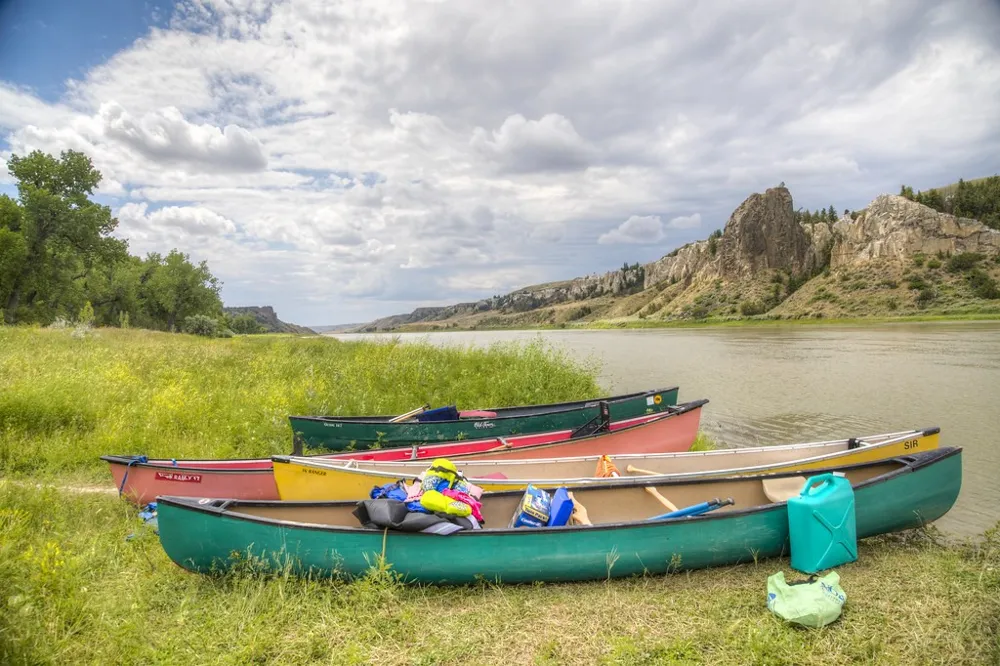
These destinations also appear on many top paddling lists. Details below come from published travel guides; check each managing agency for current permits, closures and conditions before you go.
| Destination | State | Water Type | Known For |
|---|---|---|---|
| Kenai Fjords National Park | Alaska | Glacial fjords | Glaciers, sea otters, seals and whales |
| Prince William Sound | Alaska | Glacial sound | Cold water calling for wetsuits or drysuits; Valdez is a main access town |
| Ozark National Scenic Riverways | Missouri | Spring-fed rivers | Clear Current and Jacks Fork rivers, bluffs, caves and camping |
| Eleven Point River | Missouri | Wild and Scenic river | A 44-mile section of rapids and deep, slow pools through the Ozark hills |
| South Fork American River | California | Whitewater river | About 20 miles of Class II–III rapids suited to beginners and intermediates with outfitters |
| Youghiogheny River | Maryland, Pennsylvania, West Virginia | River | A mellow middle section and whitewater sections |
| Acadia National Park | Maine | Rocky ocean coast | Granite shoreline, islands, seals and seabirds |
| Lake Powell | Arizona and Utah | Desert reservoir | Red rock cliffs and slot canyons |
| Indian River Lagoon | Florida | Warm coastal lagoon | Kayak fishing for redfish, trout and tarpon |
| Lady Bird Lake | Texas | Urban lake | Paddling through Austin and bat flights at the Congress Avenue Bridge |
Heading out to fish rather than sightsee? Our kayak fishing tips cover rigging and safety for lagoons and rivers like these.
Permits and Reservations: What to Book Before You Go
Day paddling rarely needs its own permit, but overnight trips and some special areas do. Here is what each main destination asks for, as of November 2026.
| Spot | Day Paddling | Overnight | Where to Book |
|---|---|---|---|
| Apostle Islands | No paddling permit listed; parking fee at Meyers Beach | Camping permit for all camping | Recreation.gov |
| Pictured Rocks | No paddling permit listed | Check the park's camping rules | National Park Service |
| Boundary Waters | Self-issued permit | Quota permit May 1–Sept 30; self-issued Oct 1–Apr 30 | Recreation.gov |
| San Juan Islands | No paddling permit listed | Cascadia Marine Trail sites; nightly fee, some reservations | Washington State Parks and site managers |
| Glacier Bay | Check vessel permit rules for June 1–Aug 31 | Free camping permit May 1–Sept 30 | National Park Service |
| Everglades | Check park entry rules | Wilderness permit, three months ahead | Recreation.gov or walk-up |
| Okefenokee | Check refuge rules | Overnight permit, up to two months ahead | Recreation.gov |
| Buffalo National River | None listed | None for backcountry river camping | No booking needed |
| Lake Tahoe | Clean, Drain, Dry required | Follow campground rules | Tahoe Keepers video encouraged |
States also have their own boating rules. Some require registration or an aquatic invasive species permit for paddle craft, and Minnesota, for example, registers non-motorized boats over 10 feet. Our kayak registration laws guide explains how it works and what to check when you cross state lines. This is general information, not legal advice.
Match a Spot to Your Skill Level
The biggest mistake on trip lists is treating every spot as equal. Open Great Lakes, fast tidal channels and remote fjords need far more skill than a marked swamp trail.
- First-timers: Pictured Rocks' inland lakes, short Everglades trails such as Nine Mile Pond, Lake Tahoe close to shore on a calm morning, the lower Buffalo at normal flows, or any guided tour. A stable beginner kayak and basic paddling strokes are all you need.
- Confident beginners: Boundary Waters day trips or short overnights, Okefenokee platform trips, and the middle Buffalo when levels allow.
- Intermediate: Apostle Islands sea caves in calm conditions, protected San Juan Islands routes with tide planning, and multi-day Everglades routes.
- Advanced: Open Lake Superior cliffs at Pictured Rocks, San Juan crossings in strong currents, the Wilderness Waterway, the upper Buffalo in spring, and Glacier Bay.
On any open water, learn assisted and self-rescues before you rely on them, and consider learning how to roll a kayak if you paddle a decked boat.
Plan Your Trip: Gear, Safety and Invasive Species
Cold water is the common thread at most of these spots. Lake Superior, Puget Sound, Alaska and Lake Tahoe stay cold even in summer, so dress for immersion, not air temperature; our what to wear kayaking guide covers wetsuits and drysuits.
- Check the forecast and water: marine forecasts on the Great Lakes, tide and current tables in the San Juans, river gauges on the Buffalo and water levels at the Okefenokee.
- Wear a life jacket: a properly fitted kayak PFD worn at all times, plus a whistle or signal device.
- File a float plan: cell service is unreliable at the Apostle Islands, Buffalo River and Okefenokee, and rescue can take an hour or more.
- Pack for the trip: dry bags, water (the Okefenokee suggests a gallon per person per day), navigation and Leave No Trace basics.
- Clean, drain and dry: Lake Tahoe requires it and the Okefenokee asks for it, and it is good practice everywhere to stop invasive species moving between waters.
- Get your boat there: see our kayak transport guide for roof racks and loading.
For the full list of habits and rescues, read our kayak safety guide before your first trip to any of these waters.
Frequently Asked Questions
Where is the best place to kayak in the US for beginners?
Calm, sheltered water is the best start: the Everglades' easier trails, the inland lakes at Pictured Rocks, the lower Buffalo River at normal levels, or a guided Apostle Islands sea cave trip. The National Park Service recommends guided trips for beginners at the Apostle Islands.
Do I need a permit to kayak in a national park?
It depends on the park and the trip. Many parks let you day paddle without a separate permit, but overnight trips usually need one: Everglades wilderness camping, Glacier Bay backcountry camping and Apostle Islands camping all require permits, as of November 2026.
Do you need a permit to kayak the Boundary Waters?
Yes. The Forest Service says a permit is always required. From May 1 to September 30, overnight paddlers need a quota permit reserved through Recreation.gov, while day paddlers and off-season visitors fill out a self-issued permit.
When is the best time to kayak the Apostle Islands sea caves?
Summer is the main paddling season, but Lake Superior stays cold: the Park Service says water is in the 40s °F in May and June and rarely tops 60 °F in late summer. Avoid the caves whenever wind and waves build.
Is Lake Superior safe to kayak?
It can be, with the right boat, cold-water clothing and self-rescue skills. Both the Apostle Islands and Pictured Rocks warn that conditions change quickly, cliffs leave nowhere to land, and rescue can take 30 to 90 minutes or longer.
Can you kayak the Everglades without a guide?
Yes. Everglades National Park has marked canoe and kayak trails from beginner to advanced near Flamingo and the Gulf Coast. Overnight trips need a wilderness permit, and long routes such as the 99-mile Wilderness Waterway need careful planning.
What is the best river to kayak in the US?
Popular choices include Arkansas's Buffalo National River, Missouri's Current, Jacks Fork and Eleven Point rivers, and California's South Fork American River for beginner whitewater. The right one depends on water levels and your skill.