Kayak Registration Laws: Permits, Motors and State Rules (2026)
In many states an unpowered kayak needs no registration at all. In others it needs a number, a decal or a launch permit, and almost everywhere a motor changes the answer. Here's how the rules work and where to check yours.
Do You Need to Register a Kayak? The Short Answer
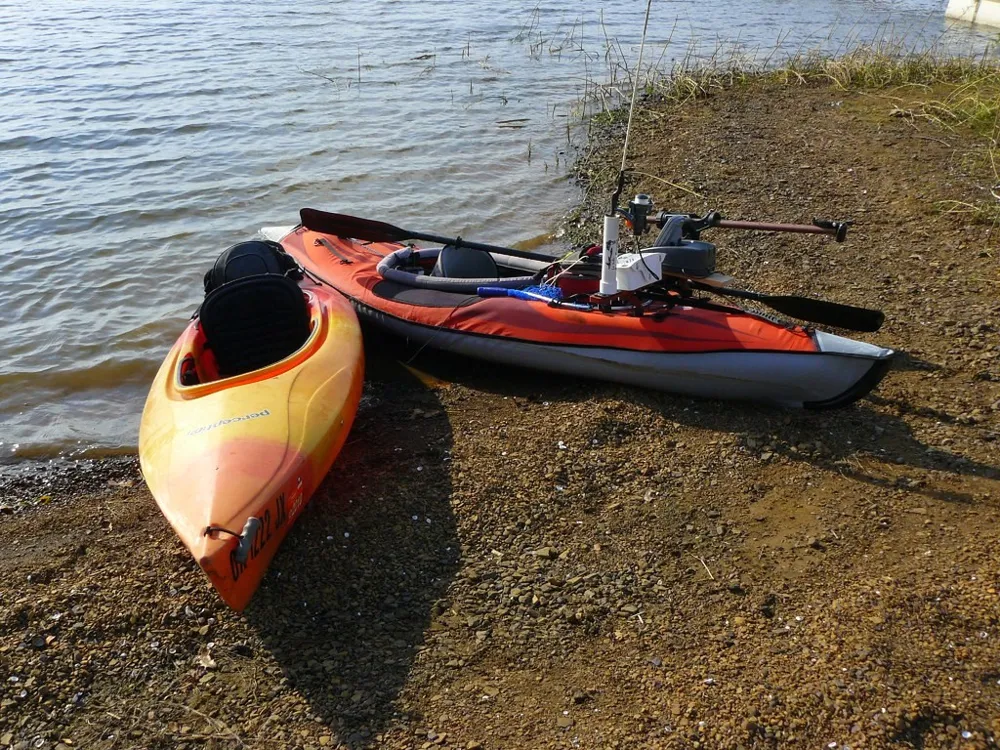
Maybe. There is no single national rule for registering an unpowered kayak; each state decides. Most states that we've checked follow one of three patterns:
- No registration for unpowered kayaks. Texas exempts paddled canoes and kayaks, and Florida exempts non-motorized boats under 16 feet.
- Registration above a set length. Minnesota registers non-motorized boats longer than 10 feet.
- Registration or a permit to launch. Ohio's law covers every watercraft on its waters, and Pennsylvania requires a registration or launch permit to use its Commission and State Parks access areas.
Two rules apply almost everywhere. First, adding a motor, even a small electric trolling motor, usually makes registration mandatory. Second, federal safety equipment rules apply to every kayak whether or not it's registered. The rest of this page explains both, shows the state rules we confirmed from official sources, and tells you how to check yours. It is a summary as of November 2026, not legal advice.
Registration, Launch Permits and Titles: What Each Means
Paddlers often hear these words used loosely. They are different things, and a state may use one, several or none of them for a kayak.
| Term | What It Is | How It Usually Shows |
|---|---|---|
| Registration | The state records the boat and its owner and issues a number or certificate for a set period | Bow numbers and a decal, or a tag where the state allows one |
| Launch or access permit | Permission to put a boat in at certain launches, lakes or parks, without registering the boat itself | A sticker or permit displayed on the boat |
| Title | A certificate of ownership, like a car title | A paper document; common for larger motorized boats, rare for paddle craft |
| Aquatic invasive species (AIS) permit or inspection | A program to stop zebra mussels and other invasive species moving between waters | A sticker, a fee added to registration or a required inspection stop |
Even where the state doesn't register kayaks, a park, city lake or reservoir can require its own launch pass or ban certain boats. Check the rules for the specific water you plan to paddle.
Kayak Rules in the States We Verified
This table includes only the states whose rules we confirmed from the state agency's own pages or the state's statute in November 2026. It is not a 50-state list. For any other state, rules vary, so go straight to your state boating agency (usually the fish and wildlife, natural resources or parks department).
| State | Unpowered Kayak or Canoe | With a Motor | Source |
|---|---|---|---|
| Pennsylvania | A boat registration, Commission launch permit or State Parks launch permit is required to use Fish and Boat Commission lakes and access areas or State Parks and Forests access areas. One or the other is enough; you don't need both. Paddle boards are listed too. | Covered by the state's powered boat rules; check with the Commission | Pennsylvania Fish and Boat Commission |
| Minnesota | Non-motorized watercraft 10 feet or less don't need registration; canoes, kayaks and paddleboards longer than that do. Registrations are good for 3 calendar years. | Motorized boats are registered by length and type; check the DNR | Minnesota DNR |
| Ohio | State law says every watercraft operated on Ohio waters must be numbered by the state. Canoes, rowboats and inflatable watercraft registered under the statute may display a rectangular tag instead of bow numbers. | Registration required | Ohio Revised Code 1547.53 |
| Florida | Non-motorized vessels under 16 feet don't need a Florida registration | All motorized vessels, including canoes, kayaks and paddleboards, must be registered unless used only on private ponds and lakes | Florida Fish and Wildlife Conservation Commission |
| Texas | Exempt while paddled | All motorized vessels must be registered regardless of length; an outboard or trolling motor removes a canoe's or kayak's exemption | Texas Parks and Wildlife Department |
Some details in the table are summaries of longer rules. Fees, renewal terms and exemptions change, so confirm on the agency's site before you buy a boat or plan a trip. Last checked November 2026.
Adding a Motor Changes the Answer
This is the rule that catches most paddlers. A kayak that is exempt while you paddle it can become a motorboat in the eyes of the law the moment you clamp on a trolling motor, bolt on a motor mount or add an electric fin. Both Florida and Texas say so directly, as the table shows, and many other states follow the same pattern.
A motor can bring more than registration:
| What Can Change With a Motor | What to Check |
|---|---|
| Registration and decals | Whether your state counts electric trolling motors and fin motors, and where numbers go on the bow |
| Title | Some states title motorized vessels above a set length or value |
| Navigation lights | At night, a motorized kayak may need power-driven vessel lights, not just a handheld white light. Florida says motorized paddlecraft follow the same lighting rules as all power-driven vessels. |
| Boater education | Some states require a boater education card to operate a motorized vessel, often tied to age or horsepower |
| Where you can go | Some lakes, reservoirs and parks ban motors or allow electric only |
Pedal-drive kayaks are human-powered, but agency pages don't always say how they're classed, so ask your state agency if you're unsure. For motor setups, see our canoe trolling motor guide, kayak trolling motors and paddle board motors; for pedal boats, see pedal kayaks.
Paddle Boards, Inflatables and Other Edge Cases

A few boat types raise their own questions:
- Stand-up paddle boards. The US Coast Guard treats a paddle board as a vessel when it's used outside swimming, surfing and bathing areas, so the federal equipment rules below apply. State registration is a separate question. Pennsylvania lists paddle boards among the boats that need a registration or launch permit at its access areas, and Minnesota lists paddleboards with canoes and kayaks. Other states exempt them; check yours. Our paddle board accessories guide covers SUP carriage rules.
- Inflatable kayaks. These are usually treated like any other kayak of the same length and propulsion. Ohio specifically lets inflatable watercraft use a tag rather than painted numbers, which helps when there's no hard bow to letter. See inflatable kayaks for boat choices.
- Folding and short kayaks. Length thresholds matter. In Minnesota, a non-motorized boat of 10 feet or less is exempt, so a short recreational or folding kayak may fall under the line. Measure the boat; don't guess from the model name.
- Rentals and guided trips. If you rent, ask the outfitter whether the boat is registered or permitted for the launch you'll use. You still need to follow the equipment and life jacket rules.
Federal Rules Every Kayak Must Follow
In the US, kayaks and canoes are vessels, so federal Coast Guard carriage rules apply to them whether or not your state registers them. For a paddled kayak, they come down to a short list:
| Requirement | What It Means for a Kayak |
|---|---|
| Life jacket | One wearable, US Coast Guard approved life jacket for each person on board, readily accessible and the right size. Inflatable life jackets count only when used as their label directs. Federal rules require children under 13 to wear one while underway unless a state sets its own age. |
| Sound-producing device | A whistle, horn or bell that can make an efficient sound signal. Florida, for example, specifies one audible for at least half a nautical mile. |
| Light | Between sunset and sunrise and in restricted visibility, a flashlight or lantern showing a white light, ready to show in time to prevent a collision. Paddle craft don't need the red, green and stern lights of powerboats. |
| Visual distress signals | Not required in daytime for kayaks and canoes. Between sunset and sunrise on coastal waters, night signals are required: for example, three pyrotechnic night flares or one Coast Guard approved electric distress light. |
Life jackets are now labeled with performance levels rather than the old Type numbers; our kayak PFD guide explains the labels, and the kayak accessories checklist covers this gear in more detail.
State Life Jacket Rules for Paddlers
States often go further than the federal minimum, especially for children and in cold months. A few examples from official sources:
| State | Wear Rule for Paddlers |
|---|---|
| Pennsylvania | A life jacket must be worn on any canoe, kayak or paddleboard from November 1 through April 30. Children 12 and younger must wear one on canoes, kayaks and paddleboards. |
| New York | Everyone in a boat under 21 feet, kayaks and canoes included, must wear one from November 1 to May 1; children under 12 must wear one at all times |
| Texas | Passengers under 13 must wear one while underway |
| Florida | Children under 6 must wear one |
Pennsylvania's Fish and Boat Commission also reminds unpowered boaters to carry a handheld light from sunset to sunrise and says a coach's whistle is an acceptable sound-producing device. Whatever the law requires, wearing a life jacket every time is the habit that saves paddlers; our kayak safety guide explains why, with cold-water and capsize advice, and what to wear kayaking covers dressing for immersion.
How to Register a Kayak or Get a Launch Permit
The exact process depends on the state, but it usually runs like this:
- Find your state boating agency. It's often the fish and wildlife, natural resources or parks department. Read its registration page for the list of exempt boats and any length threshold.
- Decide between registration and a permit where your state offers both. In Pennsylvania, for example, either works at Commission and State Parks access areas, but the Commission says only a registration is recognized by other states and comes with renewal reminders.
- Gather proof of ownership. A bill of sale or the manufacturer's paperwork is commonly requested; for a used boat that was titled, the signed title. Minnesota, for example, asks for a bill of sale for registered boats that aren't titled.
- Apply online, by mail or through a license agent, depending on the state, and pay the state's fee.
- Display the number or decal as the state directs. Some states, such as Ohio for canoes and inflatables, allow a tag in place of painted bow numbers.
- Note the renewal date. Terms vary; Minnesota registrations last 3 calendar years.
Taking Your Kayak to Another State
Road trips with a kayak on the roof are common, and the rules follow the water, not your driveway. A few things to check before you go:
- Visitor exemptions. Many states give out-of-state boats a grace period. Minnesota, for example, exempts a boat owned by someone from another state if that state doesn't license that type of boat and the boat stays in Minnesota no more than 90 consecutive days.
- Launch permits. A registration from home doesn't always cover a park or access-area permit at your destination. Pennsylvania's own launch permit, for example, isn't the same as a registration recognized by other states.
- Invasive species rules. Some states run aquatic invasive species sticker, fee or inspection programs that can apply to paddle craft; Minnesota, for example, adds an aquatic invasive species surcharge to canoe and kayak registration. Clean, drain and dry the boat between waters. Check the destination state's rules, and stop at inspection stations when they're posted.
Planning where to paddle? See our kayaking guides for trip and gear advice, and how to transport a kayak for the drive.
Check Your State Before You Launch
Rules vary by state and change over time. Before you buy a kayak, add a motor or paddle somewhere new, read your state boating agency's registration page or call them, and check local rules for the lake, river or park. The state rules on this page were checked against official agency pages and state statute as of November 2026. This is a summary, not legal advice.
Quick checklist:
- Is my kayak exempt by type or length in my state?
- Do the launches I use require a permit, even if my boat is exempt?
- Have I added a motor, motor mount or electric fin that changes my boat's status?
- Do I have a properly sized life jacket for everyone, a whistle and a white light for low light?
- Am I traveling to a state with invasive species stickers or inspections?
Frequently Asked Questions
Do you need to register a kayak?
It depends on your state and whether the kayak has a motor. Many states exempt unpowered kayaks, but some require registration or a launch permit, and most require registration once any motor is fitted, including an electric trolling motor.
Do I need to register my kayak in Pennsylvania?
To launch an unpowered kayak, canoe or paddle board at Pennsylvania Fish and Boat Commission lakes and access areas, or at State Parks and Forests access areas, you need a boat registration, a Commission launch permit or a State Parks launch permit. You can have either one; you don't need both.
Does Minnesota require kayak registration?
Yes, for non-motorized craft longer than 10 feet. Minnesota DNR says non-motorized watercraft 10 feet or less do not require registration, and registrations are good for 3 calendar years. A visiting boat can be exempt if its home state doesn't license that type of boat and it stays in Minnesota no more than 90 consecutive days.
Does a trolling motor mean I have to register my kayak?
In most states, yes. Texas Parks and Wildlife says adding an outboard or trolling motor to an otherwise exempt canoe or kayak removes the exemption, and Florida's FWC says all motorized vessels, including kayaks and paddleboards, must be registered unless used only on private ponds and lakes.
Do inflatable kayaks need to be registered?
They follow the same state rules as hard kayaks unless your state says otherwise. Ohio, for example, gives canoes and inflatable watercraft the option of a tag instead of painted bow numbers. Check your state agency's list of exempt boats.
What safety equipment is required on a kayak?
Under federal rules, one properly sized, Coast Guard approved wearable life jacket per person, a sound-producing device such as a whistle, and a white light between sunset and sunrise. Many states add life jacket wear rules for children or for cold months.