What to Wear Paddle Boarding: Outfits for Warm, Cool and Cold Water (2026)
Dress for the water you might fall into, not the air above it. Here's the SUP outfit for each water temperature, plus the life jacket, footwear, sun cover and leash that go with it.
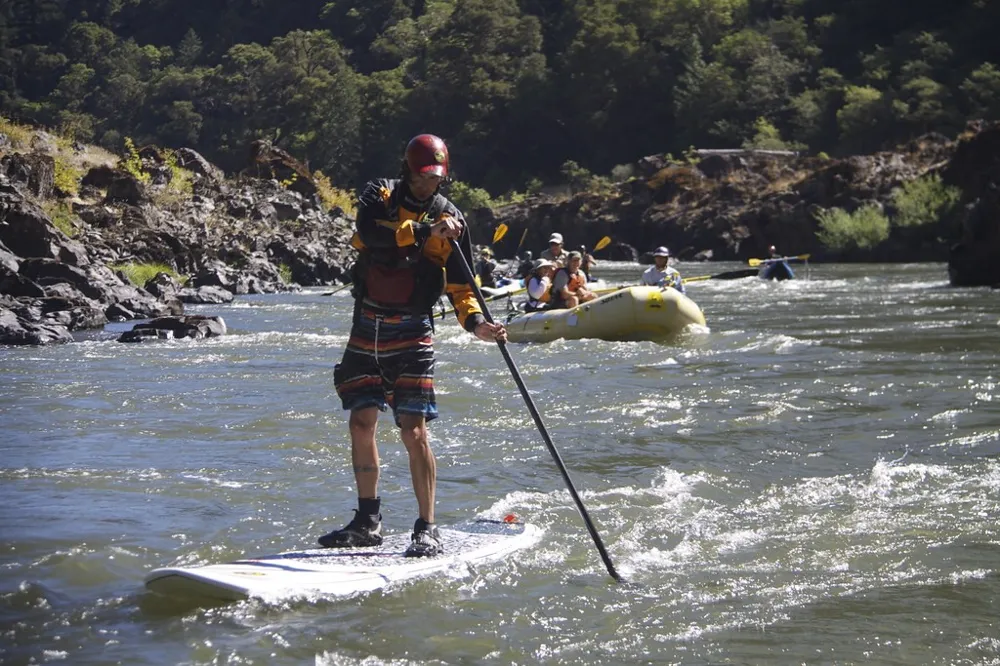
The Short Answer: Dress for the Water
When you're deciding what to wear paddle boarding, dress for the water temperature, not the air. Stand up paddlers fall in more often than kayakers, especially while learning, so plan on getting wet. The REI paddling guide sums up the core rules: avoid cotton, wear quick-drying synthetic or wool fabrics, protect yourself from the sun and wear your life jacket. In warm water that means swimwear and a sun layer. In cool water it means neoprene. In cold water it means a drysuit or a thick wetsuit, whatever the air feels like.
This guide is written for stand up paddlers. If you sit in a boat instead, our what to wear kayaking guide covers spray decks, sit-in kayaks and paddling jackets.
What to Wear Paddle Boarding by Water Temperature
Paddling groups set the cold-water line in different places. The American Canoe Association treats water below 60°F (16°C) as cold and also flags days when the air and water temperatures add up to less than 120°F. The US Coast Guard and the National Center for Cold Water Safety use 70°F (21°C), and REI's paddling guide, citing Coast Guard advice, suggests a wetsuit or drysuit whenever the water is 70°F or cooler unless you're in protected water close to shore. Our wetsuit vs drysuit guide explains the difference between the two suits. This rough guide uses the same bands; adjust for wind, distance from shore and how likely you are to fall.
| Water Temperature | What to Wear on a SUP | Extras |
|---|---|---|
| Above 70°F (21°C) | Swimsuit or boardshorts, rash guard or loose sun shirt | Sun hat, sunglasses on a retainer, sunscreen; carry a light jacket |
| About 55–70°F (13–21°C) | Sleeveless wetsuit (Farmer John/Jane) or full wetsuit, or neoprene top and shorts or pants | Splash jacket for wind, booties |
| About 45–55°F (7–13°C) | Full 4/3 wetsuit or a drysuit with layers | Booties, gloves or pogies, neoprene cap |
| Below 45°F (7°C) | Drysuit over a wicking base layer and fleece | Hood or warm hat, gloves, insulated boots |
Sudden immersion in cold water can trigger a gasp reflex and cold shock, even in water that doesn't feel especially cold. A warm, sunny spring day over snowmelt-fed water is exactly when paddlers get caught out. Our paddling safety guide covers cold-water risks and self-rescue.
Life Jacket: What the Rules Say
A life jacket is part of your outfit, not an accessory. The US Coast Guard treats a paddle board as a vessel when it's used outside a swimming, surfing or bathing area. That means you need one wearable, Coast Guard approved life jacket for each person, in the right size and readily accessible. Federal rules require children under 13 to wear one while underway unless a state sets its own age, and some states go further. Pennsylvania, for example, requires a life jacket to be worn on any canoe, kayak or paddleboard from November 1 through April 30. Our kayak registration laws page lists more state rules (last checked November 2026). This is not legal advice; check your state's boating agency.
Two common styles suit paddle boarding:
- Foam paddling vest: floats you straight away with no inflation and doubles as a warm layer in cool weather. Choose one with large armholes so it doesn't rub on each stroke. Compare options in our PFD guide.
- Inflatable belt pack: a low-profile pouch around the waist that's cooler in summer. Inflatables count toward the carriage rule only when used as their label directs, they need to be inflated after you fall in, and many carry age and weight limits.
Onyx M-16 Inflatable Belt Pack
A manual inflatable life jacket worn as a waist belt. Retailers list it as a Coast Guard approved Type V with Type III performance, with 17 pounds of buoyancy from a 16-gram CO2 charge. It is approved for ages 16 and older and for people over 80 pounds. Pull the cord, then slip the bladder over your head.
Check Price on AmazonWarm Weather: The Summer Paddle Board Outfit
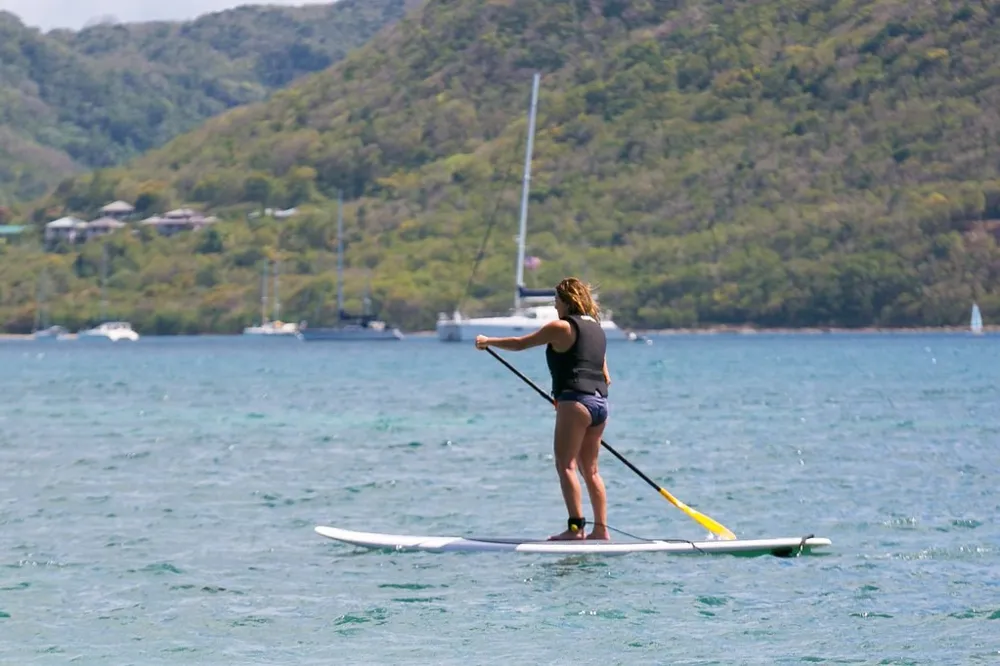
On warm water the right paddle board outfit is simple: something you can swim in, something that covers you from the sun, and nothing that's heavy when wet.
- Bottoms: boardshorts, quick-dry shorts, a swimsuit or swim leggings. Fabric with a little stretch helps when you kneel, stand up and climb back on.
- Top: a rash guard, a loose UPF sun shirt or a swimsuit top. On a board you spend most of your time out of the water, so a loose, light-colored sun shirt or hooded top can be cooler than a skin-tight rash guard. Fitted styles are compared in our rash guard guide.
- Layer to carry: a light windproof jacket or a thin fleece in a dry bag for breezes and late afternoons.
Don't overdress. A full wetsuit on a hot day over warm water mostly makes you overheat, and on a board you're working the whole time.
O'Neill Basic Skins Rash Guard
A long-sleeve rash guard that covers your back and arms. The listing describes a polyester and spandex fabric with four-way stretch and flatlock stitching, rated UPF 50+.
Check Price on AmazonSun Protection on the Water
Paddle boarding means hours standing in the open with sunlight coming down and bouncing back off the water, so sun cover matters more than on most beach days. REI recommends wide-brimmed hats and a retainer for sunglasses.
- Clothing first: UPF-rated shirts and long sleeves cover the most skin and don't wash off.
- Sunscreen: use a water-resistant, broad-spectrum sunscreen on skin that's still exposed: face, ears, neck, hands, the backs of your legs and the tops of your feet. FDA rules let labels claim water resistance for either 40 or 80 minutes, so reapply after that time or after you towel off. Our reef-safe sunscreen guide covers mineral formulas and where chemical filters are banned.
- Hat: a wide brim or a cap with a neck cape, with a chin strap or hat leash so a gust doesn't take it.
- Sunglasses: polarized lenses cut glare off the water. Put them on a floating retainer strap, because anything that drops off a board tends to sink.
- Lips: a lip balm with SPF in a pocket or deck bag.
Footwear: Barefoot, Water Shoes or Booties?
Many stand up paddlers go barefoot on the board, because the deck pad is soft and bare feet give good feel for balance. The problems are usually off the board: rocky put-ins, shells, broken glass, hot sand and sharp river cobbles. Choose by where you launch and how cold the water is:
| Option | Best For | Watch Out For |
|---|---|---|
| Barefoot | Sandy beaches and warm, clean water | Sharp objects at launch sites |
| Thin water shoes | Rocky or muddy launches in summer | Thick soles reduce board feel |
| Strapped water sandals | Rivers and walking between spots | Can collect grit; open sides |
| Neoprene booties | Cool and cold water, rocky shores | Warm in summer |
| Insulated paddling boots | Very cold water, often over drysuit socks | Check the fit over your suit |
REI calls neoprene paddling booties ideal because they're light and protect toes and soles, and it warns against footwear without a back strap. Flip-flops come off as soon as you step into mud or fall in.
NRS Kicker Wetshoe
A neoprene wetshoe for paddling, suited to rocky launches and cooler water.
Check Price on AmazonKEEN Newport H2
A closed-toe water sandal with a strap system, for rivers and summer launches.
Check Price on AmazonCool and Cold Water: Wetsuits, Drysuits and Layers
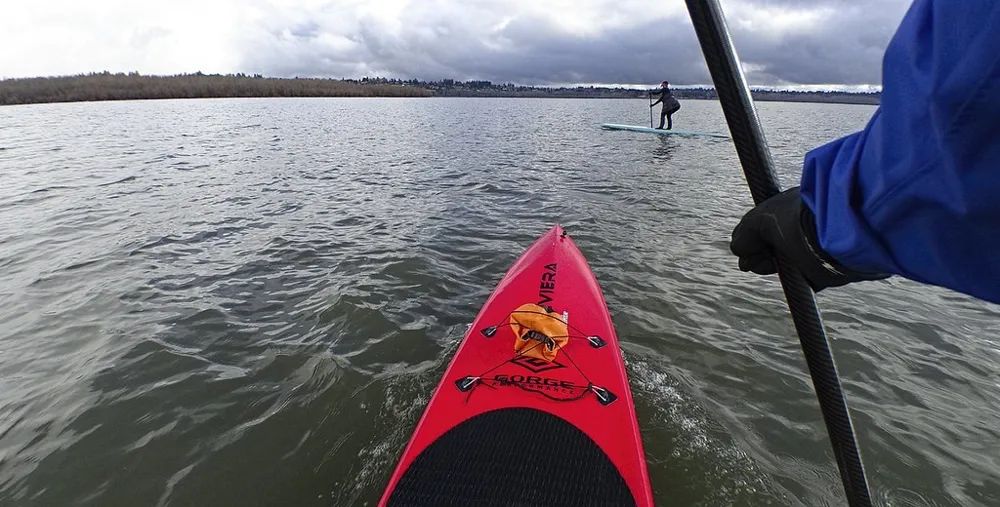
Once the water drops below about 70°F, plan for neoprene or a drysuit. Stand up paddling has one twist: you work hard and stand in the wind, so it's easy to overheat in a thick suit on calm days, then get cold fast after a fall. Thinner or sleeveless neoprene with a windproof layer on top is a common answer.
Cool Water: Neoprene and Splash Layers
- Sleeveless wetsuit (Farmer John/Jane): keeps your core and legs warm while leaving your arms free to paddle. Add a quick-dry long-sleeve top, and a paddling or splash jacket for wind.
- Full wetsuit: warmer for cooler water or days you expect to swim. Wetsuits are labeled by thickness, such as 3/2 or 4/3: the first number is the torso in millimeters, the second the arms and legs. See our wetsuit picks.
- Neoprene separates: tops, shorts and pants let you mix warmth by body area and peel a layer on a warm afternoon.
REI notes that the thin layer of warm water inside a long-sleeve wetsuit replaces the need for a wicking base layer, so swimwear underneath is enough. Our what to wear under a wetsuit guide covers the options.
Cold Water: Drysuits and Layers
A drysuit keeps water out with seals at the neck and wrists, and you control warmth with what you wear underneath: a non-cotton base layer, then fleece, with more added as the water gets colder. It's the standard choice for winter SUP, long crossings and cold lakes. Compare suits in our drysuit guide.
Hands and Head
- Hands: paddling gloves stop blisters on long days. Neoprene gloves or pogies, which attach to the paddle shaft, keep hands warm in cold weather.
- Head: a beanie or neoprene cap in cool weather, and a neoprene hood in very cold water.
Your Leash Is Part of the Outfit
A leash keeps the board, which is your biggest float, within reach after a fall. It isn't required by the federal carriage rules, but it's standard SUP gear, and the right type depends on the water:
- Flat water: a coiled ankle or calf leash stays on the deck instead of dragging.
- Surf: a straight leash, worn on your back foot.
- Rivers and moving water: a quick-release leash attached at the waist or to your life jacket, never at the ankle. A leash fixed to your leg can pin you underwater if it snags. River paddlers also wear a helmet.
Leash types and lengths are covered in our paddle board accessories checklist.
What Not to Wear Paddle Boarding
- Cotton: T-shirts, hoodies and sweatpants soak up water, dry slowly and stop insulating when wet. REI says to avoid cotton in every layer.
- Jeans: heavy, stiff and cold when wet, and hard to swim or climb back on in.
- Flip-flops and slides: they come off in mud and float away when you fall.
- A thick wetsuit on a hot day: you'll overheat on the board.
- Loose, dangling items: long scarves, baggy layers or cords that can snag on the leash or paddle.
- Valuables in pockets: phones, keys and wallets belong in a waterproof case or dry bag clipped to the deck.
- Only a summer outfit on cold water: a warm air temperature doesn't make cold water safe.
What to Wear for SUP Yoga, Fishing and Night Paddling
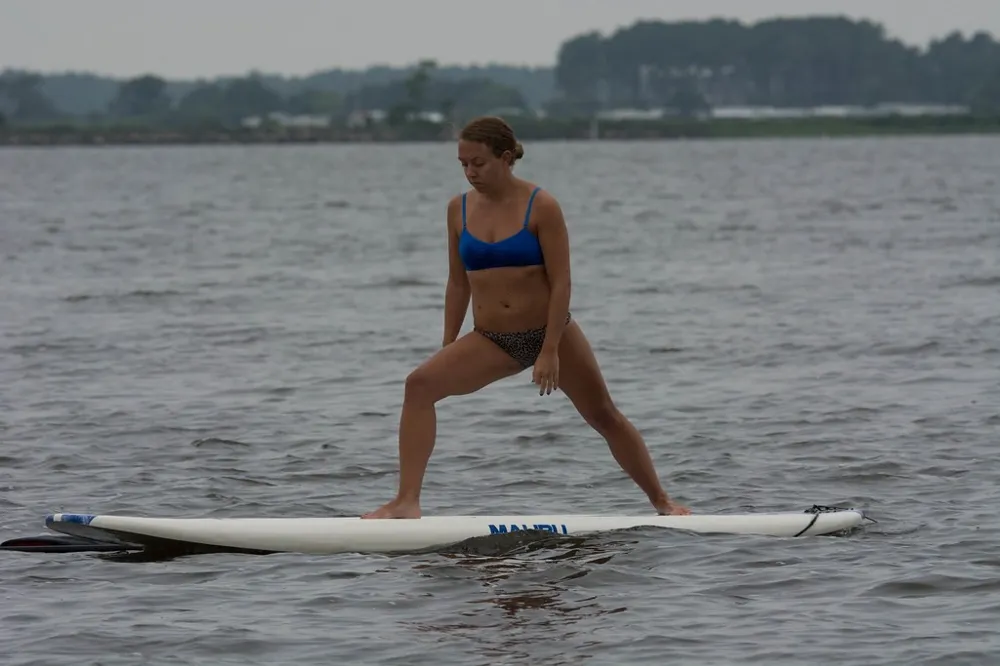
- SUP yoga: fitted, stretchy swimwear or quick-dry leggings and a fitted top, so nothing rides up or catches during poses. Bare feet give the best grip on the deck pad. See paddle board yoga for gear and safety.
- SUP fishing: long-sleeve sun shirts, a brimmed hat, a buff or neck gaiter, polarized glasses and gloves for long days in the sun, plus shoes with grip if you stand on a wet, cluttered deck. See our fishing SUP guide.
- Night and low light: US rules require a paddler to have a white light, such as a flashlight or lantern, ready to show between sunset and sunrise and in poor visibility. Bright colors and reflective tape on your life jacket and paddle help boaters see you, and an extra warm layer helps once the sun goes down.
- River SUP: a helmet, a foam life jacket with a quick-release leash attachment, and closed-toe shoes that protect against rocks.
What to Bring in Your Dry Bag
- A spare warm layer, such as a fleece or a light jacket.
- A full change of dry clothes and a towel for after.
- Sunscreen, lip balm and water.
- A whistle clipped to your life jacket.
- Your phone in a waterproof case.
For the full gear list, see our paddle board accessories checklist. New to the sport? Start with how to paddle board and our paddle boarding guides.
Quick Checklist Before You Launch
- Have I checked the water temperature as well as the air temperature?
- Is my clothing synthetic or wool, with no cotton?
- Am I wearing (or legally carrying) a properly sized, Coast Guard approved life jacket?
- Is my leash the right type for this water?
- Do I have sun cover, footwear for the launch and a spare layer in a dry bag?
Frequently Asked Questions
What should I wear paddle boarding for the first time?
Quick-dry swimwear or boardshorts, a rash guard or sun shirt, a hat with a strap, sunglasses on a retainer and a life jacket. Add a leash, and a wetsuit if the water is cold. Skip cotton.
Can I wear a swimsuit paddle boarding?
Yes, in warm water and air a swimsuit is the most common outfit. Add a rash guard or sun shirt for sun cover and a life jacket over the top.
Do I need a wetsuit to paddle board?
Not in warm water. Many paddling guides suggest a wetsuit or drysuit once the water is about 70°F (21°C) or colder, unless you stay in protected water close to shore. The colder the water, the more you need one.
Should I paddle board barefoot?
Many paddlers go barefoot on the board's deck pad in summer. Wear water shoes or booties when the launch has rocks, shells or glass, and neoprene booties when the water is cold.
Do you have to wear a life jacket on a paddle board?
In the US, a paddle board used outside a swimming, surfing or bathing area counts as a vessel, so you must carry a Coast Guard approved life jacket for each person. Children under 13 must wear one under federal rules unless a state sets its own age. Check your state; this is not legal advice.
Why shouldn't you wear cotton paddle boarding?
Cotton soaks up water, dries slowly and loses its insulation when wet, so a wet cotton T-shirt or hoodie leaves you colder after a fall. Choose synthetic or wool fabrics instead.
What should I wear paddle boarding in winter?
A drysuit with warm base and fleece layers, or a full wetsuit for less extreme water, plus neoprene booties, gloves or pogies and a warm hat. Paddle with others and stay close to shore.