Longboard Tricks for Beginners, From Easiest to Hardest (2026)
Longboards can do more than cruise. These freestyle tricks work on most longboards with kicktails, and several work on any board at all.
What Counts as a Longboard Trick?
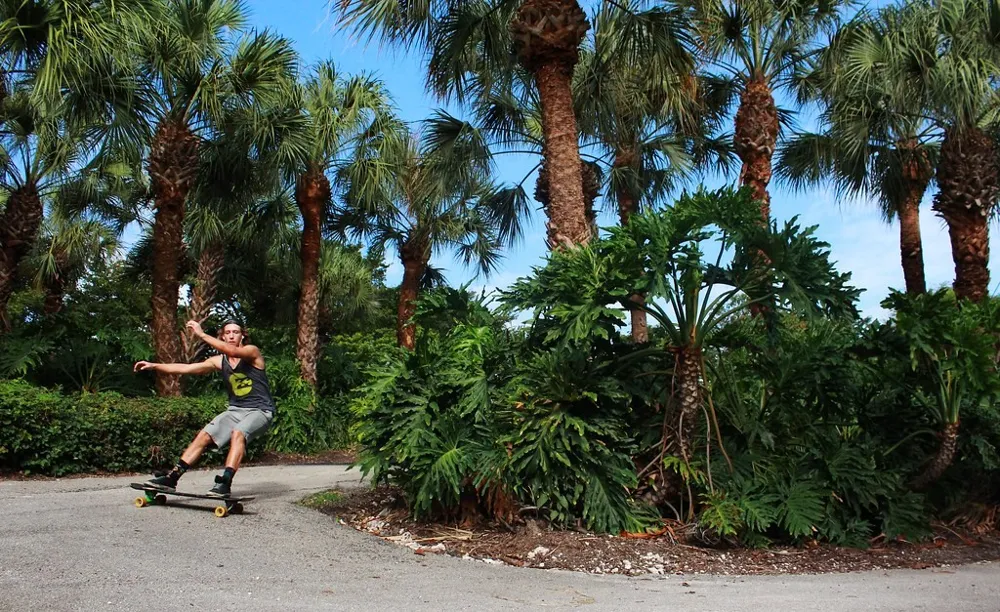
Longboard tricks fall into three groups. Freestyle tricks pop, spin or flip the board: pivots, shuvits, no-complies and ghostride flips. Dance steps are footwork while the board rolls, such as the cross-step and Peter Pan. Slides kick the wheels sideways to scrub speed. This guide focuses on freestyle tricks, with short pointers to our longboard dancing and longboard sliding guides for the rest.
Before you start, you should be able to push, carve and stop comfortably. If not, work through how to longboard, how to carve and how to stop on a longboard first.
All directions below are written for a regular rider (left foot forward). Goofy riders swap left and right. Not sure which you are? See goofy vs regular.
Before You Start: Board, Gear and Spot
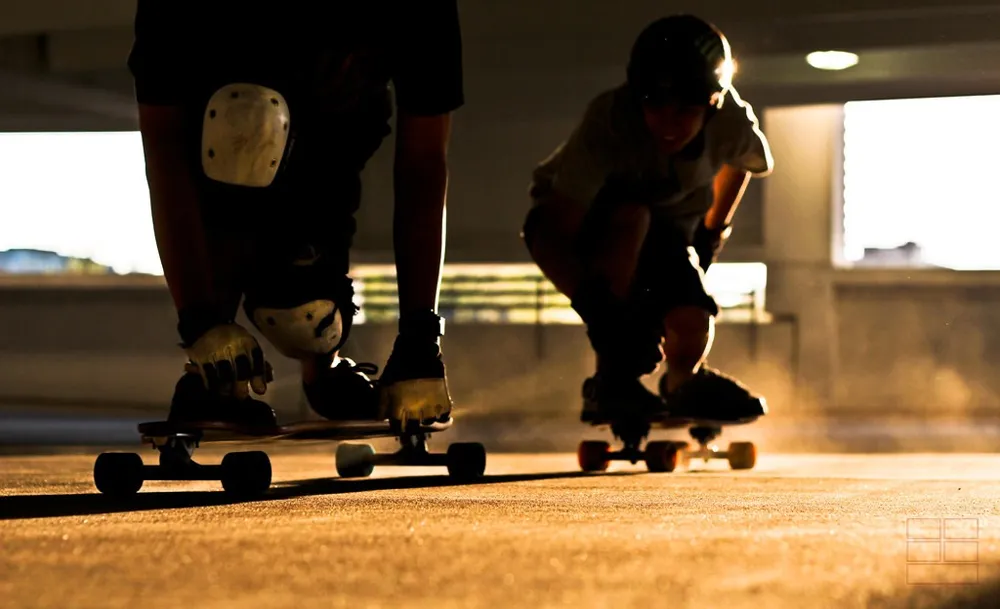
- Board: kicktails at both ends make almost every trick here easier. A symmetrical shape lets you ride either way. Long drop-through downhill boards with no kicks are poor trick boards. See types of longboards.
- Trucks: medium-tight trucks keep the board steady when you land. See how tight should trucks be.
- Gear: a helmet every time, plus wrist guards and knee pads while learning pops and spins. See skateboard helmets and wrist guards.
- Shoes: flat-soled shoes with a grippy sole give better board feel. See skate shoes.
- Spot: a smooth, flat, empty area such as a basketball court, empty parking lot or garage level. No slopes and no traffic.
Learn each trick standing still on grass or carpet first, then at walking speed. Speed makes tricks easier to roll out of but harder to bail from, so keep it slow.
Beginner Longboard Tricks at a Glance
| Trick | Type | Difficulty | Needs Kicktails? |
|---|---|---|---|
| Manual | Balance | Easy | Helps |
| Kickturn and tic-tac | Balance | Easy | Yes |
| One-foot riding | Balance | Easy | No |
| Hippie jump | Jump | Easy | No |
| Fakie pivot | Spin | Easy to medium | Yes |
| Shuvit | Spin | Medium | Yes |
| Ghostride | Footwork | Medium | No |
| No-comply 180 | Pop and spin | Medium | Yes |
| Boneless | Pop and grab | Medium | Yes |
| Ghostride kickflip | Flip | Medium to hard | No |
| Tiger claw | Pop and grab spin | Hard | Yes |
| Ollie | Pop | Hard on a longboard | Yes |
Balance Tricks: Manuals, Kickturns and One-Foot Riding
Manual
Roll slowly with your front foot near the front truck and your back foot on the tail. Shift weight onto your back foot while leaning your upper body slightly forward, so the front wheels lift but the tail doesn't scrape. Hold it, then shift forward to set the nose down. A nose manual is the same on the front wheels. Our manual guide has drills that work on any board.
Kickturn and Tic-Tac
Press the tail to lift the front wheels a little, swing your shoulders and set the nose down facing a new direction. Tic-tacs are small kickturns from side to side that keep you moving without pushing. See how to kickturn.
One-Foot Riding
Push, then keep your pushing foot off the board, held just above the ground beside your standing leg, and lean your upper body slightly forward. Ride a little further each time, and practice standing on each foot.
Hippie Jump
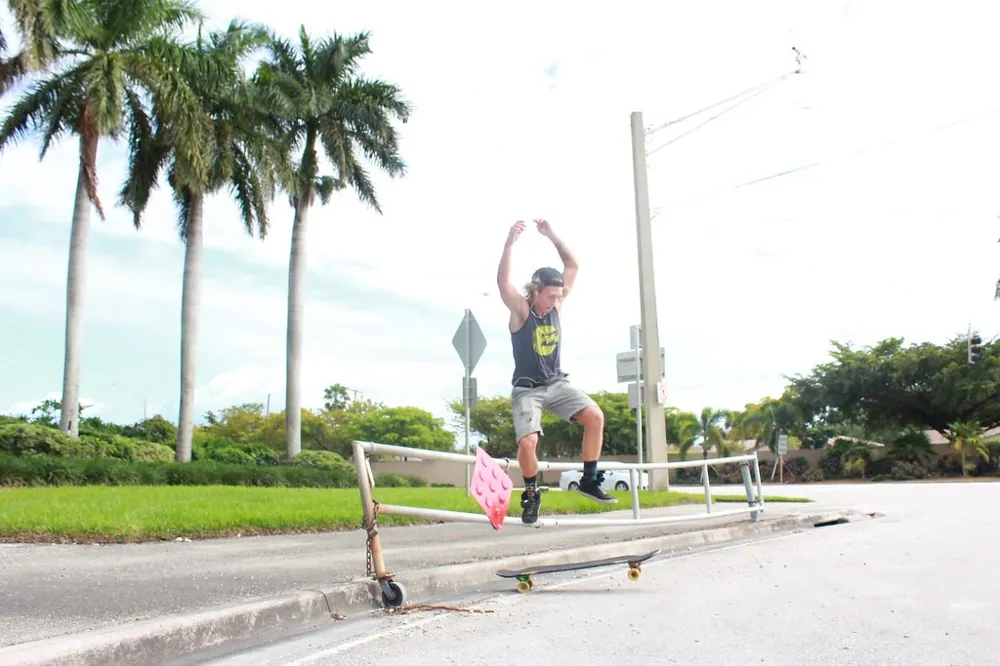
You jump over an obstacle while the board rolls underneath it, then land back on the board.
- Practice with no obstacle: roll slowly, bend your knees and jump straight up.
- Land with both feet centered over the trucks. Fear tends to push your feet out to the sides, so focus on landing on the deck.
- Once that's consistent, add something low and soft, such as a stick or a rope held loose, and work up.
Jump up, not forward. The board keeps rolling at the same speed, and so do you.
Pivots and Shuvits
Fakie Frontside Pivot
Ride fakie (rolling backward in your normal stance) with one foot on the nose and the other near the middle. Press the nose down enough to lift the back wheels, then turn your shoulders and swing the board 180 degrees on the front wheels. Ride away forward. More weight on the nose makes it easier to swing but scrubs more speed.
Shuvit
A shuvit spins the board 180 degrees under you while you stay facing the same way. On a longboard, the easiest version starts from the pivot: put the front foot mid-board and the back foot on the tail, bend your knees and push the tail around with your back foot. As the board turns past about 45 to 90 degrees, hop lightly off and let the board finish the spin, then land on it. Start with small hops and land on one foot first so you can recover. Our pop shove-it guide covers the popped version.
Ghostrides and Ghostride Flips
Ghostride
You step off the rolling board, run beside it and step back on.
- Roll at steady walking speed with your front foot in the middle, pointing forward.
- Bring your back foot around in front of your front foot and onto the ground.
- Step your front foot off too, and give the board a light push so it keeps rolling beside you.
- Walk with it, then hop back on in your normal stance.
Ghostride Kickflip
While ghost riding, walk beside the board on its heel side, slip your foot under the edge and flip it over with the outer edge of your foot. Flip it diagonally along your path, not straight out to the side, so it keeps rolling with you. When it lands wheels down, jump back on. A ghostride heelflip works the same way from the other side.
No-Comply 180, Boneless and Tiger Claw
No-Comply 180
Set up with your front foot in the middle of the board, heel slightly over the heel edge, and your back foot on the tail. Roll slowly, step your front foot off onto the ground on the heel side, and let the back foot pop the tail. Scoop the board around 180 degrees with your back foot, keep it close to your body and put your front foot back on before it lands. You ride away switch. Start by catching the board against your hip before you try the full landing.
Boneless
Front foot mid-deck, back foot on the tail. Grab the toe-side edge of the board with your back hand, plant your front foot on the ground, then jump off it while you pop and lift the board. Bring it under you, release and land with both feet on the board. It's a handy way to get a longboard up a curb.
Tiger Claw
Step your front foot off and pop the tail so the board rises spinning. Grab it near the truck with your front hand, spin it 360 degrees flat with a wrist motion, let go and jump back on as it lands. It puts strain on the wrist, so skip it if you have a wrist injury and wear wrist guards while you learn.
Ollie
The ollie is possible on a kicktail longboard, but the extra length and weight make it harder than on a skateboard. Learn it on a regular skateboard first with our how to ollie guide, then transfer it.
Dance Steps and Slides
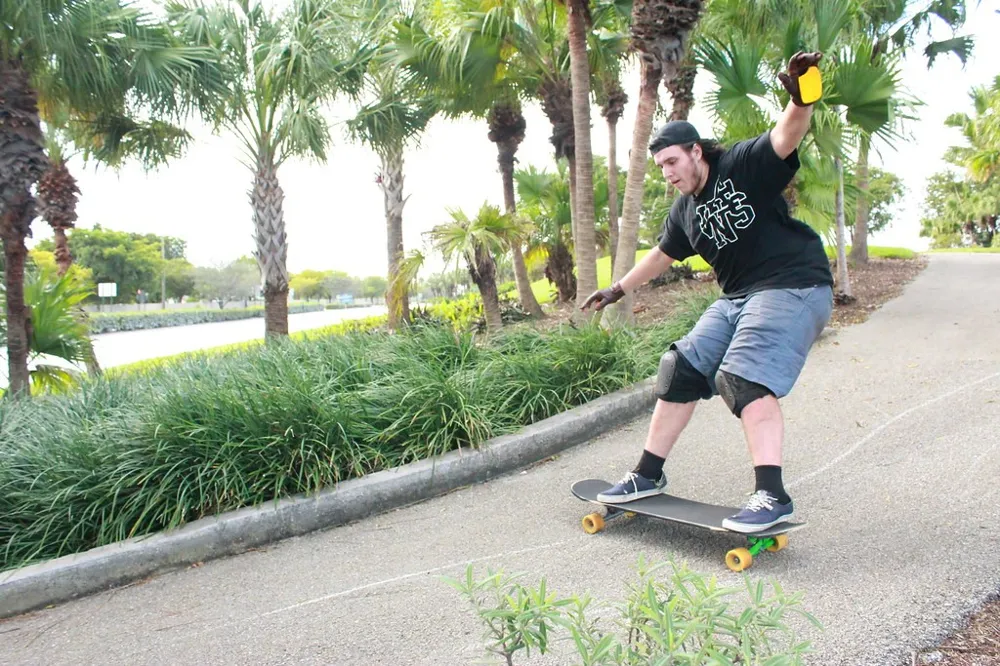
Cross-steps, Peter Pans and pirouettes are dance moves rather than freestyle tricks. They're easiest on long, flat dancer boards, and our longboard dancing guide covers them in order. One trick to try now: the cross-step, crossing one foot over the other to walk toward the nose and back, on grass first.
Slides such as the Coleman slide and stand-up slides control speed, and they're the core of freeride. They need slide gloves, a helmet and practice on a gentle slope; see how to slide on a longboard. A tuck, crouching low to cut wind resistance, belongs to downhill riding. Only try it once you can stop reliably; see downhill longboards.
A Simple Learning Order and Common Mistakes
- Start: manuals, kickturns, one-foot riding.
- Then: hippie jumps, fakie pivots, the basic ghostride.
- Next: shuvits and no-comply 180s.
- After that: boneless, ghostride flips and tiger claws.
Move on when a trick works most of the time, not after a set number of days.
| Mistake | Fix |
|---|---|
| Too much speed | Practice standing still, then at walking pace |
| Jumping forward | Jump straight up; the board keeps rolling under you |
| Stiff legs | Bend your knees before every pop, jump and landing |
| Kicking the board away | Keep shuvits and no-complies close to your body |
| Looking down the whole time | Look at the board to catch it, then look ahead to ride away |
| Loose trucks | Tighten a little for steadier landings |
Boards That Make Tricks Easier
Any longboard with kicktails will do for learning. If you're choosing a board for freestyle, look for twin kicktails and a symmetrical shape. Compare more boards in best longboards and best longboards for beginners, and check the longboard size guide.
Magneto Dancer 46"
A 46 x 9.5 inch bamboo and carbon fiber dancer with dual kicktails and a subtle camber for a bit of bounce. The long platform suits footwork, and the kicks suit pivots and shuvits.
Check Price on AmazonMagneto 44" Kicktail Cruiser
A budget 44-inch longboard with a kicktail for easier turning and curb hops.
Check Price on AmazonStaying Safe and What to Learn Next
- Wear a helmet every session, and wrist guards and knee pads while learning.
- Practice away from traffic, pedestrians and slopes.
- Check your trucks and wheels before you ride; see speed wobbles if your board shakes at speed.
- When you fall, roll rather than catching yourself on straight arms; see how to fall.
Once these tricks feel solid, try dancing, sliding or skateboard flip tricks such as the kickflip. If you ride a small plastic cruiser, see penny board tricks.
Frequently Asked Questions
What is the easiest longboard trick?
The manual and the hippie jump are usually the easiest. Neither needs pop, and you can practice both at walking speed.
Can you ollie a longboard?
Yes, on a board with a kicktail, but it's harder than on a skateboard because longboards are longer and heavier. A short board with kicktails makes it easier.
What kind of longboard is best for tricks?
A symmetrical board with kicktails at both ends, a flat or slightly flexible deck and a top-mount or flat platform. Freestyle and dancer boards are built for this.
Do I need kicktails for longboard tricks?
Not for all of them. The hippie jump, ghostride, cross-step and one-foot riding work without kicktails, but pivots, shuvits, no-complies and manuals are much easier with them.
Should I learn to stop before trying tricks?
Yes. Learn to foot brake and carve to control speed first, and practice tricks at low speed on flat ground.
Are longboard tricks the same as longboard dancing?
They overlap. Dancing is footwork while rolling, such as cross-steps and Peter Pans. Freestyle tricks involve popping, spinning or flipping the board.