How to Slide on a Longboard, Step by Step (2026)
Sliding lets you shed speed and look good doing it. Start with the hands-down pendulum slide, then move to stand-up slides.
Why Learn to Slide?
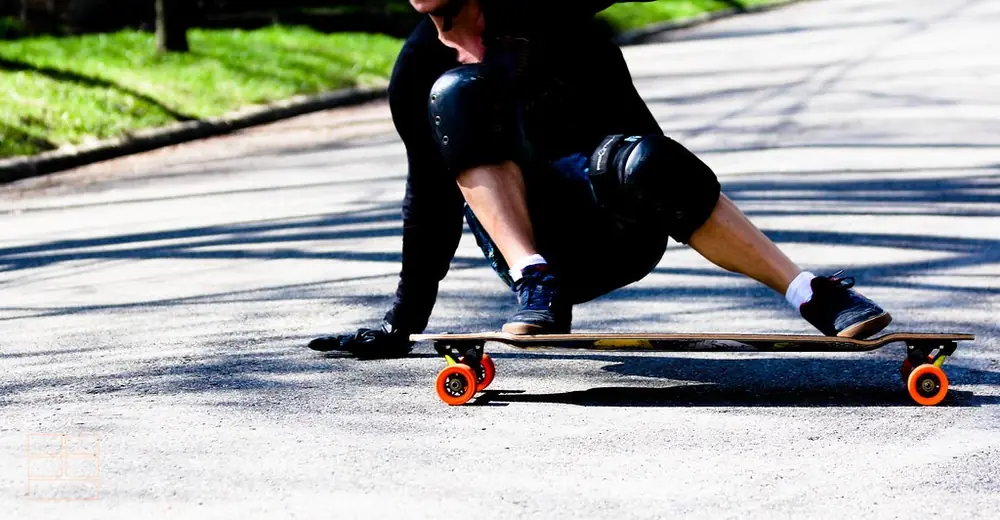
Sliding is when you break traction on purpose so your board turns sideways and skids. It's the main way experienced longboarders control speed on hills, and it's also a fun skill in itself (freeride). The usual first slide is the Coleman slide, a heelside, hands-down slide developed by Cliff Coleman in the 1970s, where you put a gloved hand down and swing the board around. Learn to foot brake first, then add slides.
Gear You Need
| Gear | Why |
|---|---|
| Slide gloves | Hard palm pucks let you put hands down |
| Helmet | Essential; full-face for speed |
| Knee and elbow pads | Protect against falls |
| Slide-friendly wheels | Rounded lips break traction easily |
| Flat shoes | Grip and feel |
Landyachtz Slide Gloves
Leather slide gloves with palm pucks for freeride. This listing is the small size.
Check Price on AmazonThe Coleman Slide (Heelside, Hands Down)
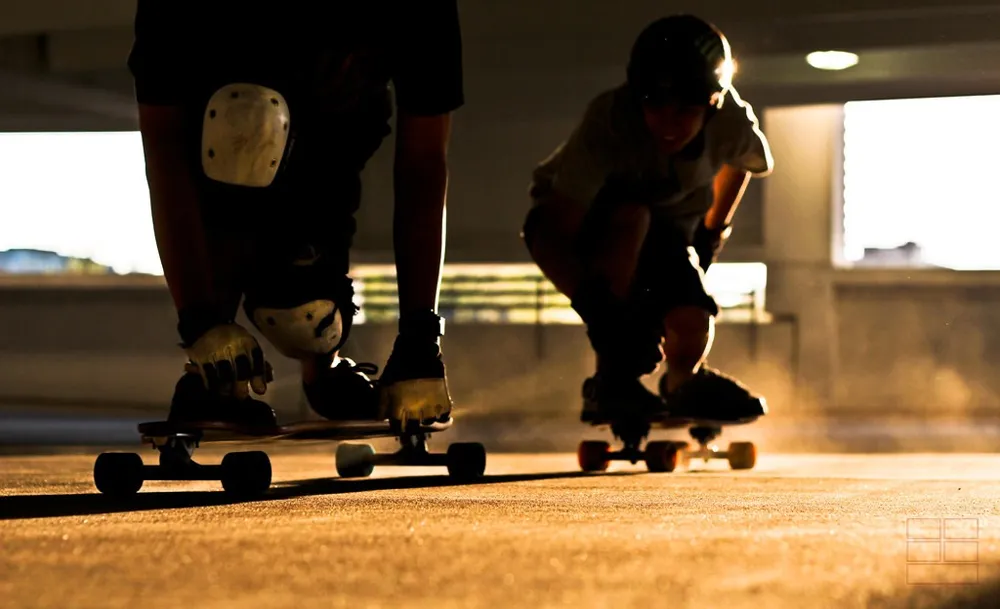
- Find a gentle hill or a quiet, smooth parking lot with a safe run-out and no traffic.
- Build moderate speed: around six to eight pushes is a common starting point.
- Get low: feet near each end of the board, knees bent, weight slightly on your front foot.
- Carve slightly toeside, then turn heelside into the slide.
- Hand down: place your back gloved hand on the ground behind you, puck flat, close to the board.
- Push the board out: lean on your hand, turn your shoulders and look over your front shoulder as the board swings sideways.
- Finish: stop at 90 degrees at first. With practice, carry it through 180 degrees and ride away switch, or swing back.
A full slide scrubs off a lot of speed, which is why it's the classic beginner way to slow down on hills.
Toeside Hands-Down Slides
The toeside version, often called a pendulum, faces you down the hill. Crouch, carve toeside, put your back hand down on the downhill side and kick the tail out. Many riders learn it after the Coleman.
Stand-Up Slides
Once you're comfortable with hands-down slides, try a stand-up slide: carve, shift your weight forward and kick the tail out with your back foot while staying upright. Stand-up slides take more speed and confidence.
Set Up Your Board for Sliding
| Part | What Helps |
|---|---|
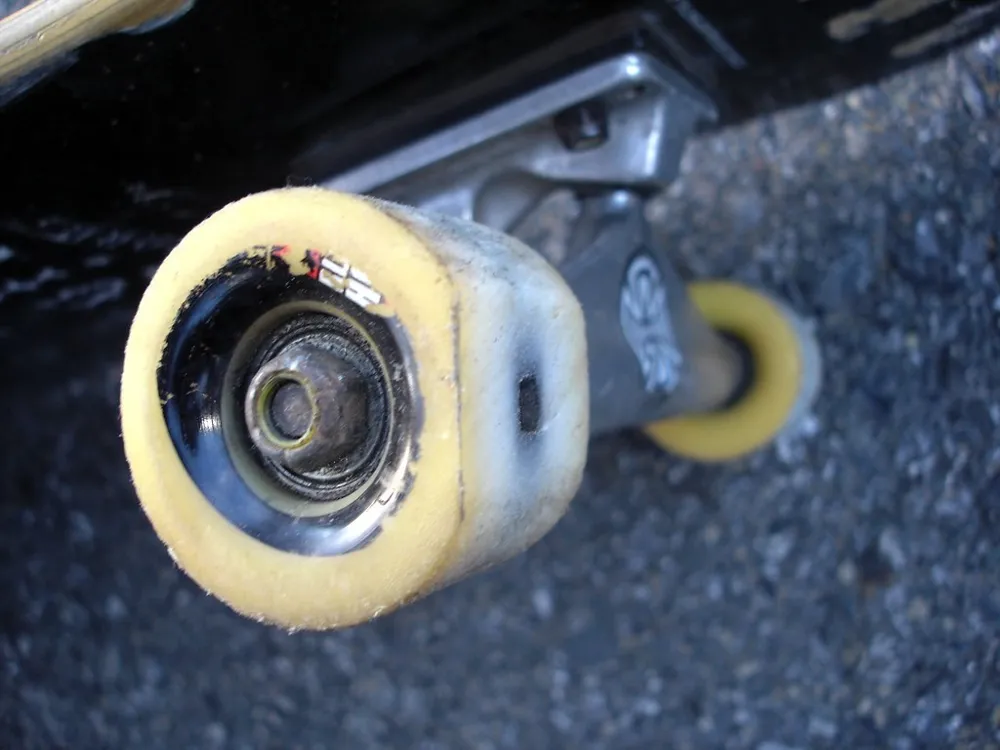
| Wheels | Rounded lips, narrower contact patch, slightly harder urethane; smaller wheels break traction more easily |
| Wheel break-in | New wheels have a skin; they slide more smoothly after a few sessions |
| Trucks | Slightly looser trucks make it easier to turn into a slide |
| Deck | A stable, low deck with some concave helps you lock your feet in |
Sliding leaves "thane lines" of urethane on the road and wears wheels faster; flat spots can develop on cheap or very soft wheels. See longboard wheels.
A Simple Progression
- Foot braking and carving at speed.
- Coleman slide to 90 degrees, then 180.
- Toeside hands-down (pendulum) slides.
- Stand-up speed checks.
- Full stand-up slides at higher speeds.
Common Mistakes
| Mistake | Result | Fix |
|---|---|---|
| Weight too far back | Board shoots out | Stay centered or slightly forward |
| Not enough speed | Wheels grip | Add a little speed |
| Grippy wheels | Hard to break traction | Use rounded-lip slide wheels |
| Standing too tall | Unstable | Get low |
| Hand too far behind you | Fall onto your backside | Keep your hand close to the board |
| Feet too close together | Board spins out | Feet near each end of the board |
Safety
- Never slide into traffic or blind corners.
- Check local laws about riding on roads.
- Start slow and build up.
- Ride with friends.
Ready for hills? See downhill longboards, longboard wheels and longboard trucks.
Frequently Asked Questions
What do I need to start sliding on a longboard?
Slide gloves, a helmet, pads, and a board with wheels that slide (rounded lips and medium-hard urethane help).
What is the easiest longboard slide?
The Coleman slide, a heelside slide done with a gloved hand on the ground, is the usual first slide.
What wheels are best for sliding?
Wheels with rounded lips, smaller contact patches and slightly harder durometers break traction more easily.
Does sliding ruin wheels?
Sliding wears wheels faster and can cause flat spots. It's normal for freeride wheels.
Where should I practice sliding?
A smooth, gentle, empty hill or a quiet parking lot with no traffic.
Who invented the Coleman slide?
Cliff Coleman developed it in the 1970s, and it's still the most common first slide.
How fast do you need to go to slide?
Moderate speed: enough that the wheels break traction rather than grip. Start slow and add speed as you get comfortable.