Washington's Best Ski Resorts, From Rainier to Spokane (2026)
Deep Cascade snow, record-setting Mt. Baker, night skiing an hour from Seattle and sunny hills on the dry side of the state. Here's how Washington's ski areas compare for the 2026/27 season.
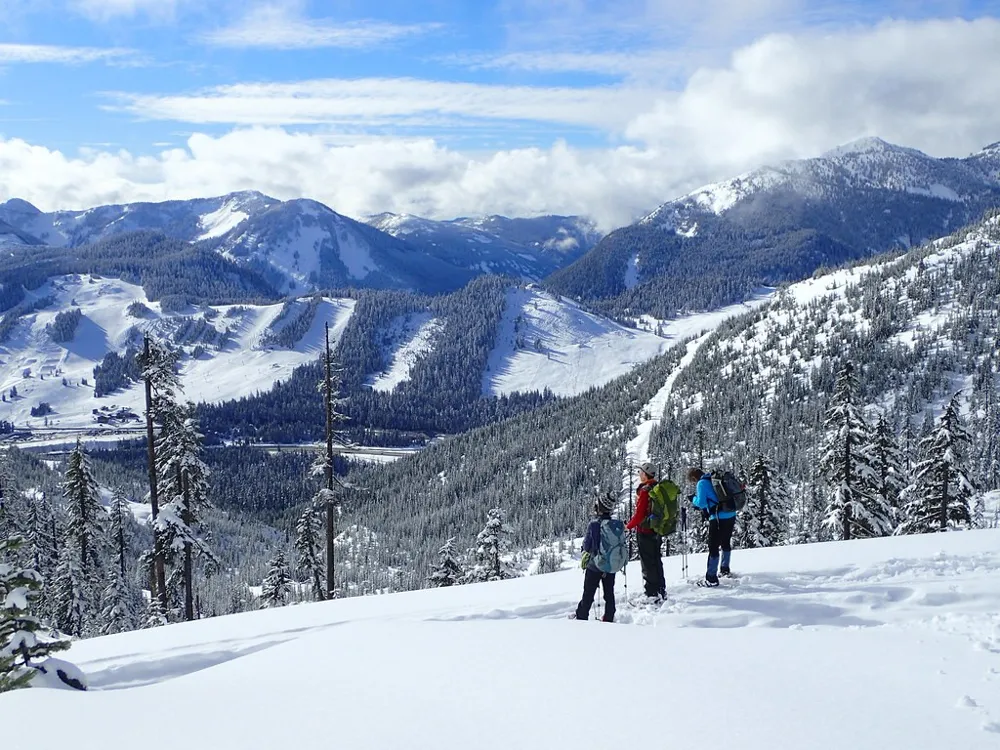
Washington Ski Resorts at a Glance
Washington's skiing runs along the Cascade Range, from Mt. Baker near the Canadian border to White Pass in the south, with a second cluster of ski hills in the drier mountains near Spokane. The west-side Cascade areas get some of the heaviest snowfall in North America: Mt. Baker holds the single-season world snowfall record. East-side areas like Mission Ridge and 49 Degrees North get less snow but more sun. Three of the big areas sit right on highway passes, so road conditions shape a Washington ski day as much as the snow does.
| Resort | Acres | Vertical | Runs | Avg. Snowfall | Night Skiing | 2026/27 Pass |
|---|---|---|---|---|---|---|
| Crystal Mountain | About 2,600 | About 3,100 ft (2,592 ft by lift) | 57 named, about 80 total | About 350 in | Limited | Ikon |
| 49 Degrees North | About 2,325 | 1,851 ft | 82–88 | About 301 in | Limited | Indy |
| Mission Ridge | About 2,000 | 2,250 ft | 36–70 (sources differ) | About 200 in | Yes | Check resort |
| The Summit at Snoqualmie (with Alpental) | About 1,914 combined | 2,280 ft (Alpental) | 62 | About 435 in | Yes | Ikon |
| Mt. Spokane | About 1,704 | 2,071 ft | 52 | About 250 in | Yes (16 lit runs) | Check resort |
| White Pass | About 1,402 | 2,000 ft | 45 | About 350 in | Limited | Indy |
| Stevens Pass | About 1,125 | About 1,800 ft | 37 major runs | About 450–460 in | Yes | Epic |
| Mt. Baker | About 1,000 | 1,589 ft | 31 | About 641 in | No | Check resort |
Stats come mainly from Wikipedia, with OnTheSnow and the Indy Pass filling gaps. Sources sometimes disagree on runs and lifts, so figures are rounded or shown as a range. Pass access is as of November 2026; check day limits and reservations with each pass.
Near Seattle: Crystal, Snoqualmie and Stevens Pass
Three of Washington's biggest areas are within about two hours of Seattle, which makes them the busiest on weekends and holidays.
Crystal Mountain
Crystal Mountain is Washington's largest ski resort, with about 2,600 skiable acres. About 2,300 of those are lift-served, and the rest is roughly 300 acres of inbounds backcountry. The top sits at about 7,012 feet, and the resort lists about 3,100 feet of total vertical, or 2,592 feet using lifts alone. Wikipedia counts 57 designated trails and about 80 runs in all, rated 11% easiest, 54% more difficult and 35% most difficult, so it leans toward strong intermediates and experts. The longest run, Northway, is about 2.5 miles.
Crystal is best known for its views: Mount Rainier rises less than 13 miles from the summit. The Mt. Rainier Gondola, which opened on January 1, 2011, is the state's only high-speed gondola and gives year-round access to the summit area, home to the Summit House restaurant, which OnTheSnow calls the highest-elevation restaurant in Washington. The resort averages about 350 inches of snow, has had snowmaking since 2015, and runs limited evening hours rather than full night skiing. Alterra Mountain Company has owned Crystal since 2018, and it's on the Ikon Pass with unlimited days on the full Ikon Pass as of November 2026. It's about 85 miles from Seattle, roughly two hours by car, and Enumclaw is the nearest city, about 40 miles away.
The Summit at Snoqualmie and Alpental
The Summit at Snoqualmie is the closest skiing to Seattle, about 52 miles east of downtown on I-90, or about 45 minutes in good conditions. It's four base areas in one: Summit West, Summit Central, Summit East and Alpental. Together they cover about 1,914 acres and 62 trails, served by 20 chairlifts and five surface lifts, with about 435 inches of snow a year. Boyne Resorts has owned it since 2018.
Summit West, Central and East have gentler verticals of about 765 to 1,100 feet, suit beginners and families, and run lots of night skiing. Summit West dates back to a Seattle city park opened in 1933, and Summit Central, formerly Ski Acres, built Washington's first chairlift in 1949. Alpental, across I-90, is the expert side: steep, technical terrain, a big back bowl and 2,280 feet of vertical from a 5,420-foot summit. Summit East also has more than 50 km of Nordic trails, and the Summit Tubing Center by Summit Central has 20 groomed lanes. The Summit is on the Ikon Pass, listed with up to seven days as of November 2026; check Ikon's reservation rules.
Stevens Pass
Stevens Pass sits on US 2 about 82 miles from Seattle, roughly 1.5 to 2 hours away. Spread across Cowboy Mountain and Big Chief Mountain, it covers about 1,125 acres and 37 major runs, with about 1,800 feet of vertical from a 4,061-foot base to 5,845 feet. Wikipedia lists 10 chairlifts, while OnTheSnow counts 13 lifts. The backside, Mill Valley, has a more natural feel with sparsely treed runs.
Snowfall is reported at about 450 to 460 inches a year. Stevens is a top pick for night skiing: Wikipedia says it typically runs until 10 p.m. most days in mid-season, though not on Mondays or Tuesdays, so check the current schedule. The Stevens Pass Nordic Center, about 5 miles east of the pass, grooms about 28 km of trails. Stevens opened in 1937 and has been owned by Vail Resorts since 2018, so it's on the Epic Pass. The town of Leavenworth is about 37 miles east.
North Cascades: Mt. Baker
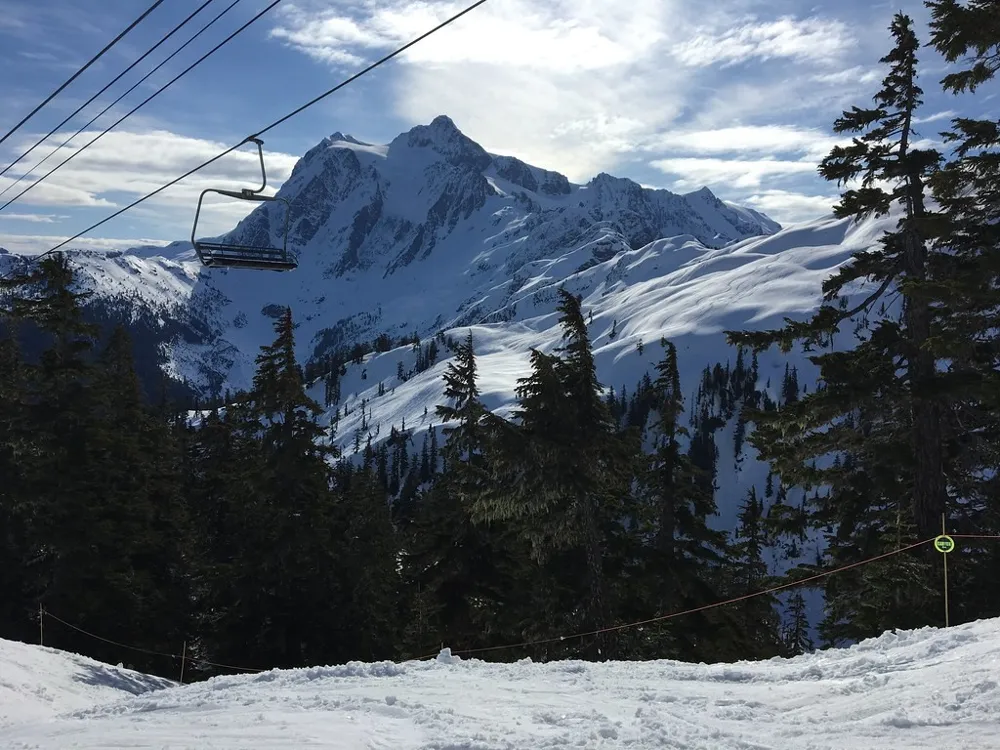
Mt. Baker Ski Area, at the end of State Route 542 near Glacier, is about 52 miles, or roughly 75 minutes, from Bellingham, and about 135 miles from Seattle. It sits only about 10 miles south of the Canadian border and is actually closer to Mount Shuksan than to Mount Baker. It's famous for snow: Mt. Baker recorded 1,140 inches of snow in the 1998/99 season, which the resort says NOAA verified as a single-season world record, and its average is about 641 inches a year, according to Wikipedia.
The area is modest in size, with about 1,000 acres, 31 runs and 1,589 feet of vertical, served by eight chairs and two rope tows. The terrain is split 24% easiest, 45% more difficult and 31% most difficult, and OnTheSnow notes it's known for powder and expert terrain. If you head beyond the resort boundary, check avalanche conditions and the resort's boundary rules first. There's no night skiing and no snowmaking. The usual season runs from late November to late April, with typical hours of 9 a.m. to 3:30 p.m.
Baker also has deep snowboard roots. It was one of the first US ski areas to welcome snowboarders, and its Legendary Banked Slalom, a race through a natural halfpipe that started in 1985, puts pros and amateurs on the same course. Learn more about the sport's early days in our history of snowboarding.
Central Washington: White Pass and Mission Ridge
White Pass
White Pass, on US 12, is about 53 miles from Yakima and about 2.5 hours from Seattle. It has about 1,402 acres, 45 runs and 2,000 feet of vertical from a 4,500-foot base to 6,500 feet, served by five chairlifts and three magic carpets. The Paradise Basin expansion, which opened in the 2010/11 season, added 767 acres and two chairlifts. The terrain is listed as 30% beginner, 50% intermediate and 20% advanced, and the area averages about 350 inches of snow.
White Pass is where Olympic racing twins Phil and Steve Mahre grew up. It also has about 26 km of groomed Nordic trails, plus snowshoeing and fat biking. Night skiing is limited to Saturdays and holidays, according to Wikipedia. A group of Yakima-area owners bought the area in 2021, and it's on the Indy Pass as of November 2026.
Mission Ridge
Mission Ridge is about 12 miles from Wenatchee on the east side of the Cascades and about 160 miles, or roughly three hours, from Seattle. It has about 2,000 acres and 2,250 feet of vertical from a 4,570-foot base to 6,820 feet. Run counts vary by source, from 36 on Wikipedia to about 70 trails on OnTheSnow, and the terrain is listed as roughly 10% easiest, 60% more difficult and 30% most difficult.
Snowfall averages about 200 inches, much less than on the west side, but Wikipedia reports more than 300 sunny days a year. Mission Ridge has had night skiing and snowmaking since 1978. Its best-known landmark is a wing section from a B-24 Liberator that crashed on the mountain in 1944, mounted above Bomber Bowl in 1992. The Wenatchee Express, a high-speed bubble chair, opened in 2020.
Eastern Washington Near Spokane
49 Degrees North
49 Degrees North, about 10 miles from Chewelah in the Colville National Forest, is Eastern Washington's largest ski area, with about 2,325 skiable acres and 1,851 feet of vertical from a 3,923-foot base to 5,774 feet. The Indy Pass lists 88 runs and seven lifts, and Wikipedia counts 82 trails, rated 30% easiest, 40% more difficult, 25% most difficult and 5% expert only. The longest run is about 2.75 miles. The Northern Spirit high-speed quad, built in 2021, is described as the newest, longest and most powerful chairlift in Washington and the Inland Northwest.
Tree skiing is the specialty: thinning work in the 1990s opened up some of the most varied glades in the Northwest. Snowfall averages about 301 inches, and the resort has snowmaking and limited night skiing. It's about 60 miles from Spokane International Airport and is on the Indy Pass as of November 2026.
Mt. Spokane Ski and Snowboard Park
Mt. Spokane sits inside Mount Spokane State Park, about 23 miles northeast of Spokane via State Route 206, which makes it the easiest after-work ski hill for Spokane locals. It has about 1,704 acres, 52 trails and 2,071 feet of vertical, served by six chairlifts and two surface lifts, and the terrain is mostly intermediate: 23% easiest, 62% more difficult and 15% most difficult. Snowfall averages about 250 inches, with no snowmaking. Night skiing, which started in 1967, covers 16 lit runs. Skiing here goes back to at least 1947.
Other Washington Ski Areas
- Hurricane Ridge: a small, community-run area near Port Angeles, about three hours from Seattle by ferry and US 101. OnTheSnow says it opens on weekends and holidays from mid-December through March, and the lodge was destroyed by fire in 2023, so check access before you go. It's on the Indy Pass.
- Ski Bluewood: near Dayton, on the Indy Pass.
- Loup Loup Ski Bowl: near Twisp, on the Indy Pass.
- Leavenworth Winter Sports Club: in Leavenworth, on the Indy Pass, along with the nearby Plain Valley Ski Trails.
For guided skiing, North Cascade Heli in Winthrop is also on the Indy Pass list. See cat skiing and heli-skiing for how guided days work.
Best Washington Resorts for...
| You Want... | Try |
|---|---|
| The most terrain and vertical | Crystal Mountain |
| Deep snow and expert terrain | Mt. Baker, Alpental, Crystal Mountain |
| Night skiing near Seattle | The Summit at Snoqualmie, Stevens Pass |
| The closest skiing to Seattle | The Summit at Snoqualmie |
| Beginners and families | Summit West and Central, White Pass, Mt. Spokane |
| Sunshine and a drier climate | Mission Ridge, 49 Degrees North |
| Tree skiing | 49 Degrees North, Stevens Pass (Mill Valley) |
| Cross-country skiing | The Summit at Snoqualmie (Summit East), Stevens Pass Nordic Center, White Pass |
| Skiing near Spokane | Mt. Spokane, 49 Degrees North |
| Ikon, Epic or Indy pass days | Crystal and the Summit (Ikon); Stevens Pass (Epic); White Pass and 49 Degrees North (Indy) |
Families comparing options nationwide can also see our best family ski resorts and ski resorts for beginners.
Washington Ski Passes for 2026/27
- Ikon Pass: Crystal Mountain is listed among the full Ikon Pass's unlimited destinations, and The Summit at Snoqualmie is listed with up to seven days, as of November 2026. Check the Ikon site for Base Pass access and any reservation requirements.
- Epic Pass: Stevens Pass is owned by Vail Resorts and is on the Epic Pass. Check Epic's site for which pass products include it.
- Indy Pass: White Pass, 49 Degrees North, Ski Bluewood, Loup Loup Ski Bowl, Hurricane Ridge and Leavenworth Winter Sports Club are listed as of November 2026. Check the Indy site for blackout dates and reservation rules.
- Resort passes: Mt. Baker, Mission Ridge and Mt. Spokane were not on the Ikon or Indy resort lists when we checked, so look at their own season passes and lift tickets.
For the big-picture trade-offs between the two big multi-resort passes, see Epic vs Ikon.
When to Go
Washington resorts usually open from late November into December, once the heavy, wet coastal snowpack builds, and most close in April. As of November 2026, OnTheSnow's projected openings for 2026/27, which it notes are not all official, are:
| Projected Opening | Resorts |
|---|---|
| November 27 | Crystal Mountain, White Pass, Mission Ridge |
| December 4 | Stevens Pass |
| December 5 | Mt. Spokane |
| December 18 | Mt. Baker |
| December 26 | The Summit at Snoqualmie, Alpental, Bluewood |
| December 30 | 49 Degrees North |
- December: early-season cover can be thin, especially at lower-elevation areas like the Summit. Holiday weeks are busy.
- January to March: usually the most reliable snow and the most open terrain. Weekends near Seattle are the busiest days.
- April: spring skiing, with softer snow and longer days. Many areas close during the month; check each resort's closing date.
Pacific storms can bring rain at lower elevations and dense snow higher up, so check the freezing level as well as the snow totals. Midweek days are the easiest way to avoid crowds and traffic. See when is ski season for how Washington compares with other regions.
Getting There
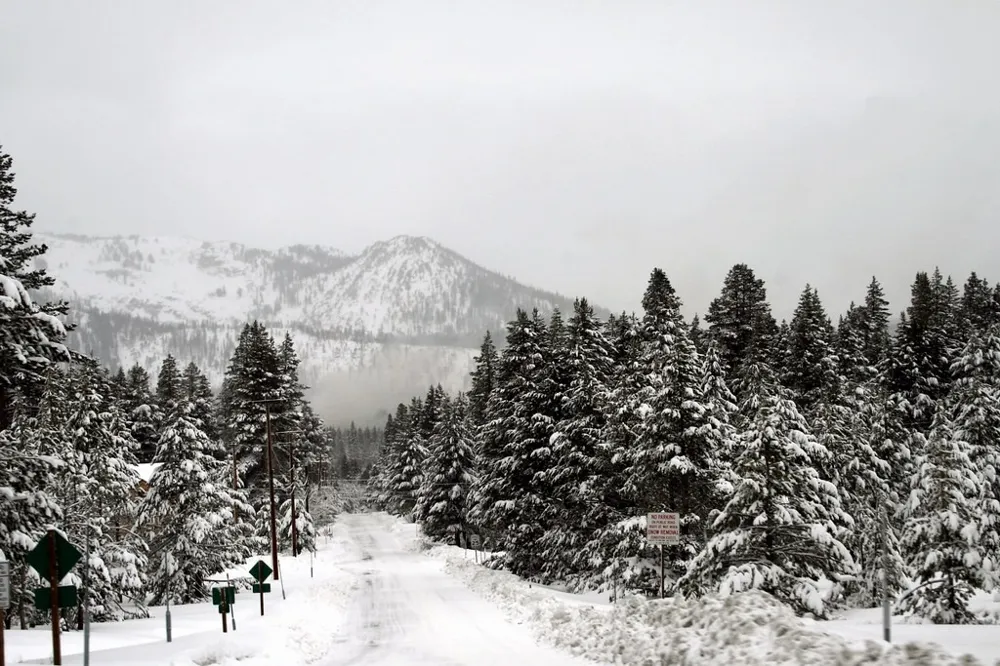
- From Seattle: fly into Seattle-Tacoma International (SEA). OnTheSnow puts the Summit at Snoqualmie at about 45 minutes, Stevens Pass at about 1.5 to 2 hours, Crystal Mountain at about 2 hours, White Pass at about 2.5 hours, Mt. Baker at about 2.5 to 3 hours and Mission Ridge at about 3 hours. Allow extra time on snowy weekends.
- Mt. Baker from Bellingham: about 52 miles, roughly 75 minutes, on State Route 542.
- Mission Ridge from Wenatchee: about 12 miles.
- From Spokane: Mt. Spokane is about 23 miles northeast of the city, and 49 Degrees North is about 60 miles from Spokane International Airport.
Mountain Passes, Traction Tires and Chains
The Summit at Snoqualmie (I-90), Stevens Pass (US 2) and White Pass (US 12) sit right on highway mountain passes, and conditions can change fast. WSDOT can require traction tires or chains, and the requirements are posted on highway advisory signs and in WSDOT's mountain pass reports, which you can check online or in the free WSDOT app. WSDOT says approved traction tires carry the mountain-and-snowflake symbol and need at least 1/8 inch of tread, that studded tires are legal only from November 1 through March 31, and that studded tires don't count as chains when chains are required. Fines apply for ignoring posted chain requirements. Carry chains that fit your tires, practice putting them on before your trip, and check the pass report before you leave. This is general information, not legal advice; read WSDOT's official guidance for the exact rules, last checked November 2026. A roof or hitch rack keeps wet gear out of the cabin.
Where to Stay
- Seattle and the Eastside: many skiers do the Summit, Stevens and Crystal as day trips from the city.
- North Bend: about 18 miles from the Summit at Snoqualmie, on I-90.
- Enumclaw: the nearest city to Crystal Mountain, about 40 miles away.
- Leavenworth: the town about 37 miles east of Stevens Pass.
- Bellingham and Glacier: bases for Mt. Baker, which lists Glacier as its location.
- Wenatchee, Yakima, Chewelah and Spokane: bases for Mission Ridge, White Pass, 49 Degrees North and Mt. Spokane.
For booking timelines and budgets, see how to plan a ski trip.
Weather and What to Wear
West-side Washington snow is usually heavy and wet, and storms often arrive with wind, fog and rain at lower elevations, so waterproofing matters more here than in drier states. Wear a shell with a high waterproof rating, waterproof ski pants and gloves you can dry overnight, and bring a spare pair of mittens. Goggles with a low-light lens help in flat light and fog; see ski and snowboard goggles and what to wear skiing. East-side areas like Mission Ridge and 49 Degrees North tend to be colder and sunnier, so add warmer layers and sunscreen.
Related Guides
Compare Oregon, Idaho and Montana resorts, see the best US ski resorts and the largest ski resorts, check skiing facts for more on Mt. Baker's snowfall record, and plan with our ski trip packing list.
Frequently Asked Questions
What is the best ski resort in Washington?
It depends on what you want. Crystal Mountain is the biggest, with Mount Rainier views and the most vertical. Mt. Baker is the pick for deep snow and expert terrain, Stevens Pass and The Summit at Snoqualmie are the go-tos for night skiing near Seattle, and 49 Degrees North and Mission Ridge suit skiers on the sunnier east side.
What is the biggest ski resort in Washington?
Crystal Mountain, with about 2,600 skiable acres, including about 300 acres of inbounds backcountry, and about 3,100 feet of vertical. 49 Degrees North, at about 2,325 acres, is the largest in Eastern Washington.
What is the closest ski resort to Seattle?
The Summit at Snoqualmie, on I-90 about 52 miles east of downtown Seattle. OnTheSnow puts the drive at about 45 minutes in good conditions. Stevens Pass and Crystal Mountain are roughly 1.5 to 2 hours away.
Which Washington resorts are on the Ikon, Epic and Indy passes?
As of November 2026, Crystal Mountain and The Summit at Snoqualmie are on the Ikon Pass, Stevens Pass is a Vail Resorts mountain on the Epic Pass, and the Indy Pass lists White Pass, 49 Degrees North, Ski Bluewood, Loup Loup and Hurricane Ridge. Check reservations and blackout dates on each pass's site.
Which Washington ski resorts have night skiing?
Stevens Pass, The Summit at Snoqualmie, Mission Ridge and Mt. Spokane all run night skiing, and White Pass, 49 Degrees North and Crystal Mountain offer more limited evening hours. Mt. Baker does not offer night skiing. Night schedules change, so check each resort's hours.
When does ski season start in Washington?
Most Washington areas open from late November to late December once enough snow has fallen. OnTheSnow's 2026/27 projections show Crystal Mountain, White Pass and Mission Ridge on November 27 and The Summit at Snoqualmie on December 26. Many areas close in April.
Do you need chains to drive to Washington ski resorts?
You may. WSDOT can require traction tires or chains on mountain passes such as Snoqualmie, Stevens and White Pass when conditions are bad. Check WSDOT's mountain pass reports before you leave, carry chains and follow posted signs.