The Midwest's Best Ski Resorts, From the U.P. to Ohio (2026)
The Midwest has no big mountains, but it has lake-effect powder, 1,000-acre Lutsen, expert-only Mount Bohemia and dozens of night-lit hills close to its cities. Here's how the top resorts compare for 2026/27.
Midwest Ski Resorts at a Glance
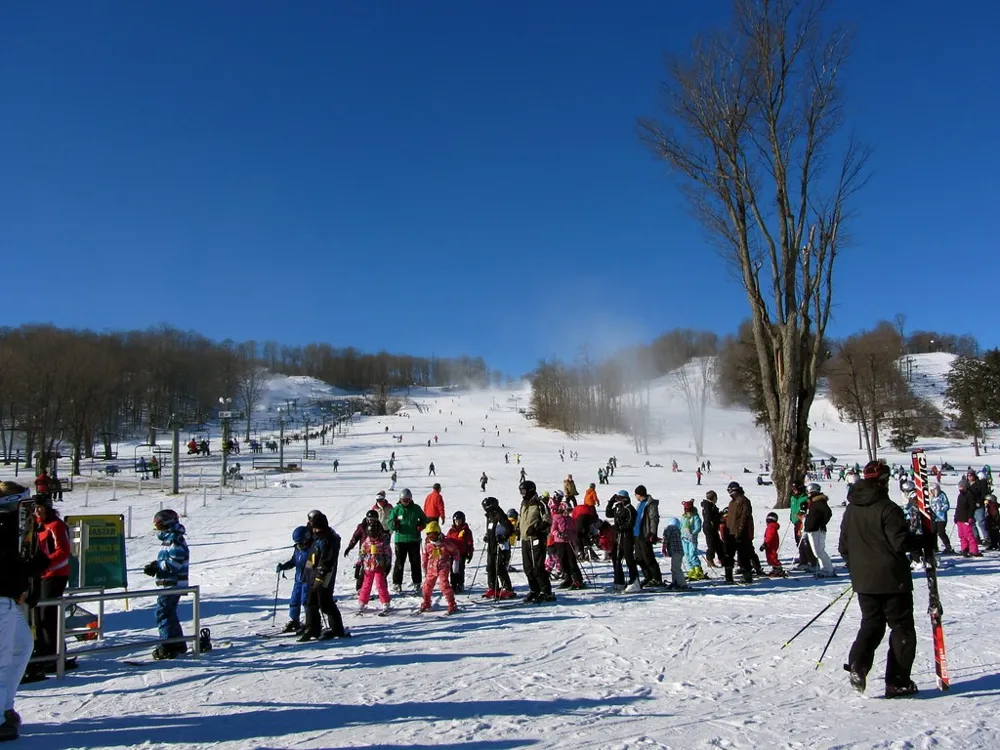
Midwest skiing is short-vertical, snowmaking-backed and often lit for night skiing, but the best resorts here are more than city bumps. Northern Michigan has two full-service resorts with 400-plus acres each, Minnesota's North Shore has the region's biggest ski area, and the lake-effect snow belt along Lake Superior delivers some of the deepest natural snow east of the Rockies. This table compares the headline resorts by size.
| Resort | State | Acres | Vertical | Trails | Lifts | 2026/27 Pass |
|---|---|---|---|---|---|---|
| Lutsen Mountains | Minnesota | About 1,000 | 1,088 ft (825 ft lift-served) | 95 | 7 | Ikon |
| Mount Bohemia | Michigan (U.P.) | About 585 (550–650 by source) | About 900 ft | About 95–105 | 2 | — |
| Terry Peak | South Dakota | About 450 | About 1,164 ft | About 30 | — | Indy |
| The Highlands | Michigan | 435 | 552 ft | 55 | 8 | Ikon |
| Boyne Mountain | Michigan | 415 | 500 ft | 65 | 10 chairlifts | Ikon |
| Afton Alps | Minnesota | About 300 | About 350 ft | About 50 | — | Epic |
| Granite Peak | Wisconsin | About 225–277 | 700 ft | About 55–67 | 7 | Ikon |
| Chestnut Mountain | Illinois | About 220 | 475 ft | 19 | 9 | Indy |
| Snowriver | Michigan (U.P.) | About 195–220 | About 543 ft | Two areas, 60+ | About 9–10 | Ikon |
| Spirit Mountain | Minnesota | About 175 | About 680–700 ft | About 22 | 8 | Indy |
| Crystal Mountain | Michigan | About 103 | About 375 ft | 58 | 8 | Indy |
| Sundown Mountain | Iowa | About 85 | — | 21 | — | Indy |
| Mad River Mountain | Ohio | — | About 300 ft | 16 | 9 | Epic |
| Perfect North Slopes | Indiana | — | — | 23 | — | — |
Stats are as of November 2026. Lutsen, Boyne Mountain and The Highlands figures come from the resorts' own stats pages; the rest come from OnTheSnow, Wikipedia and published travel guides that quote resort figures, and sources often disagree (Granite Peak's acreage and Mount Bohemia's vertical both vary by source). Treat them as approximate, and check the resort's site before you plan around a number. A dash means we couldn't confirm the figure or a major multi-resort pass. For how these compare nationally, see the largest ski resorts.
Michigan: The Midwest's Ski Leader
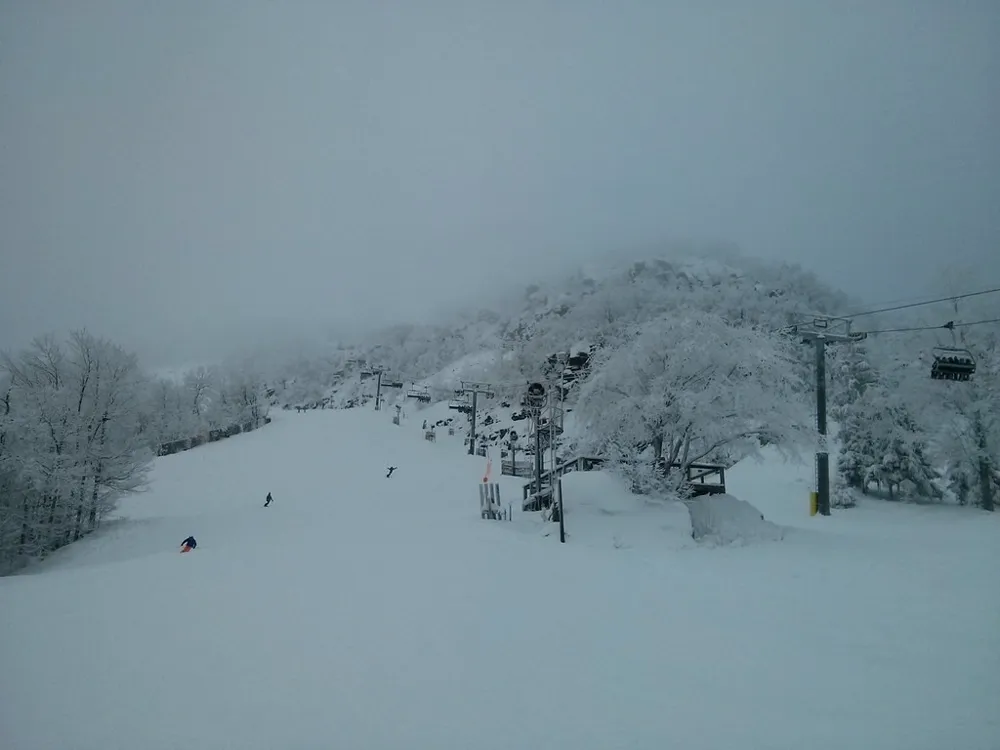
Michigan has more ski areas than any other Midwest state on OnTheSnow's regional list, and it splits into two very different ski regions. The northern Lower Peninsula has the big full-service resorts. The Upper Peninsula (the U.P.) has smaller crowds, more natural snow and the region's steepest terrain. Michigan also has deep ski roots: Ishpeming in the U.P. is often described as the birthplace of organized skiing in America, and the Snurfer, the toy that led to the modern snowboard, was invented in Muskegon in 1965 (see the history of snowboarding).
Boyne Mountain
Boyne Mountain, near Boyne Falls, is the Midwest's best-known ski resort. It lists 415 skiable acres, 65 trails, 500 feet of vertical, 10 chairlifts and five terrain parks, with snowmaking on 90% of the terrain and an average of 140 inches of snow. Its terrain leans gentle, with the resort listing 48% beginner, 27% intermediate, 22% advanced and 3% expert, which makes it a strong family and learner pick. It opened in 1949, and Wikipedia notes it still uses parts of the world's first chairlift, built in 1936 for Sun Valley. Off the slopes, Avalanche Bay is described as Michigan's largest indoor waterpark. Boyne Mountain is on the Ikon Pass for 2026/27.
The Highlands
The Highlands at Harbor Springs claims the most skiable terrain (435 acres) and the highest vertical (552 feet) in Michigan's Lower Peninsula. It has 55 trails, eight lifts and a terrain mix the resort lists as 37% beginner, 29% intermediate and 34% expert, which suits mixed-ability groups better than Boyne Mountain's beginner-heavy layout. The longest run, North Peak Pass, is about 1.25 miles. It averages 140 inches of snow, has snowmaking on 93% of terrain, runs night skiing Wednesday through Saturday (hours vary) and grooms about 35 km of Nordic trails. It's on the Ikon Pass for 2026/27.
Crystal Mountain
Crystal Mountain, in Thompsonville in Benzie County, is smaller at about 103 acres and about 375 feet of vertical, but it has 58 trails, several terrain parks and 27 slopes lit for night skiing, plus snowmaking on nearly all its terrain. It's a family-oriented resort with on-site lodging and more than 15 miles of cross-country trails. It appears on the Indy Pass for 2026/27, according to OnTheSnow's Indy Pass guide. Don't confuse it with Crystal Mountain in Washington, which has its own guide in our Washington ski resorts page.
Mount Bohemia
Mount Bohemia, at Lac La Belle on the Keweenaw Peninsula at the top of the U.P., is the Midwest's expert mountain. It has no green trails, no grooming, no snowmaking and no terrain park; it runs on lake-effect snow from Lake Superior, and its terrain is almost all black diamond, with only a few intermediate runs. It isn't recommended for beginners. Published stats vary: OnTheSnow lists about 900 feet of vertical and 650 acres, while Wikipedia lists 804 feet and 550 acres (our largest ski resorts guide uses about 585). Snowfall claims vary too, but Bohemia bills itself as the Midwest's snowiest resort. Two chairlifts serve the mountain, and it offers cat skiing on nearby Voodoo Mountain. It wasn't on the Epic, Ikon or Indy lists we checked for 2026/27.
Snowriver Mountain Resort
Snowriver, near Wakefield in the western U.P., combines two former resorts: Jackson Creek Summit (formerly Indianhead) and Black River Basin (formerly Blackjack). Wikipedia lists about 543 feet of vertical, about 195 acres (OnTheSnow says 220), a high-speed six-passenger chair, a longest run of about a mile and roughly 200 inches of average snowfall, and the area is known as "Big Snow Country." Midwest Family Ski Resorts bought it in 2022; the same group owns Lutsen and Granite Peak. All three join the Ikon Pass for 2026/27.
Other Michigan Hills Worth Knowing
- Indy Pass areas: Nub's Nob, Big Powderhorn, Caberfae Peaks, Marquette Mountain, Mont Ripley, Pine Mountain, Norway Mountain, Schuss Mountain at Shanty Creek, Treetops, Swiss Valley and Mt. Holiday all appear in OnTheSnow's 2026/27 Indy list.
- Epic near Detroit: Mt. Brighton is Vail Resorts' Detroit-area hill and is on the Epic Pass.
Wisconsin: Granite Peak and Southern Day Hills
Wisconsin's ski areas are mostly compact hills built for day and night skiing, with one standout in the center of the state.
Granite Peak
Granite Peak, on Rib Mountain near Wausau, has about 700 feet of vertical, the most in Wisconsin and, by Wikipedia's count, the fourth-tallest ski area in the Midwest. It opened in 1937 as Rib Mountain Ski Area, one of the earlier ski areas in North America, and now has seven lifts, including a high-speed six-passenger chair and two high-speed quads. Acreage is listed anywhere from about 225 to 277 acres depending on the source. It has full snowmaking coverage, lights most of its terrain for night skiing and averages about 60 inches of natural snow, so it relies on cold nights more than storms. A 2022 state park master plan allows about 125 more acres of terrain in future. Granite Peak is on the Ikon Pass for 2026/27.
Cascade Mountain, Wilmot and Devil's Head
Cascade Mountain is a popular southern Wisconsin day area with nearly 50 runs, 11 lifts, four terrain parks and a tubing hill. Wilmot is an Epic Pass hill popular with Chicago-area skiers. Devil's Head joins the Ikon Pass as a bonus mountain for 2026/27, according to Unofficial Networks.
Wisconsin Indy Pass Areas
Wisconsin has one of the longest Indy lists in the Midwest: Trollhaugen, Tyrol Basin, Sunburst, Little Switzerland, Nordic Mountain, Mount La Crosse, Christie Mountain, Bruce Mound and The Rock Snowpark, with Whitecap Mountains in the far north and Camp 10 and Paul Bunyan among the newly announced 2026/27 additions.
Minnesota: Lake Superior's North Shore
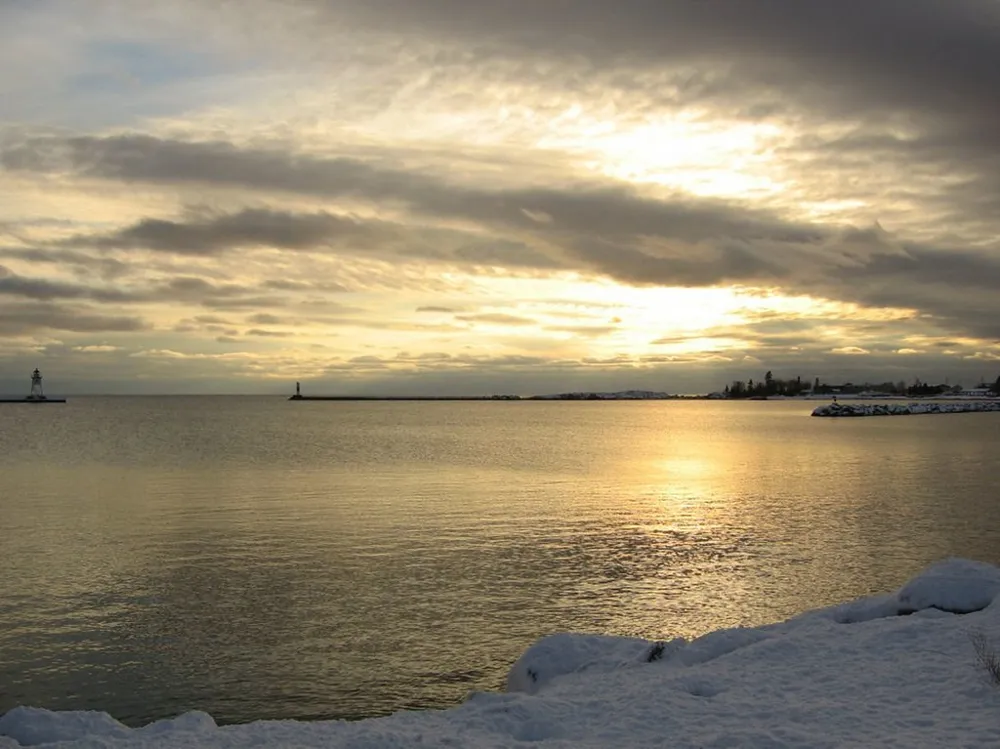
Minnesota's best skiing sits along Lake Superior's North Shore, where the hills drop toward the lake, while the Twin Cities have a ring of smaller day areas.
Lutsen Mountains
Lutsen Mountains is the largest ski resort in the Midwest. The resort lists 1,000 skiable acres across four peaks, 95 runs, 1,088 feet of total vertical (825 feet lift-served) and an average of about 120 inches of snow. Its lift fleet includes the Summit Express gondola, two high-speed six-passenger chairs (Caribou Express and Raptor Express) and three double chairs. The terrain mix is 18% beginner, 47% intermediate, 25% advanced and 10% expert, one of the most balanced terrain mixes in the region, with runs above Lake Superior. The surrounding North Shore also has an extensive cross-country trail network (see how to cross-country ski). Lutsen joins the Ikon Pass for 2026/27.
Spirit Mountain
Spirit Mountain, in Duluth, has roughly 700 feet of vertical (Wikipedia's infobox lists 678 feet), about 175 acres, around 22 trails and a longest run of about 5,400 feet. It's known for a large terrain park, offers night skiing and snowmaking, and averages about 90 inches of snow. It's Minnesota's second-tallest ski hill and is on the Indy Pass, per OnTheSnow's 2026/27 list.
Afton Alps and the Twin Cities
Afton Alps, near Afton in Washington County, is owned by Vail Resorts and is on the Epic Pass. It has about 300 acres and about 50 trails, with the adjacent Afton State Park adding about 12 miles of cross-country trails. Minnesota's Indy Pass list also includes Buck Hill, Hyland Hills, Mount Kato, Powder Ridge, Andes Tower Hills and Detroit Mountain, with Coffee Mill newly added for 2026/27.
Ohio, Indiana and Illinois
South of the snow belt, skiing depends almost entirely on snowmaking, and the hills are smaller. These areas matter because they're the closest skiing for several big cities, and many offer night skiing.
Mad River Mountain, Boston Mills and Brandywine (Ohio)
Mad River Mountain is described as Ohio's largest ski and snowboard resort, with a summit of about 1,460 feet, about 300 feet of vertical, 16 trails, nine lifts, three terrain parks and a large tubing park. Its lodge was rebuilt in 2016 after a fire. Mad River, Boston Mills and Brandywine are all on the Epic Pass. Snow Trails, another Ohio area, lists about 300 feet of vertical.
Perfect North Slopes and Paoli Peaks (Indiana)
Perfect North Slopes is less than an hour from Cincinnati and about 90 minutes from Indianapolis. It has 23 trails, three terrain parks, night skiing and tubing that runs late on weekends. Paoli Peaks, Indiana's other well-known area, is on the Epic Pass.
Chestnut Mountain (Illinois)
Chestnut Mountain, about 10 miles south of Galena, has about 475 feet of vertical, about 220 acres, 19 trails and nine lifts, with snowmaking on all its terrain and about 40% beginner runs. It's on the Indy Pass for 2026/27, as is Snowstar, also in Illinois. Villa Olivia, another Illinois area, is a small hill with about 180 feet of vertical.
Iowa, Missouri and South Dakota
Sundown Mountain (Iowa)
Sundown Mountain has about 85 acres and 21 trails, with lights for night skiing. It's on the Indy Pass for 2026/27. Iowa's other areas, such as Seven Oaks and Crescent Hill at Hitchcock, are small local hills.
Hidden Valley and Snow Creek (Missouri)
Missouri's ski areas on OnTheSnow's list, Hidden Valley and Snow Creek, are both on the Epic Pass. They're short-vertical, snowmaking-dependent areas aimed at learners and quick after-work sessions.
Terry Peak (South Dakota)
South Dakota is often grouped with the Midwest, and if you count it, Terry Peak in the Black Hills has the biggest vertical on this page. Wikipedia lists about 1,164 feet of vertical, a top elevation of about 7,064 feet, about 450 acres and about 30 runs. It's about 5 miles from Lead and 50 miles from Rapid City, was first skied in 1936 with a rope tow and hosted the 1971 NCAA skiing championships. Terry Peak and Great Bear (also in South Dakota) are on the Indy Pass for 2026/27.
Best Midwest Ski Resorts for...
| If you want | Go to |
|---|---|
| The most terrain | Lutsen Mountains, then Mount Bohemia and The Highlands |
| The most vertical | Terry Peak (South Dakota), Lutsen, Mount Bohemia |
| Expert and ungroomed terrain | Mount Bohemia |
| Beginners and families | Boyne Mountain, Crystal Mountain, Chestnut Mountain |
| Deep natural snow | Snowriver, Mount Bohemia and the U.P. snow belt |
| Night skiing | Crystal Mountain, Granite Peak, The Highlands, Sundown, Perfect North |
| Terrain parks | Boyne Mountain, Crystal Mountain, Spirit Mountain, Cascade Mountain |
| A full resort trip with a waterpark | Boyne Mountain (Avalanche Bay) |
| Chicago-area skiers | Wilmot (Epic), Chestnut Mountain near Galena |
| Day trips from Cincinnati or Indianapolis | Perfect North Slopes, Paoli Peaks |
| Twin Cities skiers | Afton Alps (Epic) and Minnesota's Indy Pass hills |
For learn-to-ski picks nationally, see the best ski resorts for beginners and family ski resorts.
Midwest Ski Passes for 2026/27
The Midwest has an unusually even split between the three big passes, so your local hill often decides which one makes sense. As of November 2026:
- Epic Pass: Afton Alps, Wilmot, Paoli Peaks, Mt. Brighton, Alpine Valley (Ohio), Boston Mills, Brandywine, Mad River Mountain, Hidden Valley and Snow Creek. These are mostly city-adjacent hills, which makes Epic useful if you ski a lot of evenings close to home and plan a western trip.
- Ikon Pass: Boyne Mountain and The Highlands, plus Lutsen Mountains, Granite Peak and Snowriver, which Midwest Family Ski Resorts moved to Ikon for 2026/27 with five or seven days each depending on pass, as reported by Unofficial Networks. Devil's Head joins as a bonus mountain. Check ikonpass.com for day limits and Base Pass access.
- Indy Pass: the longest Midwest list, covering dozens of independent areas in Michigan, Wisconsin, Minnesota, Iowa, Illinois and the Dakotas, including Crystal Mountain, Nub's Nob, Spirit Mountain, Chestnut, Sundown and Terry Peak. OnTheSnow's September 2026 guide still listed Lutsen, Granite Peak and Snowriver under Indy, so check the Indy Pass site for the current roster before you buy.
For a full comparison, see Epic vs. Ikon, and for the Indy and Mountain Collective options, how to plan a ski trip.
When to Ski the Midwest
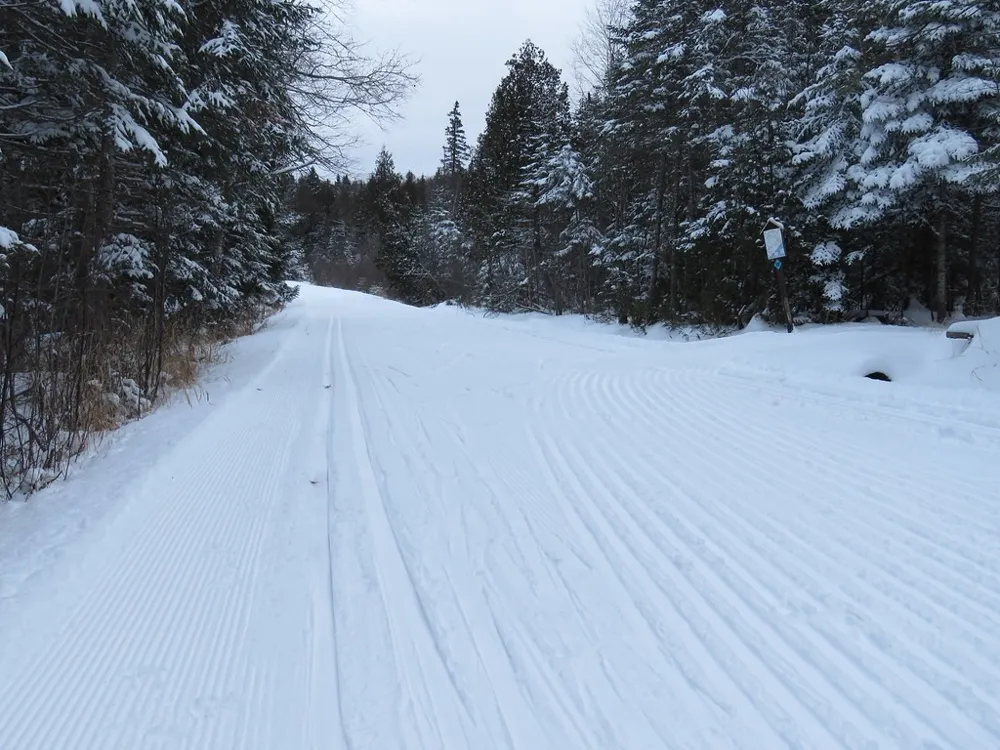
Most Midwest hills run from about December to March, with January and February the most reliable months, as we cover in when ski season starts. The season depends on cold nights for snowmaking, so a warm spell can close runs or push back opening day, especially in Ohio, Indiana, Illinois and Missouri.
- Snow belt resorts: the U.P. and the North Shore get lake-effect snow off Lake Superior, which is why Snowriver averages around 200 inches. These are the best bets for natural snow and a longer season.
- Cold: midwinter cold and wind on open slopes, especially at night, can make Midwest skiing feel colder than the thermometer suggests. Layer properly and cover your face; see what to wear skiing.
- Snow surface: machine-made snow tends to firm up, so expect hardpack and ice on busy runs. Narrower skis and sharp edges help; see the best skis for beginners.
- Cross-country: once natural snow arrives, groomed Nordic trails at The Highlands, Crystal Mountain, Lutsen and Afton State Park open up a second way to ski.
Planning a Midwest Ski Trip
- Choose day trip or destination. City hills are best for after-work and night sessions. For a weekend, the northern Michigan resorts, Lutsen and the U.P. are worth the drive, and they have lodging at or near the slopes.
- Combine resorts. Boyne Mountain and The Highlands are both on the Ikon Pass, and the U.P. has several smaller areas on the Indy Pass, so a road trip can take in two or three. The Indy Pass is built for this kind of trip.
- Drive carefully. Lake-effect storms can drop heavy snow quickly in the U.P. and along Lake Superior. Check state road reports and carry winter gear in the car.
- Ski off-peak. Weekday and night sessions are usually quieter than weekend days, and many Midwest hills run night skiing. Check each resort's site for current hours and options.
- Know the trail ratings. A black diamond at a 300-foot hill is shorter than one out West but can still be steep or icy; ratings are relative to each resort (see ski trail ratings).
- Pack for cold. Hand warmers, a neck gaiter and spare goggles go a long way; use our ski trip packing list.
For budgeting, lodging and booking, see how to plan a ski trip. If you live far from any hill, indoor ski slopes are another option for practice.
Related Guides
Compare the Midwest with East Coast ski resorts and the best ski resorts in the US, see the region's biggest areas in the largest ski resorts, or start with our skiing hub.
Frequently Asked Questions
What is the best ski resort in the Midwest?
It depends on what you want. Lutsen Mountains in Minnesota is the biggest, with about 1,000 acres on four peaks. Mount Bohemia in Michigan's Upper Peninsula is the pick for experts, and Boyne Mountain and The Highlands in northern Michigan are the classic full-service resorts.
What is the biggest ski resort in the Midwest?
Lutsen Mountains in Minnesota, with about 1,000 skiable acres, 95 runs and four linked peaks above Lake Superior. Mount Bohemia is next, then Terry Peak in South Dakota and The Highlands.
Which Midwest ski resort has the most vertical?
Among the core Midwest states, Lutsen lists 1,088 feet of total vertical (825 feet lift-served), and Mount Bohemia lists about 900 feet. If you count South Dakota, Terry Peak in the Black Hills is listed at about 1,164 feet.
Is there good skiing in Michigan?
Yes. Michigan has more ski areas than any other Midwest state on OnTheSnow's list, from Boyne Mountain and The Highlands in the northern Lower Peninsula to snowy Upper Peninsula hills like Snowriver and Mount Bohemia.
Which Midwest resorts are on the Epic and Ikon passes?
For 2026/27, Epic includes Afton Alps, Wilmot, Paoli Peaks, Mt. Brighton, Alpine Valley (Ohio), Boston Mills, Brandywine, Mad River Mountain, Hidden Valley and Snow Creek. Ikon includes Boyne Mountain and The Highlands, plus Lutsen, Granite Peak and Snowriver as new partners.
When is ski season in the Midwest?
Most Midwest hills run from about December to March, with January and February the most reliable months. Upper Peninsula and North Shore resorts that get lake-effect snow often have the longest seasons.