Kids Paddle Boards Sized Right for Young Paddlers (2026)
Four youth SUPs compared by length, board weight and rider range, plus how to size a board, paddle, leash and life jacket for a child.
What Makes a Good Kids Paddle Board?
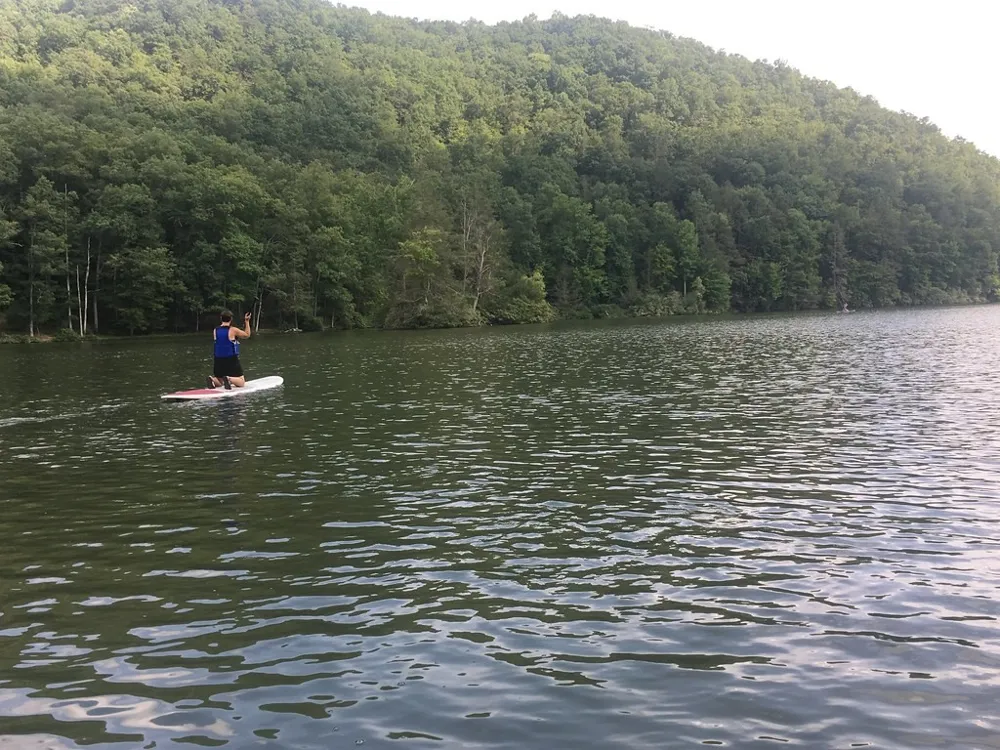
A kids' paddle board is a scaled-down stand up paddle board (SUP): shorter, narrower and much lighter than an adult all-around board, with a smaller paddle to match. That matters more than it sounds. A child who can carry the board to the water, reach past the rails to paddle and climb back on after a fall will stay keen. A child perched on a 32-inch-wide, 11-foot adult board often ends up sitting and drifting.
The four boards here are dedicated youth inflatables from Retrospec, Thurso Surf and BOTE. All specs come from the makers' pages or retailer listings, so check the current version before you buy. For teens over about 120 lb, an adult board is usually the better buy: see our beginner paddle boards and inflatable paddle boards.
What to look for in a board for a child:
- A recommended rider range that fits now. Makers that publish one (Thurso does) give the most useful sizing guide.
- Low board weight, ideally light enough for the child to help carry.
- A short, adjustable paddle included in the package.
- A leash and a traction pad that covers most of the deck.
- Enough capacity for growth without being so big the child can't control it.
Retrospec Weekender Nano 8'
Best lightweight kids board
- 8' x 29" x 5"
- About 12 lb board weight (listed)
- Kids' paddle adjusts about 52–67"
Thurso Surf Prodigy Junior 7'6"
Best for younger kids
- Recommended rider weight 45–90 lb
- 7'6" x 30" x 4", 15.2 lb
- Coiled leash and kid-size paddle
BOTE Kids FlowRider Aero 8'
Best SUP-kayak hybrid for kids
- 8' x 32" x 6"
- 150 lb max capacity
- Removable seat and hybrid paddle
Kids Paddle Boards Compared
| Board | Size (L x W x T) | Board Weight | Rider Range or Capacity | Paddle and Leash |
|---|---|---|---|---|
| Retrospec Weekender Nano 8' | 8' x 29" x 5" | About 12.2 lb | 140 lb max | Kids' adjustable paddle (about 52–67"), coiled leash |
| Thurso Surf Prodigy Junior 7'6" | 7'6" x 30" x 4" | 15.2 lb | 45–90 lb recommended, 130 lb max | 3-piece adjustable carbon hybrid paddle, 8 ft coiled leash |
| BOTE Kids FlowRider Aero 8' | 8' x 32" x 6" | About 15 lb as a SUP; seat adds 5.6 lb | 150 lb max | 4-piece kids' SUP/kayak hybrid paddle, coiled leash |
| Thurso Surf Adept Youth 9' | 9' x 28" x 4.7" | 17.6 lb | 65–130 lb recommended, 200 lb max | Carbon hybrid paddle (full package), 10 ft coiled leash |
Specs are from Thurso Surf, BOTE and REI listings and a published spec sheet for the Retrospec, as of November 2026. Makers revise these boards often, so check the listing for the current version and what's in the box.
The Best Kids Paddle Boards
1. Retrospec Weekender Nano 8'
The Weekender Nano is the lightest board here. Its published specs are 8' x 29" x 5" with a board weight of about 12.2 lb and a 140 lb maximum capacity. Retrospec uses a thinner 5-inch drop-stitch core than on its adult boards, which keeps weight down, and recommends inflating to about 15 PSI. The kit includes a kids' 3-piece adjustable aluminum paddle listed at about 52 to 67 inches, sized for paddlers roughly 3'6" to 5'1" tall, plus a coiled leash, single-chamber hand pump, backpack, waterproof phone bag and repair kit. Fins slide into three boxes without tools. Retrospec has sold more than one Nano version (including a legacy 8' and an 8'6"), so confirm the dimensions on the listing you buy.
Good to Know
- Light enough for many kids to help carry
- Short adjustable paddle included
- Full kit with pump, leash and bag
Watch Out For
- Single-layer shell is less stiff than heavier boards
- One reviewer suggests it suits kids up to about 100 lb rather than the 140 lb maximum
2. Thurso Surf Prodigy Junior 7'6"
The Prodigy Junior is the shortest board on this list and the one with the clearest sizing advice. Thurso Surf lists it at 7'6" x 30" x 4", 150 L of volume and 15.2 lb, with a recommended rider weight of 45 to 90 lb and a 130 lb maximum. The maker describes it as suited to kids aged 5 and up. Thurso's note on capacity is worth repeating: it is rated for one rider, and if a child brings a dog or extra gear the total must stay under the maximum. Listed extras include a 3-piece adjustable carbon hybrid paddle, an 8 ft double-swivel coiled leash, removable fins and a carry duffle; inflation is to 15 PSI. Some listings show the board alone, so check whether a pump and paddle are included.
Good to Know
- Published 45–90 lb rider range
- Short length is easy for small kids to turn
- Coiled leash in the package
Watch Out For
- Older kids outgrow it fastest
- Package contents vary by listing
3. BOTE Kids FlowRider Aero 8'
The FlowRider is a kids' SUP and sit-on kayak in one. BOTE lists it at 8' x 32" x 6" with a 150 lb maximum capacity, a flat bottom with entry rocker, and inflation of 10 to 15 PSI. It comes with a removable inflatable Aero seat (5.6 lb) and a 4-piece kids' carbon/fiberglass hybrid paddle that works as a SUP or kayak paddle, plus a coiled leash, click-in center fin, hand pump, repair kit and backpack. BOTE's page gives about 15 lb in SUP mode and 20.6 lb in kayak mode (elsewhere it lists 21 lb), and REI lists 15 lb. At 32 inches it is the widest board here, which suits a hesitant child who wants to sit first and stand later. Compare adult boards with seats in our paddle boards with seat guide.
Good to Know
- Seat and hybrid paddle for sitting or standing
- Widest, thickest board in this list
- Complete package with pump and leash
Watch Out For
- Heavier with the seat fitted
- Single center fin rather than three
4. Thurso Surf Adept Youth 9'
The Adept is Thurso Surf's step up from the Prodigy, aimed at older kids, teens and smaller adults. It measures 9' x 28" x 4.7" with 190 L of volume and weighs 17.6 lb. The recommended rider weight is 65 to 130 lb, with a 200 lb maximum for one rider plus gear. The narrower 28-inch width makes it quicker to paddle than the wider boards above but a little less forgiving. Both packages include a 10 ft double-swivel coiled leash and a 2+1 fin setup; the full package adds an adjustable carbon hybrid paddle, a dual-action pump with gauge and a roller backpack. Inflation is to 15 PSI.
Good to Know
- Rider range overlaps with the Prodigy for growing kids
- Longer and narrower for better glide
- Coiled leash in both packages
Watch Out For
- Paddle and pump only in the full package
- Less stable for nervous beginners than 30–32" boards
Not found on Amazon when we checked (November 2026); check Thurso Surf's site.
Kids Paddle Board Size by Weight and Age
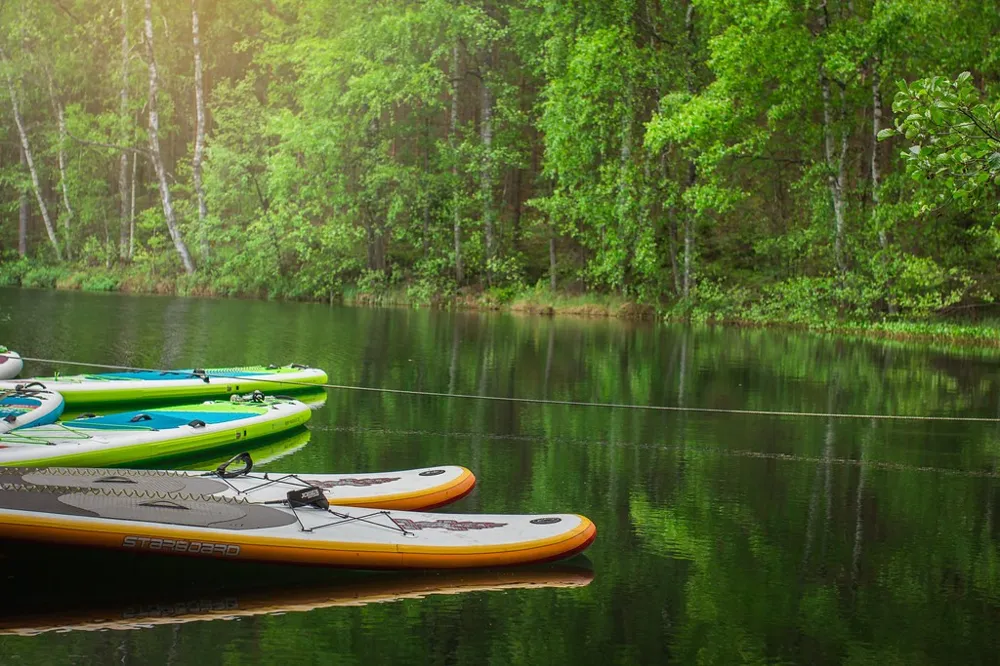
Weight is the most useful sizing measure, because it decides how high a board floats and how stable it feels. Age is only a loose guide, because children of the same age vary widely in size. Few makers publish a kids' chart, so the table below combines Thurso Surf's recommended rider weights with the size ranges commonly given for youth boards and the small-rider row of our paddle board size chart.
| Child's Weight | Typical Board | Width | Example |
|---|---|---|---|
| Under about 45 lb | Ride seated on an adult's board | 32"+ adult board | Below the 45 lb start of Thurso's kids' range |
| About 45–90 lb | 7'6"–8' kids' board | About 29–32" | Thurso Prodigy Junior (45–90 lb recommended) |
| About 65–130 lb | 8'–9' youth board | About 28–32" | Thurso Adept (65–130 lb recommended); Nano and FlowRider max 140–150 lb |
| Over about 120 lb | Small adult all-around board | About 30–32" | See the size chart by weight |
A few rules of thumb:
- Read the recommended range, not just the maximum. A child near a board's maximum capacity will sit low and feel tippy. Thurso lists a 130 lb maximum for the Prodigy but recommends it for 45 to 90 lb.
- Wider is calmer. A 30–32 inch board suits nervous or younger kids; a 28-inch board glides better for confident ones.
- Buy for the next two summers, not five. Boards with overlapping ranges (such as the Prodigy and Adept) make it easy to hand down to a younger sibling.
Why Board Weight Matters for Kids
Many adult inflatables are listed at around 17 to 22 lb, and that's before the pump and bag. For a 60 lb child, that's close to a third of their body weight to drag across a beach. The boards here range from about 12 to 18 lb, so many kids can carry one under an arm or share the load with an adult using the center handle.
Lighter boards also react to a child's smaller strokes. A heavy, long board takes more effort to turn and to stop, so kids tire quickly and get pushed around by wind. The trade-off is stiffness: thinner cores and single-layer shells, used to save weight, flex more than premium adult boards. That's rarely a problem for a light child, but inflate to the maker's recommended pressure (the boards here list up to about 15 PSI) so the board stays firm. A good paddle board pump saves the adult's arms.
Kids' Paddles: Short and Adjustable
An adult paddle is too long and too heavy for most kids. The handle ends up above their head, every stroke lifts the shoulders, and they tire within minutes. Look for a short, adjustable paddle sized to the child:
- Length: a common guide for flat-water paddling is about 8 to 10 inches taller than the paddler, the same rule we use for adults. Adjust as the child grows.
- Range: kids' paddles adjust shorter than adult ones. The Retrospec Weekender Nano's is listed at about 52 to 67 inches for paddlers roughly 3'6" to 5'1" tall.
- Weight and blade: a lighter shaft (carbon blends beat aluminum here) and a smaller blade reduce fatigue.
- Hybrid paddles: a SUP/kayak paddle like BOTE's lets a tired child sit down and keep paddling.
If a package paddle is too long even at its shortest setting, buy a dedicated kids' paddle. Adult options are covered in our SUP paddle guide.
Leashes for Kids
Inflatable boards blow away fast, and a small child can't swim after one. A leash keeps the board within reach after a fall, and the board doubles as a large float to hold onto. Three of the four boards here list a coiled leash in the box.
- Flat water: use a coiled leash attached at the ankle or calf. The coil stays on the deck instead of dragging. A leash about the board's length suits; Thurso pairs an 8 ft leash with its 7'6" board and a 10 ft leash with the 9' board.
- Rivers and moving water: never use an ankle or calf leash, because it can snag. Use a quick-release leash at the waist or life jacket, and keep young children off moving water altogether.
- Waves: a straight surf leash belongs on wave-riding boards. Kids learning in surf are better on a kids' surfboard with lessons.
A leash is not a substitute for a life jacket. More on leash types is in our paddle board accessories checklist.
Life Jackets: Weight Classes and the Law
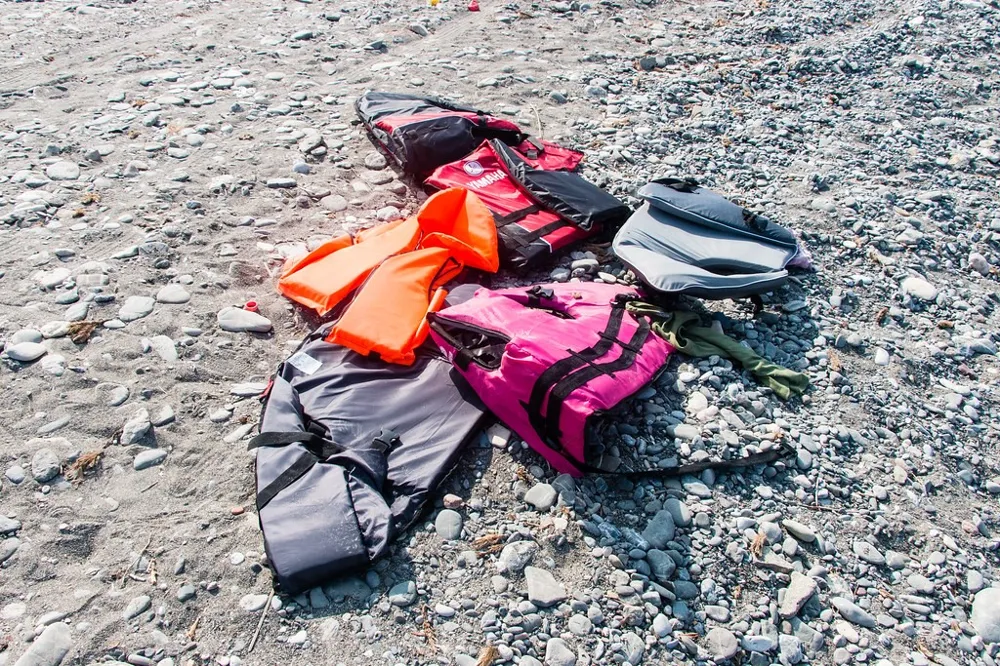
Outside the narrow limits of a swimming, surfing or bathing area, the US Coast Guard considers a stand up paddle board a vessel. Under federal rules, children under 13 must wear an approved life jacket while a vessel is under way, though a state may set its own child-wear age instead. Rules vary by state and water body, so check your state boating agency (last checked November 2026; this is not legal advice). Whatever the law says, a child on a paddle board should wear a life jacket every time.
Choose by the weight on the label, as on our kids' kayak page. US children's life jackets are commonly labeled for:
| Label Class | Child's Weight | Features to Look For |
|---|---|---|
| Infant | Under 30 lb | Head support collar, grab handle, crotch strap; too young for a SUP except seated with an adult close by |
| Child | 30–50 lb | Head support collar, grab handle, crotch strap |
| Youth | 50–90 lb | Side adjusters, large armholes for paddling |
- Buy for the weight they are now, not one to grow into. A loose jacket rides up over the chin.
- Fit test: fasten everything, lift the jacket by the shoulders, and check it doesn't slide up past the chin or ears.
- No inflatable belt packs for kids. The Coast Guard says inflatable life jackets are for people over 16, so children need inherently buoyant foam jackets.
- Water wings and pool toys are not life jackets.
Adult jackets are compared in our PFD guide.
Supervision and Where to Paddle
Kids' first sessions go best in warm, calm, shallow water where they can stand up when they fall off. Good choices are a sheltered cove, a small lake beach or a pond with a gentle sandy entry.
- Stay within arm's reach of young or new paddlers, on your own board or wading alongside.
- Check the wind. Offshore wind can push a light board and child away from shore quickly. Paddle into the wind first so the return is easy.
- Avoid currents, boat traffic and cold water. Dress for the water temperature, not the air.
- Practice falling and climbing back on in shallow water: fall to the side, away from the board, then pull up from the side near the center handle.
- Start on the knees. Kneeling in the middle of the board is stable and still fun. Standing comes when they're ready.
- Keep it short. Plan breaks, water, snacks and sun protection.
- Agree on a signal for "come back" before they set off, and give each child a whistle.
Our paddling safety guide covers cold water and float plans in more depth, and the beginner's guide to paddle boarding covers standing up and basic strokes.
Riding Together on One Board

For children too young or light for their own board, riding with a parent is the usual first step. A wide adult all-around or tandem-capable board works best.
- Check the capacity. Add the adult, child and gear together and stay comfortably under the board's listed maximum. Thurso's own note says the same: a passenger counts toward capacity.
- Child in front, adult behind center. The child sits or kneels near the nose; the adult stands just behind the center handle to keep the board level.
- Both wear life jackets, and the adult wears the leash.
- Agree on a "sit down" rule before you push off, so a sudden move doesn't tip you both.
Boards with a seat, like the FlowRider here or the adult models in our seated SUP guide, let an older child paddle while seated. For bigger families, a tandem kayak is another option, and if the dog is coming too, see paddle boarding with a dog.
Kids' Board or Adult Board?
A dedicated kids' board makes sense when the child will paddle on their own and is roughly 45 to 120 lb. It's lighter, easier to steer and comes with a paddle that fits. An adult board makes more sense when:
- the child is under about 45 lb and will ride with you;
- the child is over about 120 lb or already a confident paddler;
- you want one board the whole family can share.
A small adult board around 9'6" to 10'6" can work for teens. A wide board around 10'6" to 11' gives the most room when an adult and a child share it. See inflatable vs hard paddle boards if you're weighing construction. Inflatables are softer to fall on, which is a plus with kids.
Care, Storage and Growing Room
Rinse the board, leash and fins with fresh water after use, especially after salt water, and let them dry before rolling. Store inflatables in a cool, dry place out of direct sun, loosely rolled or partly inflated. Check the valve and seams at the start of each season, and keep the repair kit in the bag. Hand-me-down plans work best when a board is stored well. For roof racks and carrying, see how to transport a paddle board, and for the rest of the kit, our paddle boarding hub.
Frequently Asked Questions
What age can a child start paddle boarding?
Many kids start by sitting or kneeling on a parent's board in calm, shallow water. Thurso describes its 7'6" Prodigy Junior as suited to kids aged 5 and up, but swimming ability, confidence and close supervision matter more than age.
What size paddle board does a child need?
Size by weight first. Kids' boards are usually about 7'6" to 9' long and 28 to 32 inches wide, and Thurso recommends its 7'6" board for riders about 45 to 90 lb and its 9' youth board for about 65 to 130 lb.
Can a child use an adult paddle board?
Yes, especially older kids and teens over about 120 lb, or younger kids riding with an adult. A full-size board is heavier and wider, so a small child will find it harder to carry, steer and climb back onto.
Does my child need a life jacket on a paddle board?
Yes. Outside swimming, surfing and bathing areas the US Coast Guard treats a paddle board as a vessel, and federal rules require children under 13 to wear an approved life jacket while under way unless a state sets a different age. Choose a child life jacket by the weight on its label.
Should kids wear a paddle board leash?
On flat water, yes: a coiled leash keeps the board within reach after a fall. On rivers or moving water, use a quick-release leash attached at the waist or life jacket, never at the ankle.
How long should a kid's paddle be?
A common guide is about 8 to 10 inches taller than the paddler. Kids' boards often come with a short adjustable paddle; the Retrospec Weekender Nano's kids' paddle is listed as adjusting from about 52 to 67 inches.
Can a parent and child ride one paddle board together?
Yes, on a board whose listed capacity covers both riders plus gear. The child usually sits or kneels near the nose in a life jacket while the adult stands behind the center handle.