Kayak Trolling Motors for Stern, Bow and Pedal Kayaks (2026)
Purpose-built stern motors, budget transom motors, a GPS bow mount and a pedal-drive conversion, with a guide to thrust, voltage, LiFePO4 batteries, mounts and registration.
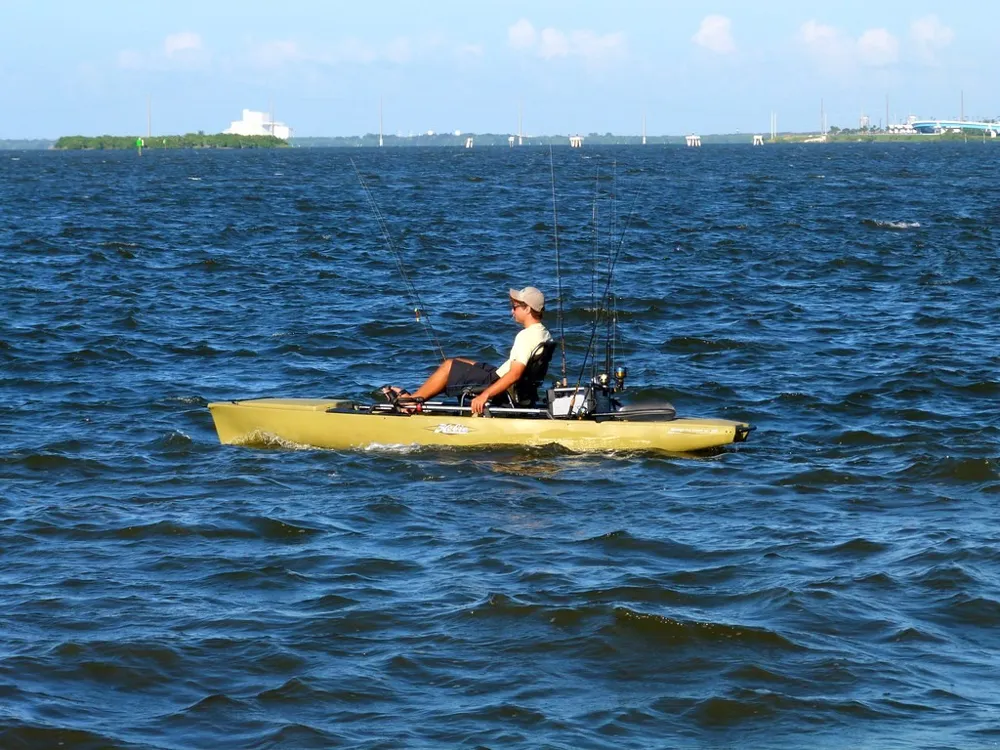
Do You Need a Trolling Motor on Your Kayak?
A trolling motor turns a fishing kayak into a quiet, hands-free boat. It gets you to distant spots without tiring arms, holds you against wind and current while you cast, and saves your energy for fishing. The trade-offs are weight, a battery to charge and carry, and, in most states, registration once a motor is fitted.
"Kayak trolling motor" now covers several different kinds of hardware. There are classic 12V transom motors that clamp to a bracket, purpose-built kayak motors that bolt to the stern and steer with your rudder pedals, bow-mount motors with GPS anchoring, small outboard kits, and electric drives that drop into a pedal kayak's drive well. Which one is right depends mostly on your kayak, so this guide starts with the motors, then explains how to match one to your hull, battery and local rules. If you're still choosing the boat, start with our fishing kayaks or pedal kayaks lists. Canoe owners should see our canoe trolling motor guide.
Newport NK180 Pro HD
Best for rudder-steered fishing kayaks
- 65 lb peak thrust, brushless
- 24V LiFePO4 system
- Retracts and stows at the stern
Newport Kayak Series 36 lb
Best simple transom motor
- 36 lb thrust on 12V
- 24-inch shaft sized for kayaks
- Saltwater rated
Minn Kota Kayak Terrova
Best bow mount with GPS
- 36-inch composite shaft
- Spot-Lock GPS anchoring
- Shallow-water depth alerts
Kayak Motors Compared
| Motor | Type | Thrust or Power | Voltage | Shaft | Weight | Water |
|---|---|---|---|---|---|---|
| Newport NK180 Pro HD | Stern kayak motor, 4-bolt mount | 65 lb peak, 1.8 HP equivalent (600W) | 24V LiFePO4 | 21.7 in | 14.3 lb | Fresh and salt |
| Newport NK300 HD | Stern kayak motor | 110 lb, 3 HP equivalent (1,300W) | 36V LiFePO4, 30Ah minimum | Not listed | Not listed | Fresh and salt (reported) |
| Newport Kayak Series 36 lb | Transom motor, tiller | 36 lb | 12V | 24 in | 18 lb | Fresh and salt |
| Minn Kota Endura C2 30 | Transom motor, tiller | 30 lb | 12V | 30 in | Not listed | Fresh |
| Minn Kota Kayak Terrova | Bow mount, GPS, remote | 55 lb (kayak versions) | 12V | 36 in | About 40 lb (earlier version) | Fresh |
| Bixpy K-1 | Mini outboard, adapters | 33 lb with PP-384 pack | 25.6V pack (384 Wh) | Adjustable depth | 2.8 lb motor, 8 lb pack | Check maker |
| Old Town ePDL+ RetroFit | Pedal-drive replacement | Pedal assist and motor cruise | 36V 6.5Ah built in | Drop-in drive | About 35.6 lb with battery | Fresh and salt |
Specs are from maker pages, retailer spec sheets and Amazon listings as of November 2026. Models change often; check the current listing before you buy.
The Best Kayak Trolling Motors
1. Newport NK180 HD
Amazon lists this motor as the NK180 HD; some retailers call it the NK180 Pro HD. Confirm the listing matches the version you want.
A brushless motor designed for fishing kayaks rather than adapted from a boat motor. Retail spec sheets list 65 lb of peak thrust, 1.8 HP equivalent (600W), a 25-amp maximum draw, a 21.7-inch shaft and a weight of 14.3 lb. It runs on a single 24V LiFePO4 battery, sold separately, and has a digital throttle with an LCD that shows battery percentage, voltage and speed. A retractor arm lifts the motor to stow it, it bolts on with a 4-bolt pattern, and it's listed for fresh and salt water. Kayak Angler reports that the NK180 Pro works with pedal kayaks, rudder handles and foot-steering systems but is a poor fit for kayaks with top-mounted rudders, and that it comes with a plate for kayaks with Power-Pole mounting areas.
Good to Know
- Steers through many kayaks' rudder systems
- Low 25A draw suits a 24V 50Ah lithium pack
- Light for its power class
Watch Out For
- Battery not included and must be 24V lithium
- Check rudder compatibility for your kayak
- No remote listed with the HD version
2. Newport NK300 HD
The bigger sibling for long runs and big water. The Amazon listing describes a brushless, direct-drive motor rated at 110 lb of thrust and 3 HP equivalent (1,300W) that needs a 36V LiFePO4 battery of at least 30Ah, sold separately. Wired2Fish reports a top speed of about 6.5 MPH and a range of up to 66 miles, figures that will vary with load and conditions. This much power on a kayak needs a stern that can carry the weight and a hull that stays stable at speed, and it moves you firmly into motorboat territory for registration and lighting rules.
Good to Know
- Most power in the Newport kayak line
- Brushless direct drive
- Fresh or salt water, per reviews
Watch Out For
- Needs a 36V lithium battery
- More power than many kayaks are built for
- Weight and shaft length not shown on the listing
3. Newport Kayak Series 36 lb
A simple 12V transom motor sized for kayaks and canoes. Spec sheets list 36 lb of thrust, a 24-inch shaft (shorter than most boat motors, which suits a kayak's low stern), a weight of 18 lb, a 29-amp maximum draw, five forward and three reverse speeds, a 6-inch telescoping tiller and a 5-point LED battery meter. The listing calls it saltwater rated, with corrosion-resistant hardware, and mentions 5-foot-6-inch battery cables so you can place the battery where it balances the kayak. Newport recommends a 12V 50Ah deep-cycle battery. A 55 lb version exists, but its 52-amp maximum draw is more than many 50Ah lithium batteries' BMS allows.
Good to Know
- Works with any 12V deep-cycle battery
- Kayak-length shaft
- Saltwater rated
Watch Out For
- Needs a transom or motor mount
- Tiller steering means reaching behind you
- Brushed design, less efficient than brushless kayak motors
4. Minn Kota Endura C2 30
A light, hand-steer transom motor from the best-known trolling motor maker, and a common pick for kayaks with a motor bracket. Minn Kota lists 30 lb of thrust on 12 volts, a 30-inch composite shaft that it guarantees for life, five forward and three reverse speeds, a 6-inch telescoping tiller, a push-to-test battery meter, a 10-position lever-lock bracket and a two-year warranty. It is a freshwater motor. Measure your mount height before buying: a 30-inch shaft can sit too deep on a low kayak bracket unless you raise the motor in its clamp.
Good to Know
- Lowest amp draw class of 12V motor
- Composite shaft flexes rather than bends
- Easy to find parts and service
Watch Out For
- Freshwater only
- 30 lb is the low end for wind and current
- Shaft may be long for some kayak mounts
5. Minn Kota Kayak Terrova
A bow-mount motor built for kayak anglers who want to fish hands-free. The current listing describes a 36-inch composite shaft sized for kayaks, Spot-Lock GPS that holds you on a spot like a virtual anchor, depth monitoring that warns of shallow water, Minn Kota's Digital Maximizer for longer runtime, and a Weedless Wedge 2 prop. Minn Kota lists it as working with its connected fish finders, maps and shallow-water anchors. Wired2Fish lists the earlier kayak version at 55 lb of thrust on 12 volts and about 40.5 lb, and Kayak Angler notes Terrova versions from 55 to 115 lb of thrust on 12 to 36 volts. It needs a bow mount plate and a kayak with room and weight capacity up front.
Good to Know
- GPS anchoring frees both hands
- Pulls from the bow, so it tracks well
- Integrates with fish finders
Watch Out For
- Heavy for a kayak bow
- Most complex install here
- Check thrust and voltage on the current version
6. Bixpy K-1 Outboard Kit
A tiny outboard with a separate deck battery that moves between boats. Bixpy lists 33 lb of thrust with its PP-384 power pack, 12 forward and 3 reverse speeds, about 75 minutes at top speed and up to 10 hours at slower speeds. The pack is a 25.6V, 15Ah LiFePO4 battery rated at 384 Wh. The motor weighs 2.8 lb and the pack 8 lb, and a wireless remote and magnetic kill switch come with the kit. Adapters, sold separately, fit it to a kayak's stern, bow, rudder, pedal-drive well or a transom; Kayak Angler notes it attaches with four small screws and isn't recommended for large, heavy kayaks. We cover its paddle board setup in our paddle board motors guide.
Good to Know
- Lightest motor here by far
- Kill switch included
- One motor for kayak, SUP or dinghy
Watch Out For
- Proprietary battery
- Adapter needed for each boat
- Less push for big, loaded kayaks
The Bixpy listing was unavailable on Amazon when we checked (November 2026); check Bixpy or paddle retailers.
7. Old Town ePDL+ RetroFit
An electric drive for owners of Old Town PDL pedal kayaks who want power without bolting on a motor. It drops into the existing pedal-drive console with no tools or wiring. Old Town lists a built-in 36V, 6.5Ah lithium-ion battery, manual pedaling, five levels of pedal assist and a five-speed motor cruise mode, and runtimes of about 13.5 hours at the lowest cruise setting, 6.5 hours at setting 3 and 1 hour at the top setting. The drive weighs about 33 lb, or 35.6 lb with the battery. Old Town names the Sportsman PDL 106 and 120, Sportsman PDL 120 Pro and Topwater PDL 106 and 120 as compatible, and its FAQ adds other PDL models; confirm your hull with Old Town. It's rated for fresh and salt water.
Good to Know
- No mount, no separate battery box
- Pedal normally when you want to
- Keeps the kayak's stern clear
Watch Out For
- Old Town PDL kayaks only
- Small battery at top speed
- Sold through Old Town and dealers
Mount and Battery to Go With Them
Brocraft Kayak Trolling Motor Mount
A bracket for kayaks without a built-in transom. The listing describes a 40-inch anodized aluminum crossbar with support bars and mounting plates that either bolt to the hull or attach to compatible gear tracks, with an adjustable motor platform for different hull widths and shaft lengths. Brocraft says it suits compatible gas or electric motors; check the listing for the motor sizes it supports.
Good to Know
- Gear-track option avoids drilling
- Adjusts to hull width
- Takes standard transom motors
Watch Out For
- Check track type and spacing on your kayak
- Motor sits off the centerline on some setups
- Recheck knobs and bolts each trip
LiTime 24V 50Ah LiFePO4 Battery
A 24V lithium pack that matches 24V kayak motors such as the NK180 Pro HD. The listing describes a built-in 50A BMS, an IP65 enclosure, Bluetooth monitoring of voltage, current and state of charge, and a rating of 4,000 or more cycles at 100% depth of discharge. It stops charging below 32°F (0°C) and stops discharging below -4°F (-20°C). For 12V motors, the LiTime 12V 50Ah pack in our canoe guide is listed at 11.57 lb.
Good to Know
- Phone app shows charge level
- 50A BMS covers motors drawing up to about 25 to 30A with margin
- Much lighter than lead-acid
Watch Out For
- Needs a 24V lithium charger
- No charging below freezing
- Too big to fly with
Types of Kayak Motors
Wired2Fish and Kayak Angler both sort kayak motors by how they attach, because that decides what fits your boat and how you steer.
| Type | How It Works | Steering | Best For |
|---|---|---|---|
| Transom (tiller) trolling motor | A standard 12V motor clamps to a built-in transom or an aftermarket bracket | Tiller handle, often behind or beside you | Simple, budget setups on motor-ready kayaks |
| Purpose-built stern motor | Bolts to the stern; retracts to stow; throttle on a cable | Linked to the kayak's rudder and foot pedals on many hulls | Anglers who want hands-free steering |
| Bow mount | Mounts on a plate at the bow; pulls rather than pushes | Remote or app; GPS anchoring on premium models | Hands-free fishing and holding position |
| Pedal-drive motor | Replaces or attaches to a pedal kayak's drive | Kayak's own rudder | Pedal kayak owners who want assist |
| Mini outboard kit | Small motor with adapters and a deck battery | Remote; rudder adapters on some kits | Light kayaks and people with several boats |
| Kayak with built-in motor | Motor and battery designed into the hull | Rudder or remote | Buyers starting from scratch |
Kayak Angler also warns that a powerful stern motor can push a low bow under, so a motor's weight and power have to suit the hull as well as the bracket.
Will It Fit Your Kayak? Mounts and Steering
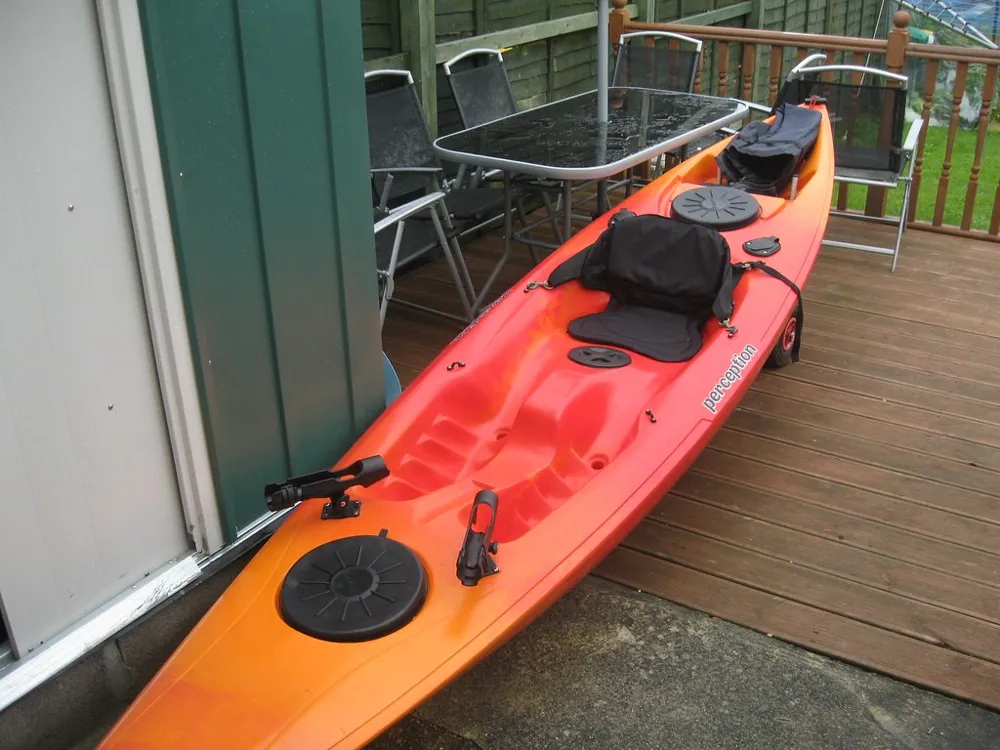
Before choosing a motor, look at your kayak's stern, bow and rudder.
- Motor-ready kayaks. Some fishing kayaks come with a built-in transom or motor plate. Pelican's Catch PWR 100, in our fishing kayaks list, has a pre-installed transom, so a transom motor clamps straight on.
- Kayaks with rudders. Purpose-built stern motors such as the NK180 Pro HD are designed to work with many rudder and foot-steering systems, so you steer with your feet and keep your hands free. Kayaks with top-mounted rudders may not suit them.
- Pedal kayaks. Check whether your kayak's maker sells an electric drive for its pedal well, like Old Town's ePDL+ RetroFit, or whether an adapter kit fits it. A motor in the pedal well uses the kayak's own rudder. See pedal kayaks for hull options.
- Gear tracks and plain hulls. Aftermarket brackets attach to gear tracks or bolt through the deck. Kayak Angler notes older or non-fishing kayaks may need these alternative mounts. Drill only where the kayak maker says it's safe.
- Bow mounts. A bow motor needs a mount plate, room at the bow and enough capacity up front. It pulls the kayak, which tracks well and suits GPS anchoring.
- Inflatable kayaks. Use a mount made for inflatables, keep thrust low and check the maker's motor guidance; our inflatable fishing kayaks guide covers hulls that accept accessories.
Steering matters more on a kayak than on a canoe. With a tiller motor behind the seat, you twist to steer, which is awkward for long. Many anglers add a tiller extension, choose a motor that links to the rudder, or move to a bow mount with a remote. Add the motor, battery and mount to your own and your gear's weight and stay within your kayak's weight limit.
How Much Thrust and Voltage Do You Need?
Minn Kota sizes motors by total boat weight and length. Its smallest category, boats up to 14 feet and 1,599 lb including people and gear, calls for at least 30 to 40 lb of thrust on a 12V system, and it adds that wind or current may call for more. A loaded fishing kayak sits well inside that category.
| Kayak Setup | Suggested Thrust | Typical System |
|---|---|---|
| Light kayak, calm lake or pond | About 30 to 36 lb | 12V transom motor or mini outboard |
| Loaded 12 to 14 ft fishing kayak | About 36 to 55 lb | 12V transom or bow mount |
| Wind, tide, current or long runs | 55 lb and up, or a 1.8 to 3 HP-equivalent kayak motor | 24V or 36V lithium system |
Voltage follows thrust. Standard 12V trolling motors commonly top out around 55 lb. Higher-output kayak motors move to 24V or 36V, which delivers more power at lower current. Match the battery to the motor's voltage exactly: a 24V motor needs a single 24V pack, or two matching 12V batteries wired in series if the motor maker allows it.
Speed is limited by the hull, not just the motor. A kayak is a displacement hull, and Kayak Angler lists average speeds of about 2 to 6 MPH for the motors it reviewed. More thrust mostly buys control in wind and current. Electric motors are rated in pounds of thrust while kayak motors like Newport's are also quoted as a horsepower equivalent; the two numbers aren't directly comparable across brands.
Brushless vs brushed. Purpose-built kayak motors such as Newport's NK line use brushless motors, which the makers describe as efficient and low-maintenance. Classic tiller trolling motors are a simpler, proven design.
Shaft Length, Propeller and Saltwater
The propeller has to sit deep enough not to suck air, but not so deep it hits bottom in the shallows. Minn Kota recommends keeping the motor about 12 inches below the waterline. Kayaks sit low, so their motors use short shafts: Newport's Kayak Series uses a 24-inch shaft, its NK180 Pro HD 21.7 inches, and Minn Kota's smallest transom motors 30 inches. To choose, measure from the mount to the waterline with the kayak loaded. Our canoe trolling motor guide has Minn Kota's full shaft chart.
Bow-mount kayak motors use longer shafts (36 inches on the Kayak Terrova) because the bow rises and falls with waves.
Weedless props shed weeds and lily pads; useful where bass and pike live. Saltwater needs a motor rated for it, with sealed electronics and corrosion-resistant hardware. A freshwater motor used in salt or brackish water may corrode quickly.
Batteries: LiFePO4, Capacity and Runtime

Every kayak motor except built-in drives needs a deep-cycle battery. Starting batteries are made for short bursts and don't suit a trolling motor.
| Battery Type | Weight | Usable Capacity | Notes |
|---|---|---|---|
| Flooded lead-acid | Heaviest | Avoid regular deep discharge | Lowest cost; needs topping up |
| AGM | Heavy | About 50% (West Marine) | Sealed, maintenance-free |
| Lithium (LiFePO4) | About 50 to 70% lighter than AGM (West Marine) | About 80 to 100% | Needs a lithium charger; many 24V and 36V kayak motors require it |
Why lithium wins on a kayak. Weight is the issue: a lead-acid battery is often the heaviest thing on board, and it all has to be carried down to the launch and lifted into the hull. A 12V 50Ah LiFePO4 pack is listed at 11.57 lb. Newport's 24V and 36V kayak motors call for LiFePO4 batteries.
Estimate runtime as usable amp-hours divided by amp draw. A 50Ah lithium battery feeding a motor that averages 10 amps gives roughly 4 to 5 hours; running flat-out at a motor's maximum draw empties it much faster. West Marine's worked example for a 55 lb motor averaging 25 amps gives about 2 hours from a 100Ah AGM and about 3.2 hours from a 100Ah lithium battery. Slow trolling uses far less, so real days often last longer, but plan on the conservative figure and turn back with at least half your charge left.
Match the BMS to the motor. A lithium battery's battery management system (BMS) shuts it off above its continuous current rating. Check that the rating is higher than the motor's maximum amp draw. For example, Newport's 36 lb Kayak Series motor draws up to 29 amps and its NK180 Pro HD 25 amps, both within a 50A BMS, but the 55 lb Kayak Series draws up to 52 amps, which exceeds it.
Battery placement affects trim. Long cables let you set the battery forward of the seat to balance a stern motor. Use a battery box with a strap and covered terminals, and keep it in a hatch or crate where it can't slide.
Lithium Battery Safety and Charging
- Use the right charger. Charge LiFePO4 with a charger that has a lithium profile at the correct voltage. Minn Kota says its motors and Precision chargers made from 2021 have a lithium profile; for other gear, check with the battery maker.
- Fuse the circuit. Fit the circuit breaker or fuse the motor maker specifies, close to the battery.
- Respect cold limits. Many LiFePO4 packs, including the LiTime batteries here, stop charging below 32°F (0°C). Bring them indoors to charge in winter.
- Keep it dry and protected. Even an IP65 or IP67 rated pack shouldn't sit in bilge water. Cover the terminals and keep hooks and metal tools away from them.
- Don't mix batteries. In a 24V or 36V series setup, use identical batteries of the same age, chemistry and capacity.
- Air travel. The FAA limits spare lithium batteries to carry-on bags and to 100 Wh each, or 101 to 160 Wh with airline approval, so kayak motor batteries usually have to be shipped or bought at your destination.
Our e-bike battery guide covers lithium storage and care in more detail.
Do You Have to Register a Kayak With a Motor?

Usually, yes. Many states exempt paddled kayaks from registration but require it as soon as any motor is attached, including a small electric trolling motor.
- Texas. Texas Parks and Wildlife exempts non-motorized canoes and kayaks regardless of length, but says adding an outboard or trolling motor to any of these vessel types negates the exemption.
- Florida. The Florida Fish and Wildlife Conservation Commission requires all motorized vessels, including canoes, kayaks and paddleboards, to be registered unless they are used only on private ponds and lakes, and says motorized paddlecraft follow the same lighting rules as power-driven vessels.
- Other states. Most follow the same pattern, and a few register or permit unpowered kayaks too. Some require a boater education card to operate a motorized vessel, often tied to age or horsepower.
Once registered, you'll typically need numbers and a decal on the bow, and a motorized kayak out at night may need power-driven vessel lights rather than just a handheld white light. Some lakes and parks ban motors or allow electric only. Pedal-drive kayaks are human-powered, but an electric pedal drive adds a motor, which in many states is likely to trigger registration; ask your state agency how it classes your setup.
Check your state. Rules vary and change. Read your state boating agency's registration page before your first motorized trip. Our kayak registration laws guide covers paddle craft rules state by state. Last checked November 2026; this is a summary, not legal advice.
Safety on a Motorized Kayak
- Wear your life jacket. Federal rules require a properly sized, US Coast Guard approved life jacket for each person; with a motor you travel farther from shore, faster. See our kayak PFD picks.
- Carry signals. A whistle, a light for low light, and a waterproof VHF radio, with your phone as backup.
- Use a kill switch where you have one. Clip the lanyard to yourself so the motor stops if you fall in.
- Mind the propeller. Switch off and raise the motor before landing, clearing weeds or when someone is in the water nearby.
- Tether the motor. Run a safety line from motor to kayak in case a clamp or bolt works loose.
- Know the rules of the road. Under power you're a motor vessel; keep clear of channels and watch your wake near paddlers.
- Keep paddling skills. Carry a paddle, because batteries run flat. Our kayak safety guide covers cold water and weather.
Installing, Care and Storage
- Dry-fit on land. Fit the mount or plate, check that the motor clears the hull and rudder when turned and tilted, and confirm the prop depth with the kayak loaded.
- Wire it cleanly. Run cables away from your feet and paddle path, fit the breaker, and connect with the motor switched off.
- Test in shallow water. Try forward, reverse, steering and stowing before heading out.
- Rinse after use. Rinse the motor, shaft and mount in fresh water, especially after salt.
- Clear the prop. Remove fishing line wrapped behind the propeller, where it can damage seals.
- Charge and store. Charge after each trip and store the battery cool and dry, charged as the maker recommends.
- Transport separately. Remove the motor and battery before loading the kayak; see kayak transport and kayak carts for getting a loaded boat to the water.
Once the motor is sorted, most anglers add a fish finder and an anchor. For more rigging ideas, see kayak accessories and kayak fishing tips, or browse the kayaking hub.
Frequently Asked Questions
Can you put a trolling motor on any kayak?
Most sit-on-top kayaks can take one. Motor-ready kayaks have a built-in transom or mounting plate; others need a bracket that bolts to the hull or clamps to gear tracks, and pedal kayaks can swap in an electric drive if the maker sells one. Check the kayak's weight capacity first.
How much thrust do I need for a kayak?
Most kayaks move well on 30 to 55 lb of thrust on 12 volts. Minn Kota's sizing chart puts boats up to 14 feet and 1,599 lb all-in at 30 to 40 lb, and extra thrust mainly helps in wind and current.
How fast does a kayak go with a trolling motor?
Expect a few miles per hour. Kayak Angler lists average speeds of about 2 to 6 MPH across the motors it reviewed, and a kayak's hull length limits how fast it can go before extra power stops helping much.
Do you have to register a kayak with a trolling motor?
Usually, yes. Texas Parks and Wildlife says adding an outboard or trolling motor to an exempt canoe or kayak negates the exemption, and Florida requires motorized paddlecraft to be registered. Rules vary by state; check your boating agency. Last checked November 2026; not legal advice.
What battery is best for a kayak trolling motor?
A deep-cycle battery at the voltage your motor needs. Lithium iron phosphate (LiFePO4) packs weigh far less than lead-acid for the same capacity, which matters on a kayak, but they need a lithium charger and a BMS rated above the motor's maximum amp draw.
How long will a kayak trolling motor battery last?
Divide usable amp-hours by the motor's amp draw. A 50Ah lithium battery feeding a motor that averages 10 amps runs about 4 to 5 hours, and slower speeds stretch that much further.
Can I take a kayak motor battery on a plane?
Usually not. The FAA allows spare lithium batteries of up to 100 Wh in carry-on bags, and 101 to 160 Wh only with airline approval. A 12V 50Ah LiFePO4 pack is about 640 Wh, far above those limits.