Blow-Up Fishing Kayaks That Pack in a Trunk and Still Fish (2026)
Seven inflatable fishing kayaks from Advanced Elements, Sea Eagle, Elkton Outdoors, Wilderness Systems, Intex, BOTE and Sevylor, with a guide to stability, standing, rigging and keeping hooks away from the hull.
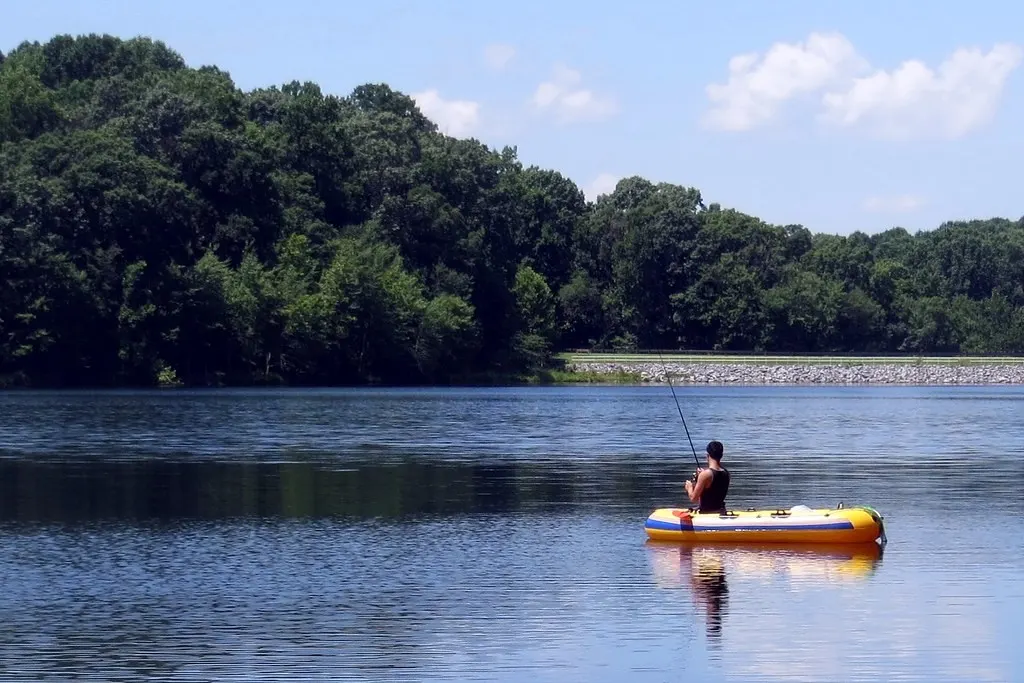
Why Fish From an Inflatable Kayak?
An inflatable fishing kayak solves the problem that stops many people from kayak fishing at all: where to keep a 12-foot boat and how to get it to the water. It rolls into a bag or backpack, rides in a car trunk, and can be carried down a steep trail to a pond or river that a roof-racked hard shell would never reach. The best angler models are no longer pool toys. They use high-pressure drop-stitch floors, wide stable hulls, mounting points for rod holders and fish finders, and seats that sit you above the floor.
This guide covers solo-first inflatable fishing kayaks plus one hybrid board and one budget two-seater. Specs come from the maker's page or published buyer's guides, and we note where sources disagree. We don't list prices because they change too often; check the current listing. For hard-shell boats, see the best fishing kayaks. For non-fishing inflatables, see the best inflatable kayaks, and if you fish as a pair, the best tandem fishing kayaks.
Sea Eagle 385fta FastTrack Angler
Best for long days and an optional second seat
- 12 ft 6 in, listed at 45 lb
- 635 lb capacity, up to 3 persons
- Rod and tool holders built into spray skirts
BOTE Rackham Aero
Best sit-or-stand inflatable fishing board
- 38-inch width, recessed deck
- 400 lb listed capacity
- Accepts a pedal drive (sold separately)
Intex Excursion Pro K1
Best low-cost way to try inflatable fishing
- 10 ft, about 37 lb
- 220 lb listed capacity
- Rod holders on each side
Inflatable Fishing Kayaks Compared
Listed dimensions and weights are from each maker or a published buyer's guide. Capacity is the total load, including you, your gear and any catch.
| Kayak | Length | Width | Listed weight | Capacity | Floor | Standing |
|---|---|---|---|---|---|---|
| Advanced Elements StraitEdge Angler Pro | 10 ft 6 in | 38.5 in | 45 lb | 400 lb | Drop-stitch | Designed to support it |
| Sea Eagle 385fta FastTrack Angler | 12 ft 6 in | 3 ft | 45 lb | 635 lb (3 persons) | Removable drop-stitch | Check the maker |
| Elkton Outdoors Steelhead | 130 in (10 ft 10 in) | 39.5 in | 40 lb | 400 lb | Self-bailing drop-stitch | Designed for it |
| Wilderness Systems iATAK 110 | 11 ft | 38 in | 44 lb (reports vary) | Reports vary | Drop-stitch hull | Seat folds to a platform |
| BOTE Rackham Aero | 12 ft 4 in | 38 in | 45 lb | 400 lb | Inflatable board | Yes (paddle board) |
| Intex Excursion Pro K1 | 10 ft | 36 in | About 37 lb | 220 lb | Inflatable PVC | Not designed for it |
| Sevylor Coleman Colorado | 10 ft | 39 in | Check listing | 470 lb (2 persons) | PVC with tarpaulin bottom | Not designed for it |
The Best Inflatable Fishing Kayaks
1. Advanced Elements StraitEdge Angler Pro
The StraitEdge Angler Pro is a sit-on-top inflatable built around a drop-stitch floor and a wide beam, which Advanced Elements says are meant to support standing. Its listed specs are 126 inches (10 ft 6 in) long, 38.5 inches wide, 45 pounds and a 400-pound maximum capacity. Aluminum ribs shape the bow and stern to help it track, and multi-layer material over multiple air chambers adds durability. Instead of fixed rod holders, an accessory frame accepts aftermarket 1-inch rail mounts for rod holders, a fish finder or a camera. It also has an adjustable AirFrame Pro mesh seat, stainless steel D-rings, bungee deck lacing, paddle holders and a fin box that takes a Bixpy motor. Rod holders and a pump are not included, so budget for both.
Good to Know
- Wide drop-stitch platform made for standing
- Rail-mount frame for your own accessories
- Fin box for an add-on electric motor
Watch Out For
- No pump or rod holders in the box
- Shorter hull is slower over long distances
The Angler Pro wasn't sold new on Amazon when we checked (November 2026); look for it at paddle shops and Advanced Elements dealers.
2. Sea Eagle 385fta FastTrack Angler
The 385fta is the longest boat here, which helps it cover water on bigger lakes and slow rivers. Sea Eagle lists it at 12 feet 6 inches long, 3 feet wide and 45 pounds, rated for up to three people or 635 pounds, so a solo angler has a lot of spare room for a crate, cooler and electronics. It has a removable high-pressure drop-stitch floor, an external drop-stitch keel at the bow to help tracking, and 1000-denier fabric with reinforced sections. Rod, tool, hook and lure holders are built into the front and rear spray skirts. Seating depends on the package, from a single seat to a Pro Angler package with tall-back seats, and an optional motor mount accepts a small electric motor. If you want it as a two-angler boat, see how it compares in the tandem fishing kayaks guide.
Good to Know
- Longest, highest-capacity hull in this list
- Holders built into the spray skirts
- Motor mount available
Watch Out For
- Seats and accessories vary by package
- More hull to inflate, dry and pack
3. Elkton Outdoors Steelhead
The Steelhead is a value-tier drop-stitch angler kayak that ships ready to fish. Paddling Magazine's buyer's guide lists it at 130 inches (about 10 ft 10 in) long, 39.5 inches wide and 40 pounds, with a 400-pound capacity and 1000D reinforced PVC. Its solid drop-stitch floor is designed for standing and casting, and self-bailing ports in the floor let water drain out. Two skegs help it track. A padded high-back seat, hard mounting points for rod holders, fish finders or cameras, and bungee storage cover the basics. It comes with a paddle, a dual-action hand pump and a travel backpack. Retailers also list a longer Steelhead 150 at 150 inches, 44 pounds and 600 pounds capacity for bigger anglers or more gear.
Good to Know
- Widest boat in this list at 39.5 in
- Self-bailing standing floor
- Paddle, pump and backpack included
Watch Out For
- Hand pump means more effort at the launch
- Lesser-known brand, so check warranty terms
Not found on Amazon when we checked (November 2026); check Elkton Outdoors or other retailers.
4. Wilderness Systems iATAK 110
The iATAK 110 brings Wilderness Systems' A.T.A.K. fishing-kayak features to an inflatable. Kayak Angler Magazine lists it at 11 feet long and 38 inches wide, with two high-pressure drop-stitch chambers wrapped in a vinyl skin to form a shaped hull, and a molded hard-plastic bow. Published weight and capacity figures differ between sources (Kayak Angler lists 44 pounds, Wired2Fish 50 pounds, and capacity figures differ more widely), so check the maker's page before you buy. The full-size Ergoboost frame seat has high and low positions and folds forward to open a standing platform. An accessory bar ahead of the cockpit and mounting bases on the sides take rod holders and electronics, a fish ruler is printed on the deck, and a removable skeg helps tracking. Kayak Angler reports that a dual-stage hand pump, a battery-operated electric pump and a carry case come with it. It is sold mostly through paddling dealers, so availability varies.
Good to Know
- Hard-shell-style seat and mounting layout
- Shaped hull with molded bow
- Electric and hand pumps reported in the box
Watch Out For
- Weight and capacity figures vary by source
- Dealer availability varies
5. BOTE Rackham Aero
The Rackham Aero is an inflatable fishing paddle board rather than a kayak, but it belongs here because many anglers use it with a seat as a sit-or-stand boat. BOTE built it for fishing, with a 38-inch width, a recessed deck and a 400-pound capacity. Wired2Fish lists it at 12 feet 4 inches and 45 pounds and notes it accepts a pedal drive sold separately. It is rigged with Rac System receivers, a Sandspear sheath and Power-Pole Micro mounting compatibility. If standing and sight fishing matter more than a cockpit, compare it with the other boards in the best fishing paddle boards.
Good to Know
- Open deck for standing and sight fishing
- Pedal drive and shallow-water anchor options
- High listed capacity for a board
Watch Out For
- Less protection from splash than a kayak
- Seat and add-ons are separate
6. Intex Excursion Pro K1
The Excursion Pro K1 is the entry point for trying an inflatable on a pond, small lake or slow river. Paddling Magazine's buyer's guide lists it at 10 feet long, 36 inches wide and about 37 pounds, with a 220-pound capacity and PVC construction. It has an adjustable seat, built-in footrests, fishing rod holders on each side, a front waterproof bag and carry handles at both ends, and it comes with an aluminum paddle and an air pump. It sits lower and is pushed around by wind more than the drop-stitch boats above, and it is not made for standing. Other value boats are in the best cheap fishing kayaks.
Good to Know
- Lightest kayak in this list
- Rod holders, paddle and pump included
- Simple to set up and pack
Watch Out For
- Lowest capacity here
- Not a standing platform
7. Sevylor Coleman Colorado
The Colorado is a two-seat inflatable fishing kayak with fittings for a small trolling motor, which makes it a simple way to try motorized fishing on calm water. Kayakguru's buyer's guide lists it at 10 feet long and 39 inches wide with a 470-pound capacity, built from 18-gauge PVC with a tarpaulin bottom and a nylon cover over several separate air chambers. It has two adjustable padded seats, Berkley rod holders, paddle holders and Boston valves for faster inflation. Paddles and a pump are sold separately, according to the same guide. Solo anglers can use the extra room for gear; for more two-person options see the tandem fishing kayaks.
Good to Know
- Trolling motor fittings
- Seats two or one plus gear
- Multiple air chambers
Watch Out For
- Tube-style PVC floor, not drop-stitch
- Paddles and pump extra
Types of Inflatable Fishing Kayaks
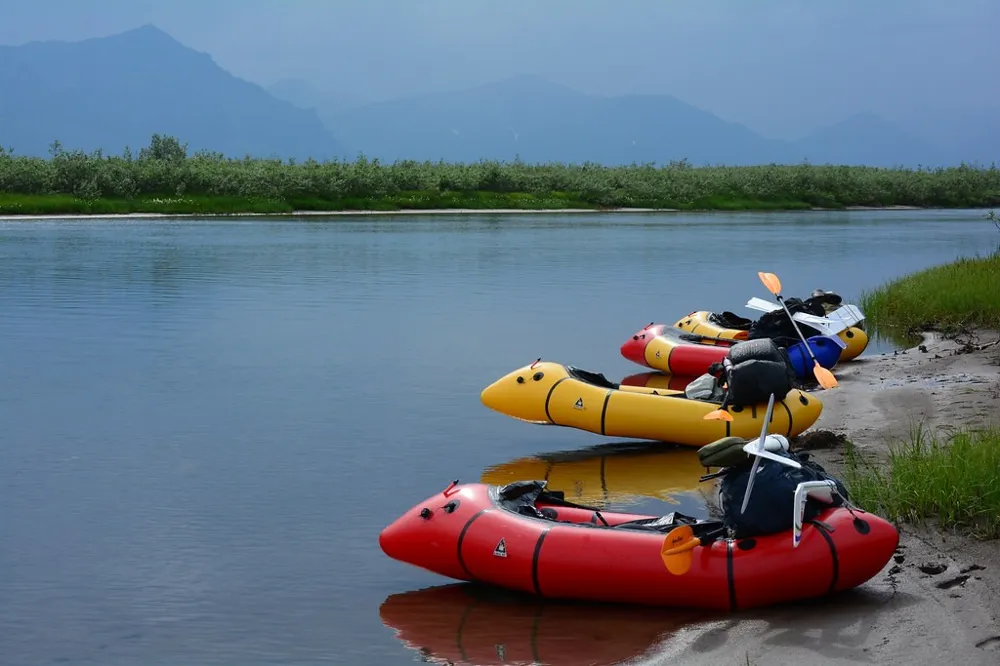
"Inflatable fishing kayak" covers several different designs. The type matters more than the brand, because it decides how stiff the boat feels, whether you can stand and how much setup you face at the launch.
| Type | How it's built | Best for | Trade-offs |
|---|---|---|---|
| Drop-stitch sit-on-top | High-pressure flat floor (sometimes sides too) with tube or panel sidewalls | Standing, all-day comfort, rigging electronics | Heavier and more expensive; needs a high-pressure pump |
| Tube-style (I-beam or air floor) | Low-pressure PVC tubes with an inflatable floor | Ponds, small lakes, occasional trips | Softer, sits lower, catches more wind; not for standing |
| Hybrid board | Inflatable fishing paddle board with a seat or frame | Sight fishing, flats, standing anglers | Open deck means more splash and less storage protection |
| Inflatable skiff or catamaran | Pontoon hulls with a deck or frame, often motor-rated | Bigger water, motors, two anglers | Much heavier and bulkier; closer to an inflatable boat |
Most anglers who want one boat for lakes and slow rivers end up with a drop-stitch sit-on-top. Tube-style boats suit occasional use and tight storage. If you're weighing a folding hard-skin boat instead, see the best folding kayaks.
How to Choose an Inflatable Fishing Kayak
Start with where you fish and how you get there, then narrow by stability, floor and mounts.
Stability and Width
Most angler inflatables are 36 to about 40 inches wide, wider than many recreational kayaks. Width adds steadiness when you twist to cast, net a fish or reach into a crate, but it also slows the boat. For ponds and slow rivers, extra width is usually worth it. For long paddles on open lakes, a longer hull matters more.
Floor Type and Standing
A high-pressure drop-stitch floor is the biggest upgrade over a basic inflatable. It stays flat and stiff, lifts you higher, and on the right hull lets you stand. A tube-style floor flexes under your feet and is a sit-down platform.
Length and Tracking
About 10 to 11 feet is easy to manage and turn on small water. Longer boats around 12 to 12.5 feet track straighter and glide farther between strokes. Look for a removable skeg or keel, which keeps an inflatable from yawing side to side. For more on length by water type, see our kayak size chart.
Capacity
Add your body weight, clothing, rods, tackle, a crate, an anchor, a cooler and any electronics or battery. Staying well under the listed maximum keeps the boat riding higher and more responsive. Our kayak weight limit guide explains how ratings work.
Mounts, Rod Holders and Storage
Count the mounting points and check what they accept. Some boats have fixed rod holders, others use rail or hard-mount bases that take aftermarket holders, fish finder arms and cameras. Look for bungee areas front and rear and room behind the seat for a crate.
Seat Comfort
A raised frame seat with a mesh back is far more comfortable for a full day than an inflatable cushion seat, and it keeps you drier. High and low positions help: low for wind and waves, high for casting.
Material and Chambers
Look for heavy coated fabric (PVC or similar, often listed by denier) with reinforced or abrasion-resistant areas on the bottom, and several separate air chambers so one leak doesn't sink the whole boat. Self-bailing floor ports help drain splash and rain.
Packed Size, Weight and Setup
Check the boat's weight, the bag weight and whether a pump comes with it. A drop-stitch floor usually needs a high-pressure hand pump or an electric pump. A backpack-style bag is easier to carry to remote water than a duffel.
Paddle, Pedal or Motor
Most inflatables are paddle-powered, so pair them with a longer fishing kayak paddle. Some accept pedal drives or have fin boxes or mounts for small electric motors. Fitting a motor usually means registration; see kayak trolling motors and our pedal kayak guide.
Can You Stand Up in an Inflatable Fishing Kayak?
Yes, in a model built for it. Standing needs a wide hull and a stiff floor that doesn't flex, which in practice means a high-pressure drop-stitch floor inflated to the full listed pressure. In this list, Advanced Elements says the StraitEdge Angler Pro's beam and floor are meant to support standing, the Steelhead's floor is designed for standing and casting, the iATAK's seat folds to open a standing platform, and the Rackham Aero is a paddle board. Tube-style boats like the Excursion Pro K1 and Colorado are sit-down boats.
To learn, start in calm, shallow water near shore with a life jacket on. Keep your feet on the centerline about shoulder-width apart, rise from a crouch using a paddle for balance, and look at the horizon rather than your feet. Sit down for wind, wakes and moving water. Our getting in and out of a kayak guide covers balance basics.
Inflation Pressure and Setup at the Launch
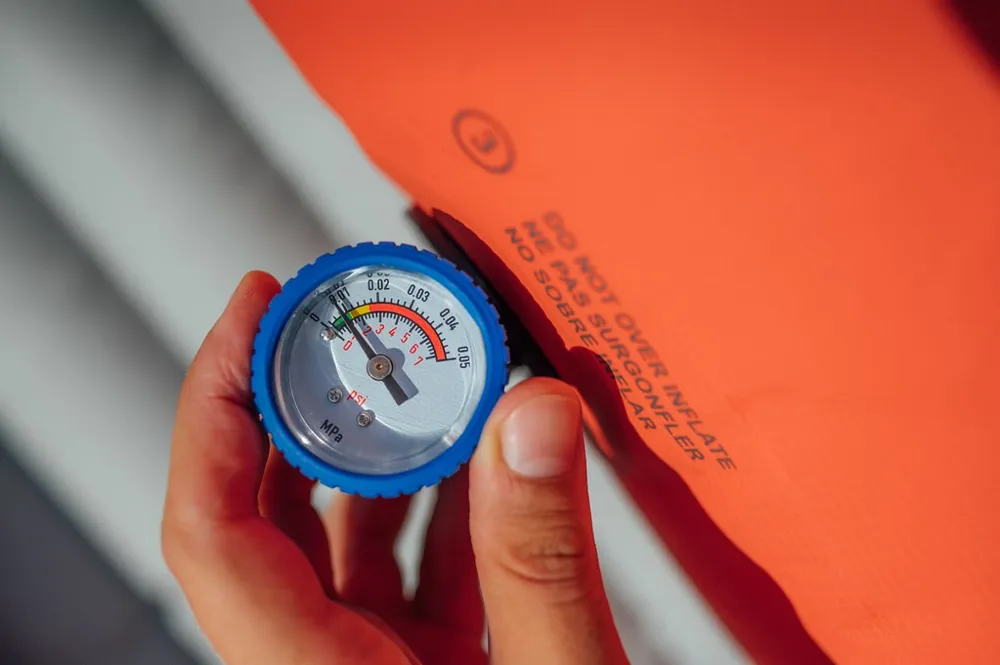
An underinflated inflatable is the main reason they feel sluggish and wobbly. Pressure ratings differ by chamber: drop-stitch floors run much higher than side tubes, and each valve is usually labeled with its own number. Use a pump with a gauge, inflate each chamber to the listed figure, and don't exceed it. Wired2Fish reports the iATAK runs at about 14 psi, for example, while tube-style chambers run far lower, so never apply one boat's number to another.
- Unroll the boat on grass or a tarp, away from sharp gravel, shells and hooks.
- Inflate the floor first if the maker says to, then the side chambers, then the seat.
- Fit the skeg or keel, seat and any mounts, then add rod holders and electronics.
- Recheck pressure after the boat has been in cold water for a while, since air pressure drops as it cools. On hot days, don't leave a fully inflated boat baking in the sun.
Practice the whole setup at home once so you aren't learning it at a busy launch. An electric pump saves effort; see the best paddle board pumps for high-pressure options that also suit drop-stitch kayaks.
Hooks, Knives and Punctures: Protecting the Hull
The most common worry about inflatable fishing kayaks is a hook going through the side. Good angler models are built from thick coated fabric with reinforced bottoms and several separate air chambers, so a single puncture leads to a slow leak in one chamber rather than a sudden sinking. That doesn't make them immune. Simple habits keep the risk low:
- Keep lures and hooks in a closed tackle box, not loose on the floor.
- Hook lures to the rod's keeper, not the hull, when moving.
- Use a rubber net and a lip-gripper so spiny fins and teeth stay away from the tubes.
- Keep knives, pliers and the anchor in sheaths or a crate.
- Drag the boat on grass or carry it, never across rocks, oyster shell or concrete.
- Carry the maker's repair kit and a small bottle of the right glue, and know which chamber each valve fills.
Avoid areas with sharp submerged branches and oyster beds, and treat sharp-toothed fish carefully in the boat.
Rigging an Inflatable for Fishing
Rigging an inflatable is similar to rigging a hard shell, but you mount to rails, pads or D-rings rather than drilling the hull. Never drill or glue fittings to an inflatable unless the maker sells a mount for it.
- Rod holders: use the boat's built-in holders or add rail-mount holders, and put a couple of extra tubes in a crate.
- Crate: a milk crate or tackle crate strapped behind the seat holds boxes and rods.
- Anchor: a small folding anchor or a stake-out pole, run through an anchor trolley if the boat has D-rings for one. See the best kayak anchors.
- Fish finder: use a mount arm on a rail or hard-mount base and a transducer arm over the side; see the best kayak fish finders.
- Leashes: leash rods, the paddle and any electronics, since an inflatable flips less often but gear still falls overboard.
Keep heavy items low and centered, and balance the load from front to back so the boat stays level and tracks well. More general setups are in our kayak fishing tips and kayak accessories checklist.
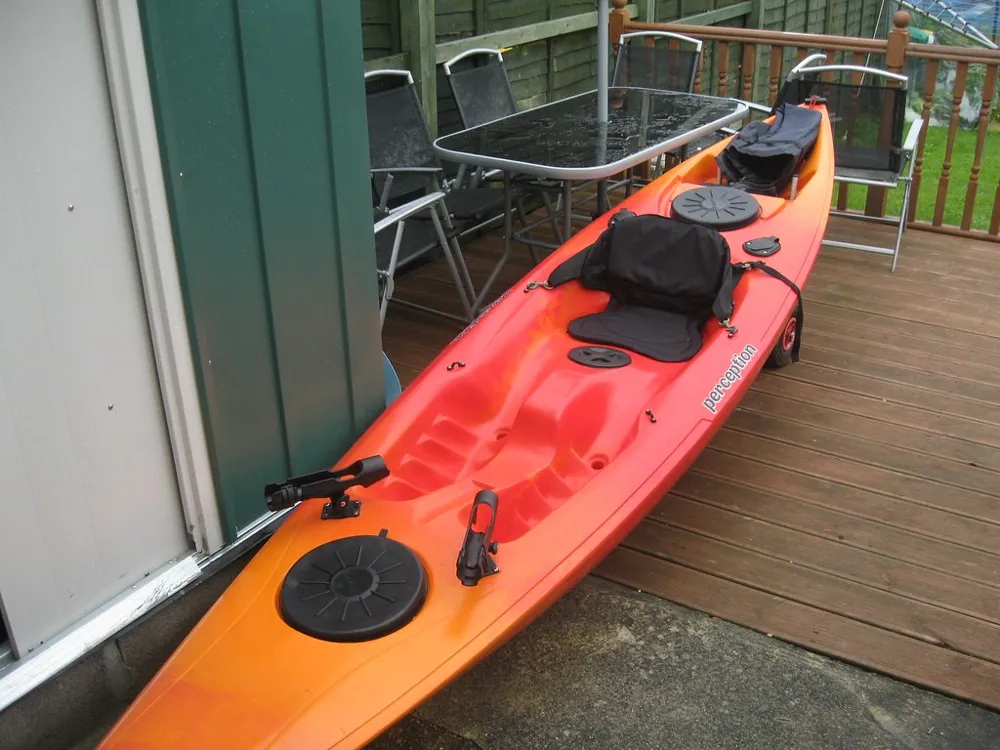
Inflatable vs Hard-Shell Fishing Kayaks
| Factor | Inflatable fishing kayak | Hard-shell fishing kayak |
|---|---|---|
| Storage | Bag or backpack in a closet | Rack, garage or yard space |
| Transport | Car trunk; no roof rack | Roof rack, truck bed or trailer |
| Weight to carry | About 37 to 45 lb for the kayaks in this list, carried in a bag | Often heavier for angler models, carried by hand or cart |
| Setup time | Inflate and rig at the launch | Unload and go |
| Wind and tracking | More affected by wind; relies on skegs | Better tracking for the length |
| Rigging | Rails, pads and D-rings only | Tracks, flush mounts, more options |
| Durability | Puncture and abrasion risk; repairable | Scrapes and cracks; very tough plastic |
| Drying | Must be dried before packing | Rinse and store |
Choose an inflatable if storage, roof racks or hike-in access are the problem. Choose a hard shell if you fish windy open water, launch from the same spot each time or want a pedal drive built into the hull. Our sit-on-top kayak and types of kayaks guides cover hard-shell options in more detail.
Drying, Storage and Repair
Rinse the boat with fresh water after every trip, and always after salt or brackish water, including under the floor and around valves and the skeg box. Dry it fully, inside folds too, before rolling it, since packing it wet invites mildew and odors. Store it loosely rolled or partly inflated in a cool, dry place out of direct sun, away from rodents and sharp tools. Check seams, valves and the bottom before each season.
For a small leak, find it with soapy water on the inflated chamber, dry and clean the area, and patch it with the maker's kit and glue following the instructions. Larger tears, seam failures or drop-stitch floor problems should go back to the maker or a repair shop. Keep proof of purchase, since most warranties cover materials and workmanship for a set period.
Safety, Registration and Licenses
Wind is the biggest hazard for an inflatable angler, because the hull sits on the water and catches gusts. Fish close to shore on lakes, check the forecast, and paddle upwind first so the return is easier. Dress for the water temperature, not the air temperature.
- Wear a U.S. Coast Guard-approved life jacket; see the best kayak PFDs.
- Carry a whistle, a light if you might be out near dark, and a phone or VHF radio in a waterproof case.
- Tell someone where you'll launch and when you'll be back.
- Read our kayak safety guide before your first outing.
Rules vary by state. Pennsylvania requires unpowered boats launched at state boating and park access points to display a registration or launch permit. Florida doesn't require registration for nonmotorized vessels under 16 feet, but a motorized kayak needs registration and a title. Many states treat electric trolling motors the same way, so fitting a motor or fin drive often triggers registration. Each angler generally needs a fishing license for the state and water. Check your state's boating and wildlife agencies and read kayak registration laws. Rules last checked November 2026. This is general information, not legal advice.
More Kayak Fishing Guides
Compare hard shells in the best fishing kayaks, find value boats in the best cheap fishing kayaks, or look at 2-person inflatable kayaks for recreational paddling with a partner. Add a comfortable kayak seat, plan your trip with kayak transport tips, or browse everything in our kayaking hub.
Frequently Asked Questions
Are inflatable fishing kayaks any good?
Yes, for the right water. Modern drop-stitch angler models are stiff, wide and stable enough to fish from all day, and they pack into a car trunk. They still catch more wind and usually track less well than a hard-shell fishing kayak of similar length.
Can you stand up in an inflatable fishing kayak?
Only in models the maker says are built for it, usually wide boats with a high-pressure drop-stitch floor such as the StraitEdge Angler Pro or the Elkton Steelhead. Inflate to the full listed pressure, practice in calm shallow water and wear a life jacket.
Will a fish hook pop an inflatable kayak?
A single hook is unlikely to cause a sudden failure in a heavy-duty angler model, which uses thick coated fabric and several separate air chambers. Hooks, knives, fins and teeth can still cause slow leaks, so keep sharp gear in a box and carry a patch kit.
Is an inflatable kayak good for fishing in the ocean?
Some heavy-duty models are used in sheltered saltwater bays, but wind, tide and chop affect inflatables more than hard shells. Stay close to shore in calm conditions, rinse the boat with fresh water afterward and check the maker's guidance on salt water.
What is a drop-stitch floor?
Drop-stitch is two layers of fabric joined by thousands of internal threads, which lets a panel hold high pressure and stay flat and stiff, more like a board than a tube. It gives a firmer platform for sitting high or standing.
How long does an inflatable fishing kayak take to set up?
It depends on the number of chambers, the floor pressure and the pump; an electric pump is faster than a hand pump on a high-pressure drop-stitch floor. Rigging rods, a crate and electronics adds time, so practice the full setup at home first.
Do you need to register an inflatable fishing kayak?
Many states don't require registration for a kayak without a motor, but some do or require a launch permit, and fitting a trolling motor or electric fin usually triggers registration. Check your state boating agency before you go.