Kayak Anchors That Hold You Right on the Fish (2026)
Folding grapnel kits, stake-out poles, drift chutes and anchor trolleys, plus how heavy an anchor you need, how much line to carry and how to anchor without tipping.
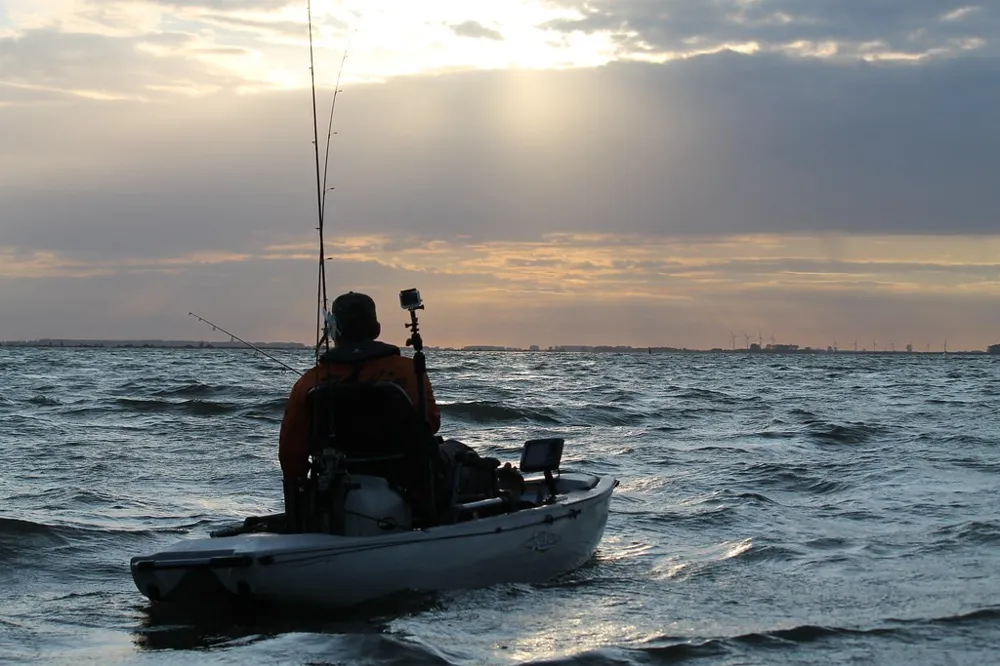
Why Anchor a Kayak?
A kayak catches wind like a sail and drifts off a spot within seconds. An anchoring system holds you over a brush pile, a drop-off or a school of fish so you can fish instead of paddle. It also matters for safety: Paddling.com points out that an anchor can stop you drifting into a hazard such as a busy channel. The right setup depends on depth, bottom and current. It usually means a folding grapnel anchor on a trolley, plus a stake-out pole for shallow flats or a drift chute for controlled drifts.
Seattle Sports Kayak Anchor Kit
Best complete kit
- 3.25 lb folding anchor
- 50 ft rope, ring and 2 carabiners
- Drawstring storage sack
YakGear Grapnel Anchor Kit
Best light anchor for calm water
- 1.5 lb folding grapnel
- 30 ft of 3/16 in nylon rope
- Storage ditty bag
YakGear AK1 Deluxe Anchor Trolley
Best anchor trolley
- Harken pulleys
- Mini zig zag cleat
- 30 ft rope and hardware
Kayak Anchors and Anchoring Gear Compared
| Product | Type | Listed Weight or Size | Included | Best For |
|---|---|---|---|---|
| Seattle Sports Kayak Anchor Kit | Folding anchor kit | 3.25 lb anchor | 50 ft rope, ring, 2 carabiners, sack | All-round lake and bay fishing |
| YakGear Grapnel Anchor Kit | Folding grapnel kit | 1.5 lb anchor | 30 ft of 3/16 in nylon rope, ditty bag | Calm, shallow water; light kayaks and SUPs |
| Gradient Fitness Kayak Anchor Kit | Folding grapnel kit | 3.5 lb anchor | 25 ft rope, buoy, carabiner, padded bag | Wind and light current |
| YakGear AK1 Deluxe Anchor Trolley | Anchor trolley | 30 ft rope | Harken pulleys, mini zig zag cleat, hardware | Moving the anchor point bow to stern |
| YakAttack LeverLoc Anchor Trolley Kit | Anchor trolley | Check listing | Installation hardware | Trolley with a locking lever |
| YakGear YakStick Mud Anchor | Stake-out pole | Listed as 6.5 ft | Mudfoot, rope attachment in handle | Shallow flats with soft bottoms |
| BLUEWING Sea Anchor Drift Sock | Drift sock | 32 in to 84 in sizes | Check listing | Slowing a drift in wind |
Specs are from the Amazon listings as of November 2026; kit contents can change, so check the listing before you buy.
The Best Kayak Anchors and Anchor Systems
1. Seattle Sports Kayak Anchor Kit
A complete kit built around a 3.25-pound folding anchor. Seattle Sports lists 50 feet of rope, an anchor ring, two carabiners and a drawstring storage sack, and says the anchor folds small enough for a hatch, crate or deck bag. The kit is listed for kayaks, canoes, paddle boards and other small craft. The ring and carabiners make it easy to clip the anchor line into a trolley or switch it between bow and stern.
Good to Know
- The longest rope of the kits here
- Ring and two carabiners included
- Mid-weight anchor suits most lakes and bays
Watch Out For
- No buoy listed in the kit
- Storage sack, not a padded bag
2. YakGear Grapnel Anchor Kit
A small, light kit from a kayak-fishing brand. The listing shows a 1.5-pound steel grapnel with four folding 6-inch tines, 30 feet of 3/16-inch black nylon anchor rope and a storage ditty bag, and says it is made in the USA. A 1.5-pound anchor is the size Paddling.com suggests for typical flats fishing. It also suits paddle boards, where every pound on the deck counts. The listing mentions "rock rig" and add-a-rope options.
Good to Know
- Very light and compact
- 3/16 in rope, the size many kayak anglers use
- Made in the USA, per the listing
Watch Out For
- Too light for strong wind, current or deep water
- 30 ft of rope limits depth
3. YakGear AK1 Deluxe Anchor Trolley
An anchor trolley is what makes anchoring from a kayak safe. This one is listed with Harken pulleys, 30 feet of rope, a mini zig zag cleat to lock the line, and installation instructions and hardware. YakGear says it lets the bow turn into the current. Outside Pursuits notes that installing it requires a drill, so plan where the pulleys go before you drill the hull.
Good to Know
- Pulleys, cleat, rope and hardware in one kit
- Lets you anchor from the bow or stern from your seat
- Works with any anchor or stake-out pole
Watch Out For
- Needs drilling to install
- Not an anchor; buy one separately
4. Gradient Fitness Kayak Anchor Kit
A heavier 3.5-pound folding grapnel for days with more wind or some current. The listing describes a cast-iron body with four flukes and a twist lock. The kit includes 25 feet of braided polyethylene rope, a floating buoy, a stainless steel carabiner and a padded storage bag. The buoy and carabiner are useful for a quick release: clip off, leave the anchor marked by the float, and come back for it. Twenty-five feet of rope is short for deep water, so add line if you fish deeper than about 10 feet.
Good to Know
- Buoy and carabiner for quick release
- Padded bag protects the deck
- Heavier anchor for wind and current
Watch Out For
- Shortest rope here
- Heavier to carry and store
5. YakAttack LeverLoc Anchor Trolley Kit
YakAttack's trolley kit, listed as made in the USA with all the hardware needed to install it. The listing calls it the first anchor trolley designed specifically for the job. It is an alternative to the YakGear AK1 if you already rig with YakAttack track and mounts. Check the listing for the rope length and pulley details.
Good to Know
- Hardware included
- Made in the USA, per the listing
- Fits a YakAttack-rigged kayak
Watch Out For
- Fewer specs on the listing
- Installation still needs mounting points
6. YakGear YakStick Mud Anchor
A stake-out pole for shallow water. The title lists it as 6.5 feet, though the bullets mention a 6-foot stick weighing 22 ounces. It is made of rigid fiberglass with an oversized foam grip, a nylon handle and pick, and an anchor-rope attachment molded into the handle, and the listing says it floats. Push it into the bottom through a scupper hole or tie it to your trolley ring. You are pinned in place in seconds, with no rope to pull up.
Good to Know
- Fastest way to stop in skinny water
- Floats if dropped, per the listing
- Light fiberglass
Watch Out For
- Only works in water shallower than the pole
- Needs a soft bottom such as mud or sand
7. BLUEWING Sea Anchor Drift Sock
A drift sock (also called a drift chute or sea anchor) made of 840D rip-stop nylon with reinforced webbing straps. It is sold in sizes from 32 to 84 inches. For a kayak, pick the smallest. Paddling.com and Outside Pursuits both describe a chute of about 30 inches as the right size for most kayaks. The listing says it slows drift in wind and current and names kayaks among the craft it suits.
Good to Know
- Small size suits kayaks
- Rip-stop fabric
- Slows a drift without stopping you
Watch Out For
- Larger sizes are for powerboats
- Does not hold you in one spot
Types of Kayak Anchors and Anchoring Systems
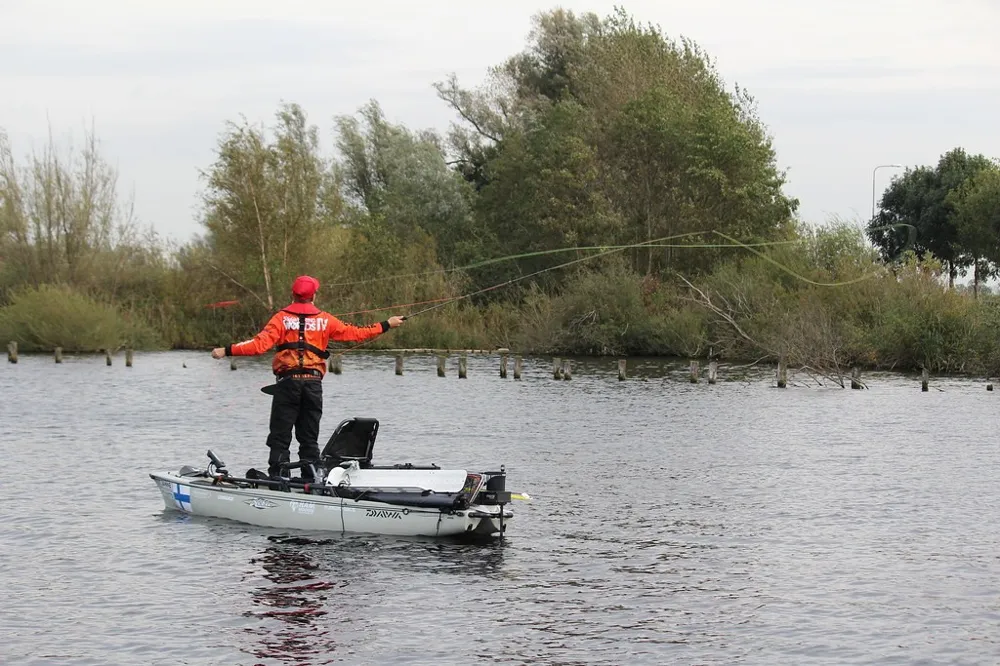
No single anchor works everywhere. Most kayak anglers carry a folding grapnel and add other tools as their water demands.
| Type | How It Works | Best Water and Bottom | Limits |
|---|---|---|---|
| Folding grapnel | Four prongs fold flat for storage and open to hook the bottom | Sand, mud, gravel and weed in lakes and bays | Can snag in rocks and timber |
| Stake-out pole | A pole pushed into the bottom pins the kayak | Shallow flats with mud or sand | Water must be shallower than the pole |
| Drift chute (drift sock) | An underwater parachute that slows your drift | Open water in wind | Slows you but doesn't stop you |
| Drag chain | A short, padded length of chain on a rope that settles among rocks | Rocky river bottoms | A river tool; not for deep water |
| Wreck anchor | Wire spines set in lead bend straight to pull free | Reefs and wrecks offshore | Specialized; for structure fishing |
| Powered shallow-water anchor | A motor drives a pole into the bottom at the press of a button | Shallow water, often bass and flats fishing | Premium price tier, shallow water only |
Folding Grapnel Anchors
This is the standard kayak anchor. Kayak Angler notes that most anglers use a four-prong folding grapnel, and that it suits sandy or soft bottoms. Paddling.com adds a useful detail: when you pull one up, it tends to spin and shed much of what it grabbed. Folded, it fits in a crate, hatch or deck bag.
Stake-Out Poles
A stake-out pole is the quickest way to stop in shallow water, and it's quiet. Kayak Angler says 6- and 8-foot poles are the most common, sized to the depth you fish. Aluminum poles are stronger and fiberglass poles are lighter. You can push one through a scupper hole or tie it to a trolley ring. A track-mounted pole holder keeps it out of the way while you paddle or pedal.
Drift Chutes
A drift chute doesn't hold position; it slows you so you can work a bank or a flat at a steady pace. Outside Pursuits notes that a larger chute slows you more and a smaller one lets you drift faster. A chute also adds drag while you fight a big fish. To bring it in, pull it from the back so it spills its water, then stow it in the tank well. Our kayak fishing tips cover drift fishing in more detail.
Drag Chains and River Anchors
River anglers often skip the grapnel, which can wedge in rocks. Kayak Angler describes a drag chain: about two feet of 7/16-inch chain wrapped in a bicycle inner tube or duct tape and tied to a 12-foot rope. Chain lies among rocks where a grapnel's prongs can wedge, and the padding protects the hull.
How Heavy Should a Kayak Anchor Be?
Kayak anchors are small. KayakHelp notes that most folding grapnels for kayaks weigh between 1.5 and 3.5 pounds. Pick the lightest one that holds in your conditions, because every extra pound takes up deck space and adds weight to the boat. Paddling.com also stresses that an anchor's size and shape matter more than its weight. Bigger flukes dig into soft bottoms better.
| Conditions | Suggested Setup | Source |
|---|---|---|
| Calm, shallow flats | About 1.5 lb folding anchor, or a stake-out pole | Paddling.com |
| Light kayak in calm water | About 3 lb grapnel | Kayak Angler |
| Significant current | About 3 lb folding anchor | Paddling.com |
| Larger kayak, deeper water | 5 to 7 lb grapnel | Kayak Angler |
| Heavy kayak in swift or deep water | Add about 2 ft of 3/8 in chain between anchor and rope | Kayak Angler |
Heavy pedal kayaks and loaded fishing kayaks sit at the top of that range. A light fishing paddle board or a small rec kayak sits at the bottom. A short length of chain helps any size of anchor: it pulls the shank down so the flukes dig in.
How Much Anchor Line Do You Need?
Scope is the ratio of anchor line let out to water depth, and sources disagree on how much a kayak needs. Many roundups, including KayakHelp and Outside Pursuits, repeat the boating rule of about 7:1, with Outside Pursuits citing 7 to 10 times the depth. Paddling.com says 7:1 is often cited but may be more than a kayak needs. Kayak Angler suggests about twice the depth (20 feet of line in 10 feet of water), with more in strong current or rough conditions.
- Carry enough line for the deepest water you plan to anchor in. That's why many anglers carry more line than a basic 25- or 30-foot kit includes.
- Let out more in wind or current, or if the anchor drags; let out less in calm, shallow water so the line doesn't tangle.
- Add a short chain at the anchor so it sets with less line. Paddling.com and Outside Pursuits both recommend this.
- Rope: Kayak Angler says many anglers use 3/16-inch rope and recommends polyester line because it doesn't stretch, resists tangling and dries quickly.
Anchor Trolleys: Anchor From the Bow or Stern, Never the Side
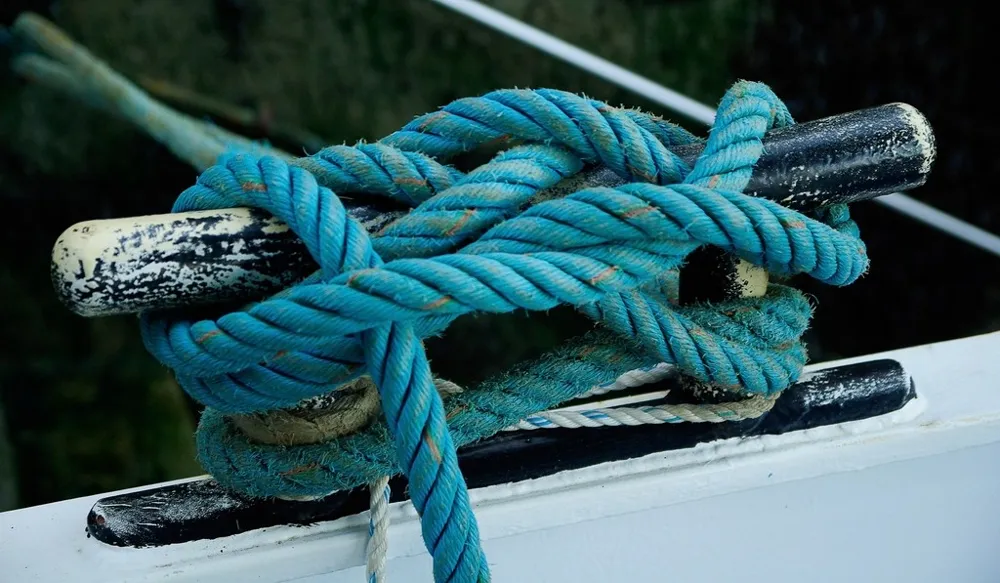
Where you tie the anchor line matters as much as the anchor. Kayaks handle water flowing along their length, not across it. Paddling.com advises avoiding the side "especially if you're in any significant current." Anchored from the side, a kayak sits broadside to waves and current, which adds drag and can tip it. Anchor from the bow or the stern so the pointed end faces the wind or current.
How an Anchor Trolley Works
A trolley is a loop of line running through two pulleys, one near the bow and one near the stern, with a ring or carabiner on the loop. Clip the anchor line through the ring, drop the anchor, then pull the trolley line to slide the ring to the bow or stern. A cleat locks it in place. As Bass Pro explains, it lets you change your heading without pulling the anchor up. Some anglers run trolleys on both sides, with one anchor at the bow and one at the stern, to hold the kayak almost still.
Bow or Stern?
Paddling.com describes the tradeoff. Anchored from the bow, you cast up-current and can watch the line. Anchored from the stern, the current carries your bait out in front of you, which suits bottom fishing. Many fishing kayaks come with a trolley, or with pad eyes and gear tracks where one is easy to add. If yours doesn't, the trolley kits above include the hardware.
How to Anchor a Kayak Step by Step
- Choose your spot upwind or up-current of where you want to fish, so you settle back onto it.
- Clip the anchor line through the trolley ring with a carabiner and set the ring at the bow or stern.
- Lower the anchor over the side near your seat. Don't throw it, and keep the line clear of your feet and gear.
- Pay out line until the anchor sets, then let out a little more to suit the conditions.
- Cleat the line with a jam or zig zag cleat that you can free with one pull. Never tie it off permanently.
- To leave, paddle or pull yourself over the anchor while you coil the line on deck. Move the trolley ring back to your seat and lift the anchor straight up.
- Store the anchor near the center of the kayak, close to or under the seat, to keep the boat balanced, as Kayak Angler advises. A padded bag protects the deck and keeps loose line from tangling.
Kayak Anchor Safety
An anchor line can tip a kayak quickly if conditions change. Follow these rules every time:
- Never anchor from the side. Use a trolley or a bow or stern attachment point.
- Use a quick release. Kayak Angler recommends a jam cleat so you can free the line fast. Bass Pro suggests clipping the anchor rope to the trolley with a carabiner and tying a float near it, so you can unclip in an emergency and come back for the anchor later.
- Carry a knife within reach. A safety knife on your PFD can free you from tangled rope, as Jackson Kayak notes. Use it to cut the anchor line if releasing it isn't enough.
- Stay out of swift water. Bass Pro advises against anchoring in swift rivers, where a kayak can get hung up and capsize. Keep well clear of strainers, low-head dams and bridge pilings.
- Practice in calm water first. Paddling.com says the time to learn your anchor system is long before you need it.
- Wear your PFD and keep clear of channels and boat traffic. Our kayak safety guide and kayak PFD guide cover the rest.
Anchoring rules vary by waterway, and some areas restrict anchoring near docks, channels or protected habitat. Check local rules before you set an anchor.
Frequently Asked Questions
What size anchor do I need for a kayak?
Most kayak anchors are small folding grapnels of about 1.5 to 3.5 pounds. Kayak Angler suggests about 3 pounds for a light kayak in calm water and 5 to 7 pounds for a bigger kayak in deeper water.
How much rope do I need for a kayak anchor?
Advice varies. Kayak Angler says to let out about twice the water depth in calm water and more in current or wind, while many roundups cite a 7:1 ratio. Carry enough for the deepest water you plan to fish.
Why should you never anchor a kayak from the side?
A kayak handles water flowing along its length, not across it. Anchored from the side, it sits broadside to wind, waves or current, which adds drag and can tip it.
Do I need an anchor trolley?
If you anchor more than occasionally, yes. A trolley lets you move the anchor point to the bow or stern from your seat, so the kayak points into the wind or current instead of swinging sideways.
What is the difference between a drift chute and an anchor?
An anchor stops you. A drift chute (drift sock) is a small underwater parachute that only slows your drift, so you can cover water at a controlled speed.
Can I anchor a kayak in a river?
Only with care. Bass Pro advises against anchoring in swift rivers, where a kayak can get hung up and capsize. In slower water, anchor from the bow or stern and keep a quick release and a knife within reach.
What is a stake-out pole?
A pole you push into a soft bottom to pin the kayak in place. It deploys in seconds but only works in shallow water; 6- and 8-foot poles are the common sizes.