Best Freediving and Spearfishing Wetsuits for Warm, Flexible Dives (2026)
Six two-piece and one-piece suits for breath-hold diving and spearfishing, and what open-cell neoprene, lining, thickness and camo mean before you buy.
What Makes a Freediving Wetsuit Different
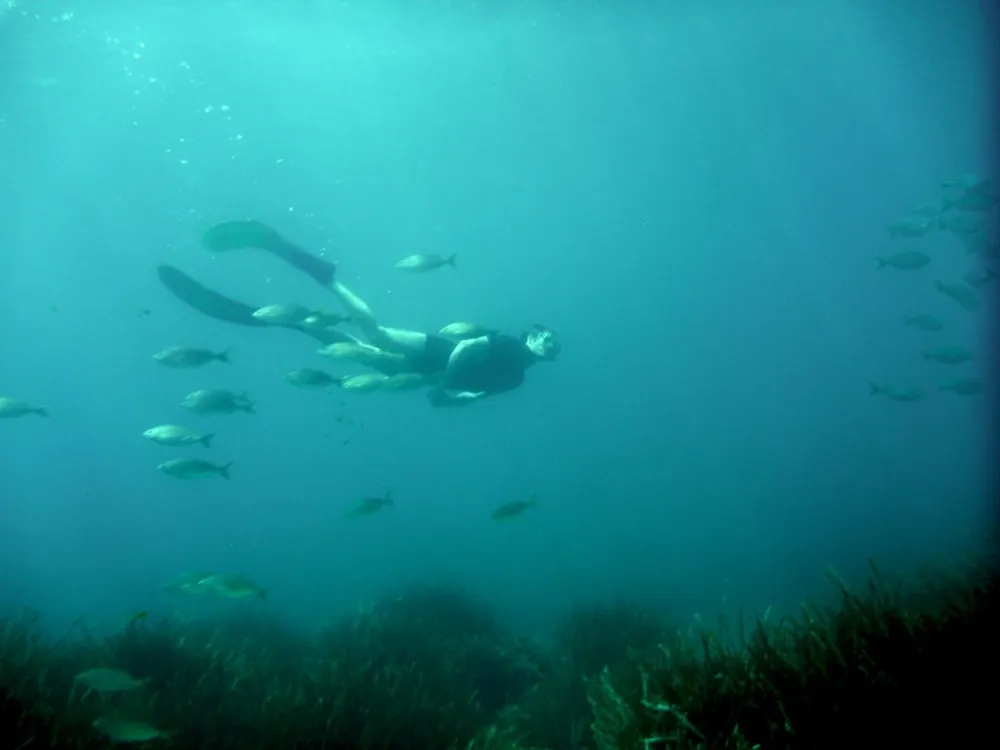
A freediver spends long stretches lying still at the surface doing a breathe-up, then dives on one breath where the water is often colder and the suit is squeezed thinner by pressure. Being cold makes it much harder to relax, and relaxation is what makes a breath-hold last. That's why freediving and spearfishing suits look different from a surf or scuba suit: they are usually two pieces (a hooded jacket and high-waisted pants), have no zipper to leak water, and are often made from open-cell neoprene that clings to the skin so very little water moves inside. The six suits below are sold for freediving, spearfishing or both, from easy double-lined suits to camo open-cell designs and a 7 mm cold-water one-piece. If you mainly surf, our wetsuit guide covers zip suits for paddling; if you are just starting out, read how to freedive first.
Cressi Apnea
Best all-round open-cell suit
- Two-piece, open-cell neoprene
- Chest support for loading a speargun
- Reinforced elbows and knees
Seac Snake
Best camo for spearfishing
- Two-piece, open-cell neoprene
- Scale-pattern camouflage
- Separate Man and Lady cuts
Seac Royal
Best for easy donning
- Double-lined neoprene, no lubricant needed
- Hooded jacket and high-waist long john
- Sternum loading pad
Freediving Wetsuits Compared
Details come from each suit's Amazon listing and, where noted, the maker's or retailers' product pages as of November 2026. Thickness options and colors change by size and seller, so check the listing before you buy.
| Wetsuit | Style | Neoprene | Thickness Options | Spearfishing Features | Best For |
|---|---|---|---|---|---|
| Cressi Apnea | Two-piece | Open cell | 3.5, 5 and 7 mm listed by retailers | Chest support, reinforced elbows and knees | All-round freediving and spearfishing |
| Seac Snake | Two-piece | Open cell, UltraStretch | 3 and 5 mm listed by retailers | Sternum loading support, camo scales | Camo spearfishing |
| Seac Royal | Two-piece, hooded | Double lined | 3.5, 5 and 7 mm | Double sternum loading pad | Beginners, easy donning |
| Salvimar Krypsis 101 | Two-piece, hooded | Open cell inside, camo liner outside | 3.5, 5.5 and 7 mm (retailer page) | Camo outer, GBS seams | Cooler-water spearfishing |
| Nataly Osmann Camo | Two-piece, hooded | Check listing | 3 mm (1.5 mm also listed) | Chest and knee pads | Budget warm-water camo |
| Beuchat Focea Comfort 3 | One-piece with attached hood | Elaskin neoprene | 7 mm | Preformed knees and elbows | Cold water (listed for about 7–12°C) |
The Best Freediving and Spearfishing Wetsuits
1. Cressi Apnea
A full two-piece jacket and pants suit that Cressi designs for spearfishing and freediving. The listing describes soft, flexible open-cell neoprene, anatomical cuts for a form-fitted feel, reinforcement in high-stress areas such as the elbows and knees, and extensive chest support to take the load when you cock a speargun. Retailers list it in 3.5, 5 and 7 mm, which covers most water from warm to cold. As with any open-cell suit, plan to use lubricant to put it on.
Good to Know
- Open-cell interior for warmth and a close seal
- Chest support and reinforced knees and elbows
- Available in several thicknesses
Watch Out For
- Open-cell neoprene tears if forced on dry
- Check which thickness a size listing actually ships in
2. Seac Snake
A two-piece open-cell suit for spearfishing and freediving with a camouflage pattern of multicolored scales, which Seac says is meant to break up the human silhouette. The listing describes 100% UltraStretch neoprene, glued and blind-stitched seams, a sternal speargun loading support and Aquastop seals at the wrists, ankles and face to limit water entry. Seac makes separate Man and Lady versions with different cuts for the jacket, pants and loading pad. Retailers list 3 mm and 5 mm versions.
Good to Know
- Camo designed for spearfishing
- Women's cut with its own loading pad shape
- Glued and blind-stitched seams
Watch Out For
- Open cell needs lubricant to put on
- Camo suits suit spearing more than pool training
3. Seac Royal
A hooded jacket and high-waist long john in double-lined neoprene, built for freediving and spearfishing. Because nylon covers both sides, it goes on dry without lubricant; the listing describes a Comfort Fit cut for easy donning and pre-shaped panels on the back, arms and calves. The hood closes with a beavertail and double clip, and there is a double Melco Tape sternum loading pad. Seac lists 6 sizes and three thicknesses: 3.5, 5 and 7 mm.
Good to Know
- No lubricant needed and tougher against scrapes
- Freediving-style two-piece with hood
- Three thicknesses
Watch Out For
- Double-lined suits let more water move inside than open cell
- Less stretch than open-cell neoprene of the same thickness
4. Salvimar Krypsis 101
A two-piece camo suit for freediving and spearfishing with a camouflage stretch liner outside and medium-density open-cell neoprene inside (listed as SHEICO-L foam). The jacket has an integrated hood with a beavertail closure, and the high-waisted pants use different thicknesses across the lower torso plus an elastic abdominal band so the diaphragm can move freely. Salvimar uses double GBS (glued and blind-stitched) cross seams and its Camo Round Seal System at the wrists, ankles and face. A retailer page lists 3.5, 5.5 and 7 mm versions.
Good to Know
- Open-cell warmth with a protective camo outer
- Pants shaped for diaphragm breathing
- Thicker options for cooler water
Watch Out For
- A loading pad isn't mentioned on the listing or retailer page; confirm before buying for speargun use
- Needs lubricant to put on
5. Nataly Osmann Camo 3mm
A hooded two-piece camo suit sold for spearfishing and diving, with a hooded top, separate pants and chest and knee pads. The listing describes 3 mm neoprene for thermal protection and protection against stings, and the title also mentions a 1.5 mm option. The listing doesn't say whether the inside is open cell or lined, so check before buying; it suits warm to mild water. The seller notes it updated its size chart, so measure yourself and check the chart.
Good to Know
- Camo, hood and pads in one budget-friendly set
- Easy to put on
Watch Out For
- Not open cell, so it is less warm than an open-cell suit of the same thickness
- Check the updated size chart carefully
6. Beuchat Focea Comfort 3 7mm
A 7 mm one-piece suit with an attached hood, listed for spearfishing, freediving and scuba in cold water; the listing gives a range of about 7–12°C (45–54°F). It uses Beuchat's soft Elaskin neoprene, preformed knee and elbow areas, a Fireskin lining in the areas most sensitive to cold and double seals at the wrists and ankles with zips. A one-piece cuts the waist overlap but is harder to get into than a two-piece, and at 7 mm you will need noticeably more weight.
Good to Know
- Made for cold water
- Attached hood and double wrist and ankle seals
Watch Out For
- Too warm and too buoyant for warm water
- One-piece suits are harder to put on and take off
Open-Cell vs Lined Neoprene
Neoprene foam can be left bare or covered with a thin fabric (usually nylon) on one or both sides. Which side is covered is the biggest choice in a freediving suit, and the names can be confusing because "open cell" usually refers to the inside of the suit.
| Construction | Inside | Outside | Pros | Cons |
|---|---|---|---|---|
| Double lined | Nylon | Nylon | Toughest, goes on dry, often the most affordable | Least warm and least stretchy; water moves inside more easily |
| Open cell (single lined outside) | Bare open-cell neoprene | Nylon or camo fabric | Clings to skin for warmth and a close seal, outer resists scrapes | Needs lubricant; inside tears easily from nails |
| Smoothskin (single lined inside) | Nylon | Smooth, heat-treated neoprene | Low drag for long glides, easy to put on dry | Fragile outside; sun can fade and crack it |
| Unlined | Bare open-cell neoprene | Smoothskin | Warm and slippery, used for performance diving | Very fragile and hard to put on |
The most popular design for recreational freediving and spearfishing is open cell inside with a nylon liner outside. PADI, Molchanovs and DeeperBlue all describe it as the common choice because it combines skin-clinging warmth with an outer that stands up to rocks, boats and reef. Double-lined suits are the easier starting point if you also want a suit for snorkeling or casual use, or if you don't want to deal with lubricant. Some makers also sell "sandwich" neoprene, with a nylon layer between an open-cell inside and a smoothskin outside, which is tougher than unlined but stiffer.
Smoothskin vs Nylon Outer Lining
Smoothskin is neoprene whose outer surface is heat-treated to a shiny, rubbery finish. It cuts drag, so you glide farther per kick, and it sheds wind and water at the surface. Competitive freedivers use it for pool and depth disciplines. The downside is durability: smoothskin scratches and tears easily, and long sun exposure fades and cracks it, so it is a poor match for scrambling over rocks or wrestling fish.
A nylon outer lining is what most spearfishing and recreational suits use. It protects the foam from fingernails, reef and gear, takes printed camo patterns and colors, and wears better in the sun. It adds a little drag compared with smoothskin, which matters far less on a recreational dive than staying warm and protecting the suit. A practical split: nylon outside for the ocean, spearfishing and everyday training; smoothskin for line training and competition if you dive enough to care about glide.
Thickness by Water Temperature
Freediving charts call for thicker suits than surf charts at the same temperature. You are not paddling to stay warm, you spend long periods still at the surface, and neoprene compresses at depth, so a suit is effectively thinner on the dive than it is on the boat. Wetsuits also compress gradually with use. Sources differ by a few degrees, so treat this as a starting point.
| Water Temperature | Freediving Suit | Extras |
|---|---|---|
| About 82°F (28°C) and warmer | Lycra skin or 1–1.5 mm | Mainly sun and sting protection |
| About 75–82°F (24–28°C) | 1.5–3 mm | 3 mm if you dive long sessions or below a thermocline |
| About 64–75°F (18–24°C) | 3–5 mm | Hood; socks |
| About 60–64°F (16–18°C) | 5–7 mm | Hood, socks and gloves |
| Below about 60°F (16°C) | 7 mm | Hood, thick socks and gloves |
The ranges blend two published guides: PADI's puts 3 mm at about 70–80°F, 5 mm at 60–70°F and 7 mm at 50–60°F, while Molchanovs suggests 1–1.5 mm above about 82°F, 3 mm at 75–82°F, 5 mm at 64–75°F and 7 mm below about 63°F. Choose the thinnest suit that keeps you warm: thicker suits restrict movement and need more weight, which changes your buoyancy more between the surface and depth. A thermocline can drop the temperature sharply a few meters down, so plan for the water at depth, not at the surface. Compare our surf-oriented wetsuit thickness chart and, for very cold paddling, wetsuit vs drysuit.
Two-Piece Suits, Hoods and One-Pieces
Most freediving suits are two-piece: a jacket with an attached hood and a beavertail flap that passes between the legs and clips at the front, plus high-waisted pants (long johns). The jacket overlaps the pants around your torso, so your core gets a double layer, and the attached hood keeps water from flushing down the neck. Two-piece suits are also easier to put on and let you wear just the jacket in warm water.
- Hood: your head loses heat fast, so an attached hood is standard from about 3 mm up. Look for a face opening that seals without pressing the mask skirt.
- High-waist pants: some, like the Krypsis 101, use thinner or more elastic panels at the belly so the diaphragm can expand on a full breath.
- One-piece: fewer gaps, but harder to get in and out of. One-piece freediving suits are mostly thin training suits or, like the Focea, cold-water dive suits.
- Zippers: dedicated freediving suits usually avoid them because a zip channel lets water in. Some cold-water suits use short zips at the wrists and ankles.
Camo and Features for Spearfishing
Spearfishers ask more of a suit than freedivers do. Beyond warmth, look at camouflage and reinforcement.
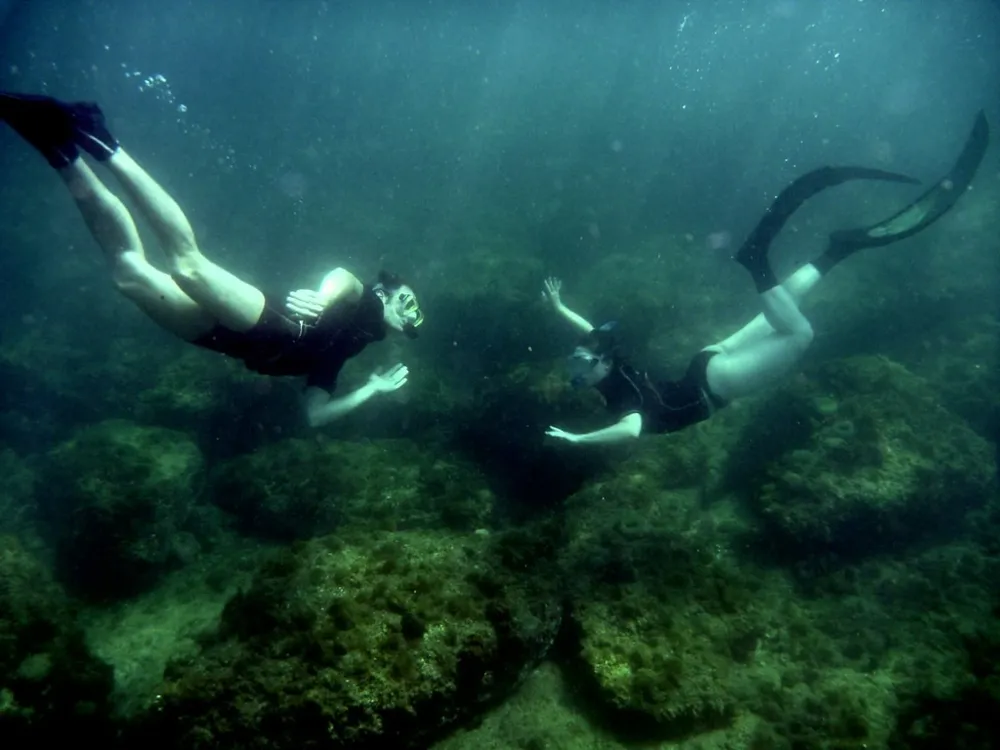
- Camouflage: camo patterns are meant to break up your outline so fish are less wary. Spearfishing guides commonly suggest blue patterns for open, blue water, brown for rocky bottoms and green or blended patterns for reef and weedy water; when in doubt, match the bottom where you usually dive. A plain black suit also works.
- Loading pad: a reinforced chest or sternum pad protects the suit and your chest when you load a band speargun. The Apnea, Snake and Royal list one. See spearguns and pole spears for how loading works.
- Reinforced knees and elbows: help when you lie on rocks or kneel on the bottom.
- Knife and accessory options: some custom makers add knife pockets or extra pads.
Spearfishing rules on licenses, species, seasons and protected areas vary by place; see how to spearfish and check your local wildlife agency before you go.
How to Put On an Open-Cell Wetsuit
Open-cell neoprene grips bare skin like a suction cup, so trying to pull it on dry is the fastest way to tear it. Freedivers lubricate the inside instead.
- Mix a lubricant: mild soapy water, diluted hair conditioner or a dedicated wetsuit lubricant in a bottle or bucket. Some divers dust with powder, or simply put the suit on in the water.
- Turn the pants right side out and wet the inside, then slide your feet through and work the material up gradually with the pads of your fingers, never your nails.
- Pour lubricant into the jacket, put your arms in first, then pull the hood over your head with your hands flat inside it.
- Close the beavertail and smooth out any folds so the suit lies flat everywhere.
- If your soap is not eco-friendly, Molchanovs suggests flushing the inside with fresh water while wearing the suit so it doesn't wash into the sea.
Take off rings and watches first and keep fingernails short. Lined and smoothskin-outside suits with a nylon inside go on dry.
How a Freediving Wetsuit Should Fit
A freediving suit should fit like a second skin: no loose folds at the lower back, armpits or knees, and no air pockets, because any gap lets cold water flush through. At the same time you must be able to take a full, deep breath and move your arms freely, so try a breathe-up and a stretch overhead in the suit. Open-cell suits feel tight and awkward to put on; that's normal, as long as they are comfortable once on.
- Measure yourself (height, weight, chest, waist and hips) and compare with each brand's size chart, since sizes vary between brands and between men's and women's cuts.
- Check the hood: the face opening should seal without pulling on your mask, and the neck shouldn't press on your throat.
- Custom suits are worth considering if you fall between sizes or have a longer torso, shorter legs or a larger chest, especially for thick 5–7 mm suits, which have less stretch.
Socks, Gloves and Weighting
Hands and feet get cold first. Thin neoprene socks also improve the fit of full-foot freediving fins and prevent rubbing, and gloves protect your hands on rocks and while spearfishing. In cold water both become essential. Match their thickness roughly to the suit.
A wetsuit floats, and the thicker it is, the more weight you need to offset it, which is why freedivers wear a rubber weight belt low on the hips with a quick release. The aim is to float slightly positive at the surface. Neoprene compresses as you descend, so a thick suit loses buoyancy faster with depth; never add weight to make the first few meters easier. Our how to freedive guide covers weighting in detail. Recheck your weight whenever you change suit thickness or move between fresh and salt water, and never freedive alone: learn why in our shallow water blackout guide.
Wetsuit Care and Storage
- Rinse in fresh water after every dive, inside and out, and don't let salt dry on the suit.
- Dry it in the shade, away from heaters, fires and dryers; UV breaks down neoprene and especially smoothskin.
- Wash occasionally with a wetsuit shampoo; never use a washing machine or petroleum-based products.
- Store it flat or on a wide hanger, out of direct sun, and avoid leaving it folded for long periods, which creases and compresses the neoprene.
For what to wear under a suit (usually nothing with open cell, since the neoprene needs skin contact), see what to wear under a wetsuit.
More Freediving Gear
A wetsuit usually comes after a low-volume freediving mask and long-blade fins. Before you buy anything, take a course and read how to freedive and how to hold your breath longer. Spearos can continue with how to spearfish, and you'll find every guide in our snorkeling and diving hub.
Frequently Asked Questions
What is the difference between a freediving wetsuit and a scuba wetsuit?
Freediving suits are usually two-piece with an attached hood and no zipper, and are often open-cell inside, so they seal against the skin and flex for breathing. Scuba suits are usually one-piece with a zip and lined on both sides, which makes them tougher and easier to put on but lets more water move through.
What thickness wetsuit do I need for freediving?
Sources differ slightly, but a common guide is 1 to 1.5 mm in water around 82°F (28°C) and warmer, about 3 mm in the mid-70s to low 80s°F, about 5 mm in the mid-60s to mid-70s°F, and 7 mm below that. Freedivers usually choose warmer suits than surfers at the same water temperature.
Do I need lubricant to put on an open-cell wetsuit?
Usually, yes. Open-cell neoprene grips bare skin, so freedivers use soapy water, diluted hair conditioner or a dedicated wetsuit lubricant, or put the suit on in the water. Forcing it on dry can tear the neoprene.
Is open-cell or lined neoprene better for beginners?
Double-lined suits are tougher and go on dry, so they are the easy choice for new divers and mixed use. Open-cell suits are warmer for their thickness and seal better, which is why most regular freedivers and spearos move to them.
Do I need a camo wetsuit for spearfishing?
No, but many spearfishers prefer one. Camouflage is meant to break up your outline so fish are less wary. A plain black suit also works, and fit and warmth matter more than the pattern.
How tight should a freediving wetsuit be?
Snug like a second skin, with no loose folds or air pockets, but loose enough at the chest and belly to take a full breath. Open-cell suits feel tight when you put them on and should still let you breathe fully once on.
Can I use a surf wetsuit for freediving?
Yes for casual shallow diving, if it keeps you warm. Surf suits have zippers that let water in and their neoprene is not designed for repeated compression at depth, so regular freedivers move to dedicated suits.