The History of Mountain Biking: A Timeline From Repack to Today (2026)
Mountain biking grew from a handful of riders bombing down Marin County fire roads on old cruisers into an Olympic sport in about twenty years. Here's how it happened, and how the bikes changed along the way.
Mountain Biking History at a Glance
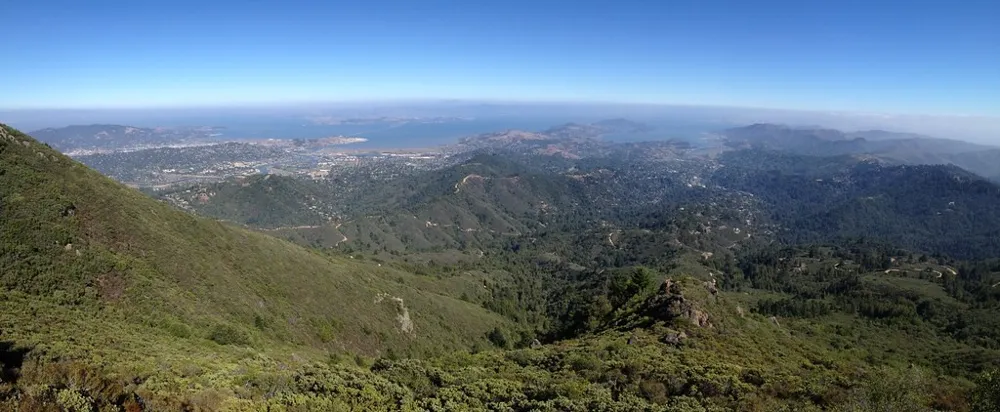
Off-road cycling is as old as the bicycle, but the mountain bike as a distinct machine took shape in Northern California in the 1970s. The table below covers the milestones; the sections after it tell the story in order.
| Year | Milestone |
|---|---|
| 1896 | Army bicycle riders from Fort Missoula, Montana, ride to Yellowstone on modified bikes |
| 1950 | First cyclocross world championship |
| 1955 | Rough Stuff Fellowship founded in the UK for off-road cyclists |
| Late 1960s–early 1970s | Marin County riders start bombing down Mount Tamalpais on old balloon-tire cruisers ("klunkers") |
| 1976 | First Pearl Pass Tour from Crested Butte to Aspen, Colorado |
| Oct 21, 1976 | First Repack downhill race near Fairfax, California |
| 1977 | Joe Breeze finishes Breezer #1, generally credited as the first purpose-built mountain bike (some sources say 1978) |
| 1979 | Charlie Kelly and Gary Fisher start MountainBikes, using Tom Ritchey frames |
| 1980 | Fat Tire Flyer, the first mountain bike magazine, launches |
| 1981 | The Specialized Stumpjumper, an early mass-produced mountain bike, goes on sale |
| 1983 | NORBA (National Off-Road Bicycle Association) founded as the first US racing body |
| 1984 | Last of 24 Repack races |
| 1988 | IMBA formed by five California clubs; Mountain Bike Hall of Fame founded in Crested Butte |
| 1989–1990 | RockShox founded (1989) and begins producing the RS-1 suspension fork (1990) |
| 1990 | First official UCI Mountain Bike World Championships, Durango, Colorado |
| 1996 | Cross-country mountain biking debuts at the Atlanta Olympics |
| Late 1990s | Disc brakes become common on mountain bikes |
| 2001 | Gary Fisher's Two Niner gives the "29er" its name |
| Mid-2000s | Lift-served and indoor bike parks open |
| 2012 | SRAM's XX1 brings the first mass-produced 1x drivetrain |
| 2013 | Enduro World Series holds its first season |
| 2014–2015 | Hall of Fame moves to Fairfax; Marin Museum of Bicycling opens (2015) |
| 2023 | Enduro racing becomes a UCI World Cup |
| 2026 | UCI announces the 2026 enduro World Cup season will be the last; world championships continue |
Before Mountain Bikes: Early Off-Road Riding (1890s–1960s)
When bicycles first spread, many roads were dirt, so a lot of riding was off-road by default. One famous early trip came in 1896, when soldiers of the 25th Infantry's bicycle corps from Fort Missoula, Montana, rode to Yellowstone on modified bikes, one of the first organized uses of bicycles on rough terrain.
In Europe, road racers rode cyclocross through fields and forests to keep fit in winter, and it became a sport of its own, with a first world championship in 1950. In Britain, off-road riders founded the Rough Stuff Fellowship in 1955 to explore tracks and mountain passes on bikes. French riders in the Vélo Cross Club Parisien are reported to have built bikes with wide 650B tires for off-road riding in the 1950s, and in the US, John Finley Scott is reported to have put together a fat-tired "Woodsie Bike" in 1953.
The phrase "mountain bicycle" may have been used first in 1966, when D. Gwynn of Oregon's Chemeketan club built a rough-terrain bike and called it that. In England, motorbike trials rider Geoff Apps began experimenting with off-road bike designs in 1968; his later Cleland bikes were designed around big 650B snow tires for muddy English trails. None of these took off commercially the way the California bikes would.
Klunkers on Mount Tamalpais (Early to Mid-1970s)
The modern sport is usually traced to Marin County, California, just north of the Golden Gate Bridge. In the late 1960s and early 1970s, local riders, including a group known as the Larkspur Canyon Gang, began coasting down the fire roads of Mount Tamalpais on heavy 1930s and 1940s balloon-tire cruisers. Through the early 1970s, road racers from clubs such as Velo Club Tamalpais joined in.
The favorite frame was the Schwinn Excelsior, prized for its geometry and strength. (For the brand's wider story, see our look at Schwinn.) Riders added motorcycle-style handlebars, better brakes and fat knobby tires, and called the results "klunkers." The first ones were single-speeds with coaster brakes, so riders often walked them back uphill or shuttled by truck.
Cupertino and Crested Butte
Marin wasn't the only place tinkering. In Cupertino, south of San Francisco, a group of riders often called the Morrow Dirt Club adapted old cruisers too, and Russ Mahon is the first rider known to have fitted a klunker with multiple gears and drum brakes, which he used in cyclocross races. In Crested Butte, Colorado, locals rode old cruisers around the mountain town, and in 1976 they started the Pearl Pass Tour, a two-day off-road ride to Aspen over 12,700-foot Pearl Pass. In 1978, five Marin County riders, including Joe Breeze, traveled to join it, linking the two scenes.
The Repack Races (1976–1984)
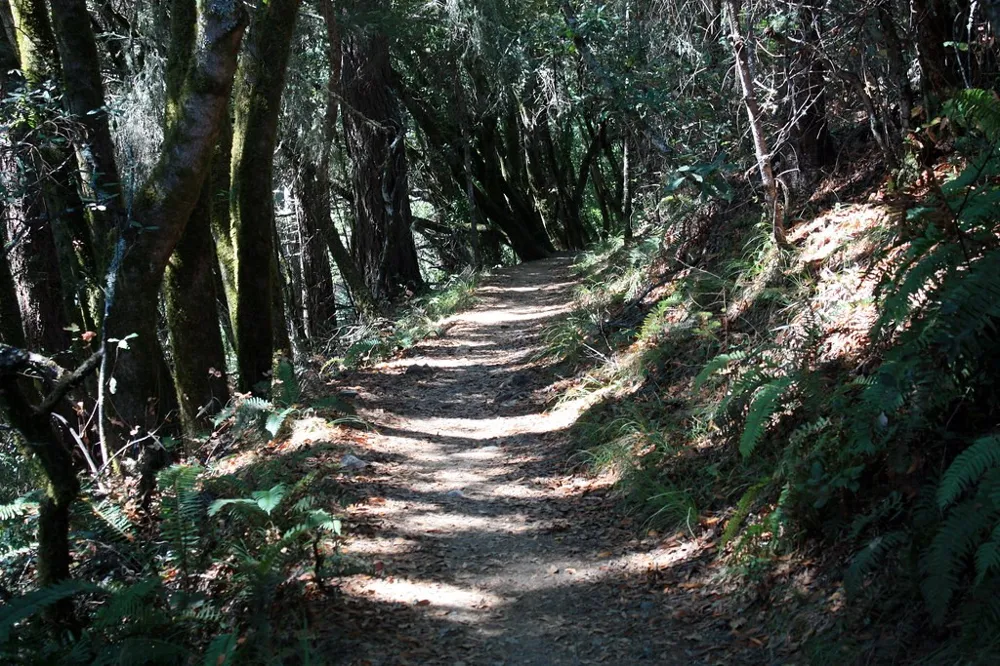
The event that turned klunking into a sport was Repack, a downhill time trial on a steep fire road on Pine Mountain, west of Fairfax in Marin County. Charlie Kelly and Fred Wolf organized the first race on October 21, 1976, with ten riders; according to the Mountain Bike Hall of Fame, Alan Bonds won as the only rider who didn't crash.
| Repack Fact | Detail |
|---|---|
| Location | Fire road west of Fairfax, Marin County, California |
| Course | Just under 2.1 miles with about 1,300 feet of vertical drop, ending in four switchbacks |
| Format | Individual time trial, riders starting two minutes apart |
| Races held | 24 in total: 22 between 1976 and 1979, plus two in 1983 and 1984 |
| Fastest time | Gary Fisher, 4:22 |
| Most wins | Joe Breeze, 10 |
| Fastest woman | Wende Cragg, 5:27 |
| Why it ended | Marin County land and water managers stopped the race after 1984 |
The name came from the brakes. The coaster-brake hubs on the old cruisers got so hot on the descent that the grease vaporized, and riders had to repack the hub with fresh grease after every run. That problem pushed riders toward drum brakes, motorcycle brake levers and gears, so the race doubled as a testing ground for new ideas.
Repack also put the scene in front of a wider audience. VeloNews covered it in 1978, KPIX-TV's Evening Magazine aired a segment on CBS affiliates in January 1979, and Charlie Kelly wrote about it for Outside the same year. The fire road still exists and is rideable today.
The First Purpose-Built Mountain Bikes (1977–1980)
By the late 1970s, old Schwinn frames were getting scarce and riders wanted something lighter and stronger. In 1977, frame builder and Repack racer Joe Breeze finished Breezer #1, a chrome-moly steel frame designed from scratch for off-road riding, and went on to win at Repack on it that year. He built nine more Series 1 Breezers by 1978. Breeze is generally credited with the first purpose-built mountain bike, though some sources date it to 1978. Breezer #1 is now in the Smithsonian's National Museum of American History.
Next came Tom Ritchey, a road frame builder who made the first regularly available mountain bike frames. In 1979, Charlie Kelly and Gary Fisher started a company called MountainBikes to sell bikes built on Ritchey frames. The partnership later split: Kelly sold his share to Fisher in 1982, the company became Fisher Mountain Bikes, and Ritchey went on with his own business. Other builders, such as Otis Guy and Keith Bontrager, also shaped early designs.
Other short production runs appeared at about the same time; the Lawwill Pro Cruiser of 1979, of which about 600 were made, is sometimes called the first production mountain bike. In 1980, Charlie Kelly and Denise Caramagno started Fat Tire Flyer, the first mountain bike magazine.
These early bikes were essentially sturdy road-bike frames with heavier tubing, wide 26-inch knobby tires, flat handlebars, many gears and strong cantilever or drum brakes. They had no suspension at all.
Going Mass Market: The Stumpjumper and the 1980s
The big jump came in 1981, when Specialized, a California company that had started out importing bike parts, began selling the Stumpjumper. Built in Asia with TIG-welded frames, a method that suited mass production, and fitted with 15 gears, it is widely described as the first mass-produced mountain bike. The Univega Alpina Pro was another of the first mass-produced models. More history on these companies is in our guide to mountain bike brands.
Big established makers such as Schwinn and Fuji at first dismissed mountain bikes as a fad, but they were soon proved wrong. Trek released its first mountain bike, the 850, in 1983, and other big makers followed with their own models.
The culture spread too. In Southern California, the Laguna Rads club began riding the coastal hills above Laguna Beach and has held an annual downhill race since 1986; many in the industry link the club to the birth of freeride. The Great Mountain Biking Video came out in 1988, one of the first films about the sport.
Racing Gets Organized: NORBA, the UCI and the Olympics
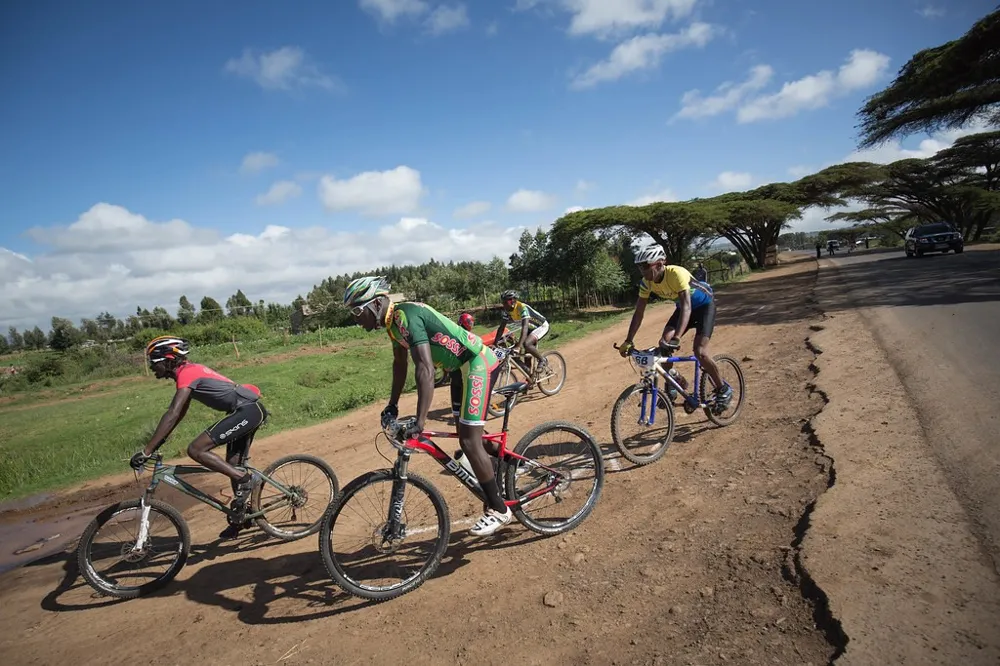
As races multiplied, they needed rules. The National Off-Road Bicycle Association (NORBA) was founded in 1983 as the first sanctioning body for mountain bike racing, with Charlie Kelly among the founders. Its national championships began soon after; one account dates the first to 1984 at Eldora, Colorado. NORBA later became part of USA Cycling. The last two Repack races, in 1983 and 1984, were tied to the NORBA circuit.
Cycling's world governing body, the UCI, recognized the sport and held the first official UCI Mountain Bike World Championships in Durango, Colorado, in 1990, with cross-country and downhill titles. Greg Herbold won that first downhill world title on one of the earliest suspension forks. New events followed: a team relay (1999), dual slalom (2000), which gave way to four-cross (2002), and later a cross-country eliminator (2012).
Then came the Olympics. Cross-country mountain biking debuted at the 1996 Atlanta Games, almost exactly twenty years after the first Repack race, and it is still the only mountain bike discipline in the Summer Olympics. Today's race formats, from short-track cross-country to downhill, are explained in our guide to mountain bike racing.
Trail Access and the Birth of IMBA (1988)
As more riders hit the trails, conflicts with hikers, horse riders and land managers grew, and some areas closed trails to bikes. In 1988, five California clubs formed the International Mountain Bicycling Association (IMBA) to fight closures and promote responsible riding: the Concerned Off-Road Bicyclists Association, Bicycle Trails Council East Bay, Bicycle Trails Council Marin, Sacramento Rough Riders and Responsible Organized Mountain Pedalers.
IMBA's influence is still visible on almost every trail: its trail difficulty system underpins the green, blue and black ratings used at many trail systems, and its trail etiquette principles are echoed in the basic rules on our mountain biking guide. The same year, the Mountain Bike Hall of Fame was founded in Crested Butte, Colorado, with Joe Breeze among the first inductees.
The Suspension Revolution (1990s)
Early mountain bikes were fully rigid, so riders' arms and legs did all the shock absorbing. That changed around 1990. RockShox, founded by Paul Turner in 1989, began producing its RS-1 suspension fork in 1990; a prototype had been reviewed by Mountain Bike Action the year before. Early forks gave only about 38 to 50 mm (1.5 to 2 inches) of travel. Today's long-travel forks offer 200 mm or more.
Through the 1990s, suspension forks spread from racing to everyday bikes, and makers experimented with rear suspension designs, from simple soft-tail frames to full-suspension bikes with linkages and rear shocks. Suspension split the sport into clearer types: light cross-country race bikes, burly downhill bikes and, later, trail and freeride bikes in between. Our guides to types of mountain bikes and hardtail vs full suspension explain how those categories look today.
By the mid-2000s, mountain bikes were sold everywhere from specialist shops to department stores, some of which stocked inexpensive full-suspension models.
Disc Brakes, Bigger Wheels and Modern Tech (Late 1990s–2010s)
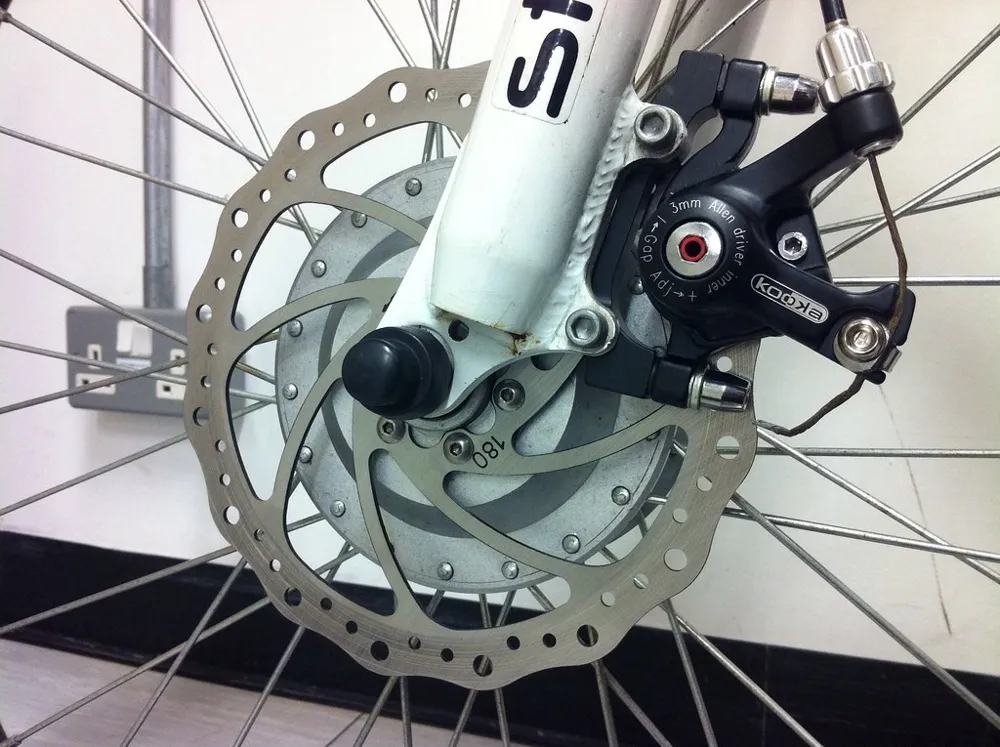
The next wave of change made bikes safer, faster and more capable:
- Disc brakes (late 1990s): hydraulic and mechanical disc brakes became common, giving far more consistent stopping in mud and on long descents than rim brakes. See how to adjust bike brakes.
- Tubeless tires (2000s): tubeless setups were gaining favor by 2004 because they resist pinch flats and run at lower pressures. See our MTB tire pressure guide.
- Bigger wheels (2000s–2010s): 26-inch wheels were the standard from the late 1970s. Gary Fisher's Two Niner of 2001 gave the 29er its name and made Fisher, by then part of Trek, the first major brand with a 29-inch line. 650B (27.5-inch) wheels returned as a middle ground from 2007 and spread widely after 2010. The full story is in our guide to mountain bike wheel sizes.
- Simpler gearing (2012 onward): SRAM's XX1 (2012) was the first mass-produced 1x drivetrain, dropping the front derailleur, and SRAM's 12-speed Eagle followed in 2016. See mountain bike derailleurs.
- Dropper seatposts: posts that let a rider lower and raise the saddle from a handlebar lever, for better control on descents and efficient pedaling on climbs, are now standard on most trail bikes. See parts of a mountain bike.
Frames moved on as well, from steel to aluminum and carbon fiber, with longer, slacker geometry that makes modern bikes far more stable on steep ground than the bikes of the 1980s.
Enduro, Bike Parks and E-MTBs (2000s–Today)
From the mid-2000s, bike parks opened, including lift-served summer operations at ski resorts and indoor parks such as Ray's MTB Indoor Park. See our guide to mountain bike parks.
Enduro, a format with timed downhill stages and untimed climbs, grew into its own discipline. The Enduro World Series ran its first season in 2013, and after ten seasons enduro became a UCI World Cup series in 2023. In August 2026, the UCI and its promoter announced that 2026 would be the last enduro World Cup season; from 2027, the focus moves to the UCI Enduro and E-Enduro World Championships, and Crankworx was reported as the new enduro organizer. Check the UCI's site for the current calendar.
Electric mountain bikes are the newest big shift. Pedal-assist e-MTBs let riders climb more and ride further, and the UCI now awards E-Enduro world titles. Many trail systems have their own rules on where e-bikes may ride, so check local regulations; our guides to electric mountain bikes and e-bike classes cover the basics.
Interest jumped again in 2020, when the COVID-19 pandemic set off a surge in US mountain biking and many shops sold out of entry-level bikes.
Where to See Mountain Bike History Today
Two places are central for anyone interested in the sport's roots:
- Marin Museum of Bicycling and Mountain Bike Hall of Fame (Fairfax, California): the Hall of Fame moved here from Crested Butte in 2014, and the museum, co-founded by Joe Breeze, opened in June 2015. It shows bikes and artifacts spanning more than 150 years of cycling history, including a copy of the 1979 Evening Magazine Repack segment. Opening hours are limited, so check the museum's website before you visit.
- Mount Tamalpais and the Repack road (Marin County): the fire roads where klunking began, and the Repack road itself, can still be ridden. Mount Tam's trails are managed by several agencies with different rules on where bikes are allowed, so check current trail rules and closures before you ride.
For a look at the era on screen, the 2007 documentary Klunkerz: A Film About Mountain Bikes covers the early Northern California scene. Crested Butte, home of the Pearl Pass Tour, remains a well-known riding town.
Keep Exploring
Start with our mountain biking guides, then read types of mountain bikes, mountain bike brands and mountain bike vs road bike. For other sports' origins, see the history of snowboarding, skateboarding history and the history of skiing.
Frequently Asked Questions
Who invented the mountain bike?
No single person did. Marin County riders such as Joe Breeze, Gary Fisher, Charlie Kelly and Tom Ritchey, along with riders in Cupertino and Crested Butte, all shaped it. Joe Breeze is generally credited with the first purpose-built mountain bike frame, the Breezer, in 1977 (some sources say 1978).
Where did mountain biking start?
Modern mountain biking is usually traced to Marin County, California, especially Mount Tamalpais and the Repack fire road near Fairfax, in the 1970s. People had ridden bikes off-road long before that, including in Britain and France.
What was the first mass-produced mountain bike?
The Specialized Stumpjumper, first marketed in 1981, is widely described as the first mass-produced mountain bike, alongside the Univega Alpina Pro. Small runs such as the Lawwill Pro Cruiser of 1979 came slightly earlier.
Why is it called Repack?
The old coaster-brake hubs got so hot on the descent that the grease burned off, so riders had to repack the hub with fresh grease after every run. The name stuck to the road and the race.
When did mountain biking become an Olympic sport?
Cross-country mountain biking made its Olympic debut at the 1996 Atlanta Games, and it is still the only mountain bike discipline in the Summer Olympics.
When were suspension forks introduced?
Suspension forks reached mountain bikes around 1990. RockShox, founded in 1989, began producing its RS-1 fork in 1990, and early forks offered only about 38 to 50 mm of travel.
When was the first mountain bike world championship?
The first official UCI Mountain Bike World Championships were held in Durango, Colorado, in 1990.
Where is the Mountain Bike Hall of Fame?
It was founded in Crested Butte, Colorado, in 1988 and moved to Fairfax, California, in 2014. It is now part of the Marin Museum of Bicycling, which opened there in 2015.