Mountain Bike Wheel Sizes: 26, 27.5 or 29 Inch? (2026)
Most new mountain bikes roll on 29-inch or 27.5-inch wheels, with mullets and 26-inch bikes filling the niches. Here's how each size rides and who it suits.
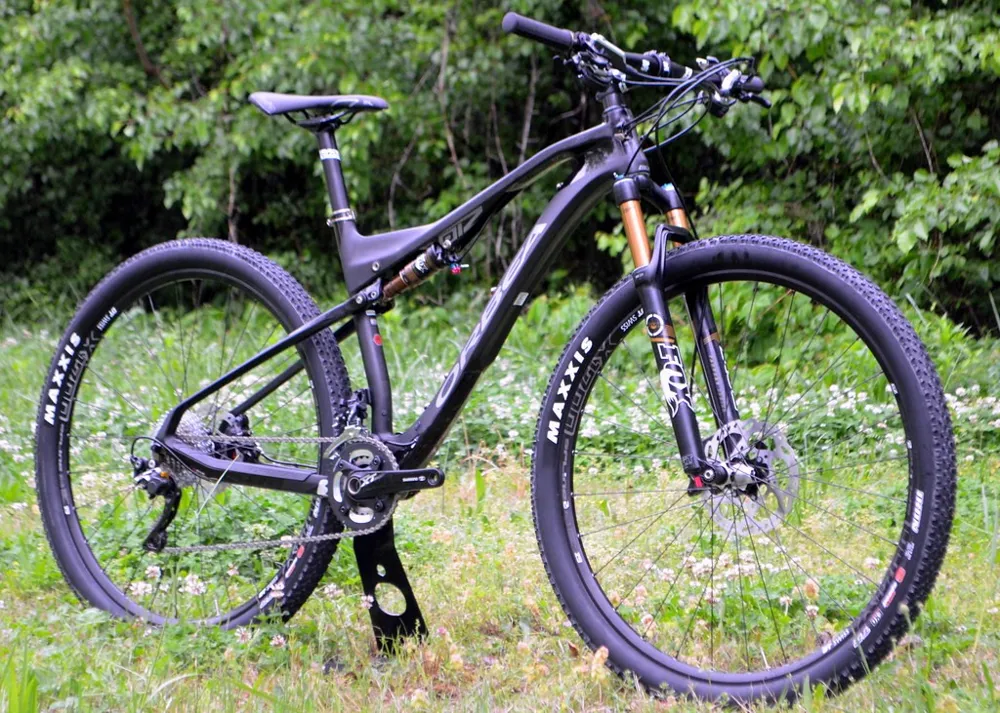
27.5 vs 29: The Short Answer
Most new adult mountain bikes now come with 29-inch wheels, and for most riders that is the sensible default. A 29er rolls over roots and rocks more easily, holds speed well and puts more tire on the ground. 27.5-inch wheels (also called 650B) are lighter and quicker to turn, and they often fit smaller riders and long-travel bikes better. Mullet bikes mix a 29-inch front with a 27.5-inch rear, and 26-inch wheels survive mainly on dirt jump, kids' and older bikes.
Wheel size is only one part of how a bike rides. Frame fit, geometry, suspension travel and tires matter just as much, so treat wheel size as a tiebreaker after you've found a bike that fits. For frame sizing, use our mountain bike size chart.
Mountain Bike Wheel Sizes at a Glance
The inch names are nominal. What actually decides whether a tire fits a rim is the ISO bead seat diameter (BSD), which you'll find on the tire sidewall.
| Wheel Size | ISO Bead Seat | Other Names | Where You'll See It Today |
|---|---|---|---|
| 29-inch | 622 mm | 29er, 700c | Most new XC, trail, enduro and many downhill bikes |
| 27.5-inch | 584 mm | 650B | Smaller frames, some long-travel and park bikes, mullet rear wheels |
| 26-inch | 559 mm | 26er | Dirt jump bikes, fat bikes, older and many budget bikes |
| 24-inch (kids') | 507 mm | Junior MTB | Kids' mountain bikes for roughly 8 to 11 year olds |
| 20-inch (kids') | 406 mm | Junior MTB, BMX | Kids' mountain bikes and most BMX bikes |
A typical 29-inch mountain bike tire measures about 740 mm (29.1 inches) across, compared with about 660 mm (26 inches) for a classic 26-inch tire, so a 29er wheel is roughly 10% larger. A 27.5-inch wheel sits between the two. Several older, non-matching tire sizes were also sold as "26 inch," so read how to measure a bike tire before you buy replacement rubber.
How Mountain Bike Wheels Got Bigger
| When | What Happened |
|---|---|
| Late 1970s | Early West Coast "klunkers" and the first production mountain bikes use 26-inch (559 mm) wheels, which become the standard for decades. |
| 1981 | British designer Geoff Apps builds an off-road bike on large 700c (622 mm) tires, an early 29-inch idea, but suitable tires are scarce. |
| 1990s | Small runs of 29-inch bikes appear; WTB's Nanoraptor (1999) is often described as the first true 29-inch mountain bike tire. |
| 2001 | Gary Fisher's Two Niner model gives the "29er" its name; Fisher (part of Trek) becomes the first major brand with a 29-inch line. |
| 2007 onward | 650B (27.5-inch) returns as a middle ground between 26 and 29 and becomes common on new bikes after 2010. |
| Mid-2010s | Mixed-wheel "mullet" frames start appearing, borrowing the idea from motocross bikes. |
| 2017 | A 29-inch downhill bike debuts at the UCI Downhill World Cup, and big wheels spread to gravity racing. |
| 2019 onward | Purpose-built mullet bikes reach the market and appear at Enduro World Series races; 29-inch becomes the default on most adult MTBs. |
For the full story of the sport, see our history of mountain biking.
29-Inch Wheels: Pros and Cons
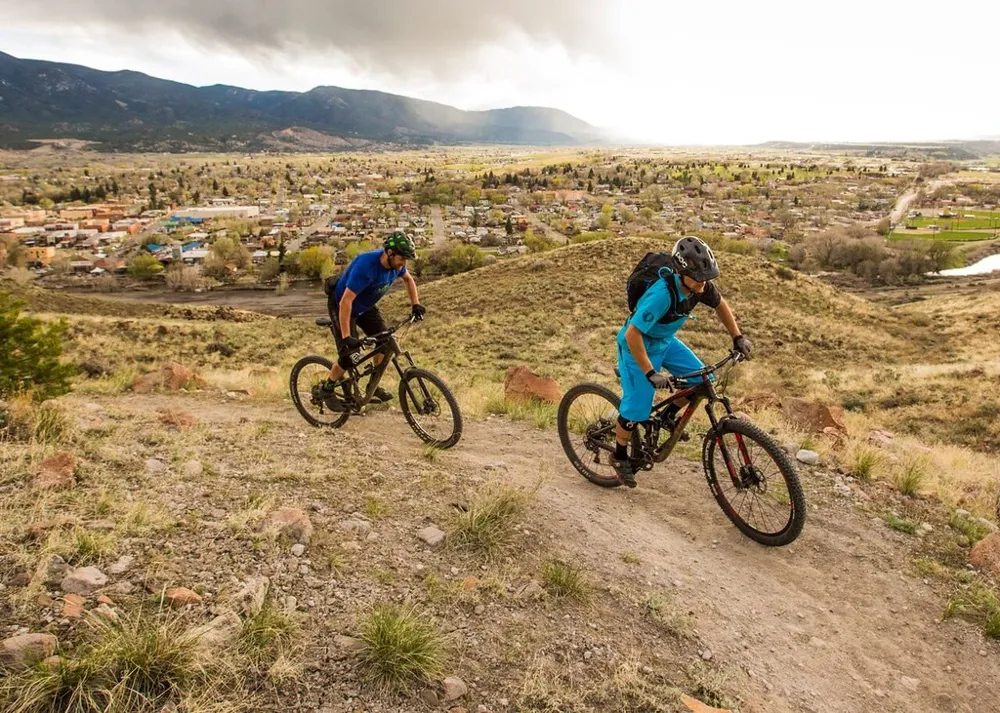
29-inch wheels first caught on with cross-country racers, and modern geometry has since made them work on steep, technical descents too. Today they are the most common size across XC, trail, enduro and downhill bikes.
- Rolls over obstacles more easily. A bigger wheel meets a root or rock at a shallower "angle of attack," so it gets hung up less and rough ground feels smoother.
- More grip. At the same tire width and pressure, a 29-inch tire's contact patch is about the same area as a 26-inch tire's but roughly 5% longer, which helps traction on climbs and in corners.
- Holds speed. Once a 29er is rolling, it carries momentum well over rough terrain, which suits long rides and efficient climbing.
- Stable. Bigger wheels feel planted at speed and under braking.
- Widest tire choice. Because most new bikes use 29-inch wheels, tire and spare-part options are broad.
The trade-offs:
- Slower to accelerate. More rotating weight takes more effort to spin up. A comparable 29-inch wheelset with tires is often around 500 g heavier than a 27.5-inch set, and REI notes 29ers can weigh about 2 lb more than similar 27.5-inch bikes.
- Less nimble in tight spots. Some riders find 29ers awkward on slow, twisty trails, though modern geometry has narrowed the gap.
- Harder to package. Big wheels need more frame space, which can make long-travel bikes (around 160 to 180 mm of rear travel) long, and they are hard to fit on extra-small frames.
- Less clearance for shorter riders, who may find the rear tire close to their backside on steep descents.
27.5-Inch (650B) Wheels: Pros and Cons
27.5-inch wheels arrived after 29ers as a compromise, and they were widely adopted on trail and enduro bikes after 2010. Many riders describe them as closer to the snappy feel of the old 26-inch wheels.
- Quicker acceleration. Smaller, lighter wheels get up to speed faster out of corners and on punchy climbs.
- More agile. Less steering inertia makes a 27.5-inch bike easier to lean, flick and throw around, which many jump and park riders prefer.
- Fits smaller frames. Brands often put 27.5-inch wheels on their small and extra-small sizes so the bike's proportions still work.
- Works well with long travel. Smaller wheels leave room for more suspension travel and shorter chainstays.
The trade-offs are the flip side of a 29er's strengths: a steeper angle of attack, a shorter contact patch and less momentum over chunky ground. On long, rough rides a 27.5-inch bike can feel a little less efficient.
27.5 vs 29 Head to Head
| Factor | 27.5-Inch | 29-Inch |
|---|---|---|
| Acceleration | Faster | Slower |
| Rolling over roots and rocks | Good | Better |
| Traction | Good | Better (longer contact patch) |
| Holding speed | Good | Better |
| Agility in tight turns and air | Better | Good |
| Weight | Lighter | Heavier |
| Fit for shorter riders | Easier | Harder on the smallest frames |
| Long-travel packaging | Easier | Harder |
| New bike and tire availability | Shrinking on adult bikes | Widest |
The differences are real but smaller than marketing suggests. Wikipedia's summary of 29er research notes that most claimed advantages and disadvantages have not been objectively studied, so the best test is riding both sizes of the same model on a trail you know.
Is a 26-Inch Mountain Bike Still Worth It?
26-inch wheels were the mountain bike standard from the late 1970s until 29ers and 27.5-inch wheels largely took over. Few new adult trail bikes use them now, but the size is far from gone:
- Dirt jump and slopestyle bikes still commonly use 26-inch wheels, which can be built lighter, stiffer and stronger for the same weight.
- Fat bikes use the same 559 mm rim size with tires up to about 5 inches wide; see our fat bike guide.
- Small frames and kids' bikes: some extra-small downhill frames and kids' full-suspension bikes use 26-inch wheels.
- Budget and department-store bikes often list "26-inch mountain bike" in the name. Read are Walmart mountain bikes good? before buying one.
If you already own a 26-inch bike that fits and works, there's no need to replace it just for wheel size. Tires and tubes are still easy to find, though new high-end spares are harder to find and the used market fills some of the gap. If you're buying new for trail riding, a 27.5 or 29-inch bike will give you far more choice.
Mullet (MX) Bikes: 29 Front, 27.5 Rear
A mullet (also called MX or mixed-wheel) bike pairs a 29-inch front wheel with a 27.5-inch rear. The idea, borrowed from motocross, is to get the bigger front wheel's rollover, stability and grip where it matters most for steering, while the smaller rear wheel adds agility, quicker acceleration and more room for rear travel and shorter chainstays.
- Who it suits: gravity riders on steep, tight trails; shorter riders who want 29-inch rollover without the rear tire catching their shorts on steep drops; and riders who feel pitched forward on a 27.5-inch front end.
- Who may not benefit: some tall riders prefer full 29-inch wheels front and rear.
- Where you'll see it: mostly on enduro and downhill bikes, and on some trail bikes. Some frames are sold in both full-29 and mullet versions, or can switch with a manufacturer link or shock kit.
A true mullet is designed around its mixed wheels. Simply dropping a 27.5-inch rear wheel into a bike built for 29 lowers the bottom bracket and slackens the head angle more than the frame was designed for, so only convert when the frame maker supports it.
Plus and Fat Tires
Tire width changes how a wheel size rides almost as much as diameter does.
- Plus tires are mid-fat tires typically 2.8 to 3.0 inches wide, compared with roughly 2 inches on traditional mountain bike tires. They need wider rims and run at lower pressures; Trek suggests starting around 14 to 20 psi. The result is more traction and stability on loose or rough ground.
- Standard trail tires are often around 2.3 to 2.6 inches wide on 27.5 or 29-inch rims. See our mountain bike tire guide and MTB tire pressure chart.
- Fat bike tires run up to about 5 inches wide, usually on 26-inch (559 mm) rims, for snow and sand.
Which Wheel Size for Your Height?
Height doesn't dictate wheel size, but it does influence which bikes fit you well:
| Rider Height | Typical Wheel Size | Notes |
|---|---|---|
| Under about 5'6" | 27.5-inch or mullet; 29-inch on some small frames | Fitting a 29er can be harder; many brands use 27.5-inch wheels on XS and S frames. |
| About 5'6" to 6'0" | 29-inch (27.5-inch or mullet by preference) | Everything is available; choose by riding style. |
| Over about 6'0" | 29-inch | Many tall riders prefer 29-inch, though 27.5-inch bikes can also fit well. |
Some shorter riders love 29ers, and some taller riders prefer the playful feel of 27.5-inch wheels, so a test ride is worth more than any chart. The frame size you need by height and inseam is on our mountain bike size chart. Women-specific fit advice is in our women's mountain bike guide.
Kids' Mountain Bike Wheel Sizes
Kids' bikes are sized by wheel diameter rather than frame size, and wheel sizes on youth bikes range from small 12-inch balance and starter bikes up to adult sizes. As a rough guide:
- 20-inch: about 3'7" to 4'0", typically ages 5 to 8.
- 24-inch: about 4'0" to 4'9", typically ages 8 to 11.
- 26-inch or adult XS (often 27.5-inch): about 4'9" and up, typically 11 and older.
Leg length and confidence matter more than age, so check the maker's chart. For picks, see our best kids' mountain bikes; for the youngest riders, start with a balance bike.
Wheel Size by Riding Style

| Riding Style | Most Common Wheel Size | Why |
|---|---|---|
| Cross-country (XC) | 29-inch | Efficiency, momentum and rollover over long distances |
| Trail | 29-inch; 27.5-inch on small sizes | Balance of climbing efficiency and descending grip |
| Enduro | 29-inch or mullet | Rollover and stability at speed; mullet for agility |
| Downhill | 29-inch, mullet or 27.5-inch | Mixed wheels are popular on tight, steep tracks |
| Dirt jump and slopestyle | 26-inch | Strength, stiffness and quick handling in the air |
| Fat biking | 26-inch rims with 4 to 5-inch tires | Float on snow and sand |
To see how these categories differ beyond wheels, read types of mountain bikes and hardtail vs full suspension.
Can You Change Your Bike's Wheel Size?
In most cases, no. Frames and forks are designed around one wheel size, and swapping can cause problems:
- Bigger wheels often won't clear the fork crown, seat stays or chainstays, and they raise the front or rear of the bike.
- Smaller wheels lower the bottom bracket, increasing pedal strikes, and slacken the head angle, changing how the bike steers.
- Mullet conversions work best on bikes their maker says can take them. Fitting a 29-inch fork to a 27.5-inch bike means matching the fork's axle-to-crown length: GT has noted that a 170 mm 27.5-inch fork is roughly equal in height to a 150 mm 29-inch fork.
Even when the diameter is right, new wheels must also match your hub spacing (for example Boost), brake rotor mount and freehub driver. Our mountain bike wheels guide covers those standards.
What "27.5-Inch 21-Speed" Means in a Listing
Many budget bikes are listed as "27.5-inch 21-speed" or "26-inch 8-speed." The inch number is the wheel size; the speed count is the drivetrain and has nothing to do with wheels. A 21-speed bike usually has three chainrings and seven rear cogs; an 8-speed usually has one chainring and an 8-cog cassette. Many modern trail bikes use a single chainring with 10 to 12 rear cogs, which is simpler to shift and maintain. Learn more in our shifter guide and derailleur guide, and compare entry-level bikes in our beginner mountain bike picks.
How to Choose Your Wheel Size
- Start with fit. Find the frame size that fits you, then see which wheel size that size comes with.
- Match your trails. Rough, rooty or long rides favor 29-inch. Tight, twisty trails, jumps and park laps favor 27.5-inch or a mullet.
- Think about your height. Under about 5'6", try 27.5-inch and mullet options as well as small 29ers.
- Check parts availability. 29-inch has the widest choice of new tires and wheels.
- Test ride both. If a shop or demo day has the same model in two wheel sizes, ride them back to back.
Ready to shop? Compare hardtail mountain bikes, full suspension mountain bikes and electric mountain bikes, or browse every guide in our mountain biking section.
Frequently Asked Questions
Is 27.5 or 29 better for a beginner?
Either works. A 29er rolls over roots and rocks more easily, which many new riders find confidence-inspiring, while a 27.5-inch bike feels quicker to turn and can fit smaller riders better. Pick the bike that fits you, then the wheel size it comes with.
Is a 29er too big for a short rider?
Not always. Riders under about 5'6" can find it harder to get a good fit on a 29er, which is why many brands put 27.5-inch wheels on their smallest frames. Some shorter riders still prefer 29-inch wheels, so test ride both if you can.
Can I put 29-inch wheels on a 27.5-inch mountain bike?
Usually not. A 29-inch wheel needs more fork and frame clearance and raises the front of the bike. Only change wheel size when the frame and fork maker lists that setup as compatible.
Are 26-inch mountain bikes obsolete?
Not obsolete, but rare on new adult trail bikes. The size lives on in dirt jump bikes, some small frames, kids' bikes, fat bikes and many older or budget bikes, and 26-inch tires and tubes are still widely sold.
What is a mullet mountain bike?
A bike with a 29-inch front wheel and a 27.5-inch rear wheel. The bigger front wheel rolls over obstacles, while the smaller rear wheel adds agility and rear-tire clearance, which is why mullets are common on enduro and downhill bikes.
Is 27.5 the same as 650B?
Yes. Both describe a wheel with a 584 mm bead seat diameter. 650B is the older French name, and 27.5 is the mountain bike marketing name.
Does wheel size change what tires I can buy?
Yes. A tire must match the rim's bead seat diameter exactly: 559 mm for 26-inch, 584 mm for 27.5-inch and 622 mm for 29-inch. Check the ISO number on your tire sidewall before ordering.